Nurlan
They hauled away the old furniture and balcony junk fast. The KAMAZ pulled into the yard without a hitch.

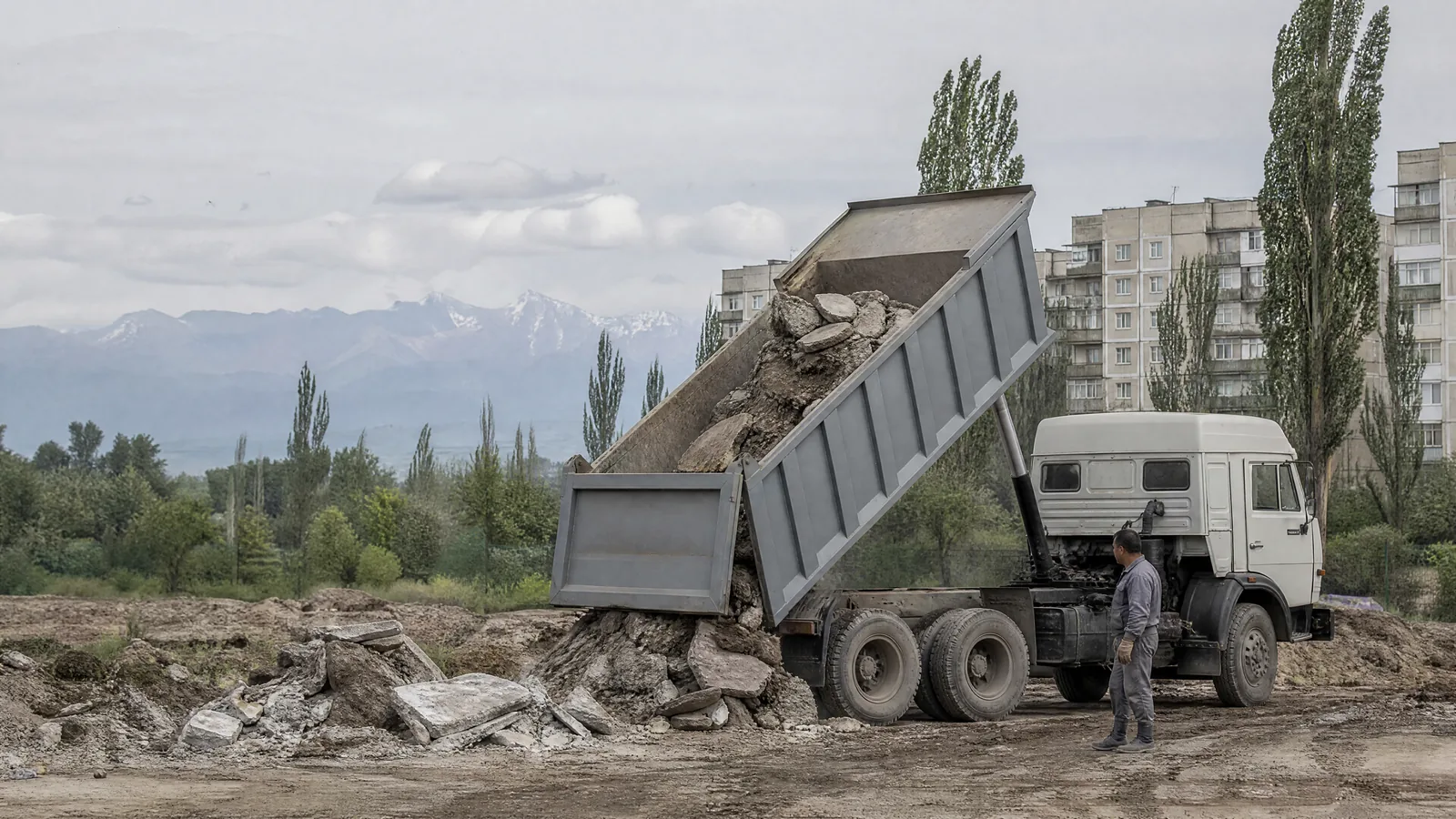
Send a photo of the pile to WhatsApp — we'll tell you if it fits in one trip and how much it'll cost.
Volume and weight are two different numbers, and a photo shows it right away. Use the calculator, and if you're unsure — send a shot, we'll adjust.
The calculator total is a guide. We give the exact figure after a photo or an on-site inspection.
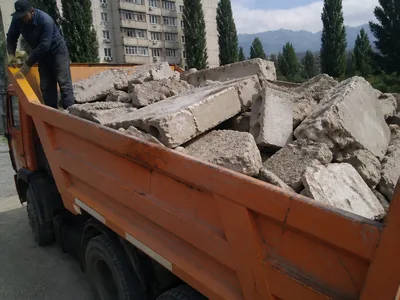
Broken slabs, blocks, leftover screed. A 15 m³ bed holds up to 20 t — but if the rubble is oversized, it's better to crush it on site.
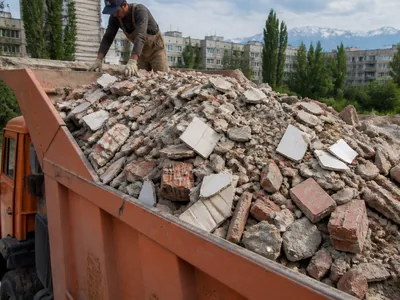
Broken brick, ceramic tiles, leftover masonry after demolition. Heavy — just right for a KAMAZ.

Earth from a plot, wet clay, backfill. Heavy and sticky — a ZIL can't handle it, so we send a KAMAZ.
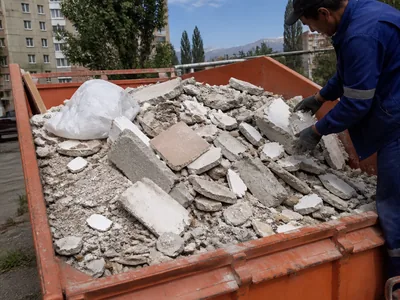
Mixed construction waste: chunks of walls, plaster, underlayment. Goes for construction waste removal by KAMAZ.
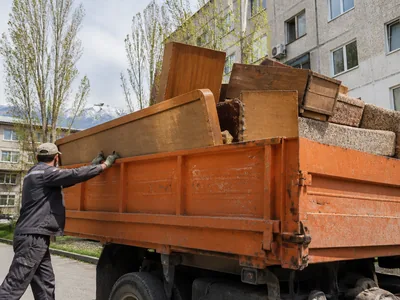
Old cabinets, sofas, frames — stuff that won't fit in a GAZelle. A 15 m³ bed has room to spare.
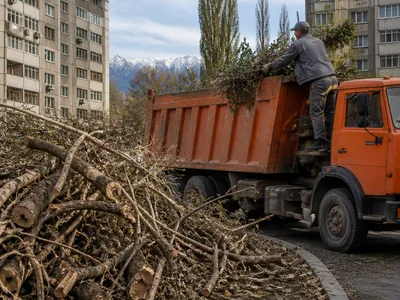
Cut branches, trunks, leaves. Bulky but light — if there's not much, a ZIL will do.
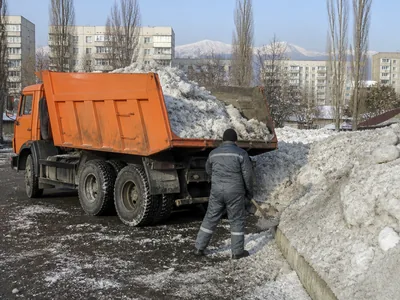
Snow cleared from yards and lots. We haul it by KAMAZ when the pile is packed and heavy.
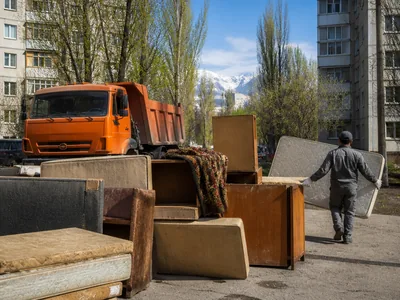
Old sofas, wardrobes, mattresses after a move. Here we usually send a GAZelle — if there isn't much junk.
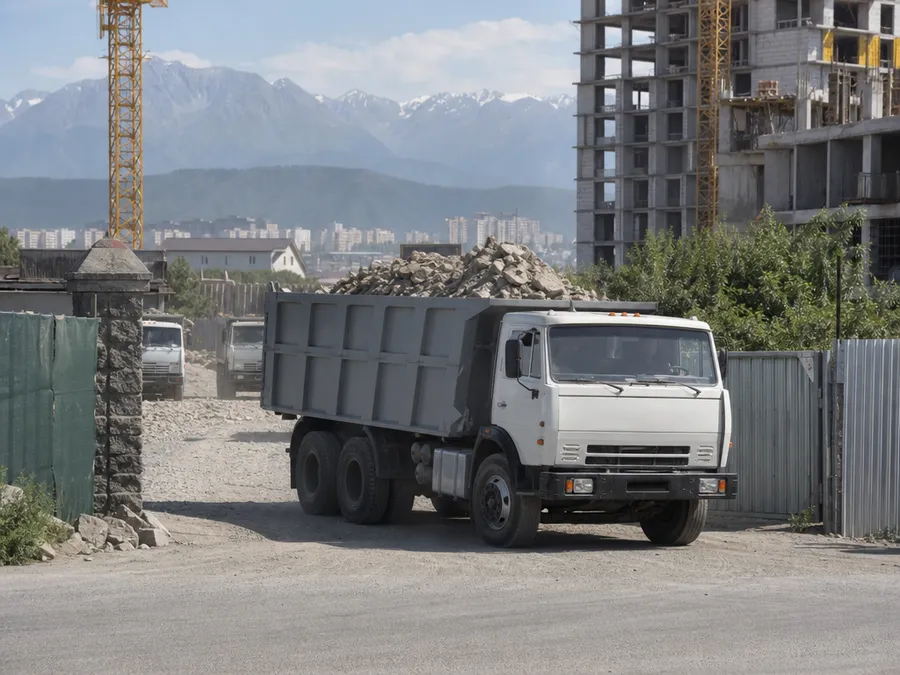
One dump truck trip with loading. If the volume fits in a 15 m³ bed — we send a KAMAZ so you don't pay for three trips.
Book a run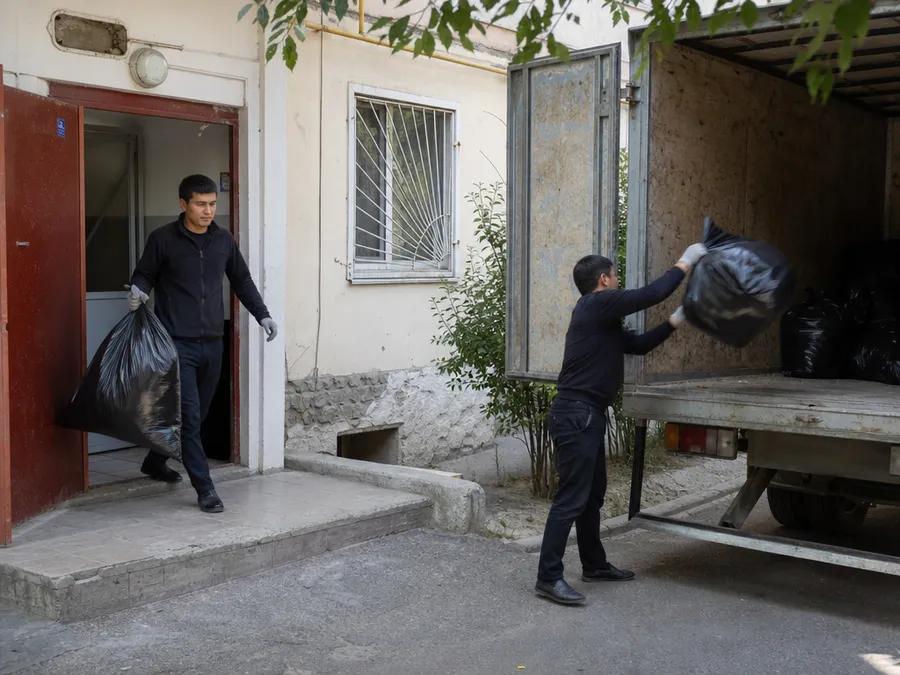
When the job takes more than one go: long loading, several locations. We charge by the actual work, no surprises at the end.
Ask about the hour
Carrying stuff out of an apartment, basement, or yard — anything heavier than a shovel. We work with a KAMAZ because the volume is usually big.
With loaders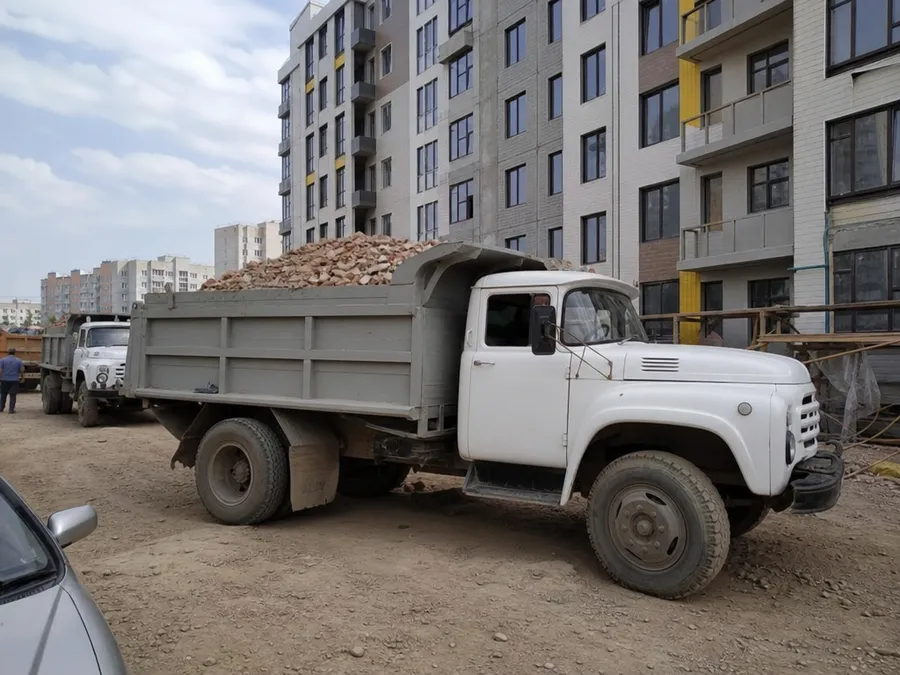
One KAMAZ trip instead of three or four small ones — if there's a lot of junk. And if we misjudged the volume, we'll recalculate across our fleet: sometimes a second truck is cheaper than a second trip.
The whole fleet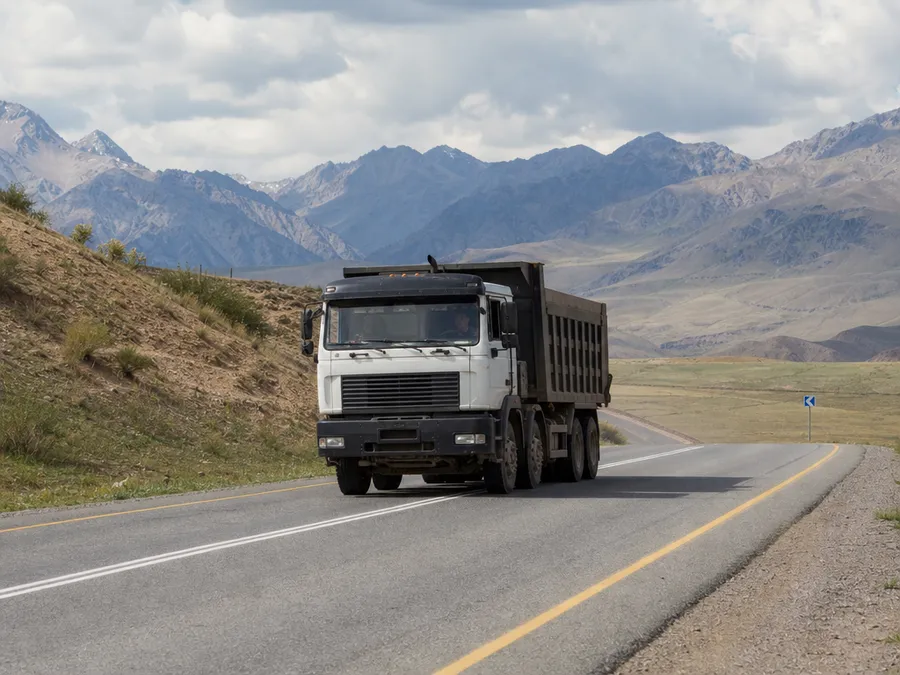
Country houses, plots, sites outside Almaty. Mileage is added to the base price — we give you the total upfront, before dispatch.
Outside the city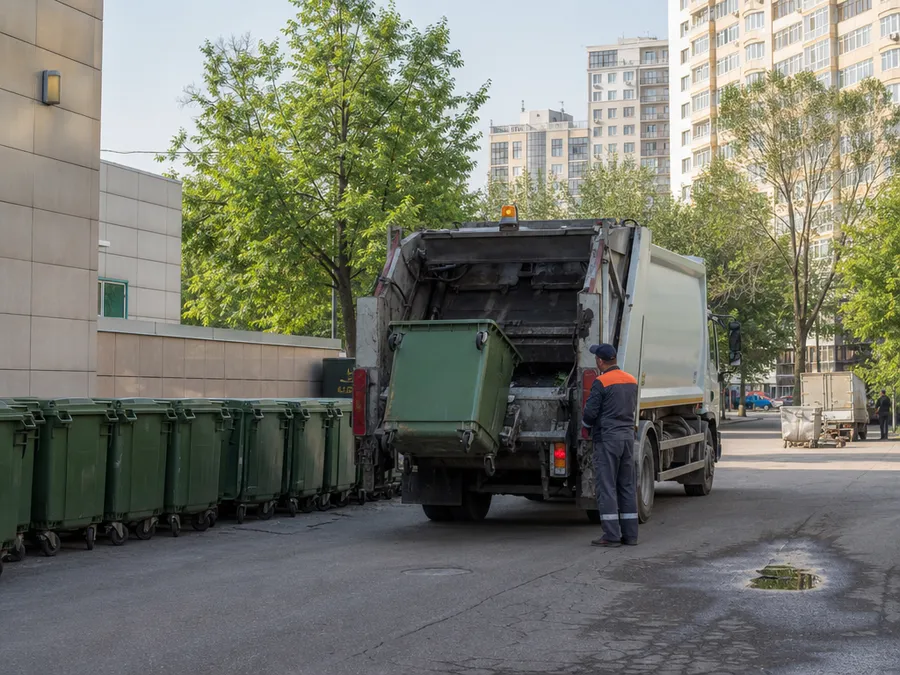
For construction sites and factories where junk piles up constantly. We match the schedule and truck to your site, and price it separately for the job.
Message us on WhatsAppBelow is all the equipment we have, with price per trip. KAMAZ isn't the only option here, and sometimes you don't need it.




Valid from August 2026 · price per trip within the city
| Equipment | Volume | Payload capacity | Price per trip | Extra hour |
|---|---|---|---|---|
| GAZelle 1.5 t | 12 m³ | up to 1.5 t | 30 000 ₸ | 6 000 ₸ |
| GAZelle 2.5 t | 16 m³ | up to 2.5 t | 35 000 ₸ | 9 000 ₸ |
| Truck 5 t | 25 m³ | up to 5 t | 40 000 ₸ | 12 500 ₸ |
| ZIL dump truck | 7–12 m³ | up to 7 t | 40 000 ₸ | 12 500 ₸ |
| KAMAZ dump truck | 15 m³ | up to 20 t | 55 000 ₸ | 15 000 ₸ |
| Howo dump truck | 25 m³ | up to 40 t | 60 000 ₸ | 15 000 ₸ |
| PUHTO (skip) | 8–10 m³ | up to 7 t | 45 000 ₸ | — |
| Multilift | 20 m³ | up to 12 t | 100 000 ₸ | — |
| Skip | 27 m³ | up to 15 t | 135 000 ₸ | — |
| Max skip | 32 m³ | up to 20 t | 160 000 ₸ | — |
Prices apply within Almaty city limits. Outside the city, mileage is added — we calculate it in chat before dispatch.
Not sure which truck you need? Send a photo — we'll pick one for you.
Message us on WhatsAppLoading, cleanup, carrying out from upper floors — the stuff that usually comes up on site. We agree on it in advance so there's no arguing at the truck.
From request to empty truck — five steps. None of them cost a thing until you agree.
Request a quoteDescribe the job or send photos — that's enough to figure out the volume.
We calculate cubic meters and weight, decide if it's a KAMAZ or a ZIL, and lock in the price.
From thirty minutes in the city, seven days a week. We'll agree on the time in advance.
Loaders carry everything out of the apartment, basement, or garage, and we load it into the truck.
We take it to disposal, and sweep the area after loading.
A couple of examples: what a yard looks like before removal and what's left after the KAMAZ drives away.
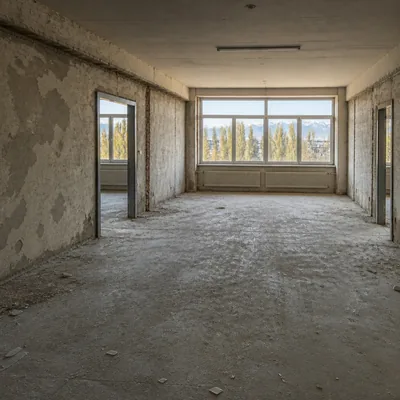
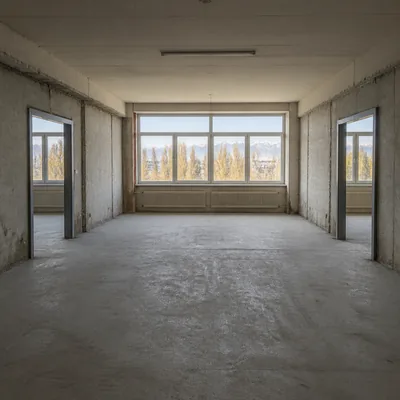
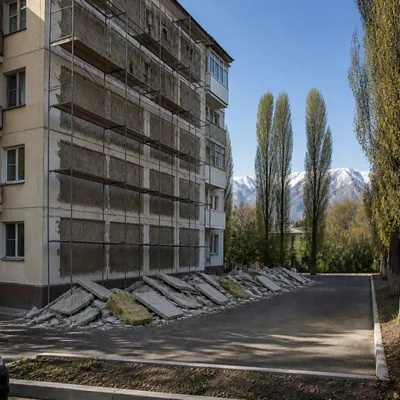
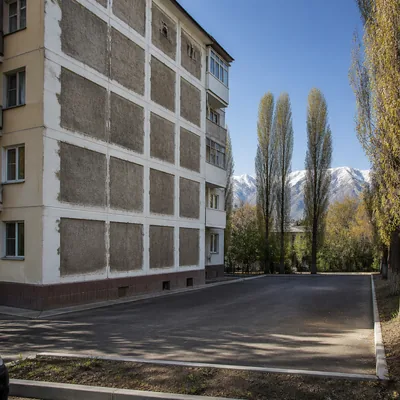
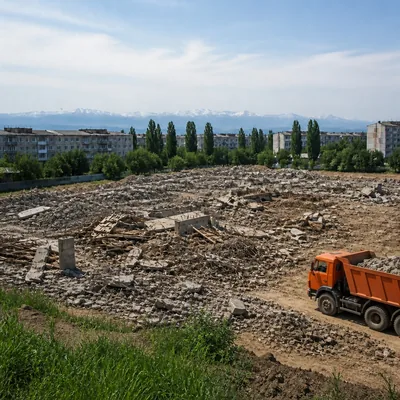
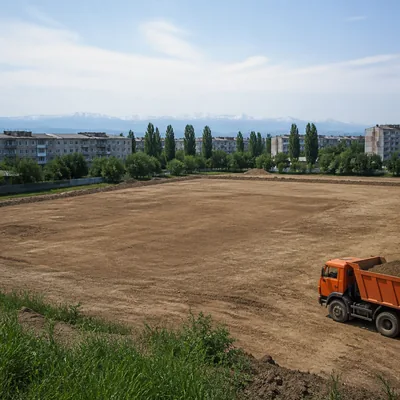
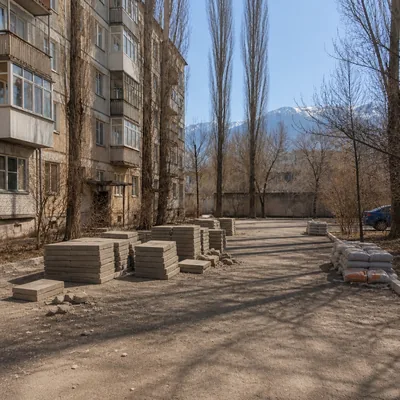
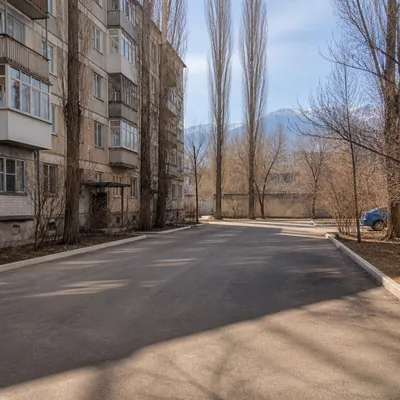
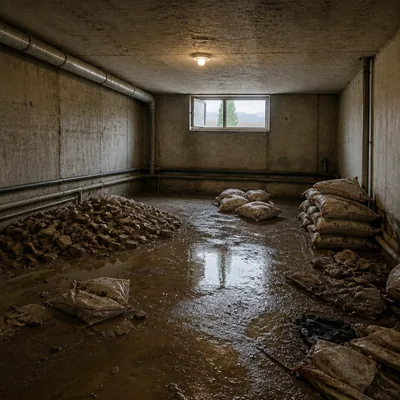
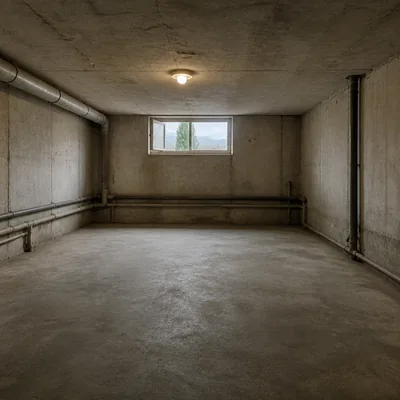
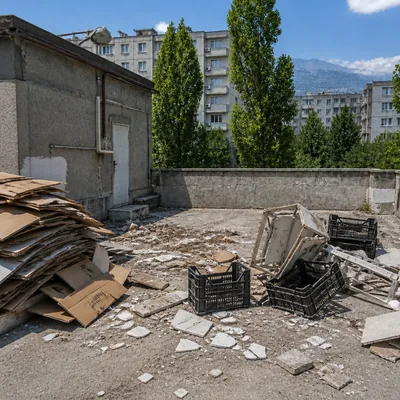
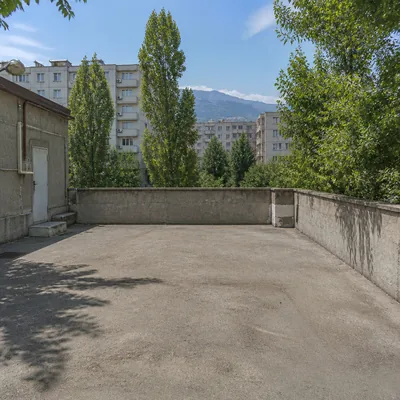
Our drivers and loaders work for us full-time — they don't just show up from a day-labor site. It's always the same crew.







A familiar picture: a pile sits in the yard after a renovation — stripped screed, chunks of concrete, leftover brick, old tiles. You eyeball it: three cubes, tops. You call a truck, and it arrives and doesn't take even half. Because concrete isn't foam, and the three cubes you saw with your eyes weigh more than they look.
This is exactly where people trip up most often. A KAMAZ dump truck takes up to twenty tons, but its bed is only fifteen cubes. And here's where it gets interesting: with light debris the cubes run out first, with heavy debris the tons do. If you don't know which case is yours, you either overpay for an extra trip or order a truck that leaves half empty while half the pile stays in the yard. In my experience, the second happens far more often. We take KAMAZ trash removal requests in Almaty via WhatsApp or by phone, and we size up the volume from photos — that's fairer for both sides.
Below is a big breakdown of the KAMAZ and weight. How much actually fits at different waste densities, what counts as an overload, what kind of access and space you need, and when one KAMAZ beats three small trips. No tenge figures — we talk money through logic, not a price list, which you already have above on the page.
A concrete screed in the yard looks compact but weighs like a cast-iron slab. One cube of stripped screed is a good two tons plus. A KAMAZ dump truck takes up to twenty tons, but its bed is fifteen cubes. Do the math: if you load only concrete chunks, the tons run out at the tenth cube. Five cubes of empty space remain. You pay for the trip, and the truck leaves underloaded. Or the opposite — the loaders pile on fifteen cubes, and the dump truck bottoms out on its springs before it even pulls away from the curb.
The catch isn't in the number itself, but in the difference in density. Two identical 15-cubic-meter bodies can weigh differently: one — six tons, the other — twenty-two. Polyethylene, cardboard, old furniture, insulation — these are light things. You can stuff them to the very roof and not exceed the tonnage. But brick fragments, tiles, removed plaster, foundation debris — these are heavy. Fifteen cubic meters of them simply won't fit by weight.
That's why, when it comes to KAMAZ garbage removal in Almaty, the first thing we ask isn't about cubic meters — it's about what's actually in the pile. A photo tells us more than any estimate over the phone. From a picture we can see both the fraction and the rough composition. If the pile is pure concrete, we price by the ton. If it's a mix with old furniture, we price by cubic meters. There's no universal formula, and anyone who promises a quote without asking questions is most likely just guessing.
Density is how much one cubic meter weighs. For styrofoam, it's laughable: a cubic meter weighs about twenty kilograms. For concrete debris — from 1.8 to 2.4 tons. The difference is a hundredfold. So the phrase "I only have three cubic meters" says nothing about the truck. Three cubic meters of concrete — that's six tons. Three cubic meters of foam — that's sixty kilograms. The first won't fit in a GAZelle, the second one loader can carry by hand.
Construction materials generally behave differently. Here's what usually lies in a pile after renovation:
Note: the last three items are light but fill the entire body. That's exactly why people most often order a KAMAZ for them, because a GAZelle can't handle the volume. And the first three — on the contrary, are heavy to load, but the volume remains free.
The most common thing — the truck arrives, and the loaders see a pile twice as big as what was described over the phone. Or the opposite: the client overinsured, called a KAMAZ, and there's only half a body of work. The second option, honestly, is rarer. People tend to underestimate volume, not overestimate. Especially when the trash is in a pile, not in bags.
What happens next? If the pile is bigger — either a second trip, or we leave part in the yard. Neither is pleasant. If the pile is smaller — the truck leaves half-empty, but the price is already fixed per trip, and no one recalculates it after the fact. We agree on the sum before dispatch, and after loading it doesn't change. This rule works both ways.
Another extreme is ordering a KAMAZ for light trash that a GAZelle could have hauled. Styrofoam, cardboard, old furniture: fifteen cubes of that weighs maybe a ton and a half. The KAMAZ would be carrying air. It'll cost more than two GAZelle runs, and that's not a miscalculation — it's just the wrong truck. That's why the price of a KAMAZ run isn't based on cubes, but on how fully the truck is loaded by weight.
It happens the other way too. The pile in the yard looks small — a couple of cubic meters, maybe three. But it's removed screed with rebar. Three cubic meters of concrete — six tons. For a KAMAZ, that's not the limit, but already half a load. If there's also brick debris nearby, it quickly adds up to twenty tons. And then a seemingly small pile fills the entire dump truck.
So when you call, we always ask: what exactly is in the pile — any concrete, brick, tile, screed? If yes, we price by weight. If it's all light stuff, by volume. That's not red tape, it's how we avoid sending a truck for nothing. Ordering a KAMAZ for waste removal isn't about cubic meters — it's about guessing what runs out first: space or the weight gauge.
From experience: two identical three-cube piles can need different equipment. One goes on a GAZelle, the other only on a KAMAZ. And the difference isn't the volume — it's what's inside. Concrete always means tonnage. Foam always means cubes. A mixed pile — we price by the heavy part, because that sets the minimum truck size.
And one last thing. If you're not sure — send a photo on WhatsApp. We'll take a look and tell you honestly what truck you need. Maybe a KAMAZ won't be necessary. Maybe the opposite — one trip won't be enough. Better to sort this out before dispatch than to unload half of it back into the yard.
Let's start simple: density is how many kilograms one cube of trash weighs. A cube of concrete is about two tons, while styrofoam is about twenty kilos. That's a hundredfold difference, and it's exactly what decides whether a KAMAZ or a small GAZelle is more cost-effective. A KAMAZ has a fifteen-cube body and twenty tons of payload capacity. If you load heavy stuff, the body won't even be half full, but the truck will already be at its limit. If it's light, you'll fill it to the brim, but the weight will be child's play.
Heavy means anything that used to be a floor, a wall or a foundation. Soil from a pit weighs about 1.6–1.8 tonnes per cube, especially if it's wet. Concrete rubble — 1.8 to 2.4 tonnes per cube, depending on the grade and how much rebar is in it. Cement screed — same concrete numbers, sometimes a bit higher. Broken brick — 1.4–1.8 tonnes per cube; solid is heavier, hollow is lighter. Ceramic tile and wall tile — about 1.5–1.9 tonnes per cube, because the shards pack tightly together. We'll throw asphalt concrete and coarse gravel in here too.
What this means in practice. Ordering a KAMAZ for waste removal makes sense when you've got eight to twenty tonnes of heavy stuff. Fifteen cubes of concrete is already twenty-five to thirty tonnes, and that physically won't fit in a KAMAZ: overload, the trip won't happen. So either two trips, or a truck with more payload. Here weight matters more than cubes, and that's not my whim — it's physics.
Another nuance: heavy stuff can't be loaded above the sides. Concrete sits unevenly in the body, and the truck heads out with a decent margin of volume to spare. Not everyone remembers this — and then they're surprised why the KAMAZ showed up but the pile is still there.
Light waste is the opposite story. Mineral wool — 30–80 kg per cube. Foam — 15–25 kg. Drywall — about 200–300 kg per cube, depending on how much moisture and leftover filler is on it. Old furniture — sofas, wardrobes, particle board — around 150–350 kg per cube, but it takes up a huge volume. Film, polyethylene, packaging — almost nothing by weight. Plastic pipes — 100–200 kg per cube.
Here the KAMAZ shows a different side. Fifteen cubes of light trash is often less than five tons. The truck leaves half-empty by weight but packed to the ceiling by volume. And the price of the run depends on volume. Ordering a truck like that for light trash is overpaying, honestly. Better to get a GAZelle with its twelve cubes and a ton and a half, or even two.
But even light stuff has its limit. If the waste is compacted or wet, the weight creeps up without you noticing. Drywall after demolition soaks up water and isn't so airy anymore. Old furniture with particleboard gets heavier when wet. We take that into account from photos and warn you in advance.
The most common story is a flat renovation. There's a bit of everything: chunks of screed, broken brick, bags of soil, drywall, old doors, tiles, packaging. The density of such a mix is roughly 0.8–1.2 tonnes per cube. You can't say for sure until you see it. A 15-cubic-metre KAMAZ takes between twelve and eighteen tonnes of this mix. Almost always a full body, and the truck leaves with capacity to spare.
Mixed waste is exactly the sweet spot for a KAMAZ. It doesn't overload the truck by weight and doesn't leave gaps by volume. Construction waste removal by KAMAZ is all about piles like these. If you're renovating a three-room flat, one trip will probably be enough. A big flat or a small office — you might need two.
There's an objection: "what if I put the heavy stuff at the bottom and the light stuff on top?" Makes sense, but in practice almost nobody does it. People just dump everything in one pile, and we work with what we've got. That's why we ask for photos — they show the proportion.
| Material | Weight per cube | What happens with a 15 m³ body |
|---|---|---|
| Soil | 1.6–1.8 t | Overload, body not full |
| Concrete, screed | 1.8–2.4 t | Only part of the body, otherwise overload |
| Broken brick | 1.4–1.8 t | About half the body |
| Drywall | 0.2–0.3 t | Full body, weight to spare |
| Insulation, film | 0.02–0.08 t | Full body, weight is peanuts |
| Mixed after renovation | 0.8–1.2 t | Full body, weight is fine |
Photos aren't a whim — they're how we avoid sending a truck for nothing. From a shot you can see what the material is, how it's lying, whether there are bags, fresh soil or dry. Here's the order: first you send a few shots from different angles to WhatsApp, then we ask a couple of questions, after that we name the truck and the volume. If it's unclear from the photo, we ask for another one, with a ruler or an object for scale. That's fairer: you don't overpay for an extra trip, and the truck doesn't leave half-empty.
And one more thing: if the pile is mixed, we can come and revise the decision on site. KAMAZ waste removal isn't rigid number-crunching, it's a normal conversation. From experience, photos are enough in about seventy percent of cases, but if you're unsure — call us for an inspection. Better to spend ten minutes than to send a truck twice.
Three cubes of concrete in a KAMAZ body is already six or seven tonnes on the axle. And its rated rear-axle load is about ten tonnes. Load it "with a heap on top" and the springs sit on the bump stops, the truck drives sideways, and the braking distance grows by a third. Overloading starts not when the spring snaps, but when you stop feeling the road. From experience, drivers catch that on the first turn off a roundabout.
Look at how the truck sits: if the body has sagged below the wheels, if the gap between the leaf spring and the axle is less than a hand's width — that's it, you're done. The second sign is the steering wheel suddenly feels heavy and numb at the same time. The third is that the truck noses down harder than usual when accelerating. These aren't fine points for mechanics; they're things you notice in a second. An overloaded KAMAZ doesn't drive — it floats. And at that moment the driver stops being in charge of the truck — he's just a passenger turning the wheel.
There's another thing people rarely talk about. When the body is packed to the brim with heavy stuff, the brakes heat up faster. On the descent from Kok-Tobe or on a mountain road, that's no longer theory. So our crew has an agreement: if in doubt, carry less but deliver. Better to make two trips than to have one beautiful non-arrival.
Leaf springs are the first to suffer. Then the wheel bearings, then the frame. The frame doesn't crack right away — it happens after a month or two of constant overloading. And then the repair bill is so high you'd have been better off buying a second truck. But the worst part is the road. An overloaded KAMAZ presses ruts into the asphalt. In Almaty, where the asphalt melts in summer even without us, every such trip leaves a mark. A month later, a car can't even drive in that rut.
And one more thing about liability. If a truck is overloaded, its insurance is void. That's not our invention — it's a standard condition in any policy. So if there's an accident, you pay out of your own pocket, not the insurance company's. That's why we never load 'to the brim' even if the client asks. The client may not know how it will end. We do.
At first glance it seems odd: the truck can take twenty tons, but we carry eighteen. Why? Because twenty tons is ideal conditions. Flat road, new asphalt, no hills. In reality, we drive around Almaty with its potholes, speed bumps, and endless detours. When underloaded, the driver keeps control and can steer around a sudden pothole instead of hitting it with a wheel.
Besides, underloading gives you a margin for the unexpected. If you have to brake hard on the road, an extra ton and a half can be the difference between 'made it' and 'didn't.' We don't want to test that in practice. And the client feels safer: the truck doesn't bottom out when leaving a courtyard, doesn't scrape curbs, doesn't need a tow truck. In the end, it's faster and cheaper than if we'd loaded it to the ceiling and then spent half a day pulling it out of a puddle.
First, we stop loading and recalculate. Not 'by eye' but for real: how much is already in the body, how much is left on site. If the remainder clearly won't fit, we offer two options. Either a second trip with the same truck, or an extra smaller truck to pick up the rest. The second option is often more cost-effective, because a KAMAZ going out for a second round of waste removal is only half loaded, which is inefficient.
Sometimes the client says, 'Let's put it all in one, I'll pay extra.' We refuse. Not because we're difficult, but because we'd have to answer for the consequences. If the truck is overloaded and something happens on the road, it's no longer about money. So it's better to say right away, 'It won't fit, let's think.' As practice shows, the client later thanks us.
By the way, this is exactly the stage where it usually comes out that you should have ordered a KAMAZ for waste removal from the very start, not after half the pile was left sitting in the yard. We show up, take a look, and tell you straight: "This is one trip, this is the second." And we give you the price before loading, so there are no surprises later.
In short, the overload line isn't a number in the manual — it's the condition of the road and the truck at that moment. We feel it and don't cross it. That's why a KAMAZ run with us almost never ends with a tow truck call. And if you're unsure about the volume, send a photo and we'll tell you exactly. Trash removal in Almaty with a KAMAZ isn't about 'loading more' — it's about 'delivering on time without adventures.'
There was a case: we once loaded almost to the brim with concrete, and on the way out of the yard the truck bottomed out. It took half a day to pull it out, and thank God it wasn't on the highway. Since then I personally check the load and never take more than needed. Better two trips than one like that.
That's the whole math. Overload is when saving on one trip turns into repairs and a lost day. We don't do it. And we don't advise you to either.
There was a request in Auezovsky, an ordinary five-story building, a pile of concrete in the yard. We brought the truck up to the gate — and that was it, we were stuck. The arch is two meters thirty high, and a dump truck with the bed raised has a much bigger clearance. We moved the delivery to the morning, and the waste sat in the yard for another day. What's annoying is that we could have known this in advance, from one photo of the arch.
A KAMAZ dump truck isn't a GAZelle that slips through any gap. The bed is fifteen cubes, up to twenty tons, and the truck itself is big. When it comes to construction waste removal, a KAMAZ doesn't always fit into a yard, and it's better to figure that out before dispatch than to stand there shrugging at closed gates.
Below is what to actually check in the yard before you agree on a time. The points go in order, because the first without the second makes no sense: a wide driveway with low wires solves nothing.
The passage in the yard is measured not by the curbs but by the narrowest spots: a pole, a trash bin, an SUV parked by the entrance. Three meters is the minimum for a KAMAZ to get through without maneuvering. If it's less, the truck will get in, but the driver will be thinking about every centimeter, and that's already a risk. Sometimes it's easier to come in from the other side of the building, where the passage is wider — that kind of thing is sorted out in five minutes from a photo.
Wires are a whole different story. Even if the arch is high, a line can hang right over the site. You raise the bed and there's about thirty centimeters to the wire. The driver sees this and simply refuses to dump: he doesn't want a fire or a snapped line. Moving the delivery spot in this case isn't being fussy, it's basic safety, and there's nothing to argue about.
Asphalt and concrete slabs handle twenty tons without a problem. But fresh paving stones on a sand base? No — the wheels will push them out, and then you'll have to explain yourself to the akimat or the neighbors. Bare ground after rain isn't an option either: a dump truck is heavy, it gets stuck on flat ground, and pulling it out is a whole other saga.
The slope is checked by eye or with a level. Up to ten degrees is fine — the bed lifts and the trash dumps evenly. Steeper — the truck tilts, and the rear axle can slide sideways. In Almaty, yards on slopes are common, especially in the area above Al-Farabi, so we ask about the slope in advance.
| Parameter | Standard | Why it matters |
|---|---|---|
| Driveway width | from 3 m | the truck gets through without maneuvering between posts |
| Height above the site | from 4.5 m | the bed lifts and dumps the load |
| Site slope | up to 10° | the dump truck doesn't tilt when unloading |
| Surface | asphalt, concrete | twenty tons won't push through the base |
| Turning radius | clear dead end | backing out of a closed-in yard |
A KAMAZ for trash removal is parked as close to the pile as possible, but not right against the wall — the bed needs room to lift. At least a meter is left between the tailgate and the wall: debris flies out from there during unloading. The loaders carry buckets and bags in a straight line, and the shorter that path, the faster the job.
It's good if the yard has a spot where neighbors' cars can park for half an hour. Usually it's settled verbally: you warn the neighbors, they move their cars. But if the yard is packed tight, you'll have to coordinate a time — say, in the morning when everyone's gone. That's not a formality, it's the difference between one delivery and a second trip.
This happens more often than you'd think. A narrow arch, wires, a steep climb, tight parking — and the truck stays outside the gate. Then the trash is carried out to the entrance or to a spot where the dump truck can stand. The carry distance is calculated separately, and it's more honest to warn about it in advance: if it's forty meters from the pile to the gate, that's a different job.
Another option is to bring in smaller equipment. A GAZelle or ZIL can get in where a KAMAZ can't turn around, and then KAMAZ trash removal simply isn't needed. There will be more trips, but no carrying and no coordinating with neighbors. From a photo of the yard, it's usually clear which option is more realistic, and we can advise you before delivery, not after the fact.
And one last thing: if the loading area needs clearing — moving someone else's car, cutting a branch, shifting a container — tell us when you book. The price of the run depends on such details too, not as a surcharge but in terms of time. The fewer surprises in the yard, the smoother the delivery. KAMAZ trash removal is about planning, not luck.
Read this far and still not sure about the volume? Send us a photo — we'll calculate and give you a price.
Message us on WhatsAppI count on my fingers, no price list. Three GAZelles mean three deliveries, three loadings, three times the loaders haul stretchers from the entrance to the side. A KAMAZ is one delivery. Even if the cubic meters come out about the same, the time difference is huge. And crew time plus fuel for three trips across half the city is money nobody's canceled.
Let's start with the heavy stuff. Concrete, brick, screed, tiles — here you hit tonnes before you hit cubes. You can't fill a fifteen-cube KAMAZ to the brim with heavy waste: it's an overload, and that's a conversation with the weigh station, not the customer. But three GAZelles of twelve cubes each, which you order "just in case," will leave half-empty — because each one hits one and a half tonnes long before the body fills up.
One KAMAZ vs. three small ones — it's not about cubes, it's about the number of operations. Every trip means entering the yard, turning around, sometimes waiting for someone to free up a parking spot, carrying out, loading, driving off. Repeat that cycle three times and you've spent an hour and a half on logistics that have nothing to do with the waste itself.
Another point: loaders. For three runs you either need one crew shuttling back and forth, or three crews working in parallel. The first is slow, the second is expensive. One big run gathers everything at one spot in one time window. Honestly, from experience, most KAMAZ orders are exactly an attempt to close a site in one go, so as not to stretch the pleasure over the whole day.
Sometimes it's the opposite. A narrow yard, nothing over seven tonnes gets under the arch, but a GAZelle slips through. Here a big run is physically impossible, and you have to split it up. But that's not about money — it's about the geometry of the yard.
A half-empty KAMAZ isn't always a mistake. If the waste is bulky and light — styrofoam, packaging, old furniture, branches — the body fills up with fifteen cubes long before the weight gets anywhere near critical. The truck leaves with a couple of tonnes on board, and that's fine: you pay for the volume you hauled, not for tonnage that wasn't there.
Another case: when a site is closed out in one day and nobody wants to leave a pile overnight. Neighbours, the management company, and just not wanting to explain yourself. Then one underloaded run is cheaper on your nerves than three tidy ones stretched over a day.
I usually ask: is the waste loose or chunky, is there access for a manipulator, will the truck block anyone's way. The answers tell me whether the KAMAZ leaves full or half-empty, and whether it's worth calling at all.
GAZelle — for small volumes: a couple of cubes after a cosmetic renovation in an apartment, an old sofa, boxes. ZIL dump truck — the middle ground: seven to twelve cubes, fits into most yards where a KAMAZ can't even turn around. If there's little waste, a big dump truck just isn't needed, and offering one means pushing something extra.
The difference is also in manoeuvrability. A KAMAZ dump truck is a big vehicle; it needs room to turn and a proper entrance. A ZIL goes where a KAMAZ gets stuck. A GAZelle gets almost anywhere. So the choice is often dictated not by volume but by access routes.
And one more thing: if the waste is heavy and there isn't much of it — say, two cubes of concrete — a ZIL is more cost-effective than a KAMAZ. Because a KAMAZ will carry those same two tonnes in a fifteen-cube body and still burn a whole run. Ordering a KAMAZ for waste removal makes sense when the volume fills at least half the body.
Photos and address — two things that decide almost everything. From photos we see if the waste is chunky or loose, and roughly estimate cubes and weight. From the address — what kind of yard it is, whether there's an arch, where the truck can park. If there are no photos, we ask for at least a couple of shots of the pile from different angles and the square footage.
Next, we size up the job. Heavy and bulky — a KAMAZ or bigger. Light and bulky — also a KAMAZ, but half-empty by weight. Heavy and compact — a ZIL. Small and simple — a GAZelle. Without this conversation, it's easy to order the wrong truck and then wonder why the one that showed up doesn't fit the job.
What to keep in mind when choosing between one big run and several small ones:
If you're unsure, send photos and we'll suggest the right truck. This kind of removal is usually done in one run, but sometimes it's more honest to bring two GAZelles. We tell it like it is, not what's more profitable for us.
It all starts with a photo. Not a description like "there's a pile," but a picture — because volume can't be measured in words. Point your camera at the whole pile, step back a couple of paces so the shot captures both the trash and the wall or fence next to it — that makes the scale clearer. If the pile is scattered around the yard, take two or three angles. On WhatsApp or by phone from the site, that's enough to name the truck and the time.
The more details in your first message, the fewer follow-up calls. Write the address — street and house number, a landmark in the yard. Say what exactly is there: concrete, brick, old tiles, wood, household junk. This matters: KAMAZ construction waste removal and old furniture removal are different stories when it comes to weight. Attach a photo. If you know the approximate volume, tell us, but don't be surprised if we ask for one more shot.
Photos save time for both sides. They show whether the pile has tiles or just light insulation, whether the load needs to be carried down from a floor, whether the truck can park right by the entrance. All of this affects the choice of equipment. If something in the shot is unclear, just call — we'll figure it out on the spot from your description.
We tie the delivery time to your schedule. Tell us when it's convenient: morning before work, lunchtime, or closer to evening. If the yard has a narrow driveway or a barrier, let us know in advance — you might need a pass or to meet the truck. Almaly, Bostandyk, and Auezov districts each have their own quirks: some yards are blocked off, some entrances only work from one side.
It's best to give the exact address, with the house and block number. If a corner store or a playground is a landmark, mention that too — the driver will find it faster. In our experience, ten minutes saved on searching is ten minutes the loaders spend working, not circling the block. You can order a KAMAZ for waste removal for a specific time, but if your day is flexible, let us know — we'll find a window.
We arrive, assess the scope, and load. If the waste is heavy — concrete, brick, soil — we fill the bed evenly first so there's no overload on one axle. Light waste, on the other hand, can be packed tighter, but we make sure it doesn't spill over the sides. After loading, we sweep the area: broom it, pick up the small stuff, so the yard doesn't look like a bomb hit it. This isn't a small thing, it's a normal part of the job — we don't charge extra for it.
Then comes disposal. We take it to the site, unload, and head back. If you want, we'll let you know the trip is closed out. No "oops, we didn't make it" or "we left it by the neighbor's place" — waste removal by KAMAZ means the trash is gone for good, not just moved around the corner.
Plans change for everyone. Call or message us on WhatsApp as early as you can — a day ahead, a couple of hours if it's a real emergency. We'll move your slot to another time or date with no penalties. If you've already booked a truck and the volume suddenly grows, let us know — you might need a bigger KAMAZ or an extra trip. If the neighbors hauled some of it away instead, that's fine too — we'll adjust the order.
Below is a table that pulls together everything we've talked about in one place. It doesn't replace a conversation, but it helps you not forget the important stuff.
| Stage | What you do | What we do |
|---|---|---|
| Request | Photos of the pile, address, type of waste, convenient time | Estimate volume from photos, pick the right truck |
| Confirmation | Confirm time and address, warn about the pass | Give you the exact arrival time |
| Arrival | Make sure there's access to the yard | Show up on time, assess the job |
| Loading | Point out what to load if there are any specifics | Load it, balance the weight, sweep the area |
| Haul away | — | Take it to disposal, unload |
Here's a quick cheat sheet for what to put in your first message. It doesn't replace photos, but it helps you not forget anything.
One more thing people often overlook: if cars are parked in the yard, ask the neighbors to free up space in advance. A KAMAZ isn't a GAZelle — it needs room to maneuver. Sometimes just moving one car is enough to make everything go smoothly.
And finally. If you're unsure whether to get a KAMAZ or a smaller truck will do, call us and we'll discuss. The price of a run depends on volume and weight, and we have no interest in sending a big truck where it's not needed. Better to honestly say a GAZelle will do than bring a dump truck and leave half the pile in the yard.
If you don't have time to read the whole breakdown, here's the short version. Weight decides, not cubes. A KAMAZ dump truck holds fifteen cubes but twenty tonnes; light waste runs out of volume first, heavy waste runs out of mass. Until you know which case you're in, you'll either overpay for an extra trip or leave half the pile in the yard. In our experience, the second happens more often.
When ordering a KAMAZ, people almost always give the volume in cubes. It's a clear measure — the pile is visible. But waste density varies, and it breaks all calculations. Three cubes of concrete is almost six tons. Three cubes of styrofoam is two hundred kilograms. Same truck, but it carries completely different things. That's why when you book, we ask not only the cubic volume but also what exactly we're loading.
Another thing: you can't pile more into the bed than it holds. Even if you're well under the weight limit, volume will hit the sides. A KAMAZ tops out at fifteen cubes — you can't heap it higher, you just need a second trip. Best to plan your arrival with both numbers in mind: tonnes and cubes.
Concrete, brick, screed, soil — heavy stuff, measured in tons. Wood, plastic, packaging, old furniture — light, measured in cubes. Mixed construction waste sits somewhere in between, and hauling it with a KAMAZ demands an especially honest estimate. Pile fifteen cubes of broken brick into the bed and the truck will bottom out on its axle. Load the same fifteen cubes of branches and you'll drive off half-empty by weight, but with a full bed.
People think about access at the last minute, and that's a mistake. A KAMAZ is a big machine — it doesn't fit into every yard. Check ahead:
If even one point is in question, tell us when you order — we'll pick a smaller truck or discuss the drop-off point.
Top tip: don't order blind. Take a photo of the pile — from different angles so the volume is clear — and send it to WhatsApp. We'll estimate the weight and cubic meters, and tell you if one KAMAZ is enough or if you need something else. The final price depends on whether you fit it into one trip. Two trips are almost always more expensive than one, even if the truck looks big.
And lastly: don't add to the pile after the estimate. People love to toss in "just a bit more" before the truck arrives, and that ruins the whole calculation. Better to show everything you've got right away — then we'll pick the right one.
Its body is 15 m³ — on paper. In reality, weight decides everything: concrete rubble and brick weigh roughly 1.8–2 t per cube, and the truck hits its 20 t at just 10–11 cubes. Light waste — foam, cardboard, old boards — will fit all 15. So a “full KAMAZ” looks different every time.
Because the weight ran out before the volume did. You can't overload — it's a fine and a risk to the undercarriage, and we still have to drive across town. If the pile has concrete, tiles, screed — it looks small but weighs heavy on the scale. In such cases it's more honest to say right away: "We won't take more, the rest goes on the next trip or another truck."
Depends on the yard. In new residential complexes with wide driveways, it goes in easily. In older buildings of Almaly or Medeu districts, the arch may be narrow or branches hang low. Then we either park on the street and carry by hand, or use smaller equipment. You need at least ten meters to turn around, otherwise reversing won't work.
We work from nine in the morning to nine in the evening, including weekends. Late at night — no, neighbors and the management company will object, and it's noisy for us too. But you can take an early slot: by nine the truck is already at the entrance while the yard is empty. Or in the evening after seven, when everyone has left.
A dump KAMAZ run starts at 55 000 ₸. If you need the loaders to carry everything out and load it themselves, a crew is added: 80 000 ₸. Each extra hour beyond the agreed time is 15 000 ₸. We'll give you the exact amount after a photo or a short description — so it doesn't turn out more expensive in the end.
Batteries, lamps, paint, solvents, medical waste — all of that goes to separate disposal, not into a general dump truck. Construction waste, old furniture, branches, soil — those are fine. If in doubt, take a photo of the pile and send it to WhatsApp, we'll tell you right away: we take it or not.
Yes, and it makes sense. A KAMAZ takes a lot, and you pay per run — why not split it with a neighbor from your entrance or floor. Just tell us in advance so we understand the volume and it doesn't turn out the weight is already at the limit. Then either a second run or a bigger truck.
If after renovating one room you have a dozen and a half bags — you don't need a KAMAZ, a GAZelle will do. Waiting for it, paying for the run, and it leaves half empty. We'll tell you ourselves if we see the truck is excessive: better to save and take a small one than run an empty body.
Whatever we agree on. You can carry them out to the truck yourself, then you only pay for the run. If you need the crew to come into the apartment or yard and haul everything out — we add loaders. From experience, with heavy waste your own back is worth more than 6 000 ₸ per hour of work per person.
Two options: either we leave some and send a second truck, or you add it to the next time. We don't leave anything behind — we sweep the area after loading so there are no complaints from the HOA. The remainder, if it's small, can be taken away by a GAZelle on a separate run.
Got a question that's not here? Ask — we'll answer in writing, no call needed.
Message us on WhatsAppThey hauled away the old furniture and balcony junk fast. The KAMAZ pulled into the yard without a hitch.
Ordered a KAMAZ to remove trash, they arrived on time. Everything fit, even the old fridge.
Our shed on the plot collapsed, a pile of boards and metal. Called a KAMAZ, Askhat arrived, said there's enough space. There was — they even took extra. Nice when they don't count every little thing.
There were old concrete blocks in the yard, about eight of them. The KAMAZ took them in one go, didn't even need a crane.
They came quickly, took everything. The KAMAZ is huge, everything fit with room to spare.
We hauled the trash out with a KAMAZ. They took everything away before lunch, and the yard was clean.
We waited for the truck longer than agreed — about two hours or so. But the KAMAZ that showed up was huge, they loaded everything in one go, and the foreman said a second trip definitely wasn't needed. They apologized for the delay. Overall fine, the waste was removed.

We waited a bit longer than promised, about an hour and a half. But the KAMAZ is huge, all the waste from the lot was gone.
A neighbor advised hiring a KAMAZ instead of a GAZelle — after demolishing the extension we had about ten cubes of broken brick. Yerlan estimated from photos and said fifteen would be more than enough. That's how it turned out, the side wasn't even fully loaded. They swept the area after themselves, no complaints from neighbors.
Called about KAMAZ garbage removal, Aigul immediately said one truck would be enough. She wasn't wrong.
They postponed the delivery to the morning once, explained the truck was busy. In the end they took everything, but it cost me some nerves.
Construction waste was hauled off by KAMAZ. The guys loaded everything themselves and swept the site.
There was a pile of broken brick and old windows. KAMAZ was just right: it fit with room to spare, and they even picked up the debris.

We hired a KAMAZ for garbage removal at a site. Twenty tons of weight, and the trash was heavy, but they managed.
I spent a long time choosing between a GAZelle and a KAMAZ. Went with the KAMAZ because there was a lot of trash. Loaded it to the top, hauled it to disposal. They quoted the price upfront and didn't change it. That's what sold me.
We had a real mess after renovation: tiles, plaster, old doors. Ordered a 15-cube KAMAZ, thought it wouldn't be enough. The guys loaded it up and even swept the place. Honestly, I thought we'd have to pay for a second trip. We didn't.
We removed trash from three apartments in a row. One KAMAZ, three addresses. Daniyar said they'd finish by evening. They did. Didn't even have to pay extra for the second trip.
We hauled away KAMAZ loads of construction debris. The guys loaded it themselves and swept the yard before leaving. The price was exactly as quoted upfront.
The KAMAZ arrived an hour after the call. 15-cube bed, all the renovation junk was taken in one go.

I estimated the volume from photos and was afraid it wouldn't be enough. It was, with space left over.
Found a KAMAZ for waste removal through the website. Left a request on WhatsApp in the evening, and by morning the truck was already at the gate. Everything was hauled away in one trip, no extra charges.
They hauled away the old furniture and construction debris from the yard with a KAMAZ. The guys loaded it fast, and the price was exactly as agreed.
We ordered a KAMAZ for the first time. They arrived, took a look, and said one trip would be enough. That's how it turned out.
Ordered a KAMAZ after tearing down a summer kitchen. They arrived by ten, and by lunch the yard was clean.
Ordered a KAMAZ for waste removal after demolishing a garage. Fifteen cubes loaded to the brim, no second trip needed.
Construction waste removal by KAMAZ — we hired it to demolish a sauna. They came, loaded, left. That's it.
The KAMAZ came, they hauled everything out in one trip. The yard is clean now, thanks.
They cleared the junk from our dacha. Came, loaded, left — all smooth.
Showing 3 of 28
Want the same? Describe your task — we'll calculate and give you a price before the truck arrives.
Message us on WhatsAppChecked us out? Drop us a line — we'll pick the right truck for your load.
Message us on WhatsAppCollection, sorting, crushing, secondary raw materials — the steps in order and what actually gets recycled.
How medical and industrial waste differ from household waste and what's required of the hauler.
Illegal dumps on the outskirts, soil and groundwater: what happens when waste goes to the wrong place.
Articles of the Administrative Offenses Code of Kazakhstan, amounts in MCI for 2026, and who's responsible for the garbage — the carrier or the client.
If the pile in your yard keeps growing and you keep putting it off — just message us. We'll tell you if it fits in one trip and give you the price before we send the truck.
Tell us how the pickup went — it helps us and anyone choosing a hauler.



