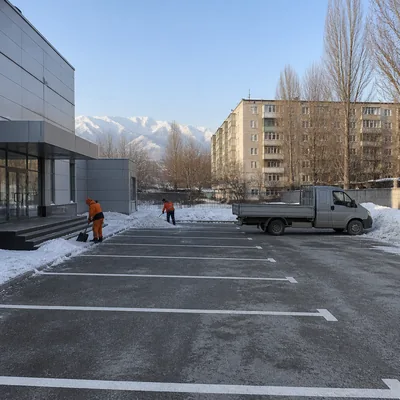
Give us the address and approximate volume — we'll name the price before the truck arrives.
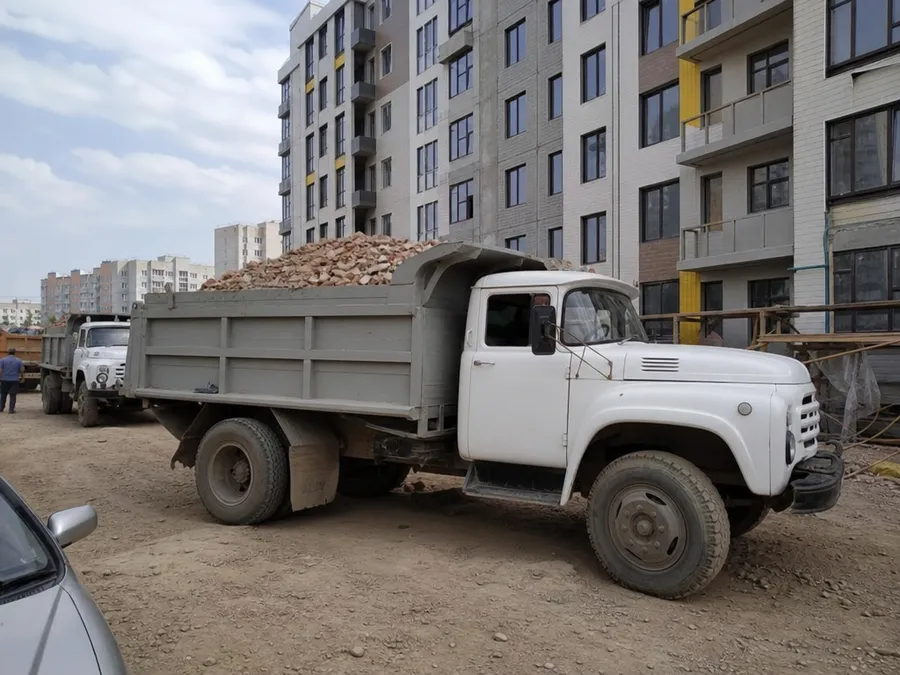
ZIL dump truck — from 40 000 ₸ per trip
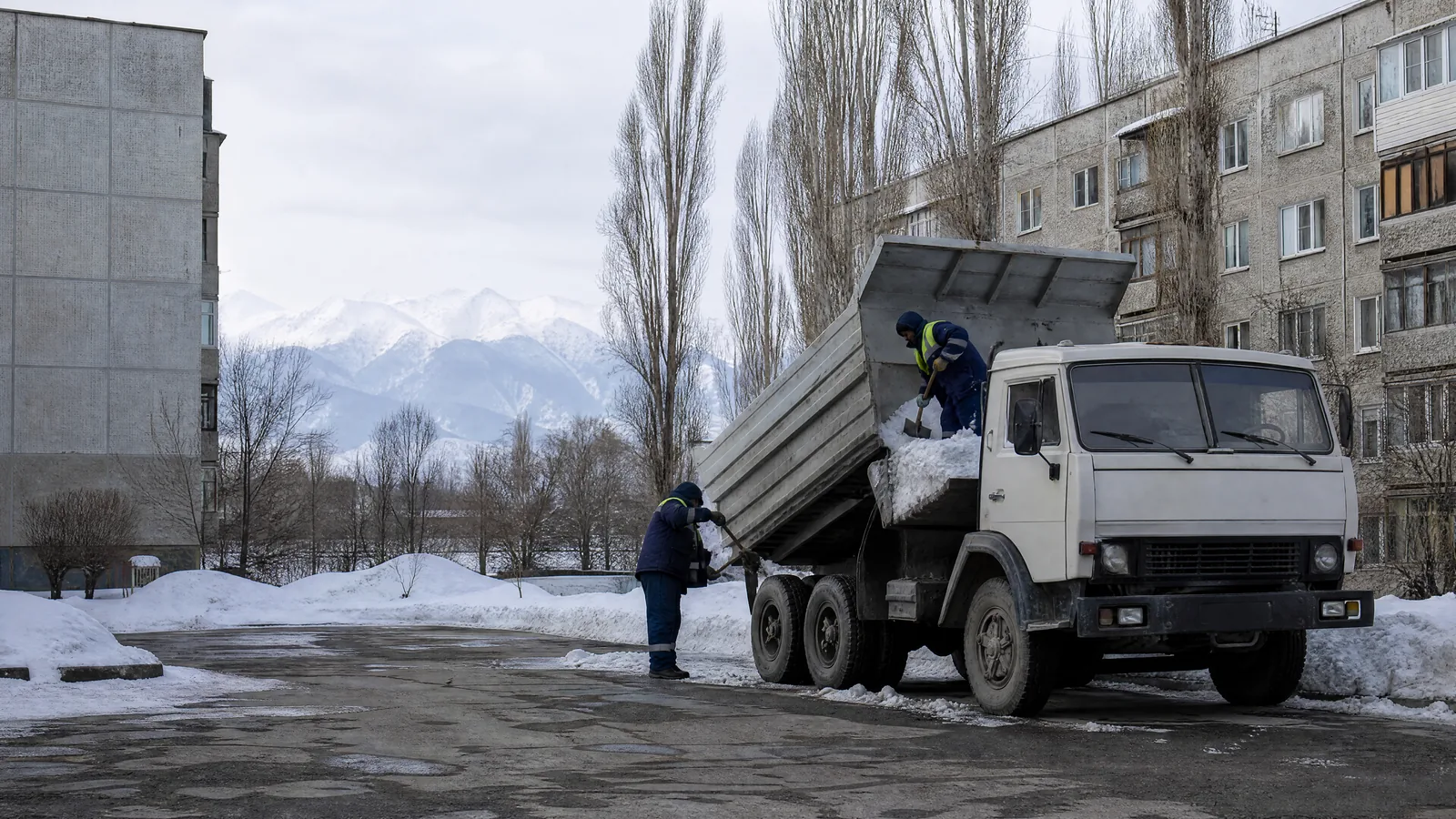
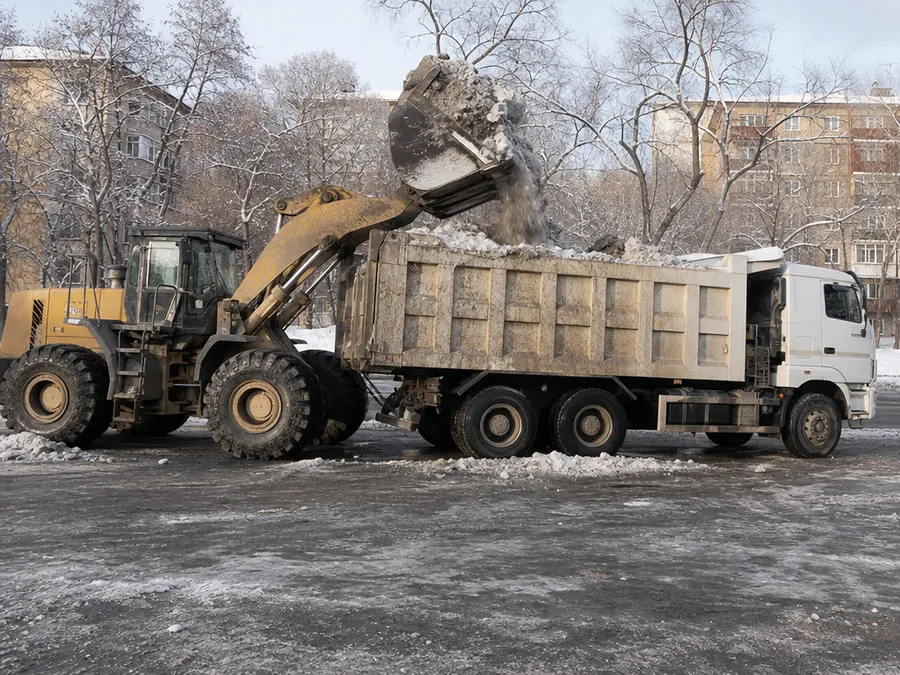
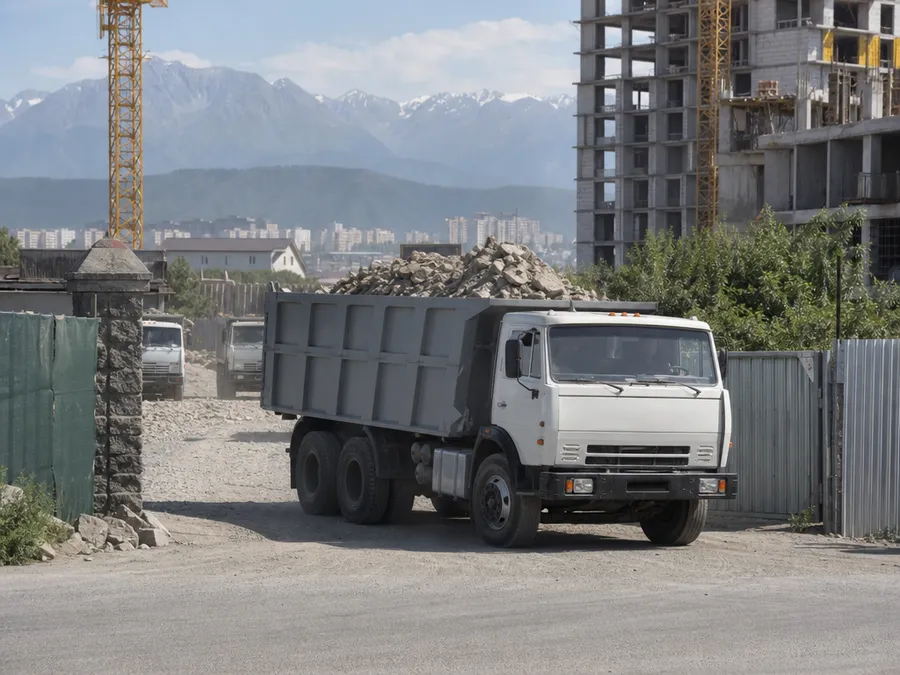
A KAMAZ dump truck holds 15 m³ of snow
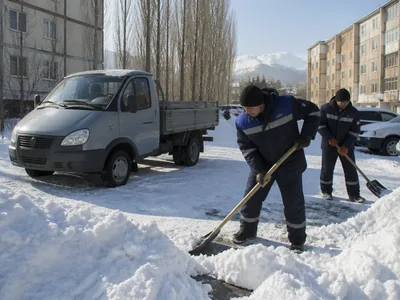
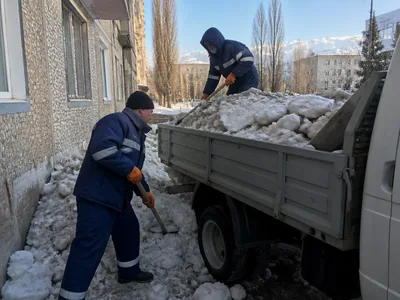
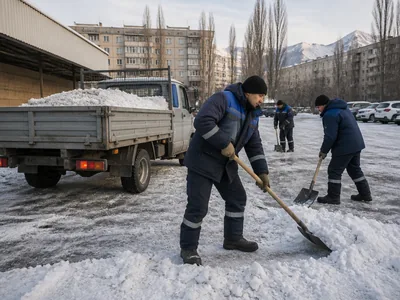
Loaders shovel and load by hand
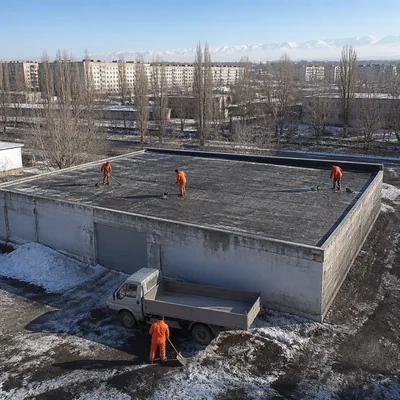
Yards, parking lots, roofs, grounds
We count cubic meters, not hours
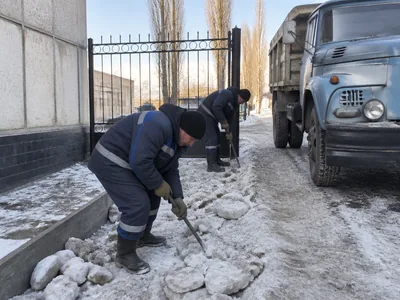
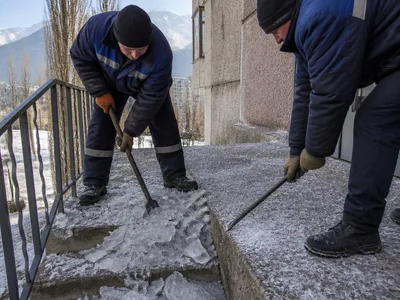
We chip ice and load it with the snow
🧮 Estimate
Snow removal calculator in Almaty — count cubic meters before dispatch
Choose when you need the truck and which one, add loaders — you'll see the ballpark. We'll count the cubes from a photo of the snowpile ourselves, on WhatsApp.
Estimated cost: 0 ₸
If the snowpile is uneven — send approximate dimensions on WhatsApp, we'll count together.
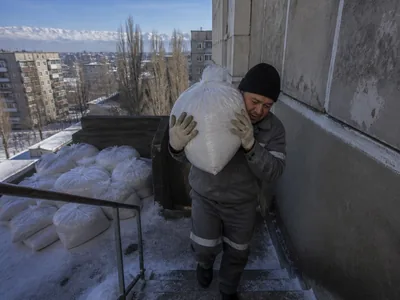
When machinery can't get in, we carry it out in bags by hand. That's how narrow walkways and underground ramps get cleared.
bagsby handwalkways
Snow after a tractor
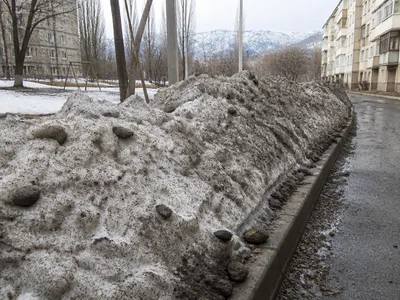
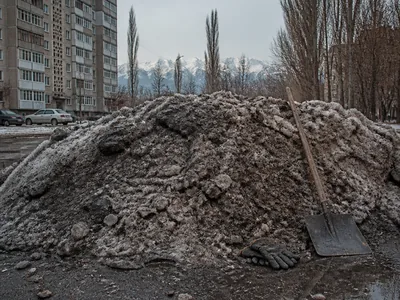
Banks pushed up by your tractor or janitor. We break them down and load them so they don't melt in the yard.
banksafter a tractorpushed up
Snow with de-icers
Slush with sand and salt — heavy and dirty. We haul it separately from clean snow and wash the bed afterward.
with sandwith saltheavy
💰 Services and prices
Snow removal services and prices in Almaty — with loading and from your site
Snow removal with loading
from 30 000 ₸ per trip, 12 m³
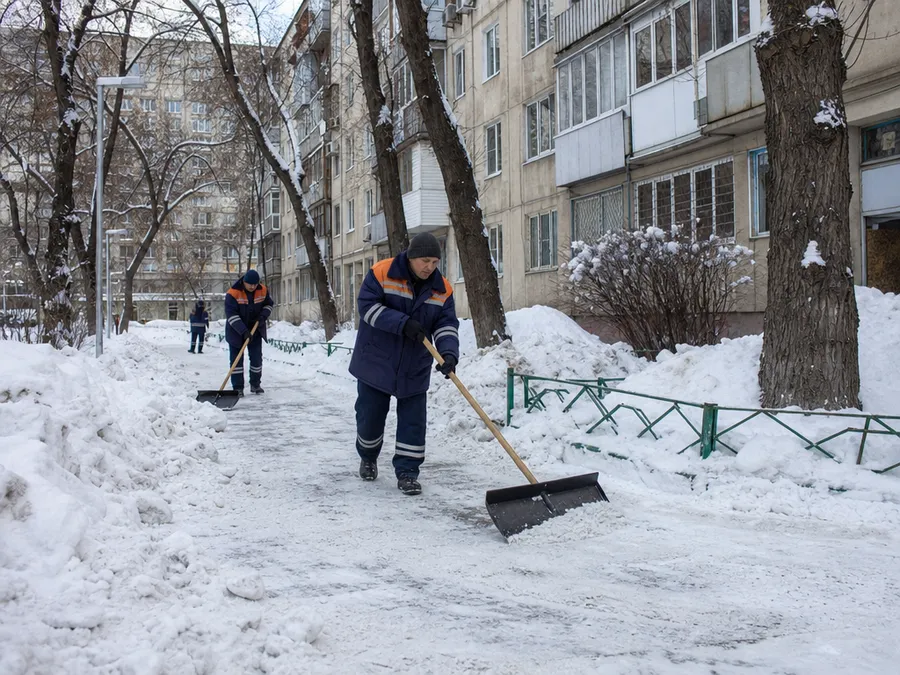
A crew arrives with shovels, loads the snow into the truck and hauls it away. This is the way to go when you can't even walk through the yard anymore. Snow removal in Almaty with loading is the most common winter order.
We clear the whole yard, parking lot or warehouse pad, not just individual piles. We price by area and layer depth. A ZIL gets in where a GAZelle gets stuck.
When machinery can't get into the yard, we carry the snow out in bags and with shovels. We price by crew hours. Mostly booked for narrow walkways and steps.
We set up regular visits: once a day, every other day or as the weather demands. For shops, auto services and residential complexes. You pay for actual runs, no prepayment for the season.
Price per project we calculate around your schedule
We place a dumpster in your yard, you throw the snow in yourself, we pick it up when it's full. The rental period and price are calculated individually for each site. Message us on WhatsApp — we'll work out a quote for your yard.
For snow we use dump trucks and dumpsters — from a ZIL to a Howo. Below you can see how many cubic meters each truck holds.
GAZelle 1.5 t
Bed volume
12 m³
Payload capacity
up to 1.5 t
ZIL dump truck
Bed volume
7–12 m³
Payload capacity
up to 7 t
KAMAZ dump truck
Bed volume
15 m³
Payload capacity
up to 20 t
Skip
Bed volume
27 m³
Payload capacity
up to 15 t
Price list for waste removal in Almaty
Valid from August 2026 · price per trip within the city
Price list for waste removal in Almaty, August 2026
Equipment
Volume
Payload capacity
Price per trip
Extra hour
GAZelle 1.5 t
12 m³
up to 1.5 t
30 000 ₸
6 000 ₸
GAZelle 2.5 t
16 m³
up to 2.5 t
35 000 ₸
9 000 ₸
Truck 5 t
25 m³
up to 5 t
40 000 ₸
12 500 ₸
ZIL dump truck
7–12 m³
up to 7 t
40 000 ₸
12 500 ₸
KAMAZ dump truck
15 m³
up to 20 t
55 000 ₸
15 000 ₸
Howo dump truck
25 m³
up to 40 t
60 000 ₸
15 000 ₸
PUHTO (skip)
8–10 m³
up to 7 t
45 000 ₸
—
Multilift
20 m³
up to 12 t
100 000 ₸
—
Skip
27 m³
up to 15 t
135 000 ₸
—
Max skip
32 m³
up to 20 t
160 000 ₸
—
Loaders:6 000 ₸/hour per person · 20 000 ₸ for a 2-person crew with a GAZelle · 48 000 ₸ for a 3–4 person crew with a ZIL · 80 000 ₸ for a crew with a KAMAZ
By volume:8 000 ₸ per m³, if it's easier to count in cubes rather than trips
Typical estimates:post-renovation 1-bedroom — 50 000 ₸ · facade work — from 60 000 ₸ with a skip · partition demolition — 88 000–135 000 ₸
Prices apply within Almaty city limits. Outside the city, mileage is added — we calculate it in chat before dispatch.
Not sure which truck you need? Send a photo — we'll pick one for you.
Describe the job: how much snow, from where, can a vehicle get into the yard. Better to attach a photo — we calculate more accurately from it. You can also just call.
2
Estimate and equipment selection
We look at the volume and decide what fits — a GAZelle, ZIL, or KAMAZ. We quote a price and lock it in. It won't change after that.
3
Truck dispatch
We arrive at the agreed time, from nine in the morning to nine in the evening. Around the city we get there fast if there's no traffic. Outside the city, mileage is added.
4
Loading and carrying out
The crew with shovels loads the snow into the truck bed. If equipment can't get in, we carry it out in bags by hand. We break up ice and take that too.
5
Removal and site cleanup
We take the snow away for disposal, and sweep the area after loading. If it's slippery, we'll sprinkle sand. The yard stays clean and passable.
⭐ Why us
Why people choose us for snow removal in Almaty — six reasons
We quote from a photo of the yard
Send a picture of the area — we'll estimate the volume and give you a price before we come out. If there's more snow than in the photo, we don't raise the price. We calculate volume (which is almost always underestimated) by layer, not by eye.
ZIL where a GAZelle gets stuck
We have our own dump trucks, from GAZelle to KAMAZ. If the yard entrance is narrow, we'll pick a vehicle that fits. You won't have to reload snow by hand on the street.
Night snowfall — morning departure
We work from nine in the morning to nine in the evening, no days off. After a snowfall, the morning queue is long, so it's better to call the night before. Around Almaty, the truck arrives quickly if you're not outside the city.
Loaders with their own shovels
The crew arrives with equipment, you don't have to search for anything around the house. They carry snow out of basements, off stairs, from around corners. We charge an hourly rate, not per truckload.
Price locked before dispatch
We agreed on a sum — it won't change after loading. No “the snow turned out heavier” or “we stood longer.” This applies to both snow removal from a property and one-time trips.
We haul it away, not just move it
The snow goes to disposal, not onto the neighboring lawn. We sweep the area after loading. If needed, we'll take before-and-after photos, no paperwork required.
📸 Portfolio
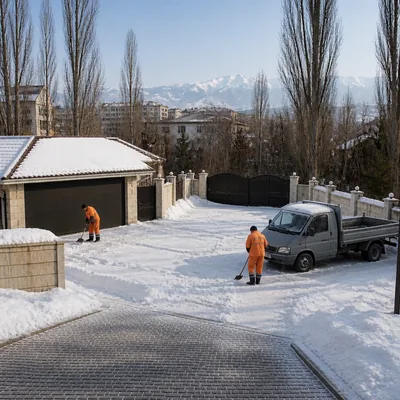
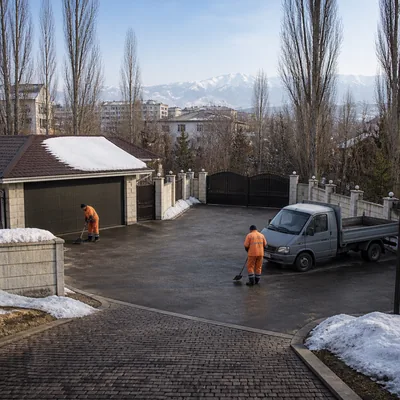
Snow removal work in Almaty — before and after
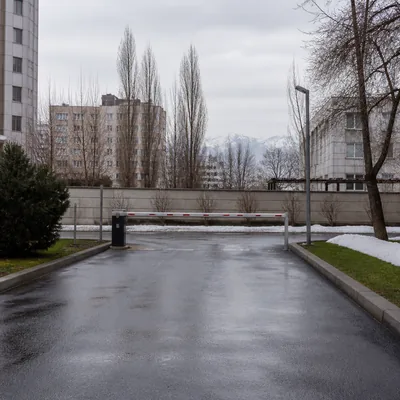
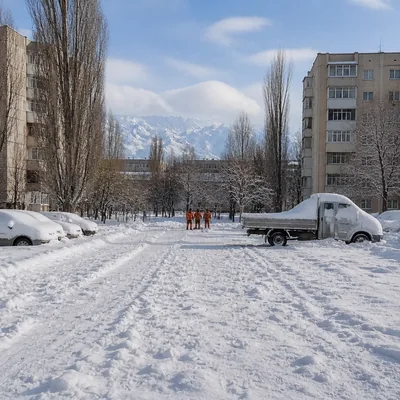
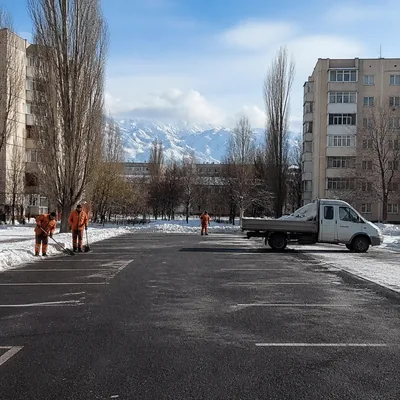
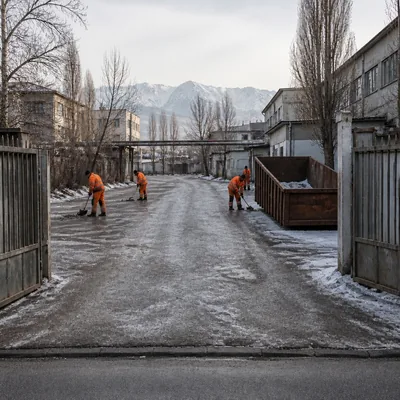
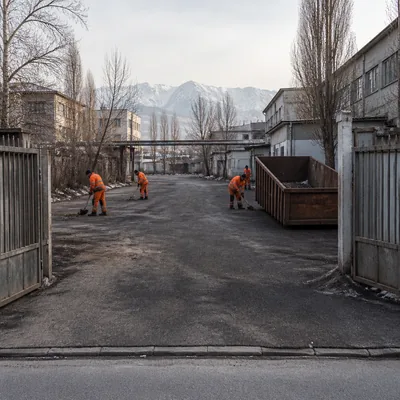
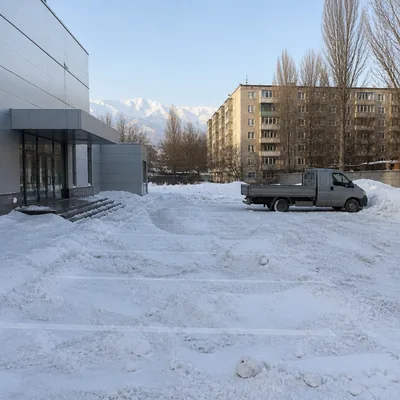
We look at the yard before and after. The difference is obvious — both in the snow and the asphalt.
Snow removal in Almaty a detailed breakdown: volume, equipment, price
Askhat Mukashev
KAMAZ driver
Published: Updated:
Snow in Almaty is a tricky business. Yesterday it was plus five and puddles, today overnight it dumped knee-deep, and by noon it all turned into slush that froze into ice by evening. A familiar picture: the car in the yard is spinning its wheels, water drips from the roof, the path to the entrance has turned into a skating rink. That's when people pick up their phone and search for someone to clear the snow — usually at six in the morning, when it's already clear you can't dig yourself out.
Snow removal only looks simple. A shovel, a truck, haul it away. In reality, volume is everything. Snow isn't a bag of trash — you can't weigh it on the spot or estimate it by eye. It lies in a layer, packed, thawed in places, crusted over in others. The same yard after a night snowfall and after three days of thaw are two completely different volumes, and they need different equipment.
From experience, the most common mistake goes one way: people think a GAZelle will be enough. We show up, take a look, and it needs a bunker. So in this article I break down what people ask about every day: how to estimate the cubic volume correctly, how snow removal with loading differs from removal without it, where the snow goes after it's hauled off the property, and why two trips are never twice as cheap as one.
How to calculate the volume of snow on a site
Snow isn't measured in bags. No one says 'I've got twenty bags here' — because snow lies in a layer, and its volume depends on area and thickness. A shovel won't help. What helps is a tape measure and basic math.
Roughly speaking, multiply the yard area by the average layer thickness. A yard ten by twenty meters, layer twenty centimeters. That's forty cubic meters. A GAZelle holds far less — so that's five or six trips, not one. And that's where 'I thought you'd do it in one go' starts.
Multiply the layer by the area: measure with a tape, not by eye
The layer across a site is almost never even. By the wall it's waist-high, at the gate it's ankle-deep. Don't measure one spot. Walk the site and check thickness in four or five places — by the wall, in the center, at the gate, in the corner. Add them up and divide by the number of measurements — that's your average. Sticking a stick in the snow and measuring it with a tape is the fastest way. Five minutes, but you know what you're dealing with.
Next, the area. A yard, a lot, a parking area — usually a rectangle, just multiply two sides. It's trickier with sites where some snow has already been pushed into piles. Then measure the area of the snow patch, not the whole yard. And add the piles separately — more on that below.
Why you can't just eyeball it: eyeballing snow is off in both directions. Someone who's been shoveling for three hours looks at what's left and thinks — half. But there's still two-thirds. And the opposite happens when thawed slush settles and the layer seems smaller than it is in cubic volume.
Packed snow vs. loose: the volume difference is almost double
Fresh snow that has just fallen is light and airy. A cube of it weighs about a hundred kilos. The same cube after two days of settling is already over two hundred. Same yard, same area, but you need a different truck for loading. This isn't nitpicking — it's the reason half of all rework happens.
Freshly fallen snow takes up many times more space than its weight suggests — it's almost air.
After two or three days of thaw, snow settles and compacts on its own, no equipment needed.
Melted snow is heavier, but its volume in cubes is smaller — the truck loads faster.
Snow that's been shoveled twice is already denser than snow left untouched.
Snow slush by the curbs is the heaviest option: it's almost as much water as ice.
Snow blown against the fence gets packed by the wind, and the layer there holds firmer than in the middle of the yard.
In practice, we estimate density by season and weather. In December after a night snowfall, the coefficient is one thing; in late February after a week of above-zero temperatures, it's another. A mistake here leads to 'we ordered a GAZelle but need a bunker.'
Ice crust and packed snow by walls — why they're counted separately
Snow by walls and under balconies is a different story. It lies denser because it falls from the roof already compressed, then freezes further. You can't shovel it as easily as the middle of the yard. Sometimes it's not snow at all but ice. It's counted not by layer but by pile volume — 'that mountain by the wall.'
Ice on the porch, steps, ramps — that's not about volume, it's about safety. But the ice has to go somewhere too, and it goes into the same snow pile removal from the property. Chipping it out separately is a different kind of job, and the volume is counted after chipping, because you can't predict the thickness of the crust in advance.
If you don't account for ice and ice crust, the picture will be incomplete. The yard seems cleared, but there are mounds left along the edges that no one hauled away. The client is surprised, and we explain: what you see now is a different cubic volume, counted separately from the layer.
What to send in chat so we don't send a truck for nothing
We don't do free site visits — that's an extra trip for you and for us. So photos decide almost everything. Take a shot of the area from one point, then another, add a frame with something for scale — a shovel, a bucket, a car in the yard. Photos show the layer, the density, and the access.
If you want to order snow removal without rework, write the main things in chat: area size, average layer thickness, whether there are piles and ice, and whether the truck can pull right up to the loading spot. That's enough to figure out GAZelle or bunker. We do the exact calculation in cubes on site, when we see the snow with our own eyes.
What equipment handles snow and why it matters what you haul it with
Snow is a deceptive cargo. It looks like air but weighs like concrete. A cubic meter of fresh snow is about two hundred kilograms, a cubic meter of packed, old snow is close to eight hundred. That's a fourfold difference, and it's exactly what determines how many trips a truck makes and whether it can even get into the yard. That's why snow removal prices in Almaty fluctuate so much: not because someone's being greedy, but because the volume in the truck bed and the volume on the ground are two different things.
Before we talk equipment, let's sort out the approach. There are two ways to remove snow from a property. First — snow removal with loading: a crew arrives, shovels it into the truck bed, tamps it down. Second — dump-truck loading, when the snow is already gathered in one place and just needs to be picked up. In practice, the first is more common, because snow doesn't lie in a neat pile — it's spread in a layer across the whole yard.
GAZelle and its limit: when trip after trip turns into a whole day
GAZelle — a good machine. It gets into any yard, under an arch, right up to the entrance. Its bed is small, about a ton and a half, and in snow terms that means: five or six cubes of fresh snow or two or three of packed. If you have five hundred square meters in front of the house and ankle-deep snow, a GAZelle is enough. If it's knee-deep, it's not.
Here's the mistake. People count trips by area, but they should count by volume. A yard ten by ten meters, twenty centimeters of snow — that's twenty cubic meters. A GAZelle carries five. Four trips. Each one takes an hour with loading. Half a day, maybe a whole day. That's when the client starts to realize that snow pile removal is priced by cubic meters, not by the truck, and GAZelle math ends up costing more than a bunker.
ZIL bed: the golden middle for a yard and a small parking lot
The next size up is a ZIL or similar dump truck. The bed is twice as big as a GAZelle's, it fits through standard gates, and it can turn around in a small space. This is the workhorse for parking lots, residential complex entrances, and store territories. In terms of volume — ten to twelve cubes of fresh snow per trip.
But there's a catch. The ZIL is heavier, and it might not even get into a slushy yard — it'll bottom out. So if the snow is melting and mushy, first they send a GAZelle to scout, then they bring in the ZIL. From experience, during a thaw it's better to make two GAZelle trips than one ZIL trip that gets stuck and delays the whole crew for half a day.
About the price. Snow removal prices in Almaty depend not only on the truck but on how long it sits there. A ZIL with manual loading means four to six people with shovels. Their work is included in the price, but if the snow has packed into ice, the time goes up, and any decent contractor will tell you that upfront, not afterward.
32-cube bunker: for areas where snow lies in a layer, not in a pile
A bunker is serious business. Thirty-two cubes, dump unloading, a tractor unit. It gets into large sites, warehouses, construction sites, parking garages. Where snow isn't gathered in a corner but spread across the whole area and needs to be scraped and loaded.
One bunker replaces five or six ZIL trips. But there's a condition: access. A bunker won't get into a residential yard with an arch. It works where there's direct entry and space to turn around. If the area is large but the entrance is narrow, there's only one way out — an intermediate dump: we scrape the snow into one place with GAZelles or a tractor, then load it with the bunker.
This is where the main point comes in. Snow removal from a site isn't just "we came and took it away." It's logistics: which truck can get in, how many trips, where to put the snow if the yard is blocked. And the price of snow removal ultimately comes from that logistics, not from an hourly rate.
What a machine can actually haul per trip
Truck
Fresh snow, cubes
Packed snow, cubes
Where it can get in
GAZelle
5–6
2–3
yard, arch, entrance
ZIL dump truck
10–12
5–6
parking lot, residential complex entry
Dumpster 32 m³
28–30
15–18
warehouse, construction site
Tractor-loader
—
—
scrapes, doesn't haul
How to choose in practice. We look at three things: snow volume, entrance width, and whether there's space to turn around. Then the order is like this.
We estimate the area and layer thickness — multiply, get cubic meters. Without that, any talk about equipment is pointless.
We check the entrance: arch, barrier, narrow passage between buildings — GAZelle. Wide gates — ZIL.
We check if there's space to turn around and back up. A bunker needs at least twenty meters of straight line.
We decide how to load: manually with shovels or with a tractor. That determines time and number of people.
We count trips: divide the volume by the machine's capacity. If the remainder is less than half a bed, better to add it to the neighboring area.
We check the forecast. If it's below freezing at night, the snow will set, and in the morning it'll be harder to load — count on more time for that.
Only after that do we talk about price. Not the other way around.
Narrow driveway, archway, barrier — where equipment can park and where it can't get through
Almaty courtyards are a whole different story. Many were built without trucks in mind: a three-meter archway, a ninety-degree turn, cars parked on both sides. A GAZelle will make it, a ZIL is questionable, a dumpster — never.
What we do. If the courtyard is a dead end, we carry the snow out to the entrance — by hand or with a tractor. It takes longer, sometimes twice as long. And we tell you upfront, not halfway through. Because ordering snow removal isn't pressing a button — it's figuring out which vehicle goes where.
And one more thing. If there's a barrier in the yard, someone needs to open it. A small thing, but it can leave the crew waiting for half an hour. Better to warn us in advance — and then snow removal will go without delays. From experience, half the hiccups on site aren't about equipment, but about access.
A final note on the ad. Sometimes people search for a snow removal ad hoping to find a guy with a shovel who's cheaper. Sometimes he is cheaper, but he won't haul the snow away — he'll just push it into a corner. A week later you'll have to remove that same snow again, now with ice. Count twice.
Snow removal with and without loading: what's the difference in practice
When the dispatcher asks "with loading or without?", it's about who's going to throw the snow into the truck. Without loading — you provide the equipment that scoops and hauls it away itself: a dump truck with a blade, a front loader, a claw snow loader. With loading — a crew with shovels comes to the truck, because equipment can't get in there or the snow is lying in a way a bucket can't pick it up.
The difference isn't in the hourly rate — it's in how many people and machines show up on site. A dump truck with a blade handles an open area where snow lies in a layer and isn't mixed with trash. If the courtyard has parking three rows deep, a playground with curbs, and a barrier between buildings — the blade is useless. You need hands.
In Almaty in winter, yards are often cleared like this: a tractor pushes snow into piles in the corners, and there's no one to haul those piles away. That's when people call — they need snow removal from the site, and specifically with loading.
Yesterday on Saina: the yard was tiny, the truck got in, but the snow between the parked cars — no bucket or blade could reach it. Five guys with shovels, two hours, and the GAZelle was gone. Without loaders we'd have been there till night.
When snow can be removed by dump truck without hands, and when it can't
A dump truck with a blade works if the area is open, the driveway is clear, and the snow isn't packed into ice. For example, a shopping center parking lot where there were no cars at night, or an inner courtyard of a new residential complex with a wide driveway. The blade scrapes the snow into a windrow, the loader lifts it into the truck, and off it goes. No people needed.
Hands are needed where equipment can't turn around or snow lies where a bucket can't reach. Between cars, along curbs, on steps, by entrances, on sidewalks with railings. Another case — snow on the roof: it's thrown down, and it doesn't fall in one spot but all around the perimeter. The only way to collect it is with shovels.
Sometimes the snow has already packed into bricks. Then even on an open area the blade slides over the top and won't bite. You have to break it up and throw it.
What loaders do on site and how many you need
Loaders don't just wave shovels. They break the crust, scrape snow into piles, carry it to the truck, and throw it into the bed. If the bed is high, one stands on top and tamps it down so more fits. Otherwise the snow sits loose and the trip goes half-empty.
How many people depends on the volume and the driveway. For a GAZelle it's usually two or three, for a ZIL — four, for a 32 m³ dumpster — five or six. If the carry is long, thirty meters from pile to truck, we add a person. Loading time for a GAZelle is about an hour if the snow is loose. If it's ice, longer.
We have our own loaders, not contractors. So you'll never get a truck with no crew.
Hand-loading into bags: which yards have no other way
Bags aren't a whim. They're for when snow has to be carried out through the entrance hall, down the stairs, through a narrow gate. Or when there's a lawn in the yard that machinery can't trample. Or when snow was thrown off the roof onto a first-floor balcony and the only way out is buckets.
In bags, snow is carried out of basements, off terraces, off roofs where a truck can't pull up. Sometimes out of parking garages: low ceiling, a dump truck won't fit, and the snow is knee-deep.
A bag of snow doesn't weigh much, but if you're carrying it forty meters from the yard to the truck, you won't make many trips in an hour. So we put more people on bag duty.
Why "just haul it away" and "haul it away with loading" take different amounts of time
Without loading, the truck spends time only on the road and unloading. With loading, you add time on site: gather it, carry it, toss it in. The difference is two to three times. If someone quotes you "two hours," ask whether loading is included. Often it isn't.
Another nuance: if the snow in the yard is already piled up, loading goes faster. If it's lying in an even layer, you first have to gather it. That's time too.
Ordering snow removal with loading makes sense when you can't handle it yourself or machinery can't get in. If there's an open area and the snow hasn't packed down, a dump truck with a blade is enough. But there aren't many spots like that in Almaty in winter.
Snow between parked cars: shovels only, a blade won't get through.
Piles left by the tractor in the yard: they have to be loaded, or they'll just stay there.
Snow falls off the roof around the perimeter: it has to be gathered by hand.
Low-ceiling parking garage: a dump truck won't fit, so we carry it out in bags.
If snow is packed into ice, we break it up first, then load it.
Loose snow settles in the bed: you need a man on top to tamp it down.
A long carry from the pile to the truck adds a man and an hour of work.
From experience, most orders for snow removal in Almaty still come with loading. The city is dense, yards are tight. Without loaders, equipment sits idle and the snow stays. So in the request we immediately ask: where to enter, what's in the yard, is there room to maneuver. That determines both the crew and the time.
Where the snow goes after it's removed from the property
The first question we hear almost every time: where are you going to put it? People are afraid their yard's snow will just move around the corner — to a neighboring parking lot or under someone else's entrance. I get it. I'd be worried too. So let me explain plainly what happens to the truck after it leaves your property.
Snow removal from a site is always a route. The truck doesn't circle the block looking for a free spot. It goes to a site where snow is accepted. Not into a yard, not into a ditch, not behind garages. There are designated snow dump points, and there's a procedure for how they operate in winter.
Snow dumps and holding sites: where snow sits until it melts
A snow dump isn't a dump in the everyday sense. It's a plot outside the city or on the outskirts set aside for receiving snow. Trucks go there one after another, dump it, and leave. No sorting, no compactor. Just a pile that will turn into water in spring and soak into the ground or the storm drain.
A holding site is the middle option. When the snow dump is overloaded or too far, snow can be left at a holding site: a large open plot where it sits and gradually melts. A holding site isn't "dump it and forget it." The site has an owner, has boundaries, and you can't dump just anything there along with the snow.
Honestly, the difference between a snow dump and a holding site is almost invisible to you. One thing matters: the snow doesn't come back into your yard. And it won't. The truck's route ends where snow is accepted by the rules, not where it's easier for the driver.
Why you can't just dump snow into a ditch or the neighbor's parking lot
Dumping into a ditch is the most common "why not." It seems like: what's the big deal, it's just water. But here's the reality. In winter, a ditch isn't an empty channel — it's often a trench clogged with ice and trash. Snow mixed with sand, de-icing chemicals, and all sorts of junk from under the wheels gets stuck there and turns into a blockage in spring. The water doesn't drain — it stands and floods whatever's nearby.
The neighbor's parking lot — same thing, only worse in human terms. You hauled it away, the neighbor came and cleared it. Or didn't, and in a week it's his problem, and in two — everyone's. Only those who work without a site and without responsibility do this. We don't.
Another option sometimes suggested: dump the snow into the ravine behind the building. Looks harmless until you remember the ravine is someone's plot or a water protection zone. The fine for that lands not on us, but on you as the client. So no.
What happens to the site after the truck leaves
After loading, the spot where the snow was doesn't stay a slushy mess. It gets swept. This isn't a courtesy, it's part of the job: if you leave scattered chunks, they'll freeze solid by evening, and in the morning you'll have the same bumps, only dirtier. Sweeping takes ten to fifteen minutes, but without it snow removal makes no sense.
Separately — about ice. If the snow sat for a long time and crusted over, after loading there's ice left on the asphalt. It gets chipped or sprinkled so you can drive out of the yard without spinning your wheels. This isn't about snow anymore — it's about why we bothered in the first place.
Where the meltwater goes in spring and what storm drains have to do with it
In spring, the snow at the site melts, and all that mass goes into the ground or the storm drain. Storm sewers are a separate story: if they're cleaned, the water drains; if not, it stands and floods the low spots. That's exactly why snow with impurities isn't dumped just anywhere: meltwater later flows into those same storm drains, and from there into rivers and canals.
What this means for you in practice. If the snow in your yard is mixed with sand, salt, and de-icing chemicals, in spring it all ends up in the water. That's why large volumes are taken to sites where runoff is at least somewhat managed, not to the nearest ditch. This isn't charity — it's the difference between "cleared" and "kicked the problem down to spring."
What happens to the snow after removal
Where it goes
What happens to it there
When it shows
The risk if you do otherwise
Snow dump
Sits in a pile, melts as it warms
Right after the trip
No site — no acceptance
Holding site
Snow sits longer, melts slower
A few days later
Snow returns to your yard
Ditch or trench
Gets stuck, clogs the drain
In spring when it melts
Flooding and blockage
Neighbor's parking lot
Stays as someone else's problem
The same day
Conflict with neighbors
Ravine behind the building
Illegal dumping, melts in place
During an inspection
Claims against the client
Here's what to look at when choosing who to hire for snow removal:
Where exactly they'll take it — ask straight out, before the request, not after.
Does the truck have a route to a site, not "somewhere around the corner."
Who pays for acceptance at the snow dump — that's a separate line, not "included."
Will they sweep up after loading, or will you be left with a mess in the morning?
What do they do about ice if the snow has been sitting there for a week and hardened?
Are they ready to name the site in advance, instead of being evasive?
Snow removal with loading isn't just a truck and shovels. It's also logistics: where, for how much, and what will be left on the asphalt afterwards. If they only ask about the volume and stay silent about the site, ask the question yourself.
And one last thing. If the snow in the yard is mixed with household trash — bottles, bags, cigarette butts — it's no longer clean snow, and the site may refuse to accept it. It's better to mention this in advance when you order snow removal, so the truck doesn't have to turn around halfway.
Read this far and still not sure about the volume? Send us a photo — we'll calculate and give you a price.
Snow in the yard and on the roof: what it means for the building
Ice on the paths isn't just inconvenient. It's the most common place where people fall. And not on asphalt, but on the tiles by the entrance and at the driveway, where car wheels pack the snow into a dense layer. In the morning this layer sets, and by evening you can't walk on it without holding on. If you don't order snow removal in time, the ice grows several centimeters thick, and then you'll have to chip it away by hand. And that's a whole different price.
Ice on paths and driveways: where people fall most often
The most dangerous spots are the ramps down to underground parking, the steps at the entrance, and the sidewalk along the building. Where people walk, snow gets packed down to a glass-like state. If it's not removed and sanded, ice stays for weeks. Snow removal with loading solves the problem right away: the truck takes not only fresh snow but also chipped ice. Without loading, janitors just push it against the wall, and a day later it's all back.
Management companies often cut costs on removal, hoping for a thaw. But a thaw in Almaty is deceptive: it melts during the day, freezes at night, and an icy crust forms on the paths. Ordering snow removal after such a cycle is harder — you need more powerful equipment.
Snow on roofs and canopies: why it's a separate story
The roof and the canopies over entrances are areas where snow is dangerous not only by weight but by surprise. A layer of 20–30 cm can sit quietly, then a slight warm-up sends it sliding down in a sheet. If people walk under the canopy, it's a direct threat. Especially on flat roofs with no natural slope.
Removing snow from a roof by hand is a job for climbers, but often it's enough to throw it down and haul it away. Here it's important not to get the equipment wrong: if the snow is wet, it's heavy, and a GAZelle may not take the whole volume. You need a dump truck or a bunker. And definitely with loading — you can't lift that volume by hand.
Another point: snow from the roof can't just be dumped on the lawn or playground. It needs to be hauled away, otherwise in spring it'll turn into a puddle that erodes the foundation. Snow removal from a site isn't just about cleanliness — it's about preserving the surface.
Clogged drains and spring flooding of the basement
Snow that sits on the roof and isn't removed melts in spring and goes into the drain. If the drain is clogged with snow or ice, water goes into the basement. The consequences are dampness, mold, ruined belongings. And if the basement is technical, equipment can be damaged.
To avoid this, drains are cleaned in winter, before the thaw. But if there's a lot of snow on the roof, it's removed first, and then the drains are checked. The price of snow removal here depends on the roof area and the thickness of the layer. Sometimes it's cheaper to haul it away right away than to repair the basement later.
Spring flooding is a typical problem in Almaty yards where snow is piled up against the walls. These piles melt slowly and release water right under the foundation. It's better to remove snow with loading so no piles are left.
When snow gets in the way of regular trash removal
Snow in the yard blocks access to the container sites. The garbage truck can't get through, and trash piles up. If this happens regularly, problems with the sanitary-epidemiological station begin. And snow also buries the containers themselves, and they have to be dug out.
What usually gets in the way and what to look at first:
Snow banks along the road left after mechanized clearing.
Ice on ramps and entrances that makes the vehicle slip.
Piles of snow pushed up against the building walls and blocking access to the containers.
Ice on manhole covers and fire hydrants.
Snow on entrance canopies that can collapse on the path where trash is carried out.
Icy steps by the garbage chute.
If you don't order snow clearing on time, these problems pile up. In that case, snow removal requires not one truck but several trips. And it's better not to let it get to that — it's cheaper to clear it right away.
In Almaty there are districts where snow lingers longer because of the mountain shadow. That's where snow clearing in Almaty matters most. And if you're looking for where to order snow clearing, don't just look at the price — what matters is that the equipment can actually reach the spot.
When to order snow removal and what the timeline depends on
The hottest call is at six in the morning after a snowfall. The person hasn't even had tea yet, and already asks when the vehicle will arrive. On days like that we have a queue: first the bookings left the night before, then everything else. If you're in Almaly or Bostandyk, we can realistically send a GAZelle in forty minutes. But only if equipment is available. After a heavy snowfall, none is available until noon.
So I always say: if you see the snow coming down all evening, don't wait for morning. Place your request in the evening, even if you haven't decided yet whether you need removal. In the morning, just confirm. It's not a trick, it's a way to avoid standing in line. Snow clearing in Almaty is a seasonal thing, and at peak times everyone calls at once.
The morning after a snowfall: why it's better to book a vehicle the night before
At night snow falls on cold ground and doesn't melt. By seven in the morning it lies in an even layer, but already with a crust. Janitors at residential complexes come out at six, but often there aren't enough of them. And then the calls start one after another. We answer first those who left a request the day before. If you call at eight and there were ten others like you before, expect to wait until two or three. Not because we're mean, but because equipment physically can't be in ten yards at once.
Evening booking saves your nerves. You give an approximate volume, we put you on the morning schedule. If no snow fell overnight, you just cancel with no penalty. This happens often: yesterday it piled up, today it's sunny. We take it calmly.
Thaw and ice: when snow gets heavier and volume grows
After a thaw, snow becomes different. It settles, soaks up water, gets heavier. What was light fluff in the morning turns into wet mush by evening. The volume in cubic meters can grow by a third. The GAZelle that handled the yard yesterday won't handle it today. You need a ZIL or a dumpster.
Ice is even worse. Snow sets into a crust, and a shovel won't touch it. You have to chip it. That takes longer and costs more. Snow removal with loading in that situation is the only option. You can't just haul it away — you have to break it up first.
A second trip the same day: why it's not 'the same again'
People often ask: 'If one trip isn't enough, will the second cost the same?' No. The second trip is cheaper than the first, but not half. Why? Because the vehicle is already on site, and so are the loaders. No time wasted on dispatch and return. But the removal and disposal themselves don't go away. Plus, if the snow is wet, the second trip can take longer to load.
From experience, the second trip costs about a third less than the first. But we give the exact price after an inspection. The price of snow removal depends on volume, not on the number of trips. Sometimes it's easier to order a dumpster right away than to run a GAZelle back and forth.
Agreement before dispatch: what gets locked in upfront
We lock in the price before the truck is dispatched. After loading, it doesn't change. That's the principle. If we show up and see the volume is bigger, we don't jack up the price on the spot. We just say: you need a second trip or different equipment. You decide. Sometimes the client says themselves: "Let's go with a dumpster, I can see the GAZelle won't be enough."
What else we lock in: dispatch time (give or take an hour), number of loaders, where we haul it. If the snow is in a courtyard, we check whether there's room to maneuver. Sometimes a GAZelle can get in but a dumpster can't. Then we either carry the snow out by hand or order a smaller truck.
Below is a table to help you figure out timing and equipment depending on the situation.
When to order and what affects the delivery time
Situation
When to book
Approximate dispatch time
What equipment is usually needed
Snowfall at night, 200 m² courtyard
In the evening or at 6–7 a.m.
From 30 minutes
GAZelle
Thaw, wet snow
Same day, preferably before noon
From 30 minutes if a truck is available
ZIL or 8 m³ dumpster
Ice, crust
A day ahead if you know the forecast
From 30 minutes, loading takes longer
Dumpster with manual loading
Second trip same day
Right after the first
After unloading the first trip
Same truck
Scheduled removal from the site
1–2 days ahead
On schedule
Any, depending on volume
Now let's go step by step through what to do so you don't lose time and money.
Check the forecast in the evening. If snow is expected, put in your request right away, even if you're not sure.
In the morning, assess the volume: depth of the layer and area. If it's above knee height, a GAZelle won't handle it.
Call or message on WhatsApp before eight in the morning. The earlier, the better your chance of getting on the morning schedule.
Say whether there's room to maneuver and where to haul it. If you don't know, we'll help you figure it out.
Lock in the price and dispatch time. After loading, the price doesn't change.
If the snow is wet or crusty, let us know. That's different technology and a different rate.
After removal, check whether the area was swept. We do sweep, but it's better to make sure.
In short: snow removal in Almaty isn't a "call and we're there" kind of thing. It's seasonal logistics where everything depends on when you book and what kind of snow it is. The earlier you book, the cheaper and faster it gets. And don't hesitate to ask about the price before dispatch — that's totally normal.
The bottom line: snow removal in Almaty
Snow in Almaty isn't just about looks — it's a real problem for your yard, parking lot, and roof. Snow clearing in Almaty often starts with a call at six in the morning, when you realize you can't handle it yourself. The key is to size up the volume correctly, pick the right equipment, and organize the loading. After snow removal, the area is swept, and the snow itself goes off for disposal. Timelines depend on workload and weather. This article gives you the short version: how to estimate the volume, what to ask about loading, what happens to the site, and which timelines are realistic.
How to estimate volume so you get the right truck
You can't weigh snow, but you can measure it. Use a tape measure to check the area and the depth of the layer in a few spots — by the fence, in the open, under a canopy. Multiply one by the other — that gives you cubic meters. But keep in mind: fresh snow is lighter, while packed, settled snow is heavier and takes up less space. If the layer is loose, the volume will be bigger. For reference: a 10 by 10 meter yard with a 30-centimeter layer is about 30 cubes. A GAZelle won't take much, but a 32 m³ dumpster is just the right size. So it's better to give rough numbers over the phone right away, so we don't have to send the truck twice.
What to clarify about loading before equipment arrives
Loading is a whole separate story. Snow can be removed with or without loading. If your snow is in a pile and you have equipment to lift it, you can order a dump truck without laborers. But most often you need manual loading or a mini-loader. Be sure to say where the snow is: in the yard, in the parking lot, behind the fence. Is there access for the truck, is the exit blocked. If the snow is on the roof, it's first thrown down, then loaded. Check if there's electricity for tools, if needed. These details affect time and cost.
What happens to the site after removal
After the snow is taken away, the site is swept. This matters because the remaining thin layer of snow can freeze and turn to ice. We always sweep after loading so we don't leave slippery patches. If needed, we can spread sand or salt, but that's an extra service. Either way, you get a clean area ready to use. Don't forget to check if any snow is left in corners or behind obstacles — sometimes equipment can't reach there, and you'll have to clean it up by hand.
What to ask about timing and a second trip
Snow removal timing depends on the weather and how busy we are. During a snowfall, trucks can be in short supply, so it's better to book in advance. If the volume is large, a second trip might be needed. Ask the operator how long loading and removal will take, and when the truck can come again. Sometimes it's cheaper to order a bigger dumpster than to send a GAZelle twice. During peak snowfalls we work from morning to night, but there can still be a queue. We'll honestly warn you if we can't come right away.
Here are the main things to keep in mind when you order snow removal:
Measure the area and layer depth to figure out the volume.
Clarify whether loading is needed or the snow can just be taken away.
Say exactly where the snow is and whether there's access for the truck.
After removal the site will be swept, but check the corners.
During a snowfall, timelines can stretch, so it's better to book ahead.
If the volume is large, you might need a second trip or a dumpster.
In short: snow clearing in Almaty isn't just about hauling snow away — it's about doing it on time and without consequences. The price of snow removal depends on the volume, how hard the loading is, and the distance. To avoid overpaying, give all the details upfront. And remember: removing snowdrifts with loading always costs more, but sometimes you can't do without it. In the next sections, we'll break down each point in more detail.
❓ Questions
Frequently asked questions about snow removal in Almaty — price, timing, loading
We calculate by volume and by how many trips it takes. A 1.5 t GAZelle — from 30 000 ₸ per trip, a ZIL — from 40 000 ₸ if the snowdrift is really big. We'll give you the exact price before the truck arrives, and it won't change after — that's a principle, not a sales pitch.
Send a photo of the yard to WhatsApp, and we'll estimate the volume from the picture — no site visit needed. A simple rule of thumb: a snow pile the size of a GAZelle bed is up to 12 m³, while a 20-meter bank along a fence can take two trips. Snow in a pile is always denser than it looks, so underestimating the volume costs you more.
Yes, shovels and manual labor, if machinery can't get into the yard. Our loaders bring their own shovels, break up the crust, throw the snow into the truck bed or dumpster, and we sweep the area after loading. If the snow has packed into ice, we bring pickaxes — a shovel alone won't cut it.
It depends on the width of the driveway and what's parked there. A GAZelle squeezes in almost anywhere; a ZIL dump truck — if there's about five meters between cars and no low archway. A photo of the yard usually makes it obvious what will work, and we won't send a ZIL somewhere it'll get stuck.
Yes, we throw it down from the roof and load it right away — dumping it on the lawn and then looking for someone to clean it up makes no sense. But roofs are a safety matter: we work when there's access and no ice that could slide down on its own. Let us know in advance what floor it is and whether there's a railing.
Yes, a nighttime snowfall means a morning dispatch so the site is clean by opening. Tell us in advance that you need an early start, and the truck will arrive by 6–7 a.m. instead of waiting its turn. Our hours are Mon–Sun, 09:00–21:00, but in reality a snowfall sets its own rules.
Then we count a second trip, and the key here is not to overpay. A second trip pays off when the first truck leaves with some snow still on site — we just come back and pick it up. If we see one trip won't do it, we'll say so upfront, before dispatch, not after the fact.
Shoveling it over the fence just passes the problem to a neighbor or onto the road, and that's often exactly what gets you fined. We take the snow to a disposal site instead of dumping it around the corner. What's actually allowed at your site we discuss before removal, so you don't have to deal with the consequences later.
A typical yard for one trip — an hour to an hour and a half, including loading and sweeping the area. If the snow has crust and ice, or the driveway is narrow, add another hour. An extra hour of GAZelle work is 6 000 ₸, so the cost difference is predictable.
Yes, Mon–Sun, 09:00–21:00. Demand is higher on Saturday after a snowfall, so it's best to send a request via WhatsApp on Friday evening or first thing in the morning — that way you'll be in the first wave, not at the back of the line. We work Sundays the same way; our trucks don't take days off.
Got a question that's not here? Ask — we'll answer in writing, no call needed.
Reviews of snow removal in Almaty — what clients say
4,9
Based on 27 reviews on this page
M
Madina
The snow in our yard hadn't been cleared for a week, the management company kept promising. I gave up, found TRASHOFF, and placed a request in chat. They came the next day at eight, cleared not only our yard but also the path to the kids' playground — I didn't ask, they just did it. Daniyar later messaged to ask if everything was okay. It's nice when they don't disappear after you pay.
Company replyMadina, clearing the playground too — that's just the decent thing. Thanks for noticing.
T
Timur
did everything quickly and well. removed the snow, swept the area. thanks.
A
Askhat
I work in a shop on the ground floor, the entrance was so snowed in that customers couldn't get in. I called for snow clearing, they came quickly, cleared the sidewalk and hauled the snow away.
D
Damir
snow by the entrance made it hard to pass. arrived quickly, loaded and left. price is fair.
N
Nikolai
Snow clearing with loading — that's exactly what I needed. I can't dig myself, my back won't let me. The guys got it all done in just over an hour.
A
Anna
I work in a shop on the ground floor, and the entrance was so snowed in that customers couldn't get in. I called for snow removal from the property. They came quickly and cleared the entrance and sidewalk. The price didn't change.
A
Aizhan
It was hard to clear the snow in the yard, there was nowhere to park. I contacted TRASHOFF, they arrived in half an hour. The guys quickly cleared the snow and took it away.
S
Saule
After the thaw, the yard was a slushy icy mess — scary to walk. I ordered snow removal, they came with shovels and bags. They didn't get all the ice, but the snow was hauled away.
S
Serik
Snow removal in Almaty — that's these guys. They came in a GAZelle with shovels and cleared the yard fast. Fixed price, no extra charges.
M
Marat K.
I've ordered snow removal from our warehouse three times this winter. They come with a loader, do the shoveling themselves — all we have to do is open the gate.
D
Daniyar
When a lot of snow falls, it's hard to clear the yard. With TRASHOFF's help we cleared it fast. Happy with the service.
A
Aigul S.
All winter we couldn't keep up with the snow in the yard, the cars got stuck. I called TRASHOFF and the equipment arrived within an hour. They loaded the snow and swept the ground before leaving. The price was quoted upfront and didn't change afterward.
Company replyAigul, thank you! If there's a lot of snow again, just give us a call.
L
Laura
I ordered snow removal. They came the next day, though they promised the same day. But the work was done well, the snow was fully hauled away.
Company replyLaura, we apologize for the delay. There were a lot of orders during the holidays, but we do our best.
O
Olga
Everything was fine. They came, cleared it, left. Didn't raise the price.
N
Nikolai
I go out in the morning — and there's a snowdrift up to my waist in the yard. The car was stuck. I called TRASHOFF, they arrived within an hour. Cleared it, hauled it away. Thanks.
Company replyNikolai, glad we could help! That's winter for you — the main thing is to call in time.
M
Marina
After the snowfall, a snowdrift taller than me grew in the yard, and there was no way to get the car out of the parking garage. I called TRASHOFF. Two guys came and cleared it in half an hour. They hauled the snow off the property. Very happy.
Company replyMarina, thank you! Always glad to help.
Zh
Zhanar
I messaged on WhatsApp at seven in the morning because the exit from the yard was completely snowed in. Dinara took the request, asked for a photo, quoted the price and said the truck would be there in about forty minutes. And it was. While they were loading, a neighbor from the third entrance came over asking for the number — now he calls them too.
Company replyZhanar, thanks for sharing. We'll help your neighbor too.
Y
Yerbol
We needed snow clearing, cars couldn't move in the yard. The TRASHOFF guys came and cleared it fast. Thanks.
S
Sergey
snow in the yard became a problem, cars couldn't get out. arrived quickly, took everything, the yard is clean. price is fair.
A
Asel
After a snowfall, a snowdrift taller than me grew in the yard, and the car couldn't get out of the parking garage. I called in the morning, by lunch they arrived with shovels, spread it out and hauled it away. The janitors kept asking for a week who did such a clean job.
Company replyAsel, thanks for the kind words. We'll put your yard on the schedule for the next snowfall, no reminders needed.
V
Vladimir P.
Their prices are fair, I compared with others. They did everything as agreed.
A
Aliya
After the thaw, the yard was a mess of slush and ice, scary to walk. I ordered removal with loading. The loader gathered it all up fast, and they hauled it away. The yard is clean, thank you!
Company replyAliya, thank you! Ice is a dangerous thing in winter, glad we could help.
D
Daniyar
I placed the order by phone in the evening, they promised to be there by nine in the morning. They arrived at eleven — probably because of the snowdrifts on the roads. They hauled away all the snow and swept the area, so it's a four, not a five.
Company replyThanks for being honest. After a blizzard, the trucks really do move slower in the morning, but we should have let you know.
T
Timur
I have a parking area in my yard, and every winter it's the same story — the entrance is buried. This time I ordered snow removal in advance, before the heavy snowfall, so the equipment would be ready. Askhat explained that you can leave a request and they'll adjust to the weather. In the end, they came at night, while there were few cars in the yard, and took it all away. In the morning, people just drove out like winter never happened.
Company replyTimur, night service is exactly for yards like yours. Get in touch.
O
Olga
I ordered snow clearing with loading. They arrived 40 minutes late, but did everything neatly. The loader loaded it up fast, and they swept the area.
Company replyOlga, sorry for the delay. Snowfall means traffic jams, but we do our best to arrive on time.
G
Gulmira
We have a private house in Boraldai, and the snowdrifts in winter are no joke. We used to shovel it ourselves, now we call them. Yerlan said right away that one GAZelle wouldn't be enough, so they sent two.
G
Gulnara
I messaged WhatsApp at seven in the morning because the exit from the yard was completely snowed in. They replied right away, and the truck arrived by nine. They removed the snow with loading. Great job!
Company replyGulnara, thanks for the review! Glad we got it done quickly.
Showing 3 of 27
Want the same? Describe your task — we'll calculate and give you a price before the truck arrives.
Articles of the Administrative Offenses Code of Kazakhstan, amounts in MCI for 2026, and who's responsible for the garbage — the carrier or the client.