Marat
We were closing our café and had old furniture left — tables, chairs, a bar counter. Aigul calculated everything, two GAZelles came. They cleared it out in three hours. Highly recommend.

Tell us the volume via photos on WhatsApp — we'll give you the price of the run before the vehicle arrives.
Pick the type of junk, the timing, the truck and whether you need movers — the calculator will show a rough estimate. We'll give you the exact price from a photo: furniture is counted by the piece, not by the bag.
We'll give you the exact price after a photo — it's locked in before we arrive and doesn't change after.
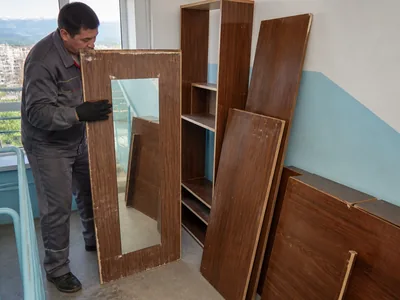
Particleboard frames, top cabinets, mirrored doors. We take them apart on site and carry them out piece by piece if there's no room to turn around in the stairwell.
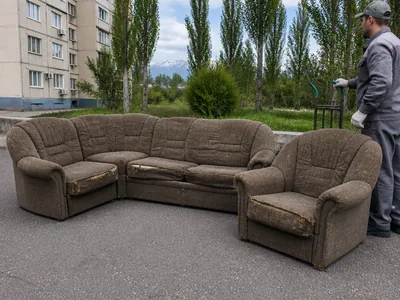
Corner sofas, sofa beds, grandma's old sprung sofas. The heavy ones go with movers — otherwise they won't come out.
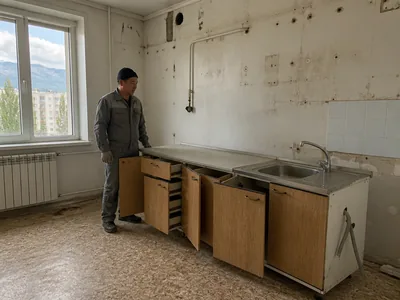
Countertops, tall cabinets, sinks. We take them off the wall, disconnect the water — then haul them away.
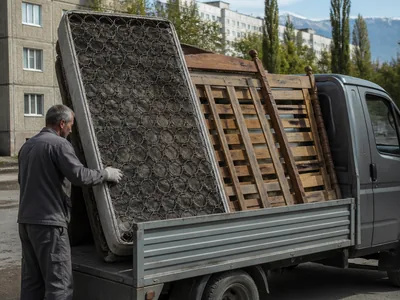
Sprung, spring-free, kids' cots. A mattress often goes right after a sofa — we take it in the same run.
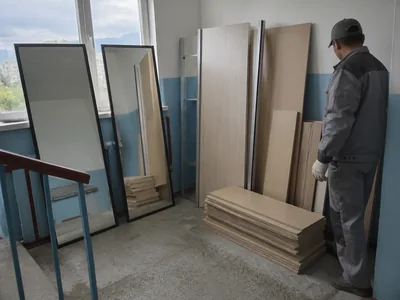
Mirrored doors shatter on the way down — we take the panels off separately and carry the frame out after.
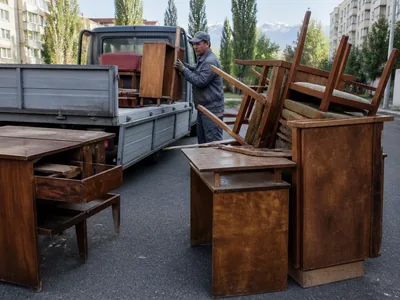
Office and dining sets, kids' school desks. Lots of them — we haul them in a GAZelle in one trip.
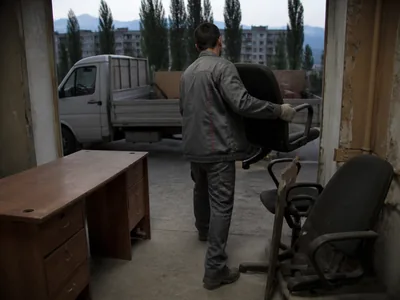
When tenants move out or an office shuts down — we come in the evening, haul out what's left, and return the keys to the owner.
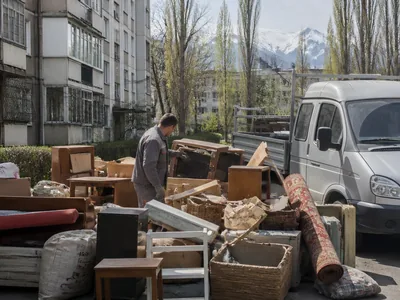
Furniture mixed with boxes, rags, appliances. We sort the pile, take the furniture for disposal, and the rest goes at the MSW rate.
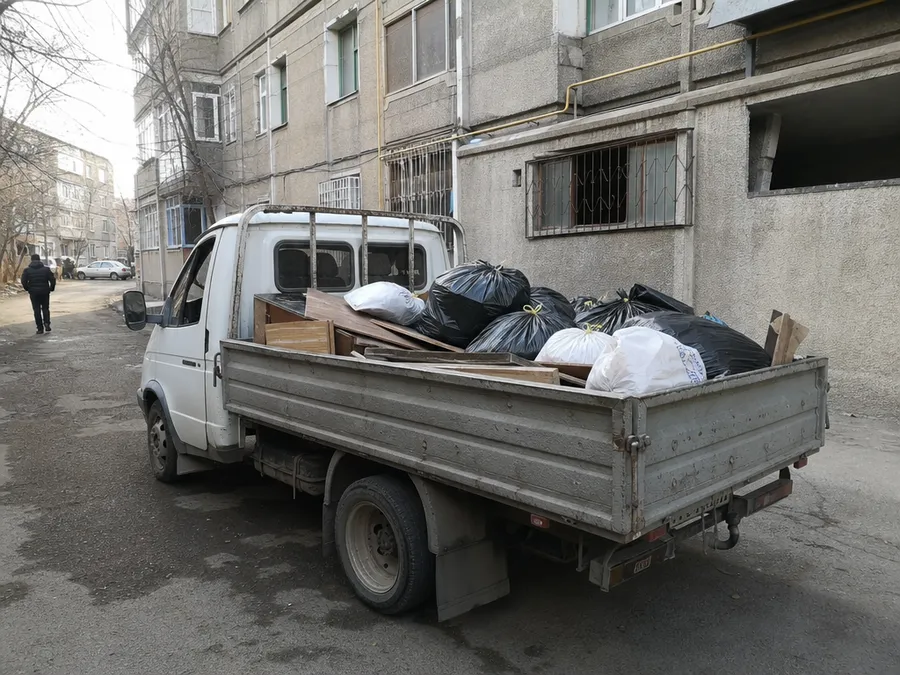
One sofa, a couple of armchairs, a disassembled wardrobe — fits in a GAZelle. We take it when there's not much furniture and it's not far to carry.
Book a GAZelle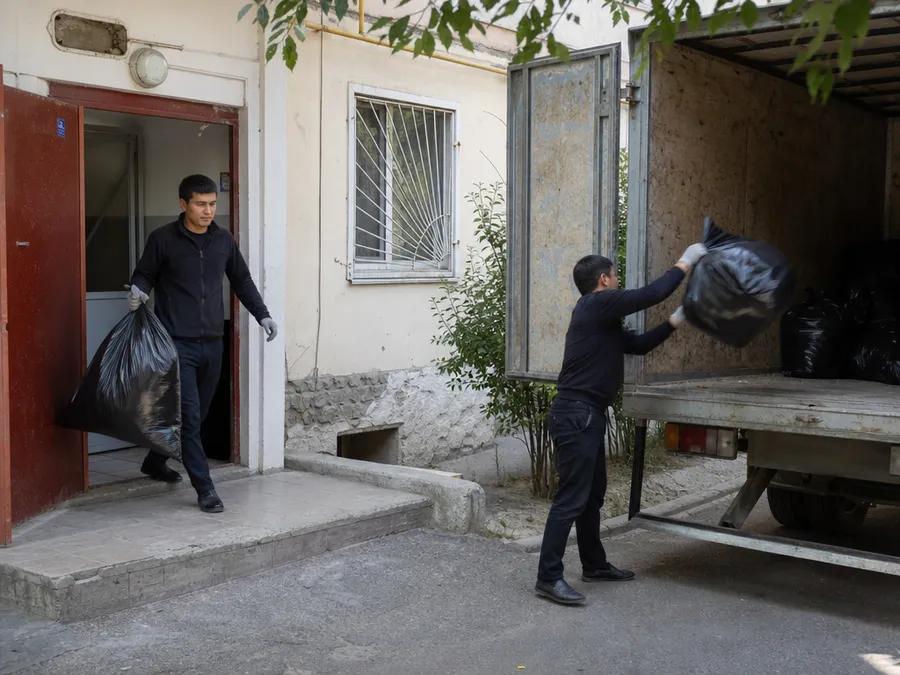
A two-person crew carries furniture down from the floor, loads it, and sweeps the area. You need this if the elevator's out or the wardrobe won't come apart.
With loaders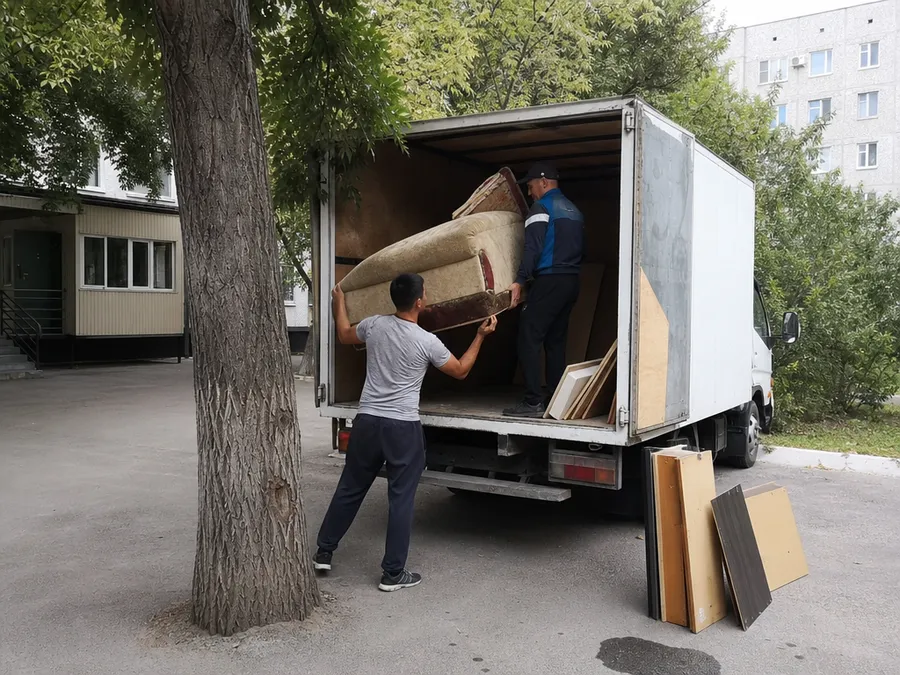
We send items for disposal, not to the pile by the entrance. We charge by cubic meters — how much space the furniture takes up in the truck bed.
Where we take it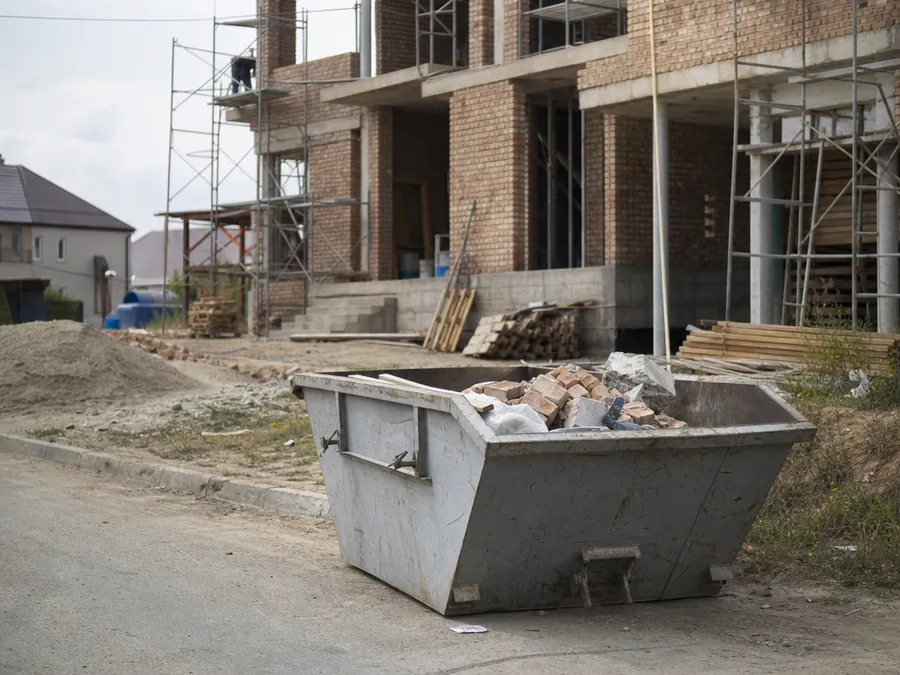
If there's a lot of furniture and you need to unload gradually — we drop a container for a few days. We agree on the timing and spot separately, and we'll quote the price in chat.
Message us on WhatsApp
Old furniture from a veranda, summer kitchen, or garage. Outside the city there's extra mileage, but within the city the price stays the same.
Removal from a country house
Offices, hotels, dorms. We work on request, haul in the evening or on weekends so we don't get in your staff's way.
For companiesFor furniture we use a GAZelle or a truck — depends on how much and what. Vehicles and rates below, no asterisks.




Valid from August 2026 · price per trip within the city
| Equipment | Volume | Payload capacity | Price per trip | Extra hour |
|---|---|---|---|---|
| GAZelle 1.5 t | 12 m³ | up to 1.5 t | 30 000 ₸ | 6 000 ₸ |
| GAZelle 2.5 t | 16 m³ | up to 2.5 t | 35 000 ₸ | 9 000 ₸ |
| Truck 5 t | 25 m³ | up to 5 t | 40 000 ₸ | 12 500 ₸ |
| ZIL dump truck | 7–12 m³ | up to 7 t | 40 000 ₸ | 12 500 ₸ |
| KAMAZ dump truck | 15 m³ | up to 20 t | 55 000 ₸ | 15 000 ₸ |
| Howo dump truck | 25 m³ | up to 40 t | 60 000 ₸ | 15 000 ₸ |
| PUHTO (skip) | 8–10 m³ | up to 7 t | 45 000 ₸ | — |
| Multilift | 20 m³ | up to 12 t | 100 000 ₸ | — |
| Skip | 27 m³ | up to 15 t | 135 000 ₸ | — |
| Max skip | 32 m³ | up to 20 t | 160 000 ₸ | — |
Prices apply within Almaty city limits. Outside the city, mileage is added — we calculate it in chat before dispatch.
Not sure which truck you need? Send a photo — we'll pick one for you.
Message us on WhatsAppOften furniture isn't just about carrying it out — it needs to be disassembled, carried down, or hauled away along with junk from the storage room.
Five steps from a WhatsApp message to a clean spot where the furniture used to be.
Request a quoteDescribe the furniture or just send a photo. From the picture we can already tell how many people and which truck you need.
We estimate the volume from the photo and pick a GAZelle or a ZIL. The price is locked in before we arrive — it won't change after loading.
From thirty minutes across the city. The movers arrive together with the truck, not separately.
We take wardrobes and wall units apart on site, remove mirrors separately, and carry sofas down in one piece. This step takes the longest — and it's where it's decided whether the furniture comes out without scratching the walls.
We take it to disposal, not to the nearest dump. We sweep the loading spot before we leave.
We show what it was and what it became: a photo before loading and the same entrance after.
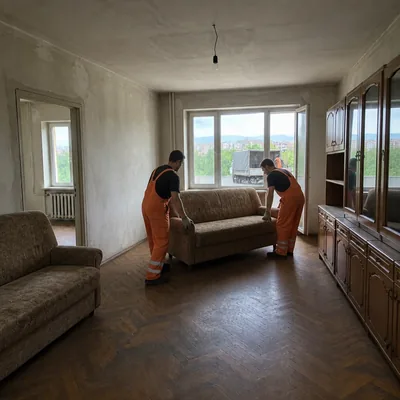
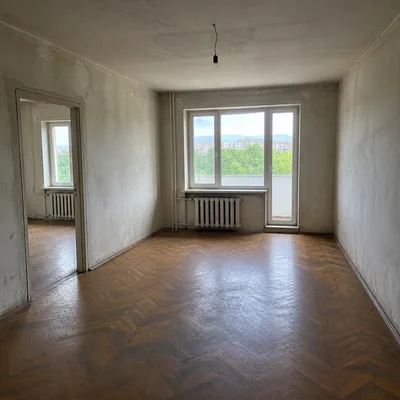
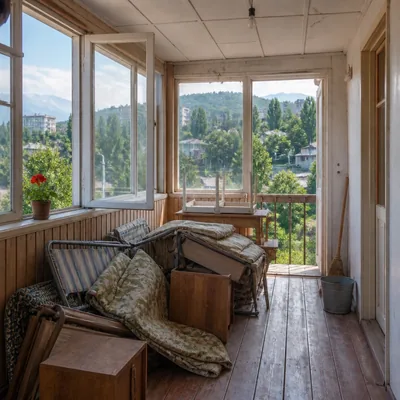
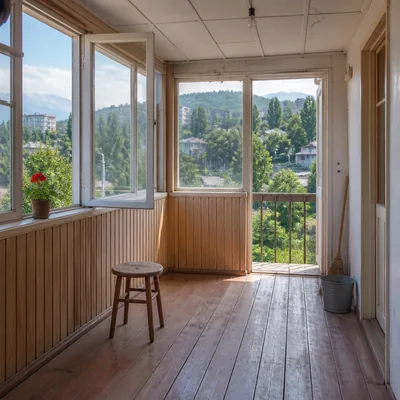
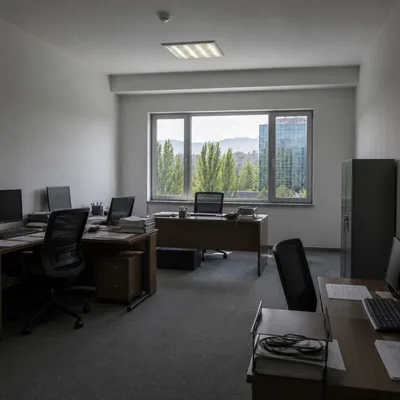
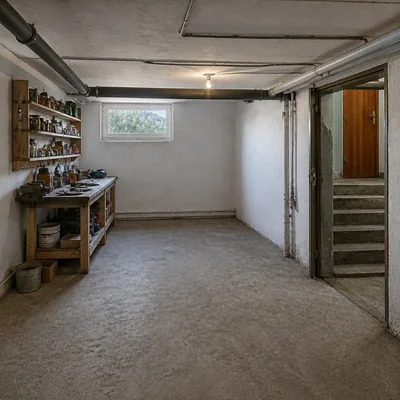
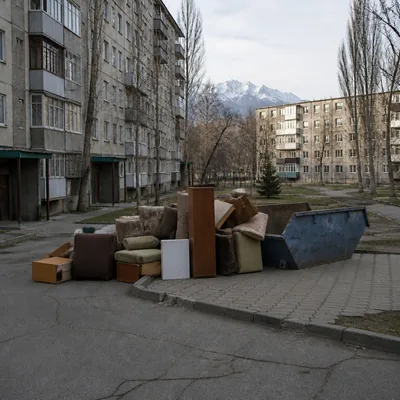
Two or three go out: loaders and a driver. Here's who comes most often.







A wall unit from grandma, a cabinet with a top shelf, a sofa that's sagging in the middle — all of it's sitting in the apartment and getting in the way. A familiar picture: you've been sidestepping it for a week, calling one company then another, and hearing "we can't today" or "that needs to be taken apart." In the end, furniture removal in Almaty turns into a quest, even though the task is simple: come, carry it out, haul it away.
We do this every day. And every day we hear the same thing: 'It's not much, a GAZelle will do.' Then in the yard it turns out the wall unit can't be taken apart without tools, the sofa won't fit in the elevator, and there's someone else's 'shell' parked in the yard, leaving no room for the loaders to maneuver. So the first thing I advise is: don't count furniture by the piece. Count by volume. A wardrobe and a coffee table aren't 'two things' — they're almost a cubic meter and almost nothing.
Then the fun begins. Half the people searching for 'where to take old furniture' are sure it has to go to the dump. That's not true, and I'll explain below. The other half wants to haul everything away for free — and that's possible too, but not in the way they usually imagine. Let's break it down: how many cubic meters it is, what happens to furniture after loading, what free options exist, and what happens if you just leave it by the entrance.
I've been hauling furniture around Almaty for years, and you know what I notice? Almost every second order starts the same way: 'It's a GAZelle, even less.' We arrive — and it turns out it's not less at all. Not because the client is lying. It's just very hard to eyeball how much space a disassembled wall unit will take. The eye catches objects, not volume.
Let's start simple. A wardrobe up to two meters high and sixty centimeters deep is roughly two cubic meters. If it has mezzanines — all three. A three-seat sofa folded is one and a half cubic meters, unfolded — already two and a half. The Soviet wall unit we hauled from Auezov the other day — almost six cubic meters assembled. And after disassembly — four. The difference, as you understand, is fundamental: it decides whether one truck goes or two.
The kitchen is a whole different story. A three-metre cabinet unit is about four to five cubic metres if it's assembled. Take it apart and it's three. But kitchens are trickier: the countertop doesn't bend, the cabinets are heavy, and some panels are only good for the dump once removed. That's why furniture removal in Almaty often starts with kitchens: people renovate and replace the unit first thing.
I look at the photo of a wardrobe someone sent me. It shows a neat piece against the wall. Clearly it takes up space. But the photo doesn't show that the back panel is another half a cubic metre, that the doors come off, that the shelves inside also need to go somewhere. So I add a correction: plus twenty percent to what I see. And I'm almost never wrong.
Here's why. A phone camera shoots with a wide-angle lens, and the item in the photo looks smaller than it really is. Plus, the person stands next to it and mentally compares the furniture to themselves, not to the truck bed. And third — they only see what they're carrying out, not what's left behind: packaging, old armchairs, shelves, the hallway cabinet. In the end, removing unwanted furniture turns into a surprise on the spot.
We never recalculate the price after loading. But if it doesn't fit in the truck, we'll need a second run, and that's extra money. So I always ask for three or four photos from different angles. Not for show — to understand the volume.
Dismantling saves space in the truck bed, obviously. But that's not all. Dismantled furniture fits in the lift, goes down the stairs, and can be loaded tightly, with no gaps. An assembled wardrobe is a frame with air inside. And air in the truck bed takes up space you're paying for. So do the math: twenty to thirty percent of the volume is just emptiness.
The thing is, not everyone can dismantle. We have our own loaders, and I know: if someone says 'I'll take it apart myself', it often means that an hour later they'll call and ask where to put the screws and how to remove the door. Okay, joking. But dismantling takes time, and that has to be factored in too.
Another point: not everything can be dismantled. Some old wall units are glued together, and the only way is to break them up. Then the truck bed won't have a neat stack but a pile of chips. What matters here isn't how it looks but how much space it takes. Broken furniture takes up more room: you can't pack it tightly. So I always ask at the booking stage what exactly is in your flat. It helps.
If you're looking for where to take old furniture, first calculate the volume. It'll save you time and nerves. Below is a short list to help you estimate on the spot. We use it when a client sends photos and asks for a rough idea of the cost.
First. Counting by the number of items, not by cubic capacity. 'I've only got three things,' someone says, and those three things turn out to be a wardrobe, a sofa and a wall unit. Nine cubic metres in total.
Second. Forgetting about the small stuff. Shelves, boxes, old pillows, the rug that also needs to go. All of it adds volume. And if you booked a GAZelle for a wardrobe, then find out in the yard that you need more room for a pile of junk — you'll have to figure it out on the spot.
Third. Not accounting for the fact that furniture can't always be packed tightly. Legs, handles, protrusions — all of that creates gaps. I always add ten to fifteen percent on top. It's safer that way. Removing unwanted furniture in Almaty isn't just about the truck — it's also about getting the estimate right. If you're unsure, message us on WhatsApp, send a photo, and we'll figure out the volume together. No obligation.
And one more thing. If you're looking to remove furniture for free — figure out the volume first. Because free pickups usually only take what can be resold. An old wardrobe with mezzanine compartments is unlikely to interest anyone. A sofa in decent condition — maybe. But we'll talk about that in another section. Right now the key thing to understand: the more accurately you estimate the volume, the fewer surprises on removal day. We're all for honest calculation. And for one truck showing up, not two.
Case furniture is anything made of particleboard, plywood, or solid wood that holds together thanks to a rigid frame. Wardrobes, wall units, dressers, vanities, sideboards, shelving. We haul these without question, but with one caveat: if there's a mirror, glass, or lighting inside — tell us in advance. Not because we'll refuse. We'll just pack it separately, and it'll take up a bit more room in the truck.
Soviet-era wall units are a story of their own. They're heavy, often solid wood, and almost never come apart without tools. Sometimes the bolts are rusted solid. People order furniture removal in Almaty for a cabinet like that thinking of it as "one item", when in reality it's two cubic metres and two hundred kilos. Once, I remember, we carried one out through the balcony — the doorway turned out to be five centimetres too narrow.
Sofas, armchairs, beds, daybeds, poufs. We always take upholstered furniture, but the fabric matters here. If there's a spring block inside, the sofa weighs as much as a cast-iron bathtub — some models hit a hundred and twenty kilos. In that case, removing such a sofa is calculated by weight, not by width. That said, weight only affects the number of movers, not the decision.
Beds almost always come apart. Sofas — not all of them. Corner units often won't fit through the doorway in one piece, so the armrests have to come off. Euro-click clamshell sofas are best not folded up on your own — you can wreck the mechanism, and then getting it out gets harder. I'll cover that in the section on stages, if it comes to that.
Kitchen cabinet sets are dozens of separate sections. We take them as they are, but a heads-up: a kitchen with MDF fronts and an artificial stone countertop can weigh more than it looks. The countertop usually comes off separately — otherwise it cracks at the first turn on the stairwell.
Tables, chairs, stools, coffee tables, TV stands — the small stuff that pushes the volume over the edge. It's because of that a GAZelle turns into two GAZelles. Where to take old furniture in Almaty if that's exactly your set? Same place as the big stuff — just tell us there's a lot of small items.
And now — a step-by-step breakdown, as I see it from the back of the truck.
Here's a table to help you keep track. It's the same as what we said above, just gathered in one place.
| Category | We take it | Needs dismantling | Approximate weight |
|---|---|---|---|
| Cabinet | yes | often | up to 200 kg |
| Upholstered | yes | sometimes | up to 120 kg |
| Kitchens | yes | almost always | up to 150 kg |
| Tables, chairs | yes | no | up to 40 kg |
| Not furniture | separately | depends | varies |
A fridge, washing machine, stove, microwave, TV — that's appliances. Not furniture. Furniture removal doesn't include them, and if you say "there's also a fridge", the order becomes different. Not harder — just different. For disposal, appliances go on a separate route because inside there's refrigerant, oil or plastic that can't just be buried.
Building materials aren't furniture either. Doors, skirting boards, leftover laminate, drywall. If you're renovating and replacing the kitchen, the old cabinets are furniture, but the old tiles are construction waste. The order is placed differently, and it's better to say so upfront than to sort it out in the yard. Free furniture removal won't work in such cases, if only because the volume doubles and you need a different truck.
And one more thing that often comes up in messages: pianos. Technically it's not furniture but a musical instrument, yet by weight and dimensions it's closer to a safe. A piano weighs from two hundred kilos and doesn't come apart. It's carried out by a separate crew, and that's always discussed in advance. If you're looking for where to take old furniture and you have a piano in your apartment, don't keep quiet about it in your request.
Now for what we definitely don't take. Garage junk and car tyres — not our thing. Hazardous waste, paints, solvents — neither. All of that needs different sites and different permits. We haul old furniture and related bulky items, not general rubbish. If you're unsure, send a photo — I'll tell you honestly whether we'll take it or not.
And lastly: don't throw furniture out to the dumpster before we arrive. Even if it's in the way right now. Furniture disposal starts with loading, not with you dragging a sofa to the bins. That way it can get picked apart piece by piece, or it'll get in others' way. We'll come, carry it out and take it away — all we need from you is a request and access to the apartment.
The truck's gone, you've closed the door and breathed out. And at that moment I'm driving it to the site where the furniture gets fully dismantled. Not to a landfill outside the city where everything gets dumped in one pile. First crushing, then sorting, then what's left. Removal alone is half the job; the second half starts right after loading.
Why can't you just take a sofa to an ordinary city landfill? Because it doesn't accept bulky items. Bulky waste is a separate story, and they won't take it there just like that. Furniture is chipboard, foam, springs, fabric, glass, mirrors. It all arrived in one truck and really should go off in different directions. No one's going to open the gates and say "dump it right here".
I've been driving for fourteen years, and I'm still surprised: people think we take it straight to the landfill. No. We take it to a site where a wall unit gets shredded into chips in half an hour. Once I brought a wardrobe with mirrored doors, and they were removed separately — glass couldn't be mixed with chipboard.
Bulky items are accepted separately, and not everywhere. That's not my whim, that's how it works. A regular household waste site won't take a wall unit: it'll clog the container and take up space meant for bags and small junk. The truck will be turned away right at the entrance. That's why removing unwanted furniture in Almaty runs on its own route, not through the nearest bin by your building.
Size is a whole separate story. A fold-out sofa assembled is two and a half meters and a hundred kilos. It physically won't fit into a standard truck bed in one piece, so it gets taken apart. A wardrobe with top cabinets is the same deal. Glass and mirrors travel separately, because one wrong move and it's all over the interior. That's exactly the kind of little thing that sends the truck back. Dumping furniture by the entrance, by the way, ends the same way — bulky items won't be picked up the usual way.
I'll be honest, no rosy hopes. Some furniture actually goes back into use, some doesn't. Solid wood goes to chips, particleboard is also shredded and used as fuel or base material. Metal — bed frames, springs, legs — goes separately, and it's gladly accepted. Glass and mirrors I take out separately, because in the general mass they're dangerous.
Upholstered furniture is trickier. Foam, padding, fabric — that's what almost never gets recycled and goes to landfill. That's how it is, and there's no point pretending otherwise. So furniture disposal in Almaty isn't "everything gets recycled" — it's an honest breakdown: metal and wood, yes; filler and fabric, mostly no.
From experience: out of an average three-room set, about a third by weight goes to recycling. The rest is shredding and landfill. Anyone who says they recycle everything is bending the truth.
The site isn't a dump in the usual sense. It's a level lot with machinery: a shredder, containers for different fractions, a separate corner for metal. I pull up, unload, wait while it gets sorted. Particleboard goes one way, metal another, glass carefully a third. Foam and fabric go into the landfill section. It's not a five-minute job, but it's not half a day either.
The main thing is there's no mountain left after unloading. The site works as a transfer point, not a storage. If every other truck just dumped furniture in a pile, the lot would be buried within a week. So shredding happens almost immediately, as stuff comes in.
Plain removal is when the stuff leaves your apartment and you don't care what happens next. Disposal is when after loading, the cargo doesn't just vanish somewhere — it gets sorted into fractions. The difference isn't in price or speed. The difference is that furniture doesn't take up someone else's space at the site for years.
What does this give you in practice? First, we sweep the area after loading — not a splinter or a broken door left behind. Second, you won't find out a month later that your sofa is still sitting by someone else's building. Third, some materials go to good use instead of into the ground. How disposal differs from simple removal isn't a philosophical question — it's a practical one.
I won't promise that absolutely everything gets recycled. Some goes to landfill, and I'll say that upfront. But if you're looking for where to take old furniture right now, here's the honest answer: shredding, sorting, metal and wood separately, upholstered stuff separately. And the site is clean after unloading. To me, that's enough to keep from dumping it all in one pile in the yard.
Let me say this right away: yes, you can get furniture removed for free. But not in the way people usually mean. Nobody's going to drive across half the city for nothing, spend two hours, and pay for furniture disposal out of their own pocket. If someone promises that over the phone, they've got an angle — you just don't know it yet.
First option: a guy with a GAZelle who sells furniture himself at a market or a secondhand shop. He wants your wardrobe, not your gratitude. Second: a neighbor with a dacha or a garage. Third: a reseller who'll haul it off, fix it up, and sell it. Fourth: a charity — but there's almost always a waiting list and conditions: they only take intact items, only on weekdays, and only if you carry it downstairs yourself.
And the fifth, most common one — someone who charges you "for carrying it out" but hauls it away for free. Meaning you still pay, just not for the truck, but for the movers' labor. Technically that's free removal of unwanted furniture — in reality, it isn't.
When someone tells me "they take it for free over there," I always ask them to clarify three things. First: who disassembles it. A wall unit with top cabinets won't come out of an apartment without being taken apart, and if I'm the one disassembling it, it's not free anymore. Second: who carries it out. Getting a sofa down from the fourth floor with no elevator is a job in itself, and everyone charges for it, including the guys doing it on the side. Third: when they'll come. With free services, it's almost always "next week, if a truck frees up."
One more thing — taking furniture to the dump yourself if you decide to save money. You pay for gas, for renting a GAZelle, for your time, and in the end it often costs more than ordering removal of unwanted furniture with movers.
The classic: two guys show up, look at the wall unit, and say "this needs disassembly, there's an extra charge for that." You agree, because your stuff is already in the hallway and you've got no choice. Or it turns out not everything fits in the truck, and you have to pay separately for a second trip. Or they don't take the sofa — only the wardrobe, and the sofa stays with you.
From experience, free removal of unwanted furniture in Almaty almost always ends with a surcharge. It just doesn't show up right away — it appears when the truck is already at your door. With us, the price is locked in before we arrive, and that's not marketing — it's a way to avoid arguing on the stairwell.
Ask a couple of questions. Where are you taking it? If the answer is "to the base," "to the warehouse," "to some friends" — the furniture isn't being disposed of, it's being resold. Ask what happens to whatever doesn't sell. A normal answer is "we'll take it to the landfill." A vague "we'll figure it out" means the leftovers end up in the nearest courtyard or on an empty lot.
Another sign is interest in the condition. A reseller asks about the year, the material, whether the fronts are intact. A removal service asks about the floor, the elevator, and the volume. If they're asking about the furniture's condition rather than your building, you're probably being used as a supplier.
And lastly. We pick up old furniture for free in only one case — when it's part of a deal, like you're ordering post-renovation debris removal and the furniture comes as a bonus. As a separate run — no, that's work, and it costs money.
| Situation | Who removes it | What they ask in return | The risk for you |
|---|---|---|---|
| Furniture is intact and in demand | Reseller | Nothing, but they pick and choose | The rest stays with you |
| Disassembly and carrying out are on you | Private seller | Carry it down yourself | Injury, damaged walls |
| You ordered another removal | Service | Payment for the main service | Almost none |
| Furniture doesn't meet their conditions | Charity fund | Only intact items, on weekdays | They'll refuse on the spot |
| They promise to take everything for free | Strangers | Extra charge for disassembly and a trip | Leftovers in the yard |
So here's the thing: free isn't a price — it's someone's angle. Want peace of mind? Measure the volume, mention the floor, and order a truck. Want to take a chance? Go ahead, but be ready for an hour of talking to end with a number you won't be able to refuse.
Read this far and still not sure about the volume? Send us a photo — we'll calculate and give you a price.
Message us on WhatsAppEvery week I see the same thing: a wardrobe has sprouted by the entrance. Next to it — a sofa, with someone's mezzanine door tossed on top. People think: it'll sit there and disappear. It won't. I've been working in furniture removal in Almaty for five years, and I can tell you for sure: abandoned furniture isn't a "it'll sort itself out" situation — it's a long story involving neighbors, the janitor, and the management company.
Why does it sit there for weeks? Because nobody wants to take responsibility. Residents say, "I didn't put it there." The janitor says, "I don't get paid for that." The management company says, "It's private property, we have no right to touch it." So the furniture stays. Sometimes for a month. Sometimes until the first community cleanup day.
The main reason is legal confusion. Furniture on the building's grounds is formally nobody's. Throwing it out means unauthorized removal of someone else's property — even if that property is a broken wardrobe. So the utility folks prefer not to get involved.
The second reason is logistics. Even if the management company is ready to haul it away, you need a truck and loaders. The janitor has a cart and a broom. The building manager has a budget where bulky waste removal often isn't included. So the wall unit stays put.
The third is the human factor. Neighbors put up with it. It's inconvenient, but they stay quiet. Until someone trips or starts complaining to the akimat. Then suddenly it turns out the furniture is in the way and needs to be removed urgently.
The yard and dumpster area are the responsibility of the management company or the HOA — depending on who services the building. They're required to keep the area clean. But "keep clean" doesn't always mean "remove other people's furniture."
In practice, it looks like this: if the furniture is at the dumpster area, a regular garbage truck might take it. But only if it fits in the bin. A sofa or wardrobe won't. They'll be left behind.
If the furniture is lying on the lawn or by the entrance, it's no longer household waste but bulky waste. Removing it is a separate service. And the management company may or may not order it. It all depends on how active the residents are.
Neighbors usually walk on by. But if the furniture blocks the way or dirties up the entrance, the calls start. First to the management company. Then to the akimat. Then up the chain.
The management company in this situation acts simply: they put up a notice: "Please remove the furniture within three days." If no one removes it, they call a contractor. But at whose expense? Most often at the residents' expense: the sum is split among everyone or the one they managed to find.
Sometimes the management company just hauls the furniture away themselves and notifies the person who put it out. If they couldn't find them, everyone pays. Unfair, but it happens.
If they find the culprit, they'll issue an order to remove the furniture. If it's not removed — a fine. I won't quote the fine amount because it changes, but trust me: it's more expensive than just ordering removal of unwanted furniture right away.
Another option: neighbors chip in and order a truck themselves. Then they go to the culprit and ask for compensation. If they refuse, a war breaks out in the building's chat. Familiar story, right?
The worst scenario: the furniture sits so long it turns into a mini-dump. People start tossing trash bags next to it. The yard becomes a garbage pit. Then the akimat shows up, and the whole building has to deal with it.
What to do if you've already put furniture out? Don't wait. Order furniture removal. We'll come, pick it up, and take it away for disposal. It's cheaper than paying a fine and listening to your neighbors.
Here's a short list of what usually happens to abandoned furniture in the yard:
I'm not trying to scare you. I've just seen dozens of these stories over the years. And almost always people say: "I wish we'd called right away." Removing unwanted furniture isn't a luxury — it's a way to avoid creating problems for yourself and your neighbors.
If you're looking for where to take old furniture, don't leave it by the entrance. We'll pick it up legally and take it for disposal. No fines, no conflicts. Just an empty yard and a clear conscience.
Many imagine it like this: you call, give the address, an hour later they arrive and take it away. Sometimes that's true. But more often it's the prep done before the truck arrives, not during. Below is the order I recommend following. It's simple, but it saves both time and money.
It seems like a lot of hassle. In practice, half of all furniture removal orders fall apart on these seven points. And they fall apart in a frustrating way: not because of the company, but because the sofa turned out to be wider than the stairwell or someone parked in the spot right at the scheduled time.
Photos aren't for show. They help us figure out whether everything will fit in one GAZelle or if we need a bigger truck, whether we need tools for disassembly, and how many people to put on loading. A shot "from the corner of the room" is useless: it doesn't show the depth of the wardrobe or the fact that there's a mezzanine screwed to the back. Take three or four shots — from the side, from the front, and a wide shot showing how the item sits relative to the door.
In your request, don't write "remove furniture" — be specific. "Two-door wardrobe 2.2 meters, sofa-bed, five chairs, washing machine." Plus the floor, elevator (passenger or freight), and the distance from the entrance to the parking spot. If the building is old, mention the width of the staircase — in Almaty's five-story buildings it can be so narrow that a standard wardrobe only turns on the landing between floors.
People usually forget about the entrance. And that's a mistake. Carrying items out takes more time than loading, and the whole time the movers are walking the same route. A rug on the stairs, a kid's sled, someone else's bike by the elevator — each item becomes an extra turn with a heavy sofa on your shoulder. Talk to your neighbors in advance, not when the truck is already in the yard.
Inside the apartment, put away anything fragile. Tiles, mirrors, electronics you're keeping — it's best to move all that to another room. We work carefully, but a wardrobe is a wardrobe: it catches corners, and no one is immune to a random scratch on the baseboard. Also: pull out the drawers. People usually forget them in dressers and sideboards, and with the contents the weight doubles.
About money, straight up: the price for removing unwanted furniture depends on the volume, the floor, and how many people a particular item needs. One fridge and one wardrobe are different jobs, even though they're both "one item." That's why we quote by cubic meters, not by the number of items on your list.
An average apartment takes an hour to an hour and a half. If there's a freight elevator and the furniture is already disassembled, we finish in forty minutes. If it's a walk-down from the fourth floor and the wardrobe doesn't come apart — two hours or more. We'll give you a more precise estimate from photos, and that's not an excuse: experience shows a huge range, and we don't want to promise blindly.
The loading order isn't random either. First the heavy and bulky stuff — wardrobe, sofa, fridge. Then chairs, nightstands, small items. In the truck we pack everything tightly so it doesn't shift on the road, and arrange it so fragile items don't end up under metal. After loading we sweep the area — it's a small thing, but it's these small things that make neighbors frown at the next order.
| What happens | How much time | What we need from you |
|---|---|---|
| Photos and request | 10–15 minutes | Photos of items and entrance details |
| Disassembling furniture | 20–40 minutes | Clear space around the wardrobe |
| Carrying it out of the apartment | 30 minutes – 2 hours | Clear path to the elevator or stairs |
| Loading into the truck | 15–30 minutes | A spot for the truck by the entrance |
| Drive to the site | From half an hour | Nothing, that's our part |
Note the last line. The road is what the client usually doesn't see, and it eats up time: traffic on Raiymbek, entering the site, paperwork. So "we'll haul everything in an hour" refers to the apartment, not the whole process.
The most common case is a sofa bed. When folded, it won't fit in the elevator or the stairwell, and you only find that out on the spot. What we do: unfold it, remove the armrests if the design allows, take it apart. If it doesn't, we take it out through the balcony or dismantle it right there, carefully, so we don't damage the walls or the neighbors' doors.
The second case is a wardrobe with a top section. The top section comes off, the main body is carried out separately. The third is built-in furniture made to fit the ceiling. It's easier to dismantle it piece by piece right in the room, then carry out the fragments. These jobs are doable, they just need tools and time. That's why we ask in advance, not when the truck is already in the yard.
If the furniture won't fit through at all — no problem. We'll take it apart on site, carry it out piece by piece, and haul it away. We pick up old furniture in any condition, including stuff that's already falling apart. Just let us know in advance so we bring the right tools and assign the right number of people.
If you're short on time and can't read the whole article, here's the quick version. It's enough to understand what you're paying for and why a request sometimes falls through. The details are below, in the other sections.
The biggest mistake is counting furniture by the piece. A wardrobe and a coffee table aren't 'two things' — they're almost a cubic meter and almost nothing. The driver looks at volume, not the number of items, because volume determines how many trips the truck makes and how many movers show up at the entrance.
A disassembled wall unit loads fast, but an assembled one can get stuck sideways in a GAZelle. A sofa with a mechanism weighs nothing like a frame without filling. Furniture disposal starts right in the yard — with whether the item fits through the doorway, into the elevator, and through the archway.
After loading, the truck doesn't just go 'somewhere outside the city.' The furniture is dismantled, wood, metal, fabric, and filling are separated, and only then is it taken for disposal. We always sweep the spot where the furniture stood — that's part of the job, not a favor.
An ad saying 'free furniture removal' usually means one thing: they'll take it if someone still needs it. An old sofa with broken springs is needed by no one, so furniture removal is almost always paid. The only things removed for free are intact wardrobes and wall units for disassembly — and not every day.
Here's a quick list of what most often decides the outcome:
Separately about paperwork. If you need a document showing where the furniture went, message us on WhatsApp before the pickup — we'll look at your case and tell you what we can provide and what we can't. Don't trust promises without a signature.
And lastly. Requests are made via WhatsApp or by phone; there are no forms on the site. The price is fixed before the truck arrives and doesn't change after, even if the movers take an extra hour in the yard.
If you still have questions after this summary, read on — it's all broken down: how many cubic meters are in your furniture, what we take, where we take it, and how the day goes from the call to an empty room.
It depends on the volume and the floor. A GAZelle run, 1.5 t — from 30 000 ₸ if the furniture is compact and you bring it down yourself. If you need a crew of loaders, add a rate of 20 000 ₸. We give you the exact amount before the vehicle arrives — after loading, it doesn't change.
You can, but it's not always wise. A sliding wardrobe often fits assembled, but a sofa doesn't if the stairwell has a tight turn or the elevator is too small. We disassemble and saw it on site if the dimensions won't let it through. In our experience, whole is faster, but if it won't fit in the elevator, disassembly saves effort.
We'll pick another vehicle — from a ZIL to a dumpster. Usually a GAZelle is enough for one apartment, but if it's furniture from three rooms or a whole suite, it's better to order a 5 t truck right away. We recalculate before loading, not during.
We take it for disposal — to a landfill or a site that accepts bulky waste. Some furniture that's still sturdy may go for recycling, but that's decided on site. After loading, we sweep the area and don't leave any trash.
Yes, we'll bring it down. That's part of the loaders' job — without an elevator it's harder and takes longer, but we're used to it. The price is affected by the floor and weight; say, a piano or an oak table is heavier than particleboard. We discuss it before the visit.
Send photos of the furniture on WhatsApp — that's enough. From the picture we see the dimensions and understand which vehicle is needed. If you're unsure, take photos from different angles and put a tape measure next to the largest item. Volume mistakes are common, but we eliminate them at the estimate stage.
Sometimes yes, if the furniture is sturdy and can be given away or sold — then we take it without a removal fee. But if it's a broken wardrobe or a stained sofa, free won't work: disposal costs money. We don't promise "always free" — that would be a lie.
Yes, Mon–Sun, 09:00 to 21:00. On Saturday and Sunday, service is the same as on weekdays, no weekend surcharge. It's best to leave a request in the evening so the vehicle arrives in the morning.
Construction waste, chemicals, tires, batteries — these are separate categories, they need a different vehicle and a different procedure. Furniture with mirrors and glass we do remove, but we pack it separately so it doesn't break in the truck. If you're unsure, ask in chat — we'll advise.
No problem, tell us before loading. If the vehicle is already on its way but you decide to keep a couple of items — we'll recalculate on site, the price will go down. After loading, unfortunately, we can't turn back: the furniture is in the truck, and unloading it without damage isn't possible.
Got a question that's not here? Ask — we'll answer in writing, no call needed.
Message us on WhatsAppWe were closing our café and had old furniture left — tables, chairs, a bar counter. Aigul calculated everything, two GAZelles came. They cleared it out in three hours. Highly recommend.
We were moving out of a rented flat, and the landlord's furniture was falling apart. Dinara gave us the price right away and said one GAZelle would be enough. She was right.
We were clearing out the basement, where an old dining set and armchairs were sitting. Askhat came, took a look, and said one GAZelle would be enough. That's exactly how it turned out.
We were moving out of a rented apartment, and the landlord's furniture was beat up. Dinara said they'd take everything, mattress included. They came in the evening, after work. Very convenient.
Honestly, I thought old furniture removal was expensive and complicated. But no. I called, got a price, they came. All good.
After winter, we decided to get rid of the old furniture on the balcony — it had piled up. Daniyar came and helped bring it down. Worked fast, no unnecessary talk.
It was long past time to get the old furniture off the balcony — it had piled up over the winter. Daniyar came, brought it all down, and they took it away. Fast and stress-free.
The move was tough, no one wanted to take the old furniture. They arrived quickly, took everything in one trip. Thanks!
A sofa, two wardrobes, and grandma's wall unit. Booked for Saturday, they arrived at ten. In two hours they carried everything down from the fourth floor with no elevator. My neighbor even asked who I called.

We were clearing out the garage, where an old wardrobe and a workbench were sitting. They arrived two hours after the call. Took everything, even swept up the trash.
After the renovation, old furniture was left over — a bed, a dresser, a vanity. I thought I'd have to find a place to drop it off myself. I called, they came the same day. Carried everything out carefully, didn't scratch a thing.

Honestly, I thought old furniture removal was expensive and complicated. But no. I messaged on WhatsApp, sent photos, got a price. They came, carried it out, took it away. Fast and stress-free.
Old furniture from previous tenants — a wardrobe, a sofa, a table. I didn't try to carry it out myself, my back is worth more. I called, they arrived two hours later. Everything was taken away for disposal. They swept the area, by the way.
We were clearing out the basement, where an old dining set and armchairs were sitting. Askhat came and carried everything out. Didn't even have to sweep anything.
Everything was removed fine, but we waited an hour longer for the truck than promised. The movers apologized and got the job done fast. Four stars for that.
I didn't know where to drop off old furniture. Found these guys, called. They came and took it. That's it.
The old furniture from the previous tenants — a wardrobe, a sofa, a table. I didn't want to haul it out myself, so I called them. They came the same day, carried everything out carefully, didn't scratch the walls.
Grandma's furniture was left after the renovation. They took it away quickly, the loaders carried everything themselves from the 5th floor with no elevator. Thanks.
Needed to get rid of old furniture, it had piled up at home. Yerlan came and took everything away fast. The price was quoted upfront and didn't change later.
Getting rid of old furniture turned out to be a problem — the neighbors were complaining about it lying by the entrance. I called these guys, and they hauled it away in an hour. Finally clean.

Showing 3 of 20
Want the same? Describe your task — we'll calculate and give you a price before the truck arrives.
Message us on WhatsAppChecked us out? Drop us a line — we'll pick the right truck for your load.
Message us on WhatsAppCollection, sorting, crushing, secondary raw materials — the steps in order and what actually gets recycled.
How medical and industrial waste differ from household waste and what's required of the hauler.
Illegal dumps on the outskirts, soil and groundwater: what happens when waste goes to the wrong place.
Articles of the Administrative Offenses Code of Kazakhstan, amounts in MCI for 2026, and who's responsible for the garbage — the carrier or the client.
Got an old sofa or wardrobe just sitting there? Send a photo on WhatsApp — we'll quote the trip and pick it up in a time slot that suits you.
Tell us how the pickup went — it helps us and anyone choosing a hauler.



