Madina
Ordered removal of plumbing fixtures after a bathroom reno. Everything was smooth, no unnecessary questions. Fixed price, no extra charges.
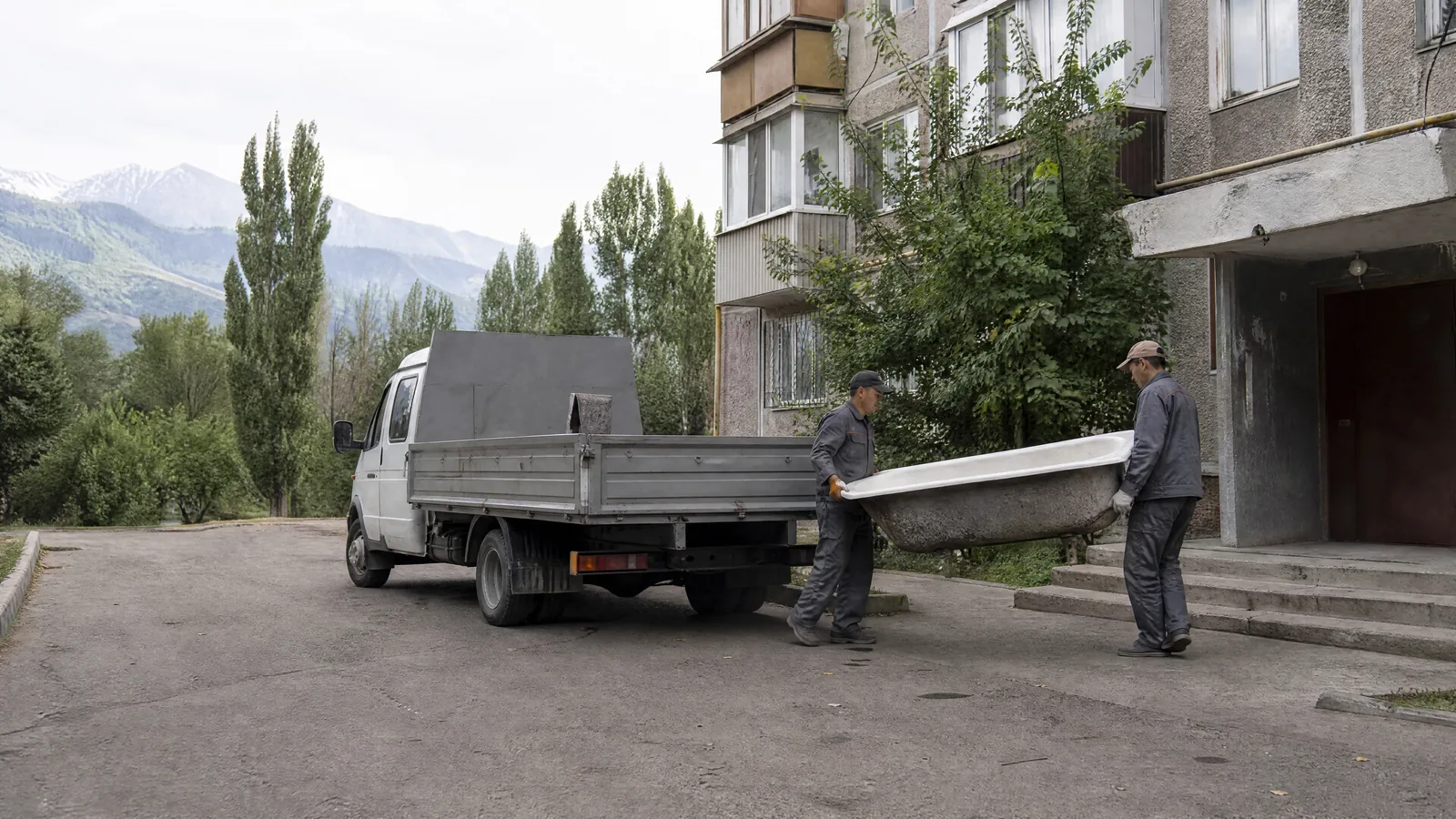
Tell us the volume on WhatsApp — we'll quote a price and a delivery time before we head out.
Pick the type of junk, the timing and the truck — you'll see an approximate price. Whether it's cast iron or acrylic and which floor, we'll confirm on WhatsApp: that determines the crew.
The price depends on the amount of plumbing, the floor and whether there's an elevator. The more items, the better the rate for the run.
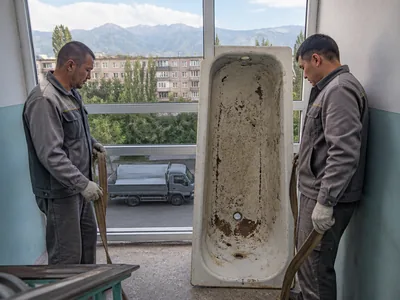
The main weight is cast iron, 80–120 kg each. Two loaders can carry it, but four with straps is better.
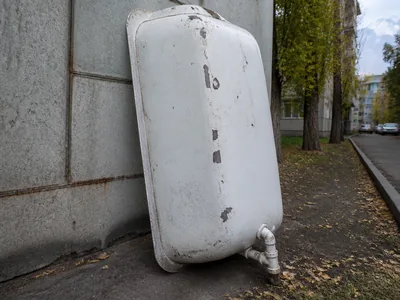
Thin steel, doesn't weigh much, but bulky — it goes into the GAZelle sideways lengthwise. We often remove it together with the trap.
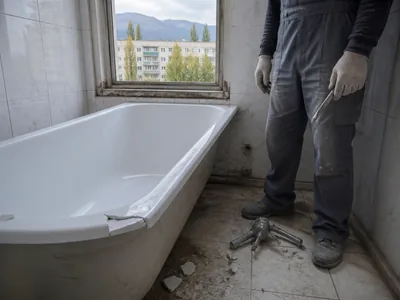
Light enough for one person to carry. But it crumbles when dismantled, so we collect the pieces separately.
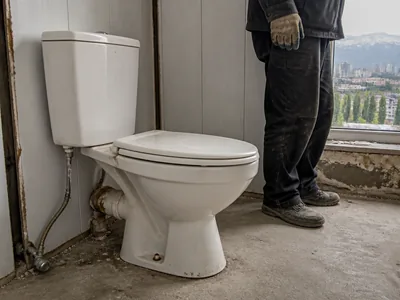
Faience, fragile, needs careful packing. We take it away along with the fittings and supply lines.
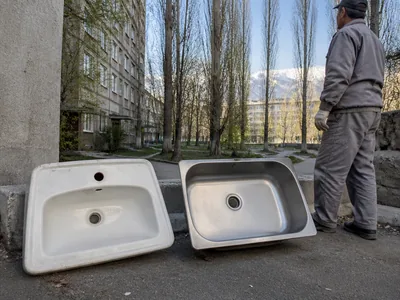
Ceramic or stainless steel. If the sink is built into the countertop, we dismantle first, then carry it out.
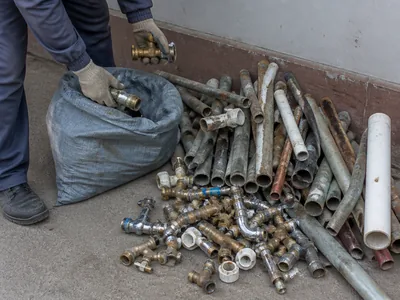
Brass, steel, plastic — small stuff, but metal takes up space. We bag it and haul it away with the rest.
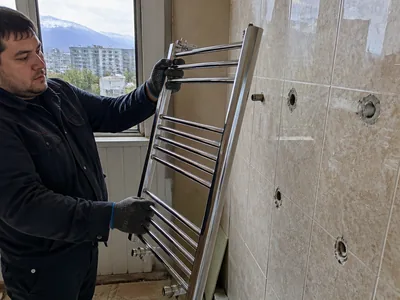
Heavy, wall-mounted — we remove them with the mounts so no torn holes are left behind.
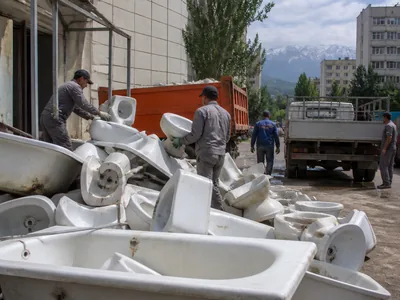
After room renovations, a dozen bathtubs and toilets pile up. We haul them away in one truck run.
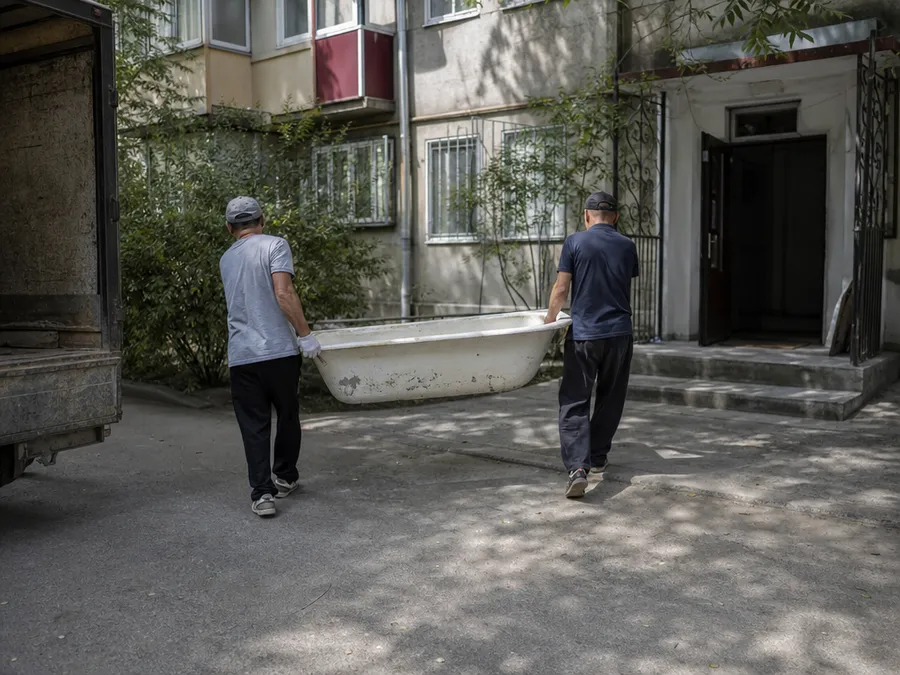
We pick up the bathtub from your apartment or house. Loaders carry it out, load it into a GAZelle, and we take it for disposal. The price is fixed before we arrive.
Bathtub removal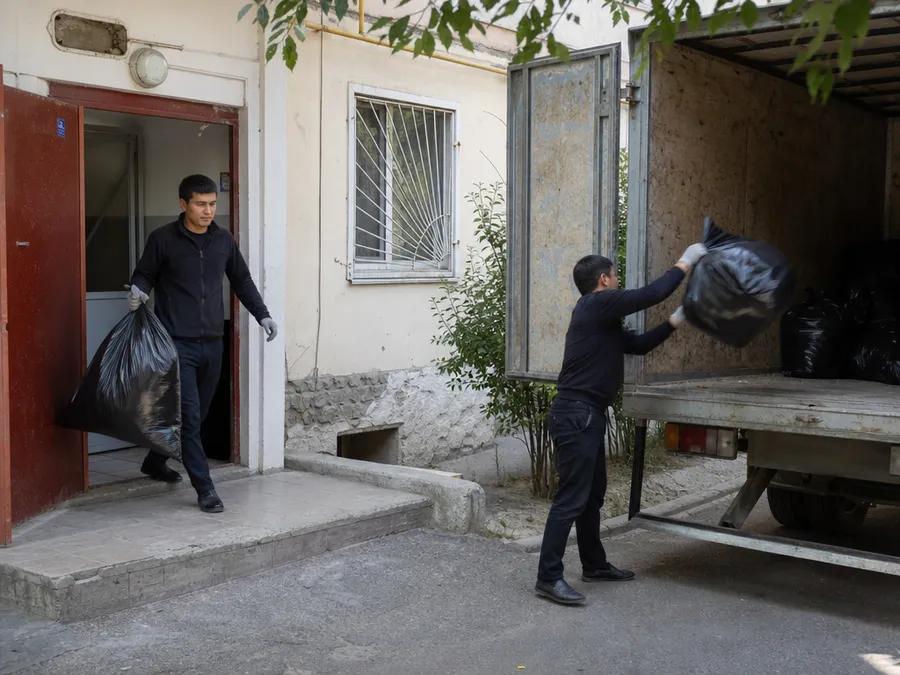
If the fixtures are still bolted down, we'll remove them, disconnect the supply lines, and carry them out. We don't start loading without dismantling.
Need loaders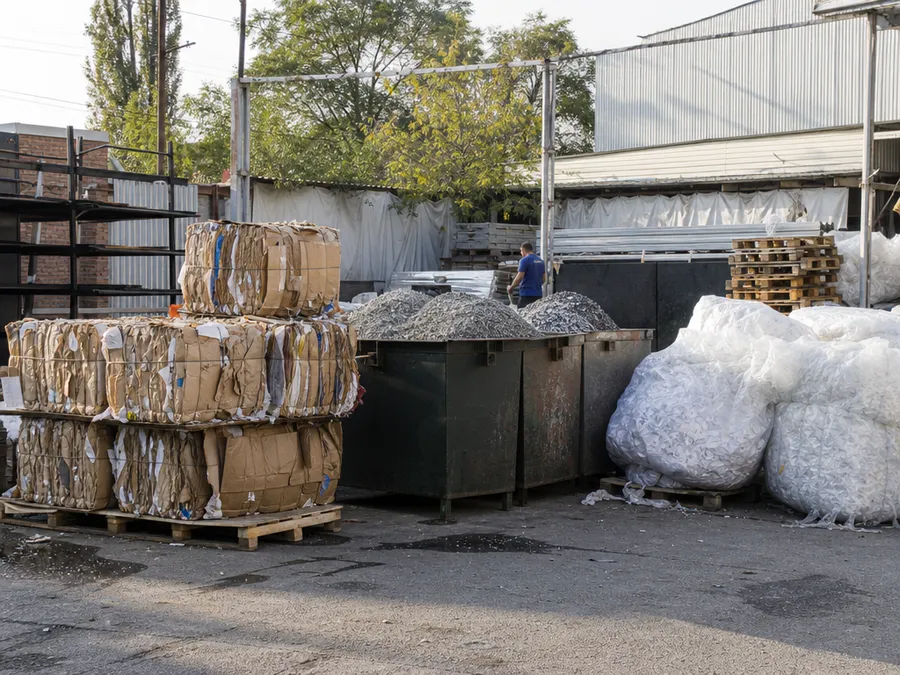
For hotels, dormitories, offices. We calculate the volume by the number of units and send the right size vehicle.
For legal entities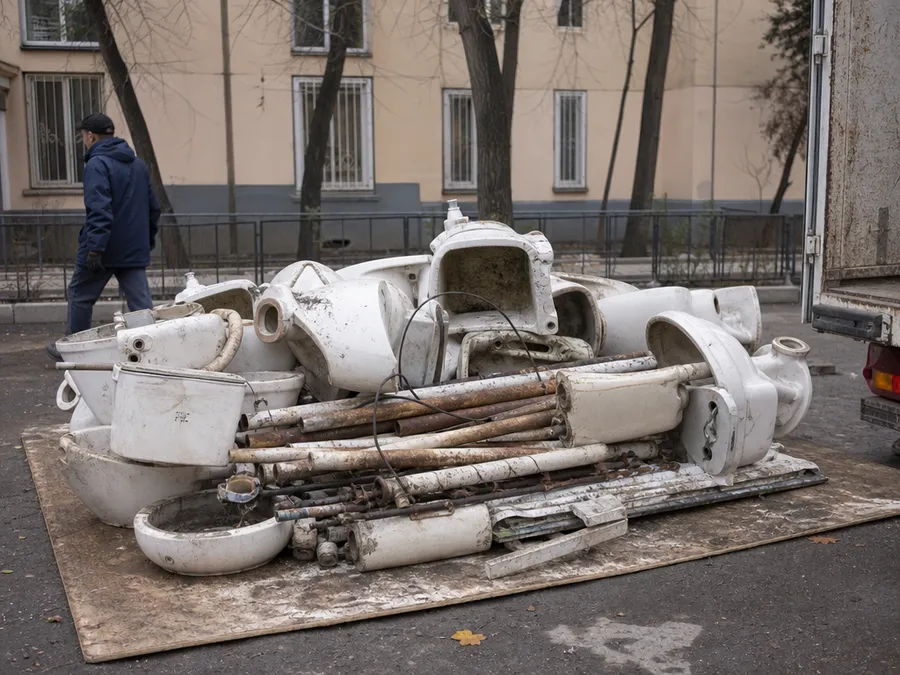
Don't worry about faience and cast iron. A dump truck is handy when the fixtures are already broken and piled up in the yard.
Order a dump truck
Faucets, pipes, a couple of valves — we pick them up along the way. If the volume is less than a truckload, you pay for what you actually have.
Book a GAZelle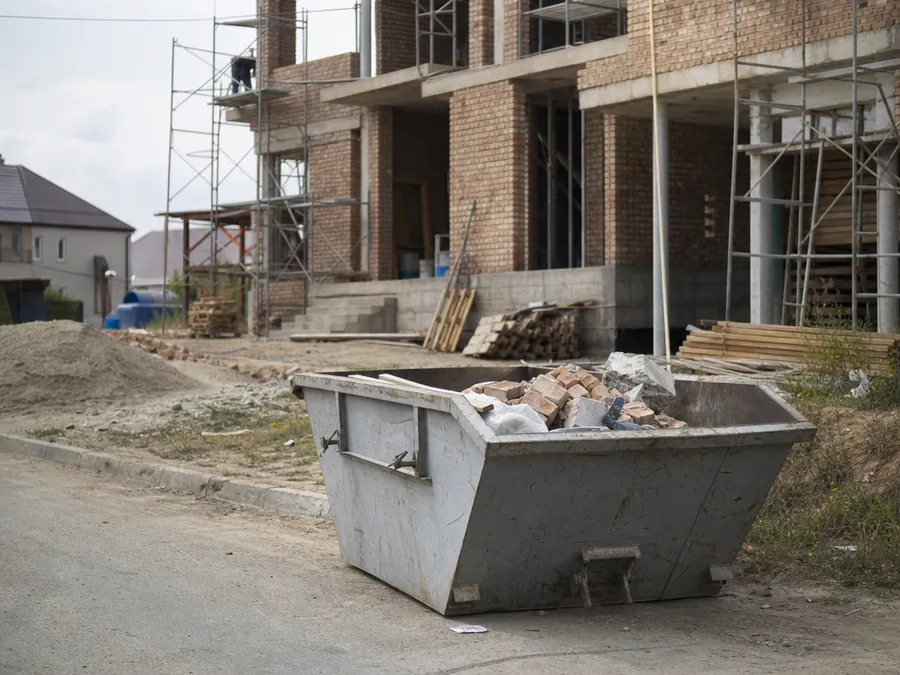
For long-term collection of plumbing fixtures on site. We place a dumpster and pick it up when you call. Pricing is separate — message us on WhatsApp.
Message us on WhatsAppA GAZelle is enough for plumbing fixtures — cast iron is heavy but compact. If there are several bathtubs, we'll send a bigger truck.




Valid from August 2026 · price per trip within the city
| Equipment | Volume | Payload capacity | Price per trip | Extra hour |
|---|---|---|---|---|
| GAZelle 1.5 t | 12 m³ | up to 1.5 t | 30 000 ₸ | 6 000 ₸ |
| GAZelle 2.5 t | 16 m³ | up to 2.5 t | 35 000 ₸ | 9 000 ₸ |
| Truck 5 t | 25 m³ | up to 5 t | 40 000 ₸ | 12 500 ₸ |
| ZIL dump truck | 7–12 m³ | up to 7 t | 40 000 ₸ | 12 500 ₸ |
| KAMAZ dump truck | 15 m³ | up to 20 t | 55 000 ₸ | 15 000 ₸ |
| Howo dump truck | 25 m³ | up to 40 t | 60 000 ₸ | 15 000 ₸ |
| PUHTO (skip) | 8–10 m³ | up to 7 t | 45 000 ₸ | — |
| Multilift | 20 m³ | up to 12 t | 100 000 ₸ | — |
| Skip | 27 m³ | up to 15 t | 135 000 ₸ | — |
| Max skip | 32 m³ | up to 20 t | 160 000 ₸ | — |
Prices apply within Almaty city limits. Outside the city, mileage is added — we calculate it in chat before dispatch.
Not sure which truck you need? Send a photo — we'll pick one for you.
Message us on WhatsAppDismantling, disconnecting from the riser, carrying it out of the flat — all in one visit. We always clean up after loading.
From request to disposal — five steps. We come the same day if a truck is available.
Book a pickup on WhatsAppTell us what the suite is and how much there is. A photo of the bath or toilet speeds up the quote enormously.
We estimate the weight and volume, and choose a GAZelle or a truck. We give you a price and lock it in before dispatch.
We arrive at the agreed time. If the suite is outside, we load right away; if it's in the flat, we come in with the movers.
We disconnect the pipework, take it off its mounts, and carry it out. Cast-iron baths are carried with straps; acrylic ones are packed separately.
We take it for disposal, and the metal goes for recycling. We sweep the spot where the suite stood.
We show you what the stairwell looks like before and after — and what we take away for disposal.
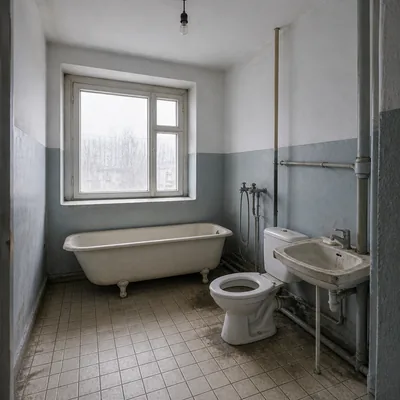
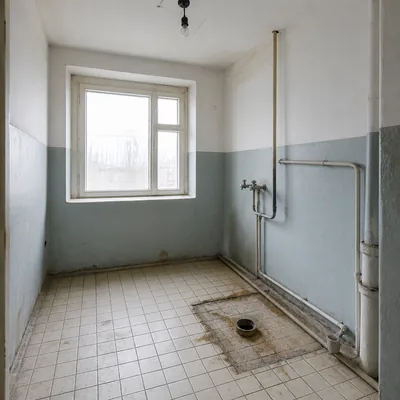
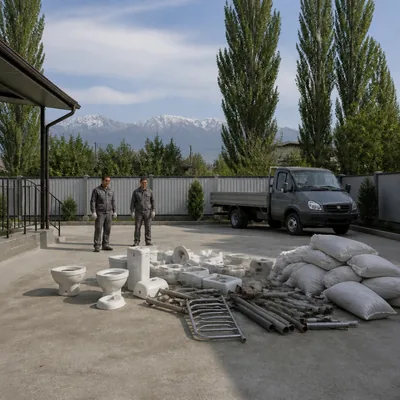
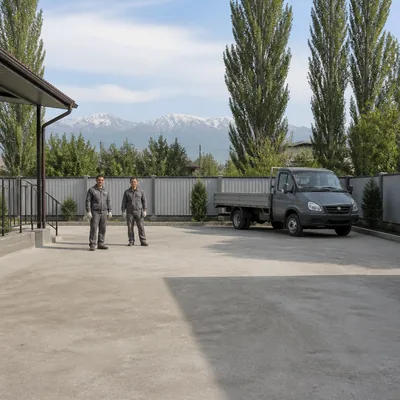
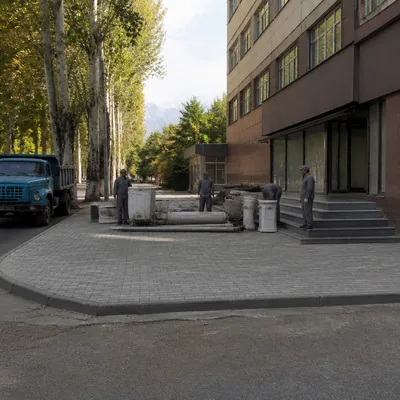
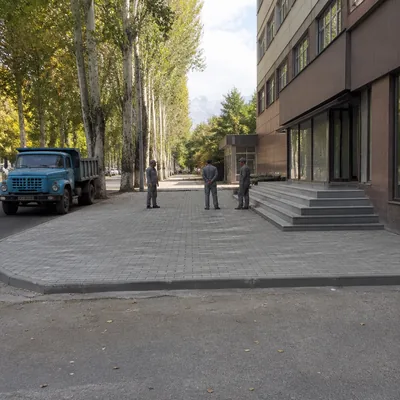
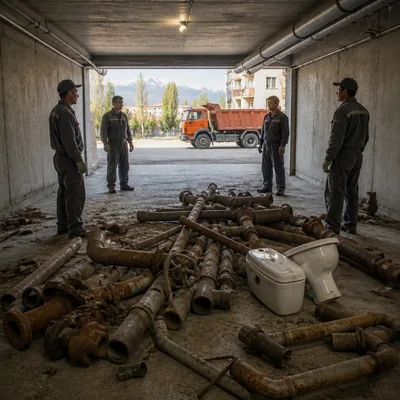
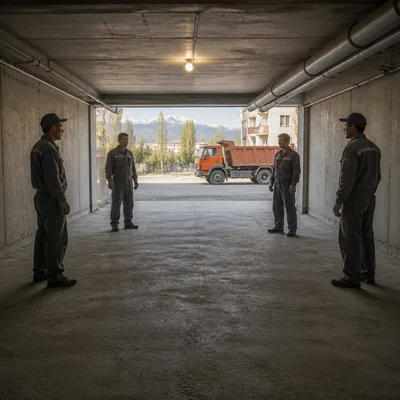
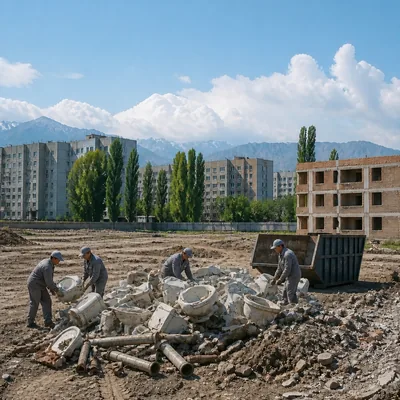
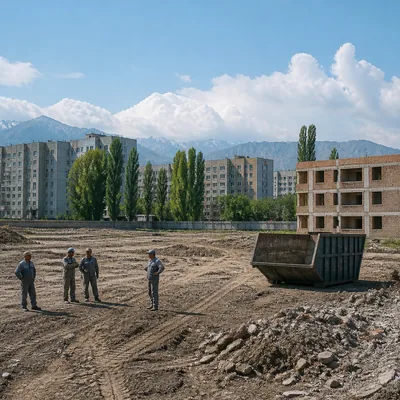
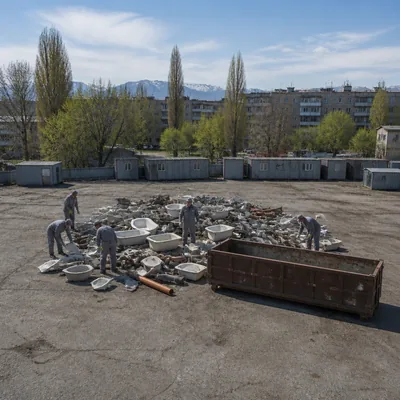
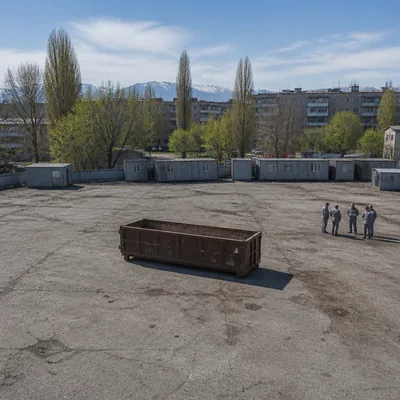
Loaders and a driver arrive on site. If the plumbing is connected, we carefully disconnect it first.







Plumbing gets replaced not during renovation season, but when it bursts. Or when the bathroom is planned anew, and the old cast-iron tub stands in the way of all plans. At that moment, a person isn't looking for 'municipal solid waste disposal' but simply — who will take all this away today or tomorrow. Then the math begins, and for most it goes wrong: it seems like 'a couple of small things,' but in reality, the loaders have half a day's work.
Plumbing removal is about weight and dimensions, not the number of items. One cast-iron tub weighs over a hundred kilograms, and two people can't carry it down from the ninth floor without risking wrecking the stairwell. A toilet, sink, towel warmer, fifty-liter boiler — each item has its own character: some shatter, some need cutting, some can't just be thrown in a container. Below is a breakdown from a logistician who takes these orders and calculates them every day.
We won't retell the price list and work stages — they're on the page above. This article is about something else: how to estimate the volume before calling, how old plumbing removal differs in a panel building versus a private house, what to do with the water inside the boiler, and why sometimes it's cheaper to order one trip than three small ones. From experience, about seventy percent of orders get adjusted on site, and almost always toward 'it turned out to be more.'
Let me start with what I see most often in orders. People write 'remove the tub,' but in reality, waiting in the yard for loading are: the tub itself, toilet, sink, faucets, towel warmer, boiler, a bunch of pipes and fittings, and sometimes even a bag of broken tiles. So plumbing removal is always not one item but a set. And you need to calculate it not by the number of pieces but by weight and volume.
Here's what usually goes into the truck when we arrive at the address:
Now in order. Cast-iron tub and enameled steel are two different worlds. Cast iron is heavy but sturdy: you can drop it, and it won't crack. Steel is light, but on impact the enamel flies off, and the tub turns into a sieve. Loaders know this and carry cast iron on straps, while steel — in hands, but carefully. If the tub is cast iron, it's often sawed on site to carry it out in pieces — otherwise, you might not be able to turn around in the stairwell.
The weight of a cast-iron bathtub is the biggest surprise for the customer. Ninety percent of people think it weighs like a bag of cement. But it weighs like two bags of cement, only awkward. Carrying it down from the fifth floor without an elevator is a whole operation. We usually warn: if the tub is cast iron and the elevator is out, be prepared for the crew to take longer, and that will affect the final price. Not because we're greedy, but because the labor is real.
A steel enameled bathtub weighs three times less. Two people can carry it down, but it's long and slippery. If you carry it wrong, you can cut yourself on chipped enamel. So we always use gloves and wrap the edges. When loading, we put steel on top so it doesn't get dented.
Ceramics are fragile. A toilet, sink, bidet — all of it chips from any impact. When removing old plumbing, we often see that people have already tried to carry the toilet out themselves, and it's smashed to pieces. Then the job gets harder: you have to collect all the shards so no one gets cut, and bag them. If the toilet is intact, we wrap it in stretch film or cardboard. But most often the ceramics already have cracks — we still have to remove them, just more carefully.
Bidets and sinks are usually smaller and lighter, but still ceramic. The main thing is not to knock them against each other. In the truck, we put them in a separate corner and pad them with soft material. If you're ordering plumbing removal, let us know there's ceramic — the loaders will bring extra packaging.
A boiler is a story of its own. Even empty, it weighs a fair bit, and if there's water left inside, that's an extra 50–80 kg. Before removal, it needs to be disconnected from the power, drained, and taken off its mounts. Boilers often stick to the wall so badly you can't remove them without an angle grinder. We do that on site. A towel warmer — water or electric — also needs draining and dismantling. Pumps, filters, hydraulic accumulators — all of it contains metal and plastic, and you can't just throw it in a container.
If the boiler is large, 100 liters, two people carry it out on a stretcher. It's awkward to carry alone, you could drop it and break it. We insure such items.
Usually a client orders removal of dismantled plumbing fixtures and then asks: 'Will you take the pipes too?' We will. Pipes are plumbing fixtures too. Cast-iron risers, steel supply lines, polypropylene, metal-plastic — it all goes in the truck. Fittings, faucets, flexible hoses — small stuff, but it adds up to a couple of bags. If there's broken tile left from demolition, you can add that too, but that's construction waste, and we'll warn you it's heavier than it looks.
In one go, it's realistic to remove a full set from a standard apartment: bathtub, toilet, sink, boiler, towel warmer, pipes, and small stuff. If there are also leftover finishes, mention it when you book, because the volume can grow, and then you'll need a bigger truck. We always say: better to tell us everything upfront than to load in two trips.
And one more thing: if you're replacing plumbing but don't want to remove everything at once, you can order just the large items. But keep in mind that a second visit costs extra, and it'll be more expensive than removing everything in one go. So we advise against splitting it up.
The first thing a logistics manager asks isn't "what are you throwing out" but "how many bathrooms are in the apartment." It's not idle curiosity. One bathtub versus a bathroom with a toilet, sink, and boiler means two different trips, even though on the request form the difference is just one word. Removing plumbing fixtures is almost always counted by points: how many spots have equipment and what exactly is in each one.
Walk through the apartment and count out loud. First bathroom, second, kitchen, storage room, balcony. Each has its own set: bathtub, toilet, sink, boiler, washing machine, towel warmer. Then for each item — material and approximate weight. That way, what looks like "a pile of junk" becomes a list where you can see what's more: volume or mass.
From experience, "one bathtub" means a GAZelle if you're carrying it out from the first floor. "Bathtub plus toilet plus sink" is already a GAZelle plus movers for two hours. And when you add a boiler and a second bathroom, you need a different vehicle. The request is accepted based on this list, not the number of items.
A cast-iron bathtub weighs over a hundred kilograms, and that's without water and without legs. An acrylic one weighs twenty to thirty, and one person can carry it. The difference is fivefold, yet on the request form both are listed as "bathtub." That's where half the surprises come from: the client says "one bathtub," the movers arrive and see cast iron that needs to be cut with an angle grinder, otherwise it simply can't be taken out of the building.
A toilet is ceramic, it chips, but it's heavy. A sink is the same. A cast-iron kitchen sink weighs as much as half a bathtub. A steel towel warmer is about ten kilograms, a cast-iron one is thirty. Count material, not pieces. That's the main mistake in estimation.
| Item | Material | Approximate weight | Carrying-out feature |
|---|---|---|---|
| Bathtub | cast iron | 100–120 kg | cut on site, otherwise it won't fit through the door |
| Bathtub | acrylic, steel | 20–40 kg | carried out whole, often by two people |
| Toilet | ceramics | 25–35 kg | light but fragile, chips on impact |
| Boiler | steel plus water | 60–90 kg | drain the water first, then carry |
| Towel warmer | steel or cast iron | 10–30 kg | removed separately, often in a niche |
| Sink and washbasin | ceramic, cast iron | 15–40 kg | removed from mounts, sometimes walled in |
A fifty-liter boiler is fifty kilograms of water plus the casing. Until it's drained, it weighs like a cast-iron bathtub, only more compact and with sharp edges. You can drain it yourself, but many don't think about it, and the movers arrive to a full tank. Then carrying it out takes an extra hour.
Same with condensation in pipes and leftover water in siphons. It's a small thing, but every such small thing adds weight and mess. From experience, if the water is drained in advance, the trip goes noticeably faster and without a puddle on the stairwell. It's not about saving money — it's about not flooding the neighbors below.
A second trip is needed when the volume doesn't fit in one vehicle or when the movers physically can't carry everything out at once. That doesn't mean you pay twice as much as for the first trip. The difference is that the second trip follows an already loaded route, and part of the work is done.
Order matters more than speed here. First, things that are cut and chipped are carried out, then whole items, then small stuff. If you do it the other way around, the small stuff scatters across the truck bed and clogs the space needed for the bathtub.
Removal of dismantled plumbing fixtures only forgives mistakes at the request stage. Fixing them later costs more: the loaders have already arrived, the truck is waiting, and cast iron doesn't cut itself. That's why we estimate by points and materials, not by inspiration. Once the list is ready, the trip goes smoothly, and a second visit, if needed, turns out not as two separate plumbing removals but as a continuation of one.
The logistics specialist doesn't look at the address but at three things: where the truck will park, how to lift the load to the floor, and how many times we'll have to come back. The building type is just a consequence. Because removing dismantled plumbing fixtures from a nine-story panel building and from a three-story Stalin-era building are two different jobs, even if the load is the same.
The fastest is a panel building with a working elevator. Everything is straightforward: load into the cabin, exit on the first floor, roll to the truck. Often we don't even cut the bathtub — a cast-iron one fits diagonally in the freight elevator if turned correctly. A couple of minutes to turn it, and off we go. The only mistake is thinking it'll be like that everywhere.
An elevator without light or under repair throws off the whole time estimate. Carrying cast iron to the ninth floor by stairs is no longer loading — it's an operation with ropes, safety, and a third person below. Two hold, one belays at the turns. It goes slowly, and no one complains — we don't want to damage the railing or neighbors' doors.
In panel buildings, stair flights are short but landings are narrow. There's almost no room to turn a bathtub between flights. So it's usually not carried up the stairs — it's cut on site or lowered down the facade. A boiler is easier: it's compact but heavy at the bottom, and you can't tilt it more than forty degrees if there's water inside.
If the elevator works but the freight one is taken by neighbors — that's another scenario. We wait, and that time isn't charged separately. The driver just stands in the yard and stays in touch by phone. It's annoying, but it happens more often than you'd think.
A Stalinist building means high ceilings and staircases built for people, not for cargo. Long flights, landings with windows, ninety-degree turns. A cast-iron bathtub physically can't make that turn. No way. Not even with four people, not even sideways.
So it gets cut. An angle grinder through enamel and cast iron, four or five cuts, twenty minutes of work and lots of sparks. Then we carry out the pieces — they fit everywhere. This isn't 'damaging property'; it's the only way to get the item out of the apartment without tearing down a wall. You can't cut on the landing — sparks fly onto wooden railings, so we usually work in the bathroom or on the stairs with protective covering.
Sometimes neighbors won't allow cutting. Then the only option is through the window — with a rope and someone below holding the guide line. More time-consuming, but safer for the stairwell.
There was a case on Gagarin — a Stalinist building, third floor, the bathtub was brought in through the window in '68 and couldn't be taken out any other way. We cut it right in the apartment, the owner held a vacuum cleaner to keep enamel off the carpet.
Also, Stalinist buildings often have no freight elevator at all. There's a passenger one, but no one will let you put dirty cast iron in it — and it wouldn't fit height-wise anyway. So it's the stairs, and that means twice as many trips.
In a private house, the hard part isn't lifting — it's getting to the door. The truck stops on the street, then it's the yard, the gate, the path. The gate is seventy centimetres wide — and a bathtub won't fit through. So it goes through the driveway gate, and that gate is often blocked by the owner's car or building materials.
Lawn and paving take a beating. A cast-iron bathtub dragged across wet grass leaves a groove the whole way. So we put down sheets, boards, whatever we've got. We're careful with the paving in the yard too — cart wheels leave chips. Let us know in advance if the path is new, and we'll lay down more protection.
There's an upside: in a private house you can almost always carry everything out through the garage or the summer kitchen straight to where the truck is parked. That saves half an hour, sometimes a whole hour.
A narrow yard, a barrier, cars parked bumper to bumper, a playground right under the windows — in Almaty that's the norm, not the exception. A six-metre GAZelle can only back into a yard like that nose-first, and only if there's room to pull out. Otherwise we park at the entrance and carry everything by hand.
What helps before we even arrive:
None of this changes the price, but it changes the time. And time in this kind of work is the only real currency. Plumbing removal where everything is planned in advance takes forty minutes. The same removal of dismantled plumbing fixtures, but with a bathtub stuck in a turn and arguing neighbors, stretches to three hours. The only difference is preparation.
The door slammed shut, the truck pulled away — and that's where people's interest in the topic ends. But the cargo route isn't just one or two stops, and by the way, it determines how many trips you'll need. Removal of dismantled plumbing fixtures works like this: the unloading address isn't one point but two, and sometimes three.
First we sort the load. Right in the yard, without driving far, because hauling mixed cargo across the whole city means losing time and space. Cast iron and steel go one way, ceramics another, boilers and pumps separately — until everything extra is taken out of them.
Sorting isn't an end in itself. It's how we take away more in one trip than would fit 'by eye'. Ceramics break into pieces and fill the gaps between the big chunks of metal — that's why we don't throw out the shards, we pack them into the crevices.
Metal has weight, and it's the scrapyard that pays for it, not us. A cast-iron bathtub, radiator, towel warmer, pipes — that's scrap, and hauling it in with the general load, meaning to the landfill, means throwing away money and space in the truck. From experience, the metal from an ordinary flat with an old bathtub and bathroom adds up to eighty to a hundred and fifty kilogrammes. That's not small change.
Ceramics, porcelain and glass don't count as scrap — that's a different story. Mix cast iron with shards and you'll have to sort it all over again at the yard. Easier to separate it right away.
A toilet and a sink are hollow shapes. While they're whole, they take up a lot of space and weigh little. Smashed, they take up a third as much. So in the truck we don't baby them: we break them, pack them in, tamp them down. The leftover volume after breaking is about a third of the original — and that's not theory, it's daily practice.
Broken pieces need to go into something, otherwise shards end up all over the truck bed. Bags or old boxes — a five-minute job on site, but if you don't do it right away, you'll be picking them out of the whole bed later.
A boiler isn't just a tank. Inside there's a heating element, wires, plastic parts, sometimes a magnesium anode. A pump is a motor with copper winding — that's a whole different story too. All of this gets dismantled on site, because no one at the receiving point will sort a mixed load — they just won't accept it.
Wire and copper parts go into non-ferrous scrap, but the volume is small — a few kilos per apartment. More hassle than profit, but you can't just throw it in the general pile, so we separate it.
After the items are carried out and loaded, the place is left the way the movers left it. If something spilled in the stairwell, it's swept up. If shards are left in the yard, they're cleared. This isn't a favor — it's part of the job: sweeping is included in plumbing removal, not a separate line item.
People often think, "since they're hauling it away, they'll pick up the trash too." No — we only pick up what we spilled ourselves. Someone else's bags that were sitting by your door aren't our load, and no one's obligated to take them. Though if you ask and there's room in the truck, we usually don't say no.
| Material | Approximate weight per apartment | Where it goes | Share of total load |
|---|---|---|---|
| Cast iron and steel | 80–150 kg | Metal recycling | About half the weight |
| Ceramics and earthenware | 40–70 kg | General stream, after crushing | A third of the volume before breaking |
| Electronics from boilers and pumps | 3–8 kg | Non-ferrous scrap | Less than a tenth |
| Plastic, rubber, insulation | 10–20 kg | General stream | The rest |
Here's the order we do things — exactly like this, no other way. The order matters because it determines how many trips the truck makes and how long it takes.
Removal of dismantled plumbing fixtures isn't just 'loaded and hauled away.' It's disassembly, sorting, and two addresses instead of one. If everything were dumped into one truck, it would drive half-empty, and you'd have to pay for a second trip. So metal separately, ceramics separately, electronics separately. Boring, but cheaper.
Read this far and still not sure about the volume? Send us a photo — we'll calculate and give you a price.
Message us on WhatsAppThe easiest thing, of course, is to sweep everything into one corner and wave it off — "the guys will figure it out." We do figure it out, but not always. There are things that turn a routine plumbing removal into a whole saga: either the movers get flooded, or the truck leaves half-empty and the second trip has to be paid as a full one. Below aren't excerpts from laws, but things we've stumbled on ourselves.
A fifty-liter boiler that was unplugged a week ago still holds about thirty liters. Sometimes forty. That's forty kilos of sloshing water inside a steel cylinder, and when you tilt it on the stairs, water runs down the lid and onto the steps. We've seen this before, so we ask you to drain it in advance. Open the inlet valve, unscrew the bottom pipe, put a basin underneath — and wait. Twenty minutes, no less: the stream is thin at first, then it just drips, but the tank is still splashing.
Same story with the toilet flush, only the volume is laughable. There's literally a liter or a liter and a half left in the bend, but if you tip it on the landing, that liter ends up on the floor. The movers will put down plastic, of course. But you can't put plastic on the stairs — there are other people's carpets by the doors. From experience, it's easier to scoop it out with a ladle into the neighbor's toilet... just kidding. We scoop it into a bucket, pour it down the drain, then carry it dry. Three minutes of work versus a showdown with the building manager.
Many tanks don't hold water but blue toilet cleaner — tablets, gels, air fresheners. By itself, that's not dangerous. The problem is different: when you tip the tank, the blue goo pours onto the movers' feet. And never mind just the feet — it gets into the truck bed, where a cast-iron bathtub will be loaded next, and then it'll have to be scrubbed off. A GAZelle smells pretty bad after that, and our next order might be furniture.
A separate story is leftover aggressive chemicals. Someone cleaned pipes with caustic soda, someone kept vinegar in the tank to remove limescale. If a bottle is sitting next to the toilet and you're handing it over with everything else — let us know. We pack such things separately, put them in a box, and don't tip them over. Not because we're afraid of inspections, but because a spilled reagent in the truck bed will ruin both the metal and the day.
Demolishing a bathroom isn't just the bathtub. There's tile, screed, drywall, bags of adhesive, pipe offcuts. And that's when people pile everything into one heap and say: take it away. But that's essentially two different loads now. Cast iron pulls down, bulky stuff pulls up: tile pieces and screed chunks fill the whole truck bed even though they weigh less. You can load them into the dumpster together with the bathtub, but then you're paying for a dumpster that's a third full of cast-iron scrap.
Second point: the movers carry broken tiles with cement in large bags, and an old toilet next to them is a risk that the ceramic will crack on the road and shards will cut everything around. We don't mix them in the same layer. If there's really a lot of debris, it's more honest to say so when you place the order: part will go in one trip, part in another. Sometimes it works out to one dumpster instead of two GAZelles. You need to do the math before dispatch, not on the landing.
Next to the bathtub there's often a bag of stuff that's just too good to throw in the dumpster: rags, bottles, old shoes, leftovers from yesterday's feast. That kind of neighbor doesn't scare us, but there's a nuance. Food waste in a closed truck bed turns into a source of odor over the day, which then soaks into the wooden sides. So we ask you to separate the bag with food — it'll be picked up first and taken away immediately, instead of being driven around town all day.
Glass, lamps, thermometers, paint leftovers — also not in the common pile. A mercury thermometer broken between the toilet and the bathtub is no longer removal of dismantled plumbing fixtures but a small environmental alarm. Loaders don't haul that away with cast-iron scrap. The easiest is to take hazardous items out separately, in closed containers, and mention it when ordering. We'll tell you what to do with them — in Almaty there are places to drop them off.
If you're not sure what can travel with what, just snap a photo of the pile in the bathroom and send it to WhatsApp. A photo shows more than a description, and we'll tell you right away what to move into a separate bag. We get plenty of orders with questions like this, and that's fine: better five minutes of texting than a second run because of blue water on the floor.
The cost of removing dismantled plumbing fixtures comes down to four things: weight, floor, elevator, mileage. Everything else is derivative. And weight and volume pull in different directions: a cast-iron bathtub weighs more than it takes up space, while a 50-liter plastic boiler is exactly the opposite.
What matters to a mover isn't how many items there are, but how many kilograms and what size. A cast-iron bathtub is a hundredweight plus, but at least you can carry it upright. A toilet is 20–30 kg, but fragile with sharp edges. A sink is 15–25 kg, but if it's old faience, it chips at the slightest knock. A 50-liter boiler is 60–80 kg, and there may still be water inside that nobody drained.
Volume counts too. Three toilets take up as much space as one bathtub, but weigh five times less. That's why we ask for both when you book. If you just say "a bathtub and a sink," we'll send a small truck, four movers will show up — and it still won't be enough.
Got an elevator? Consider yourself lucky. Even if it's a passenger one and the bathtub won't fit, it's still faster than walking. But if there's no elevator or it's broken, every floor adds time. A cast-iron bathtub gets carried up to the ninth floor by four people, and even then with breaks. On the first floor, two can handle it in ten minutes.
From experience, the difference between a first floor with an elevator and a fifth floor without one is about an hour of work. An hour for one item. And if there are five items, that's half a day. That's exactly why we always ask: which floor, is there an elevator, are the stairwells wide. A narrow stairwell is a whole other story: sometimes the bathtub has to be taken apart on site.
People often ask: can we take the bathtub first and the rest later? You can, but two small runs will almost always cost more than one big one. The reason is simple: you're paying not just for weight, but for the truck to show up, for the movers' time, for fuel. Split the order over two days and those costs double.
There's a second thing, too: old plumbing gets replaced in stages. First the bathtub, then the toilet, then the sink. Calling a truck each time adds up. It's easier to coordinate with the plumbers so the removal happens on one day and the pickup the next. Then it all goes in one trip. By the way, that's how plumbing removal in Almaty is usually ordered — all at once.
But sometimes it's the other way around: if the driveway is narrow and a big truck can't get in, you'll have to haul it out in parts on a GAZelle. Then saving money is the least of your worries.
Almaty is a sprawling city. From Talgar to Turksib is a whole different route. Outside the city, mileage gets added to the cost: they count the distance from the city limits to the point. And back again. If you're in the suburbs, say so right away — otherwise the wrong truck will show up.
Mileage is the only part that doesn't depend on weight. Even if you're hauling one toilet, outside the city it'll cost almost as much as a full run within the city. So for the region, it's better to gather everything at once: old plumbing, construction debris, junk from the garage. One trip — one price for the kilometers.
Here are the main factors that affect the total. They're easy to remember:
To avoid overpaying, it's best to say everything upfront: what items, which floor, is there an elevator, where to go. Then you'll get one price and it won't change after loading. And if you forgot something — better to call before dispatch, not when the movers are already at the entrance.
And another thing: don't think a small trip is cheap. A small trip means the same truck, the same loaders, the same fuel. Just less cargo. So removing dismantled plumbing fixtures is more cost-effective in one go, even if you have to wait a couple of days for it.
| Factor | How it affects | Example |
|---|---|---|
| Weight | The heavier it is, the more movers and time | Cast-iron bathtub — 120 kg, plastic — 30 kg |
| Floor | Every floor without an elevator adds time | 9th floor without an elevator — 4 movers |
| Elevator | A passenger elevator may not fit a bathtub | A 170 cm bathtub doesn't fit a standard elevator |
| Mileage | Outside the city it's counted both ways | Talgar — 25 km from the city limits |
| Number of trips | Two small ones cost more than one big one | A bathtub + toilet together is cheaper than separately |
The table sums it up, but in real life there are nuances. For example, if there's no room in the yard for a big truck, you'll have to order a GAZelle — it can end up costing more even with less cargo. Or if the plumbing needs to be taken down from the mezzanine — that's time too.
So there's no universal answer to "how much does it cost." There's a conversation where you describe the situation and get a quote. And if it's fixed before dispatch, it doesn't change after loading. That's the company's rule, and it takes away half the stress.
Hopefully now it's clear why two trips aren't an option. Better to gather everything at once and haul it out in one go. Cheaper and faster.
If you don't have time to read it all — here's a quick summary. It doesn't replace the breakdown, but it helps you see if this is your case or not.
We take cast iron and steel bathtubs, toilets, sinks, bidets, towel warmers, boilers, faucets, pipes. The only things we don't take are items classified as hazardous waste on paper: mercury thermometers, lamps, leftover chemicals in canisters. Plumbing removal doesn't cover those — that's a different story, and it's best to be upfront about it on the phone.
A cast iron bathtub is the heaviest item, often over a hundred kilograms. It doesn't go down in the elevator — only dragged along the stairs or out the window on ropes if the opening allows. A toilet and sink are ceramic, they crack easily, but the shards cut your hands even through gloves, so our movers wrap them in thick film. A fifty-liter boiler isn't just the casing — there's water inside too if it hasn't been drained. A towel warmer may still have water in its tubes — better not leave it outside in freezing weather.
Volume isn't counted by the number of items but by how much space they'll take up in the truck. One bathtub plus a toilet and sink will almost fill a GAZelle if you don't disassemble them. Dismantled plumbing takes up less space, but disassembly takes time, and that's factored into the quote too.
A simple trick: mentally pile everything up by the entrance. If the pile is higher than your waist and wider than two meters, a GAZelle might not be enough. If it's one bathtub and a couple of small items, it will. If it's three bathtubs and two boilers, you'll need a ZIL or a dumpster. A logistics specialist can tell you more precisely from a photo, but you can make a rough estimate yourself.
First — clear the path. If the plumbing is behind a cabinet or a washing machine, move it to an open area in advance. Second — drain the water from the boiler and pipes, otherwise it will all spill onto the stairwell during lifting. Third — warn the concierge or neighbors if you're working on a weekday during the day: the noise of cast iron being dragged across tile can be heard several floors away.
You don't have to take everything apart yourself. You can leave it as is — the movers will dismantle it on site, but that adds time. If the bathtub is bolted to the wall or tiled in, mention it when you book: it may need to be removed, and that's a separate job. If there's an elevator and the bathtub fits the dimensions, that will speed up removal of the dismantled fixtures a lot.
Call as soon as you know you'll be replacing it in the next few days. Not because we're rushing you — but if the plumbing is already dismantled and sitting in the yard, it might get taken or block the passage. If you haven't removed the old bathtub yet but have already bought a new one — call anyway: we'll tell you the best time to order the truck so you don't pay for downtime.
Not sure whether to order plumbing removal at all or just carry it out yourself? Weigh the effort and time. If you have movers, a truck, and a free day — you can do it yourself. If the bathtub is on the ninth floor with no elevator and you've only got one back — better to call us. We work every day from nine to nine, so you can call in the evening too.
We can. A cast-iron bathtub is exactly the kind of load we handle all the time — we've done this more than once. If it won't fit in the elevator, we carry it down the stairs by hand; that's why you need a crew, not just one driver. Tell us in advance about the floor and the width of the stairwell so the right truck and enough people show up to actually lift it.
It depends on how much there is to take and which floor you're on. A GAZelle trip starts at 30 000 ₸; if you need a crew of movers, that's calculated separately — 20 000 ₸. We give you the exact price before loading and never change it, even if there's more stuff than in the photos.
Yes, all at once and in one truck. Toilet, sink, water heater, old bathtub — we load them together; nobody makes a separate trip for each item. If there's only a little plumbing and nothing else to add, we'll be honest: paying for half a GAZelle makes no sense, better to wait until you've got more to go with it.
We can take it off ourselves — that's not just removal, it's dismantling, but we do it. We disconnect the water heater from the water and electricity, then take it off the wall, carry it out, and haul it away. If it's connected and you don't want us touching the plumbing, let us know — we'll discuss the order of work before we arrive.
Sure, that's how we usually do it. We cut a cast-iron tub on site with an angle grinder — sparks, noise, but it slides right through the doorway and doesn't bang up the walls on turns. Glass and ceramics we try to carry out in one piece, but if it won't fit, we take those apart too.
We will, we have our own loaders for that. Fifth floor, no elevator — usually an hour to an hour and a half for all the plumbing, depends on the weight and the width of the stairwell. We don't drop cast iron on the stairs or knock out the railings — this is exactly the case where slower is safer.
We take it for recycling, not to the nearest dumpster. What happens after — recycling or landfill — depends on the material, and that's not your concern anymore. We sweep the area after loading, we don't leave trash in the yard.
Sure, no one's stopping you. Just do the math: getting cast iron to a collection point on your own, finding someone who'll take it, paying for the lift and loading — it takes longer, and often costs no less. If the plumbing is light and you have a car — by all means, take it yourself.
If a truck is free, we'll come in the evening too, we work until nine. Plumbing already removed in the hallway is the easiest case — basically just loading and hauling. Message us on WhatsApp with a time that works for you and send a photo — we'll pick a time and the right vehicle.
We do, our schedule is Mon–Sun, nine to nine. Weekends aren't a surcharge or a reason to say no — if the plumbing is sitting there waiting, we'll come any day. The only thing is, Sunday evening there are fewer trucks, so it's better to write ahead.
Got a question that's not here? Ask — we'll answer in writing, no call needed.
Message us on WhatsAppOrdered removal of plumbing fixtures after a bathroom reno. Everything was smooth, no unnecessary questions. Fixed price, no extra charges.
We rented an apartment after a renovation, and the storage room was a whole warehouse: two toilets, a sink, a pile of pipes. The landlady said "deal with it yourselves." I called, and they came the next morning. Fast and no fuss.
We were taking out an old tub in a Khrushchyovka, and couldn't get it out ourselves — cast iron, the darn thing's heavy. I called, and they arrived within an hour. Two movers, carried it out carefully, didn't even touch the walls.
We needed to get rid of an old bathtub and boiler, and there's no man in the house. Yerlan came with two helpers and carried everything out himself. The price was exactly what they quoted upfront, no extra charges.
old plumbing fixtures after renovation, a toilet and a sink. arrived quickly, took everything. they work carefully.
Ordered old plumbing removal for the first time. Turned out easier than I thought. Called, gave the address, and two hours later the truck was at the entrance.
Old plumbing from every entrance had piled up in our building's basement. The management company threw up their hands, so we neighbors all chipped in. Daniyar came, took a look, said we didn't need a dumpster, a ZIL would do. Honestly — they could've upsold us on the dumpster. The price was locked in right away and never changed.
Had our toilet and sink replaced in the apartment. The old ones needed to go, and my back is bad. They showed up on time and carried everything down from the fourth floor with no elevator. Really saved me.
We were swapping our old tub for a new one, and the cast-iron beast had to go somewhere. No way we could've hauled it out ourselves — it weighs a hundred kilos. Two guys showed up, carried it down from the fourth floor with no elevator, didn't even scratch the railing. Took it away and swept the stairwell.

We needed to remove an old boiler and bathtub. The workers came quickly and took everything away. The price was exactly what they quoted upfront.
We were clearing out my grandma's house, and the plumbing there was straight out of the eighties. Dinara said from the photos that one GAZelle wouldn't be enough, and she was right. They hauled everything away in one go.
After the renovation we had two sinks and a toilet left over. They took everything in one trip, the price didn't change. Thanks to Askhat, he suggested we could throw in the faucets too.
A toilet, a sink and an old washing machine after the renovation. There was also a gas stove sitting in the yard, and they took that too while they were at it. All good, no questions asked.
It was my first time ordering plumbing removal, thought it'd be a hassle. Turned out to be a breeze: sent photos on WhatsApp, got a price, and they picked it up the next day. A sink and a toilet.
We were renting a cafe and needed to clear out old plumbing from the back room. Sinks, boiler, toilet. They came in the evening after we'd closed. Had it all out in half an hour. Dinara warned us the boiler needed draining, so we did that in advance.
They did everything right, but we waited an extra hour for the truck. Otherwise no complaints — the old plumbing was removed, the water was shut off, everything's clean.
They took everything away, but we waited an hour and a half longer for the truck than promised. Otherwise fine, the movers were polite and didn't argue about the floor.
We were replacing the boiler in winter and the old one had to go ASAP, and it was minus twenty outside. They came the same day, even though I thought nobody would drive in that weather. Carried it down from the fifth floor, all neat and careful.
After winter, the dacha was left with a pile of junk, including old plumbing. Ordered a GAZelle, they came and loaded everything. Even took the neighbor's trash for an extra fee. Convenient.
We were closing down a café and needed the plumbing removed from the back room. Sinks, a boiler, an old toilet. Askhat came in the evening after closing so he wouldn't get in the way. Respect.

We were clearing out the basement of an old building, and the plumbing there was from Soviet times. Rusty pipes, a tank, a sink. I thought I'd have to haul it all myself, but the guys got it done fast. Even swept up after themselves.
old plumbing fixtures after renovation, two toilets and a sink. arrived quickly, took everything, swept the yard. price as agreed.

Replaced the boiler in the apartment and needed the old one gone fast. Called in the morning, they came after lunch. The movers quickly carried it down from the fifth floor. Recommend.
Showing 3 of 23
Want the same? Describe your task — we'll calculate and give you a price before the truck arrives.
Message us on WhatsAppChecked us out? Drop us a line — we'll pick the right truck for your load.
Message us on WhatsAppCollection, sorting, crushing, secondary raw materials — the steps in order and what actually gets recycled.
How medical and industrial waste differ from household waste and what's required of the hauler.
Illegal dumps on the outskirts, soil and groundwater: what happens when waste goes to the wrong place.
Articles of the Administrative Offenses Code of Kazakhstan, amounts in MCI for 2026, and who's responsible for the garbage — the carrier or the client.
Old plumbing shouldn't be sitting by the entrance. We'll pick it up, carry it out, and take it for disposal — all in one trip.
Tell us how the pickup went — it helps us and anyone choosing a hauler.



