Sergey V.
Construction debris removal in Almaty is what they're about. Called in the morning, they arrived by lunch. The container was clean, no leftovers from previous clients.
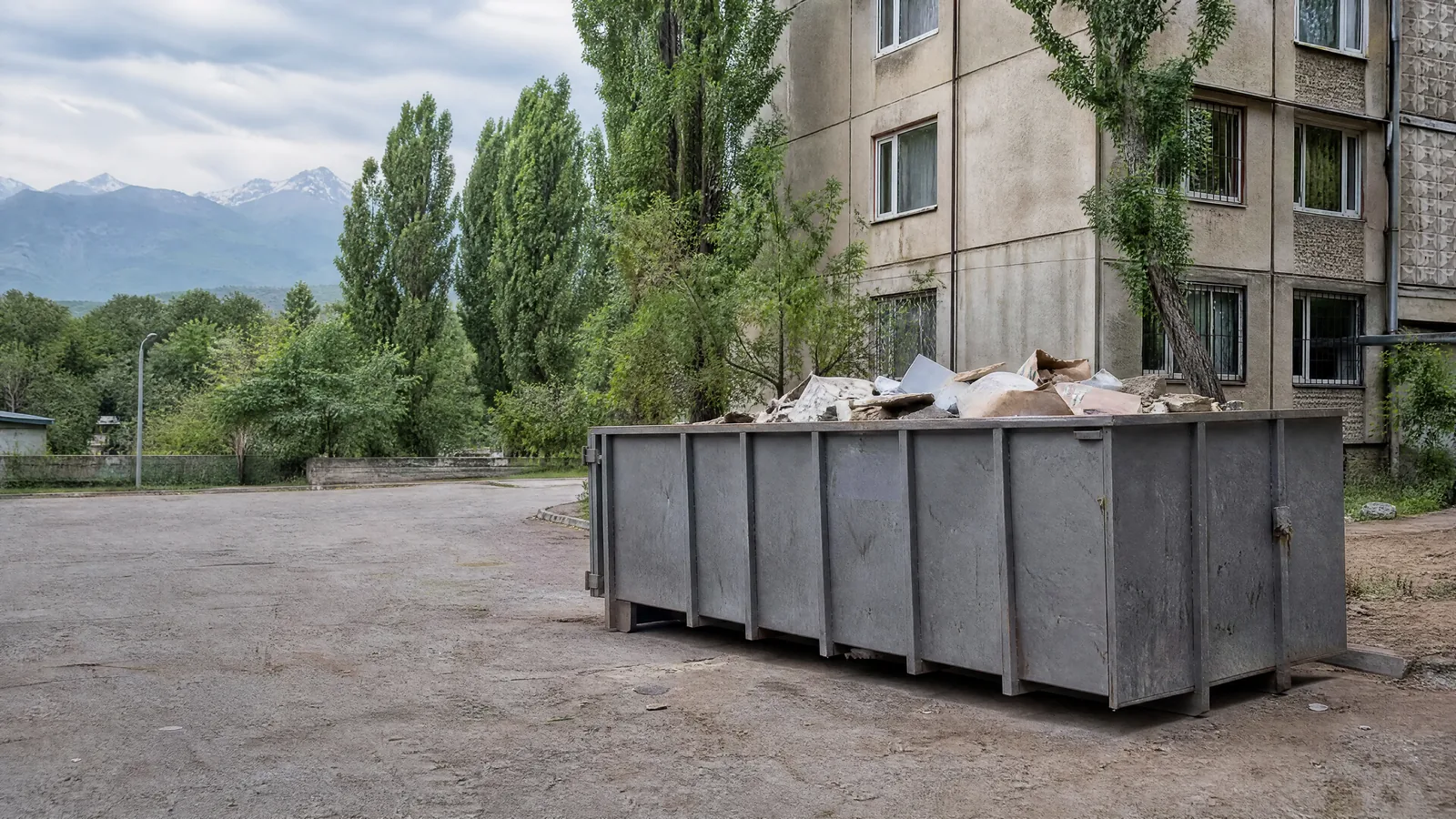
An 8-cubic container — we'll bring it and pick it up the same day if you book in the morning.
Work out how many trips you actually need. If you're unsure about the volume, send a photo of the pile and we'll adjust the number.
The figure will be a "from" — we'll give you the exact one after a photo or a site visit.
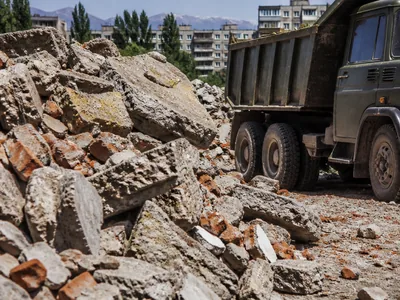
Broken concrete, brick, leftover masonry — heavy stuff. We take that by tipper truck, because you can't throw that much weight into an 8-cubic skip without risk.
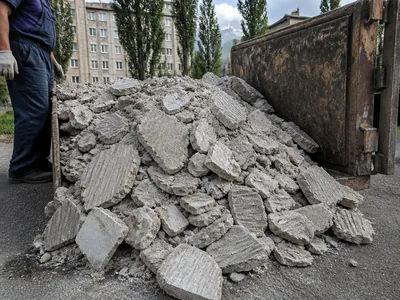
Stripped plaster, chunks of screed, tile adhesive. Loose and dusty — we load it into a closed container so the wind doesn't blow it around the yard.
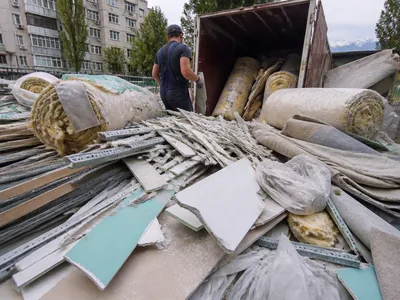
Drywall offcuts, insulation, profile scraps, rolls of linoleum. A typical one-flat renovation is exactly 8 cubes — that's one skip.
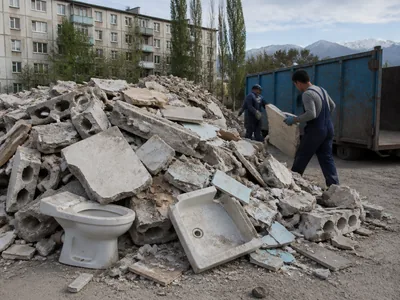
Everything left after tearing out partitions, the bathroom, old finishes. Lots and fast — here you need not just a container but a crew to carry it out.
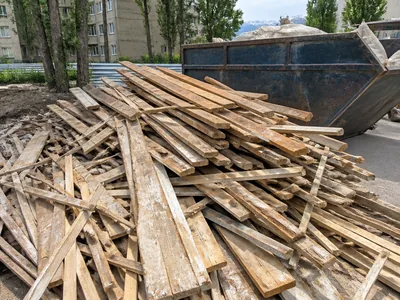
Old boards, beam offcuts, floor slats, dismantled lathing. Wood is bulky but light — it fits more than its weight suggests.
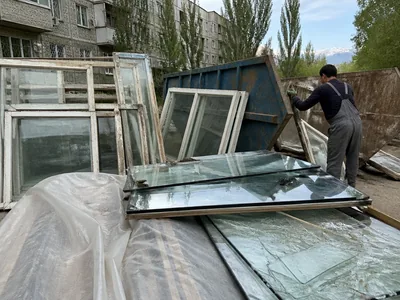
Frames, sashes, broken double-glazed units, mirrors. We put glass separately and cover it so shards don't stick out of the container.

Cast-iron pipes, bathtubs, toilets, radiators. Heavy and awkward — loaders carry them one by one, not drag them down the stairs.

When it's all in one pile: rubble, wood, film, furniture leftovers, packaging. We sort on site and take separately whatever can't go in the skip.
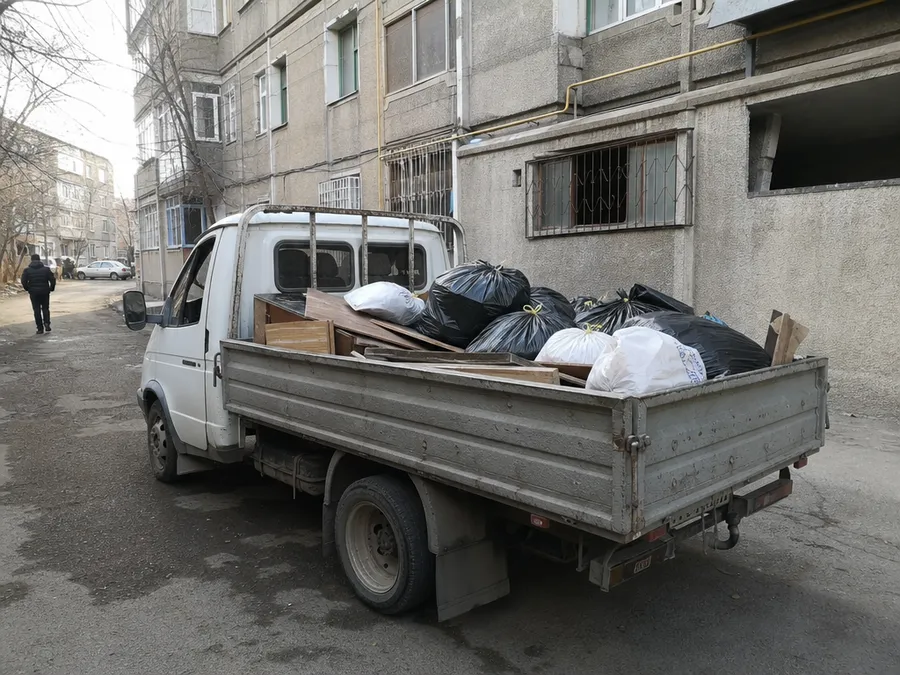
When there's not much waste — a bathroom, one room, a couple of pallets. We send a 1.5 t GAZelle and load by hand. For flat renovations this is usually cheaper than bringing a skip.
Book a GAZelle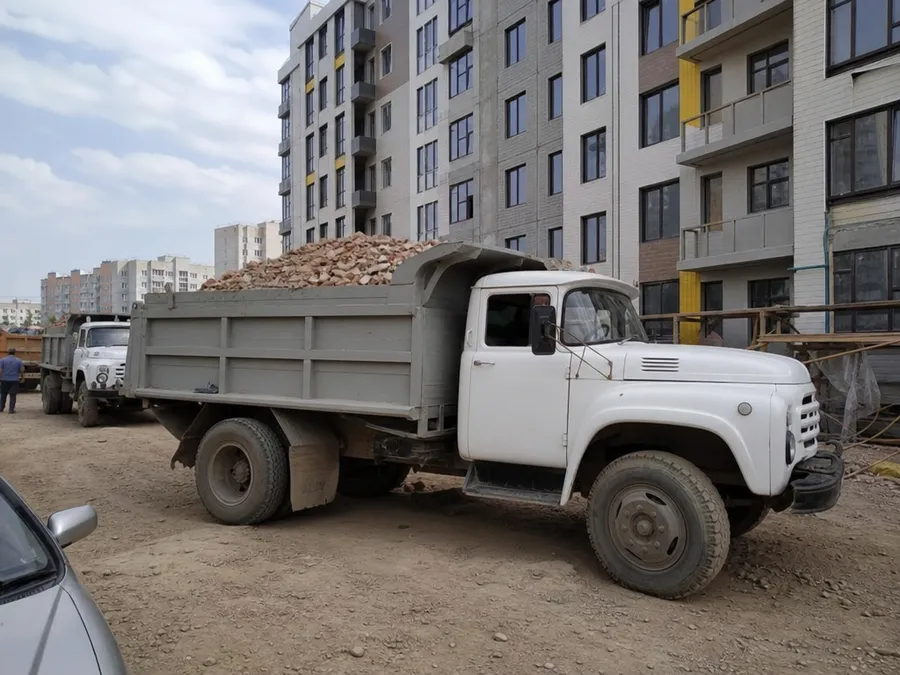
Concrete, brick, screed — the stuff that weighs. A ZIL dump truck drives into the yard and tips itself, no manual unloading. If the entrance is narrow, tell us right away and we'll pick another vehicle.
Order a ZIL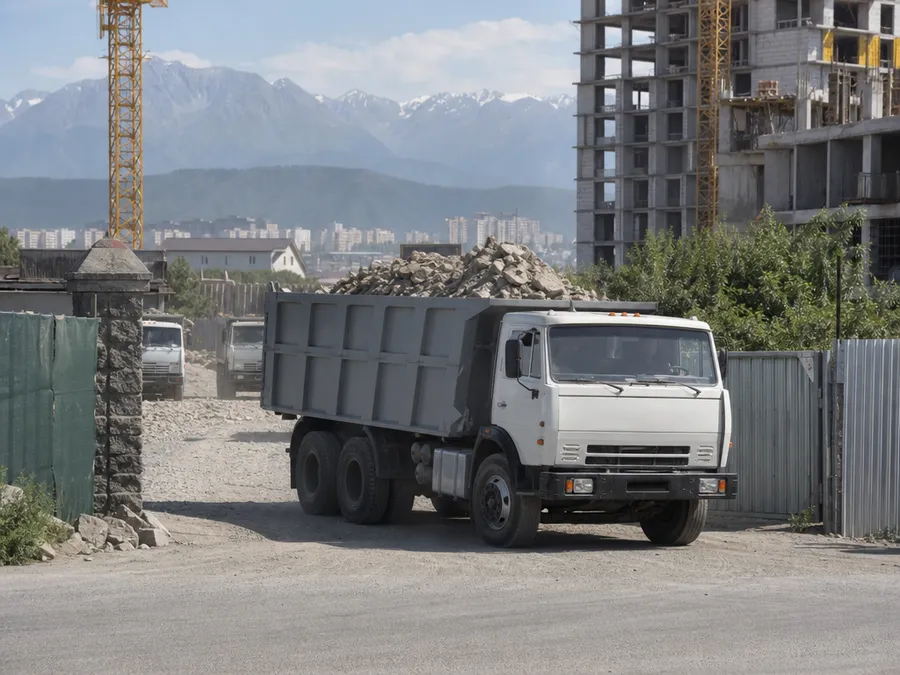
Taking down partitions, dismantling an extension, renovating several flats in a row. One KAMAZ trip replaces three or four GAZelles.
Order a KAMAZ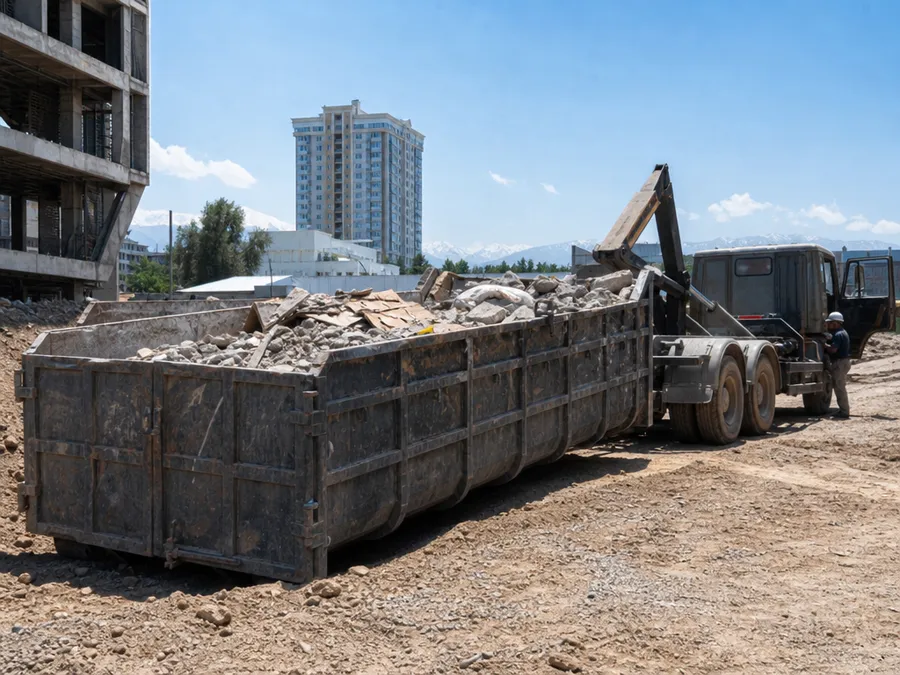
A construction classic: the container is placed by the entrance, you throw the waste in yourself or with our loaders. We pick it up when it's full. An 8-cube skip is roughly one flat renovation.
Place a skip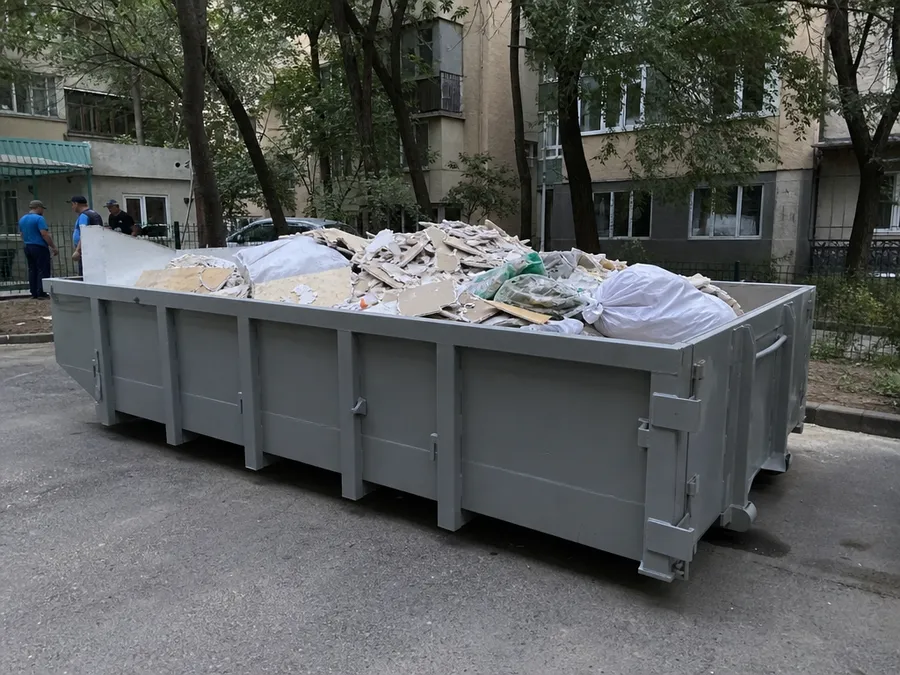
For knocking down walls, dismantling facades, clearing an industrial site. The multilift lifts the container onto the platform itself — no manual hauling.
Order a multilift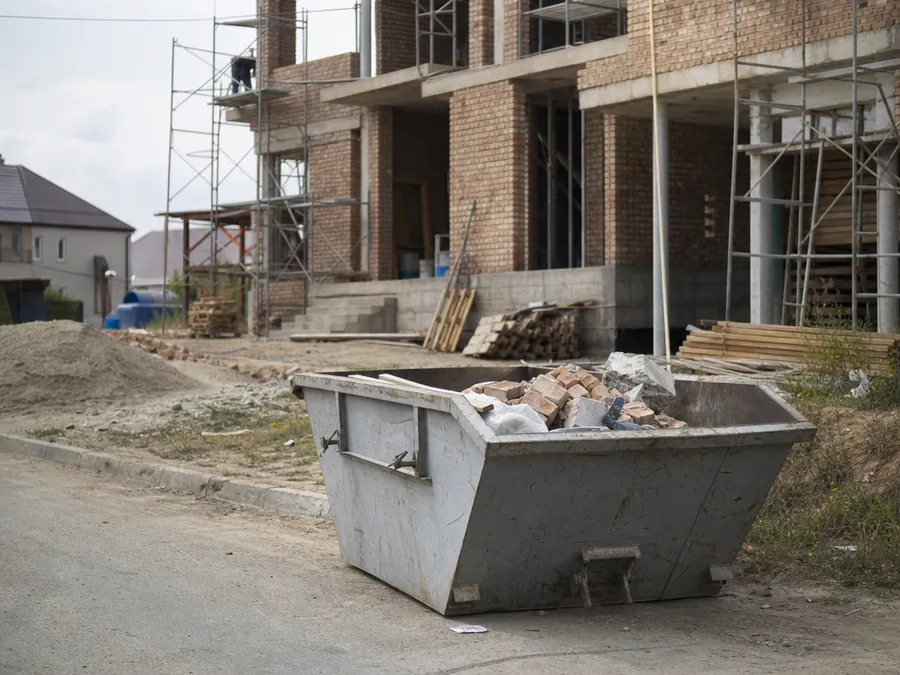
Need the dumpster to stay in the yard for a week or a month while the renovation is going on? We'll discuss the term separately — message us on WhatsApp and we'll calculate by the day. We confirm the price before delivery.
Discuss the timeframe on WhatsAppBelow are the trucks actually in our fleet and their beds. The volume of the bed and the weight determine how many trips you'll need and how much it costs.




Valid from August 2026 · price per trip within the city
| Equipment | Volume | Payload capacity | Price per trip | Extra hour |
|---|---|---|---|---|
| GAZelle 1.5 t | 12 m³ | up to 1.5 t | 30 000 ₸ | 6 000 ₸ |
| GAZelle 2.5 t | 16 m³ | up to 2.5 t | 35 000 ₸ | 9 000 ₸ |
| Truck 5 t | 25 m³ | up to 5 t | 40 000 ₸ | 12 500 ₸ |
| ZIL dump truck | 7–12 m³ | up to 7 t | 40 000 ₸ | 12 500 ₸ |
| KAMAZ dump truck | 15 m³ | up to 20 t | 55 000 ₸ | 15 000 ₸ |
| Howo dump truck | 25 m³ | up to 40 t | 60 000 ₸ | 15 000 ₸ |
| PUHTO (skip) | 8–10 m³ | up to 7 t | 45 000 ₸ | — |
| Multilift | 20 m³ | up to 12 t | 100 000 ₸ | — |
| Skip | 27 m³ | up to 15 t | 135 000 ₸ | — |
| Max skip | 32 m³ | up to 20 t | 160 000 ₸ | — |
Prices apply within Almaty city limits. Outside the city, mileage is added — we calculate it in chat before dispatch.
Not sure which truck you need? Send a photo — we'll pick one for you.
Message us on WhatsAppBesides the removal itself, we can dismantle, carry out and sweep up. These are the services most often requested along with a container.
Five steps — and the site is clean. No long approvals or rescheduling.
Start with a requestDescribe what kind of waste and roughly how much — or just send a photo of the pile. That's usually enough to estimate the volume.
We calculate cubic meters and weight, then decide: GAZelle, dump truck or an 8-cubic-meter dumpster. We give you the price and lock it in before delivery.
We bring the container or truck to the address. If the dumpster stays in the yard, we place it level so it doesn't block traffic or people.
You can toss it in yourself or call our loaders — they'll carry it out from any floor, basement or backyard. We'll cut up large items on site.
We pick up the container, take it to the landfill, and sweep the site afterward. Photo report on request — we'll send it in the chat.
We show what a site looks like before removal and after.
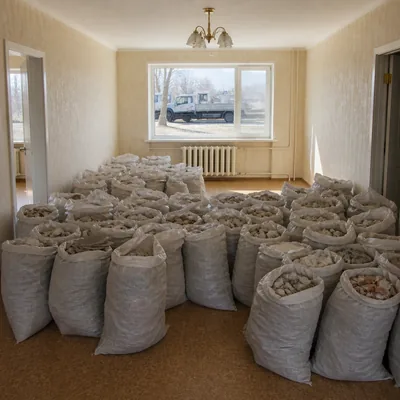
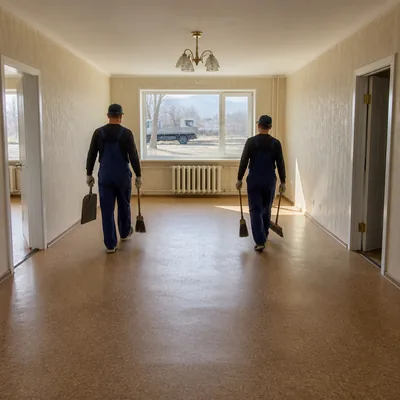
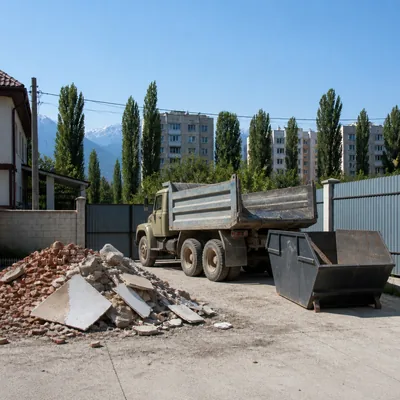
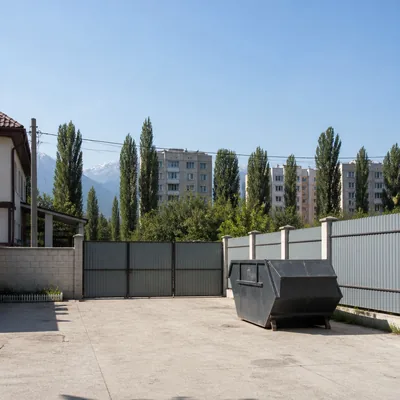
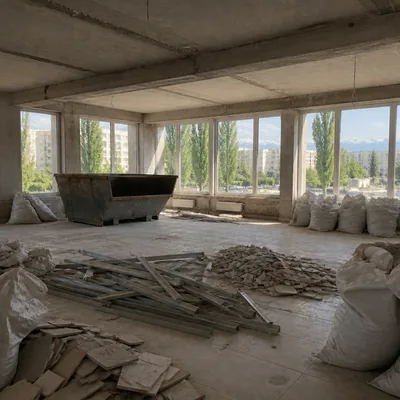
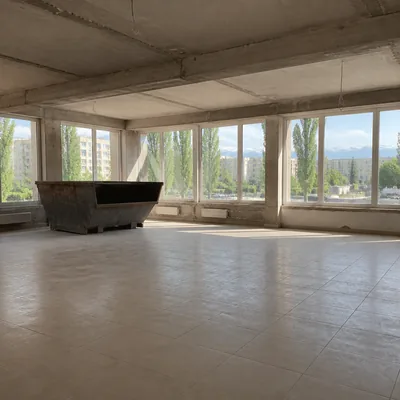
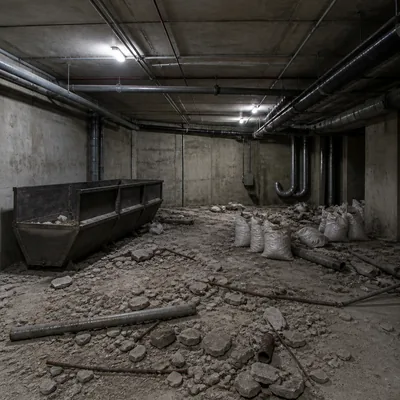
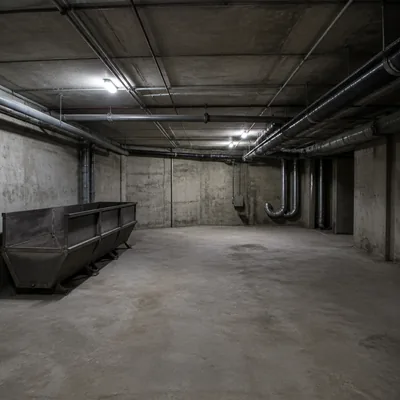
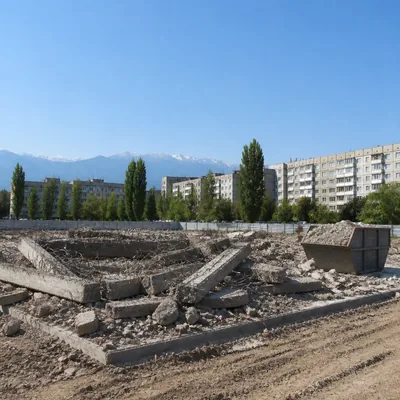
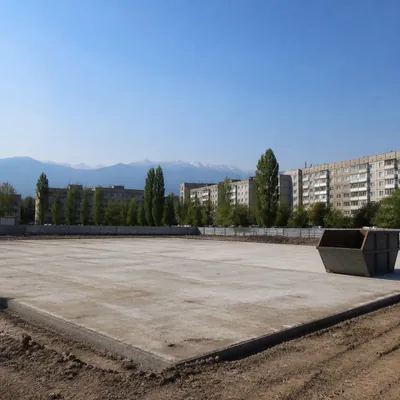
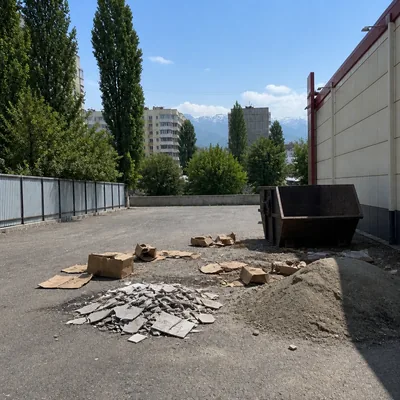
A driver and loaders arrive at the site. Here's who they'll be.







The most common call about construction debris goes like this: "After the renovation, I've got about eight cubes left, how many trucks do I need?" Almost always, the person gives a rough estimate — based on the number of bags along the wall or how many times they carried them outside. And almost always, that number doesn't match the actual volume. The bags are compressed, there's air between them, the tiles are stacked, not scattered, and an old toilet doesn't fit into any bag at all.
That's why I always start the conversation about construction debris removal in Almaty not with the price, but with the question: which container do you actually need? An 8-cubic-metre skip and a GAZelle are not "a bit bigger and a bit smaller" — they're fundamentally different stories in terms of time, load on the yard, and how many people it takes to load. The same volume of brick and the same volume of styrofoam weigh so differently that they need different trucks.
Below is what I usually explain on-site or in messages. How to calculate cubic volume from photos, how a container differs from a dump truck, where the debris goes after loading, and why demolishing a bathroom sometimes changes the entire estimate. All this without prices in tenge: the cost depends on the truck, floor, volume, and access, not on a single parameter.
Let me start with an example. A call from a new building on Rozybakiev: two bathrooms demolished, tiles, screed, old pipes. They say a GAZelle is enough. The GAZelle arrives, but only a third fits. The rest sits in the yard waiting for a second trip. In the end, three trips, the yard is dug up, neighbors are complaining. If they'd used a dumpster right away, it would've been taken away in one go.
So the question isn't what's cheaper, but what will actually haul your volume. And here it's important not to confuse two different things: how much space the debris takes up and how much it weighs. These are two independent parameters, and they often don't match.
Volume in cubes is how much space a pile would take if you poured it. Weight is how much it pulls on the scales. Both matter, but differently. A GAZelle can be loaded to the brim by volume but weigh little — if it's foam, insulation, old paneling. Or it can be half-loaded but weigh so much that the springs sag — if it's concrete rubble or brick.
So when people ask "how much does construction waste removal cost in Almaty", the first thing I check is what exactly we're loading. Concrete, brick, tile — heavy, you can't haul much of it. Wood, plastic, foam — light but bulky. That determines both the truck and the number of trips.
Here's what people usually mention when ordering, and how it affects the choice of equipment:
If the pile has both heavy and light stuff — that's mixed cargo, and it's the trickiest to estimate. Here it's better to go straight for a container, because a GAZelle will have to be loaded smartly, and loaders aren't always ready to sort.
A 1.5 t GAZelle is 12 m³ by volume, but with a weight limit. If after a cosmetic renovation you have a few bags of plaster, a couple of old doors, linoleum and odds and ends — a GAZelle will be more than enough. That's the case when construction waste removal in Almaty costs you one trip and no extra fuss.
But there's a catch: a GAZelle has to be loaded by hand. If the debris is on the third floor with no elevator, the loaders will get a workout. And if it's heavy bags of concrete, the GAZelle will take less by weight than by volume. So a GAZelle is for light and bulky debris that can be carried out quickly.
8 cubic meters is the volume after which a GAZelle stops being cost-effective. Not because it can't carry it, but because you'll need two or three trips. And each trip means time, fuel, and loader work. In the end, you pay for three GAZelles when you could have paid for one dumpster.
Also, 8 cubes is a psychological threshold: many people think it's not much and order a GAZelle, then are surprised it didn't fit. In reality, 8 cubes of tightly packed bags is noticeably more than a GAZelle can take: it holds up to 50 bags. And if it's tiles or concrete, the GAZelle will hit its weight limit before its volume limit.
So if your volume approaches or exceeds 8 cubic meters — look straight at a container. It's not marketing, it's arithmetic: one dumpster is cheaper than three GAZelles, even if the dumpster's hourly rate is higher.
Sometimes the yard is narrow, the arch is low, or the truck just can't get close to the entrance. Then the dumpster is placed outside the yard, and the debris is carried out by hand or wheelbarrow. This adds work for the loaders, but it can still be cheaper than several GAZelle trips.
In such cases, we usually offer a compromise: we place the container on the street, and you organize the carrying out yourselves. Or, if the debris is light, we use a GAZelle but plan for several trips. The main thing is not to guess, but to show us a photo of the yard and entrance, then we'll suggest the best option.
And another thing: if you're ordering waste removal with loaders, check whether carrying out is included in the price. Sometimes the loaders are willing to carry, but for an extra fee. Better to discuss this in advance so there are no surprises.
So the choice between a container and a GAZelle comes down to three questions: how many cubes, how much it weighs, and how far it needs to be carried. If the GAZelle fails on even one of these, go with a container. And don't forget: inexpensive construction waste removal in Almaty isn't about saving on the truck, it's about choosing the right equipment the first time.
Last spring a woman from Auezovsky district calls: "We took the kitchen apart, about five cubes, I think." We show up — and the 8-cubic-metre skip is filled to the brim, with a heap on top. She had five bags, not five cubes. That's a threefold difference, and it's the most ordinary case. That's why construction debris removal in Almaty starts for us not with booking a truck, but with calculating the volume.
First — by the bags. A standard waste bag holds about 50–60 liters, but construction waste doesn't fit loosely: broken brick, tiles, plaster settle densely. Count one bag as 0.05–0.06 cubic meters. Twenty bags is about a cubic meter. People are sure they have three.
Second — by area and layer thickness. You tore out a screed in an 18-square-meter room, 5 centimeters thick — that's 0.9 cubes. Plus tiles in the bathroom, plus plaster from the walls. The main thing here is not to forget what's already fallen off and is lying in a pile.
Third — by the volume of wheelbarrows or stretchers taken out. One wheelbarrow is about 0.1 cubes. If you carried out thirty wheelbarrows into the yard, that's three cubes, not a "full yard." A yard, by the way, deceptively looks fuller than it is.
A tape measure is rarely needed. Usually length, width, and height of the pile are enough, and you can measure those in steps. An adult's step is about 70 centimeters. Five steps long and three wide — that's already clear geometry.
Here's where the main mistake lies. A solid body in a wall takes up one volume, but broken and dumped — a completely different one. Brick in masonry sits tight, but broken brick in a pile is loose, with voids between the pieces. This is called the bulking factor, and for construction materials it varies widely.
Concrete and brick after demolition give about 1.4–1.5 times the original volume. Plaster and gypsum — up to 1.6. Foam block crumbles and gives even more voids. But soil from under a foundation barely bulks up. That's why "wall demolition" and "construction waste removal" are two different numbers, and the second is always bigger than the first.
In practice, I multiply a careful estimate by one and a half. Not because I want more, but because an underloaded truck still makes the trip, and a second run will cost more than a bigger bin right away. That's the honest answer to the question about prices: construction waste removal prices in Almaty are calculated by body volume, not weight, and it's better not to miss the mark the first time.
Send three or four shots, and then the conversation gets down to business. Don't photograph from far away — include something for scale: a door, a person, a car in the background. Without that, a pile in a photo can look like anything — from a cube to ten.
From these shots I name the container and the number of loaders. If the photos aren't clear, I ask two or three questions in chat — that's faster than sending a truck blindly.
An on-site measurement is needed when the waste is inside a building, scattered across several rooms, or lying in a basement or on a roof. Then photos don't show the access routes or how much is hiding behind walls. Measurement is also needed for demolition: there the volume is calculated from the dismantling plan, not from the pile.
Photos are enough in most cases. One skip in the yard, a pile after a flat renovation, old windows by the entrance — it's all visible and clear. Construction debris removal in Almaty with loaders is most often ordered from photos, and the discrepancy is usually within one cubic metre.
| Method | What we count | Accuracy | When it fits |
|---|---|---|---|
| By bags | a bag is 0.05–0.06 cubic meters | medium | small renovation, manual carrying |
| By area and layer | square meters times thickness | high | screed, plaster, tile |
| Per wheelbarrow | a wheelbarrow is about 0.1 cubic meters | medium | when everything's already out in the yard |
| From a photo | a pile with something for scale | depends on the shot | one dumpster, open area |
| On-site measurement | actual volume and access | high | basement, demolition, several rooms |
And lastly. The volume you calculate and the volume that actually fits in a specific container are not the same thing. An 8-cube bin takes eight cubes of loose waste, but heavy concrete won't fit that much by weight. So we'll still agree on the final figure together. Inexpensive construction waste removal usually works out when the volume was estimated honestly the first time.
I show up at a site, and someone yells over the fence: "What kind of container do you have, they're all the same!" No. They're not all the same. Two dumpsters side by side, both 8 cubic meters, but one takes brick, the other only insulation and drywall. Because the steel is different, the bottom thickness is different, and the lifting mechanism is different too. Now let me explain why this matters to you, not to me.
Open is a box with no top. You throw stuff in from above, nothing to fold back, loading is faster. But open has a problem: wind. In Almaty, especially in spring around Abay–Seifullin, the gusts get so strong that crumbs and pieces of mineral wool fly right over the edge. Then your neighbor goes to complain, and you're standing there picking it all up by hand again. Closed means a hinged lid or a tarp cover. Load it, cover it, drive off. It takes about ten minutes longer to load, but the yard stays clean.
Eight cubic meters of broken brick is around twelve tons. Eight cubic meters of mineral wool in bags is barely two and a half. Metal for the first needs to be thicker: bottom at least four millimeters, reinforced sides, otherwise the dumpster sags and you can't lift it later. For light debris, regular steel works, but you fill it heaped because there's no weight, just volume. That's why when someone asks "how much does it cost," I first ask what exactly you're loading. Construction debris removal in Almaty at one price for every case is a myth invented by people who've never hauled concrete.
A trailer dumpster hooks onto a truck, gets delivered to the spot, unhooked, and the truck leaves — then comes back when you've filled it. Handy if the site is in a yard and the truck won't be in the way. A roll-off has a hook lift: it drives up, slides off the platform, sets it down. It needs a wider entrance and a flatter spot. In the old courtyards of Almaly district, where the arch is three meters and the turn is ninety degrees, a roll-off sometimes just can't get through. Then we use a trailer or split it into GAZelle loads.
About neighbors, separately. In a yard with forty apartments and one entrance for everyone, an open dumpster with light debris is a guaranteed scandal. People walk by, see dust blowing around, and call the akimat. A tarp solves half the problem. The other half is not placing the dumpster under someone else's windows and not leaving it overflowing overnight. We usually cover it right after loading, even if we're driving off in twenty minutes.
One time I placed a dumpster in a yard on Tole Bi. Open, for brick. The owner says: it's all fine, there's no wind. An hour later he comes running — mineral wool on top of the brick had scattered all over the yard, grandmas with brooms. I had to come back, cover it with a tarp, and sweep up. Since then, I don't go out for light debris without a tarp, no matter what.
Now about the grab. The hooklift is when the container is lifted by a bracket on top and dragged onto the platform. It works with containers from eight cubic meters and up, because small ones are just awkward to hook. The multilift is a different story — it hooks onto the side frame and is winched in. If your driveway is narrow, the dispatcher will ask about the truck type, not the volume. That's not a formality — it determines whether the truck can get in or not.
A trailer container on wheels is a compromise. You can leave it on site for a day or two and fill it gradually. But it has a weight limit: you can't put more than eight tons in it — the wheels and axle won't take it. It's not used for demolition with concrete. For demolition with drywall, plastic, wooden frames — it's used, and it's very convenient.
Sometimes a person orders a container, but actually needs a GAZelle. The bin just won't fit in the yard, period. Then construction waste removal, priced by trips rather than cubes, comes out cheaper — but there will be three trips instead of one. And that's fine if you calculate honestly.
Another thing: old containers with rusty bottoms. I've seen those from competitors — they load concrete, the bottom sags, and the container is removed from the platform along with a piece of asphalt. We inspect ours before every trip. It's a small thing, but because of it, the delivery gets delayed by half a day.
If you're unsure which container to get, take a photo of the pile and send it to WhatsApp. From the photo we can see the fraction and estimate the weight. Construction waste removal with loaders is often ordered precisely because people are afraid of choosing the wrong bin type. And we'll tell you what to set up so you don't overpay for an extra trip.
Last spring, a woman from the Alatau district calls: "I'll break up the tiles myself, you just take them away." Two days later she calls back — she didn't break them up. The tiles on the screed hold so tight that a jackhammer takes them off a centimeter at a time. Sound familiar? Then let's be honest: demolition is a separate job, and it produces its own waste.
The crew comes out to load, but if it turns out along the way that a wall, bathtub, or floor needs to be removed — that's a different shift, different equipment, different volume. Construction waste removal with loaders is not the same as removal with demolition. The difference is in hours and in the number of cubes that will appear on site after you take down the tiles.
Below is what the crew actually does, where the waste starts during demolition, when you can handle it yourself, and how floors change the whole math.
Loading is not "toss a bag in the truck." The crew clears the piles: bags of tiles, drywall scraps, old doors, pieces of screed, baseboards, leftover glue in buckets. All of it needs to be lifted, carried, packed tightly so there are no voids. Voids in the container are your overpaid cubic meters, and you can't see them by eye.
Next comes the cleanup after loading. We sweep the area where the waste was: tile shards, sand, brick crumbs. Street cleaners in Almaty will write you up for that, and it's a whole separate headache. Then the container leaves. If the bags were packed in advance, loading goes faster; if everything's just dumped in a pile, the crew wastes time sorting it out.
Here's what's included in standard loading — I'll show it in a table so it's clear.
| Task | Crew does it | You do it | What it affects |
|---|---|---|---|
| Loading bags and junk | Yes, if you ordered it | You can do it yourself | Number of trips |
| Carrying out from the floor | Yes, via stairs or elevator | Clear the passage | Shift time |
| Site cleanup | Yes, after loading | — | Neighbor complaints |
| Demolition of tiles, screed | Separately, by agreement | Or do it yourself | Waste volume grows 2–3 times |
| Demolition of bathtub, partition | Separately, tools needed | Or do it yourself | Container delivery time |
A bathtub isn't just one bag. A cast-iron tub weighs about 120 kilograms, acrylic is lighter but takes up a lot of space. Wall tiles, once removed, turn into rubble that rips bags with sharp edges if you stuff them in. The screed under the tiles is the heaviest part: a square meter five centimeters thick is about a hundred kilograms. Demolishing a brick partition adds more cubic meters, and they don't leave in a GAZelle.
Here's the order it usually goes in on site:
Sometimes I honestly say: don't get loaders. If the waste is already in bags and sitting by the gate, and you're on the first floor, two people can carry forty bags. The savings will be noticeable. It's a different story with inexpensive construction waste removal — here it often turns out cheaper to pay for a crew than to lose two days and derail your renovation schedule.
DIY is doable: carry out foam, cardboard, profile scraps, old doors. Don't mess with screed and cast-iron bathtubs — that needs tools, experience, and insurance. We've seen homeowners chip away at tiles and call an hour later: "Where do I put all this rubble?" Meanwhile, the rubble is already piled up in the yard, and the street cleaner is cursing.
Think of it this way: if dismantling and carrying out takes you more than a day, it's not saving — it's delaying your renovation.
Height is the main factor people forget. First floor: the crew works at pace, the truck is loaded in an hour or two. Third or fourth floor: time increases, the elevator helps, but bags of tiles don't always fit. Ninth floor without an elevator — that's already several hours just for carrying out, and the volume of waste doesn't matter.
The elevator is a whole other story. In panel buildings, the freight elevator is often packed or out of service, and the passenger one can handle the weight but not the size. A bag of broken tiles weighs thirty to forty kilos, and four of those is already an overload. That's why we ask about the elevator in advance, not on the spot.
The stairwell between floors is narrow, you can't turn a skip around — you have to carry everything. That adds an hour or two to the shift. In the old centre of Almaty, where buildings have no lifts and high ceilings, construction debris removal in Almaty can stretch out for a whole day, even though the volume is laughable.
A factor you're underestimating: in courtyards with a single exit, the truck sits idle while you clear the pile. Count not just the floors, but how long it'll take to haul everything to the gate — otherwise the container arrives and there's nothing to load it with.
Read this far and still not sure about the volume? Send us a photo — we'll calculate and give you a price.
Message us on WhatsAppAfter the bin is lifted and the truck leaves the courtyard, I don't head to some dump "around the corner" — I go to a site that accepts specific types of construction materials. Brick, concrete, plaster, tile, ceramics — these are inert, they get crushed and used for backfill or recycling. Wood, plastic, packaging, wallpaper scraps — a separate stream. You can mix everything in one container, but the site will charge more for it, and that's my cost, not yours. So on site I sort what I can see.
Why a proper site at all, and not just "haul it out to the steppe"? Because the carrier — that's me, not you — is responsible for illegal dumping. The fines are so steep that one trip doesn't even cover a tenth. So I don't ask "where will you take it" — I already know. Construction debris removal is always a chain: loading, driving, acceptance, unloading, return. And acceptance takes time, sometimes there's a queue of trucks just like mine.
I arrive, weigh in at the entrance, and drive in to unload. The bin tips over, the contents go down into a receiving bin or accumulation area. Then it's sorted by fraction: concrete debris goes to the crusher, wood to a separate zone, metal is pulled out with a magnet. Construction waste in Almaty is 60–70% made up of stuff that can actually be recycled, but only if it's not mixed with anything unacceptable.
A mixed container with soil, wood, and concrete will be accepted, but as "mixed construction waste" — it's pricier and slower. Sometimes it's cheaper to make two separate trips, especially when there's a lot of volume.
Here's the list of what I can't accept at all — not for an extra fee, not "carefully at the bottom." If any of this ends up in the bin, unloading stops and the truck gets sent for hazardous waste treatment.
If you have any of this, tell us when you place your order. I'll point you to where to dispose of it separately — you'll save time and nerves.
Because the person who loaded it is responsible for an uncleared yard. Building managers and housing cooperatives know the vehicle number, and if we leave a pile of shards and dust behind, the next call might not get approved. So we always sweep — not just under the dumpster, but along the whole dragging route. A small thing, but in a yard with one parking spot it makes all the difference.
Besides, shards and nails mean punctured tires and cut feet. On our sites we don't debate this rule, we just do it. And I ask you too: don't take the trash out to the site in advance, before the truck arrives — in that time the wind will scatter it.
Sometimes neighbors see the dumpster and toss in their own stuff: an old sofa, bags, sometimes tires. That's a separate headache — formally the load isn't yours, but you're the one paying for it. In such cases I photograph the container before and after loading so it's clear what was added. If the volume has clearly grown, I call you and show you the photos.
There's a simpler option: if you know this happens in your yard, tell me — I'll come earlier and cover the dumpster with a tarp. Or I'll suggest placing it not by the entrance but closer to your site.
In February we were loading a skip in a yard on Tole Bi. The yard is a well, snow knee-deep, the truck got in but couldn't turn around. We had to unload the container and carry bags by hand through the archway. In summer we do the same address in forty minutes. Same volume, different job. That's why construction debris removal in Almaty always starts with the question "what's your yard like", not "how many cubes".
In winter trash freezes together. Bags of cement, gypsum, leftover glue — it all sits as one monolith, and you can only break it up with a crowbar. Loading 8 cubic meters takes two to three hours longer than in summer. It's not about the loaders being lazy, it's that each bag first has to be pried off its neighbor. In summer it's the opposite: dust, heat, loaders rotate every forty minutes or they lose pace.
Snow in the yard is a separate story. The spot for the dumpster has to be cleared. Sometimes there just isn't one: snowdrifts waist-high, and the parking lot is so packed the truck can't get in. Then we suggest moving the delivery to the morning, when the yard is empty.
A barrier isn't a problem if you warn us in advance. The problem is when it's closed and the truck is already at the gate. You need to tell the dispatcher: is there a barrier, who opens it, does it even work. If not — you need a code or a key, otherwise the dumpster stays outside the fence.
A narrow driveway is the second thing. A GAZelle fits through an archway two and a half meters wide, a dumpster truck doesn't. If there's a playground, a flowerbed, low wires in the yard — tell us right away too. We'll come, take a look and tell you if we can get in or not. That's better than circling the alleys for an hour.
Neighbors are the main factor. In the morning everyone leaves for work, the parking lot empties. From seven to nine is the perfect window for dumpster delivery. During the day cars are packed tight, and the only spot for the container is the lawn or the sidewalk. Neighbors might call the district officer, and then loading stalls for half a day.
In the evening after six is the second wave. People come back, the parking lot is full, but many are already home and can move their car if asked. We always ask the client to go around to the neighbors in advance or leave a note on the windshield. Once a guy came out yelling that we'd blocked his exit. Turned out he was planning to leave in ten minutes himself. We sorted it out, moved the truck.
Sometimes there's no space at all. Then we work with a GAZelle. It's smaller, fits through any archway, but there will be more trips. If the volume is that same 8 cubes of heavy debris, a GAZelle makes three or four runs: it's limited not by the bed but by its payload of up to 1.5 t. It takes longer, but sometimes there's no other way.
Option two — carry the bags to where the bin will go. We provide loaders, they haul. This adds work, but sometimes it's the only way not to block the yard. The price for construction waste removal will be higher in this case, because manual labor is added. But it's better to pay for carrying than to get into a fight with neighbors.
The third option is moving the delivery to the weekend. Saturday morning the courtyard is empty, few cars, and the dumpster sits there peacefully. Many people do just that.
So you don't get confused, here's the order of steps when ordering if the courtyard is tricky.
Below is a table that helps you quickly see how the season and the courtyard affect the time and method of loading. I've put together what I run into most often.
| Condition | What changes | Approximate time for 8 cubes |
|---|---|---|
| Summer, dry waste | Bags are light, loaders work at a good pace | 1.5–2 hours |
| Winter, frozen waste | Needs breaking up, bags are many times heavier | 3–4 hours |
| Narrow courtyard, barrier | Dumpster won't fit, we use a GAZelle | 4–5 hours with trips |
| Parking lot busy during the day | We wait for a spot to free up or reschedule | +1–2 hours of waiting |
| Carrying to the dumpster by hand | Loaders and stretchers are added | +1–2 hours |
Another thing — seasonality of orders. In spring and summer everyone's renovating, fewer trucks are available, delivery can stretch by a day. In winter it's the opposite, but the work is harder. If you want to remove construction waste cheaply, better book in advance and not during peak. But that's not certain — sometimes there's a queue in December, and in June it's empty.
And lastly. If there's a concierge or building manager in the courtyard, talk to them in advance. Sometimes they allow the dumpster on the lawn if you clean up afterward. Sometimes they demand written consent. All this gets sorted before delivery, not when the truck is already in the courtyard.
If you boil the whole article down to one idea — the trip is determined not by the number of bags, but by weight and dimensions. Two identical-looking piles can weigh three times differently. Brick and concrete rubble are one thing, foam and insulation are quite another. So calculating removal without measuring or photos is always a shot in the dark. I usually ask for a photo of the pile from two sides and something nearby for scale: a door, a car, a person. That's enough to figure out whether it's an 8-cubic-meter bin or a GAZelle.
Volume is the first thing people ask about. But it doesn't work without weight. Next is the fraction: are there large pieces that can't be thrown in the truck bed but need to be carried. And lastly — access. Yard, entrance, elevator, floor height. That's what makes up the price and time for construction waste removal. There are no hidden surcharges here — it's just that these four things really change the truck and the crew. If the volume is less than two cubes and the fraction is small, sometimes a GAZelle is more cost-effective. If it's more than five and there are big pieces — you need a container.
You might think: no container, I'll take two GAZelles. In reality you pay twice for delivery, twice for loaders, twice for the trip to the site. And you lose half a day — the trucks don't arrive at the same time. If you compare prices for two trips versus one bin, the difference usually favors the bin. Especially when there's 8 cubes of waste. One go, one crew, one removal. Two trips won't be half the price of one — they'll be more expensive.
Don't call and immediately ask "how much does it cost." First answer five questions for yourself — and the conversation will take two minutes. At TRASHOFF, we take requests via WhatsApp and phone, no forms on the site. It's faster this way: photo, address, a couple of clarifications — and I name the truck and the time. If something doesn't add up, better to ask again before dispatch than to unload it back.
Go through the list one more time before you dial the number. Address — got it. Floor — remember. Photo — done. Big pieces — counted. Demolition — decided whether you need it or not. That's it, that's enough. Then we'll tell you which container to place and how many people will come. If the yard is tight, let us know in advance — that determines whether the bin can even get in. And don't forget: waste removal with loaders means we carry, load, and sweep up after ourselves. If you'll carry it yourself, tell us — we'll park the truck closer.
And lastly. Don't go by other people's numbers from the internet. Your neighbor had 8 cubes — you might have 4 or 12. Different density, different fraction, different access. That's why we quote the price after photos, not before. But after dispatch it doesn't change: whatever we said is what you'll pay. This applies to construction debris removal in a container and to any other trip. It's fairer — for me and for you.
Depends on what. Concrete and brick are heavy: eight cubes of that is already an overload for a GAZelle, so we haul it with a dump truck. But old wallpaper, drywall, wood, plastic — they take up a lot of cubes but weigh little, and 8 cubes fill up fast. Send a photo of the pile on WhatsApp, and we'll calculate based on what's actually there.
It depends on the equipment and volume, not the district. A GAZelle trip — from 30 000 ₸, a skip for construction waste — from 45 000 ₸. If the load is heavy but there aren't many cubes, it's cheaper with a smaller truck. We give you the exact amount before arrival and don't change it after loading.
You can do it yourself if you have the means and time isn't tight. A crew for a GAZelle — 20 000 ₸, they carry it out from the floor and load it turnkey. On construction sites, people are usually hired: hauling bags of construction waste from the fifth floor with no elevator is no picnic.
We load the rest on a second trip or add a smaller truck. From experience, volume is almost always underestimated: the pile seems small, but in reality it's a third more cubes. That's why we ask for photos — so we don't send equipment twice.
Both. Demolition of partitions — from 88 000 ₸, then it depends on thickness and reinforcement. If there's no one to demolish, a crew arrives, breaks it down, piles it up, and immediately loads it into the container. One visit instead of three.
Yes, if the management company or HOA doesn't mind and it's not blocking a driveway. The skip fits compactly, but you can't block fire truck access — you'll get an earful for that. Coordinate with the janitor in advance, and we'll advise you on how to place it.
Cans with leftover paint, solvents, batteries, tires — that's not construction waste, they're transported separately. If you mix them with the general load, the landfill may turn the truck away. Better set those aside, and we'll discuss before removal.
We work Mon–Sun, nine to nine. Saturday mornings are light on trucks, so it's best to book Friday evening. We also roll out on Sundays.
To disposal — a landfill or a sorting site, depending on the load. Wood, concrete and drywall get handled differently there. We sweep the spot after loading so the yard isn't left dusty.
Dispatch across the city — from 30 minutes if a truck is free nearby. We place the skip in the agreed time slot — depends on where equipment is available. Message us on WhatsApp and we'll give you an exact time.
Got a question that's not here? Ask — we'll answer in writing, no call needed.
Message us on WhatsAppConstruction debris removal in Almaty is what they're about. Called in the morning, they arrived by lunch. The container was clean, no leftovers from previous clients.
I ordered construction waste removal in Almaty after a major renovation, it piled up to a whole dumpster. They arrived on time, loaded everything, swept the site. Yerlan Zhumabayev warned that outside the city there'd be mileage — he was upfront about it right away.
after renovation there were bricks and plaster left. they came yesterday, loaded everything themselves, swept the yard. very pleased, price is fair
after demolition there was a lot of brick left. arrived quickly, took everything, swept the yard. price is fair.

We were renovating the bathroom — tiles, old ceramic, drywall — it added up. They placed the container in the yard, loaded it in half a day. The price in the end was exactly what they quoted upfront.
We replaced the plumbing in the apartment, old pipes and a toilet were left. Called for a truck with a container, they took it away without any problems. Inexpensive compared to others. I recommend it if you need construction waste removed.
I ordered construction waste removal in a container for the first time and was worried it wouldn't all fit. After the renovation we'd accumulated: old windows, doors, bags of cement. Yerlan immediately said one GAZelle wasn't enough, we needed an 8-cubic-meter dumpster. They came, loaded it up, and hauled it away. They even swept the area — our neighbor was amazed.
The neighbor on the third floor was demolishing walls, and all that concrete got dumped in the yard. The building manager said nothing. I called, a dumpster arrived, they loaded it with loaders — I thought they'd be carrying it for a week, but they finished in a couple of hours.
We replaced the plumbing in our apartment and had old pipes, a bathtub, and a toilet left over. I thought I'd haul it myself in a car, but the volume was too much. The guys came with a container, carried everything out, and even swept the stairwell. Fast and no fuss.
After winter the yard had accumulated trash, I thought I'd handle it myself. I didn't. Called for a container, they took everything in one go, and even swept up. Thanks.
We had wall demolition in a three-room apartment — concrete, rebar, tile pieces. I thought we'd have to order several times. Askhat came, looked, said eight cubes would be enough. That's how it turned out — one container and that's it.
We had a demolition on the ground floor, carried everything into the container and hauled it away by lunch. They worked carefully and didn't hit any cars in the yard. Fixed price, no surprises.
Overall it was fine, but I waited for the truck longer than promised — about two hours. They did arrive with the container and loaded it quickly. That's why it's a four.
After renovation work in our house, old tiles and broken ceramics were left. The container was delivered at ten in the morning, taken away by noon. The workers carried everything out themselves and cleaned the entrance.
The old garbage bins in our yard were overflowing, and the administration wouldn't give permission. I called TRASHOFF, and they brought a container and took everything away in one day. The price was quoted upfront, no extra charges.
We had a demolition on the ground floor, they carried everything out to the container and hauled it away in one go. Askhat said eight cubes would be enough, and he was right. They actually swept the site after themselves, I checked.
My husband was at work, I was alone with two kids, and I had to remove renovation waste. Dinara explained everything over the phone, two guys came, carried everything out themselves. I just watched from the window. They really saved me.
After demolishing a partition in a two-room apartment, about eight cubes were left — we couldn't believe it added up to that much. The guys came with a container in the morning, by lunch the yard was clean. Daniyar suggested that one dumpster was cheaper than three GAZelles.
we renovated the kitchen, old cabinets and tiles were left. the guys arrived quickly, took everything, didn't even scratch the windowsill. thanks
We were renting out an apartment, and after the tenants left there was a pile of junk and old windows. I ordered a container, they came by evening when I already thought they wouldn't make it. They carried everything out themselves, I didn't even have to help.
After the renovation, I had a mountain of broken brick and plaster — I'd never have hauled that out myself. Ordered an 8-cube container, they came the same day. Loaded it, swept the area, left. The price didn't change by a single tenge.

A neighbor recommended this company when we were renovating a private house. The waste was all sorts — bricks, old slate. They placed the container right by the gate so we wouldn't have to carry it far. They came in the morning — by evening it was empty.
We closed our café for renovation and needed to remove old furniture, display cases, and tiles. We ordered a container, and they arrived on time. They carried everything out — we didn't have to lift a finger. Special thanks to the loaders, they worked fast and without smoke breaks.
We closed the cafe for renovation, needed to remove old furniture, display cases and demolition debris. Ordered a dumpster, it arrived in the morning, by lunch the yard was clean. Daniyar coordinated everything over the phone.
After home renovations, a lot of construction waste was left. They loaded it into a container and took it away in one day. The price was as agreed in advance, they didn't ask for extra money.
Everything was fine, but we waited an hour and a half longer for the truck. True, then they arrived right away with the dumpster, loaded it quickly. The price didn't change, as promised.
We were clearing an office after tenants, a pile of junk and old partitions were left. I called, they came the same day. The loaders carried everything out from the fourth floor, the elevator wasn't working.
We were clearing out the basement of an old building — there was concrete, rebar, old pipes. I thought it would take a week. They came with an 8-cubic-meter dumpster and loaded it in three hours. The basement is now dry and empty.
I ordered construction waste removal in Almaty for the first time, was worried I'd have to load it myself. Nope — two guys came with loaders and did everything. Fast and no fuss.

We were clearing out the basement in an old building — concrete, rebar, old pipes. Thought it was a week's work. They came with a dumpster and loaders, hauled it out in a day. The price is fair.
After a major home renovation, a lot of debris piled up — broken bricks, plaster, old windows. I thought I'd have to call several times. But a big container arrived and everything fit. The job took half a day; they left only in the evening. Thanks to Dinara for being so quick.
Showing 3 of 31
Want the same? Describe your task — we'll calculate and give you a price before the truck arrives.
Message us on WhatsAppChecked us out? Drop us a line — we'll pick the right truck for your load.
Message us on WhatsAppArticles of the Administrative Offenses Code of Kazakhstan, amounts in MCI for 2026, and who's responsible for the garbage — the carrier or the client.
Collection, sorting, crushing, secondary raw materials — the steps in order and what actually gets recycled.
How medical and industrial waste differ from household waste and what's required of the hauler.
Illegal dumps on the outskirts, soil and groundwater: what happens when waste goes to the wrong place.
If you've got a pile of construction waste on your site and don't know which container to order — message us on WhatsApp. Send a couple of photos, and we'll tell you how many trips and which truck you need. We'll lock in the price before delivery.
Tell us how the pickup went — it helps us and anyone choosing a hauler.



