Aidana
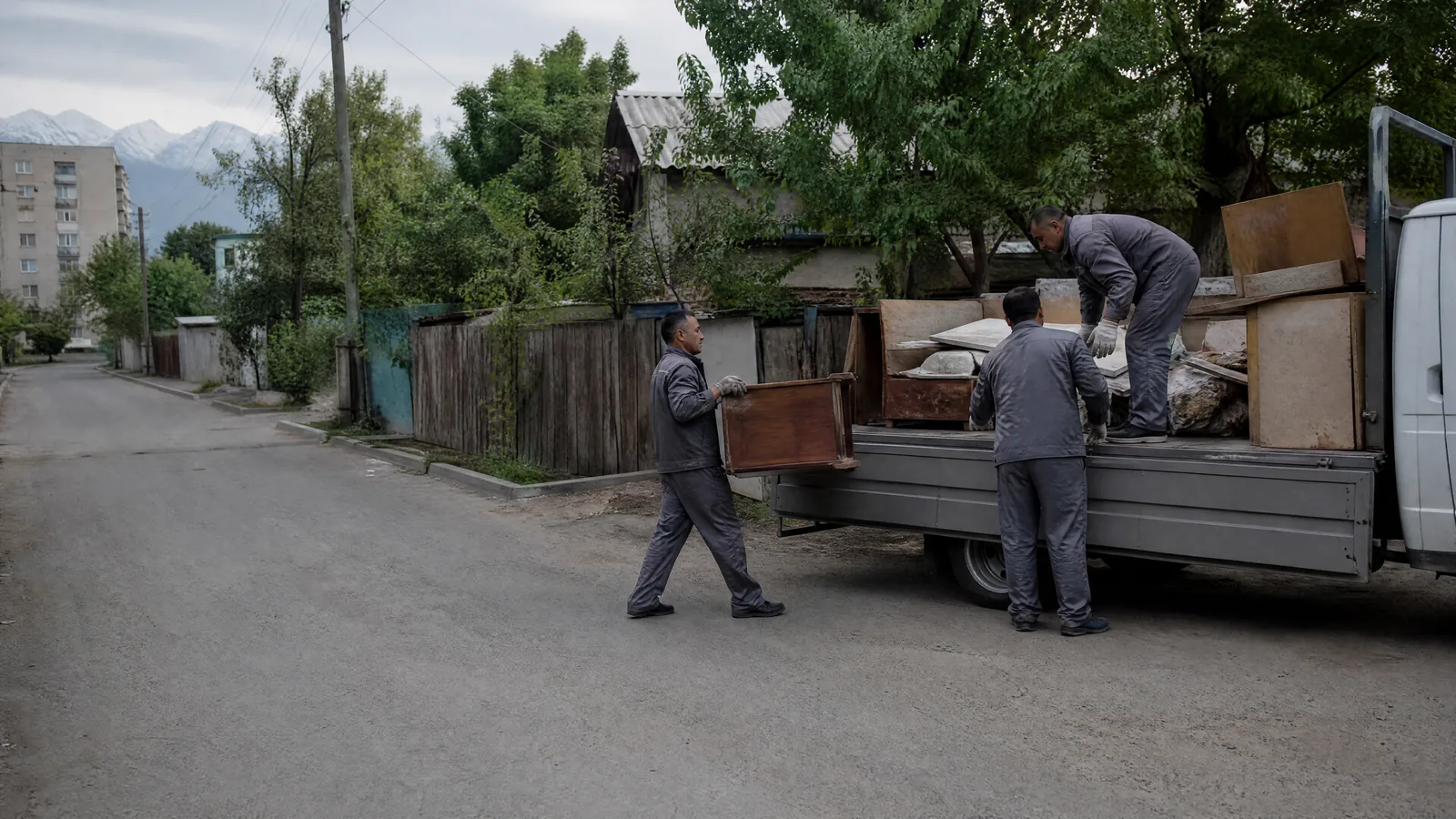
Garbage removal in a residential area — I ordered a GAZelle. They took everything and even swept up after themselves. Very happy, I'll call again.
Show us the yard on WhatsApp — we'll tell you which truck can get in and how much it costs.
Take a photo of the yard and send it to WhatsApp. From the photo we can see how many cubic meters there are and which truck can get in — a GAZelle or a skip right away. We'll quote the price before dispatch and won't change it after loading.
The amount is a guide. We'll give you the exact price after a photo or a quick call.

Kitchen bags, old clothes, broken dishes, boxes — what piles up at home for weeks. We take it with a GAZelle if the volume is up to one and a half tons.
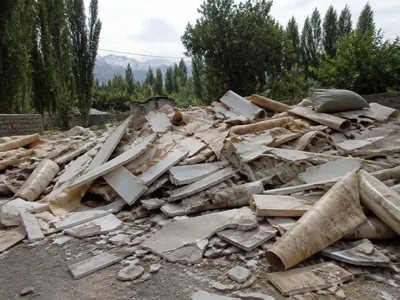
Plaster, drywall scraps, tiles, old linoleum. Heavy stuff — we measure in cubic meters, haul it out with a dump truck or in a skip.
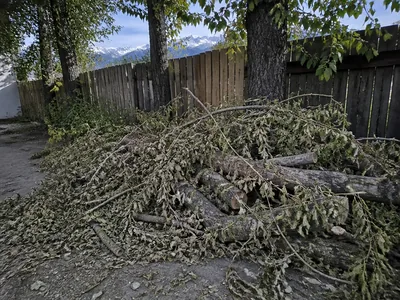
Tree pruning in the yard, deadwood, leaves raked up. We load by hand, we don't saw branches — if there's something big, let us know in advance.
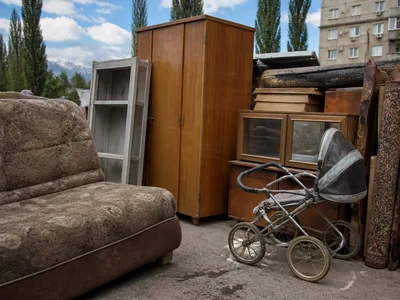
Wardrobes, sofas, cabinets, carpets, baby strollers. We carry them out of the house and off the property, no need to take them apart.
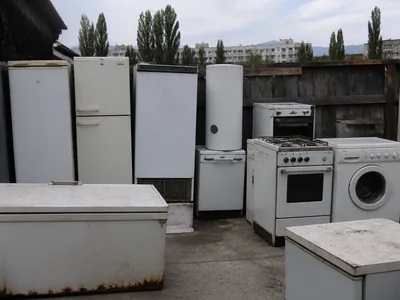
Old fridges, washing machines, stoves, boilers. We take them whole, we don't drain the freon on site.
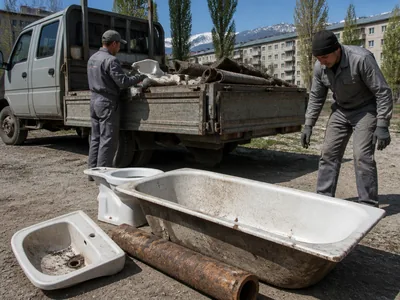
Cast iron and acrylic bathtubs, toilets, sinks, pipes. Cast iron weighs 120–150 kg — you need two loaders.
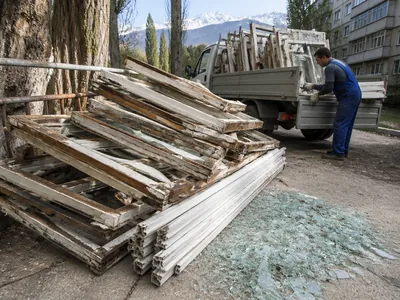
Frames, double-glazed units, glass after window replacement. We put shards aside so they don't tear the bags.
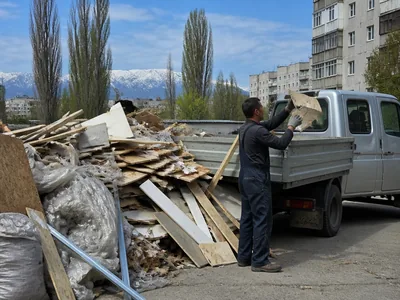
Offcuts, packaging, rejects from a workshop in the yard. For regular volumes we set a schedule — say, once a week.
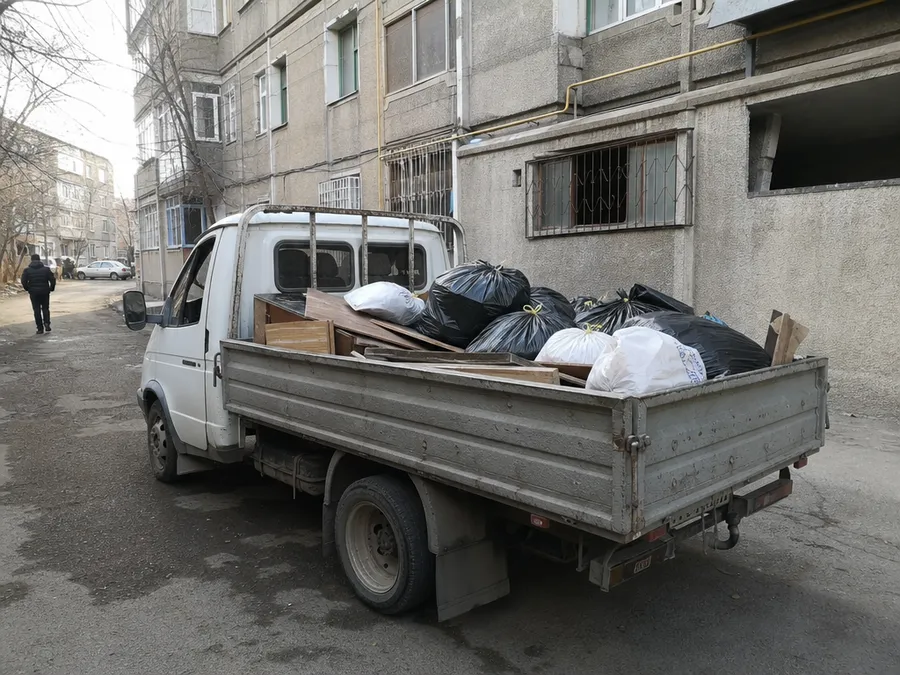
A small pile in the yard, a couple of bags, old furniture — a GAZelle fits through a narrow alley. The loaders do the loading themselves, you don't need to stand around.
Book a GAZelle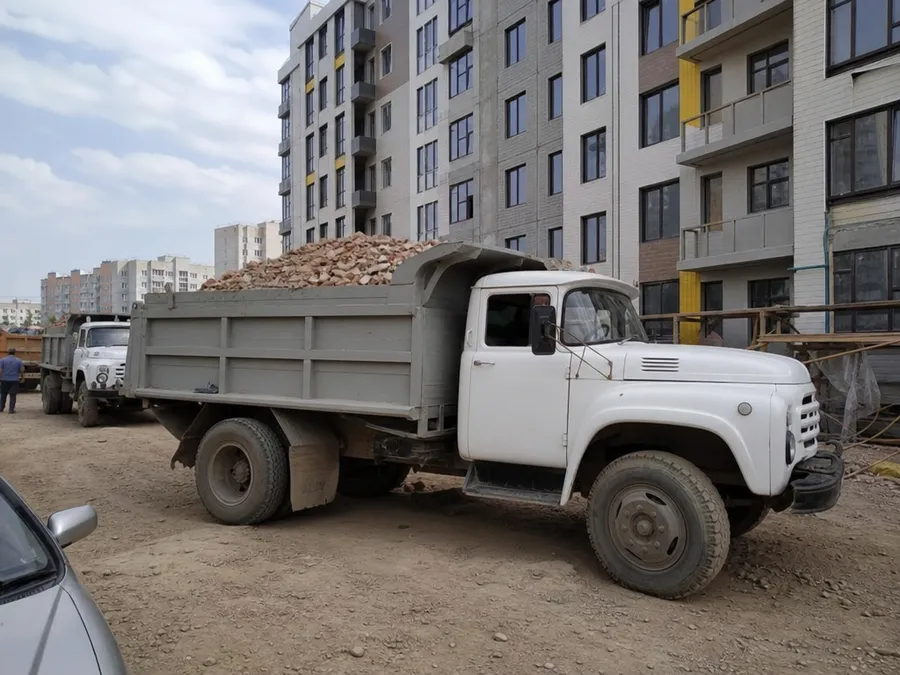
When the yard is piled up after renovation or clearing the plot. Takes up to five tons per trip, we haul it away in one go without a second truck.
Choose a truck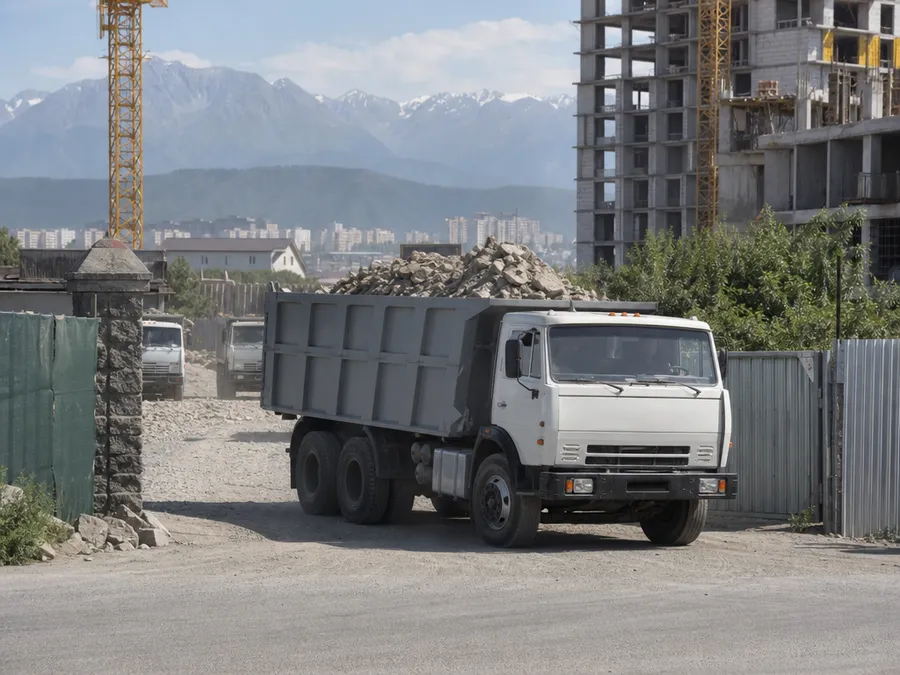
For heavy stuff: soil, broken brick, old plaster. We load loose material on top, the dump truck unloads itself at the disposal site.
Order a dump truck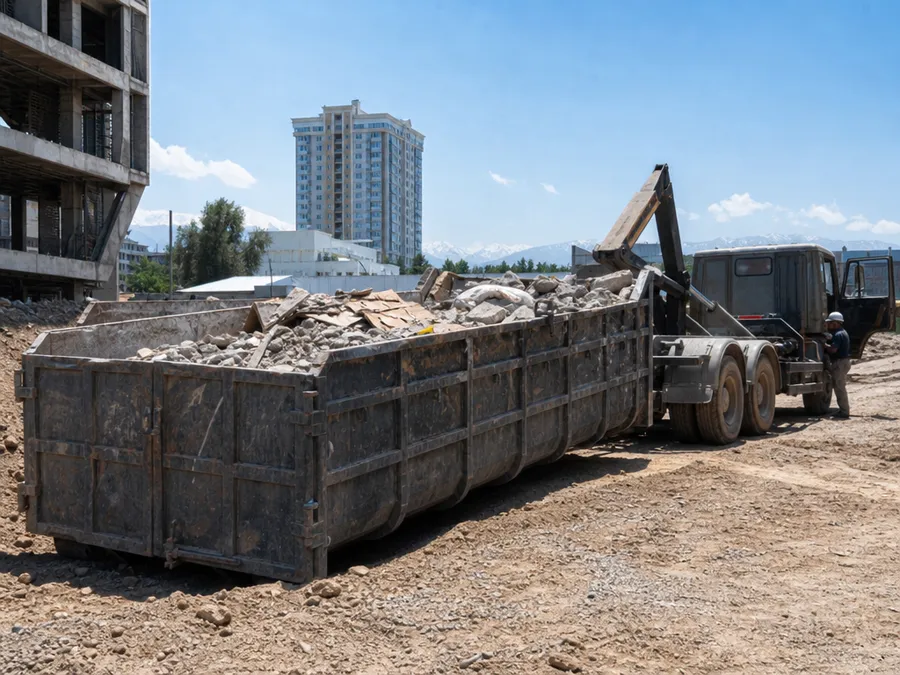
We place it in the yard, you throw garbage in yourself and take your time. When it's full — call us, we'll come and pick it up.
Ask about a dumpster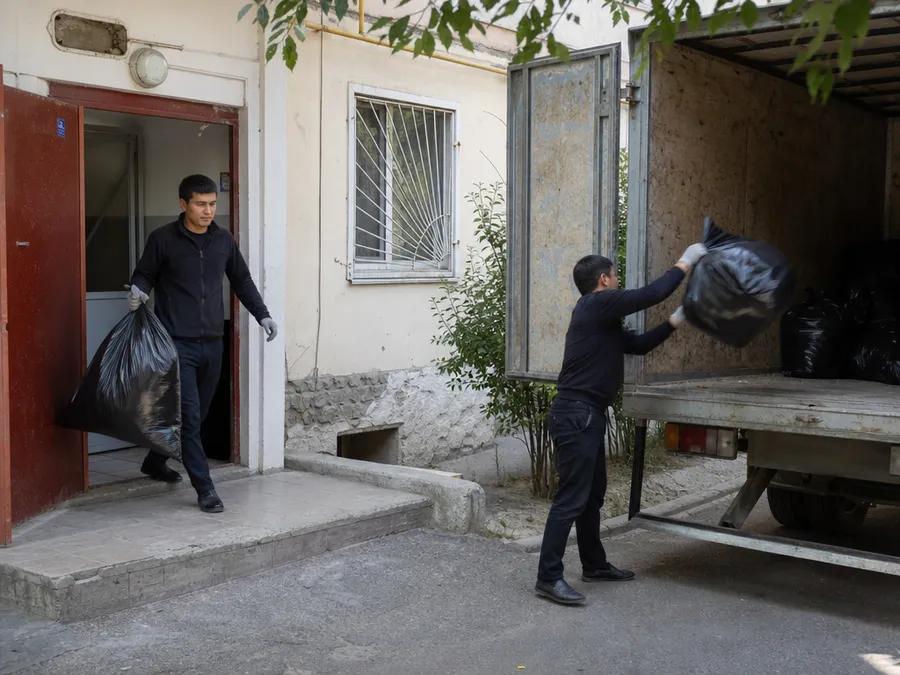
Garbage in the basement, attic or far corner of the plot — we carry it out by hand. The crew arrives together with the truck.
With loaders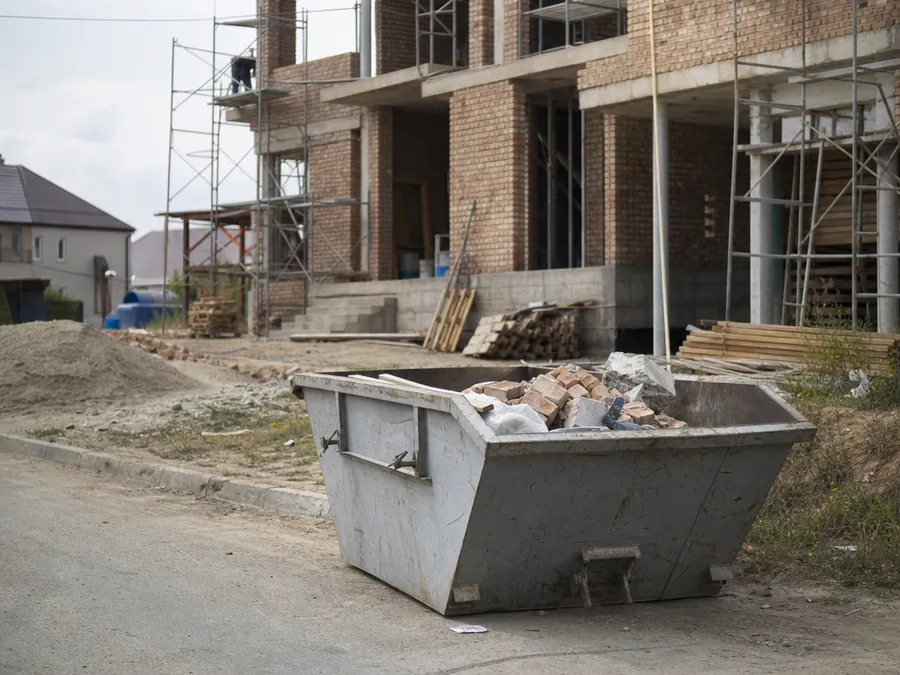
The container stays in the yard for a few days or weeks while you're cleaning up. We price it separately: depends on volume and duration.
Message us on WhatsAppNot every truck can get into a private yard. GAZelle 1.5 t — 12 m³ body, GAZelle 2.5 t — 16 m³, truck 5 t — 25 m³. If the junk is in a pile in the yard and can't be moved by hand, we bring a skip.




Valid from August 2026 · price per trip within the city
| Equipment | Volume | Payload capacity | Price per trip | Extra hour |
|---|---|---|---|---|
| GAZelle 1.5 t | 12 m³ | up to 1.5 t | 30 000 ₸ | 6 000 ₸ |
| GAZelle 2.5 t | 16 m³ | up to 2.5 t | 35 000 ₸ | 9 000 ₸ |
| Truck 5 t | 25 m³ | up to 5 t | 40 000 ₸ | 12 500 ₸ |
| ZIL dump truck | 7–12 m³ | up to 7 t | 40 000 ₸ | 12 500 ₸ |
| KAMAZ dump truck | 15 m³ | up to 20 t | 55 000 ₸ | 15 000 ₸ |
| Howo dump truck | 25 m³ | up to 40 t | 60 000 ₸ | 15 000 ₸ |
| PUHTO (skip) | 8–10 m³ | up to 7 t | 45 000 ₸ | — |
| Multilift | 20 m³ | up to 12 t | 100 000 ₸ | — |
| Skip | 27 m³ | up to 15 t | 135 000 ₸ | — |
| Max skip | 32 m³ | up to 20 t | 160 000 ₸ | — |
Prices apply within Almaty city limits. Outside the city, mileage is added — we calculate it in chat before dispatch.
Not sure which truck you need? Send a photo — we'll pick one for you.
Message us on WhatsAppThe garbage itself is only half the job. Someone has to carry it out of the shed, from the back yard, from under the awning. If needed, we'll add loaders or bring bags — let us know in advance so the right truck comes.
From request to swept yard — five steps. No "the truck will be there between 9 and 18": we'll give you an exact time and call when we're on our way.
Request a quoteDescribe what kind of trash it is and where it's lying. Photos of the yard and the pile help us estimate more accurately — send a couple of shots.
We estimate the volume from photos, choose a GAZelle, dump truck or bin. We give you the price and delivery time.
On the appointed day we arrive at your yard. If the gate is narrow, let us know — we'll pick a smaller truck.
Loaders carry everything out of the house, basement, garage and yard. We lift heavy items together, we don't drag anything across the lawn.
We take it to disposal, come back — the area is swept. You close the gate and forget about that pile.
See how it looks: on the left — the yard before we arrive, on the right — after.
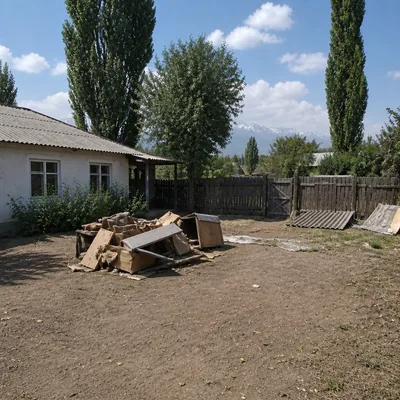
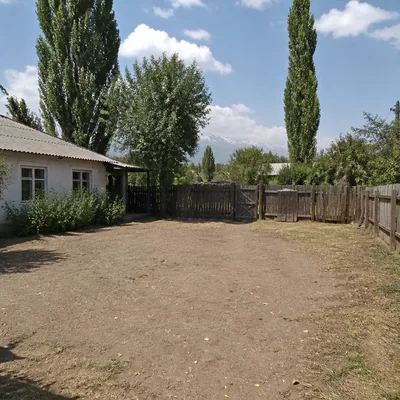
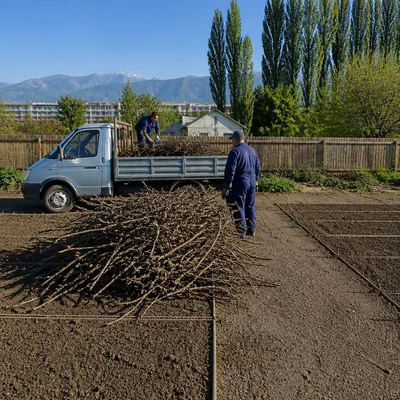
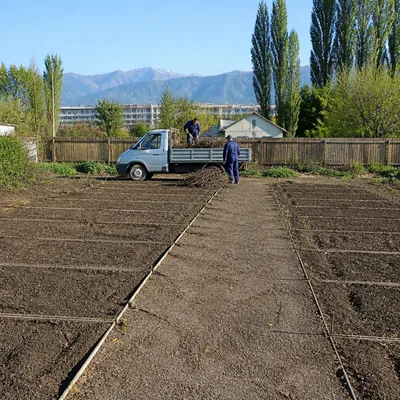
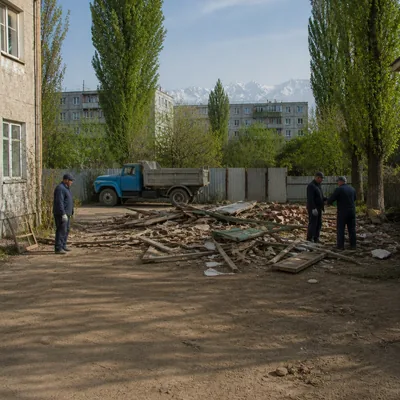
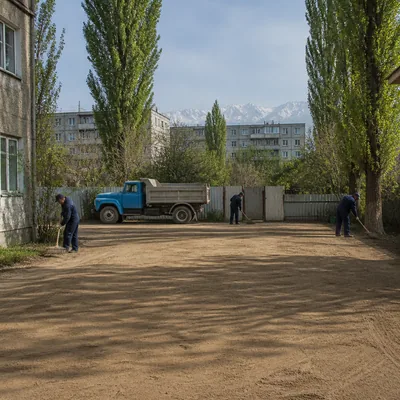
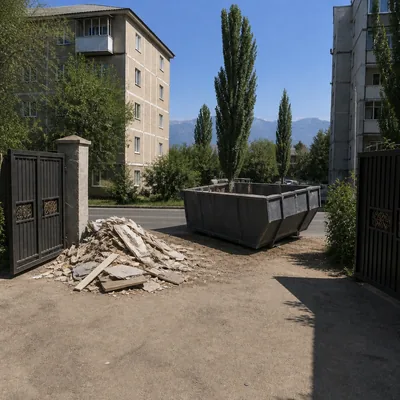
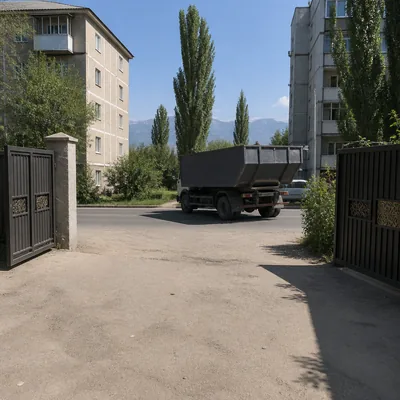
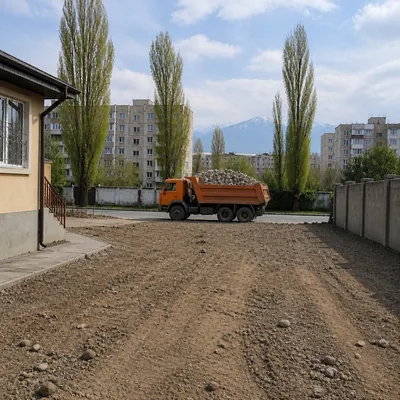
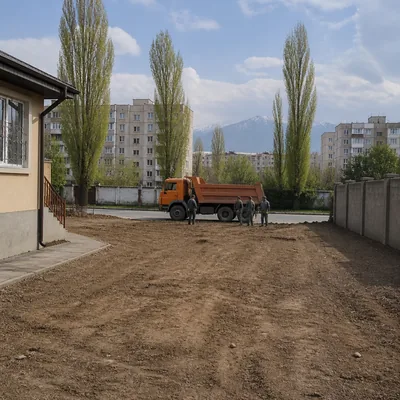
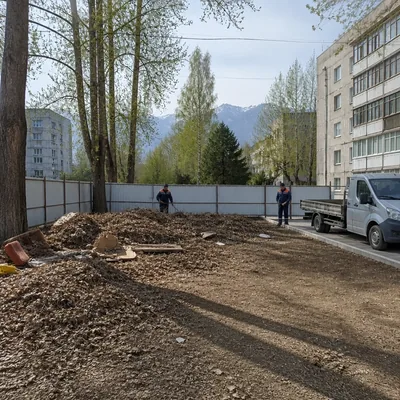
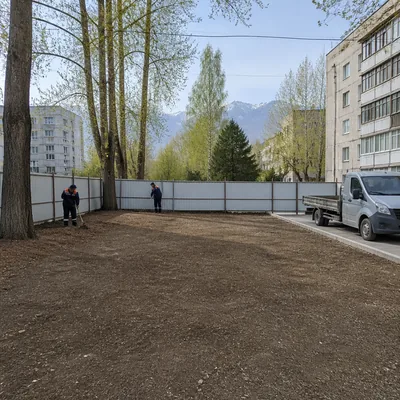
A crew and a driver head out to the request. One of our regular guys — Yerlan, Askhat, Daniyar, or Aigul. They know how to enter a yard without wrecking the garden beds.







Morning in the private sector starts the same way: someone rolls the bin out to the gate, someone looks at the pile of branches by the fence and realizes it's definitely not going anywhere today. Then a truck arrives, and the pile disappears. Between those two moments lies all the math that makes one person pay for one trip and another for three.
I work as a dispatcher and talk to people in the private sector every day: Boralday, Kok-Tobe, Tausamaly, the outskirts of Alatau and Nauryzbai districts. Everyone's story is about the same. At first it seems like there's not much junk. Then it turns out there's old slate under the awning, logs from a dismantled gazebo behind the bathhouse, and bags of grass along the fence that nobody counted. And junk removal in the private sector isn't about 'call us and we'll come' — it's about estimating the volume correctly before sending a truck.
Below is what I usually say on the phone, only in more detail. How to calculate cubic meters, why two trips don't equal two invoices, where the junk goes after loading, and why the line is longer in autumn than in March. No tenge figures — they depend on the truck and distance, not the type of junk. But with specifics: what fits in a GAZelle and what doesn't, and when it's better to order a dumpster instead of a truck.
Let me start with what most often wrecks a job. The client says: "It's just a couple of bags, no big deal." We show up — a couple of bags, an old sofa, three tires and a bathtub. Dispatch booked a GAZelle, but what's actually needed is a dumpster. So let's break down what really makes up the contents of a yard in a private neighborhood. Not from a checklist, but from what I see in the truck bed every day.
Grocery bags, cardboard, old clothes from the closet — this is the stuff that piles up on its own, no renovation or construction involved. A family of four generates five or six cubic meters a month if they don't take it out regularly. A single tube of toothpaste weighs nothing, but a fridge headed for the dump is already a hundred-plus kilos, and one loader can't carry it alone.
Old furniture is a whole different story. A sofa, a wall unit, a wardrobe — they either get taken apart or loaded whole, and it all comes down to the door opening and the gate width. If the wardrobe won't fit through the door, it gets broken down on site, and that means time and extra hands. From experience: furniture almost always takes up more space than it seemed to in the room. You walk into the apartment — looks compact, you carry it out to the truck — a third of a GAZelle.
Appliances are a separate matter. A washing machine, a stove, a TV, a microwave — it's not just weight, it's what's inside. A fridge can't be tossed flat in the truck bed, the compressor will leak. A washer shouldn't be tipped on its side either — the drum is fragile, though if it's headed for recycling, keeping it intact is no longer the point.
This is where the bulk of it comes in. A roof replacement, tearing down a shed, dismantling an old sauna, rebuilding a fence — all of it produces piles that won't fit in any bags. Broken brick, slate, rebar scraps, chunks of concrete, old plaster. The weight is deceptive: a cubic meter of concrete is over two tons, and a GAZelle simply can't haul it, it'll choke.
Slate often cuts. Sheets break, shards are sharp, loaders work in gloves, but even that doesn't always save them. So we take slate, but separately from other construction waste — on its own trip, not mixed with broken pieces.
Demolishing a structure also means breaking it down. Sometimes the owner asks not just to haul it away, but to tear it apart first. It's important to estimate in advance, because a pile of brick after dismantling takes up exactly the volume the wall had — except now it's lying in your yard instead of standing upright.
Branches after pruning are the trickiest load. They seem light, but the volume is huge. A felled apple tree makes a mountain that looks like a dumpster but weighs maybe three hundred kilos. We haul them separately or mixed with other stuff, but if branches are more than half the load, it's better to get a truck with high sides.
Leaves and grass after mowing are moisture. Wet leaves are about twice as heavy as dry ones, and rotting grass gives off a smell that lingers in the truck bed until the end of the job. Bags of potato, beet, tomato tops — nobody in a private neighborhood counts them in autumn. And here's where the cost of waste removal in a private neighborhood really lies: not in kilos, but in cubic meters, and soft green waste always takes up more volume than it looks.
There are things we don't load together with other waste. Not because we're stingy, but because they can't go to regular disposal. Mercury lamps and thermometers, batteries, cans with leftover gasoline or paint are accepted as a separate request: separately from other waste, to a specialized organization. Medical waste, syringes, expired medicines are not our profile. We take slate, but separately from other construction waste.
Large reinforced concrete structures, concrete floor slabs — they can only be moved with special equipment and a crane, which we don't have. Better to go to demolition companies for that; they have their own transport.
What to do with hazardous waste? Lamps and batteries are accepted at special collection points, sometimes at stores. Medicines — at pharmacies during recycling campaigns, if available. Car batteries — at scrap metal collection points, they even pay you for them. If in doubt, better to ask before ordering than to unload it back.
How waste collection works in the private sector, step by step, in short:
And one more thing about a private house: waste removal differs from an apartment in one way: here the pile is usually not in one place but scattered around the yard. Behind the sauna, under the canopy, by the far wall. And you need to mention that in advance, because loaders aren't mind readers.
A tape measure is almost useless here. Piles are irregularly shaped, bags get squashed, branches lie mixed with boards. I count differently — by what the waste is already packed in or what can cover it. It's rougher but more honest: underestimating by eye always goes one way — down.
A standard construction bag is 50–60 liters if packed tight and without a heap. A simple garden bag for grass holds 40–50 liters because leaves and tops settle. So ten tight bags is about half a cubic meter, and twenty is already a cubic meter.
People almost always name the number of bags from memory and underestimate by half. 'Oh, there are like five or six bags' — we arrive and there are twenty-three along the fence. I usually ask to photograph the whole row of bags so the fence is in the frame: by the height of the pickets you can immediately see how serious it is.
With a pile it's harder because it's loose. A cubic meter of branches is a cubic meter only by truck bed volume, but by weight it's about a hundred kilos, and the truck leaves half empty. Logs are the opposite: a couple of chunks half a meter in diameter weigh as much as a whole truck of grass.
I count slate and broken brick not in cubic meters but in pallets and lifts. One sheet of slate weighs about sixteen kilos, and there can be twenty on a shed roof. If the owner says 'a bit of slate', I ask how many sheets are in the stack. Without that, the conversation is pointless.
After a thorough cleanup of a plot, a hundred square meters yields roughly one and a half to two cubic meters of green waste. Not always: if it's just a mowed lawn, less. If you've uprooted an old vineyard, bushes, and deadwood, three times more.
A private house yard of six hundred square meters with a sauna, summer kitchen, and utility block after clearing everything unnecessary is usually three to five cubic meters. I keep that range in mind as a starting point, then refine by specific piles.
| What we count | Unit | Volume | Approximate weight |
|---|---|---|---|
| Tight construction bag | 10 bags | 0.5 cubic meter | 400–500 kg |
| Garden bag with grass | 20 bags | 0.8–1 cubic meter | 30–40 kg |
| Branches and deadwood | 1 cubic meter | 1 cubic meter | 80–120 kg |
| Logs, chunks | 1 cubic meter | 1 cubic meter | 400–600 kg |
| Hundred square meters after cleaning | 1 hundred square meters | 1.5–2 cubic meters | 100–150 kg |
First — count items, not volume. "One sofa, two wardrobes, a bed" isn't volume, it's a list. A sofa unfolded and a sofa disassembled differ threefold. I ask for dimensions, not names.
Second — forget about what's below eye level. Old tires behind the bathhouse, boxes under the shed, foundation remnants. They're not visible in the frame, but they take up space in the truck bed.
Third — don't account for weight. A cubic meter of brick and a cubic meter of grass are the same volume but different loads. For heavy waste, you take a smaller truck by volume, otherwise the suspension won't hold. If in doubt, photograph everything you plan to remove and send it. From photos, we'll calculate more accurately than from a description. The service of removing waste from a private house most often costs more than the estimate precisely because of these three mistakes: you named less volume, we sent a small truck, then had to make a second trip. A second trip almost never costs less than the first — fuel and time are already spent. So it's better to spend ten minutes on photos than half a day on redoing.
The cost of waste removal in the private sector depends on two things: how many cubic meters and whether there's a heavy fraction. Everything else is derivative. If the owner honestly says what's in the yard, I pick a truck with a margin for volume and weight, and it's a single trip. Waste collection in the private sector isn't about a one-time cleanup, but about not having to explain to the driver why he doesn't fit in his own truck bed.
The most common letdown in the private sector is when the truck shows up but can't fit into the yard. A narrow gate, an arch two and a half meters high, wires over the driveway, an apple tree nobody's pruned in twenty years. The driver circles the street and says, "We'll load from here." And that means hand-carrying, which costs noticeably more. That's why waste removal from the private sector starts not with loading, but with the question of access.
The GAZelle is the most compact option. It fits through an arch from two and a half meters wide, and the side height lets it go under sagging cables. The tailgate folds down, and loaders toss bags in by hand, right up to the racks. If the yard is paved with tiles, it's better to put boards under the wheels, otherwise the owner will see cracks and the whole budget will be ruined.
A dump truck is all about volume. Its own weight plus the load creates pressure that not every paving will withstand. A twenty-degree slope after rain is almost guaranteed to get stuck. So a dump truck only goes where there's a solid base: concrete, asphalt, an old stone yard.
Winter shows who's capable of what. In Tausamaly, we drove in on a cleared road, stopped at the gate, and immediately backed out along the ruts. If we hadn't turned around in advance, we'd have been stuck until evening, and I had three more addresses. So I ask about snow right away, before heading out.
Weight is a separate topic. Construction rubble in the bed pulls much heavier than branches, and where an empty dump truck would pass, a full one will sink to the hubs. So I always clarify what exactly you'll be loading: dry leaves and grass are almost weightless, but old slate and brick from dismantled masonry are tonnage.
The bunker doesn't drive into the yard — it gets dropped off on the street and stays there. That's the whole point: when you can't get into the yard at all, but there's a lot of junk. Eight cubes covers a one-time cleanup of a plot: branches, grass, old fence boards. Twenty cubes is a dismantled sauna or half an outbuilding.
A thirty-two cube bunker is for a major renovation or demolishing a building entirely. But there's a catch: you need somewhere to put that volume, and not every street in a residential area allows it. A truck with a manipulator blocks the passage, neighbors start getting nervous, and on a narrow street there's nowhere to turn around.
From these six answers you can already tell whether the equipment will get in or not. I usually double-check about the arch and the turn at the gate — that's where things most often go wrong. If you're unsure, send a photo of the entrance, and I'll give you a more precise answer.
Then the truck stays on the street, and all the load goes through your hands. Bags are one thing if you're carrying them thirty meters. But if the junk is in the far corner of the plot behind the sauna, every bag turns into a separate trip across the yard, and the time doubles. That's why nobody likes this kind of order, but we can't refuse.
People order hand-carrying when there's something fragile in the yard: a greenhouse, a car on the lawn, decorative tiles. Equipment can't get in without causing damage, but people can. The price for caution is time and effort, not extra cubes. By the way, this is the case where a private house calculates waste removal not by volume but by labor.
Sometimes it's easier to carry part of the load out the gate yourself in advance. Twenty bags that you drag to the gate over an evening will save the crew an hour, and you — part of the bill. Many owners do this, and it makes sense.
Narrow streets in residential areas are shared land, and a blocked passage instantly gathers talkative neighbors around the truck. Someone's driving to work, someone's bringing kids home from school. If the bunker is parked across the street, conflict is almost guaranteed. So it's better to coordinate delivery in advance, at least with those who keep a car in the garage.
The practice is simple: we pick a time when the street is free — usually a weekday morning. The manipulator arrives, places the bunker, picks it up after the agreed time. If the order is for the whole day, it's worth warning the neighbors at least verbally, the day before. That's cheaper than any argument.
And separately about noise. Loading slate and boards is loud, and if junk is being loaded at six in the morning, neighbors have every right to be unhappy. We work from nine, and that's not a coincidence. Truck delivery is part of the service, and it needs to be arranged before the crew arrives, not when the equipment is already blocking the street. That way, waste collection in a residential area goes without surprises.
And the last thing to remember: the smartest saving is not to order the biggest truck "just in case." If the load is for a GAZelle but a dump truck shows up, you're paying for air. Hence the rule: first the volume, then the equipment.
The truck doesn't just head to one spot when it leaves the yard. The route depends on what's in the back: clean construction debris goes to one place, branches to another, household bags to a third. That's why I always ask on the phone what exactly the load is. The answer determines both the truck and the cost of waste removal in the private sector — not because we're marking it up, but because transporting and disposing of different fractions costs differently.
Now, here's how it actually works, no generalities.
There's rarely a uniform pile in the yard. Usually it's a layer cake: grass on top, boards underneath, and deep down — old linoleum and a couple of tires. Sorting all that by fraction on site takes forever, and we don't do it. But we set aside large items right away: tires, batteries, household chemicals in canisters, lamps. They can't go into the common truck body, and not just for technical reasons — it's just not right.
What we take separately, even if it's one pile:
Sorting isn't about being pedantic. It's about making sure the truck doesn't go to the transfer station with a load they won't accept and then come back to the yard. That happens, really. Once we brought a truck body to the site with five tires hidden under the grass. We had to turn around and find somewhere to put them. Since then, I always ask about tires separately.
Construction waste from a private house is mostly concrete, brick, plaster, broken tiles. It weighs much more than it looks: a cubic meter of concrete debris is just over a ton, and a GAZelle can't take nearly everything people try to stuff into it. So before sending a truck, we calculate not only volume but weight. If there's a dismantled wall in the yard, I'll be honest: that's two trips, and the second won't be 'just a little extra' — it'll be a full one.
Then the load goes to a transfer station or straight to disposal, depending on the fraction. Concrete and brick are crushed and later used for backfill. Wood, if it's clean, without paint or treatment, can be turned into chips. But mixed construction waste is the most troublesome: it won't be accepted as a clean fraction, and the price for it is different. What they do with it next is the site's issue, not ours. Our part ends where the load stops being ours.
Important point: if you're dismantling a bathhouse or an old shed, don't mix everything into one pile. Boards separate, slate separate, debris separate. This will not only speed up loading but may also lower the price — because clean fractions are accepted more readily.
Branches are a separate story in the private sector. In spring and autumn there are so many that a GAZelle leaves with a heap on top, yet it weighs less than it seems. Branches are bulky but light. That's why we charge by cubic meters, not kilograms.
If there are just a few branches, we take them away whole. If it's a planned garden pruning or a dismantled fence, it's sometimes cheaper to chip on site: wood chips take up three to four times less space, and fewer trips are needed. But a chipper isn't always an option. It won't take thick trunks, and if you have 20-centimeter cuts, they'll still have to be loaded as is.
Grass, leaves, and tops we haul in bags or loose if they're dry. Wet grass is best not tamped down into the truck bed: it starts to rot, and by the end of the trip the smell in the truck is so bad the next client winces. We know this and try not to let it get that far. But if you've been piling grass under a canopy for weeks, be prepared that it's no longer dry.
After the truck bed is closed, the job isn't done. We sweep the spot where the pile was. If it was a concrete yard, we go over it with a broom; if it's dirt, we remove leftover boards and bags so no trash is left that the wind will later scatter all over the property. This isn't a PR gesture, just simple logic: you shouldn't have to spend an hour after we leave picking up what we scattered.
What goes into the truck and where it goes next — I've put it in a table so you don't have to keep it all in your head.
| Fraction | How we calculate | What's next | Feature |
|---|---|---|---|
| Household bags | by truck bed volume | hauled for disposal | wet waste rots, better not to stockpile |
| Branches, grass, leaves | by cubic meters, weight is low | chipping or hauling whole | the chipper won't take thick cuts |
| Construction debris | by weight, a cubic meter is about a ton | crushing, backfilling | a GAZelle doesn't hold much, often two trips |
| Untreated wood | by volume | can go to chips | painted wood is a different story |
| Tires, metal | by piece or by weight | separate route | can't be dumped in the common truck bed |
| Mixed pile | by volume, with a margin | transfer, sorting | accepted worse and more expensive |
In short: private house waste removal is always about breaking the pile into fractions before the truck even enters the yard. The more honestly you tell us what's under the canopy and behind the bathhouse, the fewer surprises during loading. And the more accurately I can quote the cost of waste removal in the private sector over the phone, without recalculating on site.
Read this far and still not sure about the volume? Send us a photo — we'll calculate and give you a price.
Message us on WhatsAppIn April, we're booked two weeks out. In August, we can come tomorrow. This isn't an ad or a complaint—it's just a fact anyone ordering waste removal from the private sector runs into. The reason is simple: a private house lives by the yard's calendar, not the management company's schedule. As soon as the snow melts, people head outside and start sorting. First, whatever was under the awning. Then, whatever was frozen to the ground. And then they find more.
The first peak is from mid-March to the May holidays. The snow goes, and underneath is a layer of packed leaves, wet and heavy. One cubic meter of that mass weighs so much that a GAZelle can only take it with extended sides. Plus community cleanups: the district administration announces a month of cleanup, neighbors drag half-rotted fences, greenhouse remnants, old swings to the curbs. If you're in Boralday or Tausamaly, where yards are big and private house waste removal isn't about one bin but a full trip, it's best not to wait in spring. I usually advise: as soon as you see the pile has stopped shrinking on its own, call. It'll only get worse — the grass will come up, and the volume will grow by a third.
Summer means fewer orders, but they're heavier. Construction season is in full swing: extensions, summer kitchens, roof replacements. You get broken brick, offcuts of profiled sheeting, bags of cement crumbs. The key here is not to mix this with green waste, because grass and branches are light, while building material is heavy. If you're ordering private-sector waste removal, say right away: branches separate, rubble separate. Otherwise the truck arrives sized for volume and ends up hitting its weight limit. In the heat, grass dries fast, volume drops, but dust and fine particles work their way into every gap in the truck bed. After loading, we always sweep the area — otherwise the neighbors will file a complaint before you've even closed the gate.
September and October are the second peak, sometimes bigger than spring. Falling leaves create volume you simply can't compact: leaves spring back, and a bed stuffed to the brim weighs less than it looks. Add tree pruning, greenhouse dismantling, dug-up bushes. At the same time, people are replacing fences and putting in new gates. I've seen plots where four GAZelles were hauled away in a week in autumn — simply because the owner decided to tidy up all at once. If you have a private house, it's better to schedule autumn waste removal on weekdays: on weekends the equipment is booked, and delivery can slip by a day. That's not an excuse, it's reality — trucks are limited, and there are plenty of people who want them.
In winter there are few orders, but they're the toughest. Snow blocks access to the yard, and the truck can't always get in. Ice on the site is a whole other story: wheels spin, and the loaders risk falling. What can you haul in freezing weather? Dry branches, old furniture, construction waste — as long as it hasn't frozen into a solid block. Frozen ground or cement is best left until the thaw: the bucket won't bite, and the loaders will throw out their backs. From experience, in December and January it's worth hauling only what's really in the way. The rest can wait until March.
How does this affect timing? At peak season, a free truck takes longer to wait for; in the off-season, often the same day. The cost of waste removal in the private sector doesn't change with the season, but the volume does. So if you're planning a deep clean, better not to combine it with the May holidays.
Now, step by step, here's how I'd recommend going about it so you don't overpay or wait longer than you need to.
In spring and autumn, people most often order GAZelles with raised sides — they take volume but don't like heavy rubble. In summer and winter, it's the opposite: dump trucks and skips are in demand, and they can get onto the plot if there's room to maneuver. If the yard is tight, you have to carry the waste out to the road — that takes longer and costs more, because the loaders do it by hand.
Here's how garbage collection works in a private neighborhood: first you describe what's there, then we pick the right truck, and only then does it show up. If it's peak season and you're not sure about the volume, it's better to call an estimator — that saves both time and money. In Almaty we cover all districts, but trucks take longer to reach remote villages, especially in winter.
And one last thing: don't leave garbage by the road for days. In a private neighborhood it quickly turns into a dump, and your neighbors into unhappy people. We haul it away on the day of pickup and leave the site clean behind us. This isn't an ad — it's just basic yard hygiene.
The dispatcher's phone rings non-stop, and half the questions repeat day after day. People are embarrassed to ask, afraid of looking silly. But they shouldn't be: better to clarify upfront than to unload the truck back later. I've gathered what I hear most often and answered the way I do on the phone — no formalities.
Yes. We work Mon–Sun, from nine in the morning to nine at night, and Sunday is no different from Wednesday. The only catch — it's best to place your request on Saturday afternoon or at least in the evening, because morning slots on weekends get taken first. People in private neighborhoods love to start clearing the clutter on Sunday: everyone's home, no one's rushing to work, you can calmly carry bags to the gate.
If you call Sunday morning and want a truck in an hour — honestly, it won't always happen. There are free trucks, but there may not be one in your area, and then the nearest slot moves to the evening. So plan for Saturday — and Sunday will go smoothly.
The most common question after volume. We don't pump out cesspits and septic tanks — that's separate equipment and separate people, we have a different profile. But we do take garbage lying next to the pit: old boards, slate, bags of grass, barrels. We draw the line by contents, not by where it sits.
Sometimes someone says "it's all mixed together in there," and we have to sort it out on site. If the pit is overflowing and the smell is strong, it's better to call the sewage truck first, and us after. Otherwise the loaders simply can't work two meters from the hatch, and that's a matter of common sense, not money.
Yes, if it's your property and you're willing to pay for it. Who exactly dumped the bags over the fence — that's not our concern, we estimate the volume and load it. It's a different story when a neighbor dumps garbage on the shared boundary and demands you haul it away at your own expense. That's not for us, that's for the chairman or the akimat, and it's best to sort it out before the pile moves onto your side.
In practice it's often the opposite: someone hauls away all their own stuff, and a week later there are bags behind the fence again. Only a conversation will help here, because you can run the truck endlessly with zero results.
| Question | Short answer | What's important to know |
|---|---|---|
| Sunday | We work | Better to request on Saturday afternoon |
| Cesspit | We don't pump out | We take garbage next to the pit |
| Neighbors' garbage | We'll haul it if it's your property | Boundary disputes aren't for us |
| Garbage after moving out | We'll pick it up on request | Access to the property is needed |
| Someone should be home | Preferred | Or a key and a clear landmark |
You leave for a month, come back — and there's someone else's pile in your yard. That's not unusual in a private neighborhood, especially on the outskirts where fences are low and streets are quiet. The fix is simple: you place a request, explain where the trash is and how to get onto the property, and we haul it away. The owner doesn't have to be there, but you'll need either a key or a neighbor who'll open the gate and show what to load.
Another option is to arrange things in advance if you're leaving for a long time. Then trash doesn't pile up for months — it gets hauled as it appears, and coming back to a clean yard feels better.
A separate note on trash collection in private neighborhoods: people often think we come on a schedule like a city service. No — every trip is by request, so there's no point in hoarding for years. The cost of trash removal in a private neighborhood depends on how much the bed takes in one go and how far the pile is from the gate. The closer to the truck, the faster and easier.
And one last thing. Don't be shy about asking questions, even if they seem silly. Asking about a narrow gate, a dog, or who'll open the gate is normal. What's much worse is when the truck arrives and it turns out it can't get into the yard or there's no one to load. That conversation takes five minutes and saves you half a day.
If you've read this far and need to decide today — here's the short version. Everything else in this article is just details that flesh out these four ideas.
Construction debris from a private neighborhood is almost always heavier than it looks. A cubic meter of broken brick weighs close to a ton and a half, while a cubic meter of old leaves is about two hundred kilos. We pick the truck by the volume the load will take up in the bed, not by how much it seems to weigh. Those are different things, and confusing them is expensive.
A private house usually orders trash removal after a one-time cleanup: tore down a bathhouse, cut down a poplar, cleared out the summer kitchen. And that's where the main mistake happens — measuring volume in bags. One bag isn't another: one's stuffed with dry grass, another with chunks of concrete from the foundation. From experience, ten bags of construction rubble is about a GAZelle, and ten bags of branches is a third of a GAZelle.
The logic is simple: first we check whether the equipment can get to the gate, then we calculate the cubic meters. In a private neighborhood, trash removal often hinges not on how much stuff you have but on the width of the driveway, overhead wires, and the turn in front of the gate. A 32 m³ dumpster just can't get into many alleys — it's long, and there's nowhere to turn around.
That's why it happens: the volume fits a dumpster, but we send two GAZelles or a ZIL. More expensive? Yes, but cheaper than taking down a fence the dumpster would catch on the turn.
In fall and spring there are noticeably more requests. People clean up their properties after winter or get ready for it, and the wait for a truck is longer. On a Friday evening in summer it's easier than on a Monday morning. The estimate process doesn't change with the season: photos, volume, equipment selection, dispatch.
I know it sounds like an excuse, but it's true — in late October and late March we have a queue, and it's better to call a day or two ahead, not "I needed it yesterday."
To make the conversation take three minutes instead of twenty, have this ready:
And lastly. The cost of waste removal in the private sector depends on the volume and access, but it's fixed before the truck arrives. After loading, it doesn't change — that's a rule, not a promise. If the photo showed one volume but it's different in reality, we count by what's there and tell you before the truck leaves.
It depends on the volume and the truck. GAZelle 1.5 t — from 30 000 ₸ per trip if there's not much trash, say a couple of cubes. If the pile is bigger, we count by cubic meters: 8 000 ₸ per cube. We'll give you the exact amount after a photo or a short video — that's more reliable than guessing over the phone.
We take regular household and construction waste — old things, furniture, branches, broken bricks, renovation leftovers. But we don't load batteries, lamps, paint, or solvents into the general truck body — we accept those as a separate request: separately from other waste, to a specialized organization. Tires and medical waste are a separate story; they need their own disposal. If you're unsure, take a photo and send it to WhatsApp — we'll tell you what to do.
Roughly measure the pile: length times width times height. If the pile is taller than you, safely count 0.8–1 cubic meter per square meter. You can also just snap a few photos from different angles — we'll tell from the pictures which truck you need. No need to run around with a tape measure.
For private homes, a GAZelle is usually enough — it fits where a bigger truck can't even turn around. If the yard is spacious and there's a lot of trash, we'll send a ZIL or KAMAZ. For really tight spots, we use a crane truck or a skip, but that's less common. Let us know about the narrow driveway in advance — we'll pick equipment that fits.
Yes, we work seven days a week from 9 to 21. Saturday and Sunday are regular days. If you need after 21 or early morning, we can discuss it separately, but usually people book during working hours.
Our loaders. The crew rate includes loading and carrying out if the trash is in the yard or in the house. If it needs to be brought down from the attic or up from the basement — we'll do that too, it's part of the job. A crew with a GAZelle is 20 000 ₸, with a ZIL — 48 000 ₸.
That happens if the volume was underestimated. Then we either call a second truck, or the loaders stay for an extra hour — 6 000 ₸ for a GAZelle. To avoid paying twice for dispatch, it's better to send a photo of the pile right away: we'll pick a truck with some margin.
For private homes it's usually not required, but if your case is different — message us on WhatsApp, we'll sort it out before you order. Either way, we take the trash to disposal and sweep the area after loading.
Yes, and it's often cheaper that way. One GAZelle trip costs 30 000 ₸, and if the trash is from two or three yards, the cost is split. The main thing is that the entrance is shared and the piles are close together. We'll arrive at the same time and take everything at once.
Cash or card transfer — whatever's convenient. The price is fixed before the truck is dispatched and doesn't change after, no extra charges for lifting or carrying out. If you pay by transfer, we'll send the receipt via WhatsApp.
Got a question that's not here? Ask — we'll answer in writing, no call needed.
Message us on WhatsAppGarbage removal in a residential area — I ordered a GAZelle. They took everything and even swept up after themselves. Very happy, I'll call again.
We tore down an old shed and needed the boards and junk hauled away. They came in the morning while it wasn't hot yet. Took everything, even swept up the nails. Thanks, Askhat.
Neighbors recommended them. We have a private house, and garbage removal is always a headache. They came in the snow, loaded everything and swept the spot. Fixed price, no surprises.
The cost of waste removal in the private sector here is reasonable. I ordered a GAZelle, they removed construction waste after renovations. All clear.

after renovation in a private house there was a lot of trash. they arrived on time, took everything away. very pleased, the price is fair.
We needed to remove garbage from a private house after a sauna was demolished. They came in the rain and still loaded everything. The cost of garbage removal in a residential area is reasonable, no markups.
A neighbor recommended this company for waste removal in the private sector. I called, explained what I needed. Aigul immediately said one GAZelle wouldn't be enough, suggested a ZIL. Everything was taken away in one go.
Private house, waste removal — that's what I needed. I called, we agreed on the morning. They came, loaded, left. Quick.
We had garbage removed from our residential area after a roof repair. Lots of broken slate and boards left over. Yerlan Zhumabayev said right away one GAZelle wouldn't cut it and sent a ZIL. Loading was quick, nothing had to be topped off.
A private house — garbage removal was exactly what I needed. Stuff had piled up after fixing the fence. They arrived on time and hauled everything away. The price didn't change.
Waste collection in the private sector was neglected at our place. I ordered a 32 m³ dumpster. They brought it, placed it, picked it up a day later. Very convenient. Thanks to Askhat.
private house, lots of old furniture. they arrived quickly, took everything. thanks
We needed to haul old furniture and junk out of a private house. Called in the morning, the truck arrived in the afternoon. They loaded everything fast and swept the yard before leaving.
Ordered waste removal from a private house. They came in the snow and took everything away. Great job.
After renovating a private house, there was a pile of scraps and an old wardrobe left. I ordered waste removal from a private house for the first time, worried they wouldn't come this far out. They arrived in an hour and carried everything out themselves.

Garbage collection in our residential area had been neglected. I ordered a 32 m³ dumpster, it arrived the next day. They took everything, even what wouldn't fit. The cost of garbage removal in a residential area turned out lower than I expected.
Private sector waste removal — I found this company. They arrived quickly, everything was neat. I recommend.
I ordered waste removal from a private house after demolishing a shed. I waited a bit longer for the truck than promised, but they warned me in advance. Otherwise, all good, the movers were careful.

Waste removal from a private house — really liked the company. They arrived on time and took everything away. Even a neighbor asked who it was. I passed along the number.
Waste removal from a private house — really liked the company. They arrived on time and took everything. The price didn't change.
After we replaced the plumbing in the house, there was a pile of old pipes and broken tiles left. I called in the morning, they gave me a truck after lunch. They removed everything in one trip.
Ordered waste removal from a private house after winter. Waited a bit longer for the truck than promised, but they gave us a heads-up. Everything was hauled away, the yard is clean.
I needed to remove old furniture and junk from the private sector. The truck arrived on time, the movers carried everything out themselves. The price didn't change.
I ordered waste removal from a private house after shoveling snow. Old tires and boards were lying in the yard. They came quickly and took everything. Didn't even have to carry it past the gate.
We were clearing out the basement — ten years of junk had piled up. Dinara suggested one GAZelle would be enough. And it was. They took everything, even the rusty cans.
In our residential area, garbage removal is a sore subject. I spent a long time looking for someone to take on old furniture and junk. Aigul Serikkyzy sorted out all the details over the phone and sent a truck with loaders. They worked like clockwork, no smoke breaks. I recommend them.
Waste removal private sector — I ordered a GAZelle. They took everything, even swept. Thanks.
Waste removal from a private house — that's me. It piled up over the winter. They came, loaded, swept the area. Quick and stress-free.
In our residential area, hardly anyone takes on a job that big. The yard was buried in branches after pruning the acacias, plus an old sofa. Askhat showed up with two loaders and they filled the GAZelle in an hour. The price didn't change, even though the volume was decent.
We were moving from a private house to an apartment. There was old furniture nobody wanted to take. I called this company and they came the same day. The loaders carried everything down themselves, even though the house is one story. Fast, careful, no unnecessary talk.
Waste removal from a private house is my headache every spring. This time I called these guys. Daniyar came, took a look, and said they'd haul everything in one go. And they did.
I needed to remove construction waste from a private house. A GAZelle came and took everything away. The price was as agreed.
We removed waste from a private house after moving. Everything went smoothly. Fixed price.
Showing 3 of 33
Want the same? Describe your task — we'll calculate and give you a price before the truck arrives.
Message us on WhatsAppChecked us out? Drop us a line — we'll pick the right truck for your load.
Message us on WhatsAppIllegal dumps on the outskirts, soil and groundwater: what happens when waste goes to the wrong place.
Collection, sorting, crushing, secondary raw materials — the steps in order and what actually gets recycled.
How medical and industrial waste differ from household waste and what's required of the hauler.
Articles of the Administrative Offenses Code of Kazakhstan, amounts in MCI for 2026, and who's responsible for the garbage — the carrier or the client.
The trash in your yard won't disappear on its own. Message us on WhatsApp — we'll look at the photos, give you a price and come at a time that works for you.
Tell us how the pickup went — it helps us and anyone choosing a hauler.



