Yerzhan
They removed the old bathtub quickly. Came, loaded it, took it away. All good.
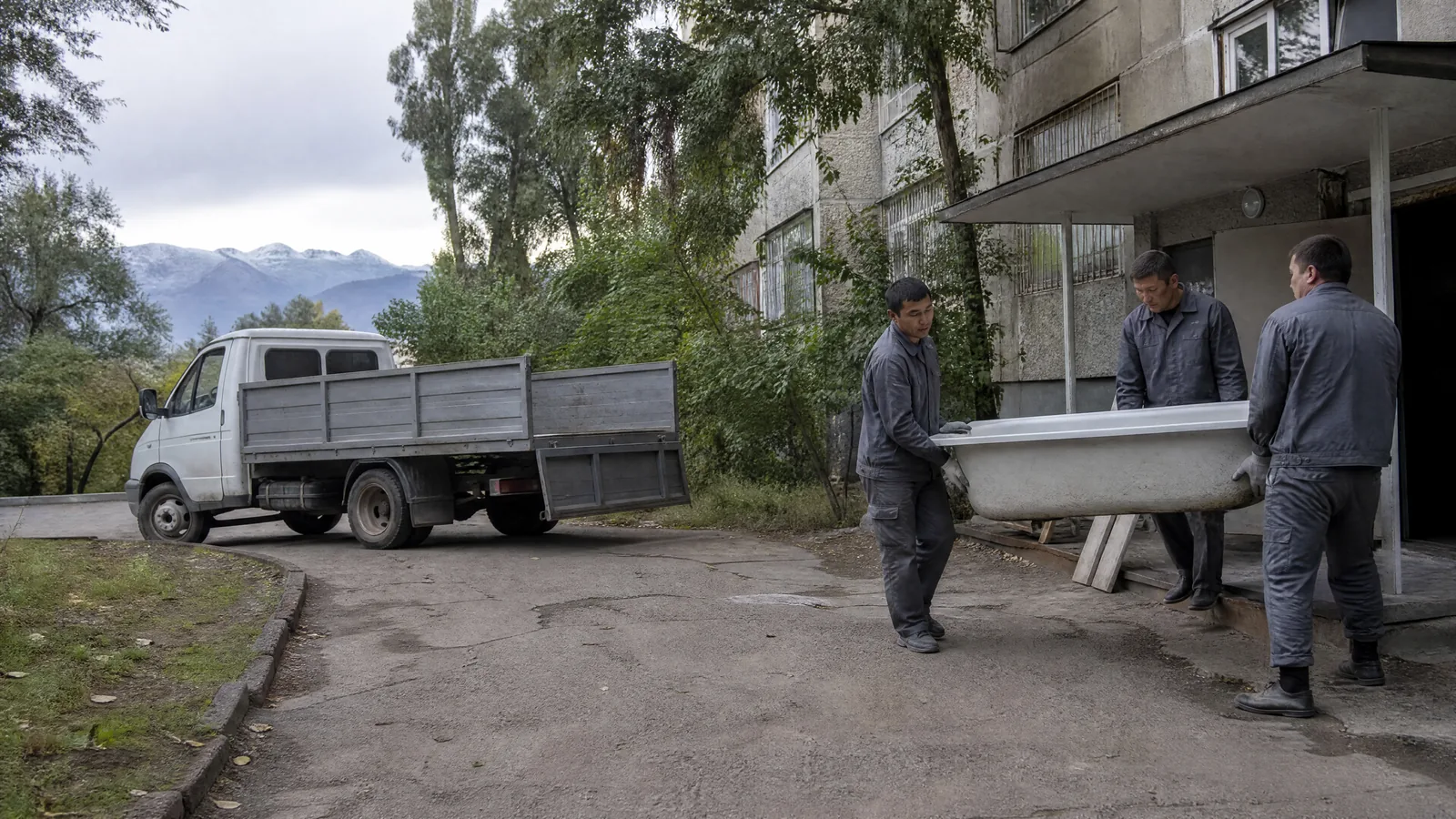
Trip from 30 000 ₸, carrying out and loading — crew from 20 000 ₸. Site cleanup is included in the price.
Choose what you need removed, when, and whether you need movers — you'll see an approximate price. We'll confirm cast iron, steel, or acrylic and the floor in the chat: that determines the crew.
The price is fixed before the truck is dispatched and doesn't change after it arrives. Site cleanup is included; carrying out and loading are charged at the crew rate.
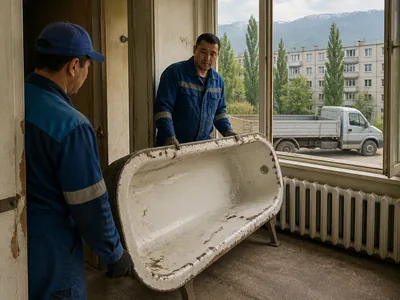
The heaviest of all. Weighs from 80 to 120 kg, and two people can't carry it down from a floor — you need a crew and a GAZelle. We carry it out carefully, without banging corners or doorframes.
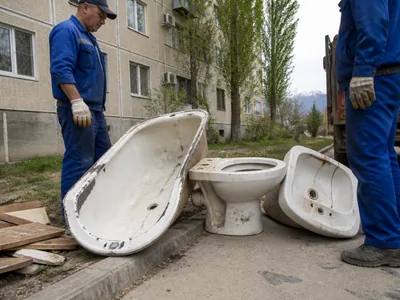
Thin, but due to the enamel and stiffening ribs it's heavier than it looks. Usually goes out together with the sink and toilet — we take everything in one trip.
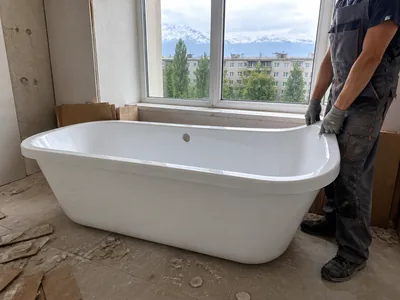
Light — one person can lift it, but it's bulky. Often swapped out during renovations, and people ask us to take it away along with the packaging and offcuts.
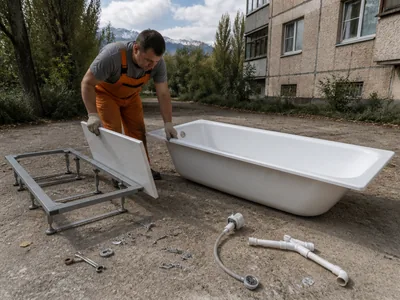
Acrylic or steel plus a metal frame, screen, drain. We take it apart on site: frame separately, tub separately — that way it fits into a GAZelle more neatly.
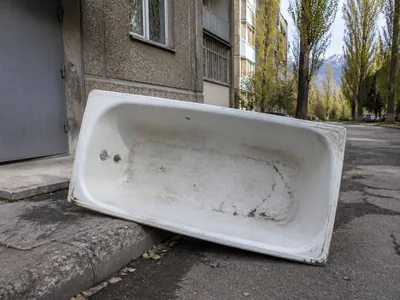
When the plumber has already ripped out the tub and left it in the yard or the hallway. We pick it up from the site, not from the apartment — the price doesn't change either way.
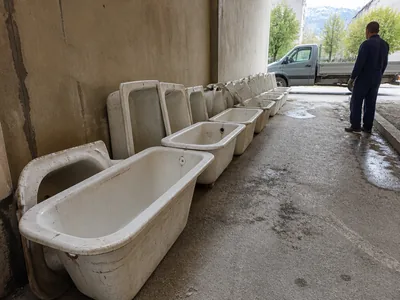
When bathrooms are being replaced in the rooms, the tubs come one after another, dozens at a time. We coordinate a floor-by-floor schedule so we don't disturb the guests, and haul them out in batches.
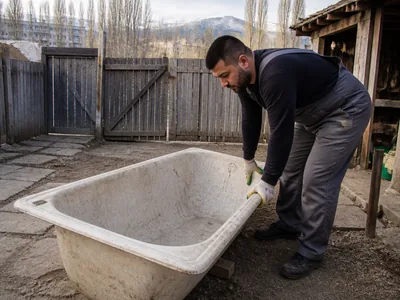
In the yard, in the summer kitchen, in the bathhouse. We carry it out through the gate and load it at the entrance. Outside the city, mileage is added — we calculate it in advance.
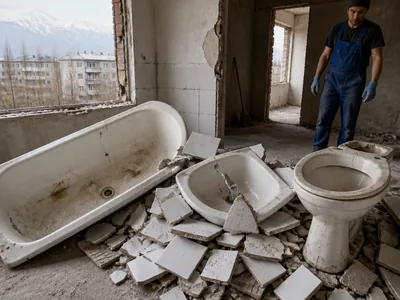
Bathtub, sink, toilet, broken tiles — everything from one bathroom. We collect it all in a single trip so the truck doesn't have to come twice.
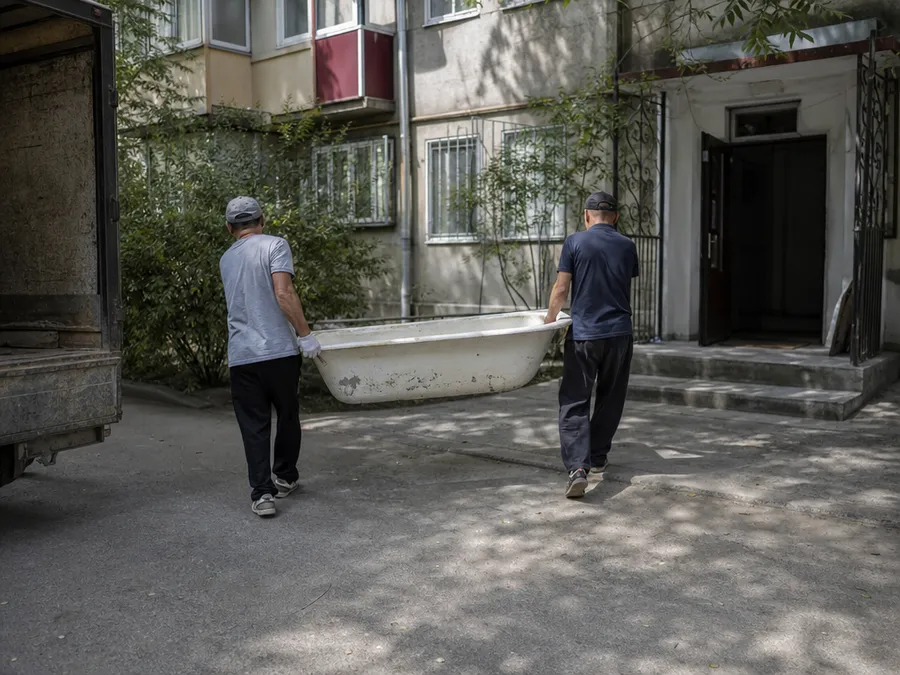
Our most common order: one old bathtub, pick it up today or tomorrow. We charge by the GAZelle trip — if it's the only thing that fits, the price won't go up.
Book a run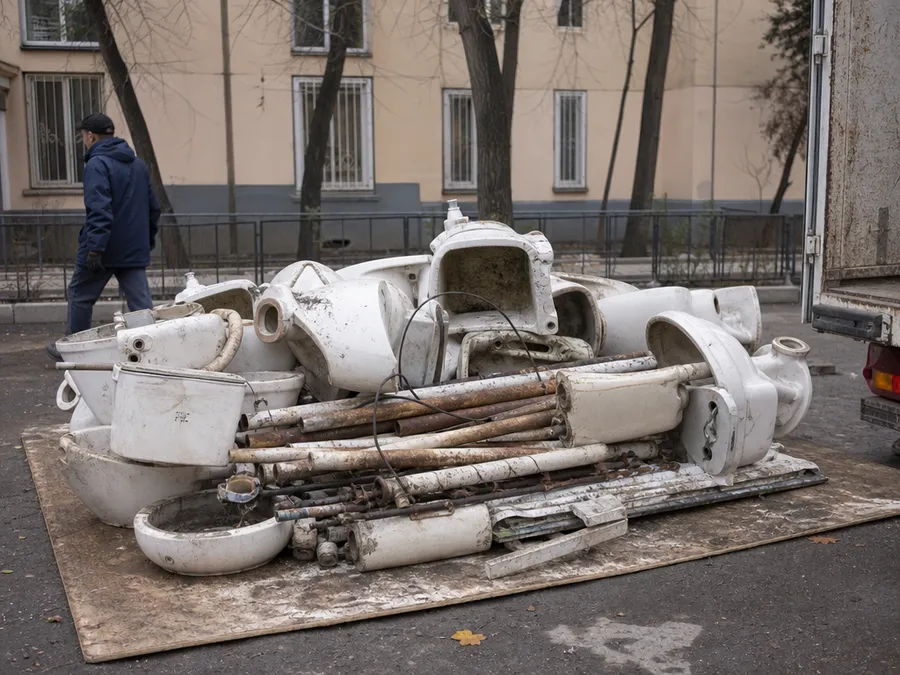
When the tub needs to come down from the fifth floor with no elevator, or be carried out of a basement. Our crew lifts it, carries it out and loads it into the truck — all you have to do is show us where it is.
With a crew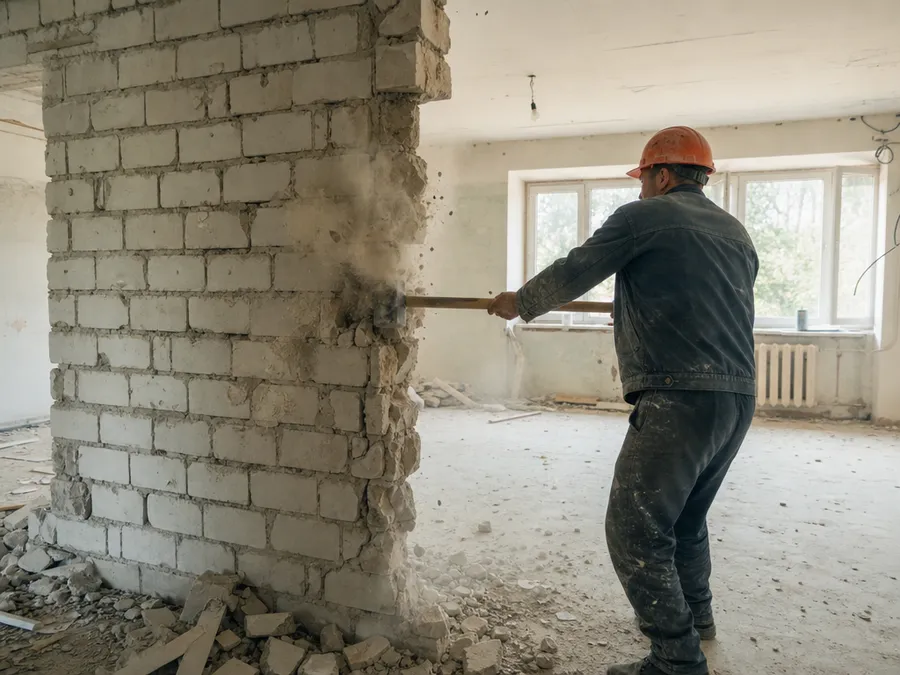
The bathtub is still bolted to the wall, but the plumber isn't around. We disconnect it, take it off, carry it out. One hour of loader work — if dismantling takes longer, we'll settle up on the spot.
With dismantling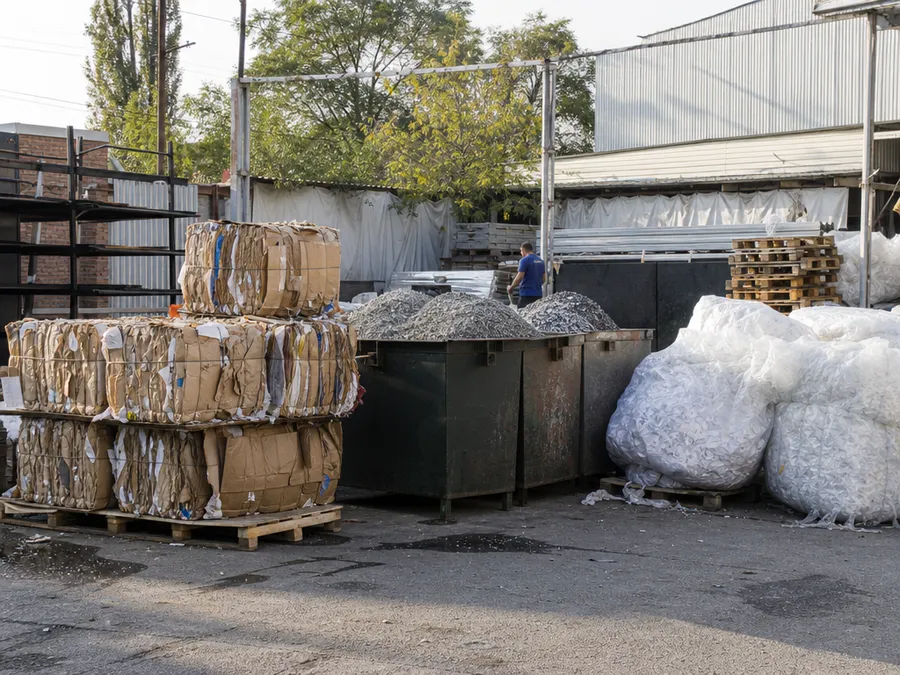
A hotel, a dorm, renovations in several apartments — when there are five, ten, twenty bathtubs. For a batch like that we bring a ZIL so we don't have to drive back and forth.
In a batch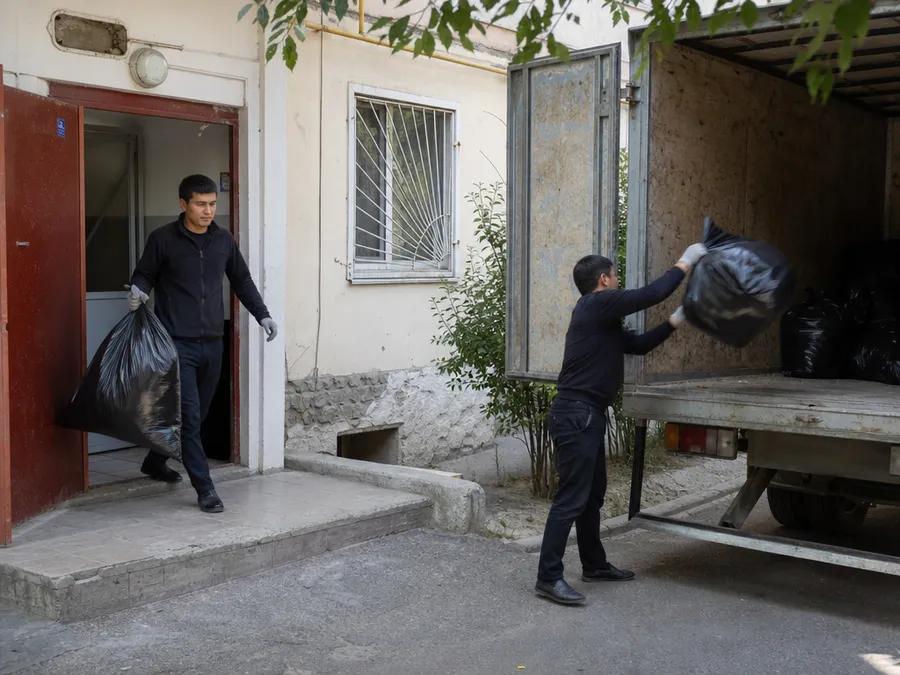
If there aren't many bathtubs but they're in different places, you pay for the loaders' hours, not for a whole crew. We charge for the actual work, and we'll discuss the minimum over chat.
By the hour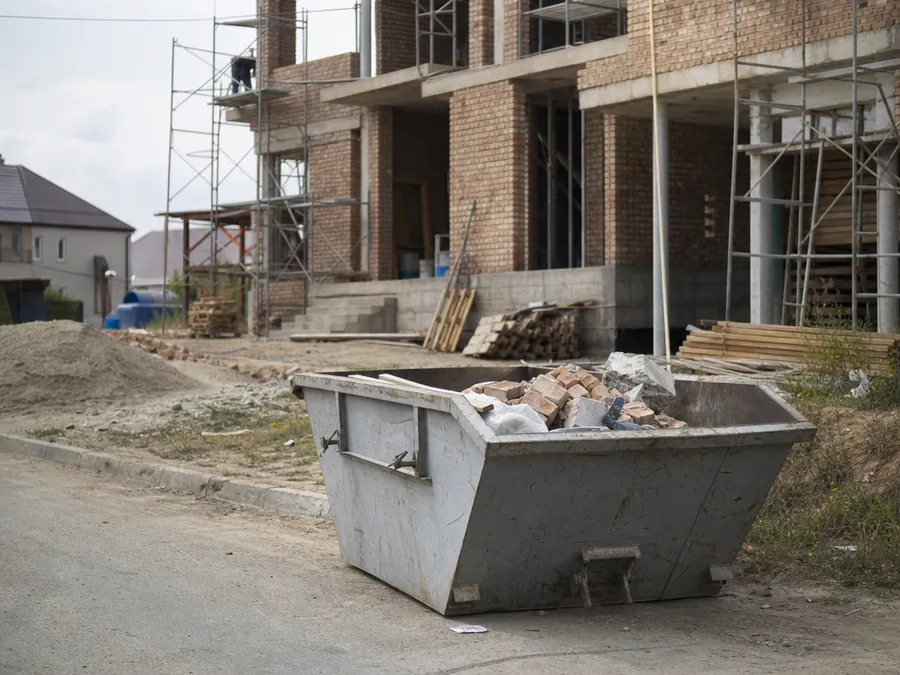
When bathrooms are being replaced in an entire building entrance and the bathtubs pile up for a week. The container sits in the yard and is hauled away as it fills up. The price depends on the duration — ask us on WhatsApp.
Message us on WhatsAppFor a bathtub, we usually take a GAZelle or ZIL. Here's what actually goes into a trip and how much it costs.




Valid from August 2026 · price per trip within the city
| Equipment | Volume | Payload capacity | Price per trip | Extra hour |
|---|---|---|---|---|
| GAZelle 1.5 t | 12 m³ | up to 1.5 t | 30 000 ₸ | 6 000 ₸ |
| GAZelle 2.5 t | 16 m³ | up to 2.5 t | 35 000 ₸ | 9 000 ₸ |
| Truck 5 t | 25 m³ | up to 5 t | 40 000 ₸ | 12 500 ₸ |
| ZIL dump truck | 7–12 m³ | up to 7 t | 40 000 ₸ | 12 500 ₸ |
| KAMAZ dump truck | 15 m³ | up to 20 t | 55 000 ₸ | 15 000 ₸ |
| Howo dump truck | 25 m³ | up to 40 t | 60 000 ₸ | 15 000 ₸ |
| PUHTO (skip) | 8–10 m³ | up to 7 t | 45 000 ₸ | — |
| Multilift | 20 m³ | up to 12 t | 100 000 ₸ | — |
| Skip | 27 m³ | up to 15 t | 135 000 ₸ | — |
| Max skip | 32 m³ | up to 20 t | 160 000 ₸ | — |
Prices apply within Almaty city limits. Outside the city, mileage is added — we calculate it in chat before dispatch.
Not sure which truck you need? Send a photo — we'll pick one for you.
Message us on WhatsAppA bathtub rarely leaves alone. Around it, tiles are dismantled, pipes are replaced, a toilet and sink are taken out. We can take those too.
Five steps — and the bathtub goes to disposal, while the site stays clean.
Order bathtub removalYou write on WhatsApp what kind of bathtub it is and which floor. A photo helps be more precise: it shows whether it's cast iron or acrylic, and whether it will fit in the elevator.
We calculate weight and volume, choose a GAZelle or ZIL, and give you the sum. It's fixed before the vehicle is dispatched — it doesn't change after that.
The truck arrives at the agreed time, from 30 minutes citywide. You won't have to wait for the crew by the entrance — we'll call when we're on site.
We disconnect the bathtub from the riser, remove it from the legs, and cut it if necessary. Loaders carry it out of the apartment, down the stairs or elevator, and load it into the truck. We also take the sink and toilet if you're replacing everything.
We take the bathtub to disposal — cast iron and steel go as metal. We sweep the loading site and take enamel shards and shavings with us.
We show what the site looks like before and after: it's important that we don't leave shards and shavings.
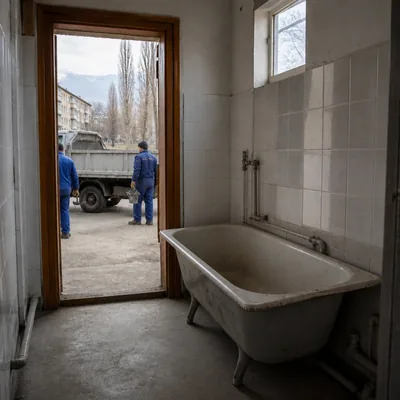
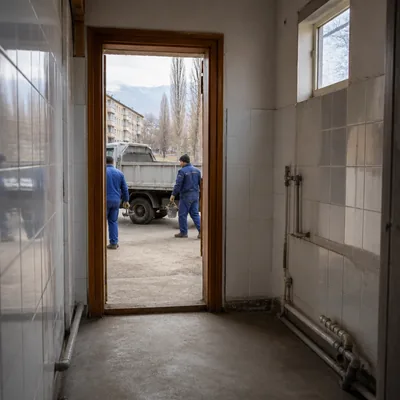
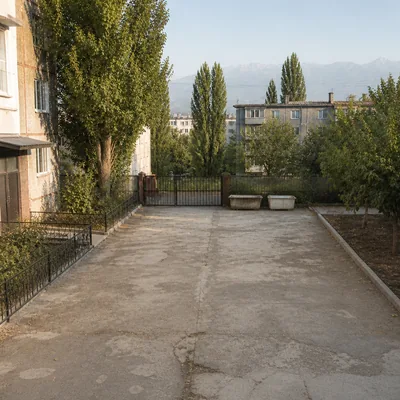
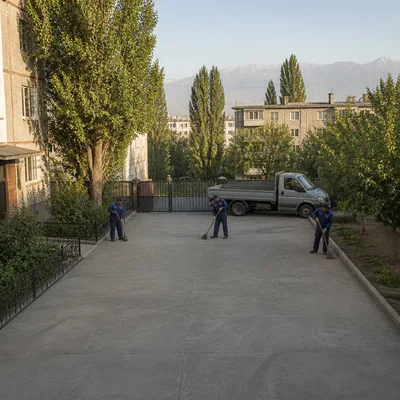
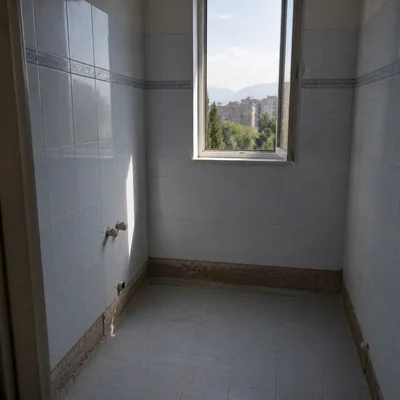
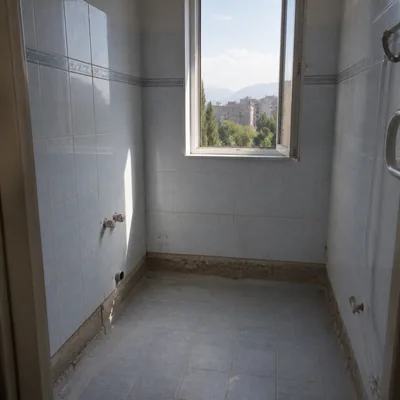
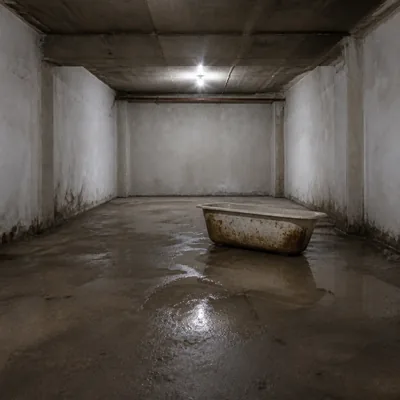
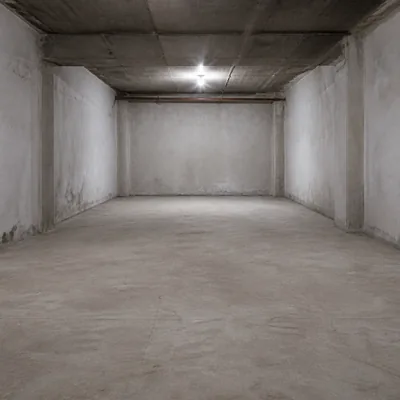
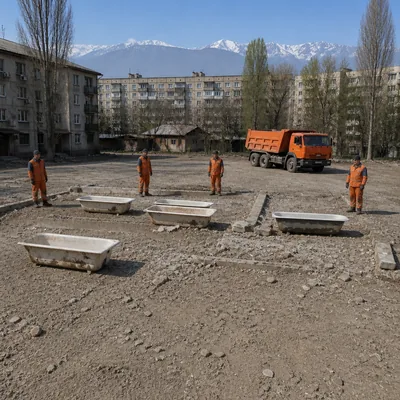
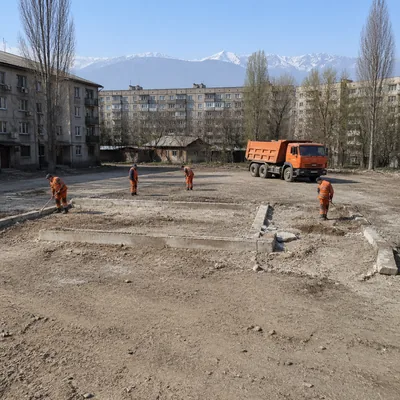
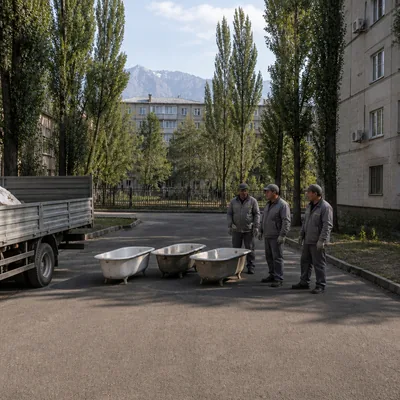
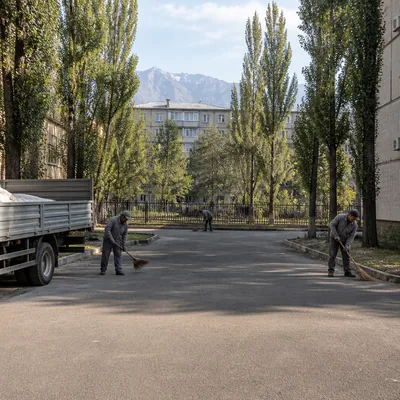
Bathtub removal is handled by loaders and a driver. Here's exactly who does what.







A bathtub isn't the kind of load you carry out with the rest of the trash. It's heavier than it seems and bulkier than it looks in photos. The most common phone call starts the same way: "We have a cast-iron one, third floor, no elevator, how much will it cost?" Then we ask three questions — material, floor, and where the truck can pull up. From the answers, it's already clear what a simple bathtub removal will turn into.
Over the years, I've hauled out hundreds of bathtubs. And every time I see the same mistakes: people think it's quick because "it's just a bathtub." But it weighs anywhere from a hundred to two hundred kilos, won't fit through the doorway in one piece, and doesn't always go into a GAZelle the way you imagine. This isn't a scare tactic — it's data from real jobs.
In this article, I'll cover what price lists usually don't mention: how to calculate the volume, why cast iron and acrylic are two different stories, what to do with a bathtub that can't be carried out through the door, and where it's taken after loading. No tenge figures — just logic and experience. Prices are already on the page above.
Let me pull up last month: twelve bathtubs, eight of them cast iron. That's not a random sample — cast iron is still in most old Almaty apartments, and it sets the tone for the whole bathtub removal. Acrylic comes up less often, but it does come up. And each material is its own story about weight, dimensions, and how many people you'll need on the stairwell.
A standard cast iron tub is a hundred and twenty kilos; an enameled one with thick walls can hit a hundred and eighty. And that's empty, no water. Two movers can lift it, but they carry it slowly: the center of gravity is off, and the sides are slippery. Often cast iron has to be carried upside down — it's easier to hold that way, but then the feet stick out. If you're ordering removal of an old bathtub from a panel building, allow twice as much time for the up and down as for the loading.
Another nuance is size. Cast iron doesn't bend and can't be cut on site. It either fits through the doorway or it doesn't. And if it doesn't — and in old buildings the doorway is sixty centimeters while the tub is seventy — we turn around and go get tools.
An acrylic tub weighs twenty to forty kilos. Sounds great. But it's big, light, and fragile all at once — you can't lean it against a wall, can't drop it flat, can't pull it by the rim. You have to hold it by the frame, and on most models the frame is thin tubes that bend under load. Plus acrylic often has no feet and sits on a trough-like frame. Removing this type of bathtub is about care, not strength.
There's a second layer to the problem: reinforced fiberglass already weighs sixty to eighty kilos and remains fragile. Two movers can handle it, but it's better to have one walk ahead and call out the turns on the landing.
Steel is thirty to fifty kilos. Thin enamel, a hollow sound when you tap it, often rust stains near the drain. Seems like the perfect candidate for a quick carry-out, but it's steel that most often causes trouble: it lets you down when lifting because the sides are thin and cut into your palms. We work in gloves, and that's not a formality.
The steel bathtub from Khrushchyovka buildings is usually one meter seventy long. It fits into the elevator diagonally if the shaft is standard. But a narrow freight elevator with handrails — no. You have to carry it down the stairs.
Cast marble, quartzil, artificial stone — heavy, from eighty to one hundred and fifty kilograms, but with even geometry and no legs. These tubs are often built into a niche and tiled along the rim. Before we talk about removal, we need to know: will you take off the tiles or will we? We don't remove tiles — that's a separate job, and it's not part of the removal.
Sometimes people argue: what's the difference if you're removing it anyway? The difference is how many people and what kind of truck show up. For cast iron, you send a GAZelle with a reinforced floor and three loaders. For acrylic, two and a regular GAZelle are enough — but with a soft pad in the bed so the rim doesn't scratch against the side. These aren't trifles, they're the difference between one trip and two.
The most common surprise is a bathtub that was "just bought but didn't fit." Those get hauled away in the packaging, whole, and often it's composite. New material, decent weight, and then in the yard there's a tight turn and a barrier. That's when old bathtub removal turns into a separate logistics challenge: pull in, turn around, don't scratch someone else's car.
And more about age. An old tub isn't just cast iron, but also a chipped enamel layer, rust at the drain, sometimes leftover trap and pipes. We don't dismantle plumbing: pipes, trap, faucet are on you. Our part starts when the tub is free and can be handled.
If you're not sure what material you have, send a photo on WhatsApp. By the enamel color, rim shape, and thickness, it's almost always clear. Cast iron gives a dull sound, steel rings, acrylic echoes with emptiness. Those three seconds with a photo save half an hour on site.
I calculate by external dimensions. Not by 'eyeball,' not by the inner basin — but by how much space the box takes in the truck bed. A standard 170×70×40 cm is almost half a GAZelle in length. We put it on its side — takes less space, but then we need straps. That's all the math. Measure once with a tape measure, then just give the numbers to the dispatcher.
Tape measure and phone. Length, width, height — three numbers. Length is the most important. If the tub is 180 cm and the elevator is 160 — it won't fit sideways or diagonally. Check the doorway in the apartment, not just in the hallway. Sometimes it fits into the hallway but not into the vestibule. Measure in three places: doorway width, doorway height, and turning depth on the landing. I've seen apartments where the tub was taken out through a window — because the bathroom was remodeled and the door was narrowed to 60 cm.
We also calculate weight. Cast iron — from 100 to 160 kg. Acrylic — 20–40 kg, but bulky. Steel — 30–50 kg, but rattles and bends. For a GAZelle, weight isn't critical, but for carrying it out — yes. Two loaders carry a cast-iron one slowly and carefully. An acrylic one — faster, but you can't drop it, it'll crack. That's why removing an old tub isn't just about the truck, but also about the people.
A GAZelle is about 3 meters long, 1.8 wide, and 1.5 high at the sides. A 170 cm bathtub fits lengthwise — and there's still room for one and a half more just like it. But if you lay it flat, it takes up the entire width. We usually stand it on end to save space. Then there's still a walkway in the bed for other junk. If you ordered the truck just for the bathtub — flat is fine. If it's along with other stuff — better to stand it upright.
The GAZelle's door opening is 90 cm. A 70 cm wide bathtub fits through. A 170 cm length fits diagonally. But if the bathtub is 180 cm or more — you need to check. There are models 190 and 200 cm. Those don't fit into a GAZelle whole. They either get cut on site or hauled on a dumpster. A 32 m³ dumpster — that's a different story.
A bathtub plus a fridge plus a sofa — that's already two trips. Not because of weight, but because of volume. A GAZelle isn't elastic. If you haul the bathtub and the rest of the junk in one bed, you'll save, but not necessarily. Sometimes it's easier to order one trip for the bathtub and take the rest separately. I always say: if in doubt, count by cubes. A bathtub is about 0.5 cubes. A 1.5 t GAZelle — 12 m³. Figure out the rest yourself.
Second point: the building entrance. If the bathtub is carried out from the fifth floor with no elevator — that takes time. The movers get tired. After the third floor they carry slower. So two trips sometimes stretch out for the whole day. Better to plan for two trips right away if you have more than three large items.
The client says: "It's just one bathtub, what's there to count." We arrive — the bathtub is in a niche, walled in with tile, with a washing machine in front of it. It has to be disconnected first, then moved. Or the bathtub is bolted to the wall. Or it's cast iron, but on the fifth floor, and the freight elevator is out of order. So it turns out that underestimating volume isn't a discount, it's extra work on site.
Hence the rule: give the real dimensions and floor. If you say "about 160" and it's 180 — the truck might not fit it lengthwise. If you say "second floor" and it's the fifth — the movers will have to work longer. We don't penalize for clarification, but we recalculate based on facts. The price is fixed before the truck arrives. But only if the info is accurate.
Now step by step, how I myself calculate volume before ordering. This order saves time and nerves.
After that the dispatcher will say which truck is coming. If the bathtub is longer than 180 cm — mention it separately. If it needs cutting — that too. We do the cutting ourselves, but it's a separate job.
| Bathtub type | Length, cm | Weight, kg | How we place it in the bed |
|---|---|---|---|
| Standard cast iron | 150–170 | 100–160 | Diagonally lengthwise |
| Acrylic | 140–180 | 20–40 | Flat or on end |
| Steel | 150–170 | 30–50 | On end, with straps |
| Extended | 180–200 | 80–180 | Only at an angle or cut it |
The table makes it clear: length is the main parameter. Anything longer than 180 cm needs a separate solution. Weight matters for carrying it out, but not for the truck bed. Acrylic is light but bulky. Cast iron is heavy but compact. Combine these data points — and you won't go wrong choosing a truck. Old bathtub removal isn't just about the truck, it's about the right calculation. If you're unsure, message us on WhatsApp and we'll help you figure it out.
This is where the real work begins. While the bathtub sits in the apartment, it just seems bulky. But the moment it's pried off the floor and turned on its side, it becomes clear: removing a bathtub is not about the truck, it's about the stairwell. Flights of stairs, elevator cabins, turns between floors — every meter of the way tests the dimensions for durability.
We always look at the front door opening first. A standard cast-iron bathtub is 150–170 cm long, 70–75 cm wide, and about 40–45 cm deep. If the door is 80 cm, it fits through in width but not in length. You have to turn it. And there's nowhere to turn in a narrow hallway — that's when the acrobatics begin.
An experienced mover doesn't run around with a tape measure. He stands in the doorway, estimates the diagonal, and says: "It won't go through the door, we take it off its hinges or carry it sideways." That's two minutes. If someone lacks experience, they drag the bathtub at random, scratch the walls, and end up stuck at a turn. Removing an old bathtub is usually easier: you don't care about it anymore, you can tilt it more boldly. With a new one, you're more careful, but the principle is the same.
Here's what the mover assesses right away:
A situation everyone underestimates. The door is 60–70 cm — and the bathtub doesn't fit lengthwise, even sideways. What do they do? Either take the door leaf off its hinges, or remove the door frames, or — as a last resort — cut the bathtub into pieces. Cast iron is cut with an angle grinder, acrylic is broken. But that's no longer removal, it's on-site disposal, and it costs more because it takes time and tools.
Another thing: the doorway might be fine, but the bathtub doesn't fit because of a turn right after the door. In Khrushchyovka buildings, the hallway is often 90 cm wide, and turning a one-and-a-half-meter bathtub there is impossible. You have to carry it out vertically — and that takes at least three people to keep from dropping it.
There was a case on Rozybakiyev Street: a cast-iron bathtub, fifth floor, freight elevator, but the cabin is short. The bathtub fits diagonally, but the elevator door won't close. We hauled it in, held the door with our hands, and rode with the doors open. We stopped at every floor to check we hadn't hit anything. We made it, but the nerves it took — like buying the bathtub all over again.
If the bathtub doesn't fit in the elevator, it's carried down the stairs. And that's a whole other story about floors and time.
A cast-iron bathtub weighs 100–120 kg. Plus water in the siphon, if it wasn't drained — a couple more liters. On the stairs, four people carry it: two in front, two in back. A breather on every floor. Fifth floor without an elevator — that's about twenty minutes just for the descent, if they don't get stuck at a turn. An acrylic bathtub is lighter — 30–50 kg, two people can carry it out, and faster.
Time also depends on how wide the stair flights are. In old buildings, there's a landing between floors where you can turn around. In some series, it's a narrow flight with no landing, and then the bathtub is passed along a chain, like a log. It's slow and dangerous for the walls.
The worst spot is the turn between floors, where the staircase changes direction. That's where the tub noses into the wall, and you have to lift it vertically to get it through. You can't hold cast iron vertically — it's too heavy. So you lay it on its side and drag it, which means scratches on the walls and on the tub itself. We usually put down cardboard or old blankets, but we don't always have time.
They also get stuck at the building entrance if there's a high step and a narrow vestibule. And coming out of the elevator if the car doesn't line up with the floor level. Every spot like that costs five extra minutes and one extra man.
That's why when you book a tub removal, we always ask: which floor, is there an elevator, how wide is the door. This isn't a formality. The answers determine how many movers show up and how long the carry-out takes.
Once we arrived at an address and the tub was already sitting in the yard — the owner decided to save money and hauled it out himself. On the way he smashed the tile in the stairwell and bent the railing. The repairs cost more than a turnkey tub removal would have. I'm not trying to scare you, it's just that this repeats month after month. So let's break down where sensible prep for removing an old tub ends and the headache begins.
Taking the tub off its legs, disconnecting the drain, unscrewing the faucet — that's doable. If the tub sits on bricks, you can carefully pry it up and lift it off. But the moment it comes to tearing it away from the wall, I'd stop. Cast iron fuses to tile for good, and one clumsy move means a crack in the wall or a chunk of tile flying off. We've seen it: a guy tried to save on removal, then had to call a tiler.
Acrylic you shouldn't touch at all. It's light, and you'll be tempted to carry it out alone. But acrylic bends, and if you drop it on the stairs, it just shatters. The shards are sharp as glass. And that whole mess is on you, because we're not responsible for anything you break before we arrive.
A whole different story is heavy whirlpool baths. They've got pumps, pipes, jets. Taking one out yourself is a sure way to end up with a puddle on the floor. We remove those ourselves — we've got the tools and the experience. Hauling away a fancy old bathtub is not the same as hauling away an old tub from a khrushchyovka.
Cutting cast iron with an angle grinder is a bad idea, and here's why. Cast iron is brittle, and cutting it throws chips. The disc can jam, and then the grinder rips out of your hands. Injuries from attempts like that aren't rare. On top of that, cast iron dust settles everywhere: on furniture, on curtains, in your lungs. You'll be cleaning it up for a week.
Another thing: after cutting, the tub loses its rigidity. The pieces get heavy and awkward, harder to load, and they scratch everything they touch. We don't cut cast iron — we carry it out whole. It's safer for us and for your renovation.
A steel tub can be cut, but only if it's not enameled. Enamel shatters when cut, and shards fly everywhere. If you really want to cut it, do it outside, in safety glasses, and preferably not alone. But honestly: it's easier to book a tub removal than to pick shards out of the whole yard afterward.
Leaving a tub in the stairwell means asking for trouble. First, neighbors can call the police or the fire department: blocking evacuation routes is a violation. Second, the tub blocks the way, and someone could trip. If a person gets hurt, you're the one on the hook, not us.
The management company won't be happy either. You can get fined for cluttering common areas. And that's not even counting the fact that your bathtub might just get stolen — yes, that happens too. Metal gets scrapped, and cast iron is valuable scrap. So you can't leave it in the stairwell for even an hour.
We take the bathtub out right away, with no intermediate storage. If you can't be home during loading, it's better to reschedule the order than leave the bathtub on the landing.
Sometimes people put the bathtub on the landing in front of the elevator and then leave. That ends badly: neighbors get angry, and the movers have to work in an awkward spot. We try to carry it out carefully, but if the bathtub is blocking the passage, it still has to be moved.
It's even worse when the bathtub is dragged outside and dumped by the entrance. Janitors aren't required to remove it. It can sit there for a week, rusting and ruining the look. Then we arrive and see that someone has already taken it apart. Don't do that.
Here's a list of things you definitely shouldn't do before the truck arrives:
| Action | Can you? | What's the risk? |
|---|---|---|
| Remove the faucet and drain | Yes | No risk if you're careful |
| Cut cast iron with an angle grinder | No | Injuries, dust, chips |
| Leave the bathtub on the landing | No | Fine, conflict with neighbors |
| Carry an acrylic bathtub alone | No | Cracks, shards |
| Load the bathtub with construction debris | No | We'll refuse to remove it |
| Unscrew the legs from a cast iron bathtub | Yes | No risk, makes it easier to carry out |
Now to the point. If the bathtub is dismantled and lying on the floor — that's the best case for removal. We just pick it up and leave. If it's still connected to the drain, we'll disconnect it ourselves. Don't try to unscrew the drain if you're not sure the pipe won't break. Better to wait for us.
And one more thing: don't fill the bathtub with trash. Sometimes people stuff bottles, rags, old slippers into it. We remove the bathtub as a single item, not as a container. If there's something inside, the movers will shake it out on the spot anyway. Better to empty it beforehand.
Finally, don't paint the bathtub before removal. Sounds funny, but some people think it'll be easier to sell or scrap that way. It doesn't affect removal, and the paint can mess up everything around. Leave it as is.
The main rule: don't create problems out of nowhere. Removing old bathtubs is our job, and we do it every day. Your task is simply not to get in the way and not to risk your health. If you're unsure — call and ask. We'll tell you what you can do before we arrive and what's better left alone.
Read this far and still not sure about the volume? Send us a photo — we'll calculate and give you a price.
Message us on WhatsAppThe truck has left — what happens next? I rarely get asked this, and that's a mistake. Because the answer determines what bathtub removal will cost and whether you'll have to pay extra for something you didn't expect. In short: the bathtub doesn't go to a landfill in the usual sense. It's taken to a place where metal and plastic are handled separately.
The scheme is simple, but it has forks. First — what the bathtub is made of. Second — what condition it's in. Third — whether there's room on site for bulky items. If you've ordered old bathtub removal, I usually say it straight: cast iron and acrylic go to different places. And that's not a carrier's whim, it's how material acceptance works in Almaty.
A cast-iron bathtub is scrap. Heavy, but in demand. When we load it into the truck, I already know: it's going to a metal recycling point, not a landfill. That's why removing old cast-iron bathtubs sometimes costs less than it seems — the weight is offset by the value of the metal.
Steel enameled is also metal, just thinner. It's accepted more readily than cast iron because it's easier to cut. But there's a catch: if the bathtub is rusted through, they may not take it or take it for less. That's not our whim, it's the acceptance rules.
What matters for you as a customer: cast iron and steel can't be left at a solid waste site. They'll still be removed from there, but as a violation. So we take them straight to where they belong.
An acrylic bathtub weighs several times less than a cast iron one. Seems like a joy. But from a recycling standpoint it's a headache: acrylic is plastic that not everyone takes. Composite (also called "cast") — same story, just with additives.
In practice, acrylic most often goes to a landfill. Not because we're so bad, but because in Almaty there aren't many places that accept acrylic for recycling. If you're handing over the bathtub yourself, be prepared to search long for the first site.
Sometimes acrylic is taken for crushing — it's then made into something like filler. But that's not our level, that's factories. We just deliver.
This is the most common scenario I hear about. "We carried it out, put it by the trash, let them take it." You can't do that. First, it's bulky waste, not household. Second, you get fined for it — and not the janitor, but the apartment owner.
Second, if the bathtub is cast iron, it'll quickly be found by those who hand in metal. But that doesn't mean the problem is solved: you'll still be asked where it came from.
Third, it's just ugly. I've seen a bathtub lying by the entrance for a week many times. Agree, when you order bathtub removal, you expect a different result.
After the bathtub is loaded, there's still trash: pieces of enamel, old putty, sometimes shards. We sweep it up. Not because it's in the contract, but because otherwise we'd leave a pigsty behind.
If the bathtub was carried through the hallway, there are traces there too. We clean them up if you warned us in advance. If you didn't — we might leave and then have to come back.
Here's what else you should know about the site where the bathtub is brought:
So it turns out that removing old bathtubs isn't just 'load it and forget it.' It's a chain where every step affects the final bill. And if you understand what happens after loading, it's easier to explain why the price is what it is and not something else.
Every day I get a dozen of the same questions in messages. People are embarrassed to ask the obvious, and then they're surprised why the wrong truck showed up. I'll gather here what I hear every day and answer the way I'd answer my neighbor — no frills, no "check with the operator."
Let me say right away: for many questions, the honest answer is "it depends." On the floor, on the material, on where the truck can park. But there are things that never change, and you should know them before you pick up the phone.
Yes, and almost everyone does it. A bathtub rarely goes alone — next to it there's usually an old toilet, a sink, leftover tiles, bags of construction debris after renovation. It makes sense: sending a truck twice costs more than loading everything to the brim once.
But there's a catch. A bathtub is heavy and takes up a lot of space, so it goes in first, and the small stuff gets stuffed into the gaps around it. If you throw in the bags first, you won't be able to put the bathtub on top — you'll have to rearrange everything. I tell everyone this: big stuff first, then the rest.
It's completely different with acrylic. It's light and fragile, you can't press it down with anything heavy — it'll crack on the way. Acrylic goes separately, and the bags go next to it, not on top.
It's a common situation, especially after buying a resale apartment. The previous tenants left the bathtub, a wardrobe, and half a disassembled furniture set. Formally it's your junk, because now it's your apartment — and removing the old bathtub is on you.
You don't need any documents for it. No receipt, no warranty, no proof that it was even bought legally. We load what's in the apartment and take it away. The only thing worth checking before the truck arrives is whether it's screwed to the wall or connected to the pipes.
If the bathtub is connected, it's disconnected first. Water is shut off, the siphon is removed, the mounts are unscrewed. We do this on site, but it's better to warn us in advance — it takes about twenty minutes, and it changes the truck's arrival time.
Not necessarily, but it's better. If you're home, you show what to take and confirm that the movers didn't grab anything extra. It's a normal human precaution, and it doesn't offend anyone.
If you're not there, it's also doable. We arrange with the concierge or a neighbor, leave the key, discuss everything by phone before arrival. But then be sure to send photos of the entrance and the stairwell in advance: without that, the movers might spend half an hour looking for the right entrance.
From experience, presence is needed in one case out of ten. In the rest, messages and photos are enough. The main thing is that someone is there to open the door.
From the call to removal usually takes a few hours if you call in the morning. The procedure itself on site takes from twenty minutes to an hour. A cast-iron bathtub from the fourth floor with no elevator is an hour of work for two movers, and that's normal.
The fastest is the first floor and a private house: pull up, carry out, drive away. Slower is a narrow staircase, a turn on the landing, a door that opens inward. Every such turn adds time.
Below is a table that puts it all in one place. It shows what makes up the time and what's worth clarifying when ordering.
| Question | What affects it | What to clarify in advance |
|---|---|---|
| Bathtub material | Weight and fragility | Cast iron, steel or acrylic |
| Floor | Number of movers and time | Is there an elevator and its dimensions |
| Doorway | Will it fit through | Width of the opening and turns |
| Access to the building | Carry distance | Where the truck will park, is there a barrier |
| More trash | Bed volume | How many bags and large items |
| Mountings | Time for dismantling | Is it screwed to the wall, connected to pipes |
The order of steps when ordering is simple, and it's worth keeping in mind so you don't forget anything.
Another common question is what if the bathtub won't fit through the door. Then it's cut on site, and that's a separate story with its own rules. Cutting is covered in detail above, in the section about removal from the apartment — I won't repeat it here.
And lastly. Don't hesitate to ask questions over the phone, even if they seem silly. "What if I don't know if mine is cast iron or steel?" — that's a normal question. We'll tell you how to tell by sound and weight. Better to clarify in advance than to figure it out on site when the truck is already at the entrance.
Bathtub removal is a procedure many put off for months because they don't know where to start. Start with one message. Then everything goes like clockwork: questions, photos, time, loading. And the old bathtub goes where it belongs, while you free up the corner for something new.
If you don't have time to read the whole article, here's the summary. A cast-iron bathtub weighs from one hundred to two hundred kilograms, an acrylic one — twenty to forty. The difference is tenfold, and it determines everything: how many people go up to the floor, which truck parks at the entrance, what the removal of the old bathtub will cost.
Material — one. Floor and elevator availability — two. Distance from the apartment to the side of the truck — three. The oversized opening the bathtub will have to be dragged through — four. And the fifth thing people forget: can the plumbing fixture be cut on site or does it have to be carried out whole. Each point adds work, and work means people and time.
From experience, the most expensive part isn't the weight but the floor without an elevator. Two hundred kilograms to the fifth floor up a narrow staircase — that's two to three hours and three people. Acrylic to the same fifth floor we'll carry out with two people in twenty minutes.
The list takes five minutes but saves an hour. Honestly, most often it's the entrance that lets people down — the truck is parked farther than promised to the movers, and the distance from the entrance to the side of the truck grows before your eyes.
First: tell us the material right when you book. Not "I don't remember, I think it's metal," but exactly. Cast iron and acrylic differ in weight by several times, and that affects both the price and the number of movers. Second: honestly describe the staircase. Is there an elevator or not, how many flights, will the bathtub turn on the landing between floors. Third: decide in advance whether the plumbing can be cut into pieces. A whole bathtub doesn't always fit through the doorway, while a cut one comes out faster and easier.
And one more thing: a narrow entrance and a turn on the stairs are not a small matter. I've seen a whole cast iron bathtub brought into an apartment through a fifth-floor window — that kind of bathtub removal costs the most.
Don't put off your request until the day the renovation is in full swing. Dispatch around the city starts from 30 minutes, but if you call on Saturday evening, you'll be waiting until morning. Best is a day or two ahead: we have time to agree on a time, pick the right equipment and brief the loaders. The earlier the request, the less hassle and the better the chance of getting a convenient time slot.
Removing an old bathtub is a task best handled before it becomes an emergency. While the bathtub is still in the apartment, you're in control. Once it's out on the landing and you've gone to get the money, the neighbors are in control. Call ahead, and everything will go smoothly.
We charge per truck trip, not per item: one bathtub fits easily in a GAZelle, trip from 30 000 ₸. If the bathtub is cast iron and heavy, add a crew of movers — from 20 000 ₸. We give you the exact price before the truck arrives, and it doesn't change after loading.
It is, but two people can't manage it — a standard cast-iron bathtub weighs about a hundred kilos, and that's without water and grime. We cut it on site with an angle grinder, then carry it out in pieces. That way the stairwell stays intact and nobody throws their back out on the stairs.
Not always. Steel and acrylic ones we often carry out whole — they're light. Acrylic, though, is fragile: just bump a corner against the railing and it cracks. So acrylic ones we usually cut up too — safer that way.
If you need it "yesterday" — message us, citywide dispatch from 30 minutes if a truck is available. Weekends are busier, so better to book a day ahead. Timing depends on the district: in Almaly it's faster, on the outskirts a bit longer.
Not necessarily, but if you've already disconnected it and taken it off its legs — great, that saves us time on site. If not, we'll disconnect it ourselves before dismantling. There's a bit of water left in the trap, but it's better to drain it beforehand so it doesn't leak all over the stairwell.
We take it away for recycling — cast iron gets melted down, steel and acrylic go through their own lines. We sweep the area after loading and take the shards and shavings with us. If you need recycling paperwork — message us on WhatsApp and we'll tell you what applies to your case.
Yes, it's even cheaper that way — one truck, one trip. Toilet, sink, faucets, old pipes — we take them all in the same visit. Just mention in the chat what else is in the bathroom, and we'll calculate the volume right away so the right truck shows up.
A regular bathtub fits, even whole. If you're doing a major renovation and there's tile, screed, and walls along with the bathtub — that's a different volume, we'll send a ZIL or KAMAZ. We recalculate before dispatch and never ask for extra payment on site.
We work Mon–Sun, from nine in the morning to nine in the evening. Saturday is our busiest day, so book ahead — about a day in advance. Sunday evening we also do removals if your request isn't urgent for the morning.
You can't do that — bulky waste isn't accepted at regular sites, and residents get fined for it. And your downstairs neighbors won't be thrilled about cast iron under their windows. It's easier to pay once for bathtub removal than to deal with the management company later.
Got a question that's not here? Ask — we'll answer in writing, no call needed.
Message us on WhatsAppThey removed the old bathtub quickly. Came, loaded it, took it away. All good.
Ordered a bathtub removal for the first time. Called, explained the situation. They came, took it away, everything clean.
I had an old bathtub removed in winter. I thought there would be problems because of the snow, but no — they came and loaded it quickly. The price didn't change. Great job.

After my father passed, an apartment was left, and we needed to remove an old bathtub and some other stuff. Daniyar came, assessed everything, and they carried it out without any problems.
We live on the fifth floor, no elevator. I thought we'd never get the cast-iron tub out. Two guys came, brought it down in half an hour, didn't scratch anything in the stairwell.
I ordered bathtub removal because we bought a new one. Two movers arrived, carried it out carefully, didn't scratch anything. Thanks.
I needed to remove a bathtub from a fourth-floor apartment. The elevator was small, the tub didn't fit. The movers carried it down the stairs carefully, without damage. I'm happy.
It was cast iron, super heavy. I thought we'd have to break it up and carry it out in pieces. Nope — they took it out whole, didn't break anything. Only some old paint flakes fell on the floor, but that's minor.
Bathtub removal was exactly what I needed. Called them, and the truck was here in two hours. They took everything away. Fixed price, no surprises.
We were renovating the bathroom, and the old cast iron bathtub was left. I thought I'd have to find movers myself, but they did everything. Two guys, they carried it up to the fourth floor... I mean, down. Everything clean, no scratches on the walls. Thanks to Yerlan for telling me the price in advance.
We needed to get rid of an old bathtub, but many companies only remove trash. Turns out TRASHOFF takes bathtubs too. The workers came and took it away quickly. Thanks!
Ordered removal of an old bathtub. They arrived within an hour, carried it out, took it away. The price didn't change, just as agreed.
Everything was done neatly, the bathtub was taken out, they cleaned up after themselves. But we waited an hour longer for the truck than promised. Overall fine, but it left a bad taste.
We were clearing out a basement storage room, and there was an old bathtub from Soviet times. They removed it quickly, we didn't even have to help.
My wife found this service. I called, we agreed on the morning. They arrived at 9:30 and carried the bathtub out from the third floor. The elevator wasn't working, but the guys managed. I recommend... though I don't plan to change the bathtub again :)
They took out the old bathtub, I needed it removed. I called, they arrived in two hours. Loaded it quickly and took it away. The neighbor didn't even notice.

A neighbor recommended them. After a flood, our bathtub had cracks and needed replacing. Aigul immediately said one GAZelle wouldn't be enough — the tub plus an old toilet. They came and took everything away.
We replaced the old bathtub, didn't know where to put the old one. I called TRASHOFF, they came the next evening. Two guys carried it out and even swept the bathroom. Thanks!

Our neighbors were replacing their bathtub, so we decided to get rid of our old one too. TRASHOFF's service was fast and clean. They took it out through the window, no hassle at all.
After the neighbors flooded us, we had to replace the bathtub. The old one needed to be removed urgently, and I was renovating. I called TRASHOFF, Dinara said the truck would be there in an hour. That's exactly what happened. The movers carried everything out themselves, I didn't even have to help. They really saved us!
Ordered removal of an old bathtub. They came, picked it up, all good.
After my grandmother passed, an old bathtub was left in the apartment. We decided to sell the place, but the tub had to go. Called TRASHOFF, they came and handled everything quickly and tactfully. Thanks to Askhat for not asking unnecessary questions.
I was renting an apartment, and after renovations the landlord asked me to get rid of the old bathtub. Askhat came with movers, they loaded it quickly and left.
Overall everything was good, but we waited for the truck longer than promised. About an hour and a half. But they removed it carefully, didn't damage the tub.
They hauled away an old cast-iron bathtub in half an hour. Two movers, carried it down from the 5th floor with no elevator. All fast, the price as agreed.
Called for bathtub removal after renovations. They arrived on time, carried it out, swept up after themselves. Recommend.
I called, they said they'd come. They took the bathtub, cleaned up the spot. Everything fast and stress-free.
Ordered bathtub removal, they arrived on time. All good.
I needed to remove the old bathtub after renovation. I called, they came the same day. Fast, neat, inexpensive. Thanks!
Showing 3 of 29
Want the same? Describe your task — we'll calculate and give you a price before the truck arrives.
Message us on WhatsAppChecked us out? Drop us a line — we'll pick the right truck for your load.
Message us on WhatsAppCollection, sorting, crushing, secondary raw materials — the steps in order and what actually gets recycled.
How medical and industrial waste differ from household waste and what's required of the hauler.
Illegal dumps on the outskirts, soil and groundwater: what happens when waste goes to the wrong place.
Articles of the Administrative Offenses Code of Kazakhstan, amounts in MCI for 2026, and who's responsible for the garbage — the carrier or the client.
An old bathtub takes up space and gets in the way of renovations. Have it picked up today — we'll come with movers, carry it out and take it away for disposal. We'll sweep the area. Price from 30 000 ₸ per trip, no extra charges after we arrive.
Tell us how the pickup went — it helps us and anyone choosing a hauler.



