Dmitry
Medical waste removal from a vet clinic. They arrived at the scheduled time and took everything. Payment on completion.
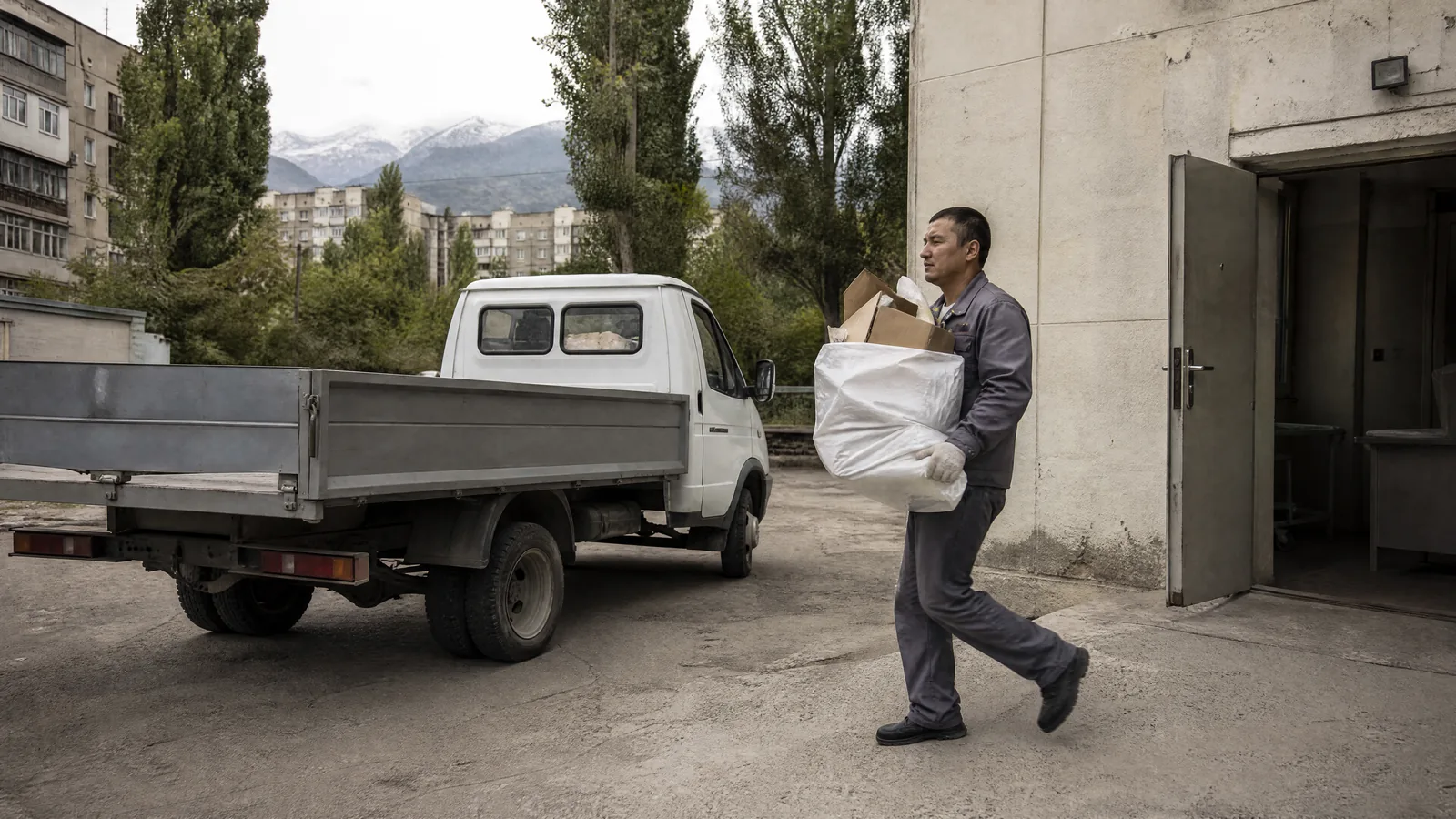
We pick up packaged Class A waste, old furniture and equipment from offices, and debris after clinic renovations. We don't take hazardous Classes B, C and D — those go to a licensed operator.
Choose the type of waste and the batch volume — we'll show the price before the truck arrives. If you're unsure about the numbers, send a photo and we'll calculate it ourselves.
The price covers the trip and loading. If the volume turns out to be larger from the photo, we'll tell you in advance, before the truck arrives. After loading, the price doesn't change.
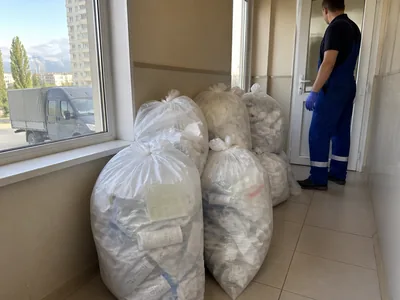
In composition, it's ordinary household waste: it hasn't come into contact with patients and isn't considered hazardous. That's exactly Class A that we pick up — by GAZelle, with loaders if it needs to be brought down from a floor.
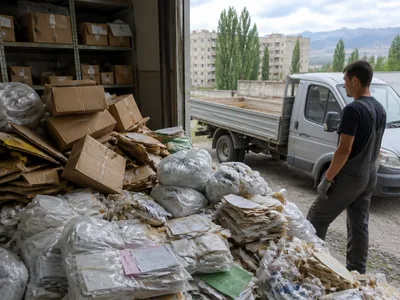
Boxes from gloves and IV systems, film, wrappers, instructions, old forms and archives. It piles up fast, takes up a lot of space, and weighs almost nothing — goes out in bags.
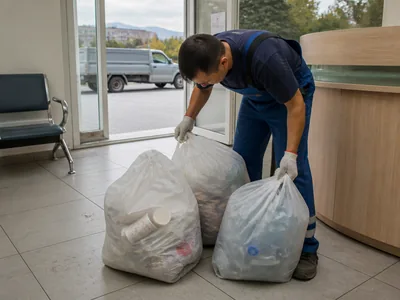
Cups, water cooler bottles, waste from the reception, staff room and administrative offices. It has nothing to do with medical treatment, so it goes as regular solid household waste.
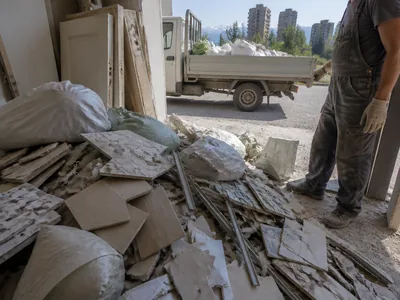
Broken tiles, pieces of drywall, old doors, ducting, profile offcuts. It's heavy, so we calculate by cubes and bags, not by eye — otherwise the GAZelle will leave overloaded.
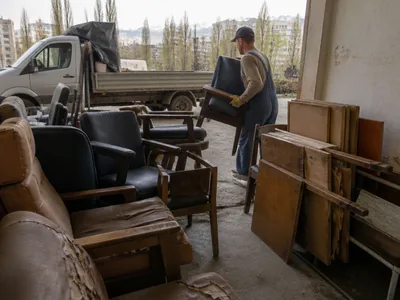
Armchairs from the waiting area, chairs, cabinets, shelving, wardrobes from the staff room. If it doesn't fit through the door, we disassemble it on site at no extra charge.
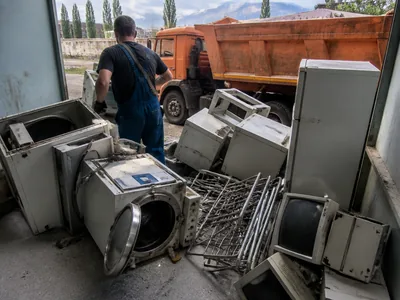
Broken autoclaves, reagent fridges, shelving, monitors, old computers from the reception desk. Oversized and heavy — this usually calls for a five-tonner, not a GAZelle.
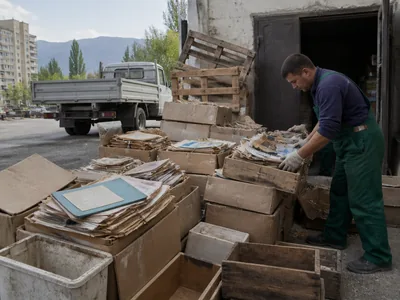
The stuff that's been sitting around for years "just in case": empty containers, pallets, warped shelves, boxes of paper. Nobody wants to deal with it — we show up and sort it out ourselves.
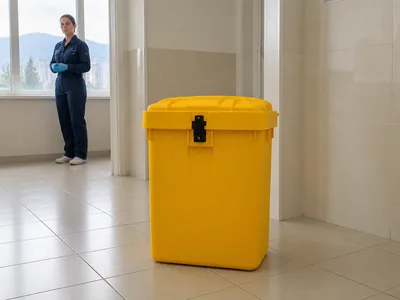
Anything that's touched a patient, can prick or cut, or relates to medications and reagents — we don't take it. That kind of waste must be collected by a licensed specialist operator — you sign a contract directly with them.
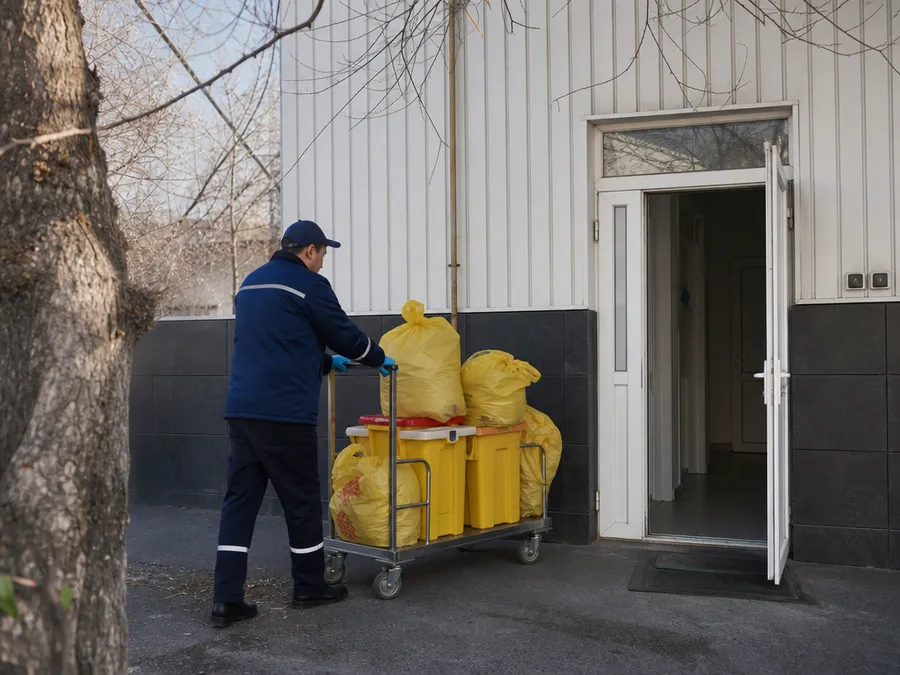
For small offices, dental and cosmetic clinics — when a month's worth of boxes, paper and a couple of bags from the hallway have piled up. The trip price is locked in before the truck arrives and doesn't change afterward.
Book a GAZelle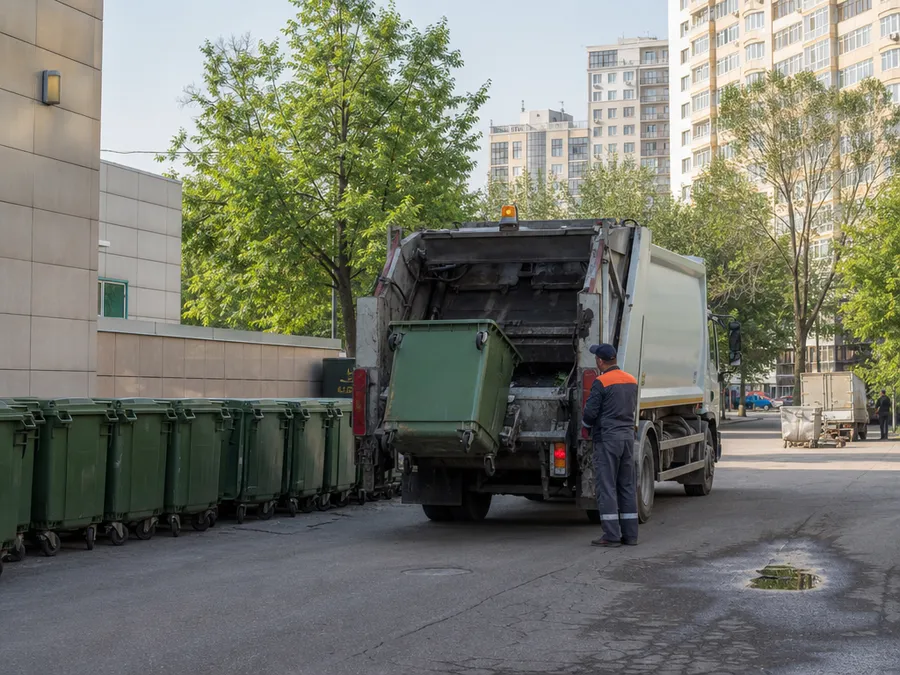
Clinics, labs and inpatient facilities usually set up regular pickup — once a week or twice. We charge by cubic meter, not by the bag — fairer for both sides.
Set up a schedule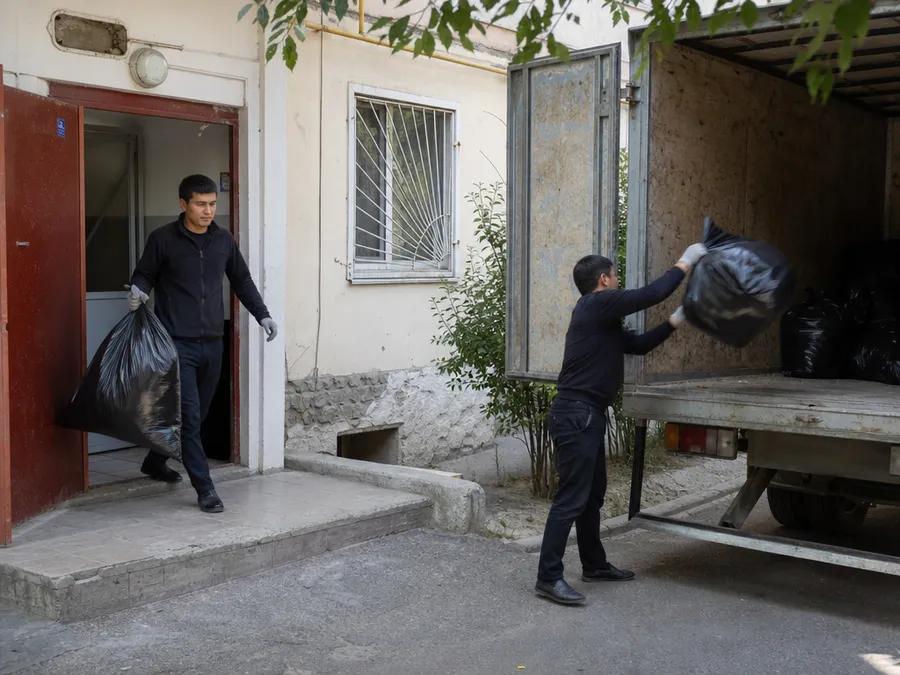
When you need bags hauled up from the basement, an old exam couch carried down from the third floor with no elevator, or a cabinet dismantled in the office. The crew arrives with the truck, hours are billed separately from the trip.
With loaders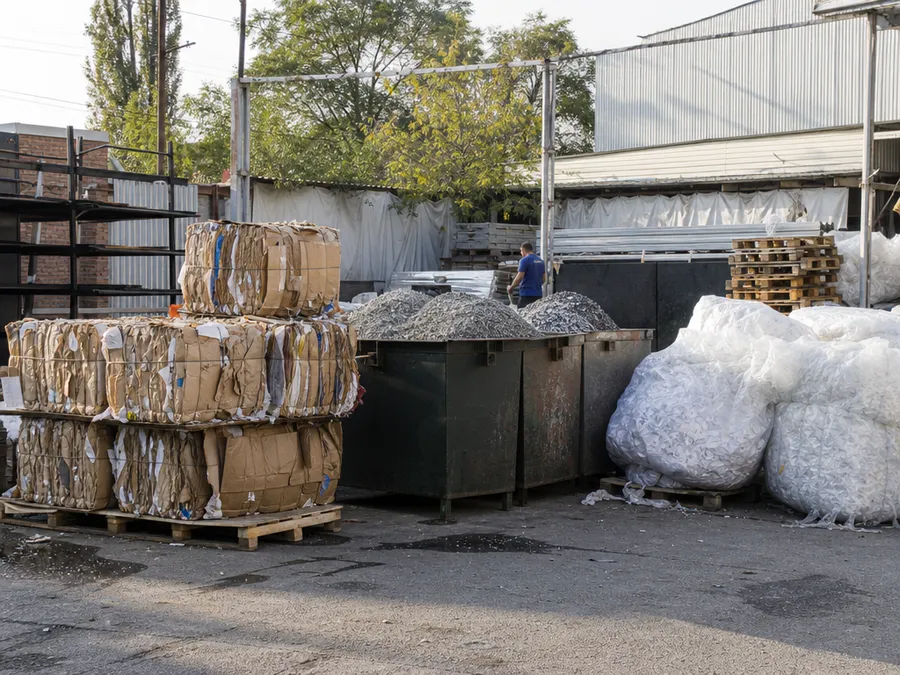
Decommissioned autoclaves, exam couches, reagent fridges, cabinets from the doctors' lounge. A five-tonner takes what won't fit in a GAZelle — with on-site dismantling if needed.
Large oversized items
Renovation starts the day after tomorrow, the office is moving, the landlord wants the storage room cleared — sometimes you can't wait a week. A truck gets across the city in 40–60 minutes if the request isn't during rush hour.
Urgent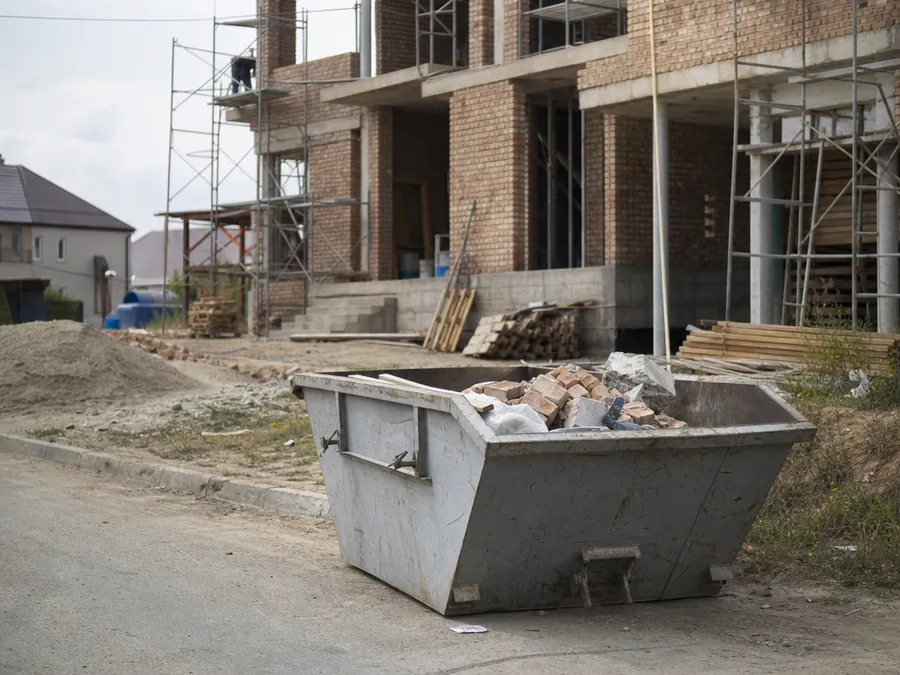
We place a sealed container in the yard for the duration of a renovation or warehouse clear-out, and pick it up as it fills. Duration and volume are discussed separately — the price depends on how many days and what kind of container you need.
Message us on WhatsAppBelow is the equipment we actually use and per-trip pricing. The numbers don't change after the truck arrives: whatever we quoted is what you pay.




Valid from August 2026 · price per trip within the city
| Equipment | Volume | Payload capacity | Price per trip | Extra hour |
|---|---|---|---|---|
| GAZelle 1.5 t | 12 m³ | up to 1.5 t | 30 000 ₸ | 6 000 ₸ |
| GAZelle 2.5 t | 16 m³ | up to 2.5 t | 35 000 ₸ | 9 000 ₸ |
| Truck 5 t | 25 m³ | up to 5 t | 40 000 ₸ | 12 500 ₸ |
| ZIL dump truck | 7–12 m³ | up to 7 t | 40 000 ₸ | 12 500 ₸ |
| KAMAZ dump truck | 15 m³ | up to 20 t | 55 000 ₸ | 15 000 ₸ |
| Howo dump truck | 25 m³ | up to 40 t | 60 000 ₸ | 15 000 ₸ |
| PUHTO (skip) | 8–10 m³ | up to 7 t | 45 000 ₸ | — |
| Multilift | 20 m³ | up to 12 t | 100 000 ₸ | — |
| Skip | 27 m³ | up to 15 t | 135 000 ₸ | — |
| Max skip | 32 m³ | up to 20 t | 160 000 ₸ | — |
Prices apply within Almaty city limits. Outside the city, mileage is added — we calculate it in chat before dispatch.
Not sure which truck you need? Send a photo — we'll pick one for you.
Message us on WhatsAppSometimes you need more than just hauling trash away: carrying bags out of the storage room, providing our own, dismantling a cabinet, cleaning up the room afterward. We handle all of that on the same visit.
Five steps from "messaged on WhatsApp" to "site swept clean." Transparent, with no phone tag.
Start with a requestTell us what's piled up: packaging and paper, office furniture, renovation debris — and where to pick it up from. A photo of the back room will speed up the quote a lot.
We calculate the volume and tell you whether a 1.5 t GAZelle will do or you need a five-tonner. We'll also check if furniture needs disassembly and how many movers to bring.
From 30 minutes around the city if the request isn't during rush hour. For clinics, we can arrive by seven in the morning — before appointments start.
The crew works in gloves. We carry bags out intact and disassemble furniture on site if needed — so we don't scuff doorframes or block the hallway during appointment hours.
We take it to disposal and sweep the area after loading. If something spills, we clean it up right away — not "next time."
On the left — the back room before loading, on the right — after. Typical sites: clinics, labs, and offices in Almaty.
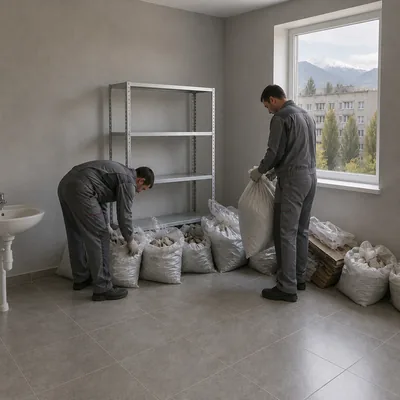
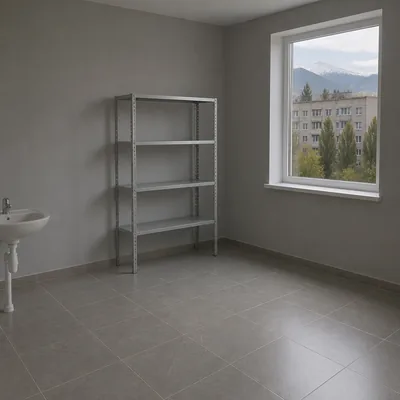
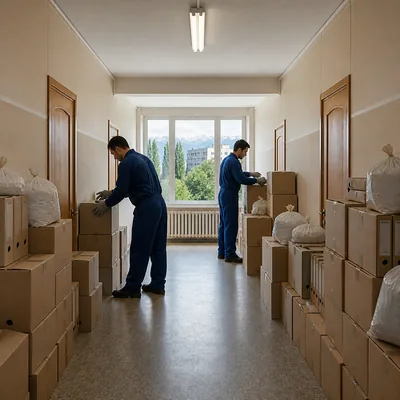
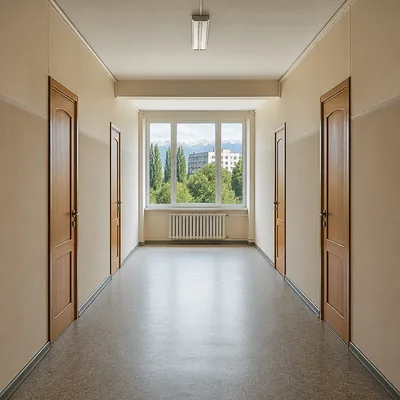
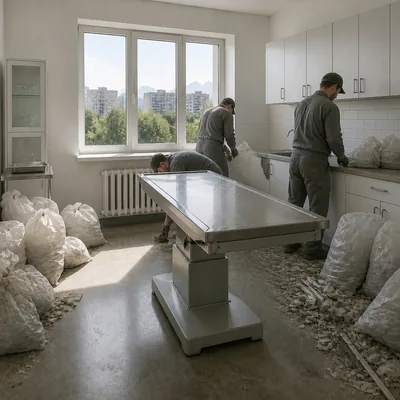
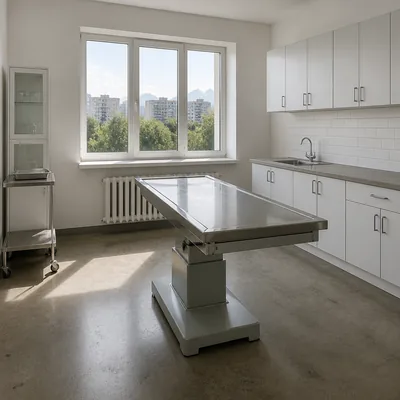
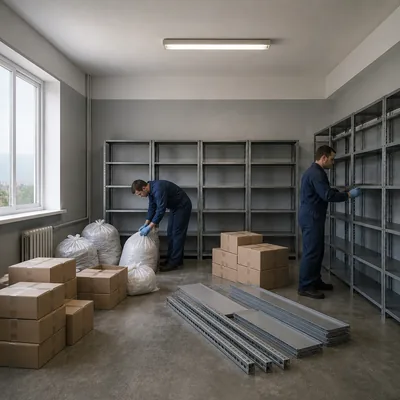
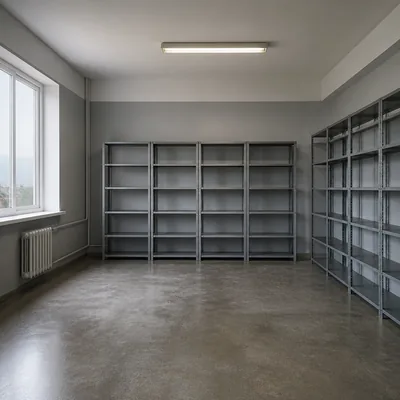
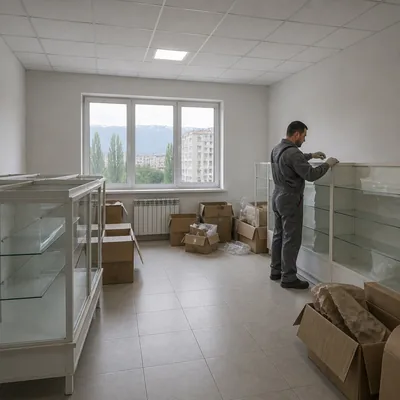
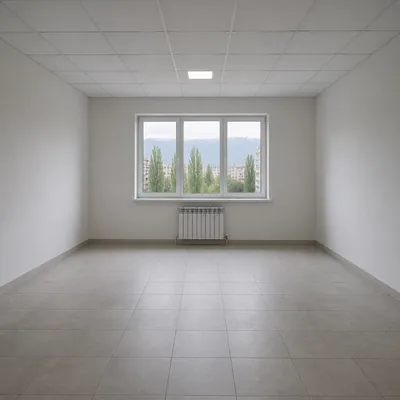
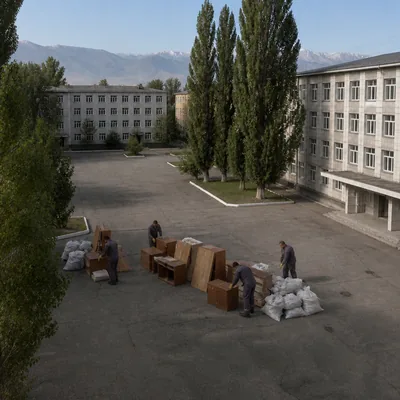
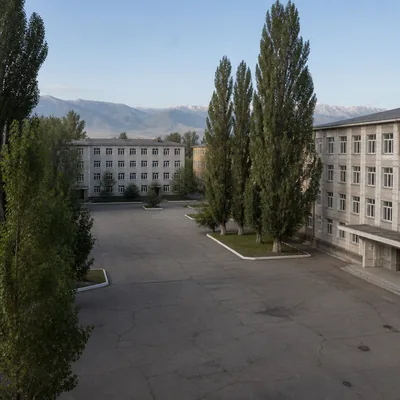
A crew of two or three arrives at the address. Below — who exactly and what they're responsible for on site.







Our most common call isn't "how much does it cost" but "do you even take this?" We do. Syringes from the treatment room, expired ampoules from the pharmacy, dressing material from the office, old X-rays from the archive — if it's medical waste, it doesn't go to the regular landfill with household bags. That's exactly why medical waste disposal in Almaty isn't about who arrives fastest. It's about who delivers it all the way and doesn't turn back halfway.
Clinics, dental offices, labs, vet clinics, cosmetologists and regular people after home procedures — they all call with the same thing: "we've accumulated stuff, where do we put it?" And almost always they guess the volume. Someone brings "a couple of bags," and on site it turns out to be four bags and a box of ampoules. Someone else, on the contrary, keeps a bag for a month because they think: "it's small, I'll wait until there's more." Don't wait. A bag by the treatment room door isn't saving money — it's a risk.
Further in the article I break it down honestly: how the classes differ in practice, how to estimate volume from a photo, what it's packed in, why a used syringe can't just be thrown in the general container, and what actually happens to the load after the truck leaves. No order numbers, no fancy wording — just how it works every day.
I'll start with what I see every day. I arrive at an address, and they roll out one black bag and say: it's all together. I untie it — on top are paper napkins from the staff room, under them an IV drip with leftover solution, and at the bottom ampoules. That "all together" is the main problem that later leads to conversations about classes. Not because someone is being difficult. It's just that the person doesn't know what's physically in their bag, and dumps into one bag what shouldn't be next to each other.
Class A is the most harmless stuff that leaves a treatment room. Disposable paper towels, used diapers with no blood, packaging from sterile instruments, office supplies from the reception desk, leftover food from the hospital cafeteria. It looks like ordinary trash, but it isn't. It was born inside a medical facility, and it can't go to the city dump along with household bags.
Mixing Class A with what's below is a mistake that doesn't look scary, but it drags the whole volume up a category. One syringe thrown into a bag of paper turns the entire contents into Class B. And that's a different conversation about handling: different packaging, different route, and a different number of people signing off along the chain that the load arrived.
What most often goes into the truck from Class A:
Class B is what people think of when they hear "medical waste removal." Syringes with needles, IV sets, gloves after examinations, blood-stained dressings, cotton balls, probes, catheters. Everything that has touched a patient and potentially carries infection. This is the stuff clinics and cosmetic offices have the most of, and it's exactly what people most often try to haul away "quietly" along with household trash.
Needles are a separate matter. If a syringe with an exposed needle is in a bag, the bag tears during loading and someone gets a needle stick. We've had that happen twice, both times because the needle wasn't removed into a sharps container. That's why I always ask when you book: needles separate or still in the syringes? The answer determines how long loading takes and what the load travels in.
Class C is infectious disease wards and labs that work with pathogens. Class D is expired medications, ampoules with leftovers, mercury thermometers, lab chemicals. This isn't cargo you pick up on a regular run. Different transport, different containers, and it's handled separately.
What if you're a pharmacy and expired ampoules have piled up? Don't pour them down the sink, don't toss them in the dumpster outside, and don't give them to a neighbor "just in case." Medical waste disposal of this kind is a separate request, and the volume is counted in boxes and packages, not bags. Ampoules travel in rigid containers so they don't break on the way.
Class D is radioactive. That's not our line of work — specialized organizations handle it, and I say so honestly if I hear about isotopes. Better to point someone straight to where they have the permit than to haul the wrong thing.
Now for the most expensive part, literally. When classes are mixed, the whole bag is counted at the highest class among its contents. Paper plus one ampoule is no longer Class A. That's logic, not a carrier's greed. Handling Class B cargo costs more: containers, route, disposal paperwork, people's time.
That's why sorting on site saves not time but money. A clinic with three separate containers pays less than one where everything goes into a single bin and then at intake it turns out there are needles in there. And that's no longer about medical waste disposal as a service — it's about how order is kept inside the office.
A practical tip I give everyone: set up containers by class right away, before waste piles up. Red for B and C, yellow for D, black for A. Even if it's just stickers on buckets. In a month you'll stop thinking about where to throw what, and you'll state the volume in your request more accurately.
We arrive at the address — and the first thing we see is a grocery bag with syringes, ampoules, and cotton balls dumped in it. Needles poking through the plastic. We can't lift a load like that into the truck: the bag will rub through on the way, and everything inside will end up on the asphalt. So first, let's figure out what to pack it in. The container directly determines whether medical waste removal reaches the site without losses and surprises in the truck bed.
A regular store-bought trash bag is 20–30 liters with plastic less than 20 microns thick. It holds up to three kilograms. As soon as glass ampoules or syringes with plungers go in, the plastic gets cut from the inside, and the bag splits at the seam. We bring heavy-duty 60 and 120 liter LDPE bags and rigid containers with lids. If you've already accumulated stuff in something — don't repack it yourself, show us, we'll decide on the spot what to transfer it into.
Cardboard boxes from gloves are a separate story. They get soggy from condensation, lose their shape, and fall apart in the truck. We put them inside a bag or transfer the contents right away. There was also a case: a glove box had unpackaged ampoules, and while carrying it up the stairs, one broke against the side. Glass was left on the steps, and we had to clean it up. Don't repeat that.
Syringes with needles and broken ampoules are the most dangerous part of the load. You can't just throw a needle into a general bag: it will puncture everything below and stick the loader during loading. We ask that needles be collected separately — in a rigid container with a tight lid. A plastic water bottle with a screw cap works, as does a detergent bottle or pharmacy container. The main thing is that the walls don't cave in when you press with a finger.
Ampoules and glass — also separate from soft waste. Even an empty ampoule cuts the bag from the inside. We transfer them into a container and place them upright so nothing presses down from above. If there's a lot of glass — bring it in what it was stored in: a tray, a closed box, wrapped. Medical waste disposal with broken glass requires rigid containers, otherwise you'll be picking half of it up by hand.
Expired IV solutions, leftover drip bags, fluid from suction canisters — that's a category of its own. You can't pour them down the sink and you can't toss them in with the regular trash: they'll leak all over the place. We collect them in sealed containers with lids — jerrycans, wide-mouth bottles, plastic buckets. If there's a lot of liquid, it's better to send it on a separate trip or in a separate vehicle, because weight is counted by liters, not by bags, and a liter weighs about as much as two kilograms of dry waste.
Expired pills in blister packs and boxes are also medical waste, and they don't go in the dumpster by your building either. We transport them in closed bags. Keep pills separate from liquids: if a liquid leaks, paper and blister packs will soak and turn into mush. Ask ahead of time what medications you've accumulated — that determines whether you need a separate container for liquids.
Double handling is the biggest time waster on site. That's when we show up, look at a bag, realize it won't hold, and start repacking everything right there by the entrance. Half an hour, sometimes more. To avoid that, gather everything in one place — where the truck can easily park. Not in a fifth-floor apartment and not in the far corner of a basement if you can bring it out to the gate.
Check every container by pressing on it: if the wall caves in, it won't survive loading. Screw on all lids and make sure they hold. Put needles separately, glass separately, liquids separately — that way loading goes twice as fast, and medical waste removal takes an hour instead of half a day.
| Type of waste | What we pack it in | What to check |
|---|---|---|
| Syringes with needles | Rigid bottle with a screw-on lid | Wall doesn't cave in when pressed |
| Ampoules and glass | Tray or closed box, upright | Nothing heavy pressing on top |
| Bandages, cotton, gloves | Heavy-duty 60–120 liter bag | Film thicker than 20 microns, seam intact |
| Expired IV solutions | Jerrycan or wide-mouth bottle | Lid seals tight, doesn't leak when tipped |
| Pills in blister packs | Closed bag, separate from liquids | Paper doesn't get soaked by nearby containers |
One more thing about yellow labeling. In the West it's a strict protocol, but here in practice the bag color doesn't matter — what matters is film thickness and whether the container is closed. Clinics often use yellow bags just for tidiness, and that's fine: it shows the waste isn't household. But don't expect the yellow color alone to hold a needle. Only a rigid wall does that.
And one last thing. If you're not sure what to put it in, take a photo of the pile and send it to WhatsApp. From the photo we'll tell you if your container is enough or if you need to bring your own. Medical waste disposal in Almaty starts not with the truck but with that conversation: the more accurately you describe what's accumulated, the faster we'll pick it up and the less we'll have to reload on site.
Medical waste is deceptive. A bag of used syringes doesn't weigh much but takes up a fair amount of space. A bag of dressing material is the opposite — heavy but compact. So when you estimate volume by eye, you almost always underestimate by half. Not because you're careless, but because your eye isn't trained for this kind of specific load.
We ask for photos not to nitpick. We need to figure out which vehicle fits: a GAZelle, a ZIL, or a roll-off container. That determines how many trips we make and how long loading takes. If you send one photo, we'll name the vehicle right away. If you misjudge, the wrong truck shows up — and we have to make a second run, which means extra hours and money.
Don't just snap individual bags — capture the whole scene: sacks by the wall, boxes on the floor, shelves in the treatment room. Be sure to include something for scale — a doorway, a chair, a person. Without that, we can't tell if it's a 30-liter bag or a 120-liter one. If the waste is stacked in layers, take photos from above and from the side. That way we can see how tall the pile is.
Here's what people usually send us in chat so we don't have to guess:
That's enough. Then we'll tell you: "We'll send a GAZelle, we'll be there Wednesday at ten." Or: "This calls for a ZIL, but we'll do it in one trip." You don't waste time measuring with a tape.
Weight is a poor guide. The same bag can weigh 5 kg if it's empty blister packs, and 25 kg if it's glass ampoules. So we don't ask 'how many kilograms', we ask 'how many bags and what size'. Volume is what really limits the truck. A 1.5 t GAZelle bed is 12 m³, and it doesn't matter how much the load weighs if it fills the entire volume.
From experience, a standard 60-liter medical waste bag is about 0.06 cubic meters. Ten of those bags is already 0.6 cubic meters. And if the bags are packed with syringes, they don't compress, and you can't shrink the volume. That's why medical waste removal starts with an honest estimate of volume, not weight.
The line is simple: a GAZelle holds 12 m³. If your waste takes up less — one run. If more — a second, but usually we try to fit everything into one, because a second run costs almost as much as the first. Two runs won't be half the price of one — they'll be more expensive than one big truck. So sometimes it's cheaper to order a 15 m³ KAMAZ right away.
When a clinic has been accumulating waste for months, it can be 30 cubic meters. Then we send a dumpster. But that's rare: most often the volume doesn't exceed 4–5 cubic meters, and a regular GAZelle with loaders is enough.
I remember we showed up for a request — a woman said "two bags." We open the door, and there are four sacks and a box of ampoules. Luckily, the GAZelle was free, so we took it all in one go. But if we'd brought a small truck, we'd have had to make two trips. Since then, I always ask for photos.
Some people think: "We have three treatment rooms, so there's not much waste." That doesn't work. One treatment room might have a 30-liter bin, another might have three of them. It all depends on patient flow and how often the bags are changed. So don't go by the number of rooms. Look at the actual amount of packaging.
Another mistake — counting by the number of staff. "We have five nurses, so that's a bag a day." No. One nurse in a dental clinic fills two bags per shift, while in a lab it's half a bag. That's not comparable. So if you're unsure, just take photos of everything that's piled up and send them to us. We'll figure it out.
And lastly: don't wait until the waste takes up half the room. Medical waste disposal doesn't require heroic hoarding. The sooner we haul it away, the lower the risk that a bag tears or someone on staff gets cut. A bag by the door is reason enough to call.
It all starts with a message. You write on WhatsApp or call the number on the site — and that's already a request. No forms to fill out, no signing up, no waiting for an email. A dispatcher answers during business hours: from nine in the morning to nine at night, seven days a week. The first thing they'll ask is what exactly has piled up. Not "how much," but "what." Because a bag of syringes and a bag of dressing material are different weights and need different vehicles. And yes, medical waste removal starts with that question, not with haggling over the price.
Next — photos. One or two, no more. Photograph the bags or boxes so the scale is visible: put something recognizable next to them — a door, a chair, a paper box. From a shot like that we estimate the volume more accurately than from the words "well, about a cubic meter." If there are no photos, I'll ask three questions: what's it packed in, how many pieces, is there anything heavy like ampoules or glass. That's enough to avoid sending a vehicle for nothing. And one more thing: medical waste disposal doesn't like haste, but it doesn't need a week of prep either.
Here's what we clarify in the chat so we don't have to redo it later:
After that I quote the price. It's locked in before the vehicle is dispatched and doesn't change afterward — even if there turns out to be an extra bag on site. That's the principle: medical waste removal shouldn't turn into a surprise with a surcharge at the entrance.
A GAZelle or ZIL arrives — depends on the volume. Our own trucks, not rented. Our own loaders, not random guys off the street. On board — gloves, bags for extra packing if something leaks, and a shovel to lift things off the floor. The driver knows what he's carrying: he won't move bags of needles with bare hands. Within the city, the truck is on site from 30 minutes after confirmation. In remote areas — longer, but we give you the time right away.
Clinic waste disposal in Almaty is also about the truck arriving prepared. We always have separate containers in the body for sharps and soft waste, so they don't get mixed. And yes, if you're in a high-rise without an elevator, tell us in advance — we'll add a person so we don't delay the removal.
One more thing: some people think it's enough to take the bag to the dumpster and "it'll take care of itself." No. Medical waste can't be left at the container site — that's a violation, and whoever dumped it is responsible. We pick up straight from the premises or the yard, without burdening you with the logistics.
Loading is our job. The loaders come in, carefully take the packed items, carry them out, and load them into the truck. If something spills along the way — we'll sweep and pick it up. If a bag tears — we'll repack it in ours. You don't need to help or stand over us. But there are things we don't touch: the contents of biomaterial refrigerators if they're not packed according to the rules, and open containers with liquids. It's not a whim — it's safer for everyone.
What we handle ourselves during loading:
If it needs to come down from the fifth floor with no elevator, it takes longer, but it's no problem. Just tell us in advance so we can allow the time. And yes, medical waste disposal doesn't end at loading: we deliver it to the site and unload it there according to the rules.
Once we're gone, you're left with an empty spot where the bags were and a swept floor. Need paperwork — message us on WhatsApp before the pickup, and we'll figure out what we can arrange. If it's a clinic that keeps records, we log what we took and hand over the list. For a private person, it's just "hauled away and forgotten." And that's how it should be: medical waste removal shouldn't leave loose ends.
Below is a table that briefly sums up the whole journey: from the first message to the empty spot by the wall.
| Stage | What happens | Who's involved | What the client is left with |
|---|---|---|---|
| Request | Message on WhatsApp or a call, photos, confirming the volume | Client, dispatcher | Confirmed price |
| Confirmation | Locking in the price and arrival time | Dispatcher | Verbal agreement |
| Arrival | Truck and loaders on site, inspection of the packaging | Driver, loaders | Nothing |
| Loading | Carrying out, repacking if needed, sweeping | Loaders | A clean spot |
| Departure | The truck leaves for disposal | Driver | An empty spot |
The main thing to remember: medical waste disposal in Almaty isn't a one-off "toss it and forget it." It's a chain where every step affects the next. If you honestly say what's in your bag and send a photo, the truck arrives with the right equipment and the right number of people. If you stay quiet about the needles, we'll have to repack on site. We won't refuse, but it'll cost you time.
And one more thing: don't stockpile. Medical waste doesn't get lighter after sitting for a month. It gets more dangerous. A bag by the door isn't "later," it's "today."
Read this far and still not sure about the volume? Send us a photo — we'll calculate and give you a price.
Message us on WhatsAppThe truck doesn't go to a landfill from your place. Its route is different, and honestly, that's the only thing worth paying for here. First the load goes to a site where it's weighed and sorted by category — sharps and blades separate, soft waste separate, and things that need high-temperature destruction separate. Sorting takes time, but you can't skip it: if you dump everything into one bin, some of the load won't be accepted by any facility.
Next comes decontamination. This is where the whole point of "where do you put it" usually gets lost. Medical waste disposal is impossible without this step, because infected material isn't even allowed to be stored next to regular waste. Decontamination is done either with chemicals in a sealed chamber or with heat under pressure — the method is chosen based on the type of waste.
The order is exactly this, and it can't be broken. Until the material is disinfected, it's dangerous both for the loaders and for those standing at the furnace. That's why medical waste removal in a proper scheme is always two separate processes: first make the load safe, then get rid of it as a physical object.
In practice it looks like this: a batch is loaded into the chamber, held for the required time, taken out — and only then does it go to the furnace. If someone suggests "just burn it right away, why bother" — that's not disposal, that's a way to get rid of the problem at your expense. And the issue will come back anyway.
Another point: disinfection doesn't erase the fact that the waste was medical. Treated material doesn't become household waste. It stays in its category until the very end — until incineration or recycling.
Mixing syringes, ampoules, dressing material and expired pills into one bag is the most common story that medical waste removal arrives with. And the most costly in consequences. Disinfection differs by type: what kills bacteria in soft waste won't necessarily work for sharps.
Plus sharps tear the bag from the inside. One broken syringe in a bag of soft waste — and the whole batch goes down the worst-case scenario, because it can't be treated as regular. Sorting at the site catches this, but time and money are already spent.
Here's what actually travels separately: syringes and needles, ampoules and vials, soft dressing waste, expired medications, X-ray films, lab biomaterial. This isn't a formality. It's what determines whether the batch is accepted or turned away.
Some of the load isn't disinfected but destroyed immediately, at high temperature. Expired medications — they're not infectious, but they mustn't end up in recycling or a landfill. Films and X-rays — they have their own chemistry story, you can't just bury them. Lab biomaterial — also in this category.
Medical waste disposal in Almaty costs extra precisely because destruction is more expensive than simple disinfection. The furnace, fuel, holding time — it all adds up to the price per kilogram. The more medications and films in the batch, the higher the bill. This is one reason why it's better to state the volume and composition upfront, not "we'll figure it out on site."
Separately about pills. An expired blister pack isn't just trash from the medicine cabinet. It's destroyed as is, not dissolved or flushed down the drain. We take these, but it should be mentioned separately in the request so the truck arrives with the right containers.
Honest answer: not by words, but by paperwork. After disinfection and destruction, a confirmation is issued — how many kilograms, what category, when and how it was treated. Without this document, medical waste removal turns into "well, we took it, trust us." And there's no way to verify it.
Ask for confirmation before the truck leaves, not after. If the contractor won't show you exactly where the load is going and how they'll confirm the end result, that's not medical waste disposal — that's hauling it into the void. With us it's like this: we sweep the area after loading, and whatever we can arrange on paper, we tell you on WhatsApp before the pickup.
And one more thing: there's no such thing as "we took it, paperwork later." Either there's a record, or no one can say the load wasn't dumped in the first yard. The difference is fundamental.
Every year, so many bags from treatment rooms pass through our trucks that mistakes are visible from the doorstep. Someone opens the trunk, and there — syringes mixed with paperwork from the front desk, ampoules in a cardboard box that once held gloves, and a lone bag with something brown inside. No one's going to sort that on the spot: we don't sort other people's waste, we haul it away. But it's exactly this "throw it all together" approach that creates stories where the clinic later has to explain itself to inspectors, and the janitor — to the neighbors.
Medical waste in the building's shared dumpster — the first thing that comes to mind when it piles up. Especially if the office is small and there's no dedicated area. The logic is simple: the dumpster's there, the truck comes, why should I be any different? The problem is that this bag then goes to a regular landfill, where it gets opened, sorted, or just torn apart. Needles, ampoules, used gloves end up among household waste, and the question "whose bag is this" gets answered quickly — by the label, by the address, by the log. Medical waste removal is singled out for a reason: it's not about convenience, it's about where the load physically ends up after loading.
The second most common — accumulation. The clinic runs for a month, the bag sits in the back room because "it's small, I'll wait until there's more." Don't wait. A bag by the door isn't a neutral object — it smells, takes up space, and draws attention. Plus, the longer it sits, the harder it is to explain where it came from and how much is inside. From experience, it's cheaper and calmer to call a truck for a small volume than to one day load everything at once under the disapproving stares of your floor neighbors.
A separate note about residential courtyards. A private office on the ground floor, a cosmetologist doing home visits, a vet — they all sometimes quietly take a bag to the regular dumpster. This works exactly until the first investigation. Then the chain starts: the management company looks for the source, residents file complaints, and the culprit either pays a fine or spends far more time than a single truck trip would have taken. We're not trying to scare you — we've just seen this scenario more than once, and it always ends the same way.
A simple guideline: if a bag sits for more than a week, you're already playing the lottery. Not because something will happen tomorrow, but because the volume grows and the space for it doesn't. Five kilos of syringes and dressings take up less space than fifty, but both need to go somewhere. When a clinic decides to "wait until the end of the month," by the pickup date there's a box of ampoules, two bags of soft waste, and a bucket of glass — and all of it has to be carried out at once. It's easier to split into two trips than to one day find that the truck can't fit into the yard or the loaders can't finish before closing.
Needles tossed into an ordinary bag — that's a classic. People think: "I'll tie it tight, nobody will get pricked." In reality, the bag tears under the weight, a needle pokes through the seam, and it's found either by the loader or by whoever sorts the waste after you. No container? Not a problem — we don't turn down loads like this, but it needs to be separated and flagged in advance. Just say in the chat that there are needles in there, and we'll tell you what to pack them in so nobody gets hurt along the way.
Sometimes people suggest burning everything in a barrel outside the city. That's not a solution — it just postpones the problem by a few hours. First, medical waste doesn't burn evenly: soft stuff burns through, glass and ampoules stay behind, and plastic gives off acrid smoke. Second, there are usually neighbors around, and they call. Third, the ash left after that fire is still the same waste — only now you can't identify it or count it. Medical waste disposal doesn't end when the fire goes out; it ends when the load reaches a place that will accept it by the rules.
What do all these mistakes have in common? The same thought: "somehow, but faster and cheaper." While the volume is small, it seems like there's no difference — a container in the yard, a barrel outside the city, a back room. The difference shows up later, when you have to explain where a specific bag with specific needles went. And that's when the cheapest option turns out to be the one where you just called and had everything hauled away at once.
We don't lecture and we don't make you keep logs. But if you're unsure how to handle a particular package, ask before the load ends up in the truck. Medical waste removal is simpler than it seems: separate it, flag it, hand it over. Everything else is our job.
| Mistake | What happens next | How to do it right |
|---|---|---|
| Bag in the shared yard container | The load goes to a regular landfill and gets opened along with household trash | Separate pickup, even if the volume is small |
| Stockpiling for months in a back room | Volume and smell grow, then it all gets loaded in one go | Haul it away as it accumulates, don't wait for a mountain |
| Needles in an ordinary bag | The bag tears, a needle finds a loader or a neighbor | Separate it and flag it in advance |
| Burning on-site | Acrid smoke, neighbor complaints, the ash is still waste | Get it to a place that accepts it by the rules |
| Glass in a shared bag | It breaks and cuts everything else inside | Store it separately, in rigid containers |
If you're not sure which of these mistakes has already happened to you, just message us on WhatsApp and describe what you've got in plain words. We'll tell you what to do with that specific bag before the truck arrives, not after.
Putting everything covered above into one short list — easier to read on your phone between appointments. Below is only what's worth keeping in mind before you call. No tables, no extra explanations: we've already explained.
Classes aren't about the color of the bag — they're about what it gets packed in and where it gets taken. Class A goes as regular medical waste. Anything that's touched blood or bodily fluids is a different story. Sharps get collected separately, in rigid puncture-proof containers. Expired medications and mercury-containing lamps don't get mixed with dressing material.
If you're not sure which class the contents of a cabinet belong to, don't guess. Take a photo and describe in words what's inside. From experience: a mistake at this step costs more than an extra question.
If it's all already gathered in one place and photographed, the call takes a minute. After that, medical waste removal is just a truck arriving in the agreed window.
Don't throw medical waste in the regular bin by the entrance. Don't carry it to the chute in a black bag "just in case". Don't mix needles and ampoules with paper and packaging. Don't store expired meds next to food or in the cupboard with household chemicals. Don't try to compress or tamp down containers to fit more — that only tears them.
And don't drag it out for months. A bag by the door isn't "it can wait". It's a spot where things pile up that should have left yesterday.
Asking and double-checking is fine. Clinic waste disposal in Almaty is one topic where an extra question costs less than a mistake. If you're unsure about the class, the container, or whether we take that specific thing — ask before the truck is dispatched, not while it's being loaded.
Message us on WhatsApp or call the number on the site. Describe in words what's piled up, attach a photo. We'll tell you if it fits regular medical waste removal or needs a separate container, and give you a delivery window.
If the volume is unclear — no problem. Medical waste disposal starts with a photo, not an exact number on paper. We'll estimate from the picture, agree, and come.
And lastly: don't wait until it's "a full truckload". Medical waste isn't cargo worth saving for better times. A bag, a box, a tray — already a reason to call.
We price by volume and truck type. A 1.5-ton GAZelle starts at 30 000 ₸ per trip if there isn't much waste. For large clinics and renovations, we use a five-ton truck or a dumpster. We'll give you an exact quote after a photo or a short description.
No, we don't. Class B is infectious waste, and it must go to a specialized operator licensed to handle hazardous medical waste. Same goes for Classes C and D. We work with Class A: packaging, paper, household trash from offices and hallways, old furniture and equipment, and construction debris after renovations. One more thing: you can't mix waste streams — if we find a yellow bag inside a bag of cardboard, we won't take that bag either.
Nothing from hazardous classes. We don't take infected and sharps waste (class B), extremely hazardous (class C), expired medicines, reagents, mercury thermometers and devices (class D). Household hazardous waste not related to treatment — mercury lighting lamps, batteries, accumulators — we accept by a separate request: separately from other garbage, to a specialized organization. We also don't take garbage without packaging if it can spill along the way. The rest — we'll discuss.
Yes, we work Mon–Sun from 9:00 to 21:00. If you need it before the office opens, we'll schedule an early morning truck. No extra charge on Saturdays and Sundays.
Our loaders do it. They work in gloves and protective gear, and they'll disassemble furniture on site if needed. If you have your own staff, we can just pick up what's already prepared and brought out.
A standard trip takes about an hour to load and haul away. If the volume is large, say after a renovation or when clearing out a warehouse, it can take two to three hours. We'll give you a more precise estimate once we know the volume.
It depends on what the clinic needs and who's asking for it. Message us on WhatsApp before the pickup — we'll look at your case and tell you straight what we can and can't provide. As for the pickup itself, it's business as usual: we haul it away for disposal and sweep the area after loading.
Count the bags, boxes, and furniture separately. A bag of packaging is about 0.12 cubic meters, a box from consumables is 0.03, and a cabinet is over a cubic meter. You can send photos on WhatsApp and we'll estimate the volume before we arrive. Being off by a couple of bags is no big deal.
We'll load it into the same truck if it fits. If not, we'll call a second one, but we'll let you know in advance. The price per trip is fixed before loading and doesn't change afterward.
Class A, furniture, and construction debris — yes, if you have somewhere to take it and a way to get it there. But hazardous classes shouldn't be transported on your own: only a specialized operator accepts them, and a regular site will turn that load away. If you don't have time to deal with regular trash, it's better to let us handle medical waste removal — we'll come and pick it up.
Got a question that's not here? Ask — we'll answer in writing, no call needed.
Message us on WhatsAppMedical waste removal from a vet clinic. They arrived at the scheduled time and took everything. Payment on completion.
I ordered medical waste removal for a clinic. They arrived promptly, packed everything up and took it away. Thanks for the work.
I needed medical waste disposal. I chose TRASHOFF because the price is known in advance. They did the job quickly and left no trash behind.
After the renovation, the hospital was left with a lot of used materials. I called TRASHOFF to dispose of medical waste. They came the same day, even though it was evening. They really saved us. Dinara let me know the truck would arrive in an hour, and it did.
We worked with TRASHOFF on medical waste disposal. They arrived quickly, took everything, provided the paperwork. Thanks!
Medical waste disposal is a serious matter, so I was looking for a reliable company. Dinara explained everything over the phone and put my mind at ease. The truck arrived at the scheduled time.
After renovations in the treatment room, a mountain of boxes from supplies and an old cabinet were left. I thought I'd be stuck for a week. Wrote in the morning — by lunch everything was gone, they even swept the floor.

After the pharmacy closed, there were display cases, shelving and a pile of cardboard left. I was looking for someone to take it all at once. They came the next day, took everything, even swept up the boxes.
I needed to remove medical waste from a polyclinic. They came the same day and took everything. Fast and no unnecessary questions.
I work at a clinic, lots of gloves and bandages accumulate. Called TRASHOFF, the truck came that evening. The price was quoted upfront and didn't change afterward.
Medical waste disposal is important work. I contacted TRASHOFF because the price is fixed. No regrets.
Medical waste removal from a lab. Everything was spot on.
My husband has his own dental practice, he asked me to find a truck — boxes from supplies and an old chair had piled up. I chose this company based on reviews. They arrived on time, everything was neat, and they cleaned up after themselves.

After the treatment room closed, there was a lot of packaging and an old couch left. I called TRASHOFF. Two loaders arrived, carried everything out, even wiped the floors. Very pleased. Yerlan Zhumabayev asked for photos beforehand to confirm the volume.
We had to clear out trash after renovating a clinic — crates, drywall scraps, old doors. The truck took a bit longer to arrive than promised, but in the end everything was hauled away neatly.
Medical waste disposal was done quickly. They arrived the next day, took everything. Thanks.
I ordered medical waste disposal after a renovation at a medical center. They did everything quickly, no unnecessary questions. Thanks to Daniyar for being so prompt.
I ordered medical waste removal from a private lab. Everything was done well, but the pickup was pushed back by two hours. Otherwise no complaints, the price is fair.
We have a beauty salon, and after renovations and changing furniture there's always something in the hallway — chairs, boxes, film. We arranged regular pickups with TRASHOFF. They come and always give advance notice. Convenient.
I needed medical waste disposal in Almaty. I called, explained the situation. They came and took everything away. They work clean.
I needed medical waste disposal in Almaty. I found TRASHOFF and called. They arrived in three hours, even though they promised by evening. They took everything quickly and were upfront that paperwork wasn't their thing. Everything was handled like decent people.
Medical waste removal from a dental clinic. They arrived on time and loaded quickly. Everything was clean.
We have a dental clinic on Abay, every week cardboard from supplies and trash from the waiting area pile up. We agreed on regular pickup — they come on schedule, no reminders from our side, that's a huge help. We take hazardous stuff separately through another company, and these guys honestly said right away it wasn't their thing.
I ordered medical waste removal for a dental clinic. Askhat arrived on time, loaded everything, and swept up. I recommend them.
Dental clinic, after renovation we had accumulated tiles, boxes, an old chair. I called TRASHOFF. They came in a GAZelle and hauled everything away. The price didn't change. Great job.
I work at a vet clinic, after replacing equipment we had boxes, pallets and two old shelving units left. I ordered a pickup. They came the next day, loaded everything, didn't scratch anything in the hallway. They swept the area after themselves, which is nice.
They removed medical waste from the clinic. Everything was neat and fast. Thank you.
I was removing medical waste from a small first-aid station on the outskirts. The guys arrived in a GAZelle, packed everything into bags, loaded it up. They swept the area after themselves — honestly, I was pleasantly surprised. The price didn't change even though the volume turned out bigger than I'd said on the phone. Now that's service.

I ordered medical waste removal from a clinic. The truck took a bit longer to arrive than promised, but otherwise everything was fine. They came and took everything away.
I had to dispose of medical waste after closing my office. I called, explained the situation. Askhat immediately said one GAZelle would be enough, but it's better to be safe. In the end they came with two trucks and hauled everything away in a couple of hours. Very pleased.
After renovations at a medical center, there was a lot of medicine packaging and used materials left. I called for a truck. The movers arrived, carried everything out, I didn't have to haul anything myself. The price is fixed, no surprises. I recommend them.
Showing 3 of 31
Want the same? Describe your task — we'll calculate and give you a price before the truck arrives.
Message us on WhatsAppChecked us out? Drop us a line — we'll pick the right truck for your load.
Message us on WhatsAppHow medical and industrial waste differ from household waste and what's required of the hauler.
Collection, sorting, crushing, secondary raw materials — the steps in order and what actually gets recycled.
Illegal dumps on the outskirts, soil and groundwater: what happens when waste goes to the wrong place.
Articles of the Administrative Offenses Code of Kazakhstan, amounts in MCI for 2026, and who's responsible for the garbage — the carrier or the client.
If your office, lab, or clinic has accumulated boxes, paper, old furniture, or renovation debris — message us on WhatsApp. We'll pick it up packed, take it away for disposal, and sweep the area after loading. We don't handle hazardous classes and will tell you straight away.
Tell us how the pickup went — it helps us and anyone choosing a hauler.



