Arman
Industrial waste removal from a small production facility. Everything was spot on, no unnecessary talk.
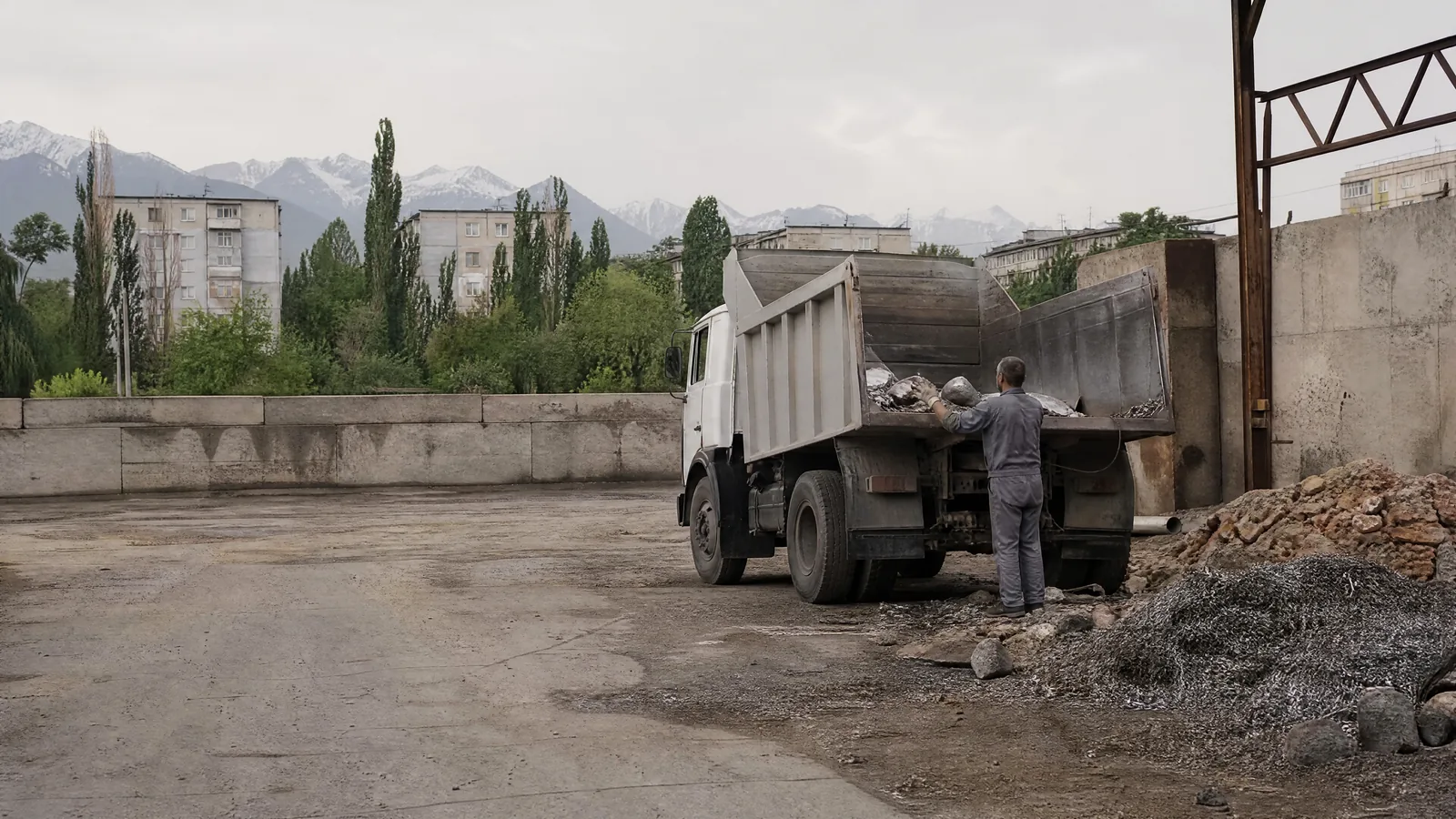
Tell us the volume and address — we'll pick the truck and give you the price before dispatch.
Calculate an approximate cost right on the page. We'll give you the exact price after a photo or inspection.
Rough estimate. We'll confirm the exact amount after a photo or an on-site look.
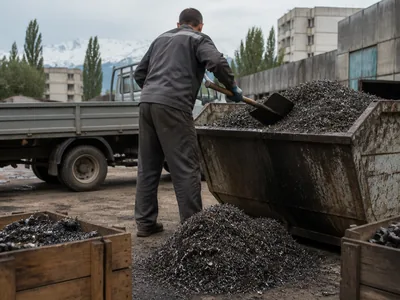
Swarf from a lathe or milling section — oily, heavy, in boxes or loose. We pick it up with a GAZelle or a dump truck if you've got a couple of cubic meters.

Plastic crates, cans, cardboard and sacks from raw materials that can't be returned to the supplier. It's all either baled or loose — we charge by volume, not by piece.
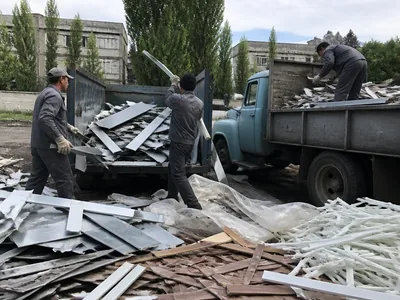
Pieces of metal, PVC, plywood and sheet plastic after cutting or stamping. Usually sharp — our loaders work in gloves.
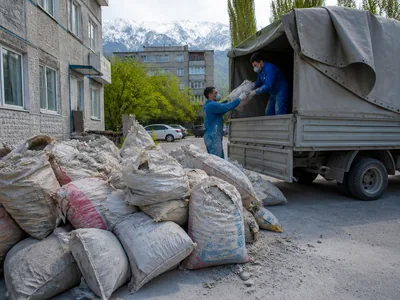
Sacks of cement, feed, dry mixes that are past their date. It's dusty, so we load carefully and cover the truck bed.
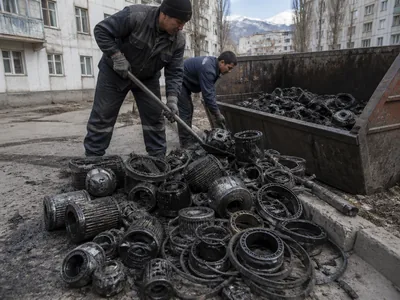
Filters, belts, old bearings, cable offcuts — everything taken off machines during maintenance. Often with oil traces.
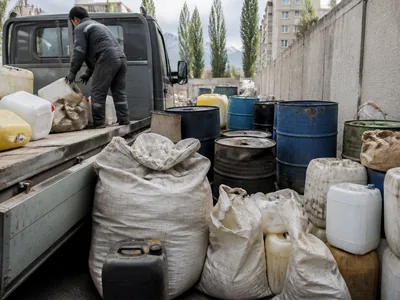
Barrels, canisters, sacks from reagents and detergents. If the container is empty and dry, we take it away as production waste.
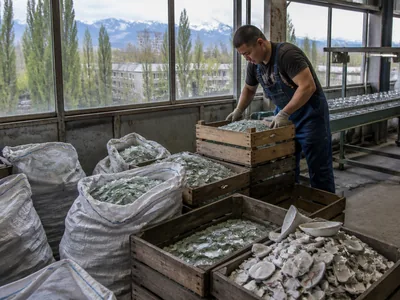
Broken glass, ceramics, rejected sheets — from the packaging line or inspection area. It's sharp, so it goes in sacks or boxes.
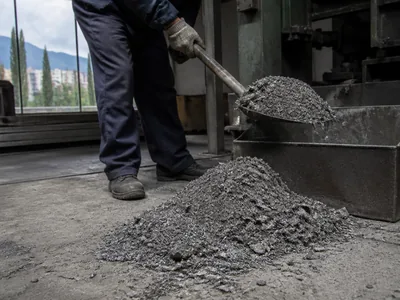
Dust, scale, and fine debris collected under equipment during cleanup. It builds up little by little, but constantly.
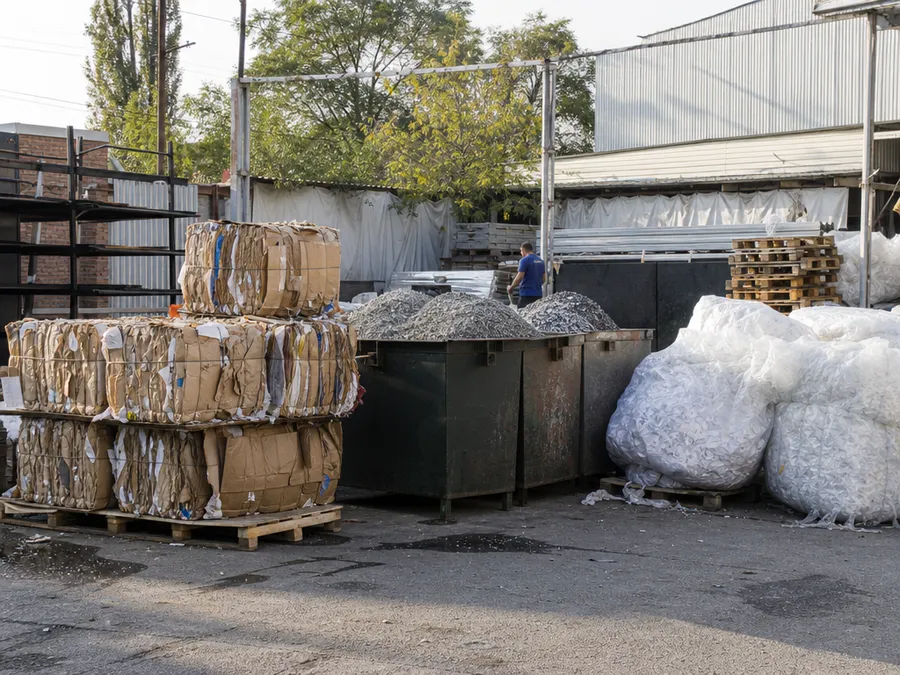
When you need to clear what's piled up over the week or after a shift, we come once, load it up, and haul it away. The price per trip is locked in before the truck arrives and doesn't change after.
Book a run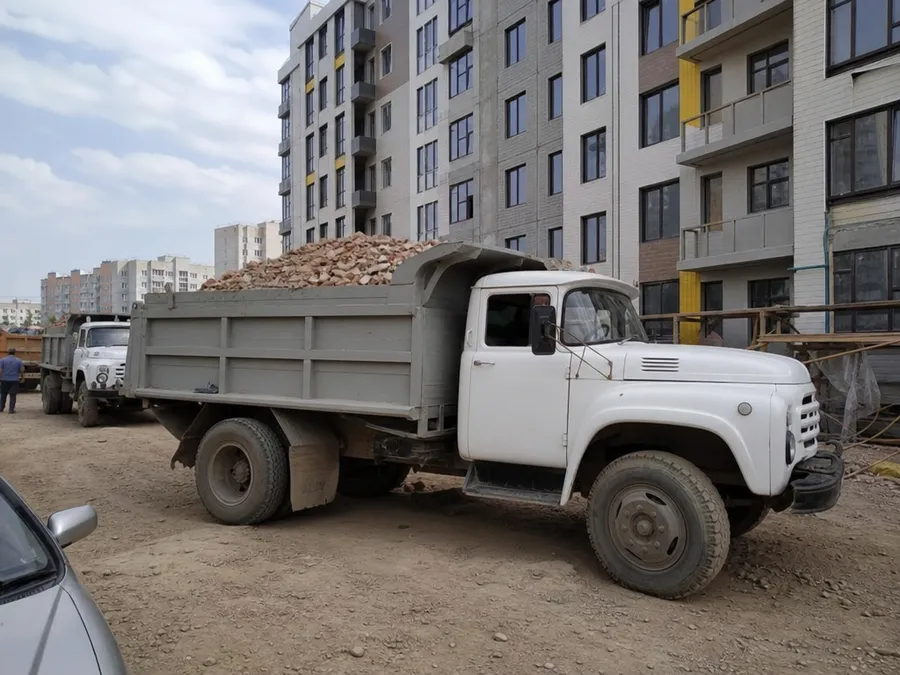
For heavy waste: metal, glass cullet, dry mixes. The dump truck tips the load on site—no manual unloading needed.
Dump truck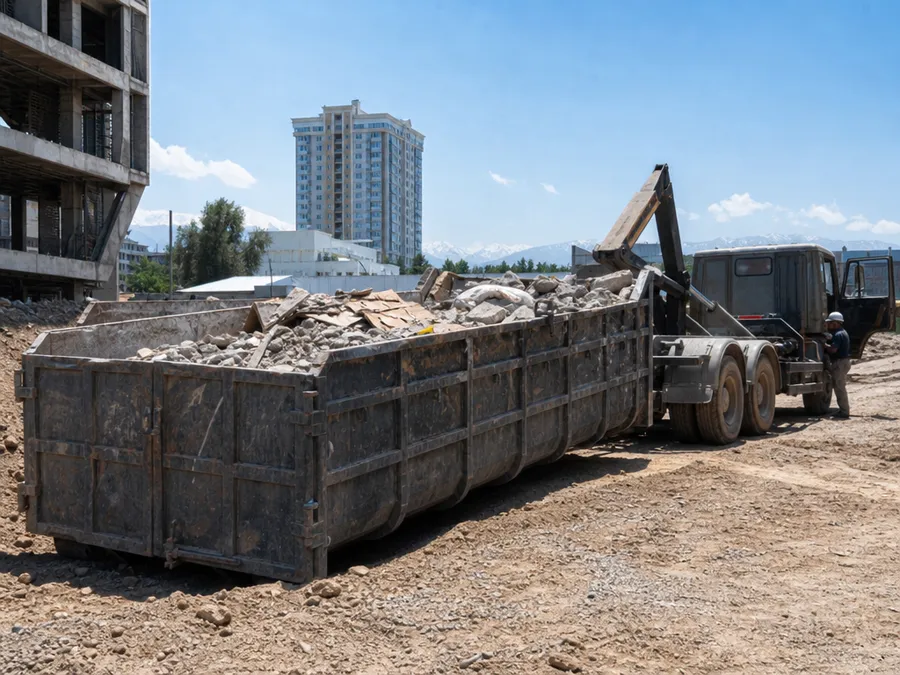
We place a skip at your shop or warehouse, and you swap it out as it fills. Handy when waste piles up daily, not once a month.
Skip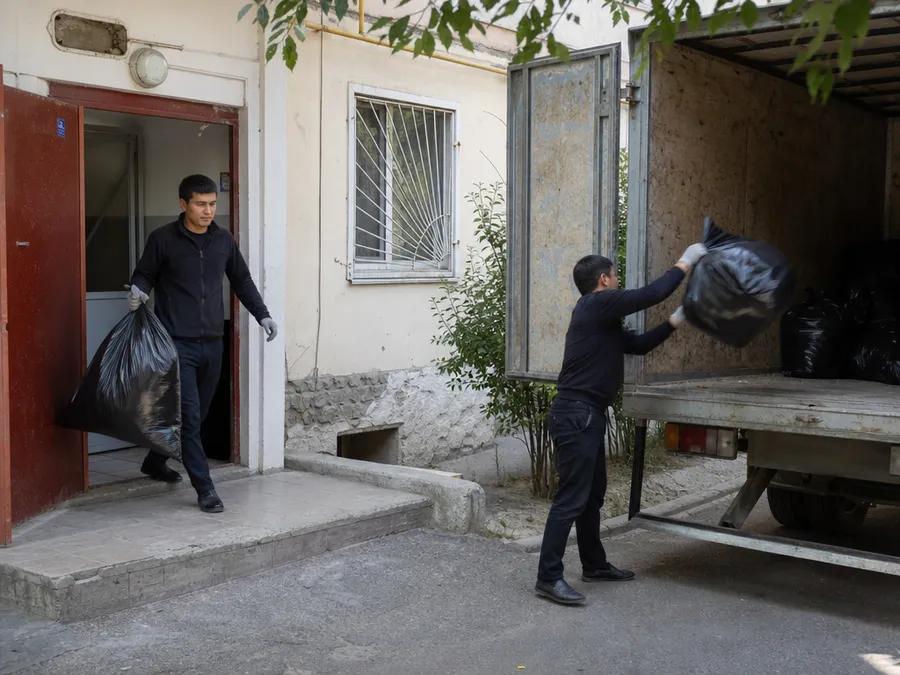
If you'd rather not pull your own crew off the line, we'll bring a team. Loaders will carry bags, boxes, and barrels from the shop to the truck.
With loaders
For facilities with a steady waste stream, we'll agree on days and times, and the truck arrives on schedule. We'll discuss volume and frequency over chat.
Message us on WhatsApp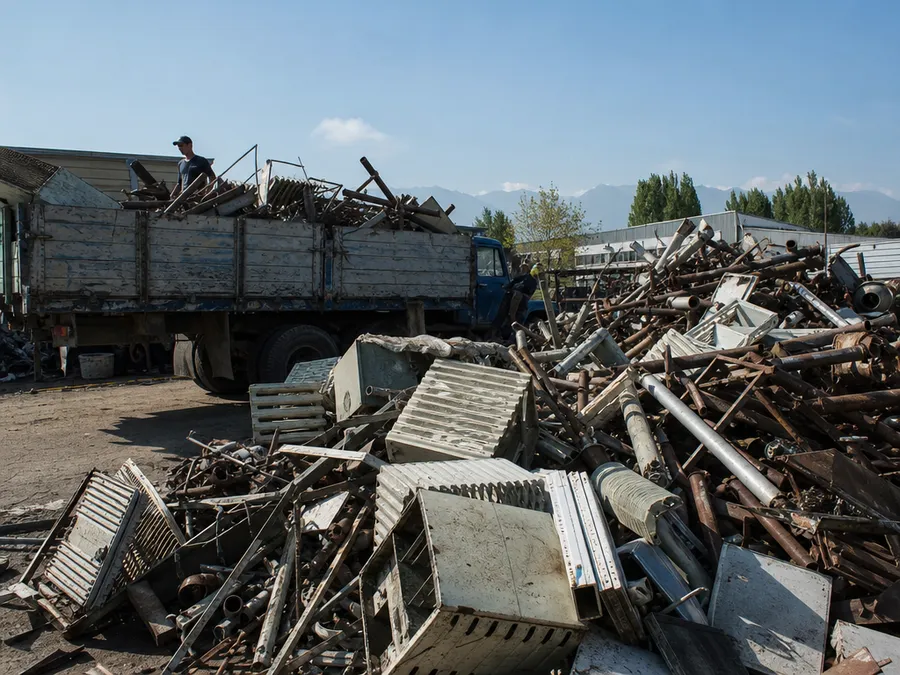
Shavings, offcuts, defective parts—we measure by cubic meters or by weight. Metal is heavy, so we assign a truck with capacity to spare.
Specify the volumeEvery job gets the right truck. Below are prices and volumes so you know what to order.




Valid from August 2026 · price per trip within the city
| Equipment | Volume | Payload capacity | Price per trip | Extra hour |
|---|---|---|---|---|
| GAZelle 1.5 t | 12 m³ | up to 1.5 t | 30 000 ₸ | 6 000 ₸ |
| GAZelle 2.5 t | 16 m³ | up to 2.5 t | 35 000 ₸ | 9 000 ₸ |
| Truck 5 t | 25 m³ | up to 5 t | 40 000 ₸ | 12 500 ₸ |
| ZIL dump truck | 7–12 m³ | up to 7 t | 40 000 ₸ | 12 500 ₸ |
| KAMAZ dump truck | 15 m³ | up to 20 t | 55 000 ₸ | 15 000 ₸ |
| Howo dump truck | 25 m³ | up to 40 t | 60 000 ₸ | 15 000 ₸ |
| PUHTO (skip) | 8–10 m³ | up to 7 t | 45 000 ₸ | — |
| Multilift | 20 m³ | up to 12 t | 100 000 ₸ | — |
| Skip | 27 m³ | up to 15 t | 135 000 ₸ | — |
| Max skip | 32 m³ | up to 20 t | 160 000 ₸ | — |
Prices apply within Almaty city limits. Outside the city, mileage is added — we calculate it in chat before dispatch.
Not sure which truck you need? Send a photo — we'll pick one for you.
Message us on WhatsAppSometimes you need more than just hauling away—you need the site prepped. We do that too.
From call to removal—five steps. No surprises along the way.
Request a quoteDescribe what kind of waste and roughly how much has accumulated. A photo of the pile or boxes will speed up the quote.
We calculate the volume, choose a truck by weight and dimensions, and lock in the price. It won't change after dispatch.
We bring the equipment to your shop or warehouse at the agreed time. Within the city, usually within an hour.
Loaders carry bags, barrels and offcuts from the shop to the truck, stacking them so nothing spills on the way.
We haul it away for disposal and sweep the area after loading. Nothing is left waiting for the next trip.
We show what it looks like at industrial sites: before removal and after.
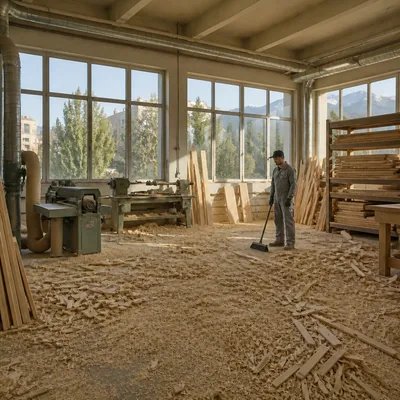
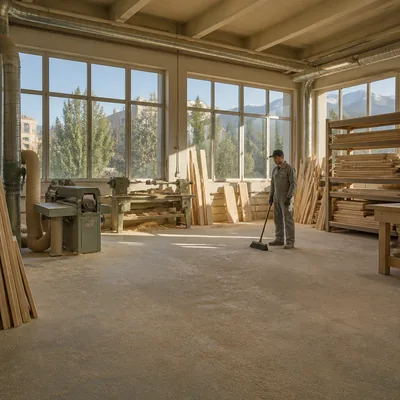
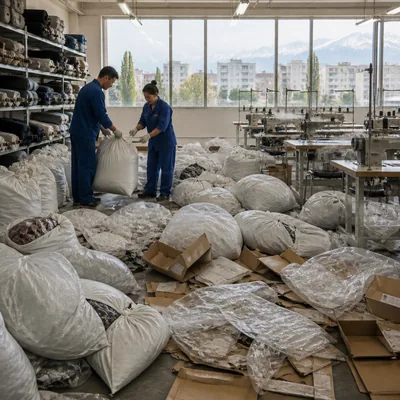
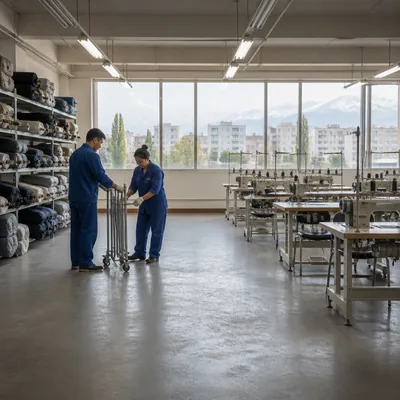
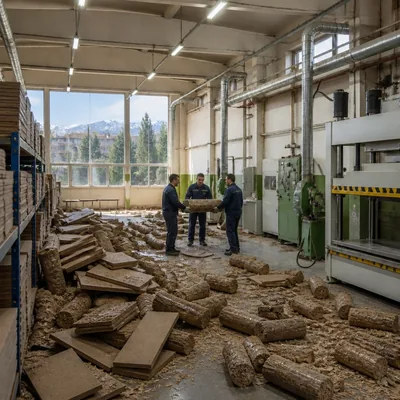
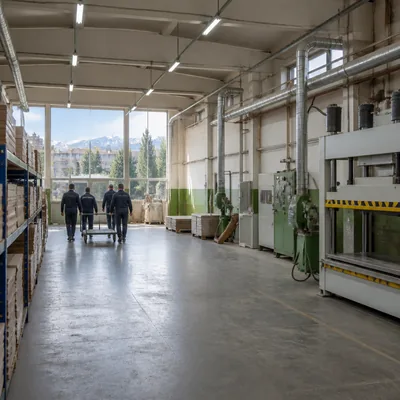
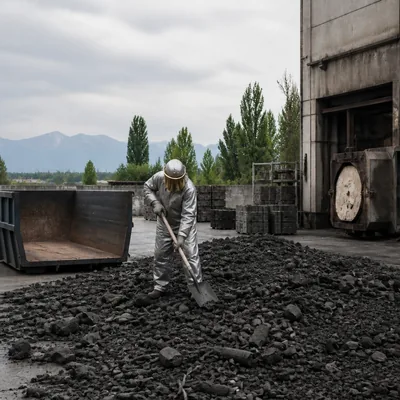
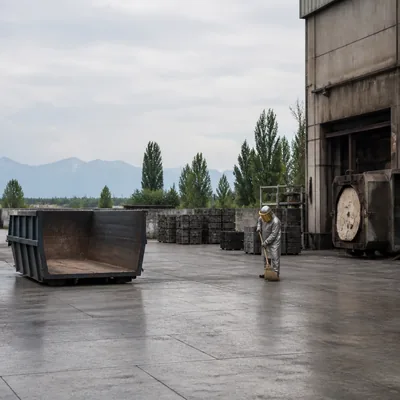
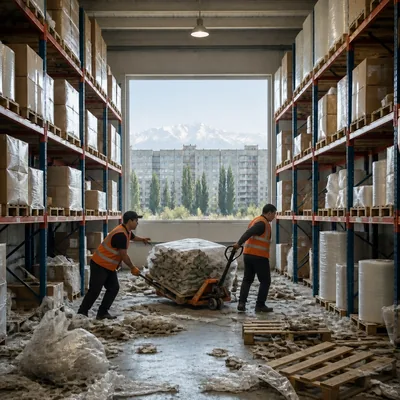
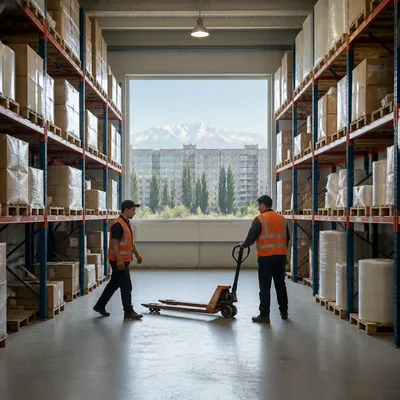
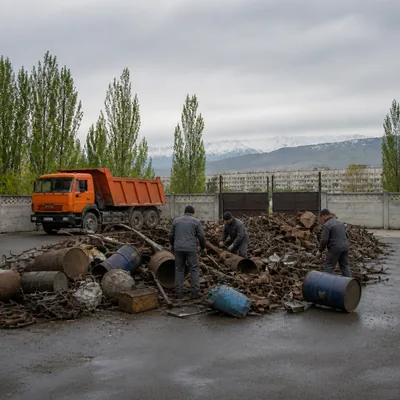
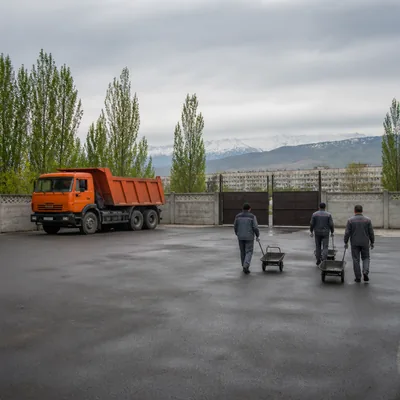
The people who will come to your site. No random subcontractors.







A workshop grinds to a halt, and by the gate there's a growing pile of offcuts, shavings and empty barrels. Or a warehouse was cleared out — leaving racks, pallets, bits of cable, bags of old workwear. A regular GAZelle won't take that, and an ordinary janitor just throws up his hands: it's not household waste, he's on a different route. That's where production waste removal begins — a whole different story with its own equipment, its own timelines and its own questions for whoever does the loading.
Production waste in Almaty isn't just "dirty" and "heavy." It's often bulky, too: metal offcuts, pipe sections, defective items, wooden crates, tooling that's seen better days. That won't fit in a GAZelle and can't be lifted by hand. And sometimes it's the opposite — light and loose: sawdust, grinding dust, polymer chips. The same-looking pile at two different plants weighs differently, and that's the first thing people get wrong when ordering.
Then it all comes down to details. Some people stockpile waste for months and want it hauled away in one go; others clean the shop every Friday and order a small truck. Some don't know if it can go to the city dump, while others just want the site swept after loading — because the inspection team arrives in the morning. Below is what we explain most often over the phone and in messages when it comes to removing production waste from a company's premises.
The easiest way to explain is with an example. We pull up to a small factory in the Turksib district — there are three piles in the yard. First: profile offcuts, metal shavings, defective brackets. Second: oil drums, bags of rags, old workwear. Third: broken pallets and leftover stretch film. All of this is industrial waste, and industrial waste removal here is one job for the whole yard, one truck.
Now, a different case. Same plant, but across the road they're tearing down an old warehouse. Out comes brick, concrete rubble, bits of roofing. That's construction waste. The difference isn't that it's "dirtier" or "heavier." The difference is where it comes from: one appeared during the shop's operation, the other during renovation or demolition.
Household waste is even simpler. MSW is what the janitor collects by the entrance: bags from apartments, bottles, food scraps. It has its own route and its own truck. If your shop puts a bag of sawdust by the gate, it won't get picked up. And that's not nitpicking — the household stream has completely different logistics.
The main difference is predictability. Household waste from a residential building is roughly the same day to day. Industrial waste doesn't work that way. Today it's lightweight polymer pellets, tomorrow it's half a ton of scrap metal. Hence different trucks and different timelines.
The second difference is density. A bag of household waste weighs about five kilos. A bag of shavings the same volume is already fifteen. And a crate of metal offcuts takes two people to lift. That's why when you place an order, we always ask not just "how many cubic meters" but also "what's inside."
Third — record-keeping. A business usually has its own interest: knowing how much waste goes out each month. We don't regulate that, but if asked, we give the volume of each truck so you can check it against your own records.
Most often people confuse what looks similar. Pipe and profile offcuts — seems like metal, but if it's leftover from installation, many file it as construction. Though really it's the same industrial stream.
Wooden packaging is a separate story. Pallets and crates from raw materials pile up for months. Construction crews leave them too, but the shop has its own, and it's easier to haul them out along with everything else.
Notice: no concrete, no soil, no brick rubble on this list. We haul those separately, and that's a different conversation.
Many people get this wrong in both directions. A one-meter pipe offcut is still metal — you can get money for it. Fine shavings mixed with sawdust is already trash, and nobody will take it.
The line is simple: if the metal is clean, sorted, and there's a lot of it — that's scrap. If it's in a pile with other trash, wet, rusty, small — that's industrial waste, and production waste removal here is just regular cleanup.
We don't buy scrap or pay for it. But if we see that part of the pile is clearly metal, we say so honestly. Sometimes it's worth spending half a day sorting than paying to haul the whole volume.
There are things you can't dump in a shared truck bed. Not because "that's the rule," but because it's harder to unload and dispose of later. We always confirm the contents before sending the truck.
We don't load together with regular workshop waste: mercury lamps, accumulators, chemically soaked rags, acid and alkali residues in open containers. These are separate streams: lamps and accumulators we accept by a separate request: separately from other garbage, to a specialized organization, and acids and alkalis are handled by specialized organizations.
Construction rubble, soil, and brick — also separate. We haul them, but with a different truck and a different calculation. If you mix everything into one pile, you'll have to separate it by hand later, and that's completely different money and time.
And one last thing. Technical waste removal and industrial waste removal are often the same thing — just called differently. Don't worry if your term doesn't match ours. Over the phone or on WhatsApp, we'll sort out exactly what you've got in a couple of minutes.
The first question when you place an order is what exactly you've got piled up. Not the name of the workshop, not the industry. The nature of the load. Two piles of the same volume can differ in weight by ten times. One is dry shavings from a milling machine — two people can carry it. The other is pipe offcuts, and there's no way without equipment. Mix them up, and the wrong truck shows up.
From experience, industrial waste removal more often falls through because the client called the waste "metal" when it's actually lightweight aluminum profile. Or the other way around: they said "a bit of wood," and it's wet oak beams. We ask for a photo. At least one. It saves a trip and your nerves.
This stuff spills, dusts, and flies around. Sawdust from carpentry, shavings from turning, polymer crumb from crushing. If you load it with the side open, half of it will be gone by the time you hit the road. You need a closed body or a tight tarp. Bags help, but not always: a torn bag in the wind means you're cleaning up the yard.
By weight, this kind of waste is deceptive. A body packed with sawdust can weigh less than three bags of metal. That's why when you call, we ask not just the volume but what the load used to be. Shavings from wet wood are heavier than dry. This matters for choosing the truck.
It's best not to leave dusty waste outside until we arrive. Rain turns it into mush, and the loaders will be scooping it out instead of loading. Covering it with film is already half the battle. If you have nothing to cover it with, tell us when you order — we'll bring covering material.
Metal is a story of its own. Sheet offcuts, pipe pieces, defective parts, old machine beds. All of it heavy, often with sharp edges. Loaders work in gloves and arm guards, but you still need extra time. Loading a ton of metal takes longer than loading three cubes of sawdust.
Heavy oversized items don't like to be rushed. First we calculate the weight, then we match the equipment. If there's more than two tons of metal, a GAZelle won't do — you need a flatbed or a manipulator. Sometimes it's easier to cut it on site than to haul it whole. We decide that with you based on photos.
Defective parts can have oil on them. That doesn't change industrial waste removal, but it changes what the truck bed needs. Oil stains on the floor mean you'll have to wash it later. We lay down plastic sheeting in advance.
This includes everything that takes up a lot of space and weighs almost nothing. Cardboard containers, stretch film, foamed polyethylene, bags of rags, old workwear. GAZelles love this kind of load: big volume, little weight. But there's a catch — the volume runs out fast if you don't compact it.
Do containers and packaging burn? Not burn, but smolder. Storing them against the workshop wall isn't a good idea. We pick them up on the day you order or the next day if the volume is small. If it's piled up for several trips, better not to wait: light bulky waste has a way of spreading across the yard.
Rags and workwear are often oily. That doesn't stop loading, but you don't mix such a pile with paper or sawdust. Mixed loads are harder to dispose of.
The name "industrial waste" tells you nothing about how to load it. What matters more is density, dimensions, flowability, and whether there's oil. The same workshop can produce light containers and heavy metal in a week. Those are two different trips, two different trucks.
We don't guess by the name. We ask for a photo and the approximate weight. If you don't know the weight, no worries — we'll estimate by volume. It's cheaper to err on the side of a light load than a heavy one.
| Waste type | Examples | Loading specifics | Suitable equipment |
|---|---|---|---|
| Loose | sawdust, shavings, polymer chips | dusty, need an enclosed body | tented GAZelle |
| Heavy and bulky | metal, pipes, defective parts | slow loading, sharp edges | flatbed or manipulator |
| Light and bulky | containers, packaging, rags, workwear | compact, watch the volume | GAZelle with a high body |
| Mixed | everything from the shop floor | separate on site | two trucks or a skip |
The table doesn't replace an inspection, but it helps avoid mixing up a run. Industrial waste removal is always a compromise between weight, volume and time. The more accurately you describe the load, the fewer surprises at the gate.
Sometimes there are several piles on site. Then technical waste removal is split into stages: heavy first, light after. That way trucks don't sit idle and loaders don't run around. If in doubt, call us for an inspection — we'll come, take a look, and tell you what to load and in what order.
And one last thing. Don't mix what shouldn't be mixed. Oily rags with cardboard, metal with sawdust. It's not a whim, it's a way to avoid extra questions during disposal. Production waste removal starts with sorting on site, even if it takes ten minutes.
It all starts with one question: how many cubes have piled up. Not bags, not 'about half the shop', but cubes — because the truck is chosen by body volume, not by the number of containers. And right away the second part kicks in: how much it will weigh. Two cubes of shavings and two cubes of scrap metal are two different runs, and you can't confuse them.
The first way is the roughest — multiply length, width and height of the pile. It works when the waste is stacked evenly: pallets in three tiers, rolls, boxes. Tape measure, three numbers, multiply — done.
The second way is through containers. You know a bag holds about sixty litres, and a standard barrel two hundred? Count the pieces and convert. Twenty bags is a bit more than a cube. Six barrels is a cube with a small tail. That's how you count when the pile is scattered and you can't catch its shape.
The third is by the area the pile occupies. Estimate the footprint on the floor and the average height. A footprint of three by four metres, average height half a metre — six cubes. The error here is within twenty percent, and that's fine if you recalculate based on actual loading.
A photo answers half the questions. From the shot you can tell whether the pile is packed tight or scattered, whether there's anything oversized, what the material is, and whether the truck can pull right up. Then the dispatcher estimates the vehicle and tells you how many trips it'll take.
What a photo doesn't give you is depth. A pile looks flat in a picture, but in reality it's a meter and a half high against the far wall. So you still need a tape measure: get at least one dimension that doesn't read in the photo.
A photo also doesn't show weight. A ton of shavings and a ton of offcuts look the same in a picture, but they're loaded differently. Heavy stuff gets lifted by crane or placed in the bed piece by piece, light stuff gets tossed in with shovels. Better to say this upfront — you can't guess it from a photo.
In our experience, people almost always underestimate. Not out of malice, but because they look at the pile from above, not from the side. From above everything seems compact until you start digging it out from under the racks and from corners nobody's looked at for a year.
The second source of error is compacted waste. Trash in a container or a corner of the shop has settled and been pressed down from above. You dig it out — and the volume grows by half. Same with wooden crates: a neat-looking stack, but take it apart and there's empty space and air between the boards.
Third — what you forgot to count. Bags outside the gate, barrels around the corner, a pallet by the wall, a piece of cable on the roof of the site trailer. All of it surfaces at loading time and changes the picture. So it's more honest to name a volume with a margin than to scramble for a second truck later.
We had a case: a metalworking shop asked for one truck. We arrive — the pile looks small, but underneath it the whole floor is covered in shavings. We loaded for three hours and hauled two trips. Since then I always ask for a photo of the floor, not just the pile.
The difference between one trip and two isn't just money — it's half a day of the shop standing idle. You can tell in advance by three signs: the volume is bigger than the bed holds, the weight is pushing into overload, the dimensions won't clear height-wise.
The first sign is measured with a tape. The second — by material density: metal and concrete are heavier than they look. The third — by the largest item: if there's a machine bed or a pipe longer than the truck, it goes separately or gets cut on site.
Sometimes it's cheaper to haul in two runs with different trucks than to send one container and wait for it to be unloaded. Sometimes it's the opposite: one big trip beats two small ones. What decides it isn't the volume itself, but how much more of the same waste will pile up in a week. If production is running — count the flow, not the one-time pile. Then the rate will be more predictable than with one-off requests to remove production waste as it happens.
So before ordering production waste removal, it's worth answering two questions: how much has piled up now, and how much will by next month. The first — for the truck, the second — so you don't have to call all over again every time. And if the volume doesn't match what's on site, that's normal — industrial waste removal is exactly the kind of job where the final number is confirmed at loading, not over the phone.
And one more thing that keeps coming up: technical waste removal from a site under renovation or retooling is counted by stages, not by the pile. Today you hauled out old equipment, tomorrow the ventilation came down, the day after the racks were dismantled. Count it all at once — the number is scary; count it by stages — you fit into one trip per wave.
Equipment isn't chosen by what the cargo is called, but by how much it weighs and how it's positioned. First we ask about weight and floor, then we think about the truck. Delay on the weight — the wrong truck shows up, and the whole run is ruined.
Light shop waste is cardboard, film, sawdust, polymer pellets, old workwear in bags. Lots of volume, few kilos. Here a GAZelle with a canopy and two loaders handle it in one go. Even if the pile looks impressive, it doesn't weigh much.
Loaders matter no less than the truck. In a shop, the passage between machines is often narrow, a pallet sits in a corner, and there's nowhere to drive up. Carrying it out by hand is faster than waiting for a crane truck and tearing down a wall. From experience — in half the shops, equipment simply can't reach the spot.
Metal is a different story. Pipe offcuts, channel beams, sheet pieces, defective castings. Here weight adds up fast: one piece of pipe can pull a hundred kilos, and there's a dozen in the pile. You don't load that by hand — not because it's heavy, but because it's dangerous.
A crane truck is needed where the cargo sits more than a meter off the ground, lies in a container behind a fence, or can't be tipped. It also saves the day when the shop is running and the line can't be stopped: the boom reaches through the opening, and people don't go inside. Sometimes it's cheaper to wait half a day for a crane truck than to pay for a shift of downtime.
Another case — molds and tooling. A half-ton cast-iron plate won't go in a GAZelle no matter how much you want it to. And it won't go on a ZIL without a crane. Here it's either a crane truck or an open-top dumpster with loading on site.
A dumpster is a container placed by the gate and picked up when full. Handy if waste accumulates over a week: the shop tosses offcuts as it works, no one waits for a truck. Plus a dumpster takes volume that would be slow and painful to haul in runs. One dumpster instead of three GAZelles is often cheaper, though it looks more impressive.
Runs are better when the cargo is one-time. Cleared a warehouse in a day — hauled it out in a day. Waiting a week for a dumpster to fill up makes no sense. Also: a dumpster takes space by the gate, and on a tight site there's simply nowhere to put it. Then it's runs only.
Count not by the number of trucks, but by the number of trips. If there's one pile by the gate — a run. If waste is scattered across three bays and accumulating — a dumpster. The price difference here is more honest than it seems.
Sometimes the gate is narrow, the surface won't hold, and there's a pipe overhead. The truck stays outside, and the cargo is inside. Then it's carrying out on shoulders, and that's separate work priced in advance. The distance from the pile to the truck bed is the main question when you book.
The second option is reloading. We bring a small cart or a loader, haul it to the gate, and transfer it to the truck there. Slower, but no downtime. The third — split the runs: haul it out in parts as it's carried, so the truck isn't stuck in the yard half a day.
| Equipment | What it takes | When it's chosen |
|---|---|---|
| GAZelle with loaders | Up to two tons, light volume | Waste at the gate, narrow passage |
| ZIL or flatbed | Up to five tons, medium size | One pile, one-time pickup |
| Manipulator crane | Metal, tooling, pipes | Cargo is heavy or sits high |
| Dumpster 32 m³ | Up to twenty tons, any volume | Waste piles up for a week |
| Loader on site | Reloading at the gate | Truck can't get inside |
Look at three things: weight, dimensions, and access. Everything else is details you sort out on site. But if you understate the weight, the wrong truck shows up, and production waste removal drags into a second day. Better to ask twice than to unload it all back.
And one last thing. Don't chase one big truck if the waste is light. A GAZelle plus loaders often finish industrial waste removal faster and without equipment downtime. But for metal, skimping on a manipulator crane backfires — I've seen it more than once.
Read this far and still not sure about the volume? Send us a photo — we'll calculate and give you a price.
Message us on WhatsAppThe truck went out the gate. Where to? Almost everyone asks this — and rightly so, because the answer determines what industrial waste removal will cost and whether the company later gets a visit from inspectors. The short answer: everything goes to different sites. Not to one landfill outside the city, as many think. And not "somewhere," just to dump it.
Mixing metal scraps, sawdust, oily rags, and empty canisters in one body isn't saving money — it's a problem passed to whoever accepts the load. At the sorting site, no one's going to pick through that mix by hand. Either they turn it back or send the whole thing to burial — which is both pricier and slower.
That's why before loading we always check what's actually in the pile. Sometimes just sorting into three compartments is enough — same volume, different route. Industrial waste removal isn't done "with one GAZelle for everything" because each fraction has its own fate.
Here's roughly how the chain looks after the truck leaves:
That's the exact order. You can't swap the steps: if you mix everything at step one, you can't pull anything out later.
Metal — almost always yes. Shavings, offcuts, defective parts, old shelving and frames — that's recyclable, they even pay for it at the receiving point, though industrial waste removal still costs money: loading, delivery, unloading. But the fact that metal doesn't go to burial already lowers the total.
Polymers — it varies. Clean film, PVC offcuts, defective items made of a single material — yes. But if it's a mix of plastic with paper and glue residue, it'll most likely go to burial. It's worth separating on site, in the shop, not at the facility.
Wood — clean only. Untreated pallets, board offcuts, shavings — we'll take them. Treated, painted, with oil residue — no, that's waste that can't go into chips. Sawdust from sanding in bags is a separate story: it's accepted as bulk waste, but only if there's nothing foreign mixed in.
What almost never gets recycled: oily rags, used filters, chemical containers, mixed construction leftovers. This is technical waste removal in its purest form — we take it to a disposal site, and there are no other options.
After the container is closed and the truck is gone, traces remain on the ground: fine shavings, dust, bits of packaging, a spilled stain from a canister. This is not a small thing. At a production facility, such traces are scrutinized more strictly than the pile itself, because the pile was temporary, but the traces stay.
We sweep the site after loading — always, it's part of the job, not an extra option. Sometimes a quick pass with a broom is enough. If we loaded something bulk, we sweep more thoroughly and collect the leftovers into the same container. If oil spilled, we cover it with sand and remove it separately.
At first glance, it's a detail. In practice, it's exactly such details that later cause problems during an internal audit. Production waste removal doesn't end when the truck leaves — it ends when the site is cleaned up.
After the trip, the company should have three things: a signed act, an understanding of exactly where the load went, and a clean site. The act is not a formality. It records the volume, the type of waste, and the date of removal. Without it, it's hard to prove later that the pile didn't just evaporate.
If the waste falls into a category requiring special handling, supporting documents are added to the act. We don't issue licenses or handle environmental permits — that's not our area. We take the load to a site that accepts it, and we'll tell you on WhatsApp before pickup what paperwork we can arrange for the trip.
What's left at the company after we leave: an empty site, signed papers, and, if needed, before-and-after photos. Photos are optional, but many ask for them: it's easier to report to management or the building owner. Industrial waste removal also means keeping the paperwork in order, not just hauling away a container.
And one more thing. Sometimes people ask: can we take everything in one truck to save money? You can, if the waste is of the same type. If it's different, you'll either have to split the trips or pay for disposal of what could have been recycled. Usually the latter costs more. So skimping on separation is the most expensive saving in this story.
In spring and autumn, dispatchers' phones are red-hot. Not because there's physically more waste — it just coincides: some companies are closing seasonal projects, others are preparing for winter and clearing out warehouses. Plus major workshop repairs that can't be done in summer. As a result, the queue for industrial waste removal stretches three to four days ahead. Not always, but in April and October — consistently. Those who plan ahead don't end up in that queue.
From experience, the toughest months are March–April and September–October. Even finding a GAZelle is harder then, let alone a dumpster. If you have regular scheduled industrial waste removal, we try to keep a slot for you — we don't move it without warning. But one-off requests during peak times go into a live queue, and then it's hit or miss.
The peak in industrial waste removal comes in two waves. The first is in spring: the snow melts, yards that weren't cleared all winter open up, and businesses take stock of what's left. The second is in autumn: before the cold sets in, you need to haul away everything that piled up over the summer, or the access road to the container yard will simply get snowed in. Add to that the end of the quarter and the end of the year — many try to close out their paperwork and get rid of the excess before reporting. During these weeks, orders go up by about a third, and there are fewer trucks available — some of the fleet gets pulled away for city clean-up days and snow removal.
The second reason is the weather. Rain and slush slow down loading: workers move slower, equipment gets stuck on the muddy ground. If your access road to the shop isn't paved, in spring and autumn it's better to book a truck for the morning while the ground is still firm. By midday it'll be a mess — and the dumpster might not even make it in.
One-off removal of technical waste is when you need it fast and just once. For example, after dismantling a production line or a deep clean. The main thing here is not to put it off: a pile tends to spread out, block walkways, and get in the way of work. We show up, load, and leave. But if this happens every month, one-off requests get more expensive and more of a hassle: each time you have to renegotiate the volume, the time, the equipment. It's easier to switch to a schedule.
Regular scheduled production waste removal means we know in advance what accumulates at your site, in what volume, and how often. For example, once a week a GAZelle comes for sawdust and offcuts, once a month a dumpster for scrap metal. The schedule can be adjusted to your shifts: morning dispatch before the shop floor gets busy, or evening after shipping. It takes the headache out of logistics and reduces the risk of a truck waiting in line on a peak day.
| Period | Load | Delivery time | What to do |
|---|---|---|---|
| Spring (March-April) | High | 3-4 days | Book a week ahead, preferably for the morning |
| Autumn (September-October) | High | 3-4 days | Plan ahead, keep an eye on the forecast |
| Summer | Medium | 1-2 days | You can book as usual |
| Winter | Below average | 1 day | Allow for snow and ice on the access road |
| Regular schedule | Fixed | By agreement | The window is yours, we don't move it without notice |
A planned shutdown is prime time for industrial waste removal. The shop isn't running, equipment isn't in the way, and you can calmly haul away everything that's piled up over the months. We try to time truck deliveries to these windows. If your shutdown lasts a week, it's better to spread the removal over several days: day one — bulky items, day two — bags and containers, day three — whatever's left after clean-up. That way equipment doesn't sit idle and you don't have to pile everything into one day.
What matters: during a shutdown, the power and water in the shop are usually cut, and that affects the workers. If we're removing waste in the evening, you need to arrange lighting for the site. And let security know so the truck gets through without delays. It's a small thing, but it can cost you an hour or two, and in a tight schedule that's critical.
Sometimes the pile is already blocking the walkway and waiting three days isn't an option. Then call us on WhatsApp or the phone number on the site — don't put it off. We check what's available nearby and try to find a window. We can't always deliver exactly tomorrow, but there's a chance, especially if the volume is small and a GAZelle or dump truck will do. It's harder during peak times, but we'll let you know right away if the time slips so you're not waiting for nothing.
To speed things up, have this ready: what kind of waste it is, roughly how much, the address, and whether a truck can get to the bin. If it's production waste in bags, tell us how many bags and what's inside. Then we'll know right away which truck you need and won't keep asking you the same thing ten times.
And one more thing: don't leave the haul for the last day of the shutdown. Something always turns up at the last minute — a pallet, a barrel someone forgot. Better to take the main load out early and the leftovers on the last day. That way you won't end up with production already running and the truck not there yet.
Let me pull together what's already been said — no new promises, no numbers. In short: production waste removal doesn't start with a truck, it starts with an honest answer to the question of what exactly is in your yard and how much it weighs. Everything else — equipment, timelines, number of trips — follows from that answer.
Only you know what's in the load. You roughly know the volume. Nobody knows the weight. So before booking, walk around the pile and estimate what's most of it: metal, wood, film, or loose material. That decides whether a GAZelle shows up or you need a bin, and whether it comes once or comes back. Production waste is almost always underestimated by eye.
Our schedule is simple: we work in the city, Mon–Sun, 09:00–21:00; outside the city, mileage is added. Requests via WhatsApp or phone — no forms on the site. The price is fixed before dispatch and doesn't change after — that alone takes half the stress out of industrial waste removal.
The yard route won't take it. Household waste is collected on a schedule and in containers, but here the weight, the dimensions and the loading logic are different. A pipe offcut, a machine bed, a roll of reject film or a bag of sawdust sit outside that system. Hence separate technical waste removal — with its own equipment and its own loaders.
Another difference is how mixed it is. A household bag is more or less the same for everyone, but a pile at two plants with the same name weighs differently: at one it's light crumbs, at another it's metal you can't move by hand. That's why industrial waste removal isn't priced by a single template.
An extra trip isn't out of spite — it's from getting the weight wrong. If you say "a couple of cubes" and it turns out to be dense metal, the truck leaves half-empty by volume and overloaded by weight. And the reverse: light film gets hauled in a bin that looks empty. One accurate measurement saves you a second run.
The second source of overpayment is sorting the pile on site. If you mix wood, metal, and film in one bin, you won't be able to separate them later. But if you sort them into piles right away, industrial waste removal happens in one go and without extra hassle. Honestly, you save more on this than on haggling.
Message us on WhatsApp or call the number on the site — whichever is easier. The conversation is short: address, what kind of load, approximate volume, whether there's access for the truck, and who loads. Photos of the pile from two angles answer half the questions right away. I won't put the address and number here — they're in the contacts.
Then we arrive, load up, take it away for disposal and sweep the site after loading. I won't promise anything beyond that: timing depends on the workload, and weight depends on what's actually sitting in the yard. Industrial waste removal is great precisely because everything is calculated in advance, with no surprises at the end.
If you request in the morning, we can usually make it the same day. Call in the evening, and if the load is heavy and you need equipment bigger than a GAZelle, it'll be the next day. In Almaty, expect about a couple of hours from confirmation, but it all depends on what your cargo is and how much there is.
Take a photo of the pile or bin and send it to WhatsApp — we'll estimate the cubic meters from the photo and pick the right truck. That way you won't overpay for an extra trip or get stuck with an overload. On site we'll confirm the actual volume, but we won't raise the price.
It depends on what exactly is mixed. Metal, wood, film and similar items we often take in one trip. But if there's something in the pile that can't go into the general stream, we'll sort it and remove it separately. Better to tell us right away what's there, so there are no surprises during loading.
Liquid waste, acids, used oils and the like we don't take — they have a different handling procedure. Mercury lamps, accumulators and chemical residues in closed containers we accept by a separate request: separately from other garbage, to a specialized organization. If you're unsure about a specific item, send a photo and description, we'll advise. We don't promise to take everything — better to refuse right away than to solve the problem on site later.
We bring our own movers, and they carry it out from the workshop, warehouse, or back room. If you have your own staff and prefer it that way, we load only with our crew, and yours carry it out. We add the crew to the trip as a separate line item and calculate it in advance.
Then a second trip will go at the same rate — our price per trip is fixed. The movers wait, no one leaves with half the load still on site. To avoid this, it's better to estimate the volume from photos in advance.
A bin and a multilift are large equipment; they need proper access and a turning area. If the yard is tight, we take a KAMAZ or ZIL and remove it in parts. Tell us about the entrance in advance so the truck doesn't get stuck at the gate.
Yes, Mon–Sun from 09:00 to 21:00. If the site can't stop during the day, we'll come after the shift or on Saturday-Sunday. We can set up a regular schedule — for example, pick up what's accumulated once a week.
Light cargo up to one and a half tons — from 30 000 ₸ per trip, the crew of movers is calculated separately. Heavy stuff like metal or concrete will require different equipment, and the price is higher. We'll give you the final quote before dispatch and won't change it after loading.
It depends on the package you need — different requirements mean different paperwork. Write to WhatsApp in advance what your accounting department or client asks for, and we'll tell you what's actually possible. What we always do: take the cargo for disposal and sweep the area after loading.
Got a question that's not here? Ask — we'll answer in writing, no call needed.
Message us on WhatsAppIndustrial waste removal from a small production facility. Everything was spot on, no unnecessary talk.
After a flood in the back room, we had to toss a pile of soggy cardboard and containers. Called in the evening, they came the next morning. Took everything out, swept the floor — didn't even have to ask.
Removal of industrial waste after dismantling old equipment. Worked fast, swept the area.
We replaced plumbing in the workshop and a lot of iron was left. My husband said we'd throw it out ourselves, but it was half a ton. I called and explained as best I could. Two hours later, a GAZelle was there.
Technical waste removal from a hangar. We waited for the truck a bit longer than promised — an hour and a half. But they arrived, loaded quickly, and swept the area. That's why it's four stars, not three.

We hauled out old boxes and broken tools from the workshop. The loaders carried everything themselves — we just watched. The price was exactly as quoted upfront, no extra charges.
There was a mountain of old tires and scrap metal in the yard of the workshop. Thought no one would take it on. They did — loaded it up and hauled it away for recycling. Aigul called back to confirm the address so as not to confuse it with the second entrance. A small thing, but nice.
It was a small volume — thought they wouldn't come because of that. They came. Took it.
A warehouse on Raiymbek, junk had been piling up for six months. We ordered industrial waste removal for the first time and were worried about the weight. Everything went fine, they gave us disposal papers.
We were clearing a space for rent on Tole Bi — junk left by previous tenants: rolls of linoleum, panel scraps, paint cans. They arrived at nine in the morning and cleaned everything out in two hours.
We were clearing a basement under a store — old pallets, boxes, pipe pieces. I thought we'd need to hire several trucks. Askhat estimated and suggested a bin, which turned out cheaper than I expected. They took everything in one go.
we were removing garbage from a warehouse, renovation started. they arrived on time, loaded everything themselves. the price didn't change, as promised.
After renovating the workshop, three piles of scraps were left — metal, plastic, packaging. Yerlan said one GAZelle wouldn't be enough, and he was right. They arrived in an hour and took everything away in one go.

We were handing over the premises and needed to clear out an old warehouse — shelving, boxes, metal bits. The volume was decent. They estimated from photos and showed up with a dumpster. Two loaders carried everything down from the fourth floor — no elevator there. Finished in three hours.
Industrial waste removal from the plant territory was a one-time thing for us. We waited for the truck longer than agreed — about an hour and a half. But they came, loaded everything carefully, no complaints about the work.
Industrial waste removal at our site is regular, once a month. We work with the same team. They arrive right on time and don't take extra.

We have an auto repair shop — all sorts of stuff piles up: old parts, tires, canisters, rags. We order technical waste removal regularly, once every two months. The same guys come, they already know where everything is. A small thing, but nice.
We ordered industrial waste removal for the first time and didn't know how to estimate the volume. Sent photos in the chat, Askhat figured one trip would be enough. Turned out exactly right — no extra charges.
We were closing a small café on Zhandosov and needed to take everything out at once — old furniture, exhaust hood, boxes. The volume (which I underestimated) was calculated from photos. Dinara gave the price right away and it didn't change. The crew arrived at seven in the morning to avoid disturbing the neighbors on the floor.
We were preparing the shop for a move and needed to clear out everything unnecessary in one day — workbenches, old crates, a bunch of scraps. Daniyar immediately said one GAZelle wasn't enough and sent two. Finished by lunch.
We have a carpentry shop, and sawdust and scraps pile up fast. We used to haul them ourselves on a trailer, but that's not enough anymore. Daniyar suggested getting a GAZelle with loaders — that's what we do. They pick everything up themselves, you don't even have to carry the bags.
There was a mountain of old pallets and scrap metal behind the workshop — kept putting it off. Finally called them, they came, loaded it up, hauled it away. Even the neighbor asked who cleared it all out so fast.
they arrived quickly, took everything. worked carefully, didn't make a mess. thanks.
We were clearing an annex to the shop — bags of dust and old containers had piled up. They came in a GAZelle, carried everything out themselves, we didn't even have to help. Swept the yard after themselves.
We removed wood waste from a small workshop. Two loaders came and lifted everything themselves. I called at nine in the morning, and it was done by noon.
We have a bakery — every week a pile of flour dust, torn bags, broken trays builds up. Used to haul it ourselves, then got tired of it. Now a truck comes once a month and takes everything at once. Convenient that you don't have to remind them about anything.
A construction site, lots of scraps and packaging. We ordered industrial waste removal for Friday. They arrived by nine, and by lunch it was clean. The price was the same as quoted on the phone.
After the tenant changed, a pile of junk was left in the workshop — pipe offcuts, old panels, boxes. They showed up on time, took everything away, left nothing behind.
Removal of construction debris after dismantling storefronts. Arrived on time, took everything, swept the area. No complaints.
A small warehouse on Seifullin — needed to remove construction debris before an inspection. Called in the evening, they came in the morning. Fast.
Showing 3 of 30
Want the same? Describe your task — we'll calculate and give you a price before the truck arrives.
Message us on WhatsAppChecked us out? Drop us a line — we'll pick the right truck for your load.
Message us on WhatsAppHow medical and industrial waste differ from household waste and what's required of the hauler.
Collection, sorting, crushing, secondary raw materials — the steps in order and what actually gets recycled.
Illegal dumps on the outskirts, soil and groundwater: what happens when waste goes to the wrong place.
Articles of the Administrative Offenses Code of Kazakhstan, amounts in MCI for 2026, and who's responsible for the garbage — the carrier or the client.
Still have questions about industrial waste removal? Message us on WhatsApp — we'll reply fast and to the point.
Tell us how the pickup went — it helps us and anyone choosing a hauler.



