Ildar M.
I ordered a dump truck for debris removal, it arrived forty minutes late. A small thing, but in the morning you count every minute. They took everything in one go, swept the yard.
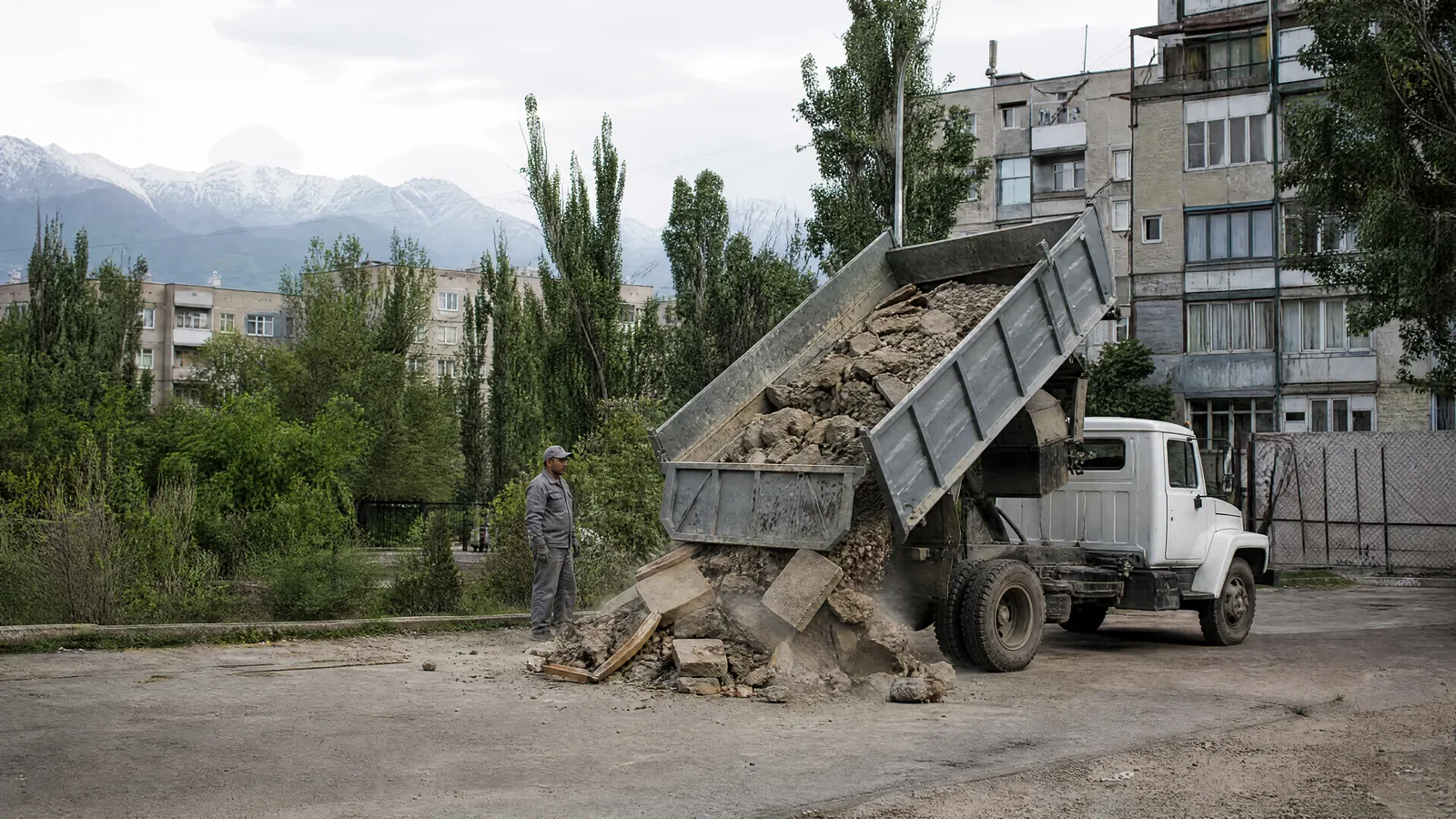
Soil, sand, broken brick and wet snow — stuff you don't bag, you scoop.
Estimate the volume — the calculator will show which dump truck to get and what it'll cost. If you're unsure about the numbers, send a photo of the pile: we'll count more precisely.
Price per run, no extra charges for raising the bed or cleanup. Mileage outside the city is billed separately.
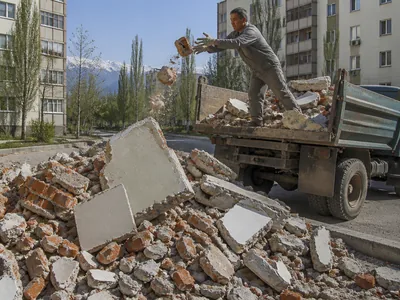
Broken brick, plaster, drywall scraps. A ZIL bed holds 7–12 m³, if it's more — we bring a KAMAZ or do two runs.
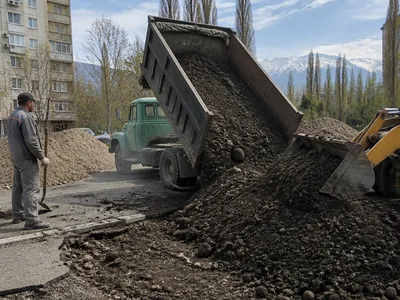
Excavated soil, clay, sand. Heavy loose material we load with a bucket, unload by tipping the bed.
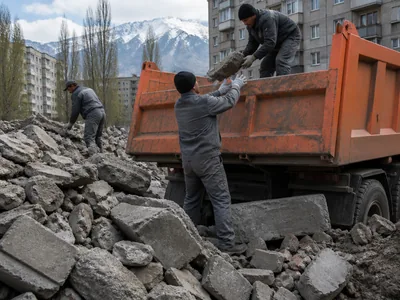
Concrete pieces, foundation debris, broken brick. Here weight matters, not volume — we calculate tonnage and bring a KAMAZ.
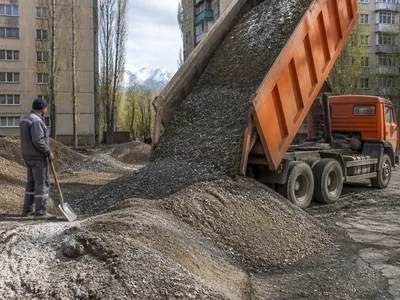
Crushed stone, screenings, leftover mixes. A dump truck is handy because it dumps everything itself, no shovel swinging.
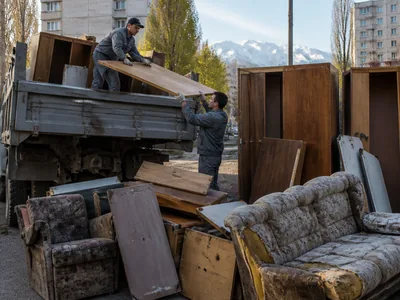
Old cabinets, sofas, door panels. Stuff like that gets tossed on top of a dump truck, but soft items are better hauled in a GAZelle.
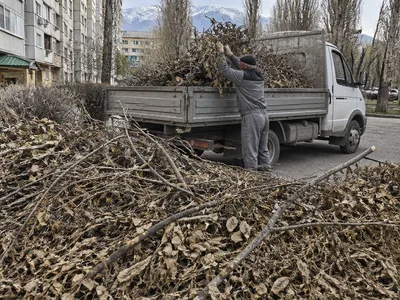
Cut branches, bushes, leaves. Big volume, light weight — you can fit a lot if you pack it tight.

In winter we clear parking lots and yards, haul snow away by dump truck. Wet snow is heavy, so we keep an eye on the load.

Offcuts, rejects, packaging, containers. For businesses we run regular scheduled trips, with paperwork.
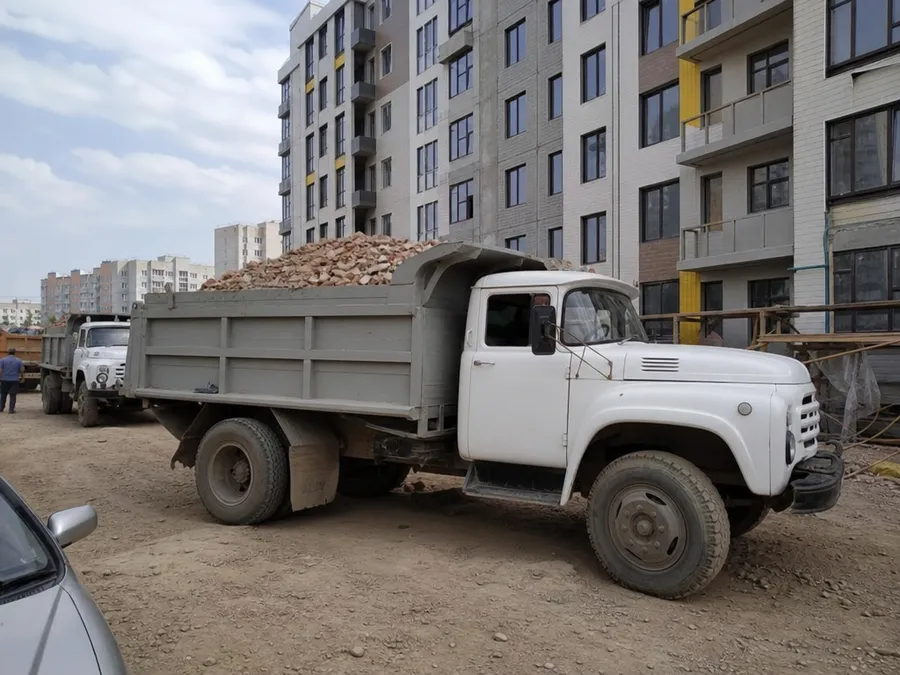
Bed 7–12 m³, up to 7 tonnes. Used for construction debris, soil and anything loose that needs to go in one go.
About ZIL
If the job runs long, we wait while you keep adding or the loaders carry stuff out. We count the hour after the first one.
Ask about the hour
A crew of 3–4 people for a ZIL. They carry items from the apartment, basement, or yard, load them into the bed and sweep up after themselves.
Add loaders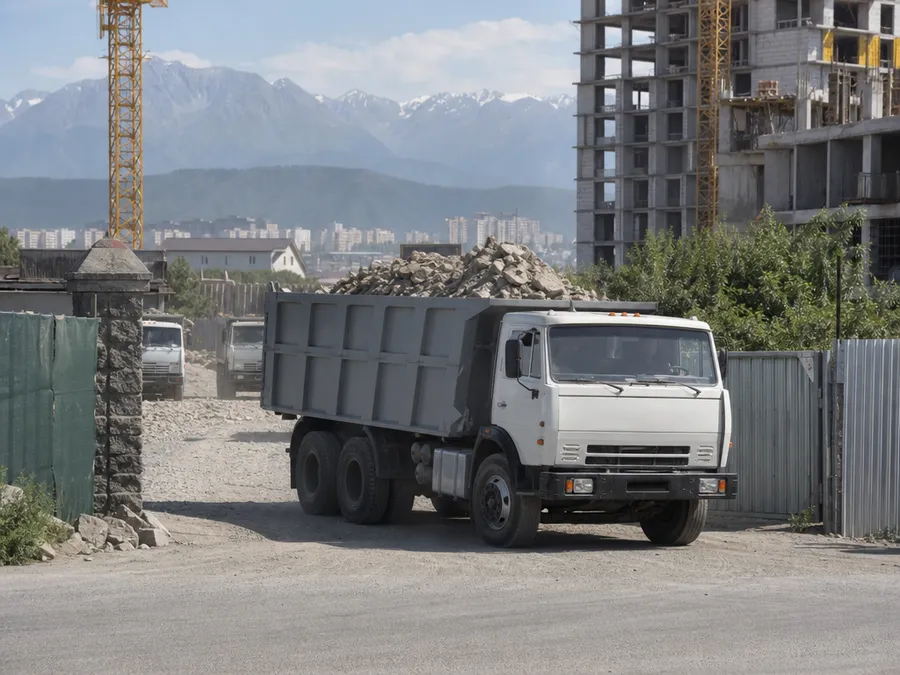
When the volume is more than one bed can hold, we don't send the ZIL back and forth — we bring in a KAMAZ or Howo. One trip instead of three or four.
About KAMAZ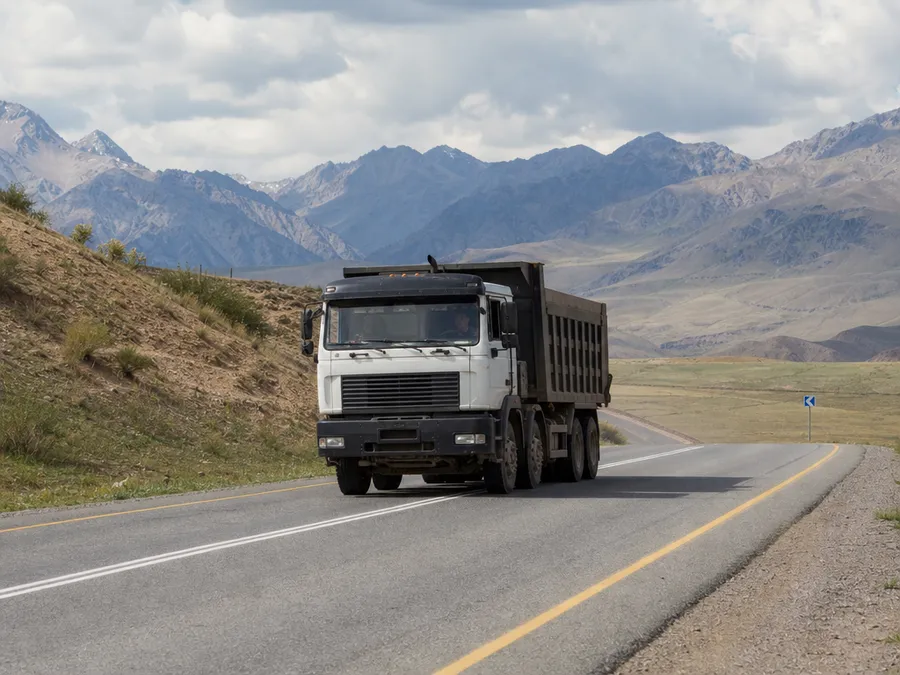
Cottages, plots, sites outside Almaty. Mileage is added to the trip price — give us the address and we'll calculate.
Calculate km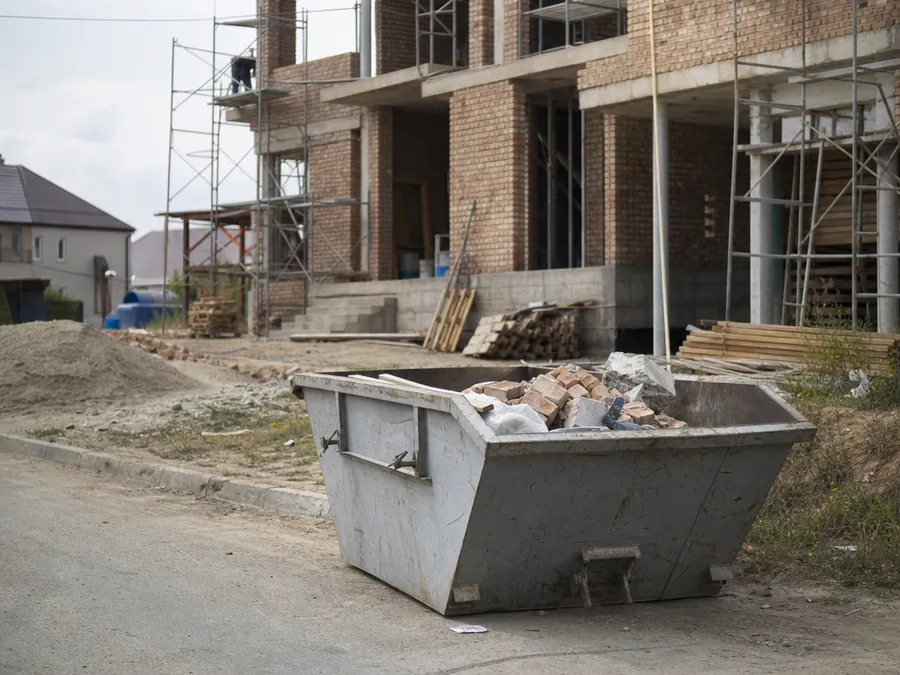
A truck for a shift or a container for the duration of construction. We quote separately for the job — message us on WhatsApp to discuss the schedule.
Message us on WhatsAppWe have two trucks, and they're for different things. The ZIL goes where it's tight, the KAMAZ goes where it's heavy. Below is the per-trip price for each.




Valid from August 2026 · price per trip within the city
| Equipment | Volume | Payload capacity | Price per trip | Extra hour |
|---|---|---|---|---|
| GAZelle 1.5 t | 12 m³ | up to 1.5 t | 30 000 ₸ | 6 000 ₸ |
| GAZelle 2.5 t | 16 m³ | up to 2.5 t | 35 000 ₸ | 9 000 ₸ |
| Truck 5 t | 25 m³ | up to 5 t | 40 000 ₸ | 12 500 ₸ |
| ZIL dump truck | 7–12 m³ | up to 7 t | 40 000 ₸ | 12 500 ₸ |
| KAMAZ dump truck | 15 m³ | up to 20 t | 55 000 ₸ | 15 000 ₸ |
| Howo dump truck | 25 m³ | up to 40 t | 60 000 ₸ | 15 000 ₸ |
| PUHTO (skip) | 8–10 m³ | up to 7 t | 45 000 ₸ | — |
| Multilift | 20 m³ | up to 12 t | 100 000 ₸ | — |
| Skip | 27 m³ | up to 15 t | 135 000 ₸ | — |
| Max skip | 32 m³ | up to 20 t | 160 000 ₸ | — |
Prices apply within Almaty city limits. Outside the city, mileage is added — we calculate it in chat before dispatch.
Not sure which truck you need? Send a photo — we'll pick one for you.
Message us on WhatsAppSometimes a dump truck is only half the job. Bags, bulky items, a clean yard after unloading — we handle it.
Five steps, nothing hidden: from the first message to a swept site. Usually it all happens the same day you request.
Request a quoteDescribe the job or send a photo — a picture shows the volume better than words.
We calculate cubic meters and tonnage, choose a ZIL or KAMAZ, and lock in the price.
From 30 minutes in the city, seven days a week. We'll give you the truck number and arrival time.
The loaders carry everything out of the apartment, basement, or garage and toss it in the bed.
We take it to disposal and sweep the site after loading.
What a site looks like before removal and what's left after. Volume, equipment, and price — under each pair.
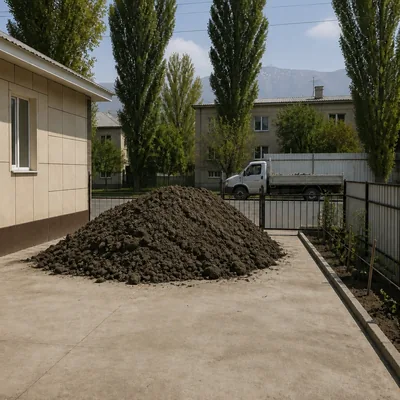
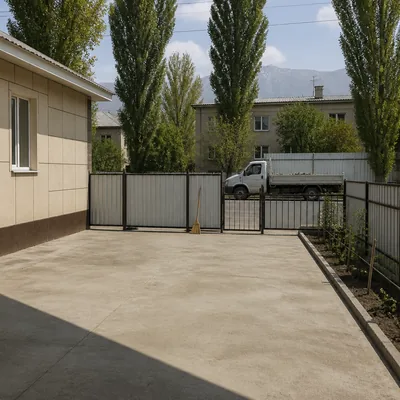
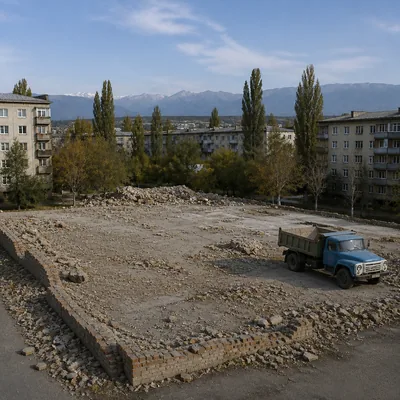
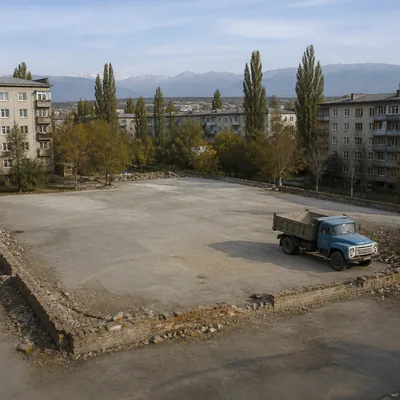
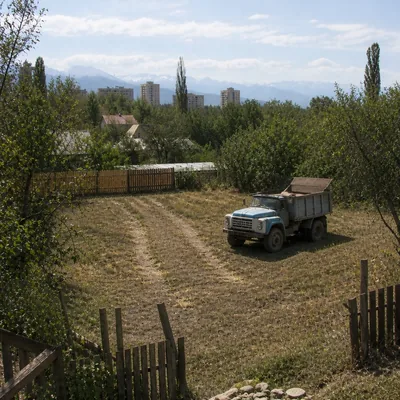
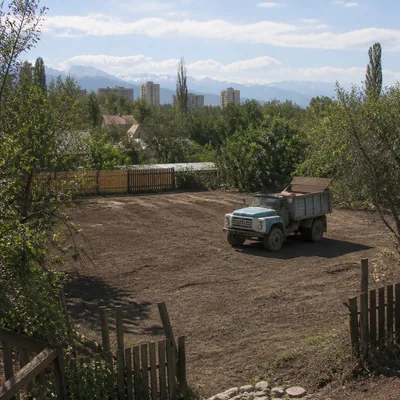

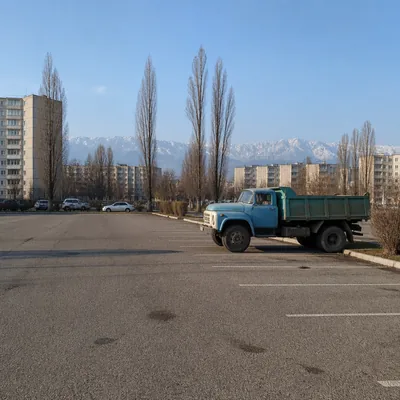
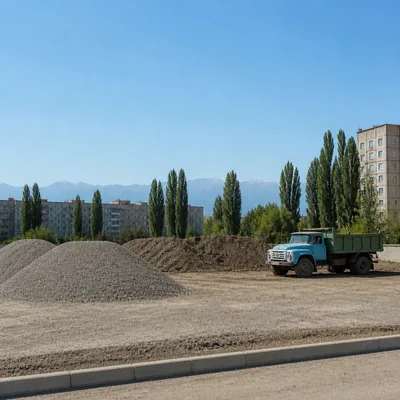
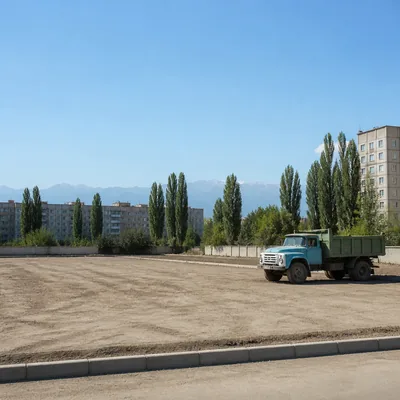
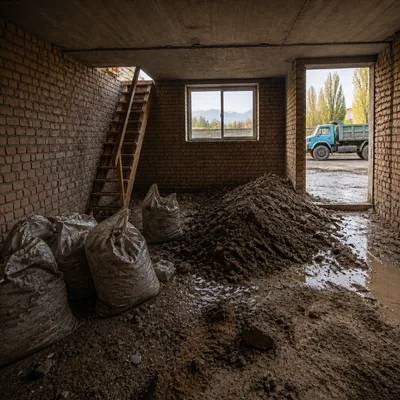
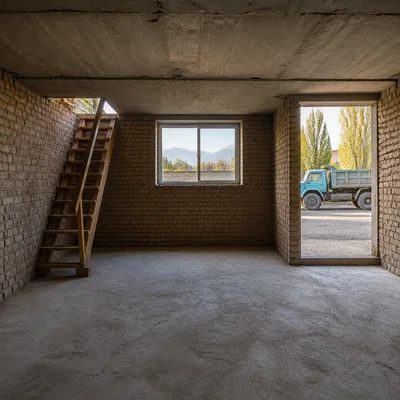
A driver and loaders come to the site. Below is who exactly does what.







Someone calls whose yard has grown a mountain after renovation: old wallpaper, chunks of screed, broken tiles, a couple of bags of cement that have set like stone. They ask: "Can you send a dump truck?" And almost always they mean something specific — either a sideboard with opening sides, or a bed that lifts and dumps everything itself. These are two different mechanisms, and the confusion starts right there.
A dump truck isn't about speed or 'big truck means one trip.' It's about the unloading method. The dump body tilts, and the contents slide down under their own weight. It works well with loose and heavy stuff: soil, sand, gravel, broken screed, concrete chunks. It works poorly with light and bulky items: foam, old furniture, branches, cardboard. There's nothing to push them out, and they just hang in the body until pulled out by hand.
That's why on this page I'm covering the class of equipment, not a specific machine. How a dump truck differs from a flatbed truck in loading and unloading, what goes in and what doesn't, how to choose between two dump trucks in the fleet, and what needs to be on site for the bed to even lift. I've got enough experience: most often problems arise not with the machine, but with the place where it's parked.
A flatbed truck and a dump truck look alike — cab, frame, wheels. The difference is one hinge. On a flatbed, the body is bolted to the frame for good; on a dump truck, it sits on a lifting mechanism: a hydraulic cylinder pushes the platform, and it tilts back or sideways. Everything inside slides down the slope. That one difference drives everything else — how you load, what you haul, how long unloading takes.
A dump platform is usually steel, with high sides, and the tailgate opens on hinges or comes off entirely. It lifts 45–60 degrees — enough for soil or crushed stone to slide out on its own. Where the load goes: a dump truck has no driver with a shovel. The truck stops, the body rises, the contents fall out. The operator at the landfill or on site drives into the unloading zone, presses a button in the cab, and drives out empty.
That mechanism comes at a cost. You can't fully raise the body under wires or in low passages — at its top point, the platform is almost twice as high as the truck. If branches, guy wires, or second-floor balconies hang overhead, the body either won't rise all the way or will hit something. That's why dump truck construction waste removal needs a site that's open above for at least the length of the body plus a couple of meters of clearance.
A flatbed truck unloads differently — by hand, crane, or manipulator. The body stays level. That means you can put in it things a dump truck shouldn't touch: old wardrobes, sofas, fridges, bathtubs, rolls of linoleum, windows in frames. They're not loose material — on a slope they won't slide, they'll get stuck, jam, tear the side, or tip over. A flatbed takes anything you can lift and set down.
Another point — fragile stuff. Dump unloading is a jolt. If there's anything breakable or that can't be shaken in the body, go with a flatbed. From experience: when a client says "a dump truck, but carefully," they almost always mean a flatbed. A dump truck doesn't do careful — it does fast.
At the landfill, a dump truck wins on time by a factor. A flatbed has to be unloaded by hand or wait for a manipulator, which is separate equipment and separate money. A dump truck tips and leaves. Compare two trips of the same tonnage, and the unloading difference is anywhere from half an hour to two hours, depending on how the flatbed is emptied.
On site, it's a different picture. Sometimes it's easier to unload sideways rather than back — then the dump truck tilts the body to the side. That works if you need to fill a pit or level an area: the truck drives along, the platform tilts sideways, and the material lays down in an even strip. A flatbed can't do that. But a flatbed can park under a canopy, in a garage, in a narrow passage between buildings — places a dump truck with a raised body won't go.
A flatbed wins in four cases. First — a narrow yard with wires and trees where you can't raise the body. Second — cargo you can't tip out: furniture, appliances, packaged building materials. Third — unloading inside a building or behind a fence with a gate. Fourth — when the waste isn't being thrown away but moved to another address.
There's a common belief that a dump truck is always the better deal because it holds more. Not exactly. The body volume of a dump truck versus a flatbed is about the same, but weight is a different story: loose material is heavy, and a dump truck usually has a higher payload capacity. If you're hauling old furniture, there's no difference in weight, but there is in convenience. So it turns out the truck is chosen for the load, not the size of the body.
Here's a list of how these two classes really differ in practice:
And one more thing. Ordering a dump truck for waste removal makes sense when the load is loose or heavy: soil, crushed stone, screed, concrete debris, sand. But if you've got a disassembled wardrobe and three rolls of old carpet in the yard, a dump truck won't push them out — they'll just sit at the bottom and stay there. In that case, we'll send a flatbed or a GAZelle with loaders, and that'll be fairer on your wallet.
A dump truck is built for loose and heavy stuff. Soil, sand, crushed stone, broken screed, chunks of concrete, brick rubble — all of it slides out when the body tilts, doesn't get stuck, and needs no manual unloading.
A dump truck is primarily for materials that behave like liquid when tilted. Sand, gravel, screenings, dry screed, soil after digging — it all slides down in one flow. If the volume is small, a ZIL dump truck with a 7–12 m³ body and up to 7 tons capacity is enough. For larger loads — a KAMAZ with a 15 m³ body and up to 20 tons.
Important: loose cargo is heavier than it looks. A cubic metre of sand is about 1.6 tonnes. A cubic metre of crushed stone is 1.4–1.5 tonnes. A cubic metre of dry screed is up to 1.8 tonnes. So don't load more than 4–5 cubes of sand into a ZIL dump truck: it'll fit by volume, but not by weight.
Brick rubble, concrete debris, old screed, foundation chunks — these are also dump truck cargo. But there's a catch: large concrete pieces can jam the tailgate during unloading. If you know there'll be boulders the size of a wheel in the body, let us know — we'll pick a truck with a reinforced tailgate or add a loader to break up the big stuff on site.
Dump truck removal of construction waste is standard practice after wall demolition, partition removal, or screed replacement. The main thing is not to mix things up: if the debris is mixed with rebar, wire, or plastic bits, it might not pour out completely. You'll have to help with a shovel.
But with styrofoam, old furniture, branches, cardboard, or insulation — a dump truck can't cope. When the body tilts, this light bulky waste just clings to the walls, and you have to pull it out by hand. Sometimes it falls not right away but a minute later, when the truck has already driven off — and that's dangerous.
That's why you don't order a dump truck for: old furniture, mattresses, branches after tree pruning, foam, mineral wool, empty plastic bottles, cardboard. For that, a skip or a flatbed truck with loaders is better.
The most common case: everything's piled together in the yard. Screed, wallpaper, chunks of drywall, a couple of bags of cement, old linoleum. A dump truck won't unload itself here — light stuff will stop the heavy stuff from sliding out. In cases like this we usually offer two options: either order a dump truck for waste removal and add loaders to help unload, or take a skip — it tips over entirely, and the contents come out even when mixed.
If we do load mixed waste into a dump truck, we put the heavy stuff first (broken brick, screed, soil), and the light stuff on top. That way, when the bed lifts, the heavy pushes the light out. But this only works if the light stuff is no more than a third of the volume.
| Type of waste | Can it go in a dump truck? | Why |
|---|---|---|
| Soil, sand, crushed stone | Yes | Loose, pours out completely |
| Broken brick, concrete | Yes, with a caveat | Large chunks can jam the side |
| Old furniture, mattresses | No | Light, bulky, gets stuck |
| Styrofoam, branches | No | Doesn't pour out, clings to the walls |
| Mixed (heavy + light) | Only with loaders | Light stuff blocks unloading |
Here's the step-by-step if you're ordering a dump truck for waste removal and aren't sure it'll work:
A dump truck for waste removal isn't a one-size-fits-all solution. Sometimes it saves time and effort, sometimes it creates problems. We'll tell you honestly when you place your order if we see that another truck would be a better fit.
Our fleet has two dump trucks — a ZIL and a KAMAZ. The ZIL — bed from seven to twelve cubes, up to seven tons. The KAMAZ — fifteen cubes, up to twenty tons. The bed size is almost double, but you don't choose by the spec sheet, you choose by the yard.
A ZIL gets through where a KAMAZ would get stuck. Old courtyards in Almaly, Zhetysu, and even downtown — narrow arches, low trees, wires. A KAMAZ just won't fit through such an arch, but a ZIL will. If your yard has a pit, a tight turn, a barrier — ZIL is your choice. Dump truck work at such a site isn't about volume, but whether the truck can reach the pile.
The ZIL isn't a weakling when it comes to weight either. Seven tons — that's a chunk of concrete, screed, soil. But if the waste is light and bulky, seven cubes will run out before you hit seven tons. Then you need a KAMAZ, even if the pile isn't heavy. The logic is simple: the volume of light waste is limited by the bed, not the tonnage.
People go for a KAMAZ when the job is big or the waste is heavy. Fifteen cubes is two ZIL trips in one. If you've got concrete, brick, rebar after tearing down a wall — a KAMAZ will haul it in one go, no second run. Tonnage up to twenty tons lets you load dense stuff without worrying about overweight.
But there's a flip side. A KAMAZ needs room to maneuver. It has to drive in, turn around, raise the bed. If the yard is tight, the driver may refuse to go in — not because he doesn't want to, but because he won't be able to get out afterward. Then unloading happens from the street, and you'll have to carry the waste out to the road. That adds time and manpower.
A dump truck for waste removal on a KAMAZ is for when you know for sure the driveway is wide, the gates are high, and there's room to turn around. If you're not sure, it's better to start with a ZIL or send a photo of the yard — a photo shows more than a description.
Density is the main thing people forget. A cubic meter of styrofoam weighs about ten kilos, a cubic meter of concrete — over a ton. Eight cubes of styrofoam will fit on a ZIL, but they'll weigh like a sack of potatoes. And three cubes of concrete will overload a ZIL. That's why you can't just say 'give me a bigger dump truck.'
Density determines what hits the limit first: the bed or the tonnage. Light waste hits the bed limit — you need volume. Heavy waste hits the tonnage limit — you need payload capacity. A KAMAZ wins on both, but it's not always necessary. If you've got an old sofa, branches, boxes — that's light, and a KAMAZ would just be hauling air. A ZIL will handle it, and you'll save.
It seems obvious: one big truck is cheaper than two small ones. In practice, not always. A KAMAZ costs more to dispatch, it's harder to get in, sometimes you have to unload from the street and carry things by hand further. A ZIL gets closer, unloads faster, and leaves without problems. Two ZIL trips can cost less than one KAMAZ if you count not just the bed but also the time.
The second point is scheduling. If waste appears in batches, it's better to remove it as it accumulates. One KAMAZ waits until fifteen cubes pile up, while a ZIL can be called for seven and take it away right away. Construction waste removal by dump truck is often about the rhythm of the job site, not the maximum volume at once.
What matters when choosing between the two trucks? Look at four things. First — the width of the driveway in the yard. Second — the height of wires and branches. Third — waste density: light or heavy. Fourth — is there room to turn around and raise the bed. If all four are fine, go with the KAMAZ. If even one is off, the ZIL is more reliable.
Construction waste removal with a ZIL dump truck is about precision, not volume. The truck gets into tight spots, unloads quickly, and doesn't need much space. A KAMAZ is about scale: when you need to haul a lot at once, and the site allows it. You can order either dump truck for waste removal, but it's better to choose based on the conditions at the site, not the price.
I remember a case in Auezovsky: we drove a KAMAZ into a yard and couldn't get out — nowhere to turn around, trees. We were stuck for about two hours until neighbors moved their cars. Since then I always ask about turning space. Better two ZIL trips than one KAMAZ that gets stuck.
That's why when you place an order we always ask: what's the yard like, is there a barrier, where will the truck park. It's not a formality — it determines whether a ZIL or a KAMAZ shows up. And if you're not sure, send a photo — it shows whether a KAMAZ will fit. Dump truck waste removal is first about access, and only then about the bed.
And one more thing: don't order a KAMAZ if the waste is only enough for a ZIL. You'll overpay and wait for the truck to free up. Better to honestly state the volume, and we'll match a truck to it. Then removal will go smoothly.
A dump truck in the yard isn't just 'the truck came and left.' The bed rises to 50–60 degrees, and at that moment the truck turns into a lever. The center of gravity shifts up and back, and the load on the frame and the ground under the wheels changes. What's fine for a flatbed truck can end in a rollover for a dump truck. That's why the site is checked before dispatch, not after the driver has already raised the bed.
Let me start with what really affects unloading. Not with 'a level surface' in general, but with specific things you can see in a photo or understand from a couple of questions. Dump truck removal of construction waste almost always means there's a pit from old utilities in the yard, or a slope toward the storm drain, or wires at four meters high. All of that breaks unloading.
A raised ZIL bed goes up five to six meters. A KAMAZ goes even higher, because the bed is longer and the lift is bigger. If a poplar branch, a power line, or a guy wire hangs over the unloading point, the bed will hit it. A branch can be moved aside, a wire can't. Then we look for another spot, and that sometimes means walking half the yard with a wheelbarrow.
You need at least one and a half to two meters on the sides so the load doesn't spill onto a parked car or someone's fence. Loose material falls down in a cone, and that cone is wider than the bed. A small thing, but if a neighbor parked right up close, unloading stops.
Asphalt, a concrete slab, compacted gravel — something that holds. Fresh fill, a lawn after rain, loose black soil — no. The ground will give way under the rear wheels, the bed will tilt sideways, and you'll be lucky if it just misses the mark. A slope over five degrees is already a risk: the truck is on an incline, the bed rises, and the weight shifts back, past the axle.
Sometimes there are pavers in the yard, and underneath is an old well. The pavers will crack, the wheel will sink. That's why I ask not only about the surface but also about what's under it.
The bed rises up and back at the same time. So behind the truck must be clear: no posts, no concrete blocks, no low gates, no gas pipe at a meter high. Even an open gate with hinges in the bed's path is a stop. The driver won't risk damaging the side.
Another point — a canopy. If unloading is under a canopy, there usually isn't enough height. Then we unload in front of the canopy, and the material is moved afterward by hand or with machinery. That's a different job and different timing.
A dump truck can pour the load right on site — if it's, say, soil for backfill or gravel for a path. Then unloading is the final point. But if it's construction waste, it can't be left in the yard: it needs a landfill or dump. Then the truck unloads not at your place but there. And the unloading area is needed at the landfill, not in the yard.
The difference is fundamental. In the first case, you prepare a place to pour. In the second, a place to pick up from. Confusion here is common: a person expects the dump truck to pour the trash into a container, but the dump truck pours it on the ground. A container is a skip, a different truck.
Here's what we check in order. I go through this list on the phone, and it saves a trip.
I'll put this in a table so I don't have to keep it in my head. The parameters are rough, for a ZIL and a KAMAZ they're a bit different, but the logic is the same.
| Parameter | Standard | What happens if it's wrong |
|---|---|---|
| Height above the bed | from 6 m | the bed hits a wire or branch |
| Space on the sides | 1.5–2 m | the load spills onto someone else's property |
| Surface | asphalt, concrete, crushed stone | wheels sink into the ground, the bed tilts |
| Slope | up to 5° | the center of gravity shifts back, risk of tipping |
| Zone behind the truck | clear | the bed won't rise fully |
| Canopy over the point | none | dump only before the canopy, the rest by hand |
If even one point fails, I'll suggest another option. Sometimes it's a flatbed with a crane-manipulator, sometimes a skip that sits in place and gets filled. Ordering a dump truck for waste removal makes sense when the site allows it. If it doesn't — it makes sense neither for you nor for us.
A separate note about winter. Snow in the yard changes everything: the slope becomes invisible, the surface — slippery. Raising the bed on ice is a bad idea. On such days we move the dump to a cleared spot or wait for the janitor to clear it. Better to lose half an hour than a truck.
And lastly. You don't need to prepare the site perfectly. You need it to be honestly described. Photos of the yard from two angles, a couple of answers to questions — and I'll tell you whether the dump truck fits or not. A dump truck for waste removal is equipment that forgives a lot, but not deception at the start.
Read this far and still not sure about the volume? Send us a photo — we'll calculate and give you a price.
Message us on WhatsAppThe process starts not with trucks, but with your message. Write on WhatsApp or call the number on the site — tell us what the waste is, where it's lying, whether there's access. You don't need exact numbers. A couple of photos and a general description are enough. From experience I know: people almost always underestimate the volume. It seems like a small pile, but in reality it's four cubes. Or the opposite — they get scared and name too much. So photos decide more than words.
Next, we agree on a time. A dump truck is a noticeable vehicle—it takes up a lot of space in a yard. If you have a narrow driveway or low branches, let us know in advance. We'll pick a truck that fits the dimensions or suggest a carry-out option. We take orders during working hours, from nine to nine, seven days a week. A dump truck isn't a taxi—no one's going to wait around by your entrance for hours. We arrive within the agreed window.
Many think you need some form or app to order. No. Write on WhatsApp, send photos, answer a couple of questions. If it's easier by voice — dial the number. I always advise writing first: that way there's a history, and nothing gets lost. In the chat you can see the address, the time agreement, what exactly you're removing.
Here's what to have on hand when you write or call:
The more precise your answers, the fewer surprises on site. Sometimes someone says "a couple of bags," and we show up to ten bags and a demolished wall. Recalculating on the fly is a pain for both you and us.
We estimate volume (which is almost always underestimated) from photos and description. Not by weight — we figure weight separately, but the truck bed is measured in cubic meters. We look at the picture: if a door or a car is visible nearby, the scale is clear. If not, we ask you to take a photo with a person in the frame or with a tape measure. That's faster than sending the truck twice.
Next, we pick a dump truck. A ZIL has a bed from seven to twelve cubic meters, up to seven tons. If the waste is heavy — broken brick, screed, concrete — the cubic meters may be fewer but the tons more. The key here is not to overload: seven tons is the limit, and it's better to make two trips of five than one of ten. A dump truck for waste removal is chosen by two parameters at once: bed volume and allowable weight. Ignore the second — and the truck will sag on its springs.
If there's little waste but it's heavy, sometimes a GAZelle is more cost-effective. It can take up to one and a half or two and a half tons, but it won't lose out on volume. Removing construction waste with a dump truck isn't always the smartest option: for a small job, smaller equipment will do. I always say honestly if I see that another vehicle would suit the client. There's no point in overpaying for a bigger bed.
We arrive and position the truck so it's easy to throw things in. If the yard is tight, the dump truck stays at the entrance, and the loaders carry everything in buckets and bags. Carrying stuff out from the third floor with no elevator is a whole different story. One cubic meter of waste weighs from three hundred kilograms to over a ton, and hauling it down stairs is not a five-minute job. That's why we ask about the floor and elevator right away.
Loading is done manually or with equipment. Light waste — foam, cardboard, old stuff — is thrown in from above. Heavy stuff — screed, brick, soil — is placed carefully, trying to distribute it across the bed to avoid tilting. The dump truck's sides go up, but that's for unloading, not loading. Sometimes people ask: "Can I throw it in myself?" Sure, you can. But then we wait, and time ticks. Usually people choose to let the loaders do everything themselves.
What loaders do when they arrive on site:
Sometimes the waste is scattered all over the place. Then it's first gathered in one spot, then loaded. It takes longer, but there's no other way. If you tell us in advance what's where, we'll save you time and money.
After the bed is full, we sweep the area. This isn't a courtesy gesture but a normal part of the job. Leftover concrete, broken glass, small debris — all of it gets cleaned up. Kids often play in the yard, and leaving trash behind is simply unacceptable. If there was a pile on the asphalt, it should leave a clean spot.
Then the truck goes off to disposal. The dump truck raises its bed and tips out the contents. This is where you see why this class of equipment is called that. Heavy and loose stuff goes down on its own, no manual unloading. Light stuff sometimes needs a push — I mentioned that above. But overall, unloading takes minutes, not hours.
Dump trucks handle most post-renovation cleanup jobs. But not all. If all you've got is branches and old boards, a GAZelle might be enough. If it's concrete blocks, you'll need something heavier. Ordering a dump truck for waste removal makes sense when there's a heavy fraction and a volume of three to four cubes or more. Less than that isn't worth it.
And one last thing. Don't leave trash in the yard "for later." Neighbors call the district officer, and fines for unauthorized dumps haven't been canceled. Better to spend an hour on the request and loading than a week on explanations. A dump truck removes waste cleanly and without a trace — provided you said right away what's actually on the site.
Most often the argument isn't about money, it's about volume. The client is sure: "There's like five cubes there, I swear." The truck arrives for seven — the sides barely close, because five cubes of concrete weigh twelve tons, not five. Weight is what ruins plans. Or the opposite: foam and boxes look like they fill the whole yard, but by weight it's half a ton, and the ZIL leaves half empty.
"Dump truck" in many people's minds is any truck with a drop side. A flatbed arrives, the driver opens the side, and it turns out: you'll be unloading by hand. But you ordered a dump truck for waste removal precisely so the bed would rise and everything would slide out on its own. The difference is critical when there's a pile of gravel or chunks of screed in the yard: shoveling them is hours of work nobody planned for.
The opposite mistake happens too. A woman ordered a dump truck, but the load was old sofas, a wardrobe, branches. The bed was raised, but the junk didn't slide: it's light, catches on the sides, nothing to push it out. We had to pull it out by hand over the top. The dump truck isn't to blame—it's just the wrong class of load.
When ordering, check not "do you have a dump truck" but "what's the unloading mechanism." That'll save you both time and nerves on site.
Volume (and it's almost always underestimated) is the second most common reason for redoing things. By eye, a pile looks smaller than it is. Especially when the waste lies in an uneven layer, in bags, between trees. Count the bags — it comes out a third more.
There's a simple rule: if you're torn between two trucks, take the smaller one and a second trip. That's more honest than overloading. An overloaded dump truck is a risk for both the suspension and the road. And yes, two trips won't cost half as much as one: mileage and time are counted separately.
Send a photo of the pile — volume is clearer from it than from a verbal description. "About like this" and "here's a photo" are two very different things. In the photo you can see whether the waste is packed tight or loose, whether there are bags, and roughly how big the site is.
The third mistake is not checking where the equipment can drive in. A dump truck is longer than a GAZelle; it needs a turning radius and room to raise the bed. Under wires, by a wall, in a narrow arch — the bed won't rise, it'll hit an obstacle. And without raising, it's not a dump truck, just a truck.
In Almaty yards, parked cars often get in the way. They'll be moved — but that takes time, and the arrival shifts. Warn your neighbors in advance if you know the driveway is narrow.
And also: removing construction waste with dump trucks requires a level site. Raising the bed on a slope is dangerous — the truck can tip over. If the yard is on a hill, tell us when ordering, and we'll find another way to unload.
Mistake four — dumping everything into the bed. Concrete, wood, plastic, soil — if it's all one pile, the dump truck will haul it as is, but the disposal site may refuse it or charge a different rate. Sorting on site saves money and time.
What you definitely can't load into a dump truck:
Break down big items on site: saw the wardrobe apart, take the sofa to pieces. Then the dump truck for waste removal will load fully with no gaps. And while you're at it, check the pile for anything that can't go to the general site at all.
| Mistake | What happens | How to avoid them |
|---|---|---|
| Confusing a flatbed with a dump truck | A flatbed arrives, unloading is manual | Confirm the unloading method when you order |
| Underestimating the volume | Overload or a second trip | Photo of the pile and add a third extra |
| Didn't check the site | The bed can't lift, downtime | Check for wires, slope, access |
| Dumped everything in one pile | Refusal at the site or a different price | Separate concrete, wood, plastic |
| Loaded light bulky junk | Trash hangs in the bed, they pull it out by hand | For that kind of load — a flatbed truck |
None of these mistakes is fatal. They're all solved at the ordering stage if you ask a couple of questions and spend five minutes on photos. Ordering a dump truck for waste removal is exactly the case where it's better to double-check than to unload by hand in the rain.
The difference between a dump truck and a flatbed truck isn't the size of the bed, but how it empties. With a dump truck, the platform lifts hydraulically, and the load slides out on its own. With a flatbed, the sides open, and to unload, you either have to remove everything by hand or call a loader. So a dump truck is always about loose and heavy stuff. If you have a pile of cement bags, broken bricks, and chunks of screed in your yard, a dump truck for waste removal is perfect. But if you need to haul away an old sofa and styrofoam, a dump truck won't help: they'll just get stuck in the bed, and you'll have to dig them out by hand.
Soil, sand, crushed stone, broken concrete, brick fragments, old plaster, chunks of screed go well. Anything heavier than water and not afraid of falling from a height. Light bulky things go badly: styrofoam, branches, cardboard, old furniture, rags. They don't create enough mass to slide out and often get stuck. Here's what you definitely shouldn't try to unload with a dump truck:
One more thing: construction waste can be removed by dump truck if it doesn't contain long items — rebar, pipes, boards. They get stuck across the bed and block the tilt. Better to tie them into separate bundles and haul them with a flatbed truck.
We have two dump trucks: a ZIL with a 7–12 m³ bed and up to 7 tonnes capacity, and a KAMAZ at 15 m³ and up to 20 tonnes. The ZIL is better where the entrance is narrow, wires are low, or you need to fit around a corner in the yard. It's more compact and lighter, puts less pressure on the asphalt. The KAMAZ is chosen when the volume is large and the access allows it. But don't assume the KAMAZ is always more cost-effective: if the waste fits in a ZIL, a second KAMAZ trip can cost more than one ZIL trip. Calculate by total weight and volume, not by the bed. Removing construction waste with dump trucks is always about precise calculation, not about "the bigger the better".
Before ordering a dump truck for waste removal, walk the site and answer a few questions. It'll save you time and nerves. Here's a minimal checklist:
If you answer "I don't know" to at least two points, it's better to call a surveyor or check with the dispatcher. We always ask these details over the phone so we don't send a truck for nothing. And remember: removing waste with a dump truck works when the load drops down under its own weight. If the weight is light, a dump truck won't help, and you'll waste your money. In that case, it's more honest to take a skip or a flatbed GAZelle rather than insist on a dump truck.
The dump truck bed tips back on its own—no need to haul bags over the side by hand. A flatbed carries the same stuff, but you'll have to unload by hand or with a shovel if it's loose. A dump truck is chosen specifically for heavy and loose materials, where manual unloading means an extra hour of loader work.
Brick, concrete, screed, soil, crushed stone, sand, old plaster — anything that can take a fall. Construction waste is most often hauled by dump truck, especially after partition walls are demolished. But branches, glass wool and large furniture are better not dumped — that's a different type of bed.
A ZIL bed is 7–12 cubes, but weight is what really decides it. A cube of concrete is about two tons, and the truck holds up to 7 tons. Send a photo of the pile on WhatsApp, we'll calculate by density — and tell you right away whether one trip is enough or you need a KAMAZ. ZIL trip — from 40 000 ₸, extra hour — 12 500 ₸.
We load it, not you. Our own crew for a ZIL — usually three or four people, they toss the bags and sweep up after loading. Crew rate — 48 000 ₸. If you want to save money and load it yourself — that's an option too, but then the trip is priced without loaders.
Sure, if it's your land and you realize you won't be able to put it back. A dump truck tips its bed straight back — you need space behind the truck, at least six meters clear. On a narrow street or under wires that won't work, you'll have to load it into bags.
We'll tell you right on the spot, no surprises. A second ZIL run costs the same as the first, plus extra for the loaders if they haven't left yet. Most often it's not volume that's the problem but weight — someone overloaded it with concrete. That's why we ask upfront what exactly you're hauling.
Within the city, arrival is from 30 minutes if a truck is free. In Alatau or Nauryzbai districts, it depends on fleet availability, but we work seven days a week, from nine to nine. We'll give you the exact time in chat once we know the address and volume.
We do, as long as the driveway hasn't turned to mush. A dump truck is heavy, and driving into a muddy yard is risky — we'll get stuck, and it'll take forever to pull out. If you're unsure about the driveway, send a photo of the yard, we'll figure it out on the spot.
Liquids — paints, solvents, leftover fuels and lubricants. We don't take medical waste, and batteries won't be accepted at the landfill — we take them as a separate request: apart from other trash, to a specialized facility. Office equipment, refrigerators and tires — only separately, that's a different disposal route. The rest — we can discuss.
Then we go by photo and description. Take a picture of the pile next to something recognizable — a car, a door, a person. In our experience, volume is almost always underestimated: you think "two cubes," a ZIL shows up — and there's five. Better to recalculate upfront than to send a truck twice.
Got a question that's not here? Ask — we'll answer in writing, no call needed.
Message us on WhatsAppI ordered a dump truck for debris removal, it arrived forty minutes late. A small thing, but in the morning you count every minute. They took everything in one go, swept the yard.
Dump truck for post-renovation debris removal, 7-cubic-meter bed. It drove into the yard, no crane needed. One hour of work and done.
The task was to remove construction waste by dump truck after demolishing an extension. I estimated the volume by eye, but Daniyar figured it out more accurately from the photo. Ordered a ZIL for seven tons. Two loaders arrived and tossed everything in themselves — broken brick, chunks of screed, old frames. Loaded the bed almost to the brim, no second trip needed. Took it to disposal, swept our yard. The money came out as agreed, no extra charges. This is my second time using them, no complaints so far.
Dump truck waste removal in Almaty — ordered after a major apartment renovation. Lots of concrete and tile left over. Arrived on time, loaded it themselves. All good.
Ordered a dump truck to remove trash after renovation. They arrived on time, loaded it themselves, hauled it away for disposal. The price is fair.
Garage demolition. The dump truck hauled everything in one go. Fast and clean.
Had the trash hauled off by dump truck from the dacha. Branches, an old fence, all sorts of junk. They arrived at the scheduled time and finished the job in an hour.
Called in the morning, the truck was there by noon. They removed everything from the site, even swept the area after loading.
We ordered a dump truck for trash removal via WhatsApp. It arrived on time, loaded quickly, swept up after itself. The price was as agreed.
Askhat warned right away that one truck wasn't enough, so we ordered two. He calculated correctly, everything was gone in one go.
Waited a bit longer than promised for the truck, about an hour and a half. But they removed everything neatly and without complaints. The price didn't change.
With Yerlan's help we booked a dump truck. There was a lot of trash, but it all went in one trip. The workers loaded quickly and swept the yard before leaving.
The dump truck arrived by nine, and by eleven the yard was clean. Bricks and old cement were removed in one trip. No complaints.

They came quickly, took everything. The dump truck arrived right on schedule, the price didn't change. The yard stayed clean.
We removed debris with a dump truck, but one trip wasn't enough. They brought a second one the same day, didn't change the price. They also picked up the trash on the street.
Hired a ZIL for demolishing a shed. It fit more than I thought. The price didn't go up after dispatch, just as they said.

Ordered a dump truck for waste removal from the plot. Everything was spot on, no delays.
It was our first time using dump trucks for construction waste. Liked that the price was fixed. They came, loaded up, left.
We had construction waste hauled off by dump truck. The truck came on time, they loaded everything themselves. The price was as quoted, no overpaying.
Ordered a dump truck for waste removal after renovation. The bed was filled to the brim, no second trip needed.
From experience, I know people usually underestimate the volume. Here it was the opposite — Aigul Serikkyzy immediately said to take a bigger dump truck so there'd be enough. And sure enough, all the old junk from the whole yard fit in one trip. The loaders were their own, worked without smoke breaks. They swept the area. The price didn't change by a single tenge. I won't shout recommendations, I'll just say — they do a good job.
Ordering a dump truck for waste removal turned out easier than I thought. Sent a photo on WhatsApp, got a price, they arrived on time. Old slate, broken brick, boards — they took it all.

Construction waste removal by dump truck was exactly what I needed. The crew worked fast, loaded everything themselves.
They moved the arrival once by a couple of hours, but warned us in advance. Otherwise all good — hauled it away fast and with no extra charges.
Dinara advised which dump truck to take for our volume so we wouldn't overpay. The truck arrived right on time, the bed was just over ten cubes, enough for all the junk from the yard. The loaders were their own, worked smoothly. They swept the area after loading — a special thanks for that. The neighbors are happy too that the driveway wasn't blocked. I'll call again if needed.
Showing 3 of 25
Want the same? Describe your task — we'll calculate and give you a price before the truck arrives.
Message us on WhatsAppChecked us out? Drop us a line — we'll pick the right truck for your load.
Message us on WhatsAppCollection, sorting, crushing, secondary raw materials — the steps in order and what actually gets recycled.
How medical and industrial waste differ from household waste and what's required of the hauler.
Illegal dumps on the outskirts, soil and groundwater: what happens when waste goes to the wrong place.
Articles of the Administrative Offenses Code of Kazakhstan, amounts in MCI for 2026, and who's responsible for the garbage — the carrier or the client.
Need a dump truck for a specific pile of soil or brick rubble in the yard? Tell us what you're removing and where to drive in — we'll say whether it's a ZIL or KAMAZ and give you the price before dispatch.
Tell us how the pickup went — it helps us and anyone choosing a hauler.



