Send photos of your load to WhatsApp — we'll give you an exact quote before the truck is dispatched, and it won't change.
GAZelle 1.5 t — from 30 000 ₸ per trip
From a 12 m³ GAZelle to a 32 m³ dumpster
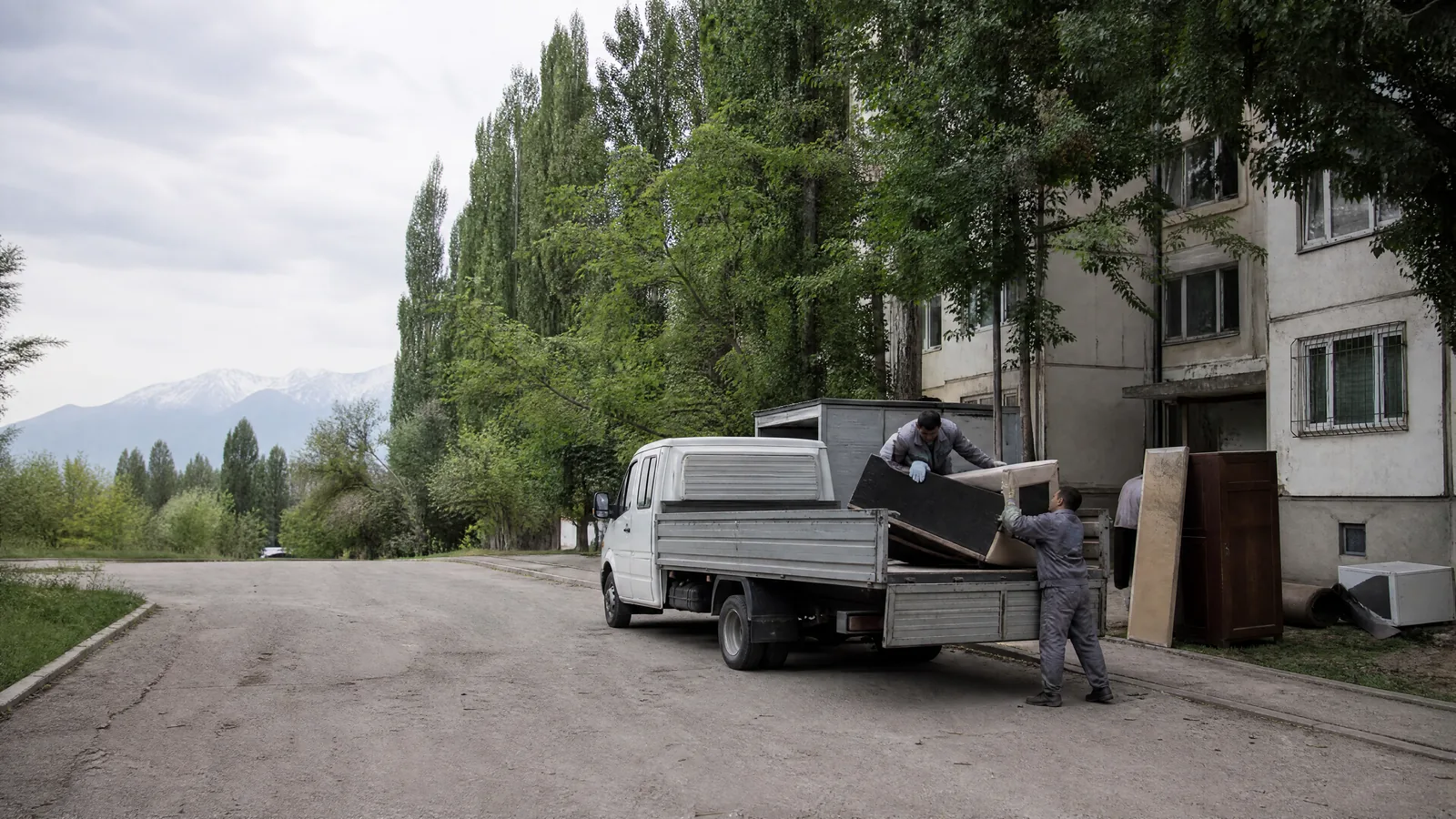
Our own movers will carry it down from any floor
Price locked in before the truck is dispatched
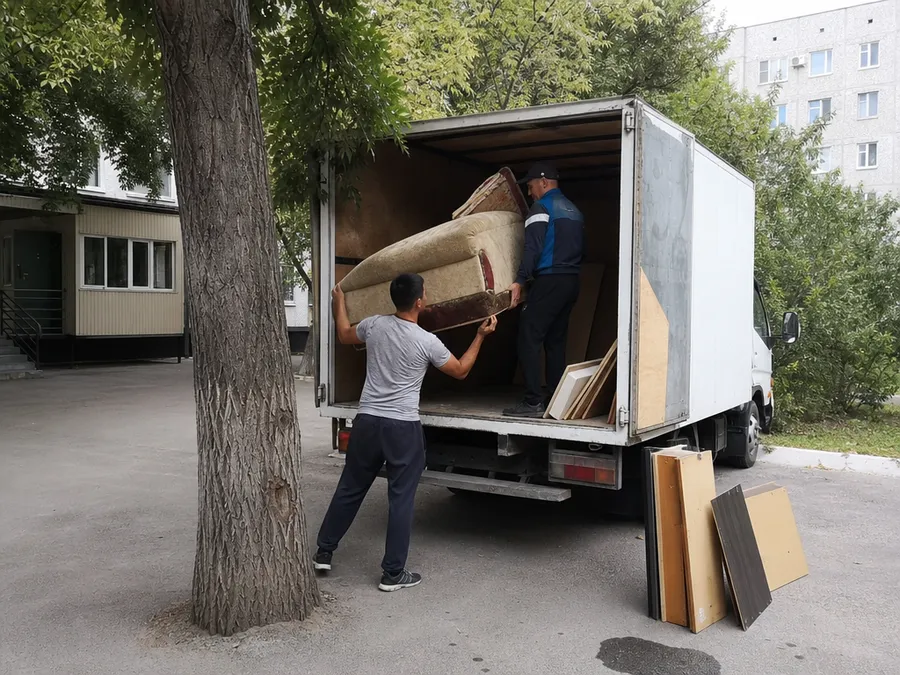
We take apart sofas and wardrobes on site
We don't dump bulky items by the bin area
🧮 Estimate
Bulky waste removal calculator — get a price in a couple of minutes
Pick what you're removing, how much, when, with what, and whether you need movers. The total below is approximate — we'll confirm the exact one in chat, after photos.
Estimated cost: 0 ₸
We'll give you the exact price after photos of the load — people almost always underestimate the volume by eye.
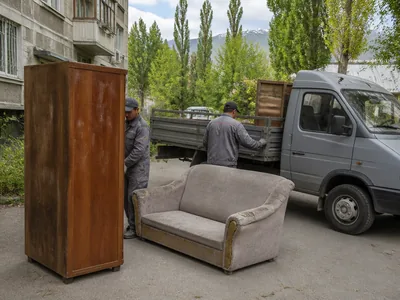
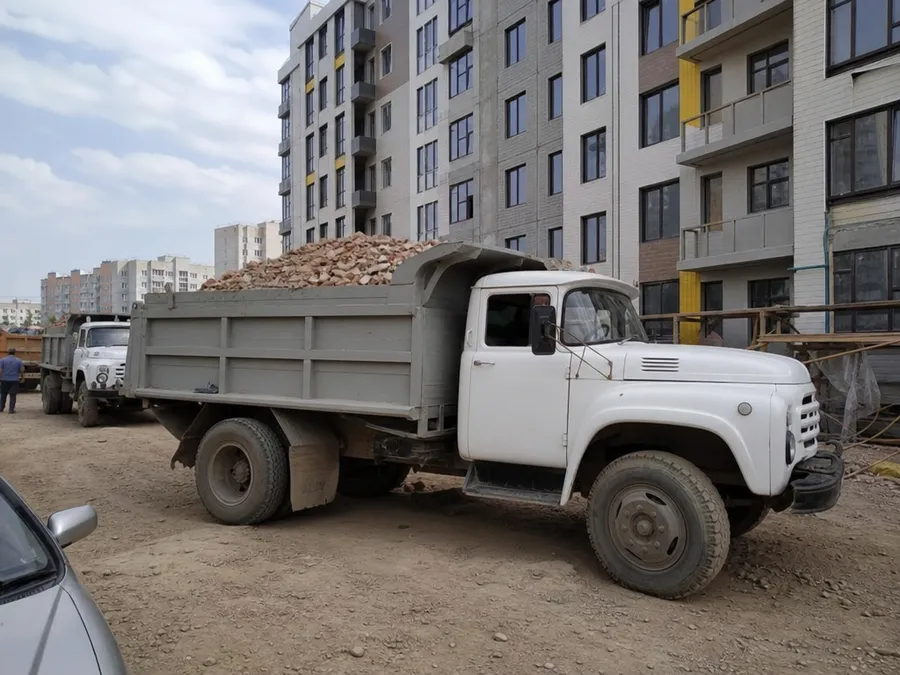
Wardrobes, sofas, wall units — the stuff that won't fit in a regular bin by the entrance. We haul it with a GAZelle or ZIL if there's enough for a whole apartment.
wardrobessofas2–4 m³
Home appliances
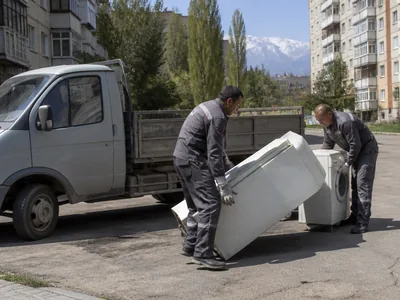
Fridges, washing machines, stoves. Heavy, with refrigerant and glass — we handle them carefully and carry them out whole, without taking them apart on the landing.
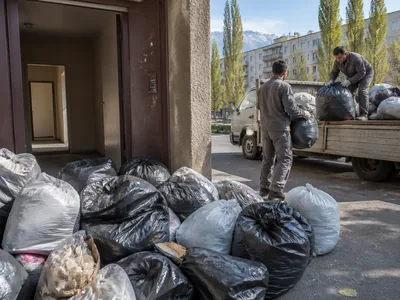
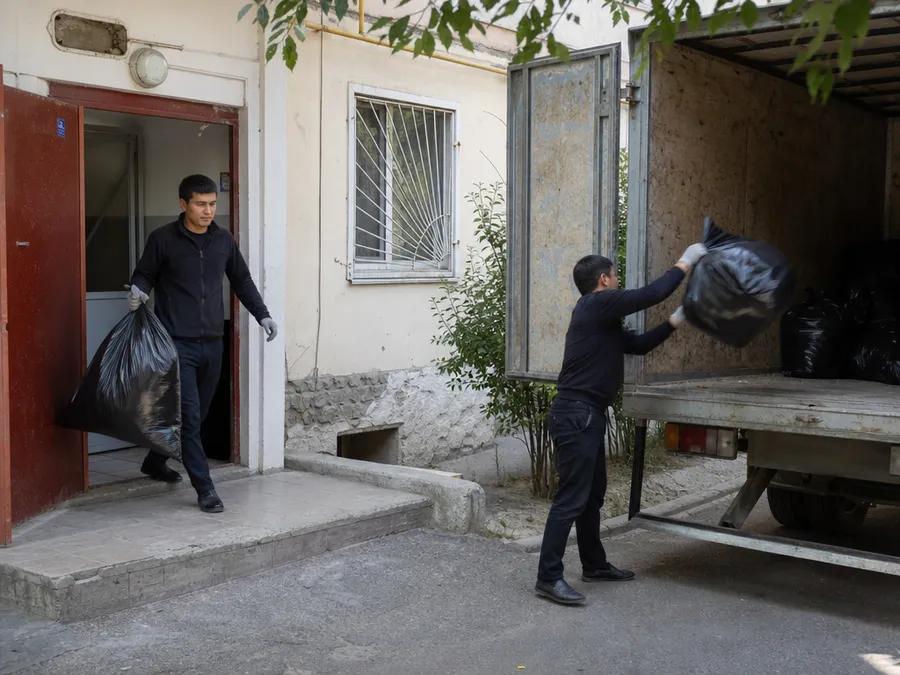
Bags and sacks that pile up after a move or clearing out a storage room. When it's twenty bags, not two — that's a bulky waste pickup, not a regular one.
The most common scenario: you cleared out a storage room or emptied a room — and now it all needs to go. Our movers come into the apartment, carry everything to the truck, and we take it away for disposal.
When the renovation isn't just one room but a whole house or office. For a job that size we send a ZIL or KAMAZ and a crew that will carry everything to the truck themselves.
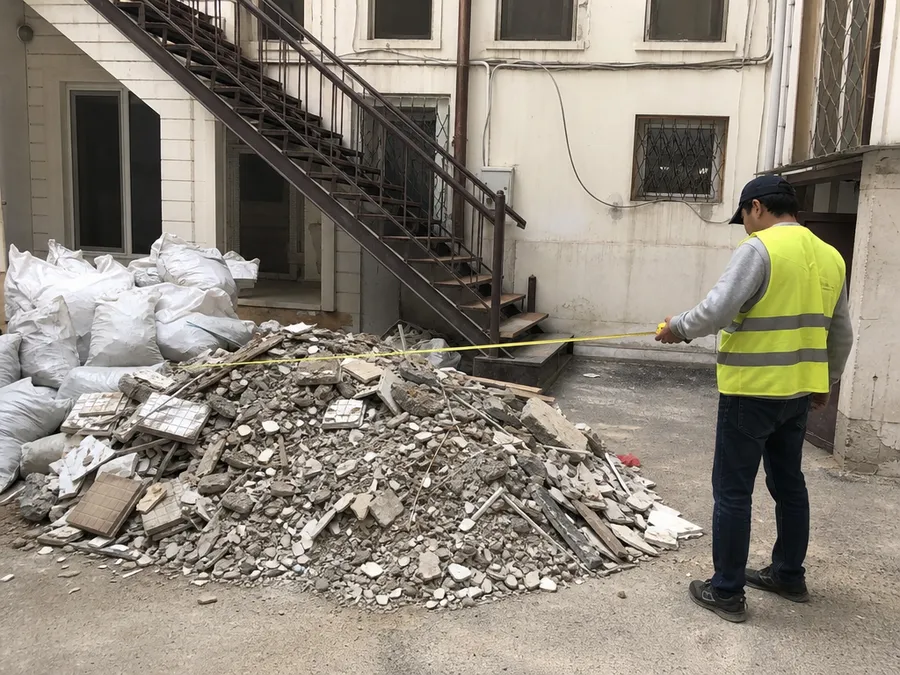
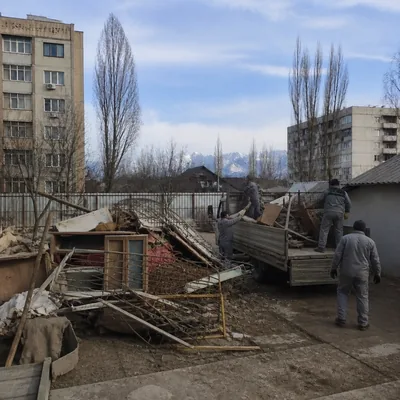
A yard, garage, summer kitchen — in the private sector, bulky waste usually fills a whole dump truck. We estimate from photos, and arrive with equipment and movers.
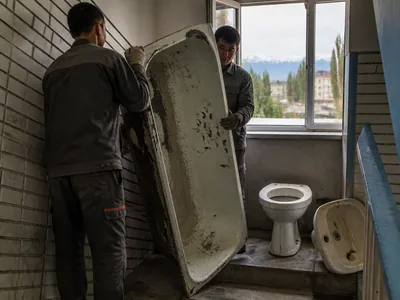
If you don't want to haul it yourself — add a crew. Two or three guys will carry out a sofa, bathtub or wardrobe from any floor, elevator or not — doesn't matter.
When there's not much waste — don't pay for a full run. We estimate the cubic meters from photos, remove it with a GAZelle and charge only for the actual volume.
Price per project we calculate around your schedule
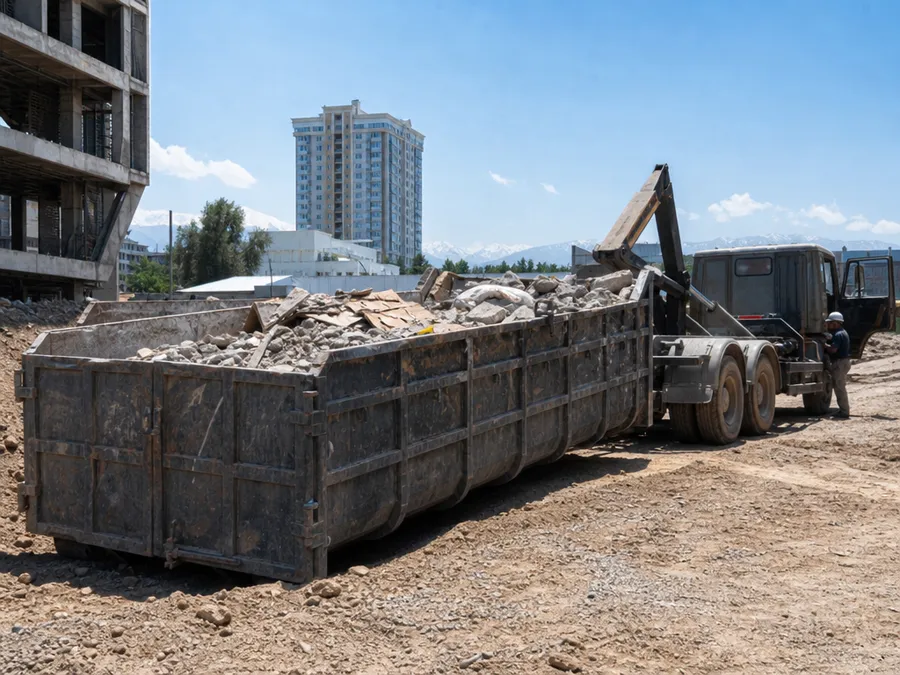
A 27 or 32 m³ container is placed in the yard while you clean up the area or renovate. The price depends on how long it stays — ask on WhatsApp, we'll calculate it for your site.
Vehicles for bulky waste removal and price list by truck
We match a vehicle to every load: sometimes a GAZelle is enough, sometimes you need a 32 m³ container. Below are the specs and prices.
GAZelle 1.5 t
Bed volume
12 m³
Payload capacity
up to 1.5 t
ZIL dump truck
Bed volume
7–12 m³
Payload capacity
up to 7 t
KAMAZ dump truck
Bed volume
15 m³
Payload capacity
up to 20 t
Skip
Bed volume
27 m³
Payload capacity
up to 15 t
Price list for waste removal in Almaty
Valid from August 2026 · price per trip within the city
Price list for waste removal in Almaty, August 2026
Equipment
Volume
Payload capacity
Price per trip
Extra hour
GAZelle 1.5 t
12 m³
up to 1.5 t
30 000 ₸
6 000 ₸
GAZelle 2.5 t
16 m³
up to 2.5 t
35 000 ₸
9 000 ₸
Truck 5 t
25 m³
up to 5 t
40 000 ₸
12 500 ₸
ZIL dump truck
7–12 m³
up to 7 t
40 000 ₸
12 500 ₸
KAMAZ dump truck
15 m³
up to 20 t
55 000 ₸
15 000 ₸
Howo dump truck
25 m³
up to 40 t
60 000 ₸
15 000 ₸
PUHTO (skip)
8–10 m³
up to 7 t
45 000 ₸
—
Multilift
20 m³
up to 12 t
100 000 ₸
—
Skip
27 m³
up to 15 t
135 000 ₸
—
Max skip
32 m³
up to 20 t
160 000 ₸
—
Loaders:6 000 ₸/hour per person · 20 000 ₸ for a 2-person crew with a GAZelle · 48 000 ₸ for a 3–4 person crew with a ZIL · 80 000 ₸ for a crew with a KAMAZ
By volume:8 000 ₸ per m³, if it's easier to count in cubes rather than trips
Typical estimates:post-renovation 1-bedroom — 50 000 ₸ · facade work — from 60 000 ₸ with a skip · partition demolition — 88 000–135 000 ₸
Prices apply within Almaty city limits. Outside the city, mileage is added — we calculate it in chat before dispatch.
Not sure which truck you need? Send a photo — we'll pick one for you.
What we do on top of bulky waste removal — disassembly, cleaning, loading
Often bulky waste doesn't just need to be removed — first it has to be taken apart, carried out and swept up. We do that too.
🪚
Saw up and disassemble
We take wardrobes and wall units apart so they fit through the doorway. We saw up a sofa if it won't fit in the elevator.
🚚
Carry out from any floor
Our movers come into the apartment, basement or garage and carry everything to the truck. We discuss the floor and elevator in advance to estimate the time.
🧹
Sweep the area
After loading, we sweep the spot where the waste was — in the yard or by the entrance. That's part of the job, no extra charge.
📅
Set up a schedule
If bulky waste piles up regularly — at a store, office, or apartment complex — we haul it on a schedule. We'll agree on days and volume in advance.
🌙
Pick up after closing
For cafes, stores, and offices, we haul in the evening or early morning so we don't get in the way of your work. We'll agree on a time in chat.
📷
Get a quote from a photo
Send a photo of the pile on WhatsApp — we'll tell you the volume and price before we come out. Often there's more trash than the photo shows, so capture everything.
📋 Steps
How bulky waste removal works — five steps from request to landfill
From request to unloading at the landfill — five clear steps. You're only involved in the first one.
Describe what needs to be hauled: a sofa, bathtub, tree trunks, or a pile after renovation. A photo of the pile speeds up the quote — the volume is visible in the shot.
2
Quote and vehicle selection
We calculate cubic meters and decide what fits: a GAZelle, ZIL, or dump truck. We lock in the price right away and don't change it after loading.
3
Truck dispatch
We arrive at the agreed time, anywhere in the city — from 30 minutes. We work seven days a week, from nine in the morning to nine in the evening.
4
Loading and carrying out
Movers carry bulky items out of apartments, basements, or garages. Heavy items — a bathtub, a wardrobe — we take apart if they won't fit otherwise.
5
Removal and disposal
We take it away for disposal and sweep the loading area. If trash piles up regularly, we set up a schedule.
⭐ Why us
Why people choose us for bulky waste removal in Almaty
We see volume, not just a word
Bulky means sofas, bathtubs, and tree trunks. From a photo we can roughly tell if it'll all fit in a GAZelle or if a dump truck is needed, and we'll tell you right away how many vehicles will come.
The price doesn't change after loading
Once we agree on a sum, it stays that way — even if the movers take longer than usual. There are no extra charges for floors or weight.
Our own movers and our own equipment
We don't hire a crew on the side or hand the job to a subcontractor. The vehicle and the people arrive together, so you never get equipment with no one to carry anything.
We work all over Almaty
From Auezov to Alatau, from private neighborhoods to new developments. Outside the city, mileage is added, but within the city there are no surcharges by district.
We take it to disposal
We don't dump bulky waste in the first pile we find. We take it where it belongs and sweep the site after loading.
We call, we don't wait
Send requests via WhatsApp or by phone, we reply during business hours with no waiting. If you message us in the evening, by morning you'll already know the price and pickup time.
📸 Portfolio
Bulky waste removal: before and after — real examples
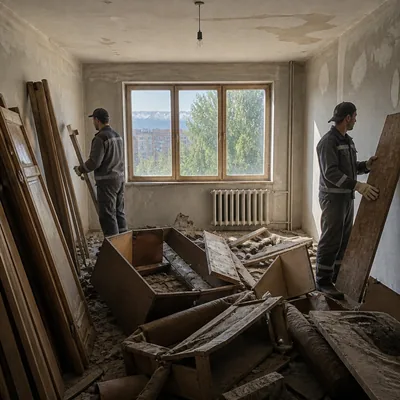
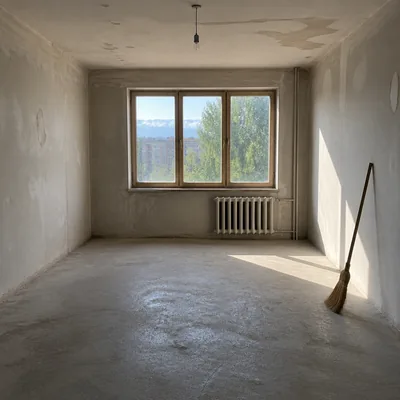
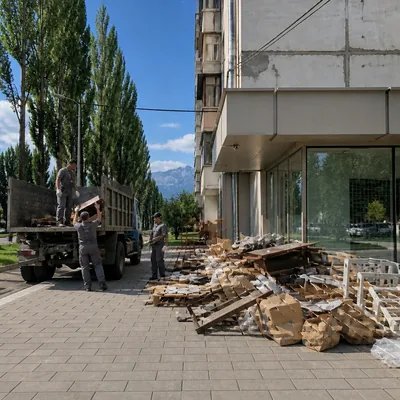
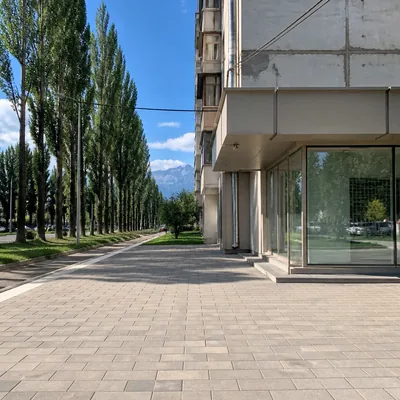
We show what jobs look like before and after bulky waste removal.
BEFOREAFTER
Three-room apartment after renovation, Bostandyk district
Bulky waste removal: a detailed breakdown — what you need to know
Askhat Mukashev
KAMAZ driver
Published: Updated:
The calls usually go like this: “I've got a wardrobe, a sofa and a bunch of other stuff in the yard, how much will it cost?” They ask about the price, but what they really want is different — for it all to disappear by evening and for the neighbors to stop giving them looks. So the conversation almost never starts with money, but with the question “what exactly are we throwing out?” The answer determines the truck, the time, and how many people come.
Bulky waste is anything that won't fit in a regular container or a chute: sofas, wardrobes, fridges, bathtubs, doors, carpets, renovation leftovers. Dumping bulky waste in the yard is a whole other story: in many buildings people get scolded for it, and in some places fined. And people feel that, even if they've never read any rules.
Below is what I see every day from behind the wheel. How to estimate the volume so you don't have to order a second truck. Why the same sofa in an elevator and on the fifth floor with no elevator are two completely different jobs. Where everything goes after loading and what can't be loaded under any circumstances. This isn't a copywriter's instruction manual — it's working notes, with numbers you can see in the truck bed, not on paper.
What actually counts as bulky waste
The line is simple: if it fits in a container, it's not our load. If it doesn't, it's ours. But in practice, size isn't the only thing that matters. You could saw a sofa apart and carry it out in bags, and technically it becomes household waste. But who's going to do that? Usually nobody. So bulky waste isn't so much about dimensions as about the fact that a person can't throw it out themselves.
Fits in a container or not: where the line is
The container in the yard holds about a cubic meter. Anything bigger and heavier won't fit. An old TV can still go in, if it's not a plasma. A washing machine — no. Furniture boxes are flat, they can be squeezed in, but ten boxes will fill the whole spot. The neighbors won't be happy. At that point it's bulky waste removal, even if each item on its own isn't big.
The second thing is weight. A door will fit in a container, but it's heavy. Two people can carry it, one can't. On our jobs it's often like this: they order bulky waste removal, and we arrive to find bags of construction debris. A bag fits in a container, but weighs like a cast-iron radiator. That's why we always ask not just the volume, but what's inside.
Sofas, wardrobes, fridges: what we haul most often
The sofa is the champion. In a year we remove more of them than everything else combined. Then wardrobes. There are many, they're heavy, and they almost always get disassembled on site, because they won't fit through a doorway whole. Fridges are a separate story. You shouldn't lay them on their side during transport, but we do it anyway, because otherwise they won't fit. If a fridge is old, nobody needs it except the recycler.
A typical order often includes a set: a sofa, two armchairs, a coffee table, a rug and boxes. It's an apartment after a move or after a relative has passed away. We call these "bulky waste removal from an apartment." There's always an elevator or there isn't, and that changes all the timing math.
Sofa and corner sofa — we disassemble on site, carry out in parts.
Sliding wardrobe — we take off the doors, saw the frame if it won't fit.
Fridge — must be defrosted before loading, otherwise it'll leak.
Washing machine — we remove the concrete weight, otherwise it can't be lifted.
Bathtub — cast iron is three times heavier than acrylic, that affects the crew.
Rugs and carpets — heavy but take up a lot of space, best not to get them wet.
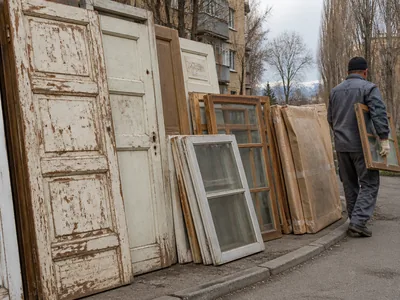
Doors and window frames — we remove the glass separately so it doesn't break.
Tricky cases: an old fridge and a double-glazed unit from demolition
A fridge is tricky because it fits in a GAZelle's cargo area but not in a container. And also because it contains freon. We don't release it into the air; we hand it over for recycling along with the body. A double-glazed unit is also tricky. It's flat, you can lean it against a wall and forget about it. But if it's from demolition, there are frames, glazing beads, window sills, and all together that's bulky waste.
Another case is plumbing. A toilet, a sink, faucets. A toilet won't fit in a container, a sink will. We take everything together, because nobody will send a toilet on a separate trip. And yes, bulky waste removal from a bathroom is almost always one order, not three.
Construction debris after renovation: it's also bulky waste, but with a caveat
After renovation, what's left isn't furniture but building materials: drywall scraps, tiles, cement bags, old linoleum. By weight, it's heavier than furniture. Tiles and concrete are the heaviest. We always warn: if the volume is small but the weight is large, the truck can go overweight, and that's a separate conversation. That's why we ask about the floor and elevator.
Construction debris can't just be dumped on the site. It has to be carried out and loaded. Clients often say, "It's not much, I'll carry it out myself." Then it turns out to be twenty 50-kilo bags. Carrying it out is half the job. That's why we always ask who's doing the carrying: us or the client. That determines how many loaders we need.
And another thing: bulky waste isn't just about size. It's anything that won't fit in a container or a chute. Everything else is regular trash. But if you're not sure, better to ask. We'll look at a photo and tell you exactly. That's faster than redoing the order later.
How to estimate the volume of bulky waste without visiting the site
The easiest way is not to count items but to estimate how much space they'll take in the truck. Because three chairs and three wardrobes are different volumes, and the question "how much will it cost" comes down to the truck. A GAZelle holds about eight cubes, a ZIL twice that, a dumpster up to thirty-two. That's the math we work with.
We count by truck volume, not by number of items
A client says, "It's not much, just a sofa and some small stuff." We show up — the sofa is three meters long, and the "small stuff" is a cubic meter and a half of old books and a rug. A GAZelle's bed is almost entirely taken up by the sofa if you don't disassemble it. Disassembled, you can fit three times as much.
Removing bulky waste from an apartment almost always starts with the same question: disassemble or carry it out as is. The answer determines both the number of trips and the time it takes.
Here's a rough guide: one wardrobe is about half a GAZelle if it's assembled and won't fit through the door. A sofa is almost the whole truck. A fridge is a third. A cast-iron bathtub is a quarter, but it weighs enough to need two loaders.
Sofa, wardrobe, and bathtub: how much space they really take
Weight is a separate story. Soft furniture is light but bulky. Construction debris is the opposite: small in area, heavy. Half a cube of broken tiles weighs more than a ton.
Look at three things: dimensions at the widest point, weight, and whether the item will fit through the doorway. If the sofa's corner is wider than the door, it either gets disassembled or goes out the window — and that's a different job.
Removing bulky waste after a renovation is calculated differently than furniture. What matters here isn't the number of items but how many bags and how heavy they are. Bags with mixed debris go at the bottom, lightweight insulation on top, otherwise the truck is overloaded.
What changes if the waste isn't disassembled
Assembled furniture always means fewer trips than you'd think. A sliding-door wardrobe comes apart in twenty minutes and takes up a quarter of the truck, not half. But not everyone is willing to disassemble — some worry about damaging walls, others just don't want the hassle.
We don't insist. We just warn you in advance: if you don't disassemble, the volume will grow, and it's not about money but about the fact that the second truck will arrive later.
Here's what's better to disassemble or break down before loading:
Wardrobes over two meters tall — won't fit in the elevator without removing the doors
Kitchen units — facades come off, carcasses go separately
Sofas with a mechanism — can't be unfolded, but the side panels unscrew
Particleboard wall units — sawed into two or three pieces
Cast-iron bathtubs — broken up if the building's plumber allows
Carpets and rugs — rolled up, saving a third of the space
Interior doors — taken off hinges and laid flat
When the volume is underestimated and you end up paying for a second trip
Mistake number one is estimating from a photo of one corner of the room. Most often people underestimate when the waste is in two places: some in the yard, some in the apartment. They see the yard and think that's all.
Mistake number two is forgetting about what's already been carried out to the containers. That also gets moved, just a bit later and separately.
How much space things take in a GAZelle
Item
Share of the truck body
Weight, roughly
Three-seater sofa
almost all of it
70–90 kg
Assembled wardrobe
half
80–120 kg
Fridge
a third
60–80 kg
Cast-iron bathtub
a quarter
100–150 kg
Renovation bags
5 to 15 bags
up to a tonne
What really helps get an accurate estimate: photos from two or three angles and the approximate ceiling height. Also tell us if there's a freight lift. This isn't us being fussy — it's the difference between one run and two.
If you're not sure, send photos in the chat and we'll tell you whether one truck is enough. Not because we want to save your money, but because a second run costs more than an honest estimate upfront.
Another thing: the price for bulky waste removal depends not on the number of items but on how many trips it takes. One trip versus two is almost double, not "a little more."
And lastly. If rubbish has been piling up on a balcony for years, no one can guess its volume from a photo. Here it's more honest to say 'come and take a look' — and that's fine, people do it all the time.
Removing bulky junk from an apartment: what's a problem and what isn't
A fifth floor with no lift and the same sofa on the ground floor are two different jobs. Not because we like hiking up the price, but because of physics. A 90 kg sofa is carried down the stairs by four people in four stages, while two people can shove it into a lift in ten minutes. The difference in effort is threefold. So the first thing we ask on the phone is: which floor, is there a lift. And if there is one — will what you're throwing out even fit inside.
A freight lift in Almaty is a rarity. In most Soviet-era buildings the cabin is 80 by 110 centimetres, and a standard three-door wardrobe won't fit through diagonally. We figure this out before we set off so we don't send a truck for nothing. Sometimes it's easier to carry it down the stairs than to take it apart.
Lift, stairs and a fifth floor with no lift
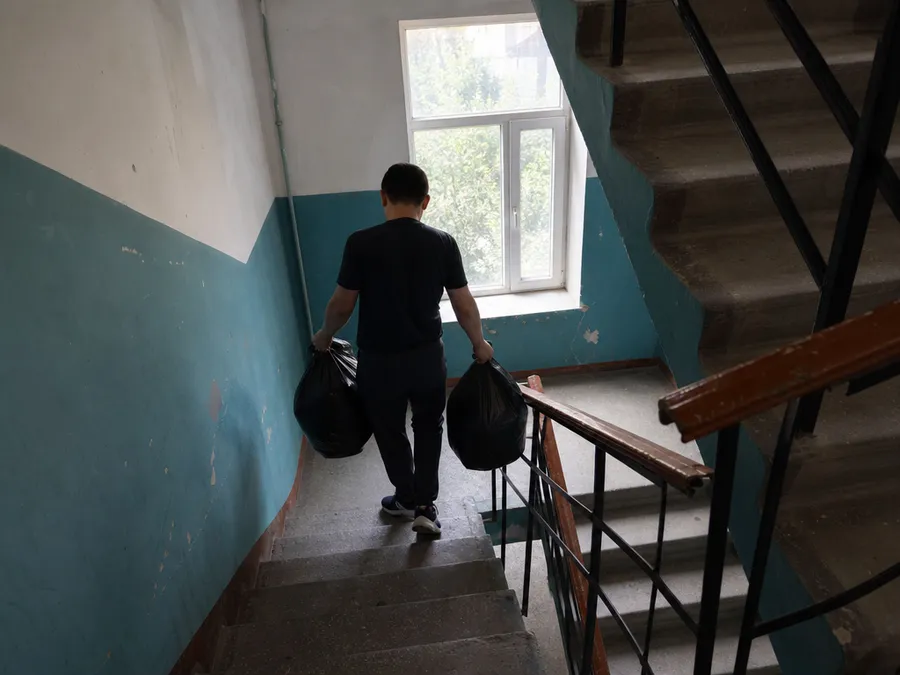
If there's no lift, the rule is: the heavier and bulkier the item, the more people and time it takes. A fridge to the fifth floor with no lift means two movers, straps and about forty minutes. A sofa means three people and an hour. A piano is a whole different story — we rarely take those jobs and we warn you upfront: it's slow and expensive. Bulky waste removal from flats on upper floors with no lift is the most common reason an order gets pushed to the morning: by evening people are worn out, and we can't wait until night.
With a lift it's a different story. Even if the cabin is small, we bring the item up to the floor, take it apart on the spot if needed, and carry it down in pieces. Faster than on foot. But there's a catch: you can't load a lift with more than it's rated for. We check the plate inside the cabin, and if the weight is critical, we carry it down the stairs. Safety beats speed.
What we take apart on site and what we carry out whole
Wardrobes, wall units and kitchen cabinets almost always get taken apart. It's easier and faster: we remove the doors, pull out the shelves, and carry the frame out flat. Sofas are hit or miss. If the doorways are narrow, we take off the legs and sometimes saw through the frame. Fridges and washing machines we carry out whole — they're rigid and don't come apart. Rugs we roll up and tie — easier to carry and they don't snag on the railings.
Some things can't or shouldn't be taken apart: bathtubs, toilets, sinks. We carry them as they are, after draining the water. If it's a cast-iron bathtub, that's 120 kg or more — you need four people and strong straps. We warn you in advance if we can see from the photos that the item is heavy.
Narrow doors, corners and stairwell openings
The trickiest part isn't the floor — it's the doorways. A standard apartment door is 80 centimeters, but with the frame and threshold it shrinks to 70. A 90-centimeter-wide sofa won't fit through without removing the legs or turning it sideways. We always ask for a photo of the door and the stairwell turn. It's not paranoia — it's how we avoid wasting your time on a dry run.
Entrance turns are a whole other headache. Sometimes there's a narrow 90-degree opening from the stairwell into the hallway, and a long item just can't make the turn. Then we take it out through a window or balcony — if the floor isn't too high and there's something to secure it with. We handle these cases on the spot, but it's better to know about them in advance.
Who's responsible for the entrance while the movers are carrying things through
The entrance is a shared responsibility. We try not to bang up walls or rip off railings, but when something's heavy and the stairs are narrow, things happen. So we usually ask you to clear the path and warn the neighbors if the work will be noisy. If we do bump something, we'll tell you right away — no hiding it. But most of the time, the entrance suffers not from us, but from whoever dragged the item before us and already scratched the corner.
Sometimes the concierge or the building manager won't let the truck into the yard. Then we park outside the gate and carry everything by hand — that adds time and sometimes a surcharge, because the distance grows. We always ask about barriers and access rules before we head out, so we don't end up staring at a locked gate.
Once we got an order to remove bulky waste from a fourth-floor apartment with no elevator. A sofa, a wardrobe and a fridge. Three of us came, thought we'd be done in an hour. But the staircase was spiral, and the sofa wouldn't make the turn. We had to take off the railing and carry it out through the balcony. Good thing the second floor was a utility level, we had a safety line. In the end it took three hours instead of one. Now I always ask about stairs and turns, even if the client says it's easy.
One more thing: removing bulky waste from an apartment often goes hand in hand with a cleanout. People haul everything out at once: old furniture, appliances, junk from the mezzanines. That makes sense, because one truck is cheaper than two trips. But then the volume grows, and it might not fit in a GAZelle. So it's better to estimate upfront how much stuff there is.
Here's what we usually ask over the phone to get a picture of what we're dealing with. It's not an interrogation — it's how we pick the right truck and crew.
What floor, is there an elevator, and if so, what size is the cabin.
What exactly are you tossing: list the big items one by one.
Are there narrow doors or turns on the stairs.
How far is it from the entrance to where the truck can park.
Does the furniture need disassembling, or is it already taken apart.
Is there a barrier or a concierge in the yard who won't let us in.
When works for you: today, tomorrow, this weekend.
The more precise your answers, the fewer surprises on site. And the more realistic the price we can quote right away, not after an inspection. Bulky waste removal is a job where details decide everything: floor, elevator, turns, weight. We don't charge extra for what we saw coming, but if a detail pops up on site, we'll have to recalculate. So tell us everything upfront, even if it seems like a small thing.
The yard, the site, and dumping bulky waste
People call in the morning: "The sofa's already by the entrance, come get it." But the yard has a narrow driveway, a playground two meters away, and grandmas on a bench. Bulky waste removal is always a compromise between "I want it fast" and "where do we park."
The management company usually doesn't mind if the stuff is hauled away the same day. But leaving it overnight by the bins is a bad idea. In the morning the janitor is cursing, neighbors are blowing up the chat, and someone's already snapped a photo and sent it to the akimat. Then a fine lands on the whole building — and that's before we've even shown up.
Stuff by the entrance: why you shouldn't leave it overnight
A fridge, a wardrobe, a rug — all of it attracts homeless people, dogs and kids. In the morning you walk out to scattered trash and a fresh neighbor scandal. Plus the janitor isn't required to clean it up: according to landscaping rules, bulky waste isn't household waste. Plan bulky waste removal from an apartment like this: carry it out — and call right away.
We dispatch a truck anywhere in the city from 30 minutes. If the items are by the entrance, the loaders take them first. But if you leave them overnight, in the morning it might not be our GAZelle that shows up, but the local police officer.
The truck in the yard: where we'll park and what we'll clear
Yards in Almaty are an art form of their own. Somewhere the driveway is three meters wide, somewhere there's a barrier, somewhere cars are parked two rows deep. We ask ahead of time: "What's the address, is there a barrier, how many meters from the entrance to the loading spot?" If the GAZelle can't get through, we suggest a ZIL — it's shorter but taller. Sometimes the only way is to carry everything out to the road by hand.
What we clear: if there's a carpet or an old dresser in the way, the movers will move it aside. If the truck needs to park on the lawn or the playground, we'll ask you first, then the neighbors. We don't want conflicts in the yard, but we can't block the driveway either: cut off the exit and it's war.
Who cleans up after loading
After loading, we sweep the spot. Always. Even if it's asphalt by the entrance or dirt by the bins. Shards, dust, small debris — it all goes in the truck. Bulky waste removal isn't just about "taking it away" — it's about "leaving no trace." Neighbors appreciate that.
If you ordered bulky waste removal and there's still a pile left after us — call, we'll come back and clean it up. It happens if stuff gets scattered after loading. But we always warn you: while the truck hasn't left yet, it's best to check that everything's been taken.
If trash sits for weeks: how it ends for residents
Smell, rats, complaints from neighbors. The management company can call the police, and they'll write up a report. Then comes a fine split among all the owners. Unpleasant, but a fact: dumping bulky waste in the yard is regulated by landscaping rules, and they fine you for it.
In Almaty there are districts where janitors take photos and send them to the akimat. You get a notice — and then it doesn't matter who exactly put the sofa out. Everyone pays. To avoid that, don't wait — just message us right away: we'll pick it up and haul it away.
Our hours are 9 a.m. to 9 p.m., seven days a week. Dispatch from 30 minutes; remote districts take longer.
What to do with bulky waste in the yard
Situation
Action
Consequences if you don't
Stuff by the entrance during the day
Call right away, movers will pick it up the same day
Neighbors may call the police
Left it overnight
In the morning the whole building could get fined
Fine from the akimat on all owners
Narrow yard, no way in
We carry it out to the road by hand
The truck can't get in, the order falls through
Trash sits for weeks
Order removal before the inspection shows up
Unsanitary conditions, complaints, a report
Once the stuff is already outside, the hardest part is agreeing with the neighbors. We try not to make noise, not to smoke on the landing, and not to block the entrance. If needed, we'll wait while you give the grandmas by the entrance a heads-up.
Here's what we do in the yard — short list, but we can't skip any of it:
We check the approach to the building: barrier, potholes, parked cars.
We ask where to park the GAZelle so we don't block the exit.
We carry things from the entrance or the yard to the truck.
We sweep the spot after loading, even if it's just dirt.
We check for leftover shards and packaging.
We only leave after you confirm everything's been taken.
One more thing: if the trash is on a playground or lawn, we can't load it without permission from the management company. We have to wait or carry things to the road. Better to tell us right away where exactly the pile is.
And lastly: don't book a large-item pickup from your apartment for the evening if the yard is dark. We work until nine at night, but neighbors might not appreciate the noise. Morning is better — you're calmer, and we can see where to park.
Read this far and still not sure about the volume? Send us a photo — we'll calculate and give you a price.
Where bulky waste goes and what happens to it next
So we've arrived, loaded up. Seems like that's it. But the customer often stands there watching us drive off — like, where are you taking this? You can understand it: nobody wants the couch their grandpa slept on to end up in the next yard over. Let me walk you through it step by step, no company names or landfill names — just how it actually works.
The first thing that happens is the truck doesn't go straight to the dump. Along the way, part of the load gets sorted out. Metal separately, wood separately, anything that can be recycled gets recycled. It's not charity, it's economics: they pay for a ton of metal, they charge for a ton of mixed waste. The difference is noticeable, so we're just as interested in this as you are. Bulky waste removal in Almaty works so that sorting starts right in the truck bed.
Next — disassembly. A wardrobe gets taken apart into panels, a couch into frame and upholstery, a fridge into metal and plastic. That happens at the site, not in your yard. You don't have to take anything apart yourself, unless you want to save on volume — but more on that below.
Sorting along the way: what gets picked up separately
Metal first. Bathtubs, radiators, bed frames, old washing machines. Anything that sticks to a magnet. You can get at least some money for metal, so it's not mixed with the rest. Next — bulky wood waste: wardrobes, doors, shelves. Those can also be reused, but not everything gets taken.
What gets picked up separately, from experience:
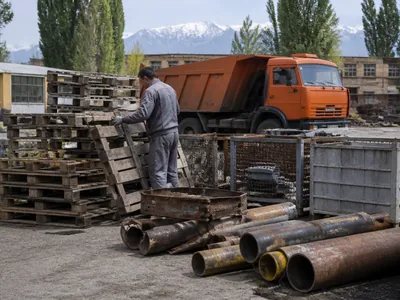
Ferrous metal — bathtubs, frames, radiators, corner pieces from old windows.
Non-ferrous metal — aluminum frames, copper tubes from fridges.
Wood — panels, doors, particleboard, if it's not painted or rotten.
Glass — mirrors, double-glazed units, glass shelves, but only intact.
Plastic — panels, baseboards, appliance casings.
Rubber — tires, hoses, mats.
Textiles — upholstery, mattresses, carpets, if they're dry and mold-free.
Obviously, in reality it's all mixed together. That's why sorting matters: separate what can be sold from what's landfill-only. The cleaner the sorting, the less volume goes to burial.
Fridges, tires, glass: special cases
A fridge is a whole different story. Inside there's freon, a compressor, oil. You can't just toss it in the common truck bed: releasing freon into the atmosphere is prohibited, and the compressor weighs a fair bit. So fridges go to a separate site where the gas is removed first, then they're broken down into metal and plastic. If you've ordered bulky waste removal from your apartment and there's a fridge, let us know in advance so the truck comes with the right equipment.
Tires are the second tricky item. Rubber doesn't rot, doesn't decompose, and burns so fiercely that putting it out is pointless. Regular landfills won't take them. Only a special site where they're either recycled into crumb or used for fill. That's why tires are counted separately and cost more than regular bulky waste of the same volume.
Glass — mirrors, double-glazed windows, glass doors. Hazardous cargo, cuts in an instant. We haul it in rigid containers or between mattresses so it doesn't break on the way. If the glass is already broken, we'll still take it, but let us know so the loaders put on protective gloves.
Landfill vs. recycling: how they differ in practice
A landfill is where trash gets buried. Recycling is when trash becomes something else. The difference for you is the price and how long the truck spends on site. At a landfill, you dump and leave. At a recycling facility, there's a queue, weighing, paperwork. So if an order has a lot of metal or wood, we try to take it where they'll actually pay for it rather than charge you.
Where exactly the truck goes depends on what's in the bed. Mixed loads almost always go to the landfill. Sorted loads — part goes to recycling. Honestly, perfect sorting doesn't always happen: time is tight and the client is waiting. But we almost always pull out metal and large wood.
What can't be thrown out at all, even for money
There are things that neither a landfill nor a recycling facility will take. It's not our whim, it's the acceptance rules. If something like that turns up in the bed, the truck gets turned away at the gate and we have to haul it back. So we ask in advance.
Not accepted:
Medical waste — syringes, IV drips, bandages, expired medications.
Batteries and accumulators — separate drop-off only.
Gas cylinders, even empty ones.
Radioactive and contaminated items.
Liquid waste in large volumes.
Lamps, batteries, accumulators and old household chemicals we take as a separate request: apart from other trash, to a specialized company.
One more thing: the price for hauling bulky junk depends not only on volume, but also on whether it contains items like these. A regular sofa and a sofa with a mercury lamp inside are two different jobs. Better to tell us right away so you don't overpay for a return trip.
And lastly. Bulky waste removal isn't just 'haul it away and dump it.' It's a chain: load, haul, dismantle, sort, return what can be reused, and the rest goes to the landfill. Surprises can happen at every step. But if you warn us in advance about a fridge, tires, or glass, there won't be any problems.
What determines the price for bulky waste removal
Ask any driver: what costs more — hauling a piano or ten boxes? The piano. Even though the boxes take up more space. Because a piano weighs as much as three sofas, and you still have to pry it off the floor. That's why the price for bulky waste removal is always about weight and floor, not cubic meters first and foremost.
Volume vs. weight: what drives the price up more
A GAZelle holds up to a ton and a half. If you've piled old particleboard wardrobes in it, it'll be packed to the limit — and that's only half the trouble. The trouble starts when a cast-iron bathtub goes on top. It alone weighs more than the rest of the load. I price an order like that separately, because the truck will have to be unloaded by hand, not dumped at the landfill with a tipper.
Volume in cubes is a tricky thing. A corner sofa takes up two cubes but weighs a hundred kilos. And ten construction bags of broken tile — just half a cube, but half a ton inside. Dense loads (tile, concrete, brick) are always pricier than bulky ones, because it comes down to payload, not the truck bed. If you don't mention this on the phone, a small truck will show up, and you'll have to send it twice.
Floor, elevator, and carry distance
Here's where the biggest confusion lies. The client says: "third floor, there's an elevator." But is it a freight or a passenger elevator? A sofa won't fit in a passenger one, no matter how you try. So we end up carrying it up the stairs, and that's a whole different job. On the fifth floor with no elevator, one sofa means two people and half an hour just to get it down.
We also factor in the carry distance. If the truck can park right in the yard under the windows, that's one thing. If the entrance is deep inside the block and a barrier won't let us in, that's another. Every extra ten meters with a fridge on your shoulders costs time and energy. I always ask: where will the truck park, is there an underground garage, are the ceilings low? Sometimes it's easier to carry everything through the yard than to wreck your back in the garage.
A cast-iron bathtub or a battery — think of it as a separate truck by weight.
Particleboard wardrobes are bulky but light: you can fill them to the ceiling.
Construction bags with tiles weigh like cast iron, even though they look compact.
A freight elevator solves half the problems, a passenger one solves none.
A fifth floor without an elevator adds about an hour to the job for going up and down.
A barrier and a narrow yard mean plus twenty minutes of maneuvering.
If the carry distance is more than twenty meters, better to say so upfront, not after the fact.
Why two trips cost more than one big one
It seems like: what's the difference — one truck coming twice or one big truck coming once? The difference is in fuel, time, and the fact that the second trip costs as much as a separate call. I don't charge for thin air, but I can't work for free either. So if the volume is borderline — between a GAZelle and a ZIL — I recommend going straight for the ZIL. It looks pricier at first, but in reality it's cheaper than running a GAZelle back and forth.
There's also a nuance with loading. When the trash is piled up in the yard, it gets loaded fast. When it's scattered around the apartment on different floors, time stretches out. And that's not about cubic meters, it's about organization. Removing bulky trash from an apartment often takes longer than the same volume from a yard, simply because we're walking bags down corridors.
What affects the final price the most
Factor
How much it adds
What to clarify when booking
Weight of the load
A lot: heavy loads need a different truck or a second trip
Are there tiles, concrete, cast-iron items
Floor and elevator
Medium: without a freight elevator, time goes up by one and a half to two times
Which elevator, what floor is the apartment on
Carry distance
Slightly, but over a long distance it adds up
Where the truck will park, is there a barrier
Number of trips
Two trips are almost always more expensive than one big one
Approximate volume in cubic meters or by photo
Season and day of the week
Slightly, but during peak times you wait longer and there are fewer trucks available
How urgent it is, is there any time buffer
Renovation season: when there are more orders and longer waits
The May holidays are no rest for us. After them comes a wave: people open up balconies, replace windows, haul out old furniture. From late April to June is the hottest period. At that time, finding a free truck is harder, especially if you call on Friday evening. Same at the end of the month: many get paid and start rearranging.
On days like that, I advise not to put off booking. If you're planning bulky waste removal for the weekend, better to give a couple of days' notice. And another thing: on Saturday evening, yards are packed with cars, so getting to the entrance is harder. That also affects time, and therefore the final price, even if not directly.
And there's a season when there's almost no work — January and February. That's when you can negotiate and pick a convenient time. But if you need to remove bulky waste urgently, at the height of the season, be ready to wait longer for dispatch than in winter. It's not greed, it's physics: one truck can't be in two places at once.
And lastly. I always quote the price before loading. Once the trash is in the truck, the sum doesn't change — even if it turned out heavier than we thought. But to avoid overpaying, it's best to be honest about cast iron, tiles, and the floor. Bulky waste removal isn't a lottery, it's a calculation: the more accurate the input, the fewer surprises at the end.
The essentials of bulky waste removal
To put it simply: bulky waste is anything that won't fit in a container or go down the chute. Sofas, wardrobes, fridges, bathtubs, doors, carpets, renovation leftovers. Dumping bulky waste in the yard is a whole separate headache, and not just for you: neighbors are watching, and sometimes they write complaints. So it's easier to haul it away right away than to explain later.
What counts as bulky waste and what's just regular trash
The line is simple — by size. A bag of bottles, a shoe box, old books — that's regular trash, the city truck takes it. Anything longer than a meter or heavier than twenty kilograms is already bulky. A fridge, a washing machine, a sofa, a sliding wardrobe, a bathtub, interior doors, rolls of linoleum, bags of construction debris. A rolled-up carpet counts too, even though it doesn't weigh much. Formally, this is bulky waste removal, and it needs a separate truck with loaders.
Sometimes people think something is junk when we could still use it. A solid wood wardrobe, a cast-iron bathtub, a Soviet-era sideboard — we sometimes take those for free if they're in good shape. But that's decided on site; you can't tell from a photo in advance. So just write it as it is in the request, and we'll figure it out.
How to estimate the volume in advance
We calculate volume by the truck bed, not by the number of items. A 1.5 t GAZelle takes 12 m³ — that's a standard one-bedroom after renovation or two or three large items with a bunch of small stuff. If there's more than fits in a GAZelle, we send a ZIL or a dumpster. Removing bulky waste from an apartment almost always hits the volume limit, not the weight: a sofa takes up a lot of space but weighs little, while bags of tiles are the opposite.
GAZelle — 12 m³, enough for a one-bedroom after a cosmetic renovation.
ZIL dump truck — 7–12 m³ and up to 7 t, we use it when the trash is too heavy for a GAZelle but doesn't warrant a dumpster.
An eight-cubic-meter dumpster — for construction debris, we place it in the yard if there's space.
A thirty-two-cubic-meter dumpster — for major renovations or demolition, delivered separately.
Two GAZelle trips aren't always cheaper than one ZIL, so calculate both options right away.
If you're unsure, take photos of the pile from two sides and send them to WhatsApp.
What they'll ask when you order and why
The dispatcher will ask for the address, floor, whether there's an elevator, and what exactly you're throwing out. This isn't bureaucracy, it's a way to avoid sending a small truck for a big pile. The price for bulky junk removal depends directly on these answers. We'll also ask where we can pull up — into the yard, to the entrance, or only to the barrier. And whether you need loaders: sometimes the client is ready to carry things themselves, then we work faster and cheaper.
If there's an elevator but it's small, the sofa will still have to be taken apart. Better to mention that right away — we'll bring tools. Sometimes a person is sure: 'there's an elevator, everything will fit.' On site it turns out only a cat fits. So it's better to double-check.
What not to do: yard, night, neighbors
Don't dump bulky items in the yard on the lawn or by the bins. First, it's a violation, and in Almaty you get fined for it. Second, neighbors will photograph it and send it where it needs to go. Third, janitors aren't obligated to clean it up, and the pile can sit there for weeks. Bulky waste removal in Almaty is a service that solves the problem in one trip, without the hassle and explanations with the KSK.
Nighttime isn't the best idea either: noise, headlights, swearing. We work from nine in the morning to nine at night, any day. If you need bulky waste removed urgently, just say so — we'll find the nearest slot. But usually it's calmer to schedule for the morning: the yard is empty and the movers are fresh. After loading, we sweep the area — that's part of the job, no extra charge.
❓ Questions
Frequently asked questions about bulky waste removal — short answers
Yes, we'll carry it out. Bulky junk removal from an apartment isn't just a truck at the entrance, but also the hands that get the sofa to the truck bed. Stairs, narrow doorways, turning on the landing — all doable, but if the item doesn't fit through, we'll saw it apart on site. Tell us about the floor and elevator in advance so the right-sized crew shows up.
Photos are the most reliable way. A simple guide: a sofa is about two cubic meters, a wall unit three or four, and an old fridge plus a washing machine add another cubic meter. The volume (which people almost always underestimate when eyeballing it) determines which truck we send. Send us pictures — we'll tell you if it all fits in one trip or if you need a second.
It depends on what you're throwing out. A GAZelle holds up to one and a half tons — a sofa, a couple of mattresses, boxes fit fine. If it's an apartment gutted after renovation or knocked-down partitions, you need a ZIL dump truck, or even a container. A GAZelle trip starts at 30 000 ₸, a ZIL at 40 000 ₸. Don't guess: describe your load and we'll pick the right truck without overpaying for extra space.
Construction mixes, tires and anything considered hazardous we don't put in the truck with furniture. Batteries, lamps and household chemicals we take as a separate request: apart from other trash, to a specialized company. Bulky waste like furniture, appliances, plumbing, doors and windows — that's exactly our thing. If you're unsure about a specific item, ask in chat before the truck arrives. Better to clarify in advance than to unload on site.
We take it for disposal — to a site where bulky waste is sorted and recycled piece by piece: wood separately, metal separately. It won't end up in a dump in your yard. After loading, we sweep the area so the entrance doesn't look like a spontaneous bulky waste dump. Need disposal paperwork? Ask on WhatsApp before ordering, and we'll answer for your specific case.
It'll be taken away, but probably not by you. Bulky waste near a yard bin is a complaint against whoever left it, and they'll go after the apartment owner or the management company. Almaty issues fines, and they're not cheap. It's easier to call a truck right away: we'll pick it up from your door, carry it out and haul it away, and your yard stays clean.
So a second trip it is — but you're better off knowing that before loading, not halfway through. That's why we size up the load from photos in advance and tell you straight: it'll fit or it won't. The extra charge is per trip, not for "squeezing it in" — the price of the second trip gets discussed upfront. A second trip is never half the first, and here's why: just sending the truck costs money whether it's full or not.
Yes, sometimes you just need stuff carried out and stacked by the entrance, and you'll handle the hauling yourself. A crew with a GAZelle runs 20 000 ₸, one loader per hour is 6 000 ₸. Tell us how many floors and whether there's an elevator — that decides how many people show up. If there's a lot of stuff, it's cheaper to book a truck with a crew right away than to pay twice for the same hands.
Yes, we're open Mon–Sun, nine in the morning to nine at night. Saturday and Sunday are no different from weekdays: same truck, same price. If you need earlier or later, just ask — we'll discuss it separately, but I won't make promises. Plenty of people clear out their apartments on weekends, so slots go fast.
The earlier the better, but we usually manage same-day. In Almaly district it's fastest — sometimes the truck's at your entrance in forty minutes. For outlying areas and beyond the city, add time for the drive and mileage. Book via WhatsApp or phone — there's no order form on the site.
Got a question that's not here? Ask — we'll answer in writing, no call needed.
Reviews about bulky waste removal from clients in Almaty
4,9
Based on 26 reviews on this page
T
Timur
I ordered bulky waste removal from a private house. We gathered old furniture, slate, a couple of bags of cement. A ZIL arrived, they loaded it up and took it away. The price didn't go up, even though the volume was more than I'd said on the phone.
A
Aliya
Neighbors threw out an old sofa by the entrance, so I decided to get rid of my junk too. I called, they came quickly.
Zh
Zhanna
The post-holiday bulky waste dump is something else. A Christmas tree, boxes, an old table. TRASHOFF took it all in one go.
N
Natalya
Once they postponed the pickup to the next day, but warned us in advance. Otherwise all good — they removed bulky waste from the apartment, a wardrobe and an old bathtub. The movers were careful, didn't scratch anything in the hallway.
Company replyNatalya, thanks for understanding. There was an accident on Tole Bi that day, so we couldn't make it. Glad it all worked out.
G
Gulnara
After the renovation, an old door, sinks, and a pile of boards were left. I ordered bulky waste removal, they arrived within an hour. They really saved the day.
S
Sergey
called a GAZelle after renovation, they removed old doors and tiles. arrived quickly, took everything. workers polite, swept the entrance.
A
Asel
My mother-in-law passed away, and the apartment had to be cleared. Lots of furniture left — a sideboard, a bed, carpets. I couldn't have carried it all myself, but three guys came and carefully brought everything down from the fourth floor. The freight elevator was broken, so they carried it down the stairs. Aigul Serikkyzy said on the phone right away that one GAZelle wouldn't be enough, we'd need a bin. And she was right — it barely fit.
Company replyWe're sorry for your loss. Glad we could help at such a time.
V
Vladimir
We were clearing the balcony and storage room after winter. You name it, we found it: skis, a stroller, three boxes of books. Bulky waste removal is our thing. We ordered a GAZelle, they arrived Saturday morning. They carried everything out, we didn't even have to help. The only thing — we waited a bit longer, but that's minor.
D
Dinara Askarova
I ordered bulky waste removal, the truck arrived two hours late. But they took everything and apologized. Overall fine.
Company replySorry for the delay, there was a traffic jam on Raiymbeka that day. Glad you were satisfied.
D
Dmitry
We were moving out of a rented apartment in Auezov district, and had accumulated: a wardrobe, a bed, two armchairs, an old fridge. We booked a GAZelle for the morning. They arrived at 9:15, though we'd agreed on 9. We waited a bit longer, but everything was loaded quickly. The price was exactly as quoted upfront, no surprises.
Company replyDmitry, sorry for the delay — morning traffic on Seifullin. Thanks for waiting.
A
Aigul N.
I called for bulky waste removal from my apartment, years of stuff had accumulated. A stove, a fridge, a sofa. They came the next day and took everything.
A
Aslan
We were clearing out a basement in a five-story building on Tole Bi — old sofas, window frames, a cast-iron bathtub. Askhat came with two movers, and they carried everything out in an hour. We had about ten of our own bags too, and they took those as well.
T
Timur
We were clearing a warehouse on Ryskulova, removed shelving, boxes, an old compressor. They worked efficiently, no downtime.
S
Saltanat
We replaced the plumbing, and the old bathtub and toilet were left over. I called for bulky waste removal. Dinara immediately said one GAZelle wouldn't be enough, but they came prepared. They took everything in 40 minutes.
Company replySaltanat, thank you! A cast-iron bathtub is heavy, but our guys handled it.
A
Ainur
We live in Almaty, and had a lot of old furniture at home. TRASHOFF's crew came and took everything away quickly. They quoted the price upfront, and it didn't change in the end.
V
Viktor
hauled out old wardrobes and a sofa after a move. the workers were cheerful, everything fast. price is fair.
Y
Yerzhan
I ordered bulky waste removal for the first time. Called, explained what I had — an old sofa and two armchairs. They arrived two hours later. Everything was smooth.
M
Marat S.
We were clearing out a garage on Obvodnaya, carried out a sofa, two wardrobes, and a motorcycle frame. They arrived by noon and loaded everything in twenty minutes.
M
Maksat
They hauled bulky waste out of the garage. Fast, cheap.
A
Aliya
Moving out of the dorm on Timiryazeva. Not many things, but the bed and desk wouldn't fit in a car. I called a GAZelle. They arrived quickly, helped carry everything down from the fourth floor. Thanks to Daniyar for not refusing in such weather — it was raining.
Company replyAliya, always happy to help. Rain is no obstacle, as long as your things stay dry.
D
Daniyar
We were clearing the area near the store, boxes, pallets, an old fridge had piled up. They removed the bulky waste without any questions.
M
Marina
We were closing a café on Abai and needed bulky waste removed — display cases, tables, an old exhaust hood. A 32-cubic-meter dumpster arrived. Everything was loaded in half a day, and the area was swept. The neighbors upstairs later thanked us for not leaving a mess.
Company replyMarina, thank you! It took three of us to carry out the exhaust hood — heavy thing. Good luck with the new project.
S
Sergey
We had a ton of junk piled up at our dacha in Talgar: old barrels, beds, a mangal. We called a GAZelle with loaders. They came, loaded it up, and hauled it away. They even swept the spot after themselves. Nice work.
Y
Yerlan Zhumabayev
My brother and I were renovating a private house, threw out old furniture, windows, slate. We ordered a 32-cubic-meter bin. Yerlan Zhumabayev brought the bin in the morning and placed it in the yard. Then they took it away, everything clean. It's very convenient not to have to haul it yourself.
Company replyThank you for noting Yerlan's work. We'll pass on your words to him.
G
Gulmira S.
After the renovation, we were left with a pile of tiles and old plumbing fixtures. They removed the bulky waste from a fourth-floor apartment with no elevator. Fine, no complaints.
Company replyGulmira, thanks for writing. No elevator is the hardest part, but our guys are used to it.
A
Aidos
A neighbor at the dacha asked for help — his plot was piled high with junk: old windows, boards, barrels. We thought we'd have to haul it to the dump ourselves. But we called TRASHOFF, a GAZelle arrived, and everything was gone in one go. The price was even lower than I expected.
Showing 3 of 26
Want the same? Describe your task — we'll calculate and give you a price before the truck arrives.
Articles of the Administrative Offenses Code of Kazakhstan, amounts in MCI for 2026, and who's responsible for the garbage — the carrier or the client.
Bulky waste removal — and other waste removal services
Order bulky waste removal in Almaty — leave a request
All that's left is to send a photo of the load to WhatsApp — we'll name the price and the earliest pickup time. We'll take bulky waste the same day if you request in the morning.