Rustam
Removed old window frames. Fast and to the point.
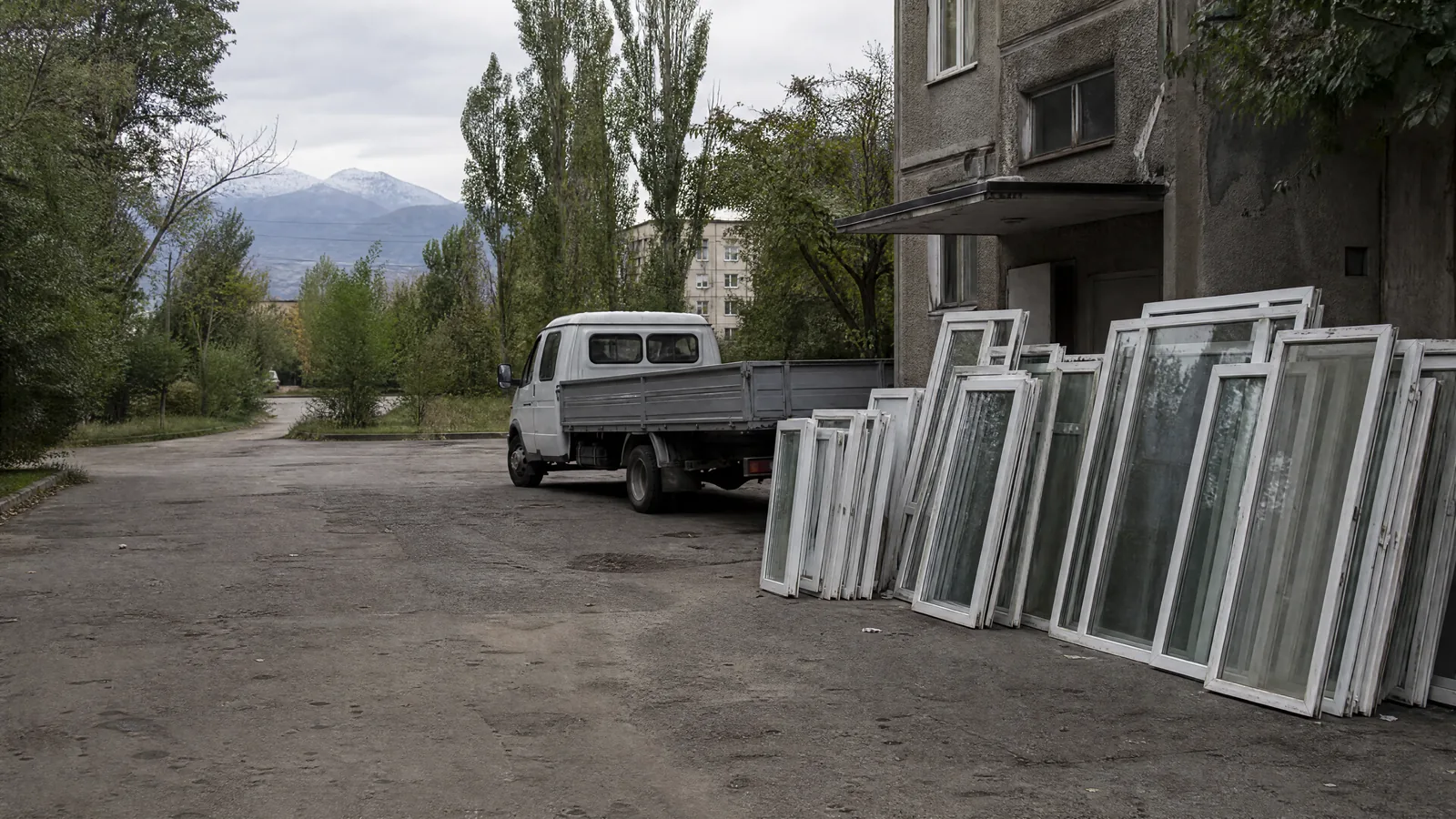
One GAZelle holds up to 12 m³ of frames and glass — usually that's 8–10 standard windows from an apartment.
Choose the type of waste, timing and truck — the calculator will show an approximate price. How many windows and from which floor, we'll estimate from photos.
If the elevator is out or the windows were removed on a top floor, let us know — we'll calculate the carry-out in advance.
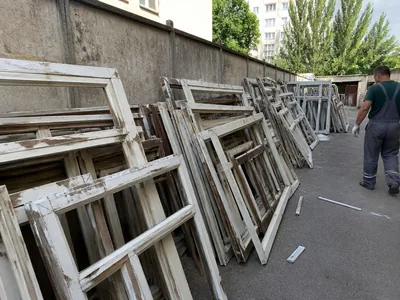
Frames, sashes and glazing beads removed during replacement. We take them in one trip with a GAZelle and loaders.
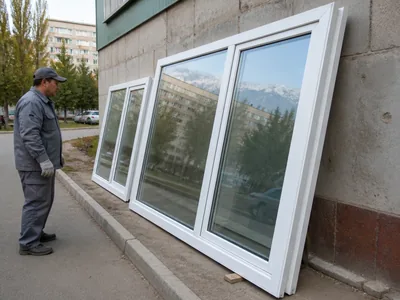
PVC profile with double-glazed units — heavy and bulky cargo. One sash can easily weigh 40–60 kg.
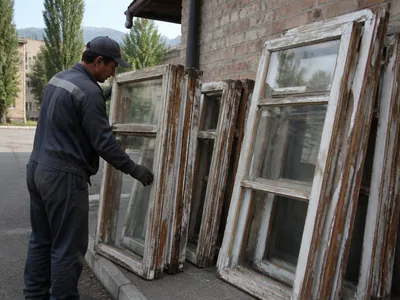
Old frames with dried-out glazing beads and glass. We handle them carefully and don't break the glass on the way.
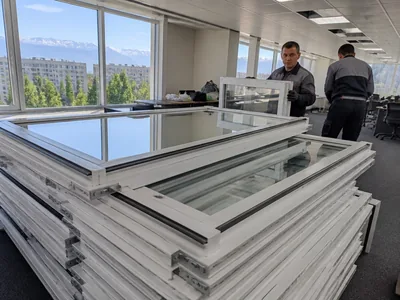
After replacing the glazing in an open-plan office, a batch of sashes is left over. We count by cubic meters, not by pieces.
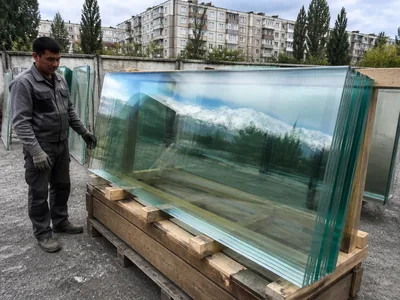
Thick glass from shop windows and entrance groups. Requires rigid crating and separate stacking.
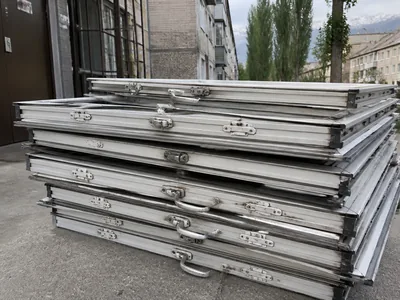
Profiles from balcony glazing and cold loggias. The metal is heavy but compact.
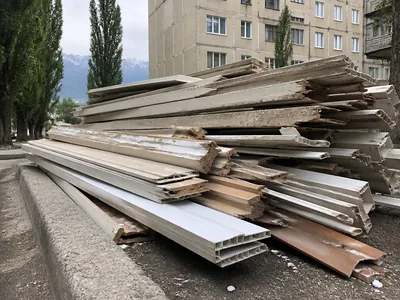
Removed window sills, slopes and casings go into the same truck. We don't leave them by the entrance.

We collect shards from broken sashes into sturdy bags. We take the bags with us and don't ask for containers.
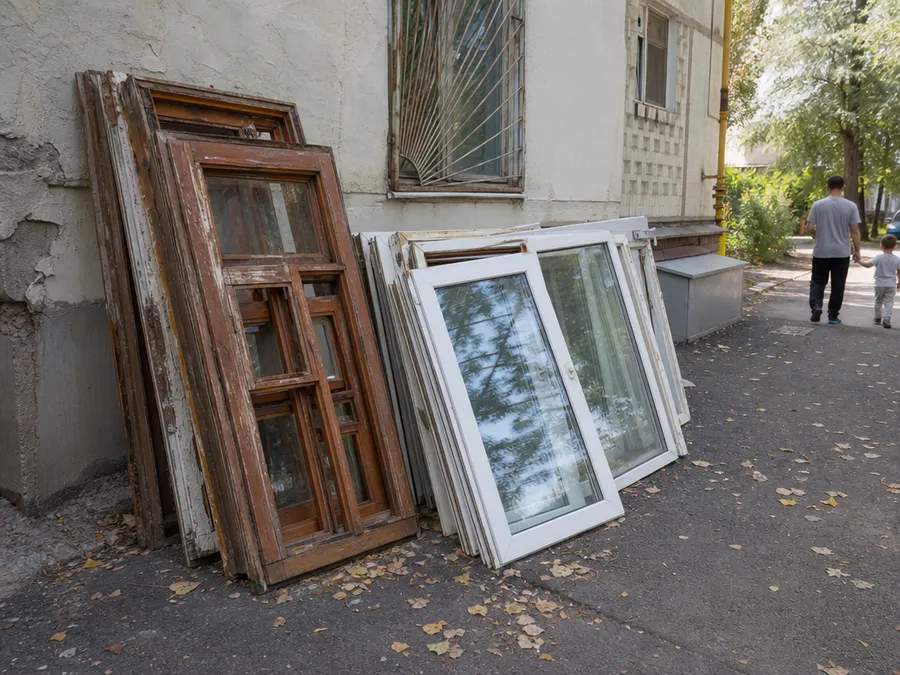
The basic option when the frames are already removed and lying in the yard or on the site. Loaders pick them up, stack them in the truck bed and take them away for disposal. Suitable for a single apartment or several floors of one building.
Book a GAZelle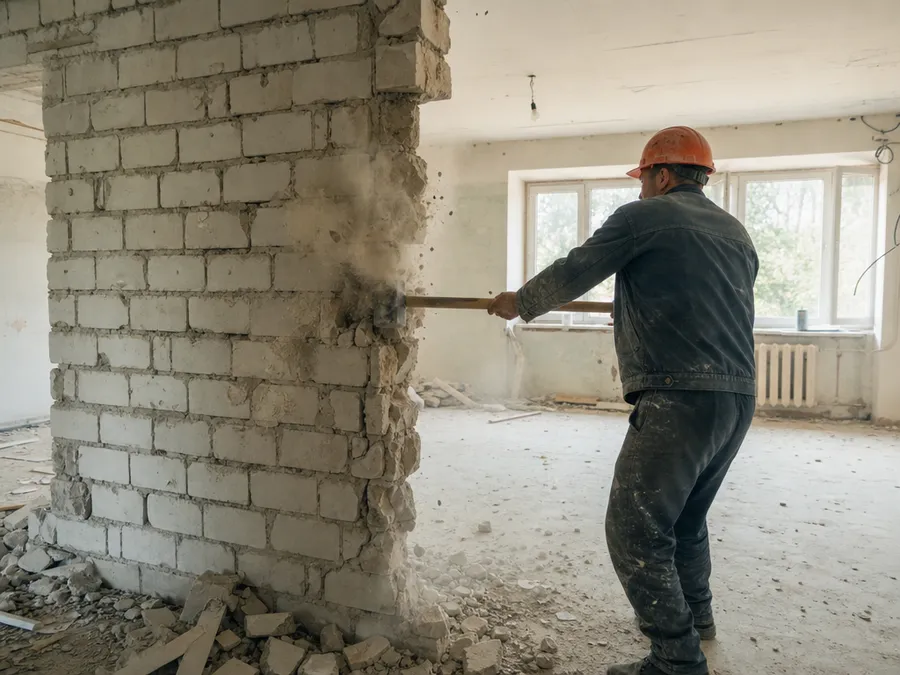
When glazing is replaced in an office, school or new building, the sashes add up to several cubic meters. We count by volume, not by number of pieces — that's fairer for both sides.
For legal entities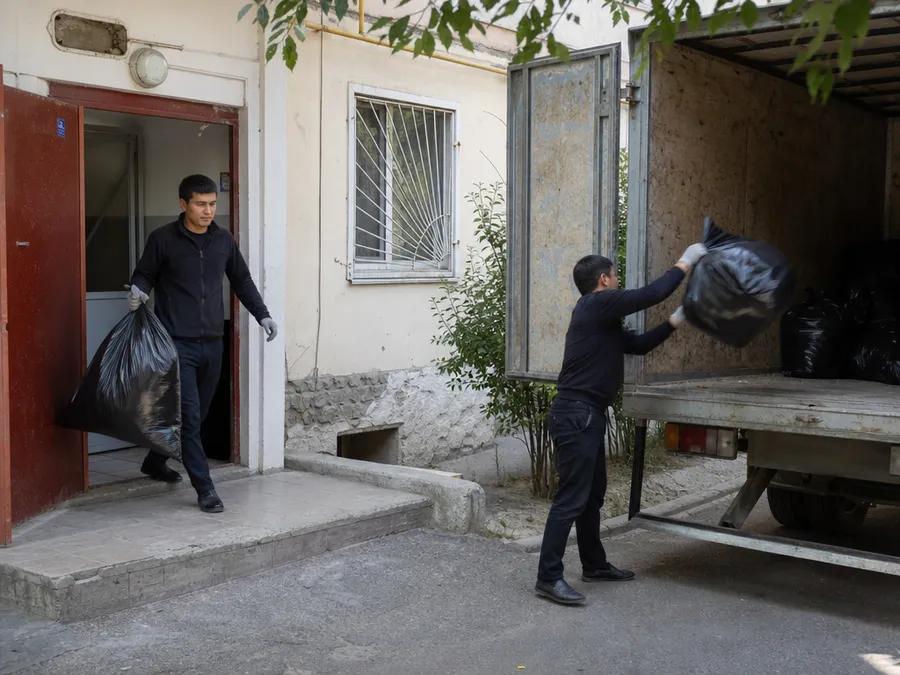
Are the frames in an apartment on the fifth floor with no elevator? The crew will carry them out and load them themselves. We check the floor and elevator availability in advance so we don't have to recalculate on site.
With loaders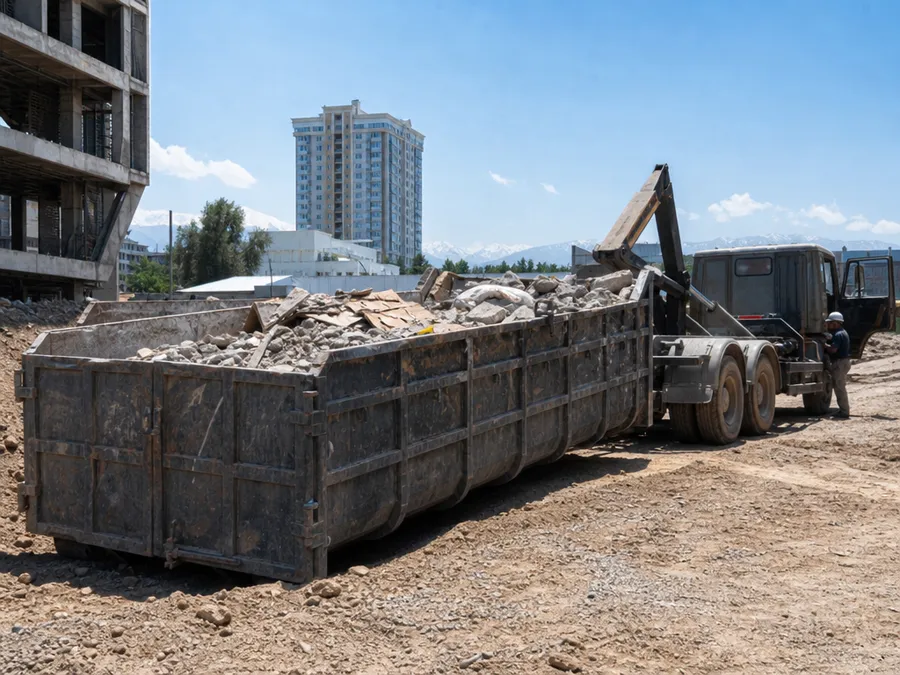
Sometimes the frames are still in place and will be replaced later. We remove them carefully, don't break the glass, and leave the opening clean. Payment is by the crew's working hours.
Get in touch
Old housing stock with wooden frames means bulky but light loads — a GAZelle often isn't enough. A ZIL takes a whole stairwell's worth in one trip.
Order a ZIL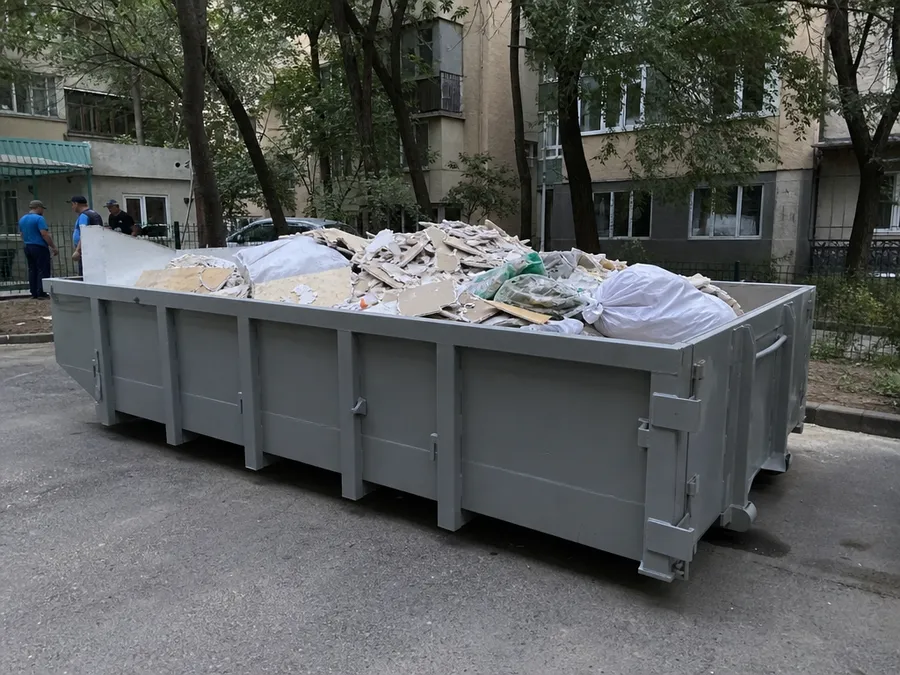
When a renovation drags on and frames pile up for weeks, it's easier to put a skip in the yard. The price depends on the rental period — we'll discuss it in chat. We'll give you the price there too.
Message us on WhatsAppWhat shows up depends on how many frames and how much glass you have. One GAZelle, or a skip if there are lots of windows and they all came from a single replacement in the building.




Valid from August 2026 · price per trip within the city
| Equipment | Volume | Payload capacity | Price per trip | Extra hour |
|---|---|---|---|---|
| GAZelle 1.5 t | 12 m³ | up to 1.5 t | 30 000 ₸ | 6 000 ₸ |
| GAZelle 2.5 t | 16 m³ | up to 2.5 t | 35 000 ₸ | 9 000 ₸ |
| Truck 5 t | 25 m³ | up to 5 t | 40 000 ₸ | 12 500 ₸ |
| ZIL dump truck | 7–12 m³ | up to 7 t | 40 000 ₸ | 12 500 ₸ |
| KAMAZ dump truck | 15 m³ | up to 20 t | 55 000 ₸ | 15 000 ₸ |
| Howo dump truck | 25 m³ | up to 40 t | 60 000 ₸ | 15 000 ₸ |
| PUHTO (skip) | 8–10 m³ | up to 7 t | 45 000 ₸ | — |
| Multilift | 20 m³ | up to 12 t | 100 000 ₸ | — |
| Skip | 27 m³ | up to 15 t | 135 000 ₸ | — |
| Max skip | 32 m³ | up to 20 t | 160 000 ₸ | — |
Prices apply within Almaty city limits. Outside the city, mileage is added — we calculate it in chat before dispatch.
Not sure which truck you need? Send a photo — we'll pick one for you.
Message us on WhatsAppSometimes you need to haul away other things along with the windows. We provide loaders separately, and we'll take old furniture and renovation debris on the same trip.
Five steps that always go the same way: from a WhatsApp message to a swept yard.
Start with photos of the windowsTell us what kind of windows they are and how many. A photo of the pile by the entrance or in the room speeds up the quote enormously.
From the photo we estimate the volume: a GAZelle is enough for an apartment, for a whole stairwell we send a ZIL. We lock in the price right away.
We arrive in the agreed time slot, dispatch across the city — from 30 minutes. The driver calls when he's already in the yard.
We take the sashes and double-glazed units down and load them ourselves. If the frames are still in place, we remove and carry them out — that's a separate step, so let us know in advance.
We take the frames and broken glass away for disposal. We sweep the loading area and take the bags with us.
Before and after — typical orders for removing window frames and double-glazed units in Almaty.
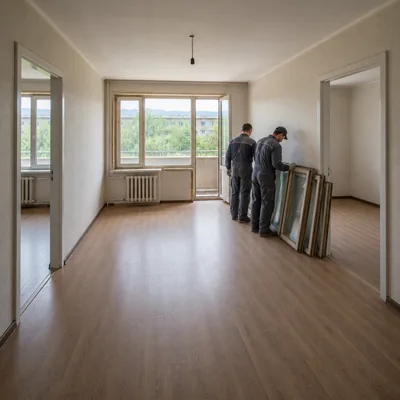
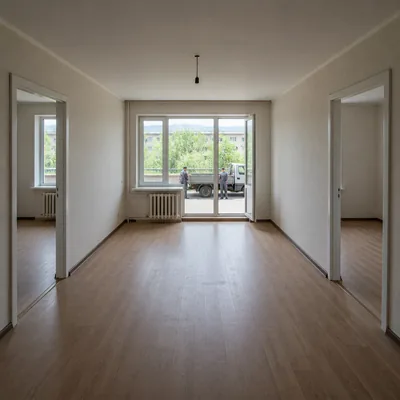
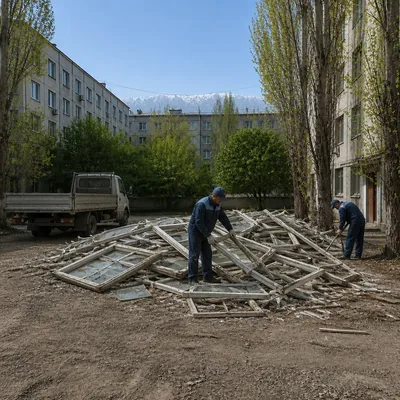
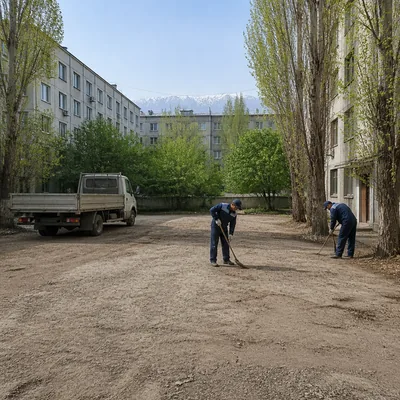
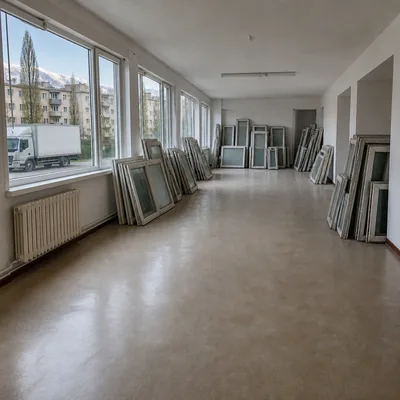
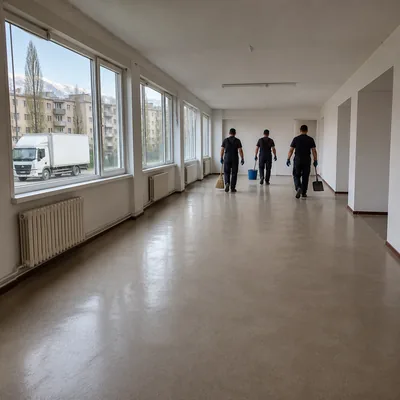
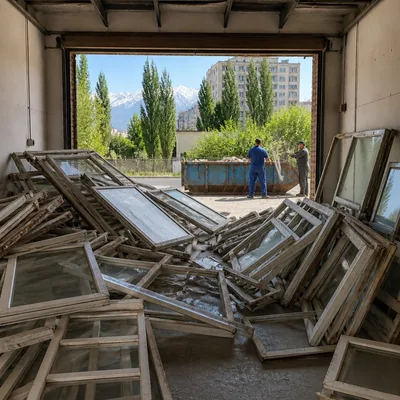
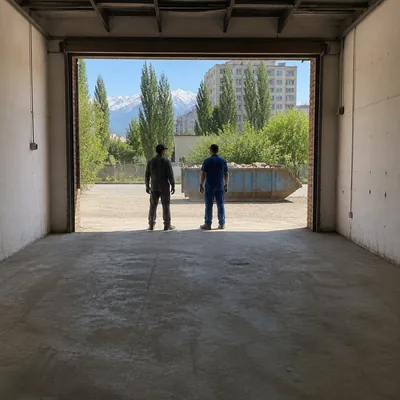
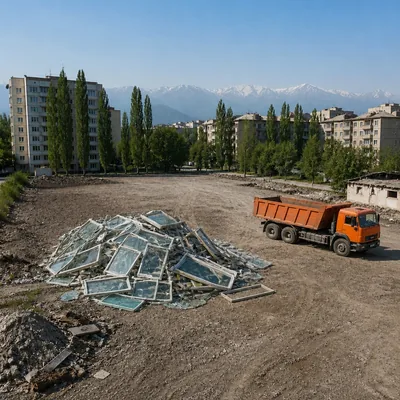
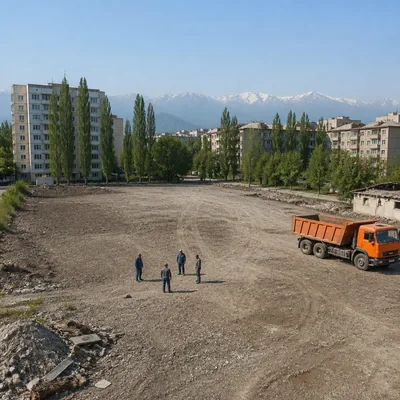
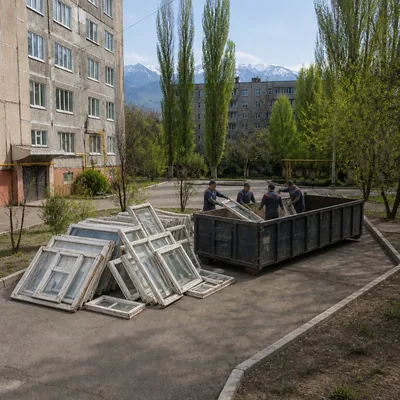
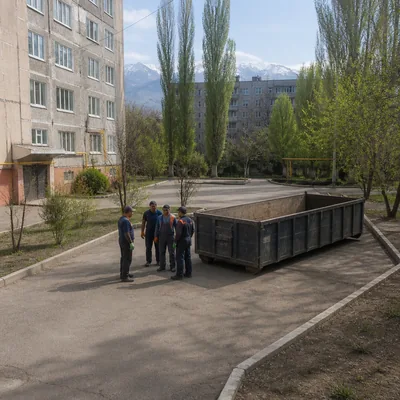
A crew that works with windows and glass: they know how not to break glass in the stairwell and where to stack frames so they don't bother neighbours.







The frames have been lying in the courtyard for three days. Someone's already knocked out the glass, leaves have blown in, and the neighbour downstairs asks every evening when you'll clear it. Sound familiar? The dismantlers left, got paid, and the pile of wood and plastic stayed with you. Or you replaced the windows yourself and now don't know what to do with four heavy double-glazed units that won't fit in the boot.
People usually remember about window removal at the last moment. When the truck is already in the yard and the movers are waiting. And that's when it turns out that a five-story building without an elevator isn't a "we'll figure out how to carry it up" situation, but a separate story for each floor. That old wooden frames with glass don't weigh anything like an empty plastic profile. And that not everything can go in one trip, because a GAZelle isn't infinite.
I work as a foreman of movers and have hauled windows out of panel buildings, stalinkas, new builds, and private houses. Below I'll break it down honestly: what makes up the volume, why wood and plastic are different jobs, what to do with glass and glazing beads, and why sometimes it's cheaper to order one dumpster than to run a GAZelle three times.
The client says "a window," but there's a pile in the yard. The frame, the glass in it or next to it, glazing beads, handles, hinges, the windowsill, the slopes, bits of mounting foam, and maybe old insulation from under the sill. If it's old window removal from a panel building, it's usually three or four such sets from one apartment. And each set has to be counted separately, because they weigh differently.
I show up and first thing I look at isn't the glass. I look at whether the frame has glass in it or is empty. That's half the answer to how many people to put on loading and whether it'll all fit in one GAZelle.
A wooden sash with glass is about forty kilos each. A standard balcony frame is more. Two people carry one down the stairs and curse on every flight, because its center of gravity is off, and you have to hold it not by the handle but by the crossbar, which can crack too.
An empty wooden frame is a whole different story. Eight, ten, twelve kilos max. One person can carry it in one go. And here's the main mistake in estimating: the client measures "by windows," but in reality half the sashes are already without glass, because it got knocked out during dismantling or cracked on its own. I count by what's actually there, not by the number of openings.
Fragility is different too. When you carry wood with glass, you hold the sash vertically, otherwise the glass rattles in the glazing beads and rings. Glass from an old frame often already has a crack in the corner, and it doesn't make it to the truck. That's normal, and it's not your fault — such glass dies on its own.
A plastic window looks solid but weighs almost half as much as a wooden one. A profile with reinforcement but without a double-glazed unit is 15–20 kilos. The problem isn't weight but size: it doesn't bend, doesn't fold, and takes up so much space in the truck that plastic window removal from one apartment can eat up the entire GAZelle by volume even though the weight is nothing.
That's why I often ask on the phone not "how many windows" but "how many sashes and are there double-glazed units." Five empty profiles will go in one trip. Five profiles with double-glazed units — that's already two, maybe three trips.
Another little thing you only see on site: plastic has sharp edges from the reinforcing profile, and you can't handle it without gloves. It cuts your hands like sheet metal.
We haul it. A single double-glazed unit is the most awkward load of the whole lot: heavy, slippery, and you can only hold it by the edge, because grabbing it flat is a no-go — it warps and cracks. A standard double-chamber unit, one meter by one and a half, weighs about thirty kilos. Three of those and the GAZelle sags noticeably.
If the units are intact, I try to stand them upright, padding between them with whatever I can: cardboard, a piece of foam, an old blanket. Lying flat in the truck bed, they'll survive until the first speed bump and arrive as crumbs. Sometimes — as dust, and then removal of window frames turns into hauling glass with a scoop.
Broken glass goes in separate bags or back into the frame if it still holds its shape. Shards scattered around the yard mean later showdowns with neighbors and the management company, and it's just not worth it.
This is where almost everyone undercounts. The customer lists the windows, but in the yard there's still a two-meter window sill, three pieces of slope, a bag of glazing beads, handles in a bucket, and expanding foam that someone sprayed all over the top. Light in weight, but in volume — half a truck bed.
About brick, separately. Sometimes the demolition crew pulls out the window along with part of the wall — especially in Stalin-era and Khrushchev-era buildings where the openings are crooked. Then removal of old window frames also means construction debris, which is heavy and shatters. I haul that kind of load in a dumpster, not a GAZelle, and I warn about it in advance.
And lastly. We always estimate volume from photos or a video call. Not because we don't trust you, but because "four windows" can mean anywhere from one GAZelle run to three, and the difference shows up on the day of delivery. Better to spend five minutes on photos than an hour on reloading in the yard.
The demolition crew leaves, and a mountain remains on site: frames, sashes, glazing beads, glass, window sills, and bags of shards. If you ordered window removal after demolition separately, the truck will come later. Your job is to keep this junk until the movers arrive. Don't let neighbors take it, don't throw it in the bin by the entrance.
By contract, the demolition crew only carries the windows out to the entrance. After that, it's your concern. Sometimes they dump the frames right on the stairwell between floors. A neighbor from above trips — scandal. So agree upfront: either the demolition crew takes everything down, or you call movers with window frame removal. Our team arrives and carries it out from any floor.
If you did the demolition yourself, it's a different picture. One sash weighs from fifteen to forty kilos. Carrying it down the stairs by hand — your back will give out after the third floor. So we usually take a stretcher or sturdy bags and work in pairs. One holds, the other carries.
The ideal option is to carry it out to the yard right away and stack it by the wall of the building. But not on the lawn. The lawn is a sore subject for the KSK chairman. Shards in the grass take a week to pick up. Better on asphalt or a concrete pad near the trash containers. If there isn't one — by the end of the building where no one walks.
Plastic frames are lighter than wooden ones, but they still take up plenty of space. Glass units can't be stood on a corner — they'll crack. Lay them flat on something soft, like old cardboard. Stack wooden frames with nails in a pile, bend the nails over or pull them out. Otherwise the movers will tear their gloves and cut themselves.
If you leave them in the yard overnight, let your neighbours know. Or at least don't stack them under first-floor windows — it scares people. We've had the police called on us: residents thought someone had dumped construction waste illegally. Good thing the customer was there to explain everything.
When we arrive, the first thing we look at is the size and the entrance. There's an elevator — great, but not every frame fits. A standard elevator in a panel building is 1.2 by 0.8 meters. A frame from a balcony door unit can be two meters. Then we carry it down the stairs.
Rope descent is a last resort. It's used when the stairwell is too narrow or the windows are on the top floor and the frames are huge. We use climbing gear and safety ropes. But this method costs more and takes longer. So tell us in advance which floor you're on and whether there's an elevator.
Sometimes the frames have already been carried out to the yard but not taken apart. Then our job is to load them. We sort: glass separately, wood separately, plastic separately. This speeds up old window frame removal and makes recycling cheaper.
Shards are the worst part. They fly all over the yard, get stuck in shoes, cut dogs' paws. We always sweep the area after loading. But if you stacked the frames yourself, pick up the big pieces in advance. Fine crumbs are easy to sweep into a dustpan with a stiff broom.
Glass can't go in a regular container. It doesn't compress and it injures recycling workers. We take glass separately and send it for recycling. Glass units go there too — they're taken apart into glass and an aluminum frame.
Here's what the sequence looks like if the dismantling has already happened:
This sequence saves time. We arrive, see the volume right away and don't waste half an hour clearing piles. If you're not sure you can handle it yourself, don't play the hero. Window removal after dismantling is a job for two, not one.
What happens if you leave frames in the yard for a week? People start hauling them off. Someone takes the wood for firewood, someone takes the glass for crafts. Then it turns out part of the load is missing and part is broken. And there's nothing left to remove. So don't put off booking.
| Type of load | Where to put it | Weight per unit | Feature |
|---|---|---|---|
| Wooden frame | In a stack on asphalt | 15–30 kg | Bend the nails over |
| Plastic sash | Flat on cardboard | 8–15 kg | Fragile corners |
| Glass unit | Flat, not on a corner | 20–40 kg | May crack |
| Shards | In bags | up to 10 kg | Sharp edges |
| Window sill | Separately, flat | 5–12 kg | May crack |
| Glazing beads and small parts | In a box or bag | 1–3 kg | Get lost |
The table tells you how to keep the cargo from breaking or getting lost. But the main thing — don't leave windows on the lawn. That's the first thing neighbors complain about.
The first thing you notice when you grab an old frame is the weight. A wooden sash from a window in a nine-story panel building weighs ten to twelve kilograms, and that's before you even think about the glass. A plastic profile of the same width — four, five at most. The difference is more than double, and you feel it on the first floor.
Wood absorbs moisture. A frame that's been there for twenty years has soaked up water over winters and summers, the primer has peeled, the veneer has swollen. Plus old windows have solid wood sashes, not hollow chambers. That's why removing old window frames is almost always heavier than the customer expects, who measured one sash in their apartment. Usually you show up for a job and there's twice as much as they said on the phone.
Volume is the opposite. A plastic double-glazed unit is a thick sandwich: frame plus two or three panes separated by a spacer. Wood is thinner but more massive in cross-section. Removing windows after dismantling from a nine-story panel building — that's typically five or six sashes, and they won't fit in a car trunk at all.
Another thing — hardware. Hinges, handles, locking mechanisms. Small stuff, but it adds to the total weight and catches on everything when you carry it. Removing it before loading is a separate job, and not always a quick process.
Glass in a wooden frame sits on glazing beads and putty. The putty has hardened and cracked over the years. Shake the frame hard enough — the glass pops out, even if it's intact. That's not a defect, just age. That's why removing window frames from old buildings often starts with taking the glass out separately and wrapping it in cardboard or stretch film.
In a plastic double-glazed unit, the glass is clamped tightly in the profile, the glazing beads hold firm. But the unit itself is a single block. Drop it flat — the whole thing shatters, not just one pane. A double-chamber triplex with reinforcement weighs almost twice as much as a single-chamber one, and it's more fragile because the glass manufacturer didn't design it for transport in a truck bed.
Broken glass is a separate story. You can't just throw it in the common pile because the loader will cut himself. We collect shards in heavy-duty bags or wrap them in old blankets if the customer has any. When removing plastic windows from a new building, there's almost none of that — the frames are fresh there — but from old sites there's plenty of shards.
Frames don't like lying flat on top of each other. The glass at the bottom takes all the load and cracks. We stack them on edge, with cardboard or foam padding. That makes the stack taller but intact. Window removal is primarily geometry, not strength. First you think about how to place it, then you lift.
A GAZelle holds about twenty to twenty-five sashes if you stack carefully and there's no furniture next to them. A thirty-two cubic meter container — that's up to a hundred, but only if the frames are disassembled. Disassembling on site takes a long time. Usually we count as we go: whatever fits, we take, the rest is a second trip.
Construction debris with nails and rebar is bad company. A nail sticks out, scratches the profile, tears the glass. If you're ordering window removal together with renovation leftovers, it's better to split them into separate runs, or at least line the frames with thick cardboard on all sides. Saving on one run turns into breakage, and breakage isn't removal anymore — it's picking up shards.
A fridge, a washing machine, a bathtub — also not neighbors. Heavy items press down on the stack from below, and glass can't take a point load. Same story with furniture that has sharp corners. Frames go in last or first, but never in the middle between heavy stuff.
Liquids and paints — separately. If they leak, the frame gets soaked, becomes even heavier, and then you have to wash out the truck bed. If the customer has leftover cans of paint, they go in a sealed box and travel separately from the frames.
Once, in a stalinka on the fifth floor, a wooden frame fell apart right in my hands — the putty crumbled, the glazing bead popped out, the glass went down. Good thing the railing caught it. Since then I always wrap old wooden frames in stretch film first and only then lift them. You never know what's holding them together inside.
Back to weight and volume: wood is heavier, plastic is bulkier. Removing old windows from panel buildings is about weight and floors. Removing plastic windows from new builds is about dimensions and fragility. You can't guess in advance, but photos usually show what you're dealing with. Send a picture of the stack in the yard — I'll tell you how many runs and which truck you need.
A plastic window is basically a frame, a sash and a glass unit. The frame weighs little, about ten to fifteen kilos. The glass unit — from twenty to forty, sometimes more. And that weight difference is the main reason why plastic window removal can't be done 'however it works out.' Heavy and fragile ride in the same truck bed, but differently.
A glass unit is two or three panes glued around the perimeter, with air or gas between them. The structure is rigid against bending, but the edge is the weakest point. Hit a corner against the side — a crack will run across the whole pane. That's why glass units are loaded standing upright, not laid flat. Flat means all the weight presses on one point, and any bump on the road will make the glass shatter.
Between the panes there's sealant and a spacer. If you hit the corner, the load goes not into the glass but into the sealant. It crumbles, the glass loses support and cracks. It's like dropping a sandwich: seems soft, but falls apart from the corner. That's why we never set glass units on a corner and never clamp them with C-clamps. Only upright, with padding.
Another thing: old glass units often have cracks. We still haul them, but separately from intact ones. If an intact glass unit cracks in the truck bed from a neighbor — it's a shame, but it happens. I put them in the far corner so they don't press on the rest.
Here's the order. First we carry out the frames — they're light, you can toss them. Then the glass units. Each one goes on the floor upright, leaning against the side. Between them — cardboard or foam, whatever's on hand. Nothing heavy on top. If there are many glass units, we tie them together by the frames with straps so they don't shift apart on turns.
Movers know: you can't carry a double-glazed unit flat on your shoulder. Only vertically, holding it by the frame. Otherwise it'll catch the railing on the stairs — and that's it. Window removal after dismantling often goes from the fifth floor with no elevator, and every turn is a risk. So we lower the glass units first, then the frames.
Breakage is normal. During dismantling, glass shatters in half the cases. We collect the shards in separate bags so no one gets cut — neither the movers nor the people sorting trash at the landfill. If the broken glass is already lying in the yard, we take that too. But we count it separately: glass is heavy but takes up little space.
How do we count it? By the volume of the truck bed. We pour the shards into bags and stack them tight. If there are many bags, they can fill half a GAZelle even though they don't weigh much. So removing old window frames with broken glass is sometimes cheaper in two trips than one overloaded one.
A separate trip — if there are more than ten glass units. Or if they're very large, floor-to-ceiling. Then they take up the whole floor of the truck bed, and the frames won't fit. The second case — when the customer asks to keep the glass units for a dacha or garage. Then we transport them with extra care, but that's not removal, it's moving. The price will be different, and we'll tell you in advance.
Here's a table showing how we arrange the load in the truck bed so nothing gets broken.
| Type of load | How we place it | Weight per unit | What not to do |
|---|---|---|---|
| Intact glass unit | Vertically, with padding | 20–40 kg | Lay it flat and press down |
| Glass unit with a crack | In the far corner, separate | 20–40 kg | Place next to intact ones |
| Plastic frame | Stacked, can be tossed | 10–15 kg | Break the sashes beforehand |
| Broken glass | In bags, packed tight | 10–20 kg per bag | Pour on the truck bed floor |
| Hardware | In a box or bag | up to 5 kg | Leave it loose |
Now step by step, how we load glass units to deliver them without breakage.
If you're ordering removal of plastic windows, tell us in advance how many glass units and what size. Then we'll come with the right fasteners and padding. And we won't have to look for cardboard on site.
Another question: what to do with the hardware? Handles, hinges, locks — that's metal. We collect them in a separate bag and hand them in with the frames. If left on the ground, they get lost in the grass and then cut feet. A small thing, but unpleasant.
And lastly. Don't try to carry a glass unit alone. Even a small one, 20 kilograms, behaves unpredictably on stairs. We work in twos or threes, and even then we sometimes spot each other. Window removal isn't about strength, it's about technique.
Read this far and still not sure about the volume? Send us a photo — we'll calculate and give you a price.
Message us on WhatsAppA new frame is just profile and glass. That's it. Grab it by the corner, lift, carry. With an old one that won't work: over ten or twenty years it's grown everything that soaked in and stuck to it. So removing old windows is almost always harder than removing plastic windows from the same apartment, even though the dimensions are similar.
Wood soaks up moisture. Not once, but over years: condensation, slanting rain, a wet rag during cleaning. Then it dries — and cracks. Dust packs into the cracks, moisture again, and the frame turns into something between wood and stone. Plus paint. It's been painted more than once, sometimes over the old coat, sometimes over filler. Layer by layer it builds up to a few millimeters thick, and in weight — like one more plank.
A plastic profile is hollow inside, with chambers and air. A wooden frame is solid timber. The same size sash weighs one and a half to two times more. You can't see it, but on the fourth floor you feel it right away.
Inside the frame lives metal no one remembers. Staples from a stapler, screws from hinges, nails from glazing beads, self-tapping screws that once held a mosquito net. All of it sticks out in different directions after dismantling. Rubber gloves tear in one trip, so we take canvas gloves with double palms. The GAZelle's bed is lined with plywood — a sticking nail will scratch the sides if you carry the frame sideways.
What we find in frames most often:
We check the frame with a gloved hand along the entire perimeter before lifting. Five seconds per piece, but no cuts.
A windowsill is a separate item. Wooden, sometimes with a concrete base, sometimes with a brick pad. Removing it is half an hour of work and about thirty kilograms of concrete in bags. Leaving it as is means bringing to the site what could have stayed. We ask you when you place the order: remove or haul together with the frame. Usually we decide on the spot — if the dismantlers have already taken everything out, it's easier to haul the windowsill as a separate piece.
Slopes are gypsum, plaster, chunks of old mounting foam. The foam has dried and become brittle, crumbles at a touch. Better to bag it on site rather than shake it down the stairs.
Inside the sashes, dust, dead flies, small pebbles, cigarette butts from upstairs neighbors accumulate over the years. Usually you can't see it. But lift the frame and turn it over — everything spills onto the landing, into the elevator, onto the carpet in the hallway. We carry frames vertically, sash to sash, and put a piece of burlap underneath. Cheap and no consequences.
If the apartment is on the first floor and the frame goes straight out the window, dust will fly onto the flowerbed below. Not a disaster, but it's worth warning the neighbors downstairs in advance.
Weight summary: a set of three wooden window sashes with glass is about one hundred kilograms. Plastic ones of the same size are about sixty kilograms. The difference isn't in size, but in wood, paint, and metal. That's why we almost always calculate old window frame removal by volume and floor, not by the number of sashes.
The question I get asked most often, already in the van on the way to the unloading site: "So where do you take them?" I'll give it to you straight. Not to the nearest dump by the road. Old window removal isn't "drive around the corner and dump them." We take them to a site where the load is sorted by fraction. Wood separate, glass separate, plastic separate, hardware separate. Everything that can be recycled goes there. Everything that can't goes to landfill. The recycling share here, honestly, depends a lot on how carefully you took the windows apart back in your own yard.
An old wooden frame is mostly pine or birch, sometimes oak in Stalin-era buildings. Such a frame with glass weighs from 25 to 40 kg, and it's not an empty piece of wood but a solid beam with hardware. After removal, the wood is chipped into shavings. Some goes into fuel briquettes, some into compost, some is processed into boards. But not every frame is good for chipping. If the frame is painted with lead paint — and in houses built before the seventies that's common — it goes to landfill, because that paint is toxic. That's exactly why I always ask for the year the building was constructed when you place an order. Not out of curiosity. It determines where the wood goes.
We remove the hardware separately. Handles, hinges, latches, nails — all of that is metal, and it goes into a separate fraction. If you don't remove it, the metal gets into the chipper and dulls the blades. We do this on site, before loading, while the frames are still intact.
A plastic profile is PVC. It recycles well if it's clean, without the reinforcing insert. The insert inside the profile is metal, and it has to be pulled out. That's done at the site, by hand. The glass unit must be separated from the frame. If plastic window removal happens with the glass units still in, the weight doubles, and some of the profile may go to landfill simply because separating the glass at the sorting stage costs more than the profile itself. So two glass units and ten profiles are a different recycling story. The glass in a glass unit isn't just glass either — there's a coating and a spacer, and they have to be separated.
| Material | Share of window weight | Where it goes | What blocks recycling |
|---|---|---|---|
| Wood (frame) | 40–55 % | Shavings, briquettes | Lead paint, rot |
| Glass (broken and intact) | 30–45 % | Cullet, remelting | Coating, glass unit spacer |
| PVC profile | 15–25 % | Granulate | Metal insert inside |
| Hardware, metal | 3–8 % | Scrap metal | Plastic covers, rust |
An intact pane from an old frame is a separate item. It isn't crushed together with broken glass. If the pane is removed carefully and has no cracks, it can be reused in greenhouses, at dachas, in sheds. Broken glass goes to remelting. But there's a nuance few people know about. Glass from old windows is often 3–4 mm thick, while modern glass units are 4–6 mm. These are different raw materials, and mixing them at remelting isn't always possible. That's why when removing old window frames we try not to break intact glass. It travels separately, in a rack.
A glass unit isn't glass. It's two panes glued along the perimeter, with a spacer and a coating inside. That "layer cake" is harder to recycle than ordinary glass. It's either broken up at the site and separated by layer, or sent to landfill whole. What exactly happens depends on how many such glass units are in the batch. One or two — they'll go to landfill. A batch of twenty — now it's worth taking apart.
Because it's oversized. A regular bin in a courtyard holds 0.7–1.1 m³, and even a single frame won't fit inside. If you cram it in anyway, the bin won't get collected — the loader can't lift it, or the garbage truck will refuse. In the end, the frame stays lying next to the bin, and that's a fine for the management company, not for you. But the bad taste lingers.
That's why window frame removal is a separate service, not something you 'toss in the shared bin.' We take frames to a site where they're sorted by material, and you don't end up dealing with angry neighbors later.
How long does it take? One GAZelle gets packed to the brim with frames in about 40–60 minutes. If the frames are intact and the glass isn't broken, it takes longer — each one has to be placed so it doesn't crack. If the glass is already broken, we load faster. From experience, removing windows after a flat demolition is one trip if there are up to five windows. More than that — we calculate by volume.
And one last thing. We don't dump the load in the nearest green belt. Everything goes to a site with sorting. It costs more than 'taking it out of town,' but it's something I'm not ashamed of. Plastic doesn't rot for hundreds of years, painted wood can't just be buried, and glass lies in the ground for centuries. So yes — old window removal ends not around the corner, but at a proper site.
If you only remember this section from the whole article, that's already something. Old window removal almost never fits into one trip if the site has frames with glass, not empty profiles. We count wood and plastic separately because they behave differently: dry pine burns in a truck bed like matches from a single spark, while PVC profiles melt and stink. Glass is a separate line item in terms of nerves — you can't just throw it on top.
We calculate volume by cubic meters, not by the number of sashes. Four standard windows in a panel building are about three to four cubic meters disassembled. But if the frames weren't taken apart and were stacked as is, the same set takes twice the space. Plus window sills, slopes, mounting foam, pieces of brick the demolition crew left behind. From experience, it's usually the volume that gets underestimated, not the weight.
Weight is the second factor. One old wooden window with glass weighs thirty to forty kilograms. A double-glazed unit with two chambers is even heavier. And if you plan window removal for the evening but ordered the truck for the morning, some of the glass may already be broken by neighbors or kids in the courtyard by then.
Wooden frames are heavier but more compact. You can break them up and stack them tight. Plastic windows don't break so easily: there's a reinforcing profile inside, and if you force it, the glass will crack. Hauling away old wooden window frames usually takes two or three trips, while removing plastic windows with double-glazed units may need a separate run just for the glass so nothing else gets broken.
You can mix wood, plastic and glass in one truck bed, but do it smart. Glass goes in first, on the floor, wood along the sides, plastic on top. Do it the other way around and by the end of loading you'll have a pile of shards and you'll be sweeping the area twice.
Don't knock out the remaining glass yourself. If it's already cracked, tape it up crosswise — that way it reaches the truck in one piece instead of shattering all down the stairwell. Collect small shards in a sturdy bag or box, otherwise the loader will cut himself and it'll be your fault. Window removal after dismantling often gets delayed because of exactly this kind of small thing.
The yard matters too. The GAZelle needs to pull up to the entrance, not park at the barrier. If other people's cars are parked in the yard, it's better to ask the neighbors to move them in advance than to carry frames across half the yard later. A 32-cubic-meter dumpster won't even fit into a panel building's yard — it gets placed at the entrance, and then every piece has to be carried by hand.
If you have more than ten windows and they're not dismantled — go with a dumpster. It'll take everything at once, including window sills and debris from the site, and you won't have to think about a second trip. For four to six windows, a GAZelle with loaders is enough: cheaper, faster, and it'll get into the yard without a problem.
The main rule is simple. Removing old windows isn't about "how many sashes" but about how many cubic meters and who's going to carry them. Tell us honestly on the phone or on WhatsApp, with photos — and the right truck will show up, not just whichever one was free. The rest are details we sort out on site.
A 1.5 t GAZelle takes about 8–10 standard window units — if the frames are already dismantled and stacked. Glass and wood are heavier than they look, so it's best to send photos — we'll quote precisely from those. GAZelle trip — from 30 000 ₸.
We carry them out ourselves. The crew comes into the apartment, takes the frames off the hinges and slopes, carries them out, and loads them. You don't need to find movers separately. Crew rate — 20 000 ₸.
Not a problem for us, but let us know in advance. If there's no elevator, or it's a freight one and out of order, carrying out takes more time and hands. In that case we put together a crew of three or four.
Dispatch across the city — from 30 minutes if a truck is free. In Almaly or Bostandyk districts it's usually faster, on the outskirts slower. It all depends on how many jobs are already in progress — we'll confirm over the phone.
Yes, removing plastic windows and double-glazed units is something we do all the time. Plastic is bulky but light, so more of it fits in the truck than wooden frames. The main thing is not to break the glass on the way, so we wrap it.
We take them for disposal. Wood and plastic go to recycling or to a landfill — depends on their condition. We don't leave anything in the yard: we sweep the area after loading.
No, we don't do that. Leaving old windows in the yard means a fine for you and for the management company. We take them straight from the apartment or from the stairwell if you've carried them out yourself.
Then we order a second truck or take a ZIL right away. You only pay extra for the trip, no markups. Better to let us know in advance so we don't send the truck twice.
Yes, our hours are Mon–Sun, 9:00 to 21:00. Weekends are busier, so it's best to message us on WhatsApp in the morning. If the windows need to go urgently, let us know — we'll look for a slot in the schedule.
Wooden frames are sometimes taken for firewood, plastic for recycling, but it's rare and a hassle: you have to find a collection point and haul it yourself. Time-wise, one truck pickup is usually faster. If you want to drop them off, we'll tell you where to go, but we can't promise they'll take them.
Got a question that's not here? Ask — we'll answer in writing, no call needed.
Message us on WhatsAppRemoved old window frames. Fast and to the point.
I ordered window removal after demolition in a new building. The builders made a mess, and there were about fifteen frames and double-glazed units. A GAZelle wasn't enough, so they sent a dumpster. They took everything in one go.
Removed plastic windows from the office after replacement. Eight of them. They came at lunch while the staff was on break, so no one was disturbed. Convenient.
Took old window frames out of a private house in Boraldai. The frames were old, wooden, about twenty of them piled up in the yard. They showed up with a dumpster, loaded everything, swept the yard. The price came out lower than I expected. They counted the mileage outside the city fairly, no surprises.
We were replacing windows in winter, minus twenty outside. The frames were on the balcony, and there was no way I could carry them out myself. They came in the evening, around eight, when I was already home from work. They took everything and even cleared the balcony. Dinara asked about the elevator and floor right away on the phone — it's nice when you don't have to explain twice.
Renovating the apartment, we removed the old wooden windows ourselves but had nothing to haul them away with. The truck arrived an hour and a half after a WhatsApp message. They quoted the price right away and didn't change it, even though the frames turned out heavier than I'd said.
Once they moved the pickup to the morning, but warned us in advance. Otherwise all good, they took the frames without any problems.
Removal of plastic windows after dismantling. Three of them, plus double-glazed units. Askhat arrived, took a look, said a GAZelle would be enough. And it was.

We replaced the old windows in the office, and the frames and double-glazed units were left behind. I called TRASHOFF, and a truck came that evening. The guys quickly loaded everything and cleaned up after themselves. The price had been agreed in advance.
Hauled away old windows. Five of them, plastic. Quick and no fuss.
The double-glazed units were broken, and I was afraid they'd refuse. They took them and even collected the shards so no one in the yard would get cut. A small thing, but nice.
After replacing the windows in a three-room apartment, I was left with a mountain of frames and two double-glazed units. I thought I'd be hauling them out piece by piece for a month. I called — they came the next day at nine in the morning. Two loaders, a GAZelle. They took everything in half an hour and even swept the entrance. Fifth floor, the elevator wasn't working — they carried it all by hand, nobody complained.

We were clearing out my grandmother's apartment, and there were old wooden windows that had to be removed along with the frames. Yerlan came, carefully stacked everything, didn't scratch anything in the stairwell. Thanks for your patience, I was a nervous wreck.
After replacing the old windows, I needed the junk hauled away. I messaged on WhatsApp, and they came the next morning. Two guys quickly lifted the frames and loaded them. The price was quoted upfront and didn't change. I'm happy.
removal of old windows after renovation. arrived quickly, took everything, even swept up the cigarette butts. price is fair

I spent a long time looking for someone to haul window frames out of my garage. I'd been hoarding them for ten years, and I know I was being silly. They came, looked, calculated by cubic meters — the price was fair. The movers were great, carried everything out and swept the garage. Daniyar said to call if anything else piles up. If it does, I will.
I ordered removal of old window frames for the first time, was afraid they'd show up and say "that's not our job." All good, they took six frames and a double-glazed unit from the balcony.
I ordered removal of window frames after demolition in two apartments at once. Sent photos on WhatsApp, they calculated the volume, and came with one truck. Everything was fair, no extra charges on site.
Everything was taken away neatly, but I waited longer for the truck than promised — about two and a half hours. They said traffic on Rozybakiyev. It happens. Happy with the work, only lowered the rating because of the wait.
We were renovating and replacing all the windows in the apartment — seven of them. We put the old frames and double-glazed units out on the landing, and then the neighbor started complaining. I called in a panic and explained the situation. Aigul calmly said: we'll be right there, we'll clear it all. And they really did arrive about forty minutes later, took everything, and swept the landing. The neighbor shut up, which was also nice.
After a major renovation in our building, nine window frames were left over — I was the building captain and responsible for the removal. I called several places, and these were the only ones who took on that volume without questions. They came Saturday morning and worked for two hours. The neighbors later asked for their number.
Showing 3 of 21
Want the same? Describe your task — we'll calculate and give you a price before the truck arrives.
Message us on WhatsAppChecked us out? Drop us a line — we'll pick the right truck for your load.
Message us on WhatsAppCollection, sorting, crushing, secondary raw materials — the steps in order and what actually gets recycled.
How medical and industrial waste differ from household waste and what's required of the hauler.
Illegal dumps on the outskirts, soil and groundwater: what happens when waste goes to the wrong place.
Articles of the Administrative Offenses Code of Kazakhstan, amounts in MCI for 2026, and who's responsible for the garbage — the carrier or the client.
Old windows after replacement shouldn't sit in the yard for weeks. Send a photo on WhatsApp — we'll give you a price and come at a time that suits you.
Tell us how the pickup went — it helps us and anyone choosing a hauler.



