Madina
We were clearing a basement for a store, there was a lot of old packaging. Daniyar came and calculated everything himself. They removed it quickly, even the neighbor was surprised.
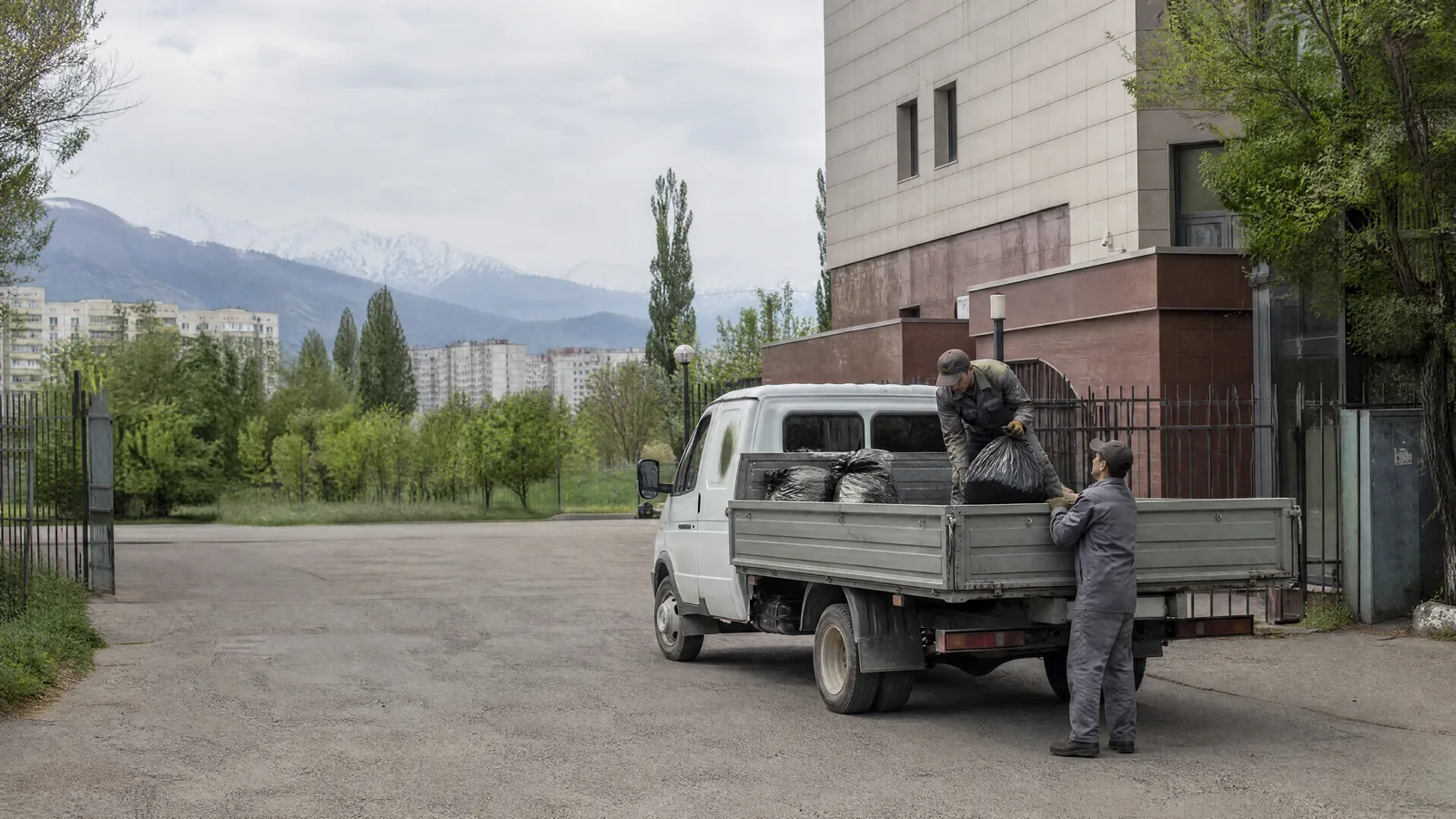
Send a photo of the pile and the address — we'll name the truck and the price before dispatch, and it won't change after that.
Choose the type of waste, timing, truck, and additional service — you'll see a price range for the equipment. We'll give you the exact amount after a photo or inspection.
The amount is approximate. We'll give you the exact one after a photo or a quick inspection, and after the truck is dispatched it won't change.
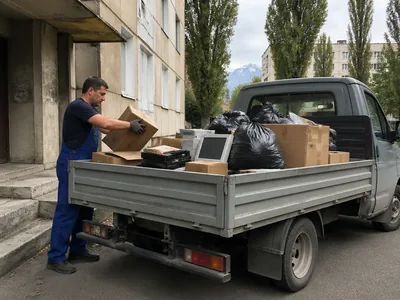
Paper, cartridges, old office equipment, leftover food from the office kitchen. We remove it with a GAZelle or a 5-ton truck — depending on how much has accumulated.
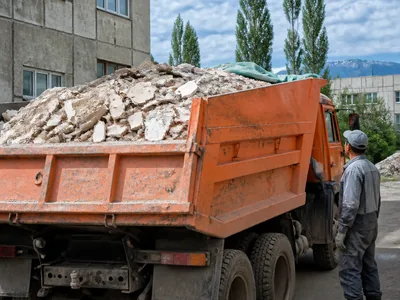
Broken brick, plaster, drywall scraps after renovating an office or warehouse. For this we use a ZIL or a KAMAZ dump truck.
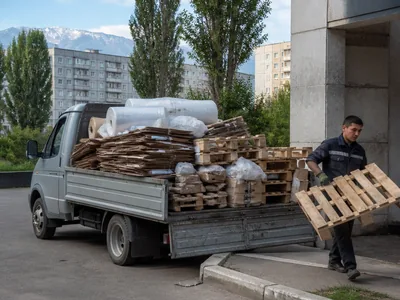
Packaging, pallets, damaged goods from a store or warehouse. We pick up and take them for disposal — no paperwork, but we clean the area.

Food leftovers from a canteen, cafe or restaurant at a company. We haul them in sealed containers so no smell lingers in the yard.
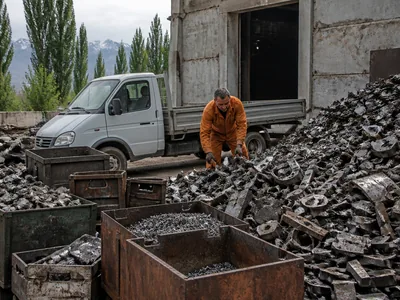
Offcuts, shavings, rejects from the line, packaging from raw materials. We check what it's made of — not everything can go to a regular landfill.
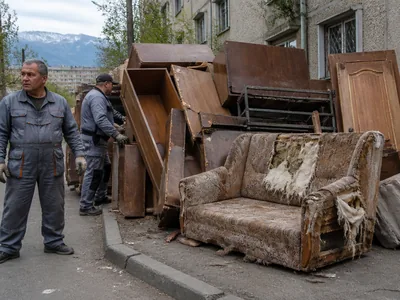
Broken furniture, old doors, shelving, retail equipment. This won't fit in a bag — you need a GAZelle with loaders.
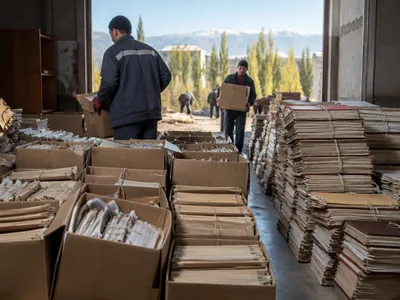
Old folders, boxes of documents, outdated catalogs. Paper is heavier than it looks: a GAZelle fills up faster by weight than by volume.

When everything's in one container — from paper to glass. We sort on site or haul it as is if the volume is small.
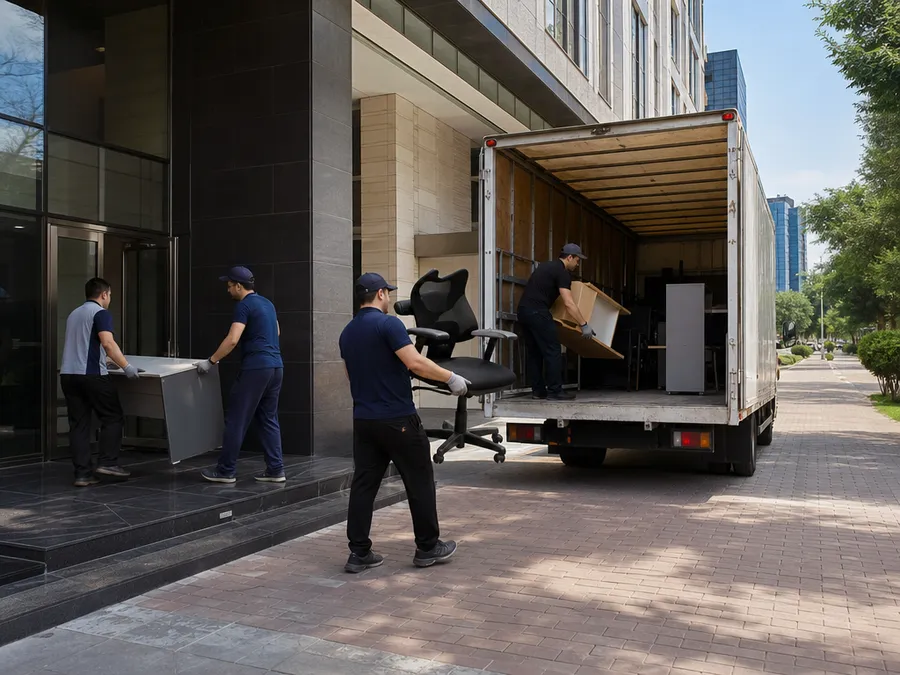
When you need everything gone at once: after a renovation, a move or a deep clean. We arrive, load, and haul away. The price is locked in before the truck is dispatched.
Book a one-off pickup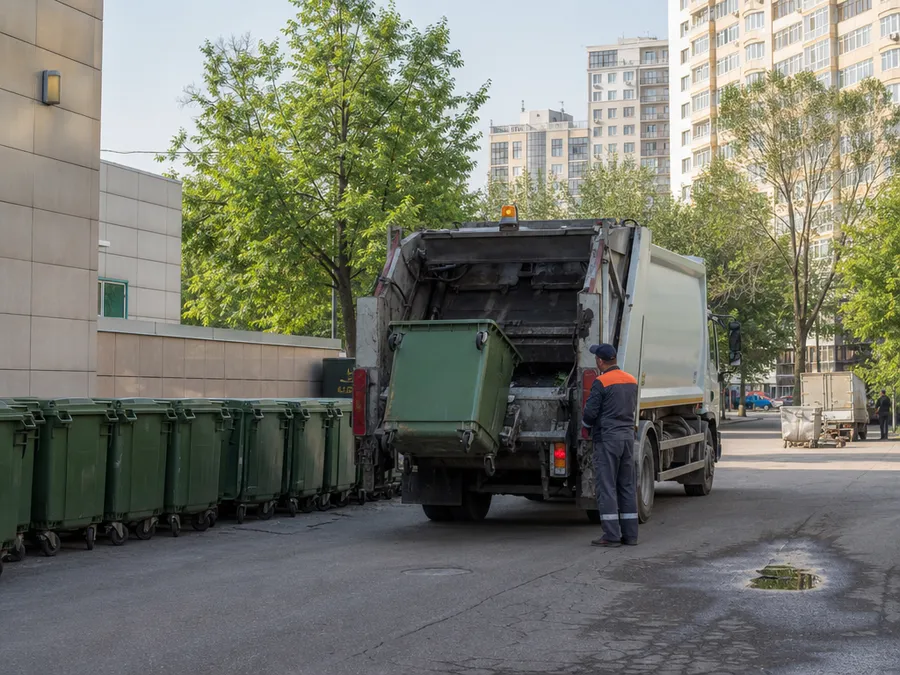
For offices, shops and plants where waste piles up constantly. We set a schedule — daily, weekly or whatever works. The truck arrives at the same time every time.
Discuss a schedule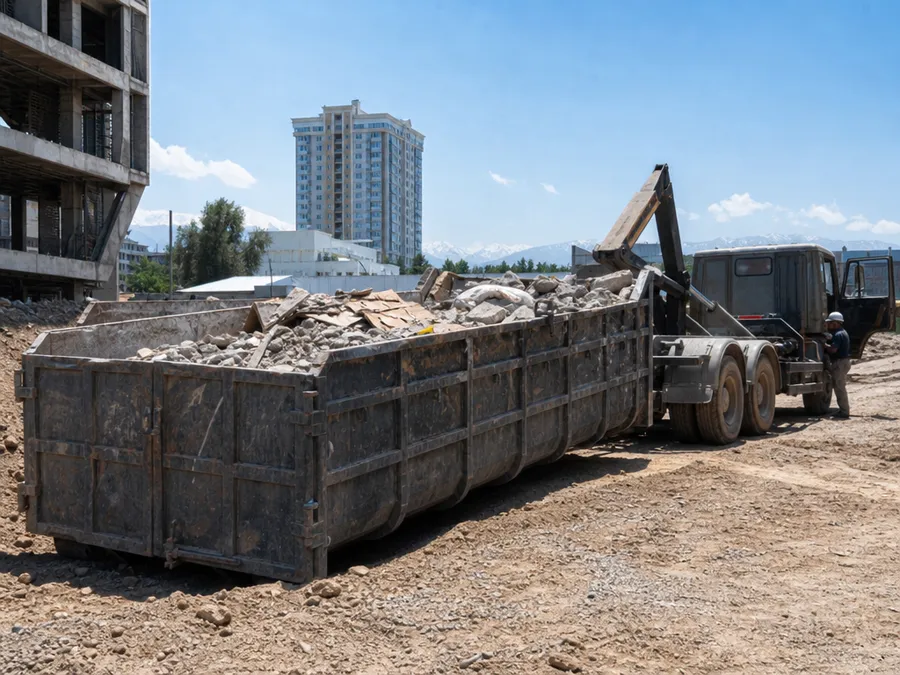
After an office or warehouse renovation, you're left with broken brick, plaster, offcuts. We load it into a ZIL or KAMAZ and haul it away for disposal. We sweep the site.
Get a price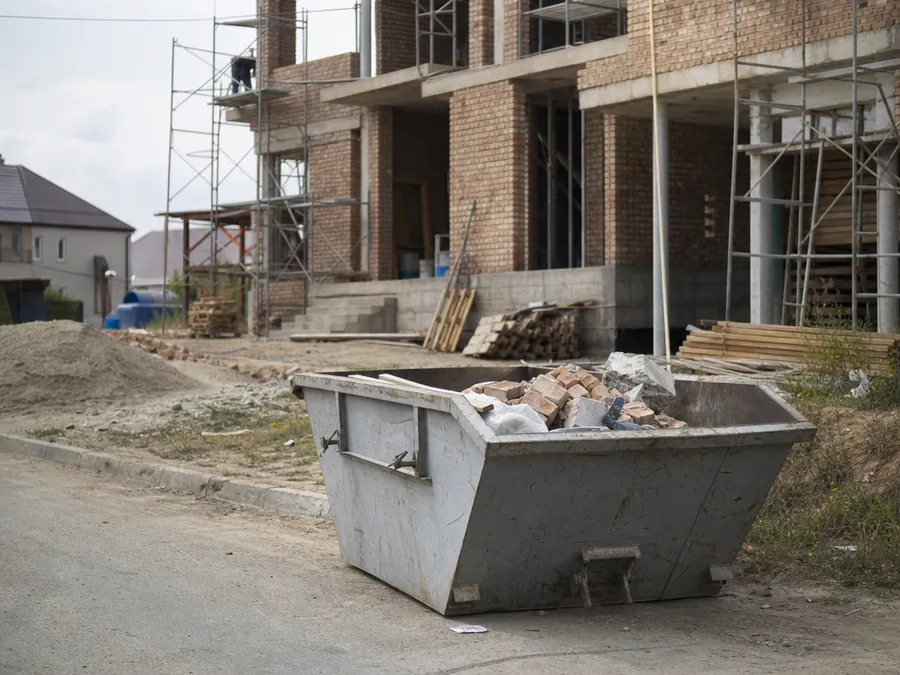
We place a dumpster in your yard or on company grounds — for a day, a week or longer. We match the volume to the job. The price is calculated after we inspect the site.
Message us on WhatsApp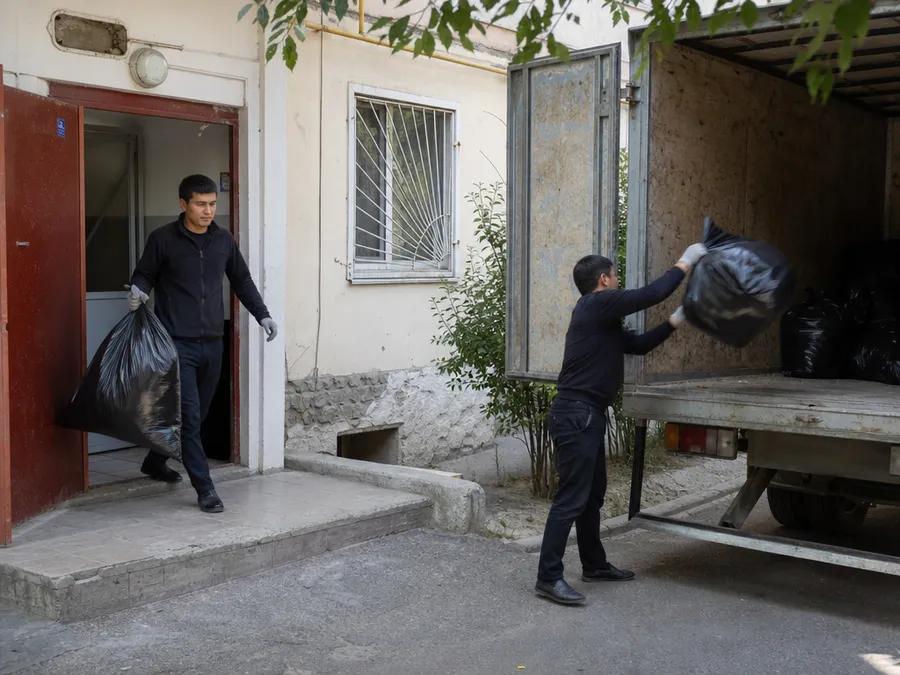
If the waste is in a basement, on an upper floor or in a far corner of the warehouse, you need people. Our crew carries it out, loads it and sweeps up after themselves. We work by the hour or per trip.
Book loaders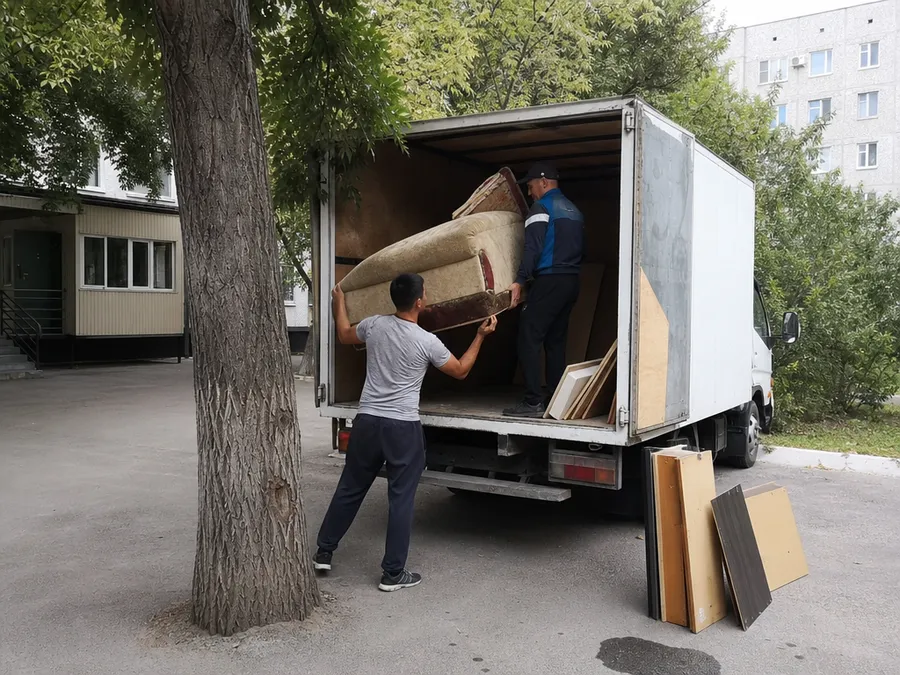
Old furniture, safes, shelving, retail equipment. This won't fit in a regular GAZelle — we send a KAMAZ or a dump truck. Loaders will help carry it out.
Book removalBelow is our full fleet and per-trip prices. If you're not sure what to order, just describe the job: we'll pick the right truck for your volume and access.




Valid from August 2026 · price per trip within the city
| Equipment | Volume | Payload capacity | Price per trip | Extra hour |
|---|---|---|---|---|
| GAZelle 1.5 t | 12 m³ | up to 1.5 t | 30 000 ₸ | 6 000 ₸ |
| GAZelle 2.5 t | 16 m³ | up to 2.5 t | 35 000 ₸ | 9 000 ₸ |
| Truck 5 t | 25 m³ | up to 5 t | 40 000 ₸ | 12 500 ₸ |
| ZIL dump truck | 7–12 m³ | up to 7 t | 40 000 ₸ | 12 500 ₸ |
| KAMAZ dump truck | 15 m³ | up to 20 t | 55 000 ₸ | 15 000 ₸ |
| Howo dump truck | 25 m³ | up to 40 t | 60 000 ₸ | 15 000 ₸ |
| PUHTO (skip) | 8–10 m³ | up to 7 t | 45 000 ₸ | — |
| Multilift | 20 m³ | up to 12 t | 100 000 ₸ | — |
| Skip | 27 m³ | up to 15 t | 135 000 ₸ | — |
| Max skip | 32 m³ | up to 20 t | 160 000 ₸ | — |
Prices apply within Almaty city limits. Outside the city, mileage is added — we calculate it in chat before dispatch.
Not sure which truck you need? Send a photo — we'll pick one for you.
Message us on WhatsAppPeople often ask to add loaders, a loader or a one-off basement clear-out to their removal. All of this is booked together with the truck, not as a separate trip.
Five steps from "hello" to the departing truck. No surprises in the middle.
Order a truckMessage us on WhatsApp or call. Describe what kind of trash it is and where it's located. A photo of the area or premises speeds up the estimate.
We calculate the volume, choose the equipment, and give you a price. We lock it in before dispatch — the amount won't change after loading.
The truck arrives at the agreed time. If needed — before opening or after closing, so we don't disrupt your work.
Loaders carry the trash out of the premises, basement, or yard. We dismantle and saw up large items so they fit in the truck.
We take the trash to disposal. After loading, we sweep the area — leaving it as clean as it was before your request.
A few typical business sites: what it looks like before removal and what's left after.
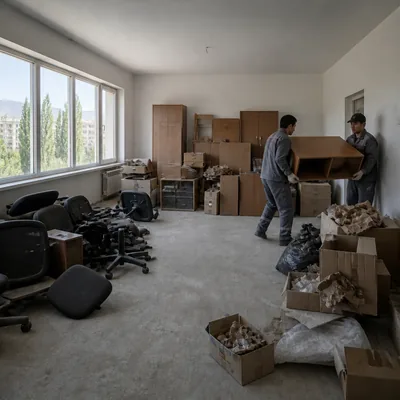
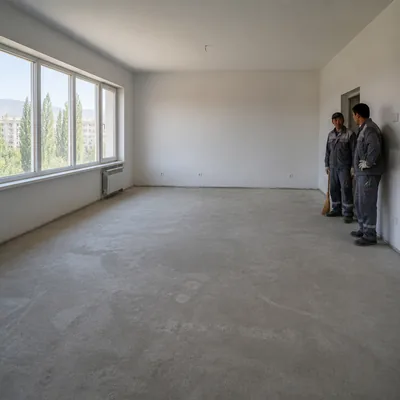
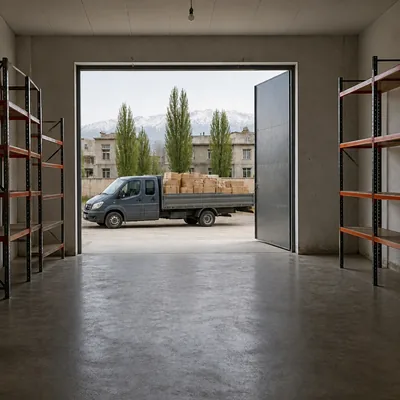
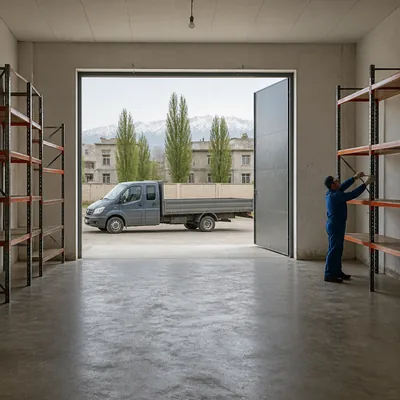
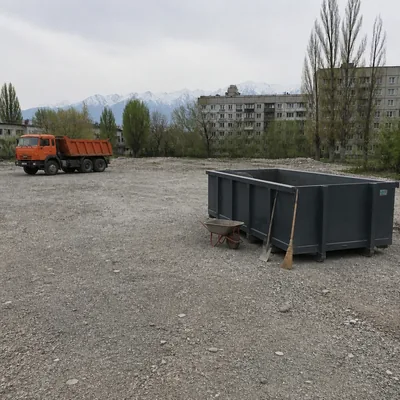
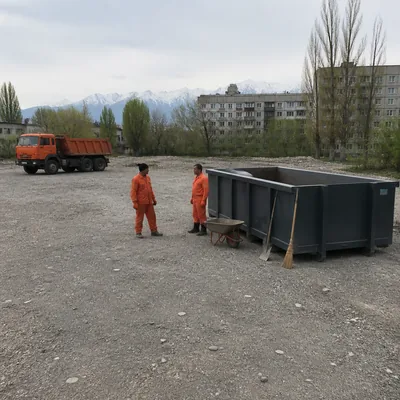
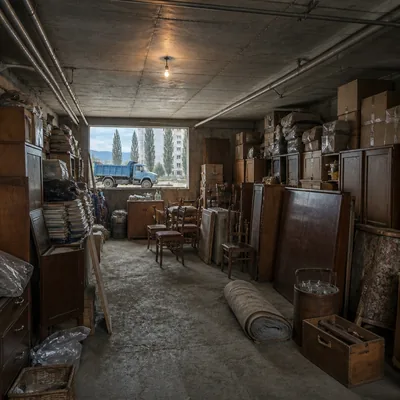
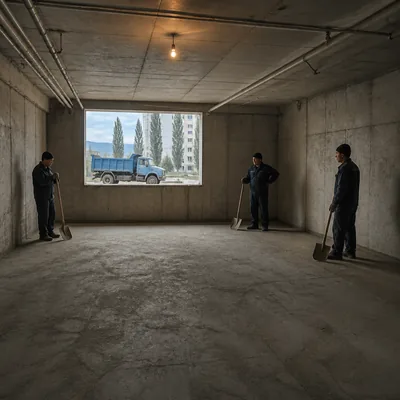
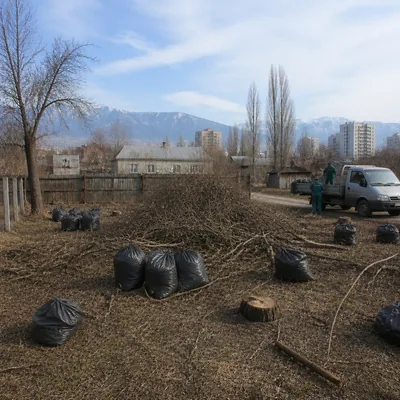
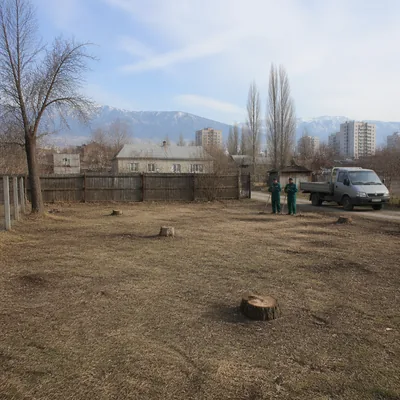
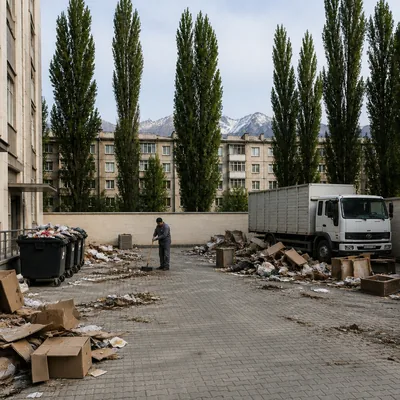
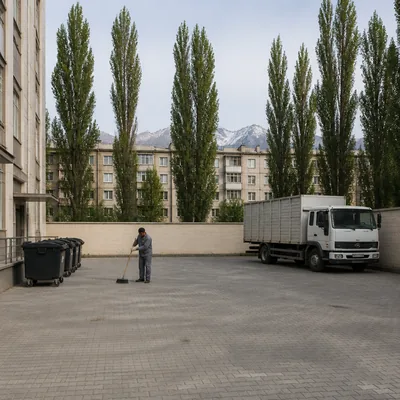
A crew and a driver come to your site. Below are the people you'll most often see in the yard or at the gate.







Usually the call goes like this: "We have an office on Abay, we've piled up three cubes of old furniture and boxes, can you send a truck tomorrow by ten?" Or: "We're a shop in Zhetysu district, every day there are boxes and packaging, we need regular commercial waste removal, but not at one in the afternoon — while the loaders are still here." Both requests are about the same thing, but they're handled differently. In the first case it's a one-off trip, in the second it's a schedule. And if you don't sort this out from the start, you can end up paying double or getting a truck that won't fit in the yard.
Businesses are trickier than apartments for three reasons. First — paperwork: the waste needs to go on the books, not just be carried out to a dumpster. Second — volume: a company rarely has "about the same as everyone else"; it's usually either very little (office dry waste) or suddenly a lot (a warehouse closed). Third — neighbors and the management company, who don't like strangers' trucks parked in the yard all day. Below is what we discuss with the client before sending a truck, and what we're asked most often.
This isn't some instruction from the internet, but working notes. I might be wrong somewhere, but from experience — it's usually like this. For example, waste removal for businesses almost always goes faster in the morning midweek than on Friday evening: same price, but the truck isn't stuck in traffic. And I've never once seen a request calculated correctly over the phone without a photo. One time a client said "two cubes," we showed up — and there were eight. Good thing we had a bigger truck available.
There are almost never scales on site. Not in your office, not in our truck. And that's fine, because you're not paying for tons but for how much space the load takes up in the truck bed. But clients still start with "we have about three hundred kilos" — and that's where the confusion begins. Three hundred kilos of old furniture and three hundred kilos of cardboard are, sorry, a fourfold difference in volume. So we count in cubes, not kilos.
Different waste has different density, and that's where both sides trip up. Compressed cardboard from appliances is almost a monolith — a cube weighs nearly two hundred kilos. But styrofoam or old soft furniture in the same cube will be forty to fifty. So you give us the weight, we send a truck for that weight, and it fills up a third of the way by volume. Or the opposite: a GAZelle leaves overloaded because you gave the volume, but inside are concrete chunks from a renovation.
So the right answer to "how much waste do you have" isn't a number but a description. What exactly is there, what it's packed with, does it fit in bags, is it stacked. From that, volume is calculated in a minute, and it'll be more honest than any eyeball weighing.
Household benchmarks we've had in our heads since day one. A disassembled filing cabinet is about 0.4 cubes, assembled it's a full 1.2. One standard office desk is around 0.5 cubes. An office chair is 0.3–0.4. A box that held A4 paper is about sixty liters, and ten of those make half a cube. Cartridges, old monitors, PC towers — count those individually, each tower is like a small nightstand.
Another thing: furniture almost never goes into the truck the way it stands in the office. It gets taken apart, or at least the doors and drawers come off. After disassembly the volume drops by about thirty percent, but you get a pile of hardware and particle board that also needs to go somewhere. This is where estimates go wrong most often — people count an assembled cabinet but load a disassembled one, or the other way around.
A heap is its own genre. After a renovation, after a warehouse move, after a store closes. Measuring by bags makes no sense here because nobody counted the bags. You look at the heap and estimate the base area and height. A heap two by two meters and waist-high is about two cubes. The same heap at human height is already five or six. Mentally break a sloped heap into rectangles and add them up, don't try to guess with a single number.
A separate note: a heap is almost always packed denser than it looks. Heavy stuff at the bottom, light stuff on top, and from the outside you only see the light stuff. Check what's filling the base: if it's leftover screed or tiles, the volume will be smaller but the weight noticeably heavier than you thought.
Here's a short list of what to clarify when you book commercial waste removal so we can estimate the volume without a site visit:
Waiting for an estimator takes a day and costs money, while a photo is already in your hand. Shoot so it's clear, not pretty. A wide shot of the heap from floor to ceiling. Then separately whatever raises doubts: a heavy base, metal parts, large equipment. If the furniture is in a room, ask someone to stand next to it — a person in frame gives scale better than any tape measure.
And don't tidy up before shooting. The more honest the shot, the more accurate the volume. We don't need a showpiece, we need a working one.
From photos we usually quote the volume to within half a cube, and that number determines which truck fits. Mistakes here cost the most, because the wrong body means either a second trip or empty air in the truck that the client pays for anyway.
If you really don't want to calculate anything — don't. Just say: "two offices, a hallway, all old." We'll ask five questions and figure it out ourselves. In practice that's faster than you hunting for a tape measure and trying to remember the office area. That's how waste removal for businesses works most of the time — by description and photos, no estimator visit.
We once went to an office on Dostyk — three rooms, and we hauled out seven cubes. The owner had warned us: "just boxes, just paper, small stuff." In reality, half the volume was old armchairs and a safe nobody could budge. That never happens with household waste: there it's one bin, maybe two. With companies, commercial waste removal almost always starts with a surprise in the corner that everyone forgot about.
The difference isn't in the amount, it's in the nature of the load. A home bag can be lifted with one hand. Office dry waste has to be bagged in five-to-seven-kilogram sacks, and furniture and equipment need to be dismantled on site, otherwise they just won't fit through the doorway. And each type has its own disposal: paper goes separately, equipment separately, construction debris separately. You can't just dump it all in one container.
Here's what usually piles up if you walk through a typical office:
Now let's go in order, because each type dictates its own loading.
Paper is a deceptive load. A kilogram weighs little, but a cubic meter pulls three to four hundred kilograms if packed tight. That's why we always ask: is the archive in folders or loose? Folders themselves add cardboard and plastic, and the volume grows by a third. Office equipment can't be thrown into the common body — glass and plastic fly, and circuit boards and batteries need separate disposal. In my opinion, it's easier to sort into three piles right away: paper, equipment, everything else. Loading then goes twice as fast, and the truck leaves once, not twice.
From the warehouse, waste flows steadily, without spikes. Cardboard, stretch wrap, foam, pallets. Foam is a separate headache: it crumbles, sticks to the sides, and you have to sweep it out with a broom afterwards. Do pallets burn? No, but they take up space as if there were three times as many in the truck as there actually are. Such leftovers are better picked up on a schedule rather than one-off, because by the time the truck arrives, the pile has grown to the ceiling. Here commercial waste removal turns into not a run but a timetable — once a week or twice, depending on turnover.
| Type | Approximate weight per cubic meter | Loading specifics | Where it goes |
|---|---|---|---|
| Office dry waste | Three to four hundred kilograms if packed tight | Five-to-seven-kilogram bags, many trips | Paper separately, the rest in bulk |
| Packaging and warehouse leftovers | One to two hundred kilograms | Foam crumbles, pallets are bulky | Cardboard and film for recycling |
| Furniture and equipment | Four to six hundred kilograms | We dismantle on site, otherwise it won't fit through the doorway | Equipment separate from particleboard |
| Construction debris after renovation | From eight hundred kilograms | Only in bags, otherwise it tears the truck body | To the site, we crush it if needed |
Let's get back to furniture — it's worth it.
Moving out and closing down is always a scramble. People pack things into boxes and leave the furniture as is: cabinets, safes, shelving. You can't budge a safe until you take the shelves out, and a cabinet won't fit through the door until you remove the doors. That's why we ask for photos in advance — a picture shows where disassembly will be needed. Four people and half an hour of work versus two hours of fiddling if you show up without tools. Particleboard after getting wet weighs almost as much as concrete, and that's visible in the photo too. If you're planning waste removal for legal entities on the closing day, it's better to give a day's notice: then the truck will park at the right entrance instead of circling the yard.
Renovating a rented office is a whole different story. The management company demands everything be removed before the handover act is signed, otherwise the deposit won't be returned. Tiles, plaster, profile offcuts, old linoleum. A cubic meter of this debris weighs from eight hundred kilograms, so a GAZelle takes less than it seems by volume. You can't mix it with paper: dust and fine crumbs clog everything nearby. And you can't throw it in the shared container in the yard — by weight and composition it's no longer household waste, and the management company will come down on you for that. We haul it on a separate run, to the site, carefully.
Let's make it a simple rule: sort by type first, then calculate the volume. One conversation about sorting saves a whole run — and honestly, that's more than any discount.
A one-time request is when the waste appears once and won't appear again. Tenants moved out of an office on Seifullin, leaving chairs, cabinets, boxes of paper. A room was cleared for a meeting room, everything extra was taken out. An old sign and banners were torn down. Nothing to calculate here: a truck arrives, picks it up, leaves. That's it.
The sign is simple. If you can't say what exactly will pile up in a week, you don't have a schedule — you have a one-time run. From experience, I know: nine out of ten office requests are like that. People call when there's nowhere left to put things, not when they want to build a system.
And another point about an empty truck bed. The truck comes to you not from the next yard but from the base. If there's just a couple of bags of waste, you still pay for the full run. In my view, that's fair — but not worth it if you haul that way every week.
A schedule appears where waste flows steadily. A store, cafe, warehouse, salon, production facility, clinic. What matters here isn't the truck but the timetable: so they come not whenever but before opening or after closing, while the loaders are on site and the entrance is clear.
By frequency, it works out roughly like this.
The day of the week isn't picked at random either. If your goods arrive on Monday, it makes sense to schedule removal for Tuesday or Wednesday, when the pile of packaging has already gathered. Otherwise the truck will come to an empty yard.
We fix the delivery time once and stick to it. A two-hour shift is a different schedule, and it breaks your goods acceptance.
The most common thing I hear: "We have a schedule, but then suddenly the warehouse got cleared out." That happens all the time. The schedule covers the baseline, a one-off truck handles the peak. And it's not two separate contracts — it's one client with two types of requests.
The point is, regular waste removal for businesses doesn't stop you from calling an extra truck for a one-off pile-up. On the contrary, the dispatcher already knows your address, the floor, where the container is and which entrance is free. No need to explain it twice.
Now, about how not to pay for an empty container. This is the biggest mistake when combining the two.
And here's what's important to understand: two runs aren't always more expensive than one. If the first run leaves with half a container, the second picks up the rest, and together it's exactly the volume you're paying for. Overpaying starts when half-empty GAZelles are sent back and forth.
There was a case on Rozybakiev Street: a store kept to a schedule, then a renovation happened and there was a mountain of boxes. I said — let's not send two trucks, but one bigger one, and take everything at once. Saved a run. A week later they call again: "Come over, we've got another pile-up." Well, that's just normal work.
Two offices, three shops, a warehouse outside the city — that's no longer one schedule, it's a route. And that's where one-off and regular commercial waste removal start living together: some locations are covered by scheduled trips, others on call.
Here's how it works in practice. Points in the same district are best collected on the same day — the truck goes in a loop instead of crisscrossing the city twice. If the addresses are at opposite ends, it's cheaper to assign a separate truck to each than to run one through traffic.
Outside the city, mileage adds up. That's not a hidden surcharge, it's an honest expense: fuel, time, the return trip. Give us the address upfront — we'll include it in the quote along with the removal, not as a separate surprise.
And lastly. Don't mix schedules from different points into one request if they have different people in charge. Confusion starts with a small thing: the loader shows up at the warehouse, but the keys are with the store manager. Different addresses — different contacts in the request.
Let me start with what I hear most often: "We just need it hauled away, we'll handle the paperwork ourselves." A week later the accountant calls and asks for the certificate. So we collect the paperwork right away, before loading. Commercial waste removal without documents is like a business trip without an expense report: you went, but you can't prove it.
Before the truck is dispatched, the client gets an invoice — by email or messenger. The invoice shows the volume, address, and date. If your waste removal request for a business goes through a tender or procurement, send us your details and we'll put them on the invoice so it goes straight to payment.
The truck arrived, the loaders loaded it, you signed the waybill or the delivery note — whatever you're used to. After the trip we hand over the completed works certificate. It has everything that's on the invoice, plus the removal date. If the waste is being written off the books and accounting needs a document specifically about disposal, message us on WhatsApp before the removal — we'll look at your case and tell you what we can provide and what we can't.
Now, step by step, how it looks in real life, not in an instruction manual.
Before arrival — the invoice and confirmation of the date. Sometimes they ask for a contract, if the company has a rule to work only under a contract. We can prepare a contract, but for a one-off trip an invoice and act are usually enough. For a regular waste removal schedule for legal entities, we usually formalize it with a contract, because there are many trips and it's easier to specify the frequency.
After the truck arrives — the completed works certificate. We stamp copies if you ask. We don't do electronic document flow, but we send scans the same day.
Accounting usually needs two things: an invoice and a certificate. The invoice covers payment, the certificate covers completion. If they ask for anything beyond that for the write-off, message us on WhatsApp before the removal — we'll tell you straight what we can provide. Keep everything: six months later auditors may come asking, and a folder of certificates really saves the day.
If you have several sites, we make one act or break it down by address — whichever is more convenient for your accounting. The main thing is that the act shows the volume and date for each address. Otherwise it won't add up during an inspection.
A common story: the office is in Almaty, but the director is in Astana or even abroad. Then the certificate is signed by an authorized person — an office manager or administrator. A power of attorney isn't always needed, but if accounting insists, send us a scan and we'll attach it to the certificate.
Sometimes the signature is needed urgently, but the person isn't there. Then we email the act, you sign it, scan it, and send it back. We can send the original by mail or courier, but that's a separate arrangement.
We stamp copies of the certificate with the company seal. If you need several copies, tell us in advance — we'll make them. Sometimes people ask for a certified copy of the invoice — that's no problem either, just let us know you need the invoice stamped, not just a printout.
We stamp every page if the document is multi-page. This isn't a formality but a requirement of some accounting departments. And yes, waste removal for legal entities isn't just a truck and loaders — it's also this paperwork. But then you don't have to send things later and prove anything.
| Document | When we issue it | Who signs | Stamp needed |
|---|---|---|---|
| Invoice | Before the truck arrives | Accountant or manager | Yes, if required |
| Waybill or trip sheet | At loading | Responsible person on site | No |
| Act of completed work | After the trip, scan — same day | Authorized person | Yes |
| Disposal documents | We'll discuss on WhatsApp before pickup | Depends on the case | We'll tell you in advance |
| Contract (for a schedule) | Before the first trip | Manager | Yes |
That's it for the paperwork. If we forgot something or you need to add something — call us, we'll sort it out. The main thing is not to leave documents for later: a month down the line it's harder to collect them, and accounting doesn't like to wait.
Read this far and still not sure about the volume? Send us a photo — we'll calculate and give you a price.
Message us on WhatsAppThe first question from an accountant usually isn't "how much does it cost" but "where are you going to put it." Makes sense: if an inspection comes tomorrow, or the director just asks where the stuff written off the books ended up, "we hauled it away" won't satisfy anyone. So I explain it as it is, no fog. The truck with your load isn't heading to the nearest dumpster or a ravine behind the power plant — it's going to a site that accepts commercial volumes.
Even before loading, while you haven't shut the door yet, we sort the load into categories. Not out of love for order — because of money and because a mixed truck is more expensive to sort later. Metal, glass, paper and cardboard, plastic, wood, furniture remnants — all of this doesn't travel in one heap.
Here's what we usually ask to keep separate, if possible:
Electronics are a separate story. There are cartridges, circuit boards, sometimes batteries. We pick these up by hand, not scoop them with a bucket, and not because they're expensive, but because if such things go to the site together with furniture, the truck will be turned away at the entrance. The client doesn't see this at the volume stage, but it's immediately visible at unloading.
The second stage is reloading. Sounds boring, but this is where time is lost, and that's why I talk about deadlines in advance. The GAZelle or ZIL that was parked at your office is not the final destination. Then the load is either reloaded or goes to the site as is, if it's homogeneous.
Why can't you dump everything into one pile? The reason isn't philosophical. The site accepts by category, and if a truck arrives with wood, metal, paper, and construction debris mixed together, it's either sent for additional sorting or turned away. Both mean time. And time in this job is exactly the money that just goes down the drain while the truck waits in line.
Another nuance is weight. A cubic meter of furniture and a cubic meter of paper weigh differently, and the site calculates the tariff by weight, not by your truck's appearance. Anyone who's done a one-time haul knows: three volumetric cubes of boxes go through easier than one dense cube of broken tiles. That's why on the request I always ask what exactly is inside, not just "how many cubes."
Not everything goes into the ground, and that's not our whim. Part of the flow can't be buried at all — properly speaking, this is because some fractions decompose for decades or release into the soil what later comes up in water. Lamps, accumulators, batteries, chemicals — they have a separate path.
What usually happens to such fractions, in plain language:
Don't think this is about saving the planet just to look good on a website. It's simply cheaper than dealing with a fine later. Plus, disposal is exactly what separates commercial waste removal from calling a buddy with a GAZelle: your buddy will haul it somewhere much closer, but you'll never know where.
The question everyone asks. How do you prove the load wasn't dumped in a field past Borotka while you went back to your reports? It's so simple it's almost embarrassing to explain.
First, the client has the right to see what's going on. Want to? Ride along with the truck — there's usually room in the cab. Second, we photograph loading and unloading: before and after. Third, if you need a disposal document, message us on WhatsApp before pickup — we'll look at your case and tell you what we can arrange. We always provide an invoice, contract, and completion act — that's your protection with the director or an inspection: they show the volume, address, and date, not just that payment was made.
And here's my honest take. If someone promises commercial waste removal at half the market price and stays quiet about the disposal site, the issue isn't the discount. The issue is where your waste ends up. The difference between 'removed' and 'disposed of' isn't visible on loading day. It shows up later—on the balance sheet, in the paperwork, and in your accountant's peaceful sleep.
Tuesday, nine in the morning. A GAZelle in the courtyard of a business center on Furmanov, loaders carrying boxes out of a third-floor office. An hour — done. The same volume on Friday at seven in the evening: the courtyard is packed with cars, the elevator is busy, the loaders are waiting. A four-hour difference. So if you ask when waste removal for companies goes smoothly and without hassle, the answer is simple: weekdays, morning, mid-month.
From experience, the most predictable slot is nine to twelve. More crews available, Almaty traffic is tolerable, the management company is still awake. After lunch it starts: traffic jams, closed barriers, security on lunch break. Commercial waste removal in that window costs more not because the rate changes, but because the truck sits longer.
Morning wins in practice. The truck arrives, the loaders are there, carrying goes without pauses. During the day, traffic on Al-Farabi adds up, and in the evening — a packed courtyard. The hourly rate doesn't change, but if a trip takes twice as long, the second truck might not make it the same day. The numbers are simple: a 12 m³ GAZelle loads in 40 minutes in the morning, and in an hour and a half in the evening. The difference turns into downtime.
Ask the foreman: "When will the elevator be free?" If there's no answer, better to move the pickup to the morning. Waste removal for organizations isn't about the speed of one truck, but how many trips it makes before the end of the shift.
On Saturday and Sunday many offices are closed, but that's exactly when it's convenient to remove what's blocking the way. Stores, cafes, warehouses are open—and they need to finish before opening. On weekends there are more trucks available, but some courtyards are closed to heavy vehicles. On weekdays there's no such problem, but there is traffic.
If you have a production facility or warehouse, weekends are golden. No one bothers you, you can set a 32 m³ container and load calmly. For office workers it's the opposite: on Saturday there's no one to sign the act, so Tuesday–Thursday is better. Below is a table to help you choose a window by facility type and day of the week.
| Facility type | Best day | Best time | Waiting risk |
|---|---|---|---|
| Office in the center | Tuesday–Thursday | 09:00–11:00 | low |
| Neighborhood store | Monday–Wednesday | 08:00–10:00 | medium |
| Warehouse outside the city | Saturday | 10:00–14:00 | low |
| Cafe, restaurant | Tuesday–Thursday | 15:00–17:00 | high |
| Construction site | weekdays | 07:00–09:00 | medium |
From the 25th to the 5th, accounting closes the month. During these days, companies haul away everything they've piled up to get it written off. Trucks are booked tighter, and pickup may slip by a day. If you have a paper deadline, order three or four days ahead. Otherwise, commercial waste removal risks sliding to the next week — and your signature with it.
End of quarter is the same story, only worse. Add seasonality: more packaging in autumn and spring, more containers and organics in summer. December brings post-holiday boxes, January brings Christmas trees. Same thing every year.
Sometimes you need it gone tomorrow, but there are no available GAZelles. Here's how we handle it. It's also the answer to how not to derail waste removal for companies in a crunch.
And most importantly: don't leave your request for the last day. Commercial waste removal isn't a taxi — the right truck for your volume is matched in advance. Monday morning has more available trucks than Friday evening. Use that.
Before you request commercial waste removal, remember the essentials: volume, paperwork, timing, waste type. If you've already read the article, you know what we recommend. If not, here's the summary. It'll help you avoid overpaying and missing deadlines.
People usually underestimate waste volume. Office dry waste looks small until you start loading it. That's why we always ask for photos. Snap the pile from different angles, add a tape measure or an object for scale. From the photos, we'll tell you which truck you need: a GAZelle, a dump truck, or a 32 m³ skip. Without photos, the manager can only give you a range. Accuracy down to the cubic meter saves money.
Remember: weight and volume are different things. Light insulation takes up a lot of space, while concrete rubble takes up little but weighs tons. If in doubt, call us for an on-site estimate. It's free, but only within the city. Outside the city, it's by mileage.
For waste removal for legal entities, paperwork is no less important than the loading itself. Accounting needs a contract, invoice, and act. Without them, the waste can't go on the books. We prepare this package: contract, invoice, completion act, all with stamps. Disposal documents are a separate matter: message us on WhatsApp before pickup, and we'll see what we can arrange. If you have several locations, we issue separate acts. Tell us in advance which documents you need — your accountant will appreciate it.
Another thing: some companies ask you to specify the hazard class. Regular office and construction waste is class 4–5. Mercury lamps and batteries we take as a separate request: apart from other trash, to a specialized company. Hazardous medical waste we don't take: that needs a licensed operator. Don't risk it, the fines are big.
Working hours — Mon–Sun, 09:00–21:00. If you need the truck at opening, book the evening before. In the morning the dispatcher will confirm the time. For regular clients we set pickup in the same window every time, so you don't have to guess. But if you're unloading at 11 and we show up at 13 — that's not sabotage, it's traffic on Ryskulov. Let the manager know if the time is critical.
Also: don't order a truck "just in case." If there's not much trash, it's better to wait and let it pile up. Two trips will cost more than one, even if the volume is small. The manager will suggest the best interval.
The final checklist. Ask about the loading method: do you need movers or will you handle it yourself. Clarify the floor and whether there's an elevator. If it's a freight elevator — great. If not — factor in the time to carry everything out. The manager will ask about access: where the truck will park, whether it will block the exit. And most importantly — lock in the price. We fix it before dispatch; after dispatch it doesn't change. If something changes — call right away, we'll sort it out on the spot.
That's it. With these points you definitely won't go wrong. And if you still have questions — message us on WhatsApp or give us a call. We're here.
Yes, any waste generated by your operations is business waste, even if you have just two desks and one warehouse. You can't throw it in a regular bin in the yard — that's not us being picky, it's the rule we discuss before pickup. We take office boxes, old furniture, and whatever's left after unloading or renovations.
We estimate from photos and your description: what kind of waste, how much, whether there are bulky items like old cabinets. If the volume is unclear, it's best to take photos from two or three angles and send them via WhatsApp — that way you won't overpay for a trip, and we'll send the right truck. In our experience, the stated volume is almost always underestimated, so having extra truck capacity only helps.
It depends on access. A GAZelle fits almost anywhere, while a ZIL or KAMAZ depends on driveway width and overhead wires. If we can't get into the yard, we park closer to the exit and carry everything by hand — it takes longer, but no surprises on site. Let us know about barriers and parking in advance so we don't waste time.
Ours, on staff, but the crew is booked separately — it's not included in the trip by default. Two for a GAZelle, three or four for a ZIL if there's a lot of heavy waste. If you're ready to carry it out yourselves, the trip will be cheaper: from 30 000 ₸ without a crew.
We take it for disposal — to a landfill, and anything that can be sorted goes separately. We sweep the site after loading so we don't leave a pile and complaints from neighbors or the landlord. If you need supporting documents for reporting, message us on WhatsApp before pickup — we'll tell you what's possible in your case.
We load a second trip or send a bigger truck — that's more honest than cramming it over the edge. The trip price is fixed before dispatch and doesn't change after, extra payment is only for the actual added volume. If you're unsure, it's better to mention the extra upfront.
Yes, some waste isn't ours to haul: hazardous medical waste and industrial chemicals are a whole different story with different rules. Mercury lamps, batteries and leftover household chemicals we take as a separate request: apart from other trash, to a specialized company. Tell us what you've got piled up, and we'll honestly say whether we'll take it or not. Everything else — construction, office, furniture, packaging — we'll pick up.
We work Mon–Sun, 09:00–21:00, so Saturday and Sunday are regular days. We can also discuss evening pickup if your site closes late. Just let us know in advance so the truck fits the schedule.
We discuss the format when you place the order: both cash and arrangements for businesses. The trip price is known in advance — from 30 000 ₸, or 8 000 ₸ per cubic meter if it's easier to calculate by volume. No extra charges for 'complexity' after dispatch.
Yes, we can set up a schedule — once a week, once every two weeks, or as waste builds up. For businesses, it's more convenient than recalculating the volume each time: the truck arrives in an agreed time window, and the same loaders come. We'll discuss the arrangement when you place a request, without paperwork on the site.
Got a question that's not here? Ask — we'll answer in writing, no call needed.
Message us on WhatsAppWe were clearing a basement for a store, there was a lot of old packaging. Daniyar came and calculated everything himself. They removed it quickly, even the neighbor was surprised.
We needed to clear a warehouse, old construction materials were left. Yerlan came and loaded everything quickly. The price was as quoted in advance.
We were clearing the space for a new tenant. Old shelving, papers, a broken air conditioner. They came with loaders and carried everything out in two hours.
We ordered waste removal for businesses after inventory. We waited a bit longer for the truck than promised — about an hour. But otherwise everything was fine, they took it away without questions.
We were closing a spot on Rozybakiev, junk piled up after renovation. Yerlan came, took a look and said one GAZelle wasn't enough, so we got a dumpster. By evening the area was clean, they even swept up.

A warehouse on Ryskulov — empty boxes and stretch film had piled up. They came the same day, one GAZelle was enough. They carried everything out themselves, we didn't even have to help.
Waste removal for businesses is our constant headache. But these guys don't let us down. The truck is always clean, the movers are sober. The price is fair.
We were closing a cafe, old furniture and dishes were left. Dinara processed everything quickly, the truck came in the morning. They removed it and mopped the floor, honestly I didn't expect that.
We have an auto service, and old tires and spare parts had piled up. We ordered waste removal for a business via WhatsApp, sent photos, got a quote. A ZIL came and took everything away. Tires, by the way, are handled separately, but it was convenient for us to do it all at once.
We were renting an office on Seifullin and moving to another district. Old furniture and a pile of documents were left. Daniyar came, looked everything over, said one GAZelle wasn't enough, but a second would arrive in an hour. That's what we did. No extra charges.
We're a cleaning company, we often need removal after cleaning. The guys come through, always reachable. The movers are careful, didn't scratch the elevator.
When we closed the store, there were lots of old shelves and boxes. Askhat came and quickly loaded everything. The price was quoted upfront and didn't change afterward.
Worked on the weekend, came to an office on Abay. Took everything in an hour and a half. Didn't change the price after inspection.
We ordered waste removal for businesses for the first time. I was afraid they'd show up and start adding charges for the floor. No, everything was clear — they quoted a sum and didn't change it.

We ordered waste removal for a business for the first time and were afraid they wouldn't show up on time. We waited an hour longer than promised for the truck. But otherwise — they took everything away fast and clean, even swept the area.
Waste removal for businesses is our constant task. But these guys have never let us down. Even when we're in a crunch, they arrive fast.
We needed old furniture removed from an office, three rooms. Askhat came, looked everything over and said two GAZelles would be needed. We finished in one day.
We have an office in Bostandyk, every month we remove paper and old furniture. The guys show up without reminders, their own movers, no need to look for anyone on the side. They quoted the price upfront and didn't change it.
We rented a space for a warehouse on Tole Bi, the landlord demanded we clear out the junk. I called at noon, they came by evening. A 32-cubic-meter dumpster was loaded in a couple of hours.
We renovated the shop, and there were lots of old shelves and boxes. One GAZelle wasn't enough, so we called a second one. The price was exactly as agreed in advance.
We have a small production, waste accumulates once a month. We signed a contract for waste removal for businesses. They come on schedule, all the paperwork is in order. Only once did they postpone pickup by a day, but they warned us in advance.
We're a cleaning company and often need removal after a clean-up. These guys have been saving us for a year now. Always reachable, arrive at the agreed time.
We were moving offices, had lots of papers and old furniture left. They came fast, took everything. Happy.

We ordered waste removal for a business after closing a shop on Gogol. Furniture, display cases, boxes. Dinara warned us that a 32-cubic-meter container would be cheaper than two runs — and that's how it turned out.
After an office renovation, there were drywall scraps, old doors, cans of paint left. We called these guys. They came Saturday morning and carried everything out in an hour and a half. They really saved us, because employees were coming in on Monday.
Showing 3 of 25
Want the same? Describe your task — we'll calculate and give you a price before the truck arrives.
Message us on WhatsAppChecked us out? Drop us a line — we'll pick the right truck for your load.
Message us on WhatsAppArticles of the Administrative Offenses Code of Kazakhstan, amounts in MCI for 2026, and who's responsible for the garbage — the carrier or the client.
Collection, sorting, crushing, secondary raw materials — the steps in order and what actually gets recycled.
How medical and industrial waste differ from household waste and what's required of the hauler.
Illegal dumps on the outskirts, soil and groundwater: what happens when waste goes to the wrong place.
Send a photo of the pile and the address — we'll tell you which truck fits and how much it costs. The price is fixed before dispatch and doesn't change after.
Tell us how the pickup went — it helps us and anyone choosing a hauler.



