Daniyar
A country house in the suburbs — in winter you can't get there in a car. The GAZelle made it fine. They hauled away an old sofa, a fridge and a pile of rags. Nice that I didn't have to carry anything myself.
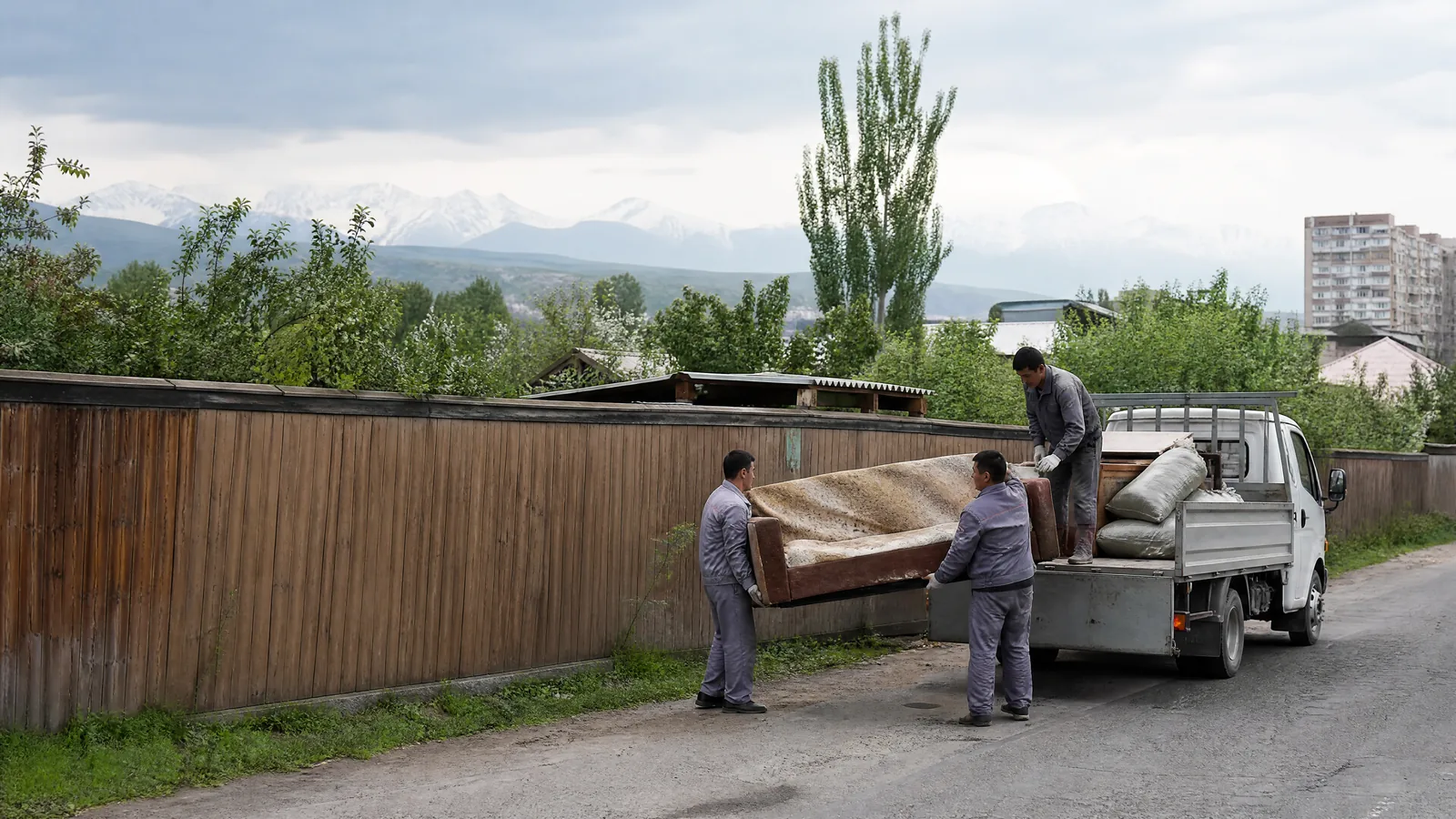
Send a photo of the pile on WhatsApp — we'll quote the trip and pick a truck by volume.
Choose the type of waste, the timing, and the truck — the calculator will show an approximate amount. We'll give the exact one after photos, and after dispatch it doesn't change.
If you underestimate the volume, a small truck will arrive — you'll have to call a second one. Better to send photos, and we'll calculate accurately.
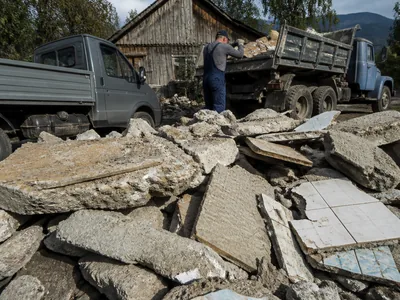
After renovating a dacha, there are chunks of concrete, plaster, tiles, and offcuts left. We haul these with a GAZelle or ZIL, and heavy loads with a dump truck.
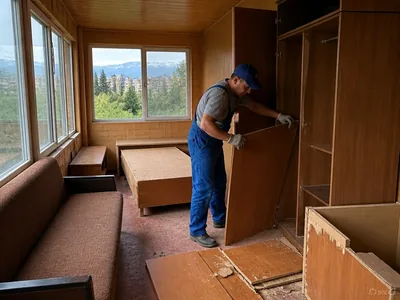
Wardrobes, sofas, beds from dacha verandas and attics. We disassemble them if they don't fit through the door.

Buckets, shovels, jars, rags, old dishes — everything that piled up over the years. Comes in bags or loose.
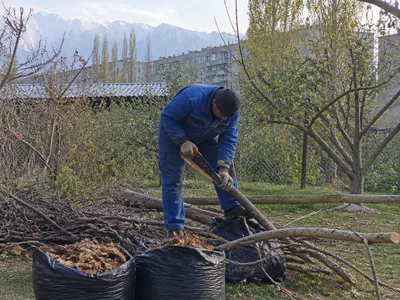
Pruning apple trees, deadwood, raking leaves into bags. Branches longer than two meters we saw on site.
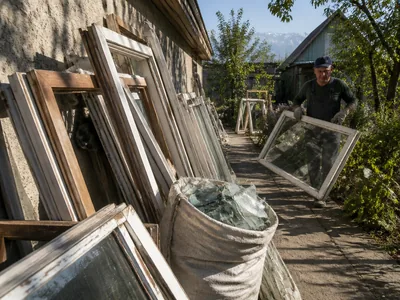
Wooden frames, double-glazed units, broken glass after replacement. We wrap the glass so the loaders don't get cut.
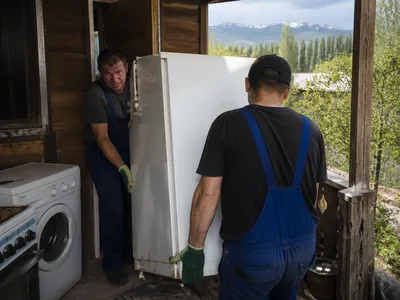
Fridges, washing machines, stoves that have served their time at the dacha. A fridge weighs up to 80 kg, we carry it out together.

Regular trash from a country house: bags, packaging, food scraps. We pick it up together with bulky items if you tell us in advance.

Leftovers from digging a pit, leveling the plot, old turf. Heavy — we count by cubic meters, not by bags.
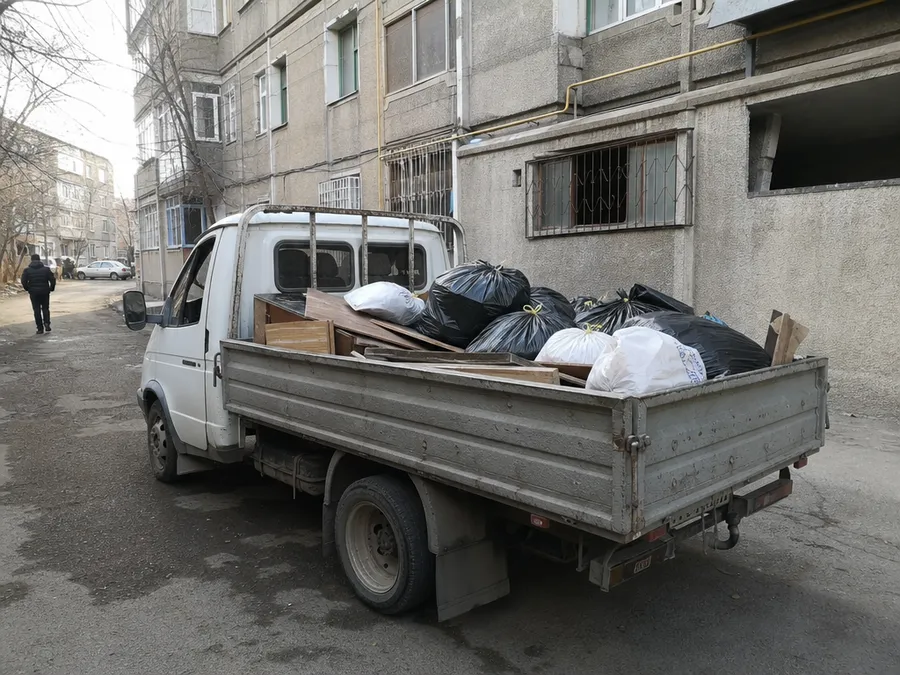
For a small dacha: a couple of cubic meters of junk, furniture, branches. Fits in a 3×2 m bed, can drive into SNT alleys.
Book a GAZelle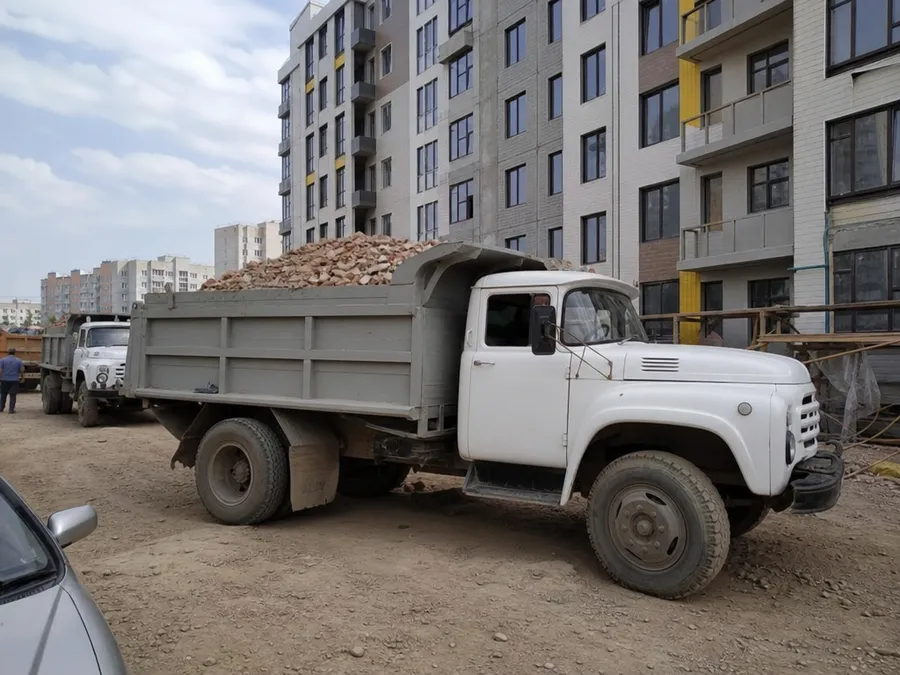
When there's a lot of trash — after renovation, dismantling a shed, uprooting. The dump truck unloads itself, no need to throw by hand.
Order a ZIL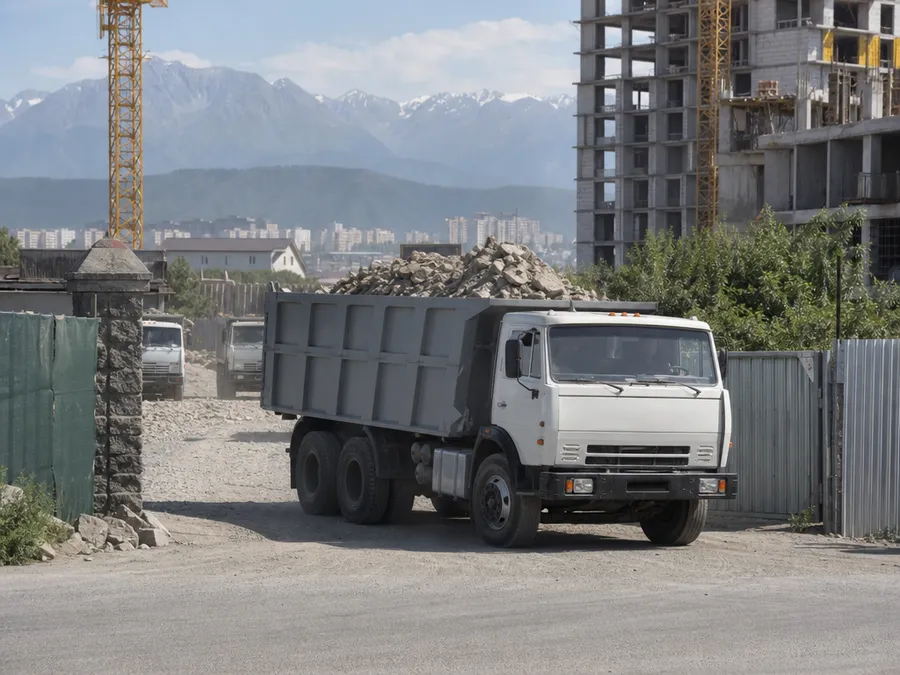
For large plots and construction waste by the ton. Need free access — the truck is long.
Order a KAMAZ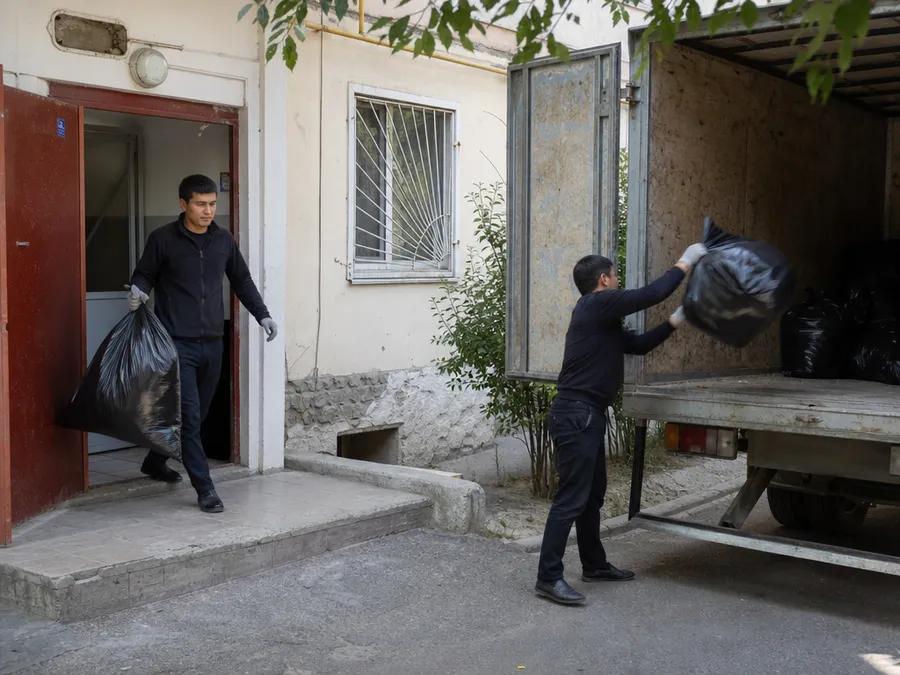
They carry out bags, furniture, appliances from the house and shed. Two for a GAZelle, three or four if the work is heavy.
Need loaders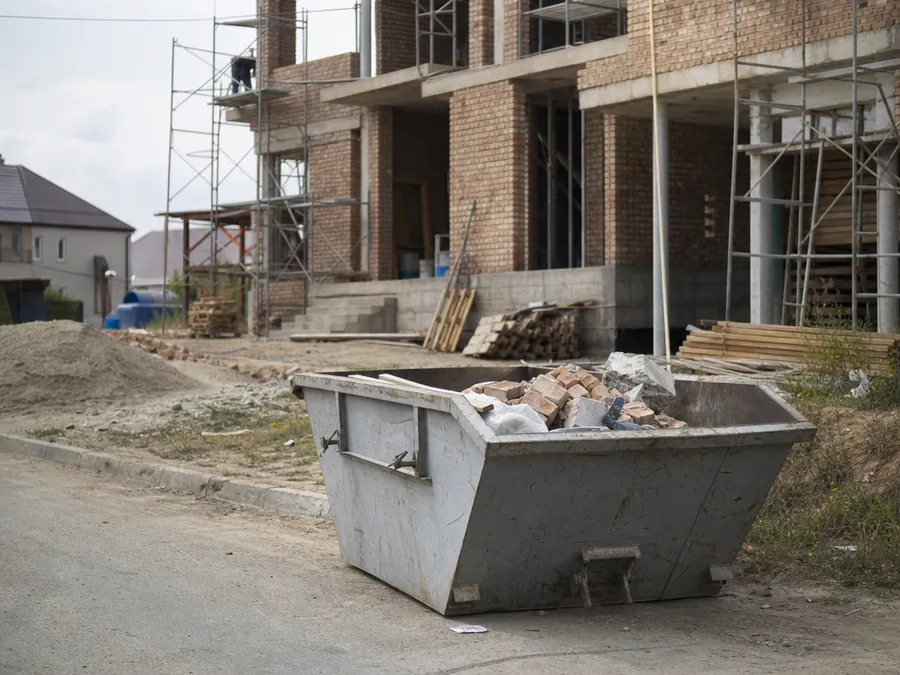
We place a dumpster on the plot for a few days, you throw the trash in yourself. We discuss the term and volume in messages.
Message us on WhatsApp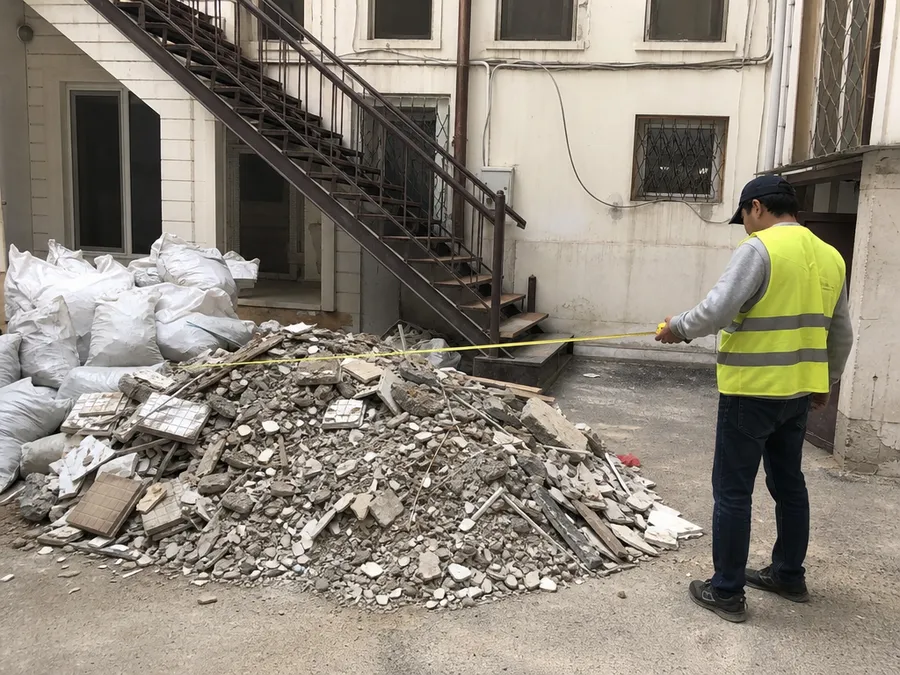
If the volume is small or you count yourself — pay for the actual volume. We measure by the truck bed on site.
Get a priceCountry driveways are narrow, and piles come in different sizes. That's why our fleet has both a 12 m³ GAZelle and a 32 m³ dumpster — for the job, not for what's closer.




Valid from August 2026 · price per trip within the city
| Equipment | Volume | Payload capacity | Price per trip | Extra hour |
|---|---|---|---|---|
| GAZelle 1.5 t | 12 m³ | up to 1.5 t | 30 000 ₸ | 6 000 ₸ |
| GAZelle 2.5 t | 16 m³ | up to 2.5 t | 35 000 ₸ | 9 000 ₸ |
| Truck 5 t | 25 m³ | up to 5 t | 40 000 ₸ | 12 500 ₸ |
| ZIL dump truck | 7–12 m³ | up to 7 t | 40 000 ₸ | 12 500 ₸ |
| KAMAZ dump truck | 15 m³ | up to 20 t | 55 000 ₸ | 15 000 ₸ |
| Howo dump truck | 25 m³ | up to 40 t | 60 000 ₸ | 15 000 ₸ |
| PUHTO (skip) | 8–10 m³ | up to 7 t | 45 000 ₸ | — |
| Multilift | 20 m³ | up to 12 t | 100 000 ₸ | — |
| Skip | 27 m³ | up to 15 t | 135 000 ₸ | — |
| Max skip | 32 m³ | up to 20 t | 160 000 ₸ | — |
Prices apply within Almaty city limits. Outside the city, mileage is added — we calculate it in chat before dispatch.
Not sure which truck you need? Send a photo — we'll pick one for you.
Message us on WhatsAppSometimes you need not just to remove, but also to dismantle, carry out, sweep. These are separate services, but we do them on the same day.
No measuring with a tape over the phone. Five steps, and the plot is empty.
Book a removalDescribe what kind of waste and where to pick it up. Send a photo — it's easier to estimate the volume from it.
We calculate how many cubic meters and which truck can get through. We fix the price before dispatch.
We arrive at the address at the agreed time. Within the city — from 30 minutes, no days off.
Loaders carry it out of the house, shed, garage. Heavy items we saw and disassemble on site.
We take it away for disposal. We sweep the spot where the truck stood — the plot stays clean.
Different plots, different piles. We show where we started and what was left after.
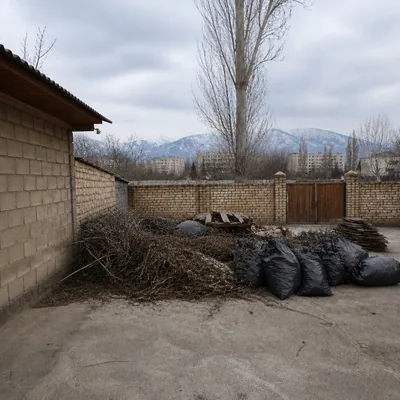
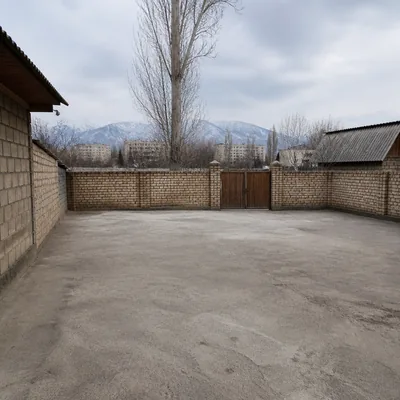
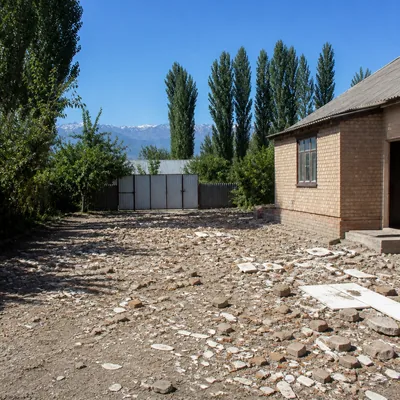
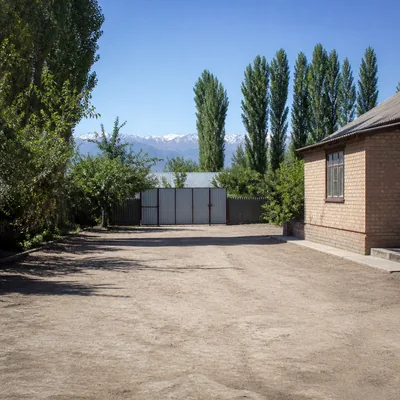
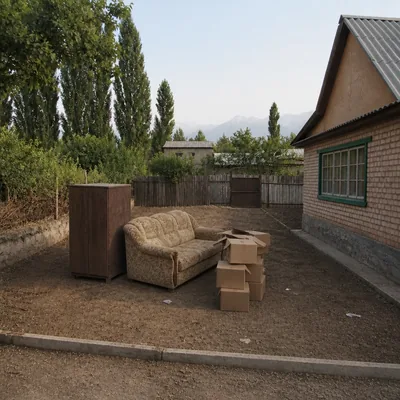
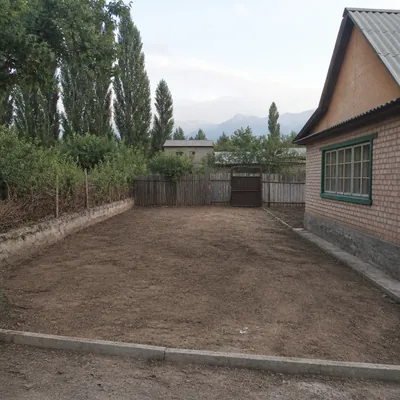
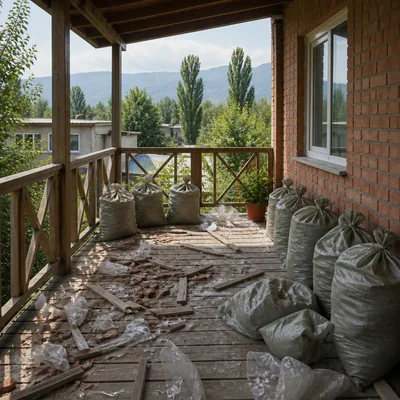
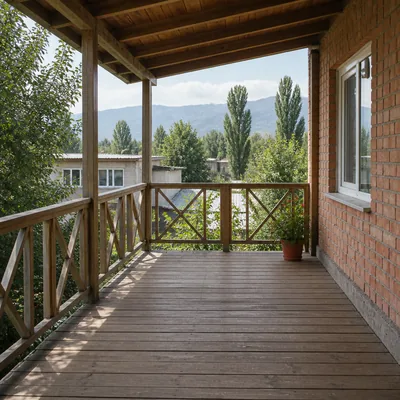
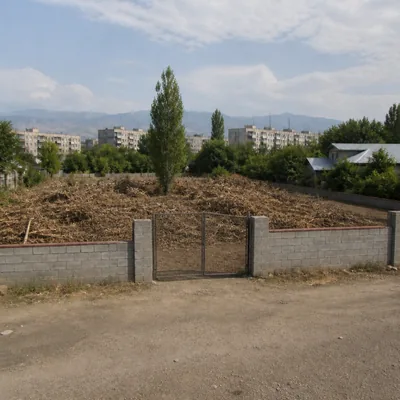
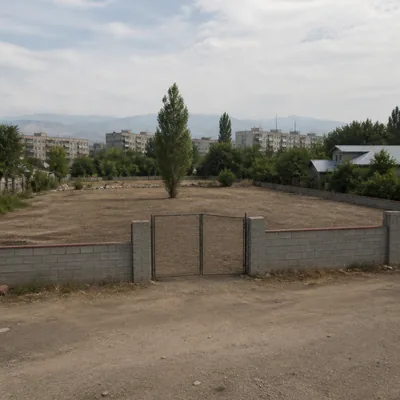
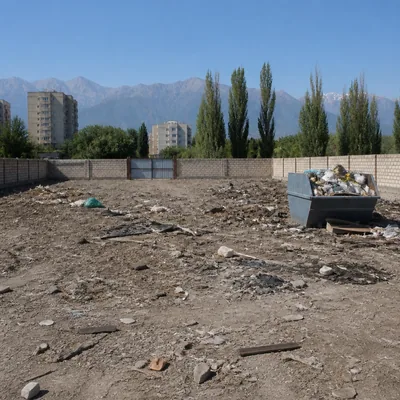
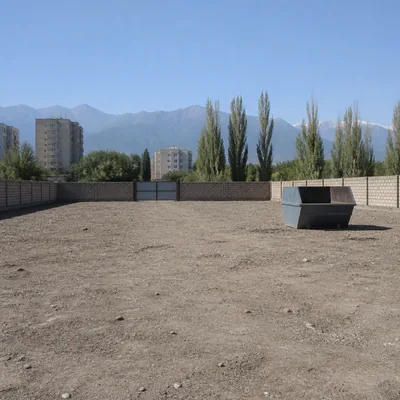
Loaders and a driver arrive at the dacha. No middleman dispatchers or random people.







A familiar picture. You drive out to your dacha near Almaty in May — and the first thing you see isn't the apple trees, but last year's pile by the fence. Plastic film, branches, an old sofa with its upholstery torn open, three bags of cement that have set into stone. Over the winter, neighbors quietly added what they brought over "just for a minute." And now you're standing there with your phone, wondering: what will this cost if I call someone, or is it easier to just hitch up a trailer and haul it myself?
I do this every day — I go out with a crew to dachas from Upper Kaskelen to Talgar. And honestly: half the requests for dacha waste removal aren't about volume, they're about the person not knowing what's actually lying around. They send a photo of three bags, but in reality it's a full GAZelle bed. Or the opposite — they're afraid they'll need a dumpster, but a pickup is enough.
Below is a breakdown without prices (our prices are in the block above, this is about something else). About how to really estimate what's on your plot, how dacha waste removal differs from city apartment removal, what you can't put in the pile, and why sometimes it's cheaper to remove dacha waste in two trips than to bring in a big dumpster. If you still have a question after this — chances are, it's answered at the end of the article.
Over the winter, the plot piles up its own stuff. Not bags from home — those are a different mix. Leaves that filled twenty bags in autumn and shrank to ten by spring. Greenhouse film torn by March winds. Roofing felt from the old shed that crumbled to dust. Fence boards — the ones that turned black and soft from snow. And on top of it all — bags the neighbors brought over "until they haul their own away." People often book a dacha waste removal without realizing that half the pile is stuff you can't lift with a shovel into the truck bed.
We count honestly. Twenty bags of leaves is about one cubic meter. Greenhouse film — three or four pieces a couple of meters each, but light, the wind blows them right out of the truck, so we haul them under a load. Rotten fence boards — a meter-high stack, but almost nothing by weight, and half a GAZelle bed by volume. Old spunbond covers that fell apart after the first winter — people usually burn them on site, but burning isn't allowed, that's a whole separate headache. All of this needs to go in one trip, but on different trucks. Leaves and film — in a GAZelle, boards — in a ZIL if there's more than three cubic meters.
Why I count in cubes, not bags. A bag isn't just a bag: packed-down leaves are one volume, and the same weight of branches is completely different. So when you book, I ask for a photo from about three meters away so the whole pile is in frame, not just the top. From the photo I can tell if the layer is light or dense. That affects which equipment shows up — and how much it costs to remove waste from the dacha. Not because I'm stingy, but because a GAZelle for leaves and a ZIL for boards cost different rates.
Here's where a different story begins, and it's heavier. Brick rubble from a dismantled veranda, plaster knocked off the walls, old roofing felt from the roof, leftover cement in bags. This isn't household waste anymore — it's construction debris. The category matters: construction waste can't go in the same bed as leaves and film — it crushes, tears bags, and then you can't unload any of it. Plus it goes to the landfill separately. So construction waste removal from a dacha isn't "the same thing, just more." It's a different route and a different truck.
Weight is what decides here. A cubic meter of brick rubble is a ton plus a bit. A cubic meter of leaves is a hundred kilos. Eight cubic meters of construction waste is already an overload for a GAZelle — you need a ZIL or a dumpster. And roofing felt separately: it's heavy, sticky, and melts in the heat. It can't go in the same bed as wood — you'll spend half a day washing the bed afterward. You learn these things not from manuals but from experience: once we put roofing felt under the boards, then spent two hours scraping it off the floor.
A sofa with its upholstery torn open, a cast-iron bathtub, a fridge that kept freezing until the very end — all of this is at the dacha. And it's a separate category because of the size. A cast-iron bathtub isn't about volume, it's about weight: one piece weighs more than a cubic meter of leaves. It takes two people to carry it, and not over the fence but through the gate. Fridges we haul separately: you can't just dump the refrigerant, but that's our concern, not the client's.
An important point — dimensions and openings. A sofa won't fit through a dacha gate if it's 80 centimeters. You have to partially disassemble it: take off the legs, unscrew the back. I ask about this right away, before dispatch. If you don't ask, the truck arrives and nothing goes into the bed — the sofa's in the yard, the loaders are standing around. That's why I always ask in the booking: write about the gate and whether the sofa has sharp corners. It's not a formality, it's so the trip isn't a waste.
The rule is simple: different categories — different truck bodies. And it's not just about construction waste. Here's what we never mix:
If you dump everything in one pile, the trip will cost more and be dirtier. Not because we're like that, but because it takes twice as long to sort and unload later. That's why I ask about categories, not just "how many cubic meters." Three cubic meters of construction waste and three cubic meters of leaves are different money, different trucks, and different time. And when a client says "it's nothing, a couple of cubes," but the photo shows half of it is construction waste, I call back and clarify. Better to clarify before dispatch than to unload and explain on site.
And also about the season. From April to June, dachas are empty, and the trash has been lying since winter — it's compacted, less in volume but heavier. From July to September, fresh waste adds up: weeding, pruning, cans, bottles. Trash removal from dacha plots in summer is often light in volume but frequent: people ask us to come every two weeks. And in autumn — leaves and covers, heavy again. Understanding the season helps avoid sending a truck for nothing. Sometimes it's easier to wait a week and take everything at once than to pay for two trips in a row.
So it turns out that sorting by category isn't bureaucracy. It's a way to avoid overpaying and to send the right truck. Look at your pile not as "trash in general," but as three or four different piles. Leaves and film — one. Boards and branches — another. Construction waste — a third. Bulky items — a fourth. Once you sort it onto these shelves, it'll be clear what to call and what to say on the phone.
The most common question when ordering: "how much does it cost to remove trash from a dacha?" — and to answer, I need the volume. Not approximate, but at least accurate to the truck body. That's why I ask for photos. But not every photo works: from bottom up, from far away, without an object for scale — from such a shot I can only guess. And I don't want to guess, because then the wrong truck shows up.
Let's go step by step. First how to shoot, then what to look for, and finally — why even careful people are off by one and a half to two times.
Take your phone and walk around the pile. Shoot from four sides: front, back, left, right. It must be visible how it sits on the ground — not against the sky, but with the horizon or a fence behind. And put something recognizable next to it for size: a shovel, a wheelbarrow, a car tire, a box. Without such an anchor, the scale is completely lost.
Second: shoot not only the pile itself, but also the approach to it. Where the truck can park, how many meters from the gate to the heap, whether there's a narrow spot. Often the volume is small, but carrying bags through an 80-centimeter gate is a whole other story. And third: if the pile is of different heights, take two or three shots from different angles, not one panoramic from above.
Now about how to measure. The simplest way is to estimate what this pile will fit into. I always suggest clients compare it to something familiar. A passenger trailer — that's a Zhiguli bed or a small homemade one, it holds about two cubic meters if packed tightly. A 1.5 t GAZelle — already 12 m³, but it depends on the body: some are tarped, some are all-metal. A ZIL dump truck — 7–12 m³, but it holds up to 7 t: a serious machine. A 32 m³ dumpster — the largest container, it's placed for loading with a crane-manipulator.
How to apply this? If the pile is your height and about three meters long — that's a GAZelle. If it's taller than a person and longer than five meters — a ZIL or two GAZelle trips. If it's a mountain of construction waste from a dismantled veranda — count in cubes: one cube is roughly 200–300 kg, depending on whether it's broken brick or dry leaves.
There are three reasons. First — you look at it from above, but volume grows in height. Second — you forget what's under the pile: old roofing felt, boards that have grown into the ground. Third — psychology: people want to think it's "small stuff" so they don't overpay. I don't judge, but then it gets awkward: a small truck arrives and there's nowhere to load.
From experience, the real volume is almost always 30–50% more than it seems. If you think "two cubes," prepare for three. If "five" — most likely seven. This isn't a scam, it's geometry: a pile has a slope, and what you see is just the top.
There are cases when one shot is not enough. This is if the pile is mixed — construction waste with household waste, if it's covered with branches or film, if the plot is on a slope and it's unclear how to get there. Or if it's not a pile but remnants scattered all over the plot: then I ask for several photos from different angles and a short video.
We don't send an estimator to the site even then: we quote the amount based on photos and video, without an estimator's visit, and we don't take prepayment. We give the price before the truck arrives, and after loading it doesn't change. This is more honest than guessing from one shot and then recalculating on site.
| Vehicle | Volume, m³ | What fits | Weight, kg |
|---|---|---|---|
| Passenger trailer | 1,5–2 | 10–15 bags, old furniture | up to 300 |
| GAZelle 1.5 t | 12 | Dismantled shed, junk | up to 1500 |
| ZIL | 7–12 | Construction waste, logs | up to 7000 |
| Dumpster 32 m³ | 32 | Large demolition, soil | up to 20 000 |
And lastly. Don't hesitate to ask again. If I say "you need a GAZelle" and you're unsure — send another photo, I'll reconsider. Better to spend five minutes texting than to unload extra later.
It all starts with a request on WhatsApp. You send a photo of the pile — from your phone, however it turns out, even from a second-floor window. From the picture we already understand about seventy percent: whether a GAZelle is needed or something bigger, whether the truck will fit between the fence and the apple tree, whether you'll have to carry bags across the whole plot. If the photo is blurry or the angle is bad, I ask again: what's under the film, is there slate, is there concrete in the pile. A couple of questions saves both you and us half a day.
Then we agree on the day and time window. From experience, morning is better: before the heat we manage to carry out the heaviest stuff and don't get stuck in traffic leaving the city.
A dacha association is a whole science. In old SNTs near Almaty, the driveway is often about three and a half meters wide, with other people's fences, poles, and abandoned KAMAZ trucks on the sides. A GAZelle can get almost anywhere, but not always. I ask about the barrier, the gate, whether there's room to turn around or if the truck has to back in and leave the same way. If the driveway is narrow, the driver checks on the spot and doesn't guess—nobody wants a wrecked truck or a broken mirror.
Sometimes the road inside the association just isn't cleared. Then we discuss carrying everything to the entrance. That's more honest than promising a driveway to the gate that won't happen.
Now here's where the fun begins. The truck is at the entrance, and the pile is in the far corner, behind the greenhouse. The loaders go with stretchers and bags. Each trip to the truck takes minutes, and there can be twenty trips. You get it, right? The volume hasn't changed, but the work has doubled. So in the request, I always clarify: how far is it from the pile to where the truck can actually park. If it's close, that's one thing. If it's across the whole plot and the gate is narrow, that's completely different.
And another thing. Some people leave the truck in the yard if the gates are wide and the owner allows it. It's faster and cheaper in terms of effort. But the lawn, tiles, well—all of that is a risk zone, and we don't drive there without permission.
Once we arrived at an SNT near Talgar, and the driveway had been dug up—a neighbor was replacing a pipe. The truck stopped a kilometer away. The guys carried everything by hand, eight trips. The owner later said: I thought you wouldn't manage. But what can you do—we came to work.
The crew is two or three people, sometimes four if the volume is large or the carry is far. We look at what's in the pile. Branches and film are light but bulky, taken in armfuls. Brick, concrete, set cement are heavy, carried in bags by two people. Time is simple: if you can park close and the load fits a GAZelle, an hour to an hour and a half. If you have to carry far and there are many bags, three, four, sometimes five hours.
We don't like leaving half for later. Doing a second load later means another trip, and that's a whole different story when it comes to money.
The pile is gone—the place remains. And it should be clean, not 'sort of tidied up.' We sweep the area, pick up what scattered: wood chips, debris, pieces of film. If there was soil or old roofing felt under the pile, we ask whether to take it or leave it. Sometimes the person says: leave this, I'll handle it. Okay, we leave it, but then we spell it out so there are no surprises later.
The point of all this is simple: you come to the plot and see a level area, not a new pile, just smaller. That's how it should be.
A small detail that often comes up. People think waste removal from a dacha plot means you show up and toss everything into the truck bed. In reality, we sort through the pile: what burns and weighs little goes separately, heavy stuff separately. That way the truck runs with a normal load, no overload, and doesn't wreck the suspension on dacha potholes. And one more thing: if you're asking how much it costs to remove waste from a dacha, the answer depends not on the number of bags you eyeball, but on how many people and hours it will actually take. That's an honest estimate.
An old veranda, dismantled last August, yielded three cubic meters of rubble. Plus concrete aprons the neighbor removed from the foundation — another cubic meter. And that one cubic meter with the three, if you dump them into a GAZelle, will flatten it to the asphalt. Literally: the springs will give out, the wheels will splay. That's why construction waste from a dacha is not about volume, but about weight.
Concrete rubble weighs like concrete rubble. One cubic meter is roughly 1.8–2.2 tonnes. Brick is a bit lighter, but still about 1.5 tonnes per cubic meter. Plaster taken off walls in sheets gives 1.3–1.6 tonnes per cubic meter. Five cubic meters of that load is already ten tonnes. A GAZelle can't take that much, even if it looks like it fits.
Earth from under a greenhouse or a septic pit is the most common item after brick. A cubic meter of soil weighs 1.5–1.8 tonnes. It seems like you can remove waste from a dacha with a GAZelle if the pit is small. But a GAZelle takes three cubic meters — and that's already five tonnes. Overload. That's why for soil they order a dump truck or an 8–10 m³ bin if the volume is really large.
But old insulation, greenhouse film, branches after pruning — that's "air." A cubic meter of insulation weighs 30–50 kg, a cubic meter of branches — 80–120 kg. They can go in the same bed as light dacha junk, but must not be mixed with concrete: the heavy stuff will crush the light stuff, and you'll get an uneven load on the floor.
In practice, people often ask: "How much does it cost to remove waste from a dacha if it's all mixed together?" — and they give the total volume. But I look at the photo and see: half the bed is old boards, and underneath is tile rubble. The conversation changes immediately.
Because the truck counts weight, not cubic meters. A GAZelle fully loaded with concrete will go over gravel on dacha streets and just get stuck. Plus unloading: heavy stuff has to be dumped, while light stuff can be pulled out by hand. If you mix them, you'll lose an hour or even two on unloading.
And then there's safety: a piece of concrete falling out of the bed onto your foot is not "oh well," it's an injury. That's why we always sort: heavy first, then light. Or the other way around — whatever's more convenient, but never mixed.
One more thing: old tires, which are often lying around dachas. They're not heavy, but bulky and they burn. They're best removed separately from construction materials, because during loading they spring and take up space that concrete could use.
Look: to remove construction waste from a dacha, you first need to understand what fractions are there. If the pile is only boards and film — that's one truck. If it's concrete — a completely different one. And you need to count not "how much space it takes" but "how much it weighs."
Usually we ask the client to photograph the pile from two sides and put something next to it for scale — a shovel, a bucket, a boot. From these photos it's already clear which transport to prepare. Without photos you have to guess, and the wrong truck may arrive.
Now, here's the order of steps if you decide to haul construction waste from your dacha on your own or with our help. Here's how it goes step by step, so you don't overload the truck and don't pay for air:
If you follow this order, waste removal from dacha plots goes without surprises. But if you start from the end — 'just come, it's all mixed together' — half the trip goes to re-sorting and topping off.
Here's a table that helps quickly estimate what goes with what and what weighs what. It doesn't replace a photo of your pile, but it gives an idea of why heavy and light stuff can't be shoved into one body.
| Fraction | Weight per 1 m³, tons | Can it go in the same bed as light waste? |
|---|---|---|
| Broken concrete | 1,8–2,2 | No, only separately |
| Brick | 1,5–1,8 | No, it'll crush the light stuff |
| Plaster | 1,3–1,6 | Only at the bottom, under the light stuff |
| Soil | 1,5–1,8 | No, overload |
| Insulation | 0,03–0,05 | Yes, but on top |
| Branches | 0,08–0,12 | Yes, if they don't get in the way of heavy items |
The numbers are approximate and depend on moisture. But even they show: a cubic meter of concrete and a cubic meter of branches differ twentyfold in weight. So when someone asks 'how much does it cost to remove waste from a dacha,' I first ask what the fractions are. Only then do I name the truck.
Read this far and still not sure about the volume? Send us a photo — we'll calculate and give you a price.
Message us on WhatsAppWe arrive in Talgar on Saturday, the plot is narrow, the neighbor's fence is right up against the road. The owner points to the pile and says, 'Just drop a dumpster there, I'll sort it out over the weekend.' But there's nowhere to put the dumpster — from the gate to the first pile of branches is two meters. That's when the talk turns to equipment: not about what's cheaper on paper, but about what can even get into that yard. Dacha waste removal almost always hinges on access, not weight. First we look at the entrance, then at the pile.
If the house has a decent driveway, a spot in front of the gate, and a place where the dumpster can sit for a day or two — that's the calmest option. The owner hauls junk at their own pace, the pile grows into the dumpster, no one waits on anyone. Handy on plots with wide gates, where there's an old shed and a lawn nearby that you don't mind. But a dumpster has weight and size: loaded, it sinks into the ground and leaves ruts in a rain-soaked yard until fall. Plus it has to be delivered and picked up — that's two equipment trips instead of one.
Another thing: there's nowhere to put a dumpster in a new development near Verkhnyaya Kaskelen, where the street is basically an alley between two fences. A GAZelle can get in there, and even then with just inches to spare on the mirrors. So a big trip isn't always better — sometimes it just can't get in.
It's reverse logic, and it happens more often than you'd think. The yard is tight, the pile is medium — four to six cubic meters, but it's in two spots: construction materials by the fence, household junk by the summer kitchen. A dumpster won't fit here, and one GAZelle run can't take it all at once. So we split it into two runs. It takes longer, but the loaders come from two sides of the plot and don't drag bags through the garden beds.
Two trips are also more reasonable when the composition of the pile is different. Branches and film can go in one run, and brick in another (we take slate separately from other construction waste), because heavy stuff is put at the bottom and it eats up volume faster than it seems. Mixing everything in one truck means underloading it by weight and still going twice. So you need to count not trips, but what actually fits.
A typical dacha pile is a layer cake. On top there's grass and tops, under them branches, then boards from an old veranda, and at the very bottom stuff no one has moved for years. If you load it as is, heavy stuff ends up on top of light stuff, and the truck drives overloaded by weight with a half-empty bed. So we take off the top first, then break down the bottom layer.
At a glance it looks like this:
Because of these layers the volume 'floats'. A person looks at the pile from above and sees one thing, but dig in and there's a concrete blind area they once removed themselves.
Owners often ask: how much does it cost to remove trash from a dacha. Honestly, it depends not on the number of bags in the photo, but on four things. First: how many cubic meters there really are, not by eye. Second: what the weight is — a cube of branches and a cube of brick are two different worlds. Third: how far the truck is from the pile, because carrying from the third floor and carrying across twenty meters of garden are not the same. Fourth: how many runs it takes and with what equipment.
Two small runs almost never cost half as much as one big one — fuel and crew time are spent twice. But a big run for three bags is overpaying. From experience, the easiest way is this: send photos of the pile from two sides and tell us what the access to the plot is like. From the photos we'll understand whether a skip can get in or not, and we'll offer one option, not three to choose from. As for trash removal from dacha plots in season — in May and September the queue is tighter, so it's better to book a day or two ahead. And yes, if part of the pile is construction waste after renovation, say so right away: construction waste removal from a dacha is calculated differently from household waste, and equipment is chosen for the weight. And if you don't want to figure it out at all — just describe in words what's there. Our dacha trash removal starts with a conversation, not an inspection.
The gates closed, you went to have tea, and the truck drove off. And that's where the part almost no one thinks about when ordering trash removal from a dacha begins. Because hauling everything to one site and dumping it in a common pile doesn't work that way. Along the way, part of the load changes route.
I'll say more: a truck from a dacha almost never has just one route. The bed doesn't arrive at the site in one piece — about an hour and a half later, sixty percent of what was loaded gets there. The rest has gone to other addresses.
Separation starts right in the bed when we load. It's not a formality for the report. The reason is simple: some categories are charged separately at the site, and others won't be accepted at all for any money. Sorting on site is cheaper than running the truck twice.
First, we pull the metal out of the pile. Radiators, pipes, an old tiller, a greenhouse frame, gate hardware. This is the only thing in dacha trash that sometimes doesn't get disposed of but sold — and by weight it's always more than it looks. One heavy piece of iron at the bottom of the truck bed outweighs three bags of branches.
Second — things that can't be mixed with the rest: tires, batteries, paint and solvents in cans, agrochemicals, fluorescent lamps. We put them aside and pack them so nothing leaks. Same goes for mirrors, greenhouse glass, broken tiles.
Third — things that take up space but weigh almost nothing: styrofoam, film, old insulation, plastic barrels. We compress and pack these into a separate compartment, otherwise the truck will be half-empty by the middle of loading.
If you've ordered construction waste removal from your dacha after a home renovation, sorting follows the same logic, just with fewer categories and heavier ones. Broken brick, chunks of cement, plaster — all go one way. Film and packaging from materials — the other.
Most of it goes to disposal: furniture, branches, tops, textiles, wood, broken structures, household junk. That's the load accepted without questions if it's not mixed with prohibited items. That's why the truck carries not one big pile but two or three separate compartments.
What doesn't go to disposal is hazardous waste. Mercury lamps, batteries, leftover chemicals, medicines, accumulators. These are accepted only at specialized facilities, and taking them to a regular site means a fine for the whole truck, not just one bag. We keep track of this, because otherwise the next trip gets delayed for a long time.
Plant debris is a separate story. Cut branches, tops, mowed grass. Some sites take them, some don't, because it's volume without weight. The decision is made in the morning, when you can see what's more in the truck.
I tell this to everyone who orders dacha waste removal for the first time. There's a list of things that turn into a problem for the whole truck when mixed in.
If you have any of these — tell us right when you place the order, not when the truck is already at the gate. Then we'll come with separate containers, and everything goes to its proper destination without surprises. Otherwise we'll have to unload it back, and that's a lost day for you and the crew.
Because along the way it finds another owner. Metal, working tools, whole bricks, boards, rolls of film — all get taken by those who need them. The crew stops at two or three known spots, and part of the load goes there. No mystery, it's just cheaper and faster for everyone.
That's why the cost of removing dacha waste varies. If there's a lot of metal or usable material in the pile, the trip costs less than it seems by volume. But if all of it goes to disposal as one mass, you'll pay as for a full truck.
| Category | Where it goes | Share in dacha pile | Feature |
|---|---|---|---|
| Metal: radiators, pipes, frames | Sold, not disposed of | about 15% | Heavy — outweighs light junk |
| Furniture, wood, textiles | For disposal | more than half | Accepted without questions |
| Hazardous waste | To a specialized facility | a few | They won't take a shared truck with them |
| Plant debris | Depends on the site | up to a third of the volume | Volume without weight, decided in the morning |
| Styrofoam, film, barrels | Disposal after compaction | up to 20% | Takes up space but hardly weighs anything |
| Good boards, bricks, tools | Picked up along the way | depends on the plot | Reduce the total cost of the trip |
And one last thing. We sweep the site after ourselves — not because it's required, but because leaving a handful of debris on the asphalt is shameful. If you're ordering waste removal from a dacha plot where the driveway is narrow, tell us in advance: turning around and backing out eat up time, and that's part of the calculation too.
I've gathered here what's already been said above — no new rules and no price list. Just the guidelines people usually use to decide how to remove waste from a dacha and how many trips it'll take.
The most accurate way to assess a pile is to photograph it from two sides and remember what it was already stored in. If bags of cement have set and are stacked, that's not 'small stuff' but dense volume. An old gazebo taken apart into boards usually fills a GAZelle. Branches and grass after winter look like a huge pile but weigh little and compact three times denser in the truck. So if a familiar vehicle is nearby, compare by eye.
There's almost always a mix on the plot. And it determines what to do with the load after loading. Here's what I see most often in my requests:
If everything is dumped in one pile, there's no one to sort on site, and that's fine. But knowing what's more — by weight or volume — is useful before you call.
Here it's not just volume but access that decides. A GAZelle can get through a narrow alley between fences, but a 32 m³ dumpster won't. If the pile is in the far corner behind a greenhouse, count how many meters you'll have to carry it to the truck. Sometimes the volume is small but the carry is long, and that changes things. From experience, a GAZelle covers most dacha requests, and a dumpster is used for a full plot cleanup.
Being unsure is normal — sometimes I see something different on site than in the photo. So don't try to guess exactly. Describe it in words: 'a pile by the fence, two by two meters, mostly boards and three bags of cement.' That's enough to figure out if it's a GAZelle or something bigger. And also: if you're planning waste removal from dacha plots in spring, before neighbors bring their own, mention it — the volume can grow in a couple of days.
And one last thing. I don't calculate how much it costs to remove waste from a dacha here — prices are in the block above, and they're fixed before dispatch. But what really affects the total: weight, carry distance, and number of trips. If after reading something's still unclear — write to WhatsApp, we'll figure it out from photos.
We calculate by body volume and mileage — outside the city it's added to the trip. GAZelle 1.5 t — from 30 000 ₸ per trip if there's not much waste. A loading crew — from 20 000 ₸. We'll give you the exact amount after seeing a photo of the pile, and it won't change.
Yes, we work outside the city — the mileage is simply added to the trip cost. Tell us exactly where the plot is, and we'll calculate it including the drive. Within Almaty, we haul at the standard rate.
Yes, we work all seven days from 09:00 to 21:00. On weekends there are more people at the dachas and the roads are jammed — better to book a truck in advance. On weekdays, dispatch is usually faster.
Yes, we take it along with the rest. We load the fridge and mattress carefully, we don't just toss them in a pile. If needed, we'll take off the legs and disassemble them so they fit in the truck bed.
It depends on the pile — photos show it better than a description. Usually one GAZelle if it's household junk and old furniture. Construction waste from a dacha is heavier, so we haul it in a separate trip.
We'll discuss access in advance in messages: neighbors, a watchman, or a key. If no one is at the plot, we work by arrangement, but it's better if someone meets us. That way we can also confirm the volume on site.
Our loaders — from the doorstep to the truck bed. The crew carries out bags, boards, old furniture, loads and ties it down. After loading, we sweep the area.
Then we make a second trip — we'll warn you in advance if it's clear one truck isn't enough. An extra trip is charged at the rate, and an extra hour starts at 6 000 ₸. Better to send photos right away so we can match the equipment to the volume.
Liquid waste, cans with leftover paint and solvent, batteries — those aren't for a regular trip. We discuss handling before removal so we don't have to unload it back. We take everything else.
We take it for disposal, to a facility. If you need confirmation, ask on WhatsApp before ordering, and we'll answer for your case. Dachniki usually don't need it, but it varies.
Got a question that's not here? Ask — we'll answer in writing, no call needed.
Message us on WhatsAppA country house in the suburbs — in winter you can't get there in a car. The GAZelle made it fine. They hauled away an old sofa, a fridge and a pile of rags. Nice that I didn't have to carry anything myself.
A country house in the suburbs — in winter you can't get there in a car. The GAZelle made it fine. They hauled away old tires and junk. Fast and hassle-free.
Once they postponed the pickup to the next day, but warned us in advance. Otherwise all good: they came, removed old furniture and junk from the dacha. The price didn't change.
Dacha trash removal is what they do. I have a plot in Talgar, they got there without any problems. They took everything: old furniture, boxes, bottles. I recommend them.
Everything was removed neatly, but we waited for the truck almost two hours instead of the promised one. They said traffic jams on Ryskulova. The dacha waste was fully removed, thanks for that.
Our dacha was a real warehouse: old windows, doors, paint cans, some metal pieces. Aigul on the phone immediately asked if there was construction waste and warned that a dumpster was needed. They came, loaded, took it away. Quick and stress-free.
Construction waste from a dacha is a whole different story. Concrete chunks, bricks, plaster. I thought no one would take it. They did. True, the price was higher than for regular waste, but that makes sense — the weight is different.

We needed to remove old furniture and grass waste from a village house. Daniyar came quickly and loaded everything. The price was as quoted in advance.
In spring the dacha flooded, lots of trash was left. Askhat came and collected everything and took it away. Thanks for the work.
After New Year, there were Christmas trees, boxes, bottles left at the dacha. I called, they came on Sunday. Quickly loaded and left. They swept the area, nice.
We were dismantling an old dacha house. Brick, boards, junk. I ordered a 32 m³ dumpster. They came, loaded it, took it away. Everything's clean. The price is fixed, which is nice.
Neighbors at the dacha recommended them, so I called. They came Saturday morning while I was still asleep. Everything was quick.
they arrived the next day, took everything away. worked fast, even swept up after themselves. there was a lot of trash, but they managed.
they did everything quickly, the price is fair. they removed old stuff from the dacha. thanks!
After winter, a mountain of branches and old slate was left at the dacha in Alatau district. I called in the morning, by lunch a GAZelle arrived. They loaded everything in half an hour, even swept the spot by the gate.

A dacha plot in Talgar, not every truck will go there. But they came, calculated the mileage in advance. They removed everything: old greenhouse, boards, tires. I'm happy with the work.
How much it costs to remove trash from a dacha — I asked around. Here they gave me the price right away and it didn't change. There was a lot of junk: old cans, rags, a broken pump. Askhat came with a crew, everything was loaded fast. Thank you.
We needed to clear old stuff from the dacha. Dinara helped, explained everything. The truck arrived on time, the job was done fast.
In spring we went to the dacha, and everything was flooded, trash floating. We called, they came, removed it. Thanks.
they arrived quickly, took everything. i'd been looking for someone to remove trash from the dacha for a long time, here they did it properly.

I had construction debris removed from the dacha. Concrete chunks, rebar. I thought they wouldn't take it, but a ZIL with a crane arrived. Everything was loaded and taken away. Great job.
My mom asked to remove junk from the dacha, she couldn't do it herself. I arranged it via WhatsApp, sent photos. They came and took everything. Mom is happy.
Dacha trash removal after renovation. Concrete chunks, broken brick. I thought they wouldn't take it, but a dumpster arrived. Everything was hauled away, the plot is clean.
We were renovating a dacha near Almaty, needed to throw out the old floor and window frames. Construction waste piled up to about five cubic meters. Yerlan came, took a look and said — one truck won't take it, let's use a dumpster. And indeed, we wouldn't have.
I called in the morning, they came by noon. They removed the trash from the dacha quickly. My neighbor got interested too, I gave her your number.
I called in the evening, they came in the morning. They removed waste from our dacha and our neighbor's in one go. Convenient that you can combine.
We had trash removed from the dacha after the summer. There was a lot: old pots, cans, rags. They came on Saturday and took everything away. Thanks to Daniyar.
We were clearing a dacha in Kaskelen for demolition. Old boards, window frames, a heap of junk. They came in a GAZelle, loaded everything in an hour and a half and took it away. They swept the site — nice.
We waited half an hour longer for the truck, but they warned us. Otherwise all good: they removed construction debris from the dacha, old windows and doors. The price didn't change.
We were clearing out the dacha before selling. Junk had been piling up for about ten years: old buckets, cans, a broken grill, a sofa. Askhat and his team carried everything out themselves, even went down to the basement. It took three trips.
They removed trash from the dacha after renovation. Arrived on time, worked carefully. I liked everything.
Showing 3 of 31
Want the same? Describe your task — we'll calculate and give you a price before the truck arrives.
Message us on WhatsAppChecked us out? Drop us a line — we'll pick the right truck for your load.
Message us on WhatsAppIllegal dumps on the outskirts, soil and groundwater: what happens when waste goes to the wrong place.
Collection, sorting, crushing, secondary raw materials — the steps in order and what actually gets recycled.
How medical and industrial waste differ from household waste and what's required of the hauler.
Articles of the Administrative Offenses Code of Kazakhstan, amounts in MCI for 2026, and who's responsible for the garbage — the carrier or the client.
If there's junk left at the dacha from last season or the renovation isn't finished and you have no way to haul it away — message us on WhatsApp. We'll pick a truck for the volume and give you the price before dispatch.
Tell us how the pickup went — it helps us and anyone choosing a hauler.



