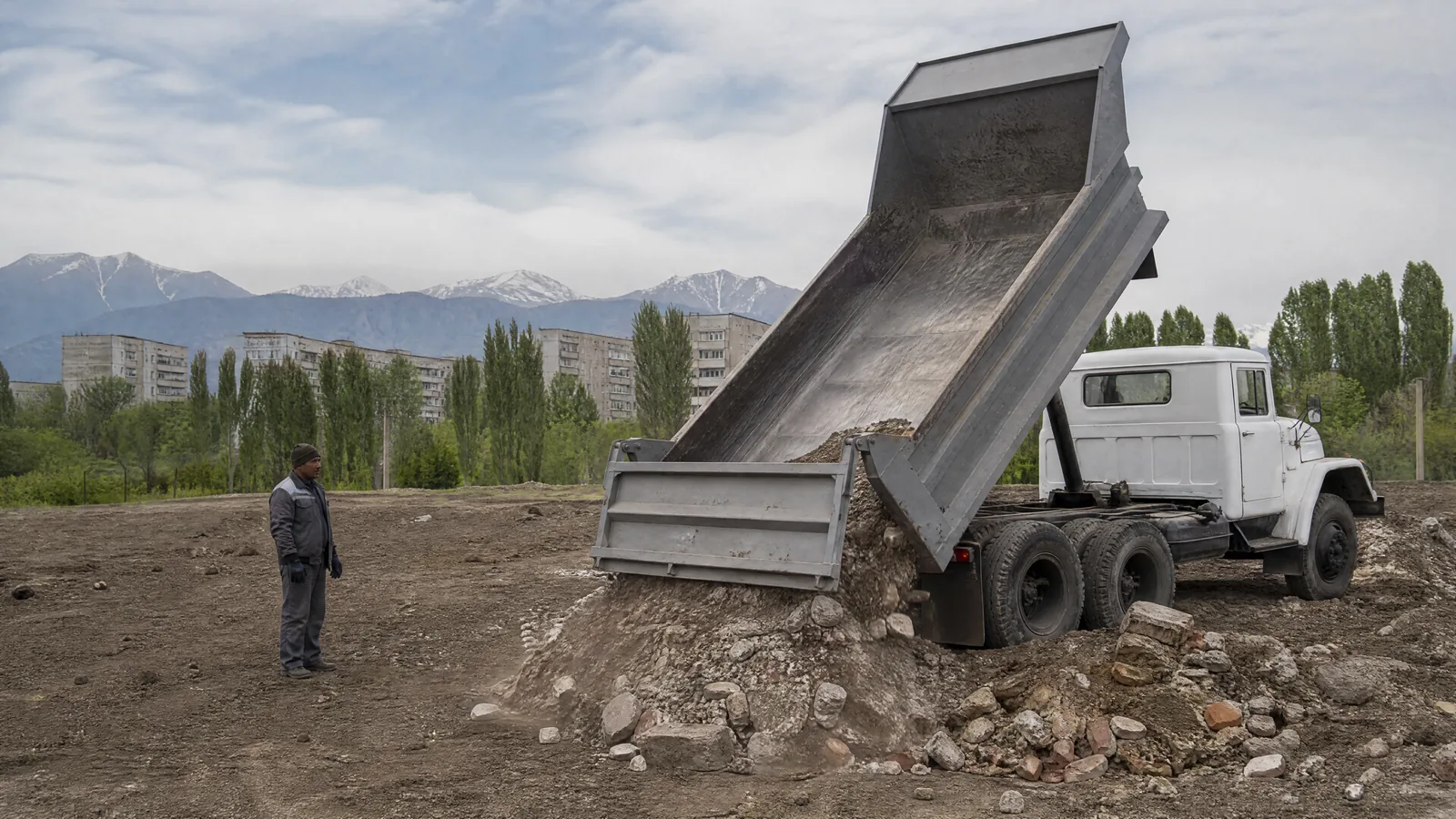
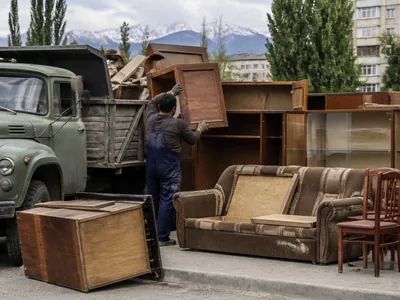
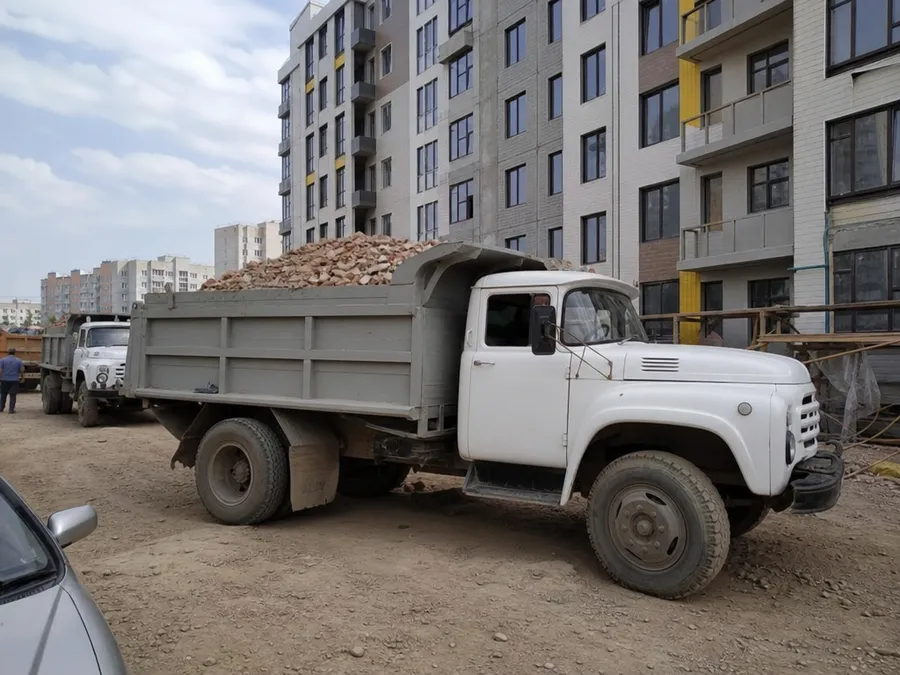
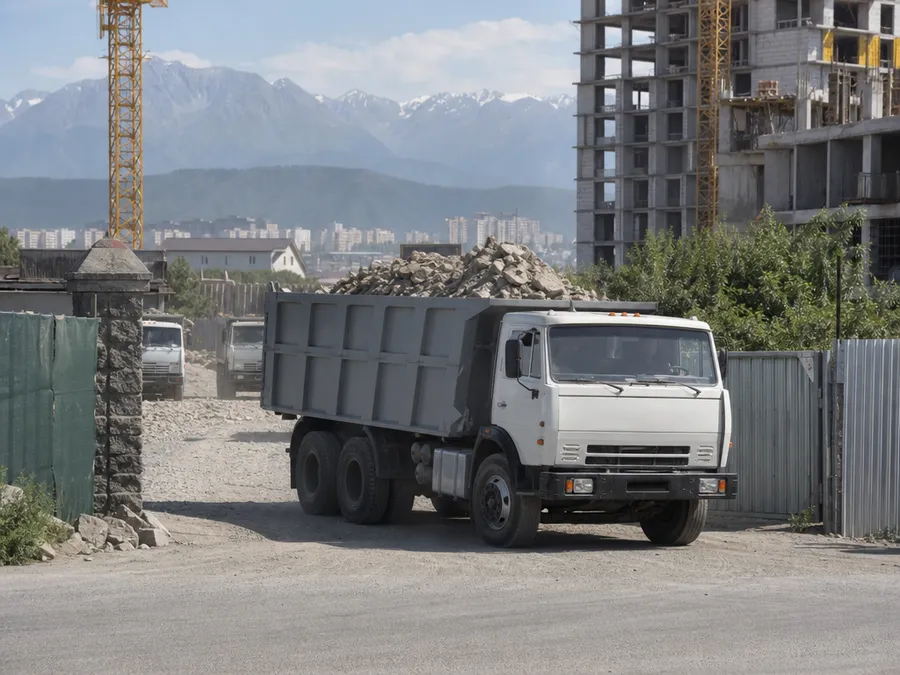
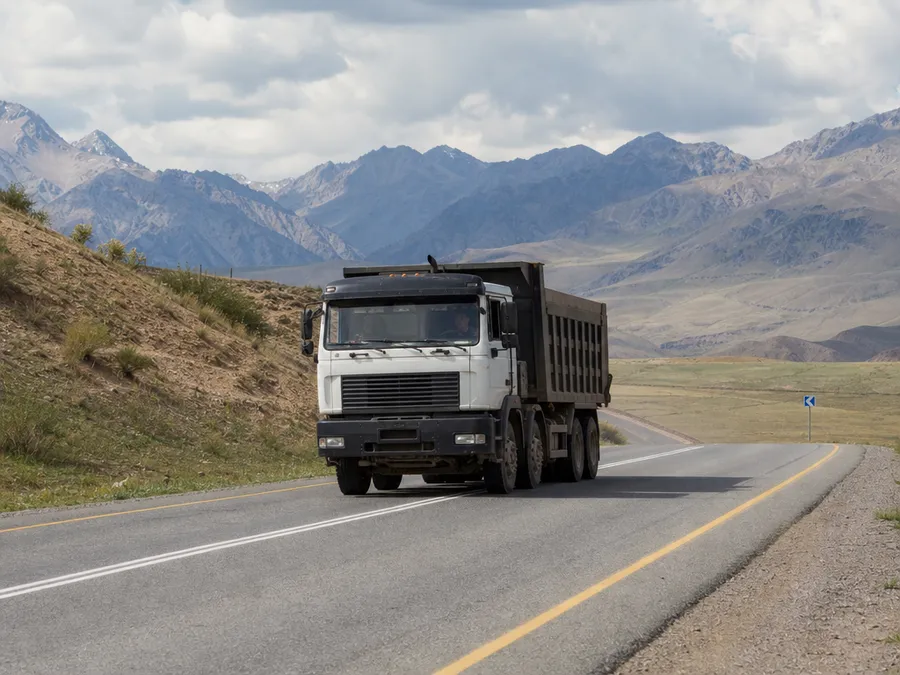
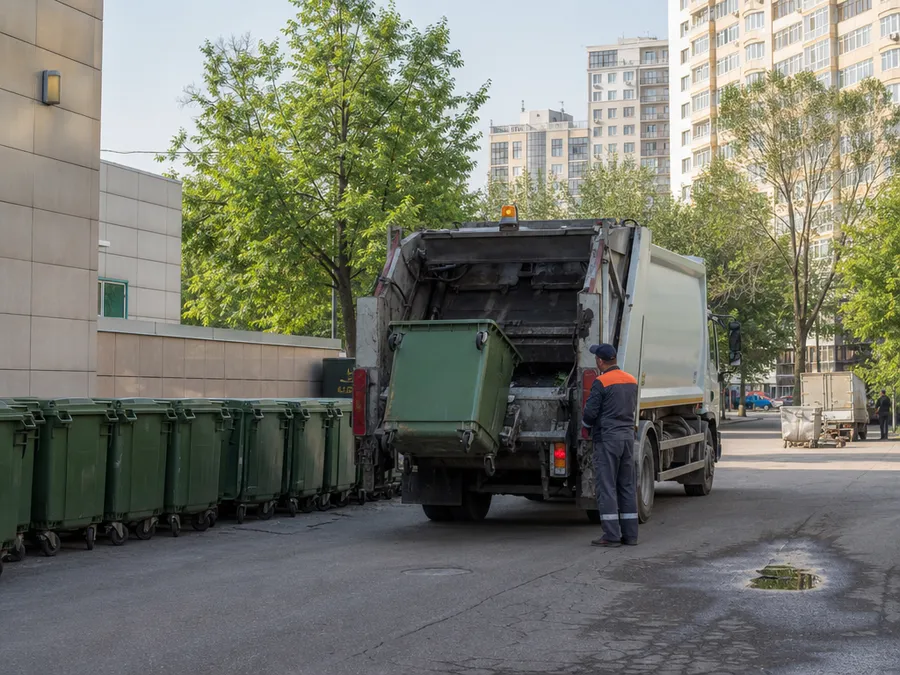
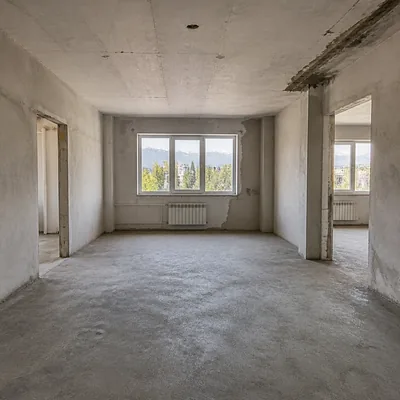
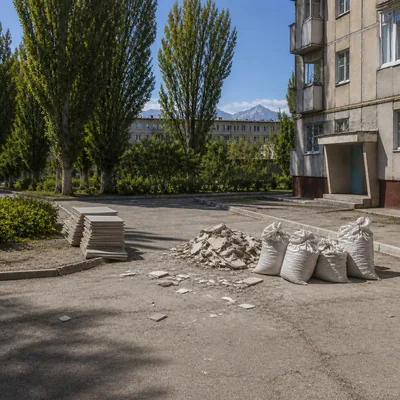
When there's more waste than the bed holds — we count by the number of trips. The second trip is usually faster than the first. If that's not enough either, we bring a bigger truck — the whole fleet with volumes is listed separately.
Valid from August 2026 · price per trip within the city
Price list for waste removal in Almaty, August 2026
Equipment
Volume
Payload capacity
Price per trip
Extra hour
GAZelle 1.5 t
12 m³
up to 1.5 t
30 000 ₸
6 000 ₸
GAZelle 2.5 t
16 m³
up to 2.5 t
35 000 ₸
9 000 ₸
Truck 5 t
25 m³
up to 5 t
40 000 ₸
12 500 ₸
ZIL dump truck
7–12 m³
up to 7 t
40 000 ₸
12 500 ₸
KAMAZ dump truck
15 m³
up to 20 t
55 000 ₸
15 000 ₸
Howo dump truck
25 m³
up to 40 t
60 000 ₸
15 000 ₸
PUHTO (skip)
8–10 m³
up to 7 t
45 000 ₸
—
Multilift
20 m³
up to 12 t
100 000 ₸
—
Skip
27 m³
up to 15 t
135 000 ₸
—
Max skip
32 m³
up to 20 t
160 000 ₸
—
Loaders:6 000 ₸/hour per person · 20 000 ₸ for a 2-person crew with a GAZelle · 48 000 ₸ for a 3–4 person crew with a ZIL · 80 000 ₸ for a crew with a KAMAZ
By volume:8 000 ₸ per m³, if it's easier to count in cubes rather than trips
Typical estimates:post-renovation 1-bedroom — 50 000 ₸ · facade work — from 60 000 ₸ with a skip · partition demolition — 88 000–135 000 ₸
Prices apply within Almaty city limits. Outside the city, mileage is added — we calculate it in chat before dispatch.
Not sure which truck you need? Send a photo — we'll pick one for you.
Article: what fits in a ZIL for debris removal after renovation and construction
Aigul Serikkyzy
Request manager
Published: Updated:
You know the picture: a mountain has grown in the yard — an old sofa, bags of plaster, scraps of boards, a couple of buckets of broken brick. The owner calls a GAZelle. The GAZelle arrives, the bed looks big, but the loaders stand there scratching their heads: half of it won't fit because the bags are heavy and the sides are high. That's when they remember the ZIL dump truck. Not because it's prettier. Because its bed is on a short wheelbase, opens at the back, and you can toss stuff in from above instead of lifting it over the side.
A ZIL dump truck in Almaty is used where a regular GAZelle falls short in volume or weight. The bed here is from seven to twelve cubes, and the truck holds up to seven tons. This is no longer 'fit everything in one trip,' but it's not a KAMAZ either, which needs proper access and a turning area. The ZIL is the middle ground between small and large. And it's in this middle ground that mistakes are most often made: people calculate by cubes, but it turns out they're over on tons, or vice versa—the bed is almost empty, but the weight is maxed out.
Below we'll break it down honestly: where a dump bed beats a regular one, how much actually fits at different densities, what to do with soil and screed, and when a ZIL is simply not enough. No magic and no promises of "we'll be there in an hour." From experience, half the questions in chat are "will it fit," and it's better to answer them before the truck arrives than to unload the excess back in the yard.
What is a ZIL dump truck and how is it different from a flatbed
I once showed up for a call at a private house on Rozybakiev Street. The whole family spilled into the yard, staring at a pile of construction debris — a pallet of broken brick, old window frames, sacks. The owner says: "A flatbed would be handier — drop the sides and just toss it in." Only a flatbed won't fit here: the turning space is too tight, and its bed is too long. But a ZIL dump truck can get in. That's exactly why a ZIL in yards like this isn't a whim — it's a necessity. Short bed, rear dump, and you can load from above.
Rear dump unloading: how it works in a courtyard
The main difference of a dump truck is that the bed tilts back and the load pours out on its own. But in a courtyard this feature doesn't always work like it does in a quarry. If you fill the bed to the top with construction waste, it might not slide out — it'll get stuck, and you'll have to help with a shovel. So we usually load it so the center of gravity is closer to the tailgate. Then the bed rises and the contents go down without delay.
Another nuance: you can only raise the bed on level ground. If the truck is on a slope, the dump truck can tip over. So in courtyards with a slope, we first level the truck, sometimes putting blocks under the wheels. It's not a five-minute job, but at least there are no surprises.
Short wheelbase — where it gets through and where it doesn't
A short wheelbase means the distance between the front and rear axles is small. The plus: the truck fits into narrow driveways and turns around on a dime. The minus: it handles worse at speed, but speed isn't our concern. In Almaty, courtyards like this are in the old center — left, right, and a parked car in the middle. The ZIL gets through where a long KAMAZ wouldn't even dare.
But there are places even a ZIL can't get into. For example, if the arch is two meters high or the driveway is blocked so only a meter and a half is left. Then we carry the waste out by hand to the truck parked on the street. That's a separate story, and it's below.
Why a flatbed has to be loaded by hand and a dump truck doesn't
A flatbed has a bed with drop sides, but the loading height is about a meter twenty. A bag of plaster weighs twenty to thirty kilograms, and you have to lift it to that height. Loaders do it by hand. If there's a lot of waste, by evening your arms are falling off. A dump truck also has a drop side, but because the bed can tilt, part of the load goes in from above and part through the side. It's faster and easier.
Besides, dump trucks often have low sides so the load doesn't spill. That means you can toss bags over the edge without lifting them high. A flatbed doesn't give you that option.
What the ZIL's cab is like and how many people are on the crew
The ZIL's cab is classic, narrow, no frills. It seats a driver and two passengers, but we usually take one loader so we're not crammed. The crew for a call-out is a driver plus two or three loaders, depending on the volume. If the waste is heavy, three is better. If it's light but bulky, two can handle it.
Here's what the order process for a ZIL looks like — step by step, so you don't get confused:
We call or message on WhatsApp, describe what the waste is and roughly how much.
We send photos of the pile — from them we estimate the volume and weight so we don't mismatch the truck.
We'll agree on a delivery time: within the city, we can have a ZIL there in as little as 30 minutes.
The driver positions the truck so it's easy to load and then dump.
The loaders toss the trash into the bed and level it out to fit more.
After loading, we sweep the area — that's part of the job.
The truck leaves for disposal, and the site stays clean.
If the trash is bulky — old cabinets, bathtubs — it's best to load those first and toss the small stuff on top. That way the bed fills up tighter. And another thing: don't leave empty spaces, or the trash will shift around and you'll lose some of the volume.
Now a few words about how it differs from a flatbed truck. A flatbed is when the bed is flat, the sides fold down, and you can place cargo on the floor. A dump truck is when the bed tilts and the cargo slides out on its own. For trash removal with a ZIL, the dump truck is better for construction and bulky waste, while the flatbed is for careful transport of items. But we haul trash, so it's the dump truck.
One more thing: dump trucks often have chains on the tailgate so it doesn't open by itself. When unloading, the chains are removed, the bed lifts, and the trash slides out. If the trash is light, you can skip lifting the bed and just dump it over the side — but that's hit or miss.
In short, a ZIL dump truck is the machine for when you need to squeeze into a narrow yard, load a lot, and not kill yourself unloading. That's why ZIL trash removal is often ordered for construction sites and after renovations, where other transport can't handle it. Short wheelbase, dump unloading, ability to toss from above — those are the three things that set it apart from a flatbed. And that's exactly why we keep it in our fleet.
How much fits in a ZIL for waste removal: cubes, tons, density
First, about the beds. In the price list, the ZIL dump truck comes with a range of 7–12 m³, and that's not the list maker's whim. There are two different trucks on the line: a short dump truck with a bed of about seven cubes and an extended one up to twelve. Both have folding sides and a steel platform. The difference is how many trips you pay for. Seven cubes or twelve — almost double the difference, but the price per trip differs much less. So the first question when you order is which ZIL will show up.
A 7 m³ bed and a 12 m³ bed are actually different trucks
The seven-cube ZIL fits into yards where there's no room to turn and squeezes under low wires. The twelve-cube one needs a space at least as long as the truck and a gate at least three meters wide. If you're in a yard of an old five-story building with neighbors' cars parked in two rows, the twelve-cube one just won't get in. You'll either have to clear the yard or take the short bed and make two trips. It's not a money scam, it's yard geometry.
Next — weight. The ZIL's payload range is up to seven tons. Sounds solid, but does a seven-cube bed and a twelve-cube bed weigh the same when fully loaded? Of course not. That's where cargo density comes into play, and it's what breaks all the cube calculations.
Light trash: furniture, branches, packaging
An old wardrobe, sofa, armchair, mattress, branches after pruning, cardboard, foam, plastic wrap. The density of such waste is fifty to one hundred fifty kilograms per cubic meter. So a twelve-cubic-meter bed will hold at most a ton or a ton and a half. By weight there's a huge margin; by volume the bed is full. The ZIL works like a big GAZelle here: you pay per cubic meter, not per ton.
Furniture and branches can be tossed on top, the side is folded down, and it's convenient for the loaders. The only thing is soft items need to be compacted, otherwise a sofa will take up a third of the bed.
Heavy trash: concrete, brick, tile
Concrete chunks, brick, ceramic tiles, screed, soil, sand. Density from 1.2 to 2.5 tonnes per cube. Let's do the math: seven cubes of concrete chunks at two tonnes each — that's fourteen tonnes. But a truck holds up to seven. So the bed can be filled barely halfway. And that's when it turns out cubes are a poor guide for construction waste.
Brick and tiles are a bit lighter, but even there the weight limit hits before the volume limit. In practice, a seven-cube ZIL under heavy load is loaded a third full, half at most. A twelve-cube one — a quarter. You need to look at tonnage, not cubic capacity.
Why a cube isn't a tonne and how it breaks your calculation
A cube is volume, a tonne is weight. One cube of foam and one cube of concrete differ thirtyfold in mass. When a client says "I have twenty cubes," they usually mean the volume they see with their eyes. But a truck is limited by both. And the limit kicks in on whichever parameter hits first.
From experience, calculation errors happen in two scenarios. First: light waste is estimated by weight and the volume is underestimated. Second: heavy waste is estimated by cubes and a truck is ordered that physically can't take it all in one go. Either way — an extra trip or paying more on site.
What actually fits in a ZIL at different cargo densities
Type of waste
Density, t/m³
7 m³ bed, load
12 m³ bed, load
Furniture, branches, packaging
0,05–0,15
full
full
Boards, offcuts, plywood
0,2–0,4
full
full
Brick chunks, tiles
1,2–1,6
half full
a third full
Concrete, screed, soil
1,8–2,5
a third full
a quarter full
The numbers in the table are a guide, not the gospel truth. Density depends on how the load sits: concrete chunks in bags weigh differently than loose. But the ratio is clear: light waste hits the volume limit, heavy waste hits the tonnage limit. A ZIL for waste removal at a construction site and a ZIL for waste removal in a courtyard are two different loads for the same truck.
Before dispatch, we always ask what the load is. Not for formality — the answer determines which truck to send and how many trips to plan. If you say "furniture and boxes," a twelve-cube one will come. If you say "concrete and tiles," you might need not a ZIL but a truck with higher payload capacity. More on that in the following sections.
Here's a short list of what we clarify when you book, so we don't guess about the load:
What the pile mainly consists of — furniture, building materials, or soil.
Are there bags and what are they packed in — sturdy or tearing.
Where the truck can pull up: into the courtyard, to the gate, or only to the road.
How many floors to carry the load and is there an elevator.
Do you need it carried out of the apartment or have you already brought it down to the courtyard.
Do you need the area swept after loading.
Is there room on site for a dump truck to turn around.
If you don't clarify all this, the wrong truck will show up. And changing the order on site means lost time for you and the crew. So it's best to say right away what the waste is, how much there is, and how to get to it.
And lastly. A cube and a tonne don't compete. They both limit the load, and the one that hits first wins. The ZIL is interesting precisely because with light waste it takes the full volume, and with heavy waste it lets you avoid hiring a KAMAZ if there isn't much.
Where the ZIL wins at waste removal: construction site, renovation, old courtyard
Let me start with what makes dispatchers twitch. Third floor, renovation in a two-room apartment, the owner says confidently: "there's about six cubes, a GAZelle will do." A 2.5 t GAZelle arrives. The loaders lift the first bag of screed — it weighs about forty kilos, maybe more. And there are forty such bags. By volume it'll fit. By weight — the truck will sit on its rear wheels. That's the moment when people remember the ZIL.
A ZIL dump truck has a seven-to-twelve-cube bed and hauls up to seven tonnes. It's not a KAMAZ and not a Howo. It's exactly the truck that removes rubbish with a ZIL from a courtyard where a truck with a bunker can't get in, and it doesn't buckle under the weight of plaster. Below are four scenarios where it's objectively handier than other trucks. No advertising, just geometry and payload capacity.
After a flat renovation: bags, screed, offcuts
Renovation isn't about volume, it's about weight. A bag of stripped screed weighs on average forty kilos. A bag of tiles weighs even more. A bag of wallpaper and dust is lighter, but there's a lot of dust and it flies. A GAZelle 2.5 t will take a sixteen-cube bed, but by weight it'll only pull one and a half to two cubes of that screed. After that it's either a second run or a ZIL.
A ZIL takes up to seven tonnes. That means it carries bags of screed and tiles not "by eye" but calmly, without overloading. If the rubbish is mixed — tiles, drywall offcuts, old frames, bags of dust — the truck collects it all in one visit. Plus the dump bed tilts back and unloading takes minutes. No need to pull bags out by hand over the side, standing knee-deep in construction dust.
What matters: a GAZelle is often hired for a home renovation, into a courtyard with a low barrier. A ZIL will get in there if the driveway is wider than three metres. If the barrier is low, check the height. But on weight it beats the GAZelle outright, and that's not an advertising argument, it's arithmetic: six cubes of screed is about four tonnes. A GAZelle 2.5 t simply won't carry that.
Construction site: soil and masonry leftovers
A construction site is a dump truck's home turf. Soil dug out from under the foundation, masonry leftovers, broken brick, concrete chunks — it's all heavy and loose. A GAZelle is no help here; its bed is designed for volume and light loads. A ZIL with seven tonnes of payload capacity takes soil fine, but with one caveat: soil is heavy, and fewer cubes fit than you'd think. More on that below.
The main advantage on site is loading. The dump truck pulls up to the soil pile, and an excavator or shovel tosses the material in from above, over the side. No need to lift bags up high, no need to carry buckets across the whole plot. If there's machinery on site, loading takes fifteen to twenty minutes. That's far faster than labourers with stretchers.
Another thing: leftover masonry — broken brick, blocks, chunks of mortar — often lies in a heap mixed with dirt. The ZIL takes it as is, no sorting. If you have a construction site and need to haul away soil or construction debris, the ZIL is often the most obvious choice in terms of money and time. One truck instead of three GAZelles.
I remember a case on Rozybakiyev: we drove into a courtyard where a KAMAZ had got stuck between a pole and a fence, and the driver spent half an hour manoeuvring out. We came in on a ZIL from the other side, loaded in twenty minutes and left. Since then I always ask the client about the driveway width — not because I'm afraid of not getting in, but because I don't want to repeat someone else's story.
An old courtyard in the centre where a KAMAZ can't get in
Almaly, Medeu, old courtyards in the centre — that's where a ZIL shows its best. Narrow driveways, cars parked on both sides, trees, wires. A KAMAZ dump truck with a fifteen-cube bed physically won't squeeze in there. A 27 or 32 m³ bunker even less so. But a ZIL on a short wheelbase gets into a three-and-a-half-metre driveway, turns around on a patch and stands ready for loading.
Height matters too. Old courtyards with archways, wires over the driveway, overhanging branches. A ZIL is lower than a KAMAZ, and that's not a small thing — it's the difference between "got in" and "didn't get in". If the trash is in a courtyard and the access is tricky, a ZIL removes it without reloading: the truck pulls up to the entrance, the loaders carry out the bags, the body closes, the truck leaves. No extra trucks, no reloading.
When two ZIL runs beat one big truck
Sometimes it's the opposite: there's a lot of trash, but the driveway is such that a big truck can't get through. Then they compare two ZIL runs against one KAMAZ run. On paper, one big truck looks cheaper. In practice, two ZIL runs often come out cheaper, because you don't need a reload, you don't need a second small truck for shuttle runs, and you don't need to get approval for a KAMAZ to enter the courtyard.
The order is this: first the heavy stuff goes — soil, screed, concrete. Then the light and bulky stuff — bags of dust, offcuts, frames. If you do it the other way around, the heavy stuff sinks to the bottom and you have to dig it out again. That's why the list in this section is numbered: the loading order really does affect how many trips you'll need.
First they check the entrance: driveway width, wire height, where the truck will park.
Then they calculate weight, not cubic meters: screed and tiles pull down, dust and wallpaper don't.
Heavy stuff goes first, at the bottom of the body, so the truck rides level.
Light and bulky stuff goes on top, until the sides are full.
If the weight is already at the limit but the body is empty on top, they take a second run instead of risking it.
After loading, they sweep the area: small debris and dust remain, and they clean that up too.
Two ZIL runs aren't automatically "more expensive". Calculate based on facts: weight, distance, access difficulty. Sometimes one big truck is cheaper, sometimes two small ones. The difference is that a ZIL can get almost anywhere, while a big truck can't always.
Soil, screed and heavy waste: what the ZIL carries with reservations
Soil after digging: how much a dump truck really takes
Freshly dug soil is the case where the body seems bottomless, but in reality the truck sits on its springs. Cubic meters lie here, because dug-up earth is loose, full of air. In dense form there's less of it, in loosened form more. If you go by body volume, it's easy to overload a ZIL so much that it drives sideways.
In practice, hauling soil with a ZIL comes down not to cubic meters but to tons. The dump truck holds up to seven tons, and that's the ceiling. Eight cubic meters of soil is already about twelve tons. It won't fit. Eight cubic meters of dry sand is roughly the same. People are surprised when they're told the bed will be a third full and you can't take more.
Hence a simple rule: soil is loaded not "to the top" but "to the weight". The loaders themselves stop loading if they see the side going down. Arguing with them is pointless — they're responsible for the truck leaving the courtyard, not staying there with a broken suspension.
By the way, a regular GAZelle is no option at all for soil. The body is 12 cubic meters, but it holds one and a half tons. One cubic meter of earth — and that's it. The ZIL wins precisely because it has seven tons versus one and a half.
Screed and concrete debris — weight matters more than cubic meters
Concrete debris is the most deceptive load. A bag of screed the size of a pillow weighs like a suitcase. A cubic meter of concrete is about two and a half tons. So a ZIL can take roughly two and a half cubic meters of concrete, and that's the weight ceiling. And the body is seven to twelve cubic meters.
I've seen people ask to "load it to the brim". They loaded it. The truck sagged but moved. Two hundred meters later it stopped — springs bent the wrong way. That's why with concrete and screed a ZIL carries few cubic meters, but honestly. Better two runs than one plus repairs.
Concrete debris often comes with rebar. The rebar snags on the sides and gets in the way when unloading. A dump truck is better here than a flatbed: tip the bed and everything slides out on its own. With a flatbed, you'd have to pull it out by hand.
If the screed is already removed and lying in the yard, it's loaded in bags. A bag of concrete is twenty to thirty kilograms. A hundred bags is two to three tons. Per trip a ZIL takes up to 100 bags, we don't load more.
Brick, tile, plaster: why they're not counted in bags
Broken brick, tile, old plaster — all of this is heavy loose debris. It's not counted in bags because bags vary in weight. Some people put in twenty kilograms, others stuff them to forty. You agree on a hundred bags, but when you arrive, there are a hundred and fifty.
So they estimate: a cubic meter of broken brick weighs about one and a half tons. Tile — up to two tons. Plaster — about a ton if it's dry. A ZIL will take four to five cubic meters of this debris, and that's normal.
Important point: brick and tile can't be loaded into the bed 'heaped up.' A dump truck tips backward, and if the load sits above the sides, it'll spill onto the ground when raised. You either have to underload or load it level.
Plaster often comes with chunks of concrete and wood scraps. Mixed loads are lighter — wood and plaster create air pockets. Here you can load almost a full bed, but not right up to the sides.
What to do if the weight is already maxed out but the bed isn't full
This is the most common situation with heavy waste. The bed is a third full, but the truck is already at its limit. What to do? There are three options.
Order a second ZIL trip — often faster than finding a bigger truck.
Call a twenty-ton KAMAZ — it'll take the whole volume at once, but you need access and space.
Split the load: haul the heavy stuff with a ZIL, the light stuff with a GAZelle.
Leave some debris for the next day if you're not in a hurry.
Check if there are empty bags and packaging in the pile — they add volume without weight.
Ask the dispatcher if there's a truck with a higher payload capacity in your area.
Honestly, most people choose the second trip. Two ZILs at seven tons each is fourteen tons, almost like a KAMAZ. But they arrive faster, and access is easier.
Another nuance: if the weight is maxed out but the bed isn't full, the loaders might suggest topping it off with light debris — boards, cardboard, branches. It won't add weight but will fill the empty space. Sometimes that's what they do.
What a ZIL actually takes for heavy loads
Material
Weight per cubic meter
How many cubic meters a ZIL takes
What gets in the way
Soil after digging
1.4–1.6 t
4–5
Loose, volume is deceptive
Concrete debris
2.4–2.5 t
2,5–3
Weight, rebar snags
Broken brick
1.3–1.5 t
4–5
Can't load above the sides
Tile
1.8–2.0 t
3–3,5
Heavy, breaks into pieces
Dry plaster
0.8–1.0 t
6–7
Dusty but light
The numbers in the table are approximate because moisture and fraction size greatly affect weight. But they give you a guideline.
And one more thing: if you're ordering a ZIL for heavy waste, tell the dispatcher in advance. Then they'll pick a truck with weight in mind, not just cubic meters.
Read this far and still not sure about the volume? Send us a photo — we'll calculate and give you a price.
When a ZIL isn't enough and you need a bigger truck
Yesterday's case. A call from a five-story building on Gagarin: 'We had a ZIL remove it, but there are still two cubic meters left.' Why left? Because the owner measured by eye, and when the truck arrived, it turned out there was also a stack of boards and old slate in the yard. The ZIL left half-empty. And the next trip had to be made again. So think: call a second time or take a KAMAZ right away.
Volume over twelve cubic meters — that's not for here
Look at the actual situation. A ZIL bed holds seven to twelve cubic meters. If you have thirty cubic meters of construction debris on site, that's at least three trips. And that's if the loaders manage to load everything in one go. In practice it turns out like this: the truck sits there waiting while you carry stuff over. And downtime costs money. A KAMAZ takes fifteen cubic meters, and it's often cheaper than two ZILs. Not always, but if the volume is over twelve, do the math yourself. The ZIL is great up to a certain point. Beyond that, you need different equipment.
Sometimes the waste seems fine by volume, but not by weight. That's a separate topic.
When the weight creeps up to seven tons, we look at a KAMAZ
A ZIL is rated for up to seven tons. But that doesn't mean you can toss in seven tons of broken brick and drive off. A dump truck isn't a plane — it has axle limits. If the load is heavy, like concrete chunks or soil, it's better not to risk it. A KAMAZ dump truck takes up to twenty tons. The difference is noticeable. When you've removed flooring from three rooms, that's no longer a ZIL. That's a KAMAZ or even a Howo. Otherwise, the truck just bottoms out on its springs.
Recently we got a request: 'a bit of waste after renovation.' Turned out to be forty bags of cement crumbs. A ZIL could take it, but it would be overloaded. We left and brought a KAMAZ. The owner grumbled, but when he saw the truck leave with a full bed, he agreed: this is the right way.
Long waste: boards, profiles, pipes
A ZIL is a dump truck with a short bed. Long items don't fit. Boards longer than three meters stick out. Drywall profiles — same story. Pipes, baseboards, trim — all of that either needs to be cut or loaded into a truck with a long wheelbase. A KAMAZ's bed isn't a barge either, but it's longer. And if you've got really long junk, it's better to get a dumpster and not bother. You can throw things in as they are. True, a dumpster is a different type of equipment, and it needs different access.
Here's what usually doesn't fit in a ZIL:
boards and timber longer than three meters — they stick out of the bed;
drywall profiles in factory packaging — they don't bend;
trim, baseboards, casings — they break during loading;
plastic and metal pipes — they don't fit lengthwise;
old window frames whole — too bulky;
plywood and particle board sheets — they don't fit widthwise.
If you've got half of this list, a ZIL isn't your option. Look at a KAMAZ or a dumpster.
Long-distance trips out of town and mileage
A ZIL is great in the city. It has a short wheelbase, it turns around in a narrow yard, it fits under an arch. But out of town, it's a different story. Mileage adds to the cost, and here it matters how many trips you make. One trip out of town is tolerable. Three trips with a ZIL to the landfill and back — count the fuel, time, wear and tear. A KAMAZ will take more in one trip, and in the end it's cheaper. Not always, but often. Especially if the distance is more than twenty kilometers from the city.
Another thing: out of town, the roads are different. A ZIL can get stuck on a dirt road after rain. A KAMAZ is heavier, but it has better off-road capability thanks to its wheels. And a dumpster won't even go on a broken road — it's delivered on a manipulator. So if the site is in a field or in a SNT with poor access, it's better to check in advance. We always ask: what's the access like, are there potholes, where will the truck park. This isn't a formality — it's to avoid turning back halfway.
By the way, it can be the other way around. Someone ordered a KAMAZ, but it couldn't pass under wires. Or it didn't fit into the yard. Then we go back to a ZIL. So if you're unsure — ask us. We'll tell you honestly: where a ZIL can handle it and where it can't.
And more on ZIL waste removal: don't assume it's always cheaper. Sometimes two ZIL trips cost more than one KAMAZ. Think in terms of the job, not the truck.
How to order a ZIL: request, loading, unloading
You call at nine in the morning, and by lunch the truck is already at your building. That's how it goes when you give the address, floor, and approximate volume right away. But sometimes it's different: the request is accepted, the ZIL is on its way, and then in the yard it turns out the driveway is blocked by neighbors' cars and there's nowhere to turn around. So it's best to go through the whole process step by step, without rushing, before you even submit.
Below is how ZIL removal works, from the first message to swept asphalt. Nothing complicated, but a couple of minutes on the request saves an hour on site.
Address and district: street, building number, exactly where to pull in — from the yard or the end of the building.
Floor and elevator: is there a freight one, how many steps to the landing, where the truck will park.
What kind of waste: construction, household, old junk from the apartment, or mixed.
Approximate volume: how many bags, how long the boards are, whether there's a sofa or a bathtub.
Photos: a wide shot of the pile and a separate one of where the truck should park.
Time window: when it's convenient to receive the truck and who will be there.
What to write on WhatsApp so you don't have to recalculate twice
Messaging is better than calling because photos and text stay in the history, and the dispatcher can go back to them anytime. Write briefly but don't skip anything. Three lines and two shots usually cover everything.
The main thing is not to embellish or understate. When someone writes "oh, it's just a little," but it's actually six cubes of broken concrete, they send the wrong truck. Recalculating on site wastes time for you and for the crew that could already be heading to the next address.
If you're unsure about the volume, just say so: "not sure, take a look at the photos." We'll estimate from the picture and tell you whether one ZIL is enough or you should plan two trips. A WhatsApp request is also handy in the evening, when you don't feel like calling, but in the morning it all needs to be gone.
Photos of the waste and the entrance: why they matter
A photo of the pile isn't a formality. From the picture you can see the density: bags of insulation take up a lot of space and weigh almost nothing, while concrete rubble in the same bags weighs half a ton. The difference for the estimate is huge, and you can't catch it from a verbal description.
The second shot is the entrance. The width of the arch, the height of the wires, whether there's a barrier, where the bed will hit when unloading. The ZIL is short and maneuverable, but it still needs room to open the tailgate. From the photo we can tell right away: the access is fine, or the crew will be carrying bags from the entrance.
Don't worry if the photo is crooked or taken on the run. Content matters more to us than quality. Better an extra shot than figuring out details on site and moving the truck around the yard.
Loading with our own movers and what they do afterward
Our own movers aren't about you not having to do anything. It's about you not having to find people and negotiate with them separately. The crew arrives with the truck, and the question "who's going to carry it" never comes up.
The ZIL is handy because it has a dump bed: the tailgate folds down, and you can load from below instead of lifting to the height of the side. Heavy bags fly into the bed faster than into a GAZelle. Boards and long offcuts are laid lengthwise so they don't stick out over the edge.
Then comes the most important part. After loading, the area is swept. No leaving a scatter of gravel by the entrance and no throwing up hands: "it'll blow away." We sweep where the pile was and along the path from the entrance to the truck. That's part of the job, no need to ask separately.
Acceptance at the landfill and cleanup after unloading
We take it to a disposal site, not to a vacant lot outside the city. At the landfill, the load is accepted, the truck is weighed, the dump truck raises its bed and drops the contents. Everything brought there stays there — it doesn't come back to your yard.
After unloading, the bed is cleaned. Leftover bags, scraps of film, stuck-on dirt — all of it is cleaned out so the next truck doesn't haul your trash across half the city. A small thing, but it's from such small things that proper work is built.
What we ask when you order a ZIL and why
What we ask
Why it matters
What happens if you skip it
District and exact address
To figure out if the truck fits into the yard and how long the drive to the landfill is
The ZIL arrives, but there's nowhere to turn around, and time is lost on maneuvering
Floor and whether there's an elevator
To calculate how much to carry by hand and how many people to assign
A two-person crew can't finish in one go
Composition and density of the waste
To tell light volume from heavy weight
By cubic meters it seems to fit, but by tonnage it's already overloaded
Photo of the pile and the entrance
To match words with the picture and assess access
The volume is underestimated, and the truck arrives smaller than needed
Who meets the truck
To open the yard, the barrier, and show where to unload
The truck sits at the gate waiting, and the trip gets delayed
Working hours are from nine in the morning to nine in the evening, no days off. There are no night trips, and we won't promise them. But Saturday and Sunday are regular working days, which is convenient for moves and renovations.
The price is fixed before the truck is dispatched and doesn't change after it arrives. If the actual load turns out bigger than stated, that's a conversation before loading starts, not a surprise at the end. That's fairer, and there's nothing to argue about later.
Briefly about the main thing: ZIL in two words
To put it briefly — a ZIL is booked when a GAZelle is no longer enough but a KAMAZ can't get into the yard. Seven to twelve cubic meters, up to seven tons, the tailgate opens, and you can toss from above. That's the whole point.
Who a ZIL dump truck suits
After renovating a three-room apartment, where thirty bags of plaster and an old wardrobe piled up. A dismantled veranda at a dacha within the city limits. Old junk from a garage that had been accumulating for about ten years. All of that is one ZIL trip without overloading.
It doesn't suit those whose yard has a narrow passage with a two-and-a-half-meter arch or a barrier under a low branch. A ZIL simply won't fit by the entrance, and you'll have to carry things by hand to the corner. Check the yard map in advance, not after the truck arrives.
What to check before the truck is dispatched
First — weight, not volume. Construction debris, cement screed, sand in bags weigh many times more than they look. Second — density of the load: old linoleum is light, but drywall with tiles is not. Third — where the truck will park and how far to carry from the door to the side.
Is there room in the yard to turn around and back up to the bed?
How many floors and is there an elevator — this affects loading time.
Heavy or bulky load: screed, brick, or old sofas.
Will the truck pass under wires and branches in the yard?
Who carries it out: loaders or the owner prepares bags by the side?
Will one trip be enough, or will a second be needed if the volume is overestimated?
From experience, weight is what people most often get wrong. They look at a pile and say 'about five cubes.' But that's eight tons of concrete, and a ZIL can't take that much. Then we either split it into two trips or call a truck with a higher payload.
What a ZIL can't do
It can't carry loose soil with a full bed — the tonnage isn't right. It won't fit into an underground parking garage with a low ceiling. It's not suitable for concrete blocks that can't be lifted by crane or moved by hand. And it won't replace a dumpster where waste accumulates for weeks and needs to be left on site.
One more thing — dump-truck unloading. The bed tips backward, so the landfill or site needs space for that load to fall. You don't unload like that in a courtyard. It's done at the disposal site, not under your windows.
What to ask in chat before you agree
Message us on WhatsApp, attach photos of the load and the yard. Ask straight out: how many trips, who loads, what time the truck will be at the entrance, what happens if the actual volume is bigger. A good answer is specific — no "well, we'll come and see."
And the main thing: the price must be quoted before the truck arrives. If they tell you "we'll figure it out on site" — that's a red flag. With a decent service, the sum is fixed in advance and doesn't change after loading, even if the load turns out heavier than in the photos. ZIL garbage removal is more honest than most in this respect: one truck, one trip, no extra charges along the way.
If after all this you still feel that seven tons is too little and twelve cubes is too tight, then you don't need a ZIL. And that's fine: every mountain of trash has its own truck.
Depends on the yard. With a 7–12 m³ bed, the truck is wide, and where the arch is narrow or trees are right up against it, it won't fit — you'll have to haul bags to the gate. From experience: in the Almaly and Medeu districts, there's usually access, but downtown with new barriers, it's hit or miss. Send a photo of the entrance on WhatsApp and we'll tell you right away whether the truck can get in.
By volume — the bed is from 7 to 12 cubic meters, and a construction bag is about 0.05–0.06 m³. But there's air between the bags, and construction debris is heavy, so we count up to 100 bags per trip. It's best not to overfill the bags, otherwise they tear when tipped. The crew for a ZIL is 3–4 people, so loading goes fast.
Yes, that's exactly what it's for. Heavy debris — soil, broken brick, concrete screed, asphalt — goes into a dump truck because it handles up to 7 tons and unloads by tipping. But there's a catch: a cube of soil weighs about 1.5–1.8 tons, so the bed may not be filled completely — you're already at the weight limit. We estimate from photos so we don't send the truck twice.
You don't have to unload by hand. A flatbed only dumps debris manually, while a ZIL dump truck raises the bed and tips everything out itself. Plus the sides are high — easier to load, nothing spills over the edge. If you've got a construction site or a demolition, not just a couple of bags, the difference in speed is noticeable.
Then we decide on the spot: either pick up the rest with a second ZIL run, or switch to a KAMAZ right away — its bed is bigger. The second run is charged separately, see 40 000 ₸. Sometimes it's cheaper to bring one big truck once than a small one twice — we calculate by volume in advance.
A ZIL dump truck run starts at 40 000 ₸, which covers dispatch and disposal. Loading is separate: if you need loaders, a crew of 3–4 is 48 000 ₸, and you can order them in the same request. An extra hour if loading drags on is 12 500 ₸. The price is fixed before dispatch and doesn't change after.
Narrow arches, low wires, fresh paving in the yard, an underground parking garage with a height limit — a ZIL won't get in there. In that case we suggest a GAZelle: it's smaller and lighter, but its bed is more modest too — you'll need several runs. Or we leave the bags by the gate and the loaders carry them out by hand.
We don't remove with a ZIL anything that requires a special licence: medical waste, chemicals, mercury lamps, barrels with unknown contents, tyres in large volumes. Regular construction and household debris is no problem. If you're unsure about a specific load, message us on WhatsApp and we'll advise.
When the volume goes over 12 cubes or the debris is very dense — like concrete, where weight matters more than volume. A KAMAZ takes more both in cubes and in tonnage, so one run is often cheaper than two ZIL runs. We'll tell you ourselves if the photos show a ZIL won't be enough.
We work Mon–Sun, from 09:00 to 21:00, so Saturday and Sunday are regular days. It's best to place your order in advance, on Friday evening, so the truck arrives at a convenient time. A ZIL trip on weekends costs the same as on weekdays.
Got a question that's not here? Ask — we'll answer in writing, no call needed.
Reviews of ZIL garbage removal in Almaty — what clients say
4,9
Based on 21 reviews on this page
M
Madina
At first we thought a GAZelle would do, but the volume was large — old furniture, junk from two apartments. Dinara suggested a ZIL, and that was the right call. Everything was loaded in one trip, no second one needed. The loaders worked carefully and didn't damage anything in the stairwell. We paid as agreed, no extra charges for the floor.
Company replyThank you, Madina! Glad the ZIL worked out — for two apartments it really is optimal.
A
Azamat
The ZIL arrived by nine, and by eleven the yard was empty. Seven-cube bed, more than enough for us. No complaints.
D
Daniyar
A neighbor recommended this service. Ordered a ZIL, the truck arrived on time, the loaders were their own. Everything was hauled away for disposal, our yard is clean.
A
Ainur S.
We hauled away construction debris with a ZIL truck, and the loaders worked fast. The price was agreed on in advance and didn't change. Great service.
A
Asel N.
Ordered a ZIL after moving. Lots of boxes and old things left over, hated to just toss them in the dumpster. The ZIL came in the morning, the crew loaded everything and took it away. The yard was clean, the neighbors even thanked me. The price was lower than I expected. Will definitely call again.
A
Alisher M.
We waited a bit longer than the promised hour for the truck, but by evening everything was removed. Big bed, fit more than I expected.
Company replyYes, there was a traffic jam on Ryskulov that day — sorry for the delay. Glad the volume worked out.
T
Timur A.
I spent a long time looking for someone to haul away garbage from my plot, everywhere they only offered a GAZelle. Here they immediately suggested a ZIL — a seven-cubic body, just right for our volume. They arrived in the morning, by lunch everything was loaded and taken away. They swept the area, even picked up the small bits. The price was locked in before dispatch and never changed. Next time I'll come back here.
N
Nurlan
The ZIL arrived quickly, took everything in one trip. The loaders worked carefully, swept the yard after themselves.
Y
Yerzhan
We had our trash hauled away with a ZIL truck, and everything was right on time. The loaders came with the truck and even swept the yard before leaving. Thanks.
Zh
Zhanna
I ordered a garbage removal, a ZIL arrived with loaders. They worked fast and swept the area after loading. Pleasantly surprised.
Company replyThank you, Zhanna! I'll pass it on to the crew — they'll be glad.
G
Gulmira
Construction debris after tearing down walls. Askhat said right away that a GAZelle wouldn't cut it, we needed a ZIL. That's how it turned out.
V
Vladimir
Hauled with a ZIL, everything was smooth. Big truck, fit a lot. Happy.
I
Indira
ZIL — just what you need for a big volume. We had tons of stuff after renovation, one truck solved it.
S
Sergey P.
They arrived at nine, by eleven the site was clean. That's it.
M
Marina T.
We removed renovation debris from a two-room apartment. One ZIL truck — and that was it, no second trip needed.
R
Ruslan
Ordered a ZIL to remove trash after renovation. They arrived on time, took everything, the price didn't change.
O
Olga
Ordered a ZIL for the first time, were afraid it wouldn't all fit. It all fit, with room to spare. They didn't raise the price.
B
Bekzat
Junk from the dacha, old tires, boards. The ZIL was loaded to the brim, came out cheaper than I'd calculated myself. Recommend.
D
Dmitry K.
Called in the morning, by afternoon the truck was at the entrance. They took away old furniture and junk from the balcony, all in one go.
Company replyThank you! If it piles up again — message us on WhatsApp, we'll send the same kind of truck.
N
Natalya K.
Once they moved the pickup by a couple of hours, but warned us in advance. The removal itself went fine, the ZIL was fully loaded, the yard was cleared. Thanks for the flexibility, but it left a bit of a sour taste.
Company replySorry again for the delay — the truck got stuck at the previous address. Thanks for waiting.
A
Askhat
Did a ZIL pickup at a site in Auezovsky. Arrived at the scheduled time, worked fast. Good.
Showing 3 of 21
Want the same? Describe your task — we'll calculate and give you a price before the truck arrives.
Articles of the Administrative Offenses Code of Kazakhstan, amounts in MCI for 2026, and who's responsible for the garbage — the carrier or the client.
Trash removal by ZIL — and other vehicles in the fleet
Order garbage removal with a ZIL in Almaty — message us on WhatsApp
Tell us what kind of garbage and where it is — we'll estimate the volume and give you a price. The ZIL can get into a tight yard where a long truck won't fit.