Nurlan
everything was fast and neat. the bags were heavy, but the movers managed. the price is fair
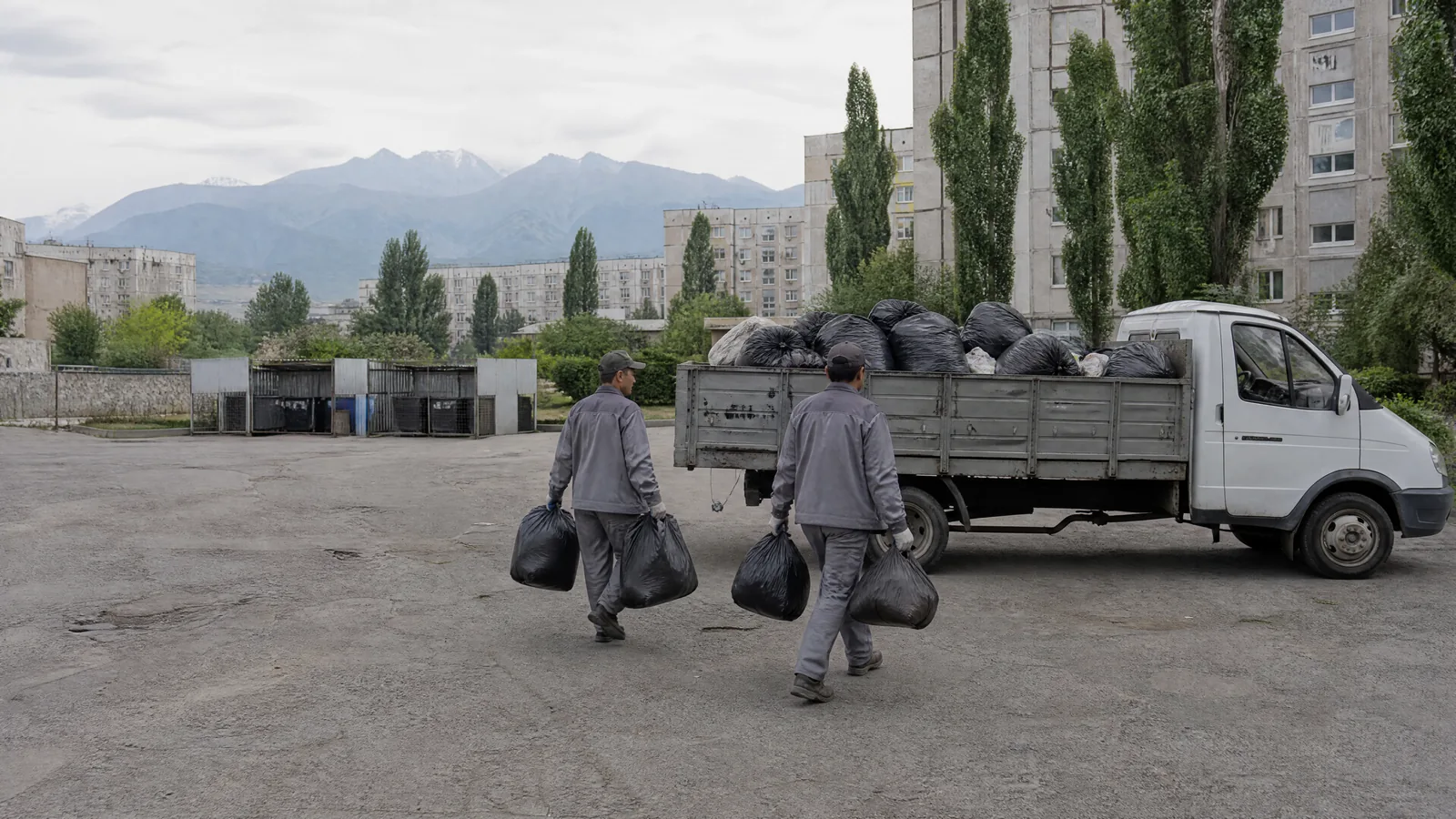
Tell us the number of bags and the address — we'll quote the trip price before the truck arrives.
Pick the waste type, timing and truck — the calculator will show a ballpark figure. How many bags and which floor — message us on WhatsApp, we'll calculate more precisely.
Roughly: a 12 m³ GAZelle fits up to 50 standard bags. We'll give you the exact price once we confirm the address.
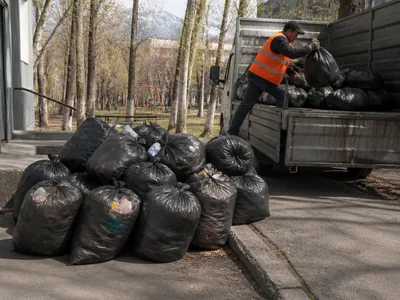
Kitchen bags, plastic, bottles, packaging. Usually 5–15 bags, we pick them up with a GAZelle in one trip.
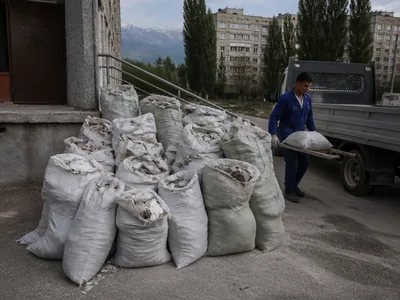
Plaster, tiles, broken brick, dry mixes — everything left after renovation. The bags are heavy, so movers carry them out on stretchers or drag them.
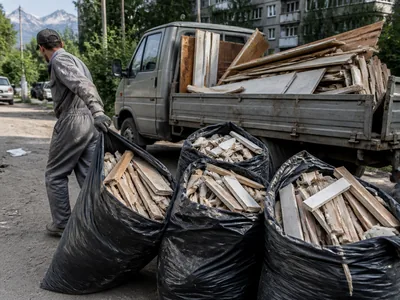
Broken-up furniture, door frames, baseboards — they get sawn apart and put into bags to be carried out of the apartment. One person can't lift this alone.
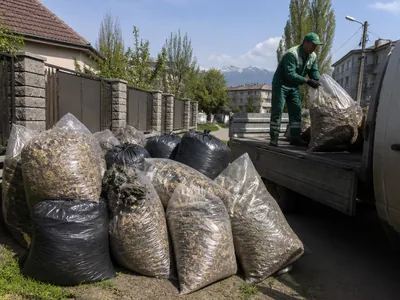
Seasonal waste from your property: leaves, small branches, cut grass. Bags make it easy to carry to the truck, we pick them up along with the rest of the load.
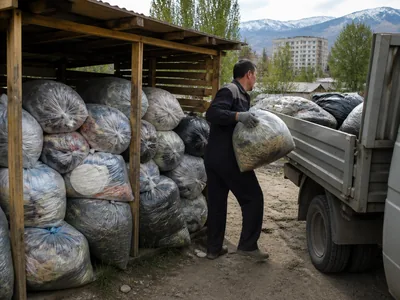
Old stuff, broken dishes, food scraps, grass — everything that piled up over the summer. The bags are in the shed or under the awning — we carry them out and load them up.
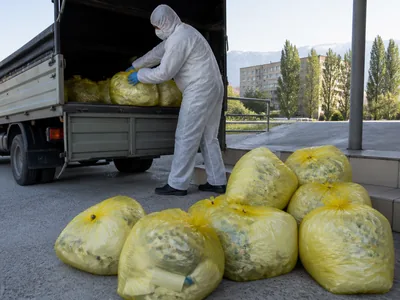
Used bandages, syringes, IV drips from the treatment room. Collected in separate bags, disposed of according to regulations.
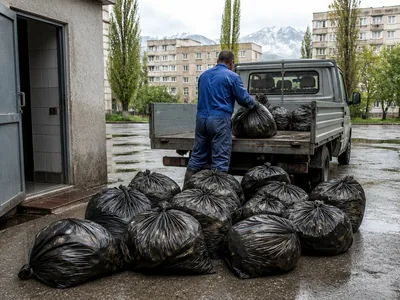
From restaurants, cafes, canteens — in heavy-duty bags so nothing leaks. We pick up on schedule or one-off if it's urgent.
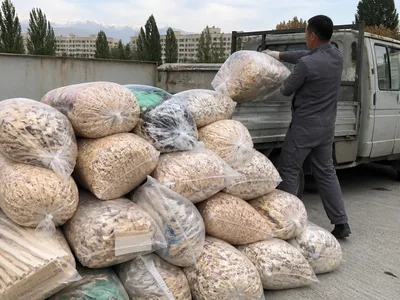
Offcuts, shavings, packaging from a workshop or garage. The bags are small but there are lots of them — we calculate the total volume and send a truck.
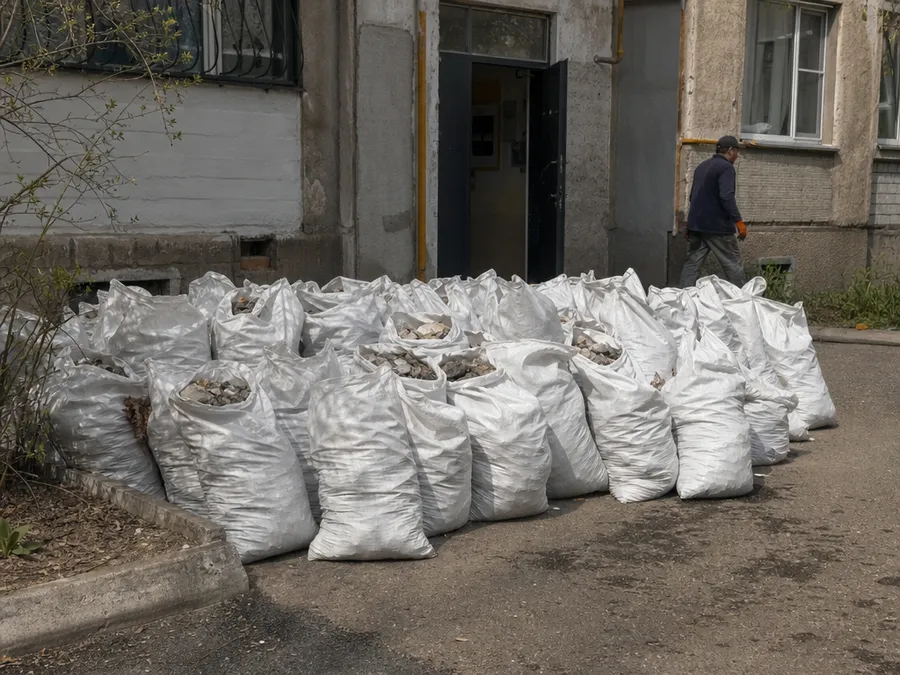
Great when there aren't many bags — up to 15–20. A GAZelle pulls into the yard, loaders carry the bags out from the entrance or warehouse. Price per trip, no extra charges for floors.
Book a GAZelle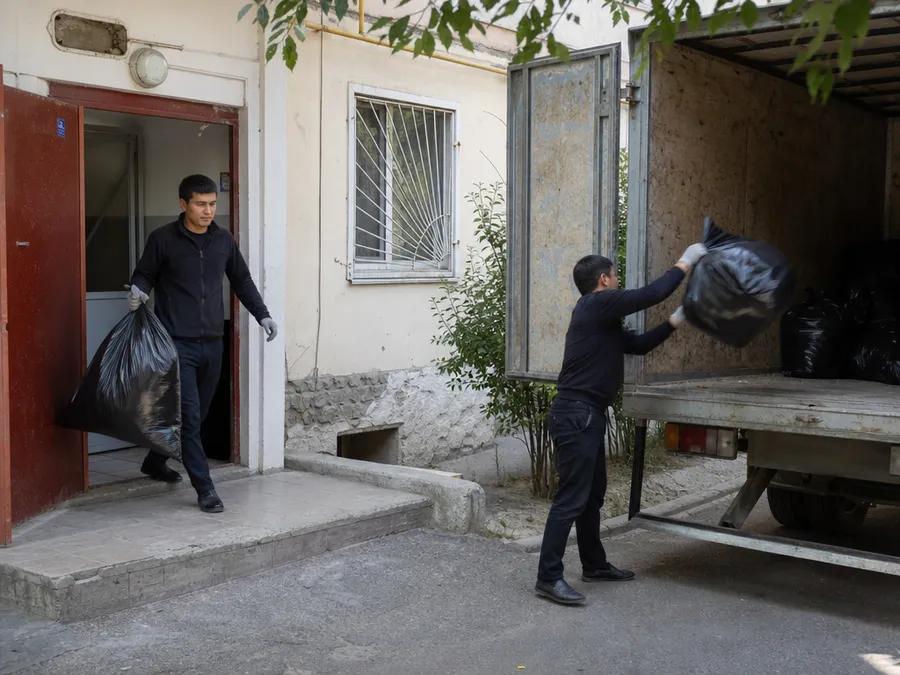
If the bags are heavy or far from the truck, we send a two-person crew. They carry them out of the apartment, down the stairs, and load them into the truck. Crew's hourly rate applies.
With loaders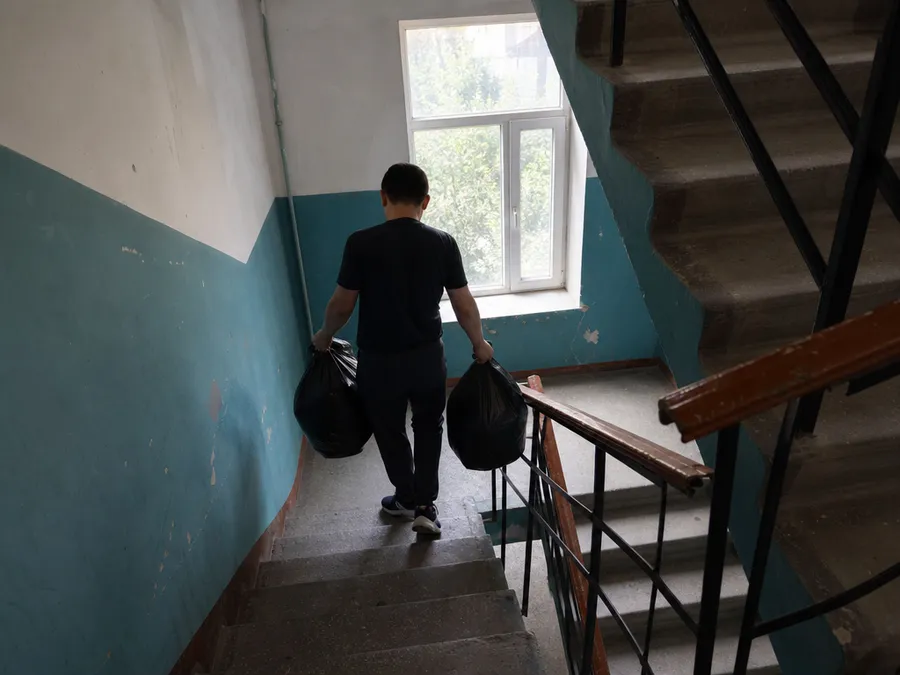
After a renovation, bags of tiles and plaster weigh 40–50 kg each. We charge by cubic meters because bags come in different sizes. We haul them away for disposal and sweep the area.
Construction waste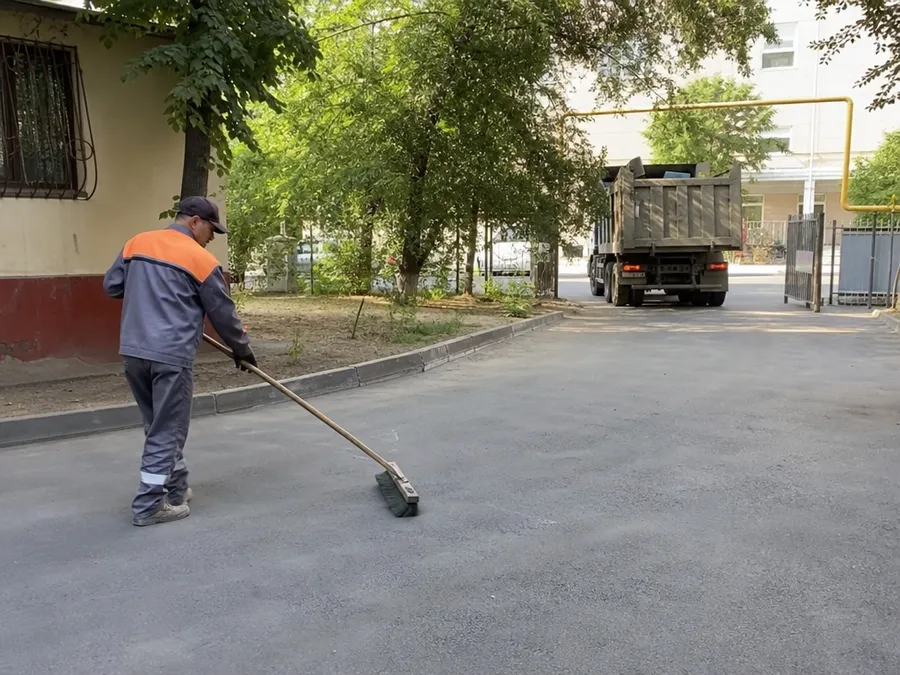
When there are lots of bags — 30 or more — we send a ZIL and a crew of three or four. They carry the bags out in batches so the truck isn't kept waiting.
With a crew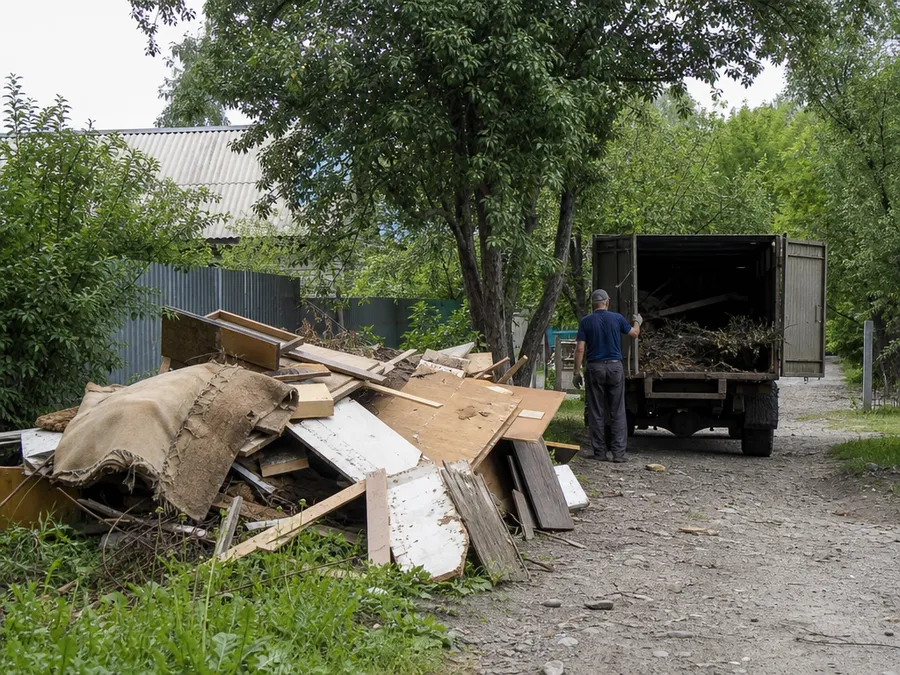
Outside the city, mileage is added to the trip price. We carry bags out of the shed or from the plot, load them up, and drive off. We work weekends.
From a cottage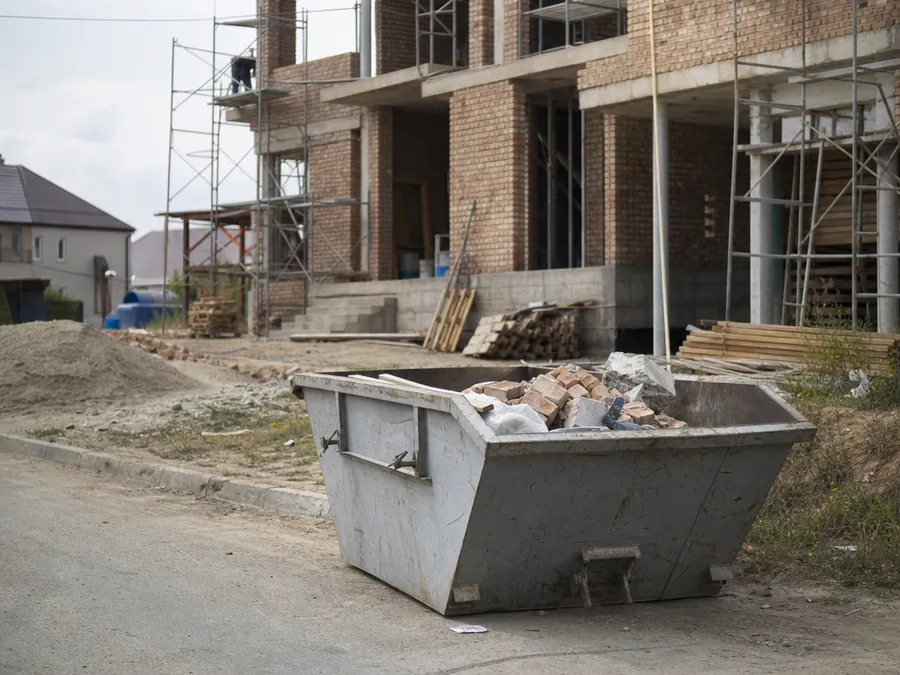
If bags pile up for a week, we place a container in the yard. We discuss the term and volume in chat — the price depends on how often we empty it. Message us and we'll find the right option.
Message us on WhatsAppFor bags we use a GAZelle, ZIL, or bunker — it depends on the amount and whether we can get to the entrance. Below are truck volumes and prices per trip.




Valid from August 2026 · price per trip within the city
| Equipment | Volume | Payload capacity | Price per trip | Extra hour |
|---|---|---|---|---|
| GAZelle 1.5 t | 12 m³ | up to 1.5 t | 30 000 ₸ | 6 000 ₸ |
| GAZelle 2.5 t | 16 m³ | up to 2.5 t | 35 000 ₸ | 9 000 ₸ |
| Truck 5 t | 25 m³ | up to 5 t | 40 000 ₸ | 12 500 ₸ |
| ZIL dump truck | 7–12 m³ | up to 7 t | 40 000 ₸ | 12 500 ₸ |
| KAMAZ dump truck | 15 m³ | up to 20 t | 55 000 ₸ | 15 000 ₸ |
| Howo dump truck | 25 m³ | up to 40 t | 60 000 ₸ | 15 000 ₸ |
| PUHTO (skip) | 8–10 m³ | up to 7 t | 45 000 ₸ | — |
| Multilift | 20 m³ | up to 12 t | 100 000 ₸ | — |
| Skip | 27 m³ | up to 15 t | 135 000 ₸ | — |
| Max skip | 32 m³ | up to 20 t | 160 000 ₸ | — |
Prices apply within Almaty city limits. Outside the city, mileage is added — we calculate it in chat before dispatch.
Not sure which truck you need? Send a photo — we'll pick one for you.
Message us on WhatsAppMost often, bag removal comes with carrying them down from the floor, loading into the truck, and cleaning up afterward. We do it all in one visit.
From request to landfill — five steps. You're only involved in the first and the last.
Start with a requestTell us how many bags and where to carry them from. Send a photo — that way we'll calculate more accurately.
We'll tell you which vehicle fits: a GAZelle or a ZIL. We lock in the price before dispatch.
The truck arrives at the agreed time. If the bags are heavy, the crew comes right away.
The movers carry the bags out of the apartment, basement, or garage and load them into the truck. This is the longest step if there are many bags.
We take them away for disposal and sweep the spot where the bags were.
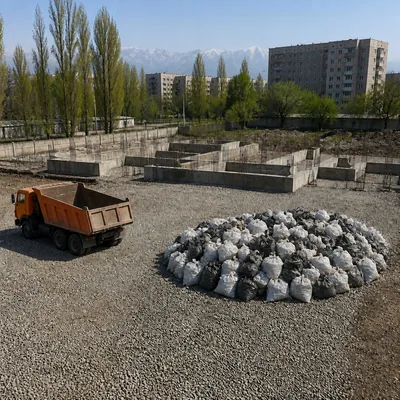
We show what the yard or site looks like before loading and what's left after.
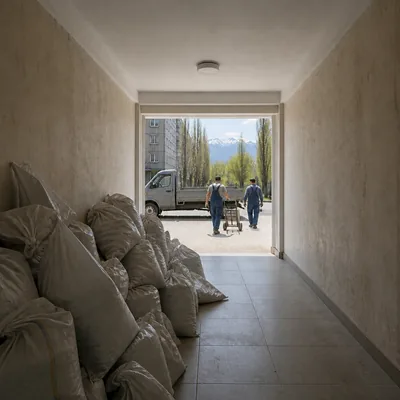
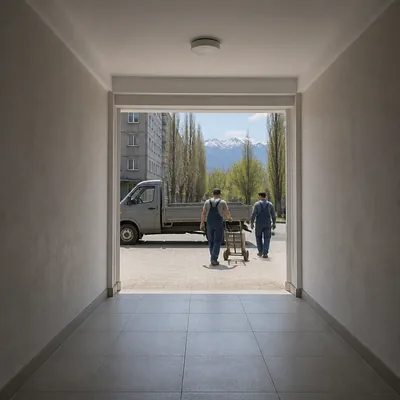
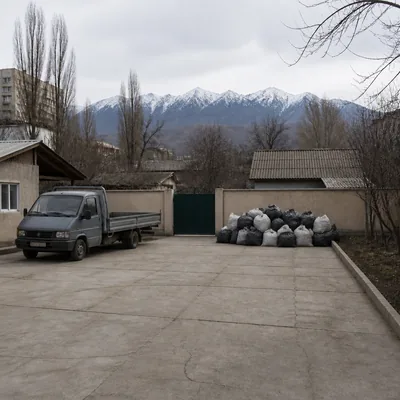
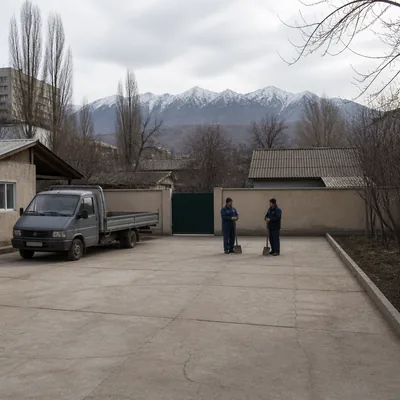
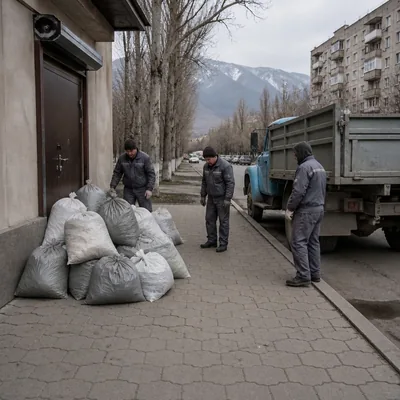
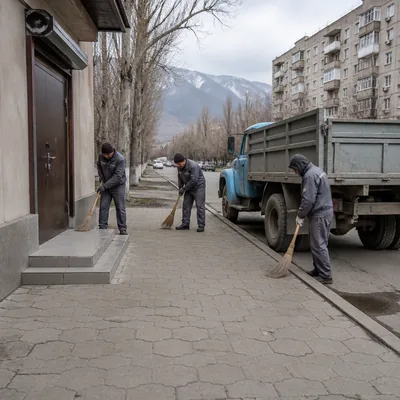
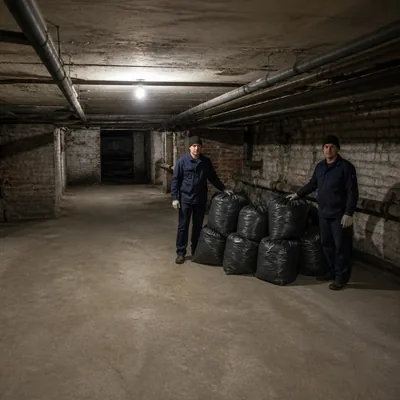
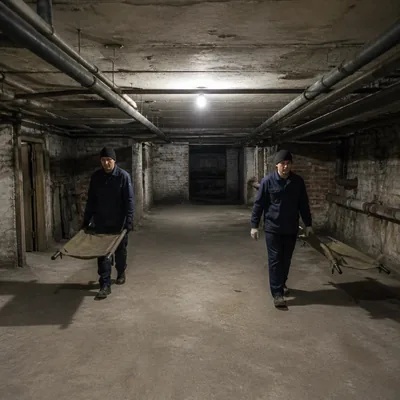
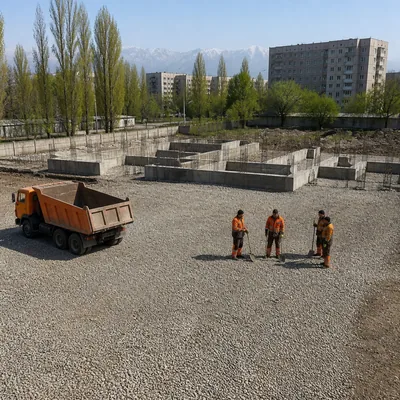
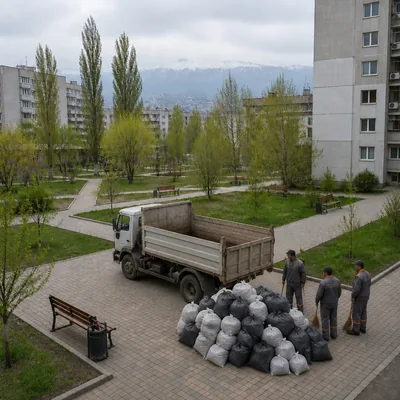
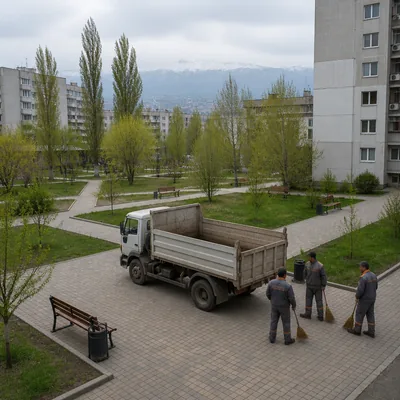
Foremen and drivers who go out to addresses with bags. They know how to load bags into the truck bed without tearing them on the way.







A familiar picture: a pyramid of bags growing in the yard. Fifty-liter ones, gray and black, some already leaking, some split at the seams. The renovation finished a week ago, but the bags are still there — carrying them one by one to the bin doesn't work, the bin site near the building can't take that volume, and your conscience won't let you anyway. That's when people start looking for bagged waste removal — not because they don't want to haul it themselves, but because there's nowhere left to haul it.
Over the years, I've seen plenty of these pyramids. Sometimes it's twenty bags after a cosmetic renovation of a one-bedroom apartment. Sometimes it's a hundred and twenty after tearing down walls in a three-bedroom, and half of them are torn already on the stairwell because four people carried them and misjudged. A bag is a deceptive unit. It looks like a clear measure, but in reality it's the most imprecise way to estimate volume there is.
Below is a breakdown without any sugarcoating. How many bags actually fit in a truck bed, why the same bag can weigh eight kilograms or thirty-five, what to do with bags that can't be taken to a regular bin, and why the phrase "waste removal price per bag" sounds logical but in practice almost never works the way people imagine.
Last fall we went to Ainabulak for forty bags. The owner insisted: "They're small, they'll fit in a car." On site it turned out to be cement crumbs, thirty-five kilograms each. A ton and a half. The GAZelle sank onto its springs, and we had to make two trips. This isn't rare, it's the rule: a bag never matches what the customer thinks about it.
A fifty-liter bag is a container, not a measure. Fill it with dry plaster or pieces of drywall — you get five to seven kilograms. Fill the same volume with removed ceramic tiles — forty to fifty. A sevenfold difference by weight, and it instantly wrecks any estimates. Density is the first thing that kills calculations "by the number of bags."
Shape works against you too. Board offcuts stick out at the corners, drywall lies flat and eats up the bed, and glass wool puffs the bag out so much it won't sit in line with the rest. Soft waste compacts — sometimes by half. Hard waste doesn't compact at all. So the same bed takes either forty bags or ninety, and both times that's an honest answer.
From experience, people understate the volume more often than they overstate it. They think the bags should fit and don't account for the gaps between them. A tight wall of square bags is rare. Usually a third of the bed is eaten up by air and crooked sides.
Below are average numbers I've seen on loadings hundreds of times. I won't promise bag-perfect accuracy: there's always a spread. Keep weight in mind, not just count.
A mound is when bags are stacked above the side and strapped down. Sometimes it's fine if the load is soft and won't spill on the road. But it's not something the rules call for: when you brake, the top row slides forward, bags tear, and half of it spills as you leave the yard.
A mound hurts in two cases. When the load is heavy: the strap won't hold, and nobody's cancelled the weight limit. And when the yard is tight: with a mound the truck is taller, branches and wires aren't a myth — I've seen a strap like that get torn off at the very first arch.
You'd think one run is always better. Not always. If you're in the old center where a GAZelle parks twenty meters from the entrance and the bags are on the fifth floor with no elevator — a big truck will stand longer and hit the weight limit before the volume limit. Sometimes two GAZelle runs are cheaper than one ZIL.
About money, I'll say this: there are no prices on this page, see the price list below, but go by weight and density. Carrying waste out at a price per bag usually works when there are few bags and they're light. When there are nearly a hundred and they're stuffed with concrete — they count by bed and runs instead.
And one more thing. Bags are handy containers, but construction waste removal in bags almost always needs two or three people to load. One person physically can't keep up with the pace you have in mind. That's worth factoring in too when you decide: one run or two.
A household bag one person can lift. A construction bag often takes two, or even four. The difference isn't the container volume, it's what's stuffed inside. Chunks of concrete, tile shards, drywall offcuts, plaster — all of that weighs far more than potato peelings and a plastic bottle, and behaves differently. A bag of household waste you can toss into the bed, it lands and stays put. A construction bag falls heavy, the bottom tears, and the contents scatter across the asphalt. I've hauled both, and the difference hits you from the first lift.
Density. That's the whole answer. A litre of household waste weighs about two hundred grams on average, because it's mostly air, packaging, paper. A litre of construction waste — about a kilo and a half, maybe two. A fifty-litre bag of concrete rubble weighs seventy to eighty kilos. You can lift it, but carry it carefully: the handles cut into your palms, and your back isn't made of iron. I've seen a guy in his thirties strain himself on the fourth bag and then carry the rest in halves.
That's exactly why removing construction waste in bags is a whole different story. The "toss it in and carry it out" approach doesn't work here. Each bag is a weight that has to be distributed among people. Two people carrying one bag — that's normal. One person carrying two — a sure path to injury and spilled cargo on the stairs.
They all tear if you pack them wrong. Thin polypropylene, the kind sold in hardware stores, holds about forty kilos. Beyond that — it's a gamble. Especially if there are sharp tile edges or rebar inside. I always say: don't stuff the bag to the brim. Better two bags of thirty than one of sixty. A second trip is cheaper than treating your back.
Here's what actually rips the bag on the way up:
Simple advice: put sharp pieces in a separate sturdy container or wrap them in old burlap. Sounds like overkill, but in practice it saves half an hour of cleaning in the stairwell.
Not everything you want to fits properly in a bag. Drywall is long, fragile, breaks when bent. Tile is flat and sharp, tears the bag. Concrete chunks are heavy with sharp edges. Each of these materials needs its own approach.
| Material | Weight of one bag, kg | What it does to the bag | How best to load |
|---|---|---|---|
| Broken concrete | 60–80 | tears the bottom and seams | carry one at a time, two people |
| Tile shards | 40–55 | cut the film from inside | line with cardboard |
| Drywall | 15–25 | breaks, sticks out | carry out in sheets, don't bag |
| Plaster | 50–70 | pulls the bottom, tears on lifting | split into two smaller bags |
| Glass wool | 10–20 | tears from inside with fibres | pack tight, seal with tape |
The numbers are approximate — they depend on how dry the material is and how tightly the bag is packed. But that's the order of things. If you have concrete chunks or tile shards left after renovation, it's better to order construction waste removal right away; the price per bag in that case is fairer than trying to cram everything into one container and tearing it on the way.
Dust is what people forget about until loading time. While the bags are sitting in the yard, everything's fine. As soon as you start lifting them, the fine fraction — cement dust, gypsum crumbs, sand — sifts through micropores and seams. After loading, a grey trace remains on the asphalt, blown by the wind all over the yard. Building managers don't like it, and neither do the neighbours.
After loading, we always sweep the area. It's not a marketing gimmick, it's a necessity: if you leave a trace, next time the truck might simply not be allowed into the yard. That's why we always ask in the request where exactly the bags are and whether there's water nearby to wash off the dust.
One more thing: small debris loves to slip through the gaps between bags in the truck bed. If you don't cover it, some will fly off into the air on the way. We cover the load with a tarp — keeps the yard cleaner, and everything we loaded makes it to the landfill.
And lastly. A construction bag isn't a unit of measure—it's a container. Two identical bags can weigh forty and eighty kilograms, and you can't tell by looking. So when someone asks about bagged waste removal, I always ask for a photo. A photo shows what's inside, and I can tell you in advance how many people it'll take and whether it'll all fit in one truck.
This is where the real work hides — the reason bag removal is priced as a separate line, not a bonus on top of loading. A bag sits in the corner of a room — and it weighs nothing until you walk up to it. A twenty-kilo bag of plaster goes down three floors, and by the time it reaches the landing it's a thirty-five-kilo weight: on every flight your arm pulls down, your grip weakens, the angle shifts, and the load on your hand grows faster than straight line.
A fifth floor with no elevator is twenty minutes per trip with a bag, if you carry it two-man. Thirty bags isn't sixty minutes, it's a full three hours, because after the twentieth your legs stop working properly, and your head follows. Your shoulder gives out even if you haul every day: muscles get flooded with lactic acid, and instead of speed you get standing on the landing between the second and third floors.
With an elevator it's the opposite. An elevator turns ten bags into one trip, and a freight lift in a new building turns it into a conveyor. But an elevator isn't always a freight one. A passenger car can't fit four people with bags, so either one person rides and the rest walk, or you call in a crew from outside. And I'm not talking about the weight of the bags, but the dimensions: a bag fits in the elevator, but a two-and-a-half-meter sheet of drywall doesn't.
In Almaty, the old housing stock is built so that a freight elevator is far from every building. In series 1-464 buildings it's small — the cab seems roomy until you actually measure it — and a bag fits, but a fridge box doesn't. Measure the cab before you start hauling; I once spent forty minutes getting a bathtub down because it wouldn't fit through the elevator diagonally by about ten centimeters.
A torn bag on the stairs isn't a disaster, but it cuts your speed in half. If the seam splits on the landing, you gather the broken pieces bit by bit, put them in a new bag, and toss the old one in too. If it tears in the elevator, you shake it onto a clean piece of film, wrap it up, and carry it out. Simple rule: loose and broken stuff isn't carried alone—it's carried in pairs and in a double bag.
Film under the bag isn't unnecessary caution. It catches the crumbs and dust that fall from below, and after everything's out you don't get that scene where the stairwell needs mopping from the landing to the ground floor. One roll of film costs less than a cleaner and a scandal with neighbors you woke up at eight in the morning on a Saturday.
Doors, windowsills, profile offcuts, countertop pieces — anything longer than a meter simply won't go in a bag. These aren't bags, they're oversized items. They're carried separately, in your hands, and on the landing they take up as much space as thirty bags. That's exactly why construction waste removal is priced per bag only for loose and small debris, while oversized items go by truck volume, not by container unit.
A question to the driver when taking the order that immediately removes half the hassle: not "how many bags do you have," but "is there anything longer than a meter and heavier than fifty kilos." For that, not two but four people come in the crew — and not because they can't handle it, but because a piece of concrete weighing two forty-kilo bags can't be lifted by hand: that's not technique, that's a person's back.
Corners are wrapped in cardboard, film, or an old blanket if they're carrying past a mirror in the hallway. The elevator is covered with film or cardboard on the floor and walls. Handrails and door frames are the first to suffer, and the first the crew pays for. While carrying, the work is done in order, and the order here is not a formality:
In terms of time, it looks like this: carrying out from the first floor — two people and forty minutes for thirty bags; from the fifth floor without an elevator — the same thirty bags, but two people and two and a half hours. The difference is exactly the elevator and how many times you have to go down for a new batch. The elevator carries a batch, the stairs — one bag at a time, and no amount of hands speeds that up.
This is the wall we once carried for four hours. Thirty-two bags, fifth floor, elevator under repair. The second bag tore right on the landing, and after that we wrapped each one in film so we wouldn't have to wash the stairwell. Neighbors peeked out, asked what happened. One grandpa watched for a long time, then brought us tea. That day we realized: it's better to say right away that it will take a while than to promise we'll finish in an hour.
That's where the removal fee comes from: it's priced separately not because the crew is padding the bill, but because this part of the job is measurable and visible — in time, in effort, in risk. Carrying bags of trash down from the ninth floor with no elevator is not the same service as carrying them out from the first floor, even if it's the same truck and the same number of bags. If you're ordering removal along with loading, tell us the floor and whether there's an elevator, and everything will line up timewise with no surprises.
A bag in the yard is not yet waste, but a request for transport. After that, everything is decided by the contents. A bag with wallpaper and baseboard and a bag with tile look the same on the outside, but they'll go to different places and, most likely, on different trucks. That's why removing construction waste in bags is almost always more expensive and troublesome than it seems from the first photo.
Ordinary household waste — wrappers, old clothes, dishes, cardboard, food scraps — goes to the landfill as a mixed stream. Construction fractions are accepted by different rules: concrete, brick, tile, plaster, soil, sand are usually taken to a site that accepts inert materials. Drywall is a separate story; it crumbles and doesn't like moisture. Wood and branches are also separate.
Some things won't go in the shared truck bed at all. Paint, solvent, glue, sealant, batteries, fluorescent lamps, household chemicals — these are hazardous waste, and they don't ride together with bags. We take them as a separate request: apart from other waste, to a specialized facility, and we pack them so nothing leaks on the way. I mention this right when you place the request, before the truck is even dispatched.
A mixed bag is the most expensive option. Heavy stuff like tiles sinks to the bottom, light trash sits on top, and by weight the bag turns out heavier than it looks. The movers lift it — it splits at the seam, and the contents spill on the stairs. Sometimes this takes half an hour, and the truck is standing there the whole time.
If the bags are already packed, I won't make you unpack them. But if you're just starting to fill them — separate right away: heavy on one side, light on the other, and anything that might leak on its own. This isn't a whim, it's a way to save a trip.
And one more thing. If a bag has been sitting for weeks, there may be water at the bottom — rain, a leak, damp soil. A bag like that weighs one and a half times more than a dry one, and hauling it down from the fifth floor alone isn't worth it. In such cases I suggest carrying two bags at a time, but slowly.
The drive to the site takes from half an hour to an hour — depends on which part of the city you're going to. Unloading is faster: the bed lifts, the trash slides out, the truck leaves. Unloading takes about ten minutes if the bags didn't tear on the way.
If bags tear in the truck, unloading drags on: you have to shovel the contents out by hand, and that's another twenty minutes. That's why I always check the bags during loading. Sometimes I swap torn ones for intact ones — from the spare supply in the truck.
After loading we sweep the site. This isn't a marketing gimmick, it's a normal part of the job: if we leave scattered trash behind, we won't be allowed back next time. This especially applies to courtyards where a concierge or building manager keeps an eye on things.
The spot where the bags stood should stay clean. If the bags were on the ground and left moisture or marks underneath — we clean that up too. We sweep the site after loading, and that's part of the job, not an extra charge.
| What's in the bags | Where it goes | Can it go in one trip |
|---|---|---|
| Household trash: wrappers, clothes, dishes, cardboard | Landfill, mixed stream | Yes |
| Concrete, brick, tiles, plaster, soil | Inert materials site | Yes, but in separate bags |
| Drywall, wood, branches | Separate site | No, goes on its own trip |
| Paint, solvent, glue, sealant | Hazardous waste | No, only separately |
| Batteries, lamps, household chemicals | Hazardous waste | No, only separately |
That's why twenty bags can go in one trip, while a hundred take two or three. It all depends on what's inside.
When I arrive on a call, the first thing I look at isn't the number of bags, but what's in them. You can't always tell from photos, so I have to figure it out on site. Sometimes opening one bag is enough to understand how many trips you'll need.
And here's what matters: if the bags are already sitting there and you need trash bag removal tomorrow, I won't start digging through the contents. I'll come, take a look, and tell you how many trips and which truck you need. After that — just loading and the road.
The reason is simple: not all sites accept mixed trash. One takes concrete but not wood. Another accepts household waste but not construction debris. So if the truck has both, it may go to one site first, then another. That adds an hour or an hour and a half to the route, sometimes more.
That's why I suggest sorting bags in advance. Not because it's the rule, but because it really saves time and trips. If you don't want the hassle, we'll figure it out on site, but sorting by the client is almost always faster.
One more thing — weight. The same bag of concrete weighs three to four times more than a bag of wallpaper. If you don't factor that in, you might order a small truck and then find out it can't lift the load. So when you call, I ask not just how many bags, but also the approximate weight.
If you're not sure — take a photo of the bags and describe what's inside. From the photo I'll tell you which truck you need and how many trips it'll take.
Basically, the whole route comes down to these six points. The rest is equipment and time.
Read this far and still not sure about the volume? Send us a photo — we'll calculate and give you a price.
Message us on WhatsAppI once carried out a bag of cement. Heavy as hell. Got it to the dumpster — dropped it. A day later I look: the dumpster's still there, and next to it a puddle of grey sludge. The bag tore, the cement got wet, and it all spread across the yard. The janitor cursed, the neighbors cursed, and I thought: who does that? Turns out, I did. Since then I know: not everything that fits in a bag can go in a regular dumpster.
Look. A regular dumpster is for household trash. You know, potato peels, paper, bottles. Everything a person throws out in a day. And people drag renovation leftovers there too: cement, plaster, paint. But that's not household trash. It's construction waste. It has different weight, different volume, different rules.
I won't scare you with laws. I'll just explain in plain terms why you shouldn't do that. And what to do with this stuff properly.
Cement, plaster, concrete — they're heavy. One bag of cement is fifty kilograms. And if it hasn't set yet? Then it spreads. It'll tear the bag, flood the dumpster, and then it all sets like stone. The dumpster becomes too heavy, the garbage truck can't lift it. And the whole site grinds to a halt.
And then there are liquid leftovers. Paint, primer, solvent. If you pour them into a dumpster, they leak to the bottom, mix with other trash. Then it all stinks. And it's no longer just trash — it's chemicals.
You might ask: where then? I'll answer: in separate containers. And call for construction waste removal in bags. We take that. But not in a general dumpster — in a separate truck.
And yes, if the bag of cement has already torn, don't drag it across the yard. It'll spill along the way. Better to pour it into an intact bag or a bucket right away.
Broken tiles. Glass shards. Ceramic dishes. All of that turns into a knife inside a bag. The bag can't take it, it tears. And you're not carrying a bag — you're carrying a sieve with glass spilling out.
I saw a loader cut his hand on a bag like that. He just picked it up, and a shard was sticking out. Blood, first aid kit, delay. Nobody needs that.
What to do? Wrap glass in thick paper or cardboard. Or put it in a box, not a bag. A box doesn't tear as easily. And it's easier to carry.
And if the glass is small, like sand? Then double-bag it. One tears, the second holds. But a box is still better.
Paint, glue, solvent, household chemicals. These are all hazardous waste. Not because they're radioactive, but because they're chemically active. They can catch fire, react, poison the air.
In a regular container, they get mixed with other trash. Then it all gets compacted in the garbage truck. And if there's a spark or high temperature — it can blow up. Not always, but it happens.
And another thing: if you pour paint into a container and it spills, the next person who tosses a bag in there will get dirty. They won't like it. And you wouldn't like it either.
Stuff like that needs to be dropped off at special collection points. Or call a truck for trash bag removal, but give us a heads-up that there are chemicals in there. We'll figure out what to do.
Tires. Large appliances. Furniture. Doors. None of that fits in a bag. And if it does, it weighs so much you can't lift it.
Tires are a whole different story. They don't burn, they don't rot, they take up a lot of space. Containers won't take them. And rightly so. There are special drop-off points for tires.
A fridge or a washing machine? There's freon in there, there's oil. That's not exactly household trash either. They get recycled separately.
Furniture and doors are bulky waste. They need a separate truck. And movers. Because you can't carry a sofa alone.
Here's what I usually ask when someone says they've got bags. To figure out if it can go in a shared truck or not:
These questions aren't out of spite. It's just that if I know there's cement in there, I'll send a different truck. And a different mover. And the price will be fairer.
Now, about construction debris removal — price per bag. People often ask: how much does it cost to carry out one bag? I say: it depends on what's in the bag. A bag of paper and a bag of concrete are two different things. In weight, in difficulty, in time.
So I don't quote a price per bag right away. First I look at what's there. Then I tell you. That's fairer for both sides.
And one more thing: don't try to stuff into a bag what won't fit. Better to call and ask. We'll tell you how to do it right. And we'll haul it away so nobody has a problem.
The money conversation starts not with the bags but with the truck bed. A bag is what you collected stuff in, but you pay for how much the truck takes in one go. And here's the main confusion: the price per bag for trash removal seems fair and clear until it turns out the bags are different weights, different volumes, and half of them are torn. One is packed with broken tile — it weighs thirty-something kilos. Another is insulation, which weighs almost nothing. Treat them as equal — and you'll be off by half.
From experience, clients almost always underestimate the volume. Not because they're trying to cheat, but because a bag in the corner looks smaller than it does in the truck bed. When you carry them one by one, you lose the sense of scale.
We never count by the number of bags directly. We ask other things: what's inside, roughly how much it weighs, where to drive in, where to carry it out from. Weight matters no less than volume, because a truck takes not only cubic meters but also mass. If the bags are plaster and concrete, the GAZelle will sag before it's full.
Then there's the floor and the elevator. From the third floor with no elevator, carrying takes longer, and that's time, not an abstraction. If there's an elevator, it's easier — but not always: in old buildings the cabin is narrow, a bag goes in sideways, and there's no room to turn around on the landing. We also count the carry distance: from the apartment door to the truck bed it can be ten meters, or eighty across the whole yard with curbs.
The logic is simple: each trip means bringing the truck, loading, driving to the landfill, unloading, and driving back. The dispatch and the road are repeated twice, and the load is split in half. So two trips are never equal to two halves of one. It's not greed, it's the arithmetic of fuel and driver time.
Honestly, sometimes it's cheaper to order a bigger truck and haul everything in one go. Especially if the bags are already packed and you're ready to load fast. Another story is when a dumpster can't get into the yard — then there's no choice, only smaller trips.
Construction waste removal price per bag often seems lower if you count by bags, but with two trips the total comes out different. People are surprised, then they count the fuel and agree.
Peak is from April to October. Renovations, dachas, moves — all that happens in summer. Plus the heat: in July, bags with organic waste start to smell within a day, and no one wants to delay removal. In winter the volume drops but doesn't disappear: cosmetic repairs go on year-round.
There's also a seasonal trap. In autumn, yards have lots of leaves, which also get bagged. They're light but bulky, and if you mix them with construction waste, the weight is distributed unevenly. In winter, bags stiffen in the cold, tear more often, and carrying takes longer.
In summer there are fewer trucks available — everyone's hauling. Better to book a day or two ahead, not the same morning.
| Factor | How it affects | When it matters most |
|---|---|---|
| Weight of the load | Limits loading before volume does | Concrete, tiles, plaster in bags |
| Bag volume | Determines how many truck beds you need | Insulation, plastic, light junk |
| Floor and elevator | Adds time for carrying out | Above third floor without elevator |
| Carry distance | Increases labor costs | Far parking, narrow yard |
| Number of trips | Each trip repeats dispatch and road | Volume doesn't fit in one truck |
The table shows that the sum is made up of several things, not a single number per bag. And that's right: you pay for real work, not an imaginary unit.
The most reliable way is to send photos of the bags via messenger. Not one, but two or three from different angles so the scale is visible. From the photos we estimate volume and weight, ask a couple of questions, and give you a price. After that, it doesn't change.
If the bags aren't packed yet and you're just planning, tell us the approximate volume and type of waste. That's enough to figure out which truck will fit.
Sometimes there's more on site than in the photos. Then we stop and agree on a new amount before loading, not after. No surprises at the end.
And another thing: trash bag removal isn't always about bags. Sometimes someone says "about twenty bags," but in reality there's also an old sofa and three tires. Better to mention that upfront, otherwise the estimate has to be redone on the spot.
We take requests via messenger or by phone from the website. No order forms, everything through chat or voice. It's faster and clearer for both sides.
Bottom line: the amount depends on weight, volume, floor, elevator, carry distance, and number of trips. A bag is a handy unit for collecting, but not for calculating. Want accuracy — show photos. We'll give you the price and send the truck.
If you've scrolled all the way down, that pyramid in your yard is already yours. And trash bag removal seems simple: you call, we come, we take it away. In reality, the devil's in the details. A bag is an approximate unit; a truck bed is an exact one. In ten years I've seen plenty of mix-ups where a client says "twenty bags" and it turns out to be forty. Or the other way around. Both hurt your wallet just the same.
First: not all bags are equal. A fifty-liter bag of soil weighs seventy kilograms. The same bag filled with expanding foam weighs three kilograms. Second: construction waste in bags is on average three to four times heavier than household waste. Third: a torn bag needs a second bag, otherwise the movers will end up carrying half of it in their arms. Fourth: volume is calculated by the truck bed, not by the number of bags. Fifth: price per bag is a rough estimate, because it depends on weight and floor.
Here's what I usually list when explaining to a new client why you can't just give the number of bags:
What to prepare before the crew arrives? Clear the path from your apartment door to the vehicle. Remove any rugs in the hallway. Let the concierge know there will be noise. Gather the bags in one place — not all over the apartment. If there's an elevator, check if a bag on a pallet fits inside. Often it doesn't — then they carry it down the stairs.
A separate note about parking. The vehicle should park as close to the entrance as possible. If there's a barrier in the yard, arrange a pass in advance. If the parking spot is taken, the movers will have to carry everything across the yard, and that adds time. We don't charge extra for distance to the entrance, but a drawn-out carry sometimes turns into a separate trip.
When you call or message on WhatsApp, the dispatcher will ask: address, floor, elevator availability, approximate number of bags, and what's inside. Don't hesitate to ask: "What if there are more bags?" The answer should be honest: the price is fixed before dispatch, but if the volume doubles, it's a different order. Ask about the cost of removing waste per bag — but remember it's a guideline, not a rigid rate. And check when the vehicle can come: morning or evening.
You can realistically carry out ten to fifteen bags yourself if you live on the first or second floor and have the time. Beyond that, it's math: forty bags down the stairs means two days of work and a thrown-out back. Plus, the container site may not accept construction waste. So if there are more than twenty bags or some are heavy — call us. It'll be cheaper.
If the bags are standard, 50–60 liters, and not stuffed with stones, we take up to 50 per trip in a 1.5 t GAZelle: the body could hold more, but we're limited by payload capacity. Construction bags with broken brick or tile weigh much more, and here we count not by quantity but by weight — the truck won't take more than a ton and a half. Send a photo — we'll tell you exactly how many bags fit in one trip.
Then we either order a second one or bring in bigger equipment right away — a ZIL, a KAMAZ. Sometimes it's cheaper to take one bigger truck than to run two small ones. We usually estimate from photos and tell you: this many bags, this truck, this many trips. If it turns out something didn't fit, we don't leave it in the middle of the yard — we'll figure out how to finish the job.
We charge not per bag but per trip plus the loaders' work. A GAZelle trip is from 30 000 ₸, a two-man crew is 20 000 ₸. If the bags are heavy or it's a high floor with no elevator, that may add a little to the labor, but we quote the sum before the truck arrives and don't change it after. We'll give you the exact figure after a photo or a short description.
We carry them out — that's why the crew comes. Your job is to show us where the bags are. If the stairwell is narrow, the elevator is out or there's no room to turn around in the yard, let us know in advance so we bring enough people and don't waste time.
Then we carry them by hand to where it can park. This happens a lot in old Almaty yards — arches, parked cars, a barrier. The carry distance affects the work time, so tell us about it right away, when you place the order. We'll figure out how many people to send so it doesn't drag on all day.
Don't put construction debris with rebar sticking out into a bag if the bag tears on it — that stuff is better in a hard container or straight into a dump truck. Don't put batteries, lamps, paint or solvents into trash bags — we take those as a separate request: apart from other waste, to a specialized facility. We don't take medications. And don't mix glass with soft waste in one bag: it tears when lifted, and everything spills all over the stairwell.
We haul it away for disposal and sweep the spot after loading. Whether you need paperwork and which kind — message us on WhatsApp, we'll answer before you order. With bags, few people need it, but it's worth asking.
Usually after loading, once the truck is full and you can see the volume. Cash or transfer — whatever works for you. The key thing is the price is locked in before we arrive and doesn't change after. No "oh, there turned out to be more bags, pay extra."
Yes, Mon–Sun, 9 to 21. If you need earlier or later — we'll discuss it separately, but during standard hours we come with no weekend surcharge. Better to leave a request on WhatsApp in advance so a truck is available.
If they tear on the way, we pick everything up and move it into intact bags if we have any. So here's a tip: don't stuff the bag to the brim, especially with construction waste that has sharp edges. A double bag or heavy-duty 70–80 liter bags hold up much better. And tell the movers if there's anything especially heavy inside — we'll lift it more carefully.
Got a question that's not here? Ask — we'll answer in writing, no call needed.
Message us on WhatsAppeverything was fast and neat. the bags were heavy, but the movers managed. the price is fair
After moving, we had lots of bags with stuff that wasn't picked up. Dinara helped sort everything out over the phone. The truck arrived an hour later, took it all.
They took everything out carefully, but we waited half an hour longer for the truck. Otherwise fine, they took all the bags.
It snowed all day, I thought they'd reschedule. Nope, they came. The bags had cement in them, heavy. The per-bag price for waste removal worked for me.
We were replacing plumbing in two apartments, old pipes and toilets in bags. The per-bag price for construction waste removal turned out lower than others. They came Saturday evening, even though they could have said no. Daniyar organized everything fast.
We were gathering bags from the balcony, junk had been piling up there for years. I thought I'd have to drag it all to the dump one by one. They came and took it all in one go.
Overall all good, they carried everything out fast, but we waited for the truck longer than promised. About an hour and a half. Maybe traffic, maybe something else. The bags were heavy with old tiles, the guys didn't complain. That's why it's a four, not a five.

Once they postponed the pickup by a day, but warned us in advance. In the end, everything was removed, the bags taken. Fine.
We were clearing out a storage room in the basement, about twenty bags plus old furniture. Dinara said a GAZelle would be enough, but a dumpster would be better. We went with the dumpster, it was faster. Thanks for the advice.
After winter, bags of sand and de-icing agents were left in the yard. I decided to order waste removal, the per-bag price worked for me. They came, took it away, swept the area.
Waste removal in bags — just what I was looking for. One call, the truck's at the entrance. Fixed price, no surprises.
We were clearing out the basement, must have piled up about forty bags. No elevator in the building, fifth floor. I thought I'd never find anyone willing. Three of them came, carried everything out, swept the area. Dinara called to confirm the address.
Ordered construction waste removal in bags for the first time. Was worried they'd show up and say the volume was wrong. Nope, everything was spot on.
I ordered construction waste removal in bags for the first time. I was afraid they'd show up and start counting every bag to jack up the price. Nope, they gave me the price right away, and that's exactly what I paid. Askhat warned me a GAZelle would be enough.
they took everything quickly, the bags were heavy but the movers didn't complain. they cleaned the yard. thanks.
After the renovation, about twenty bags were left, and I thought I could handle it myself. Of course, I couldn't. I called in the evening, and by morning the truck was already at the entrance. The movers carried everything out in half an hour.

We were renovating our bathroom, old tiles and pipes in bags. Our neighbor recommended this service. They came in the evening, took everything out, we didn't even have to help. Very happy.
Tore down the shed at the dacha, ended up with bags of broken brick. They came, loaded it up, hauled it away. All good.
A neighbor recommended them. I ordered, they arrived within an hour. Everything was spot on.

When cleaning the yard, a lot of bags piled up. I called, they arrived an hour later. Took everything away and swept around.
Spring cleanup in the yard, we piled up bags of leaves and junk. Thought we'd haul it ourselves, but we don't have a truck. They came, took it away, swept the yard. Nice that we didn't have to twist anyone's arm.
ordered trash removal in bags, they arrived quickly. the movers carried everything down from the 4th floor themselves. great job.
After the renovation, we needed to get rid of the trash in bags. When Yerlan arrived, he calculated everything quickly and took it away the same day. The price was quoted upfront and didn't change.
We were clearing out the garage, ended up with about thirty bags. Askhat said they'd come by noon, and they did.
We were closing a café and needed to haul away bags of dishes and leftover food. It didn't smell great, to be honest. They came, carried it out, didn't even flinch. Got it done in two trips.
They carried out construction waste in bags after a kitchen renovation. All fast, price as agreed.
they arrived quickly, took all the bags, swept the yard. the price didn't change, even though I was worried. thanks
We ordered bagged garbage removal after clearing the yard. They arrived at the scheduled time, everything neat. The price didn't change.
Showing 3 of 28
Want the same? Describe your task — we'll calculate and give you a price before the truck arrives.
Message us on WhatsAppChecked us out? Drop us a line — we'll pick the right truck for your load.
Message us on WhatsAppArticles of the Administrative Offenses Code of Kazakhstan, amounts in MCI for 2026, and who's responsible for the garbage — the carrier or the client.
Collection, sorting, crushing, secondary raw materials — the steps in order and what actually gets recycled.
How medical and industrial waste differ from household waste and what's required of the hauler.
Illegal dumps on the outskirts, soil and groundwater: what happens when waste goes to the wrong place.
Gather the bags by the entrance or in the yard, take a photo and message us. We'll quote a price per trip, come in a convenient time slot and take it away for disposal.
Tell us how the pickup went — it helps us and anyone choosing a hauler.



