Timur
The price per cubic meter turned out lower than I'd estimated. Soil removal with loading is just what I needed. I'd have been digging for a week myself.
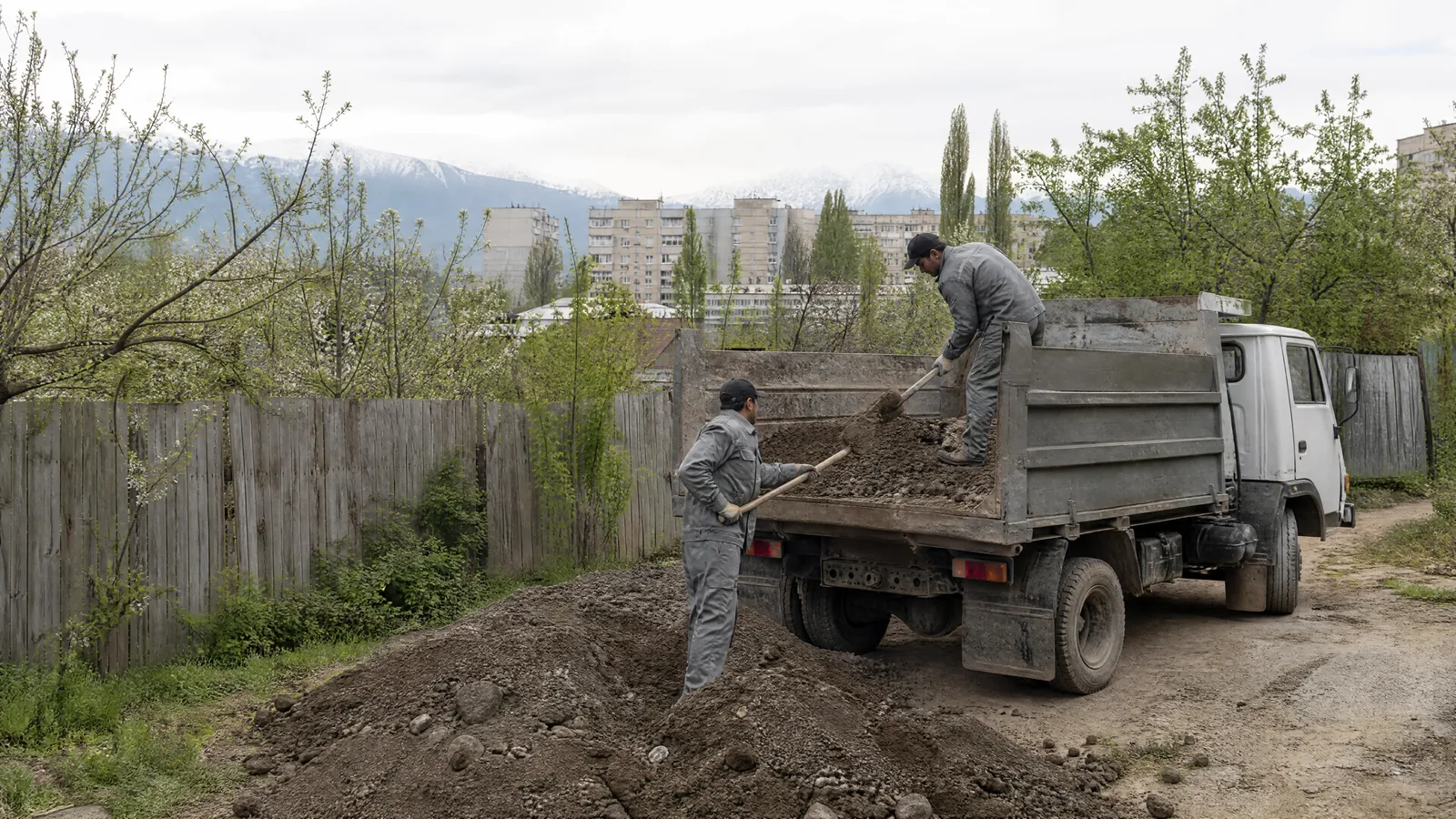
Tell us the volume and address — we'll give you a price before the truck arrives, and it won't change.
Choose the type of soil, timing and truck — you'll see a price range. If you're not sure about the volume, send a photo of the pile to WhatsApp: we'll calculate it together.
We calculate by volume in cubic meters. The exact amount will be given after a photo or measurement — it won't change after the truck arrives.
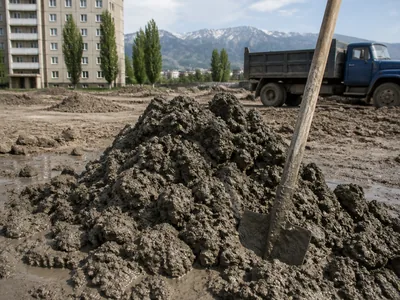
Heavy and sticky — a cubic meter weighs about two tons. A GAZelle can't take much at once, so we usually send a dump truck. But it's perfect for removing clay from your plot completely.
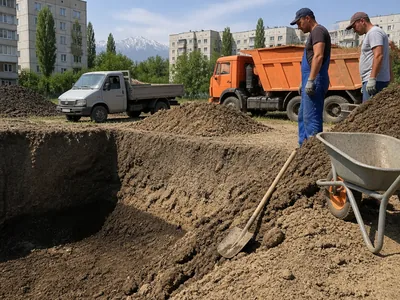
Regular soil after foundation work or a septic hole. We calculate by cubic meters: the closer the truck is to the pit edge, the less work for the loaders.
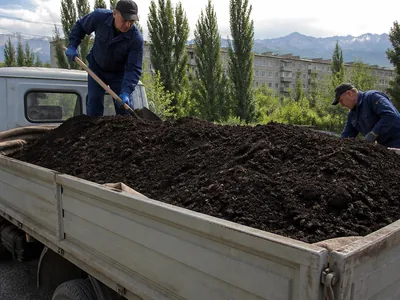
Sometimes it's not thrown away but moved to another plot. Then the task isn't to remove soil but to move a couple of cubic meters to the right place.
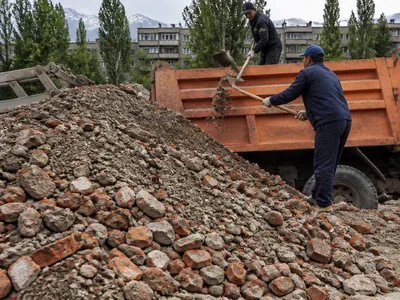
Rock, crushed stone mixed with soil, broken brick. This load is heavier than usual, so we don't fill the truck bed to the brim — otherwise the suspension won't hold up.
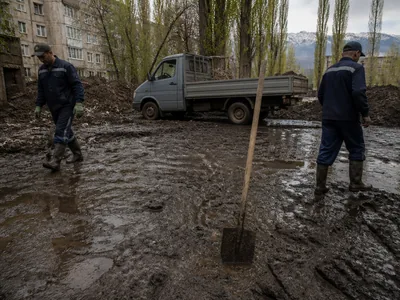
It soaks up water and gains weight. From experience, it's better to let it drain for a couple of days or load a partial bed so you don't pay for overload.
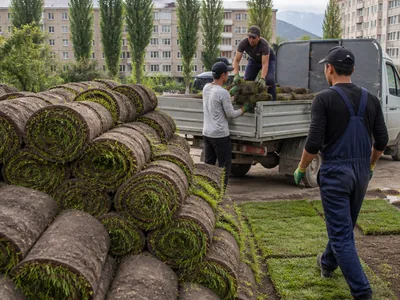
Removed turf, roots, grass mixed with soil. We haul this layer away together with the soil, separately from branches — they go on different routes.
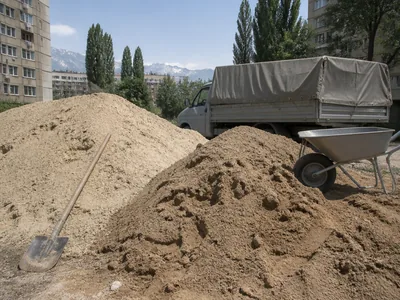
Leftover fill from construction or a pit. It's loose, loads quickly, but it's dusty — we cover it with a tarp if we're driving through the city.
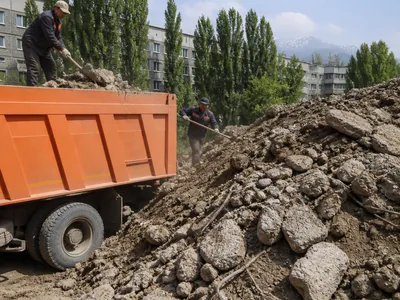
Concrete chunks, rebar, pieces of screed in the soil. If this makes up more than a third, we count it as construction waste — the price per cube is higher.
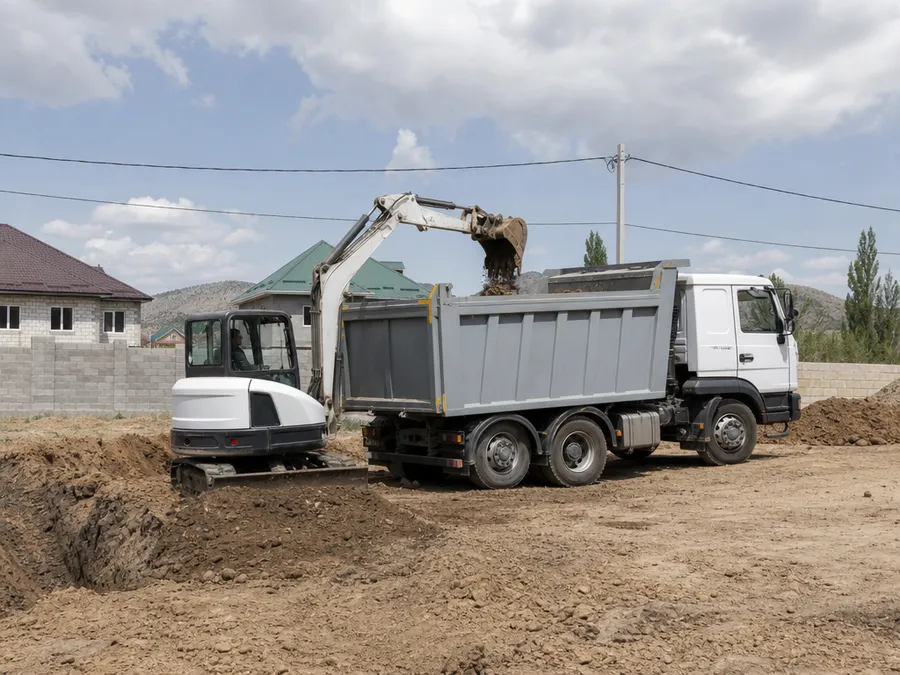
Our main service: we arrive, load with shovels, and carry it to the truck. You need this when digging is done and the pile is sitting in the yard or behind the house. We charge loading at the crew rate — from 20 000 ₸, and we quote the amount before dispatch.
Order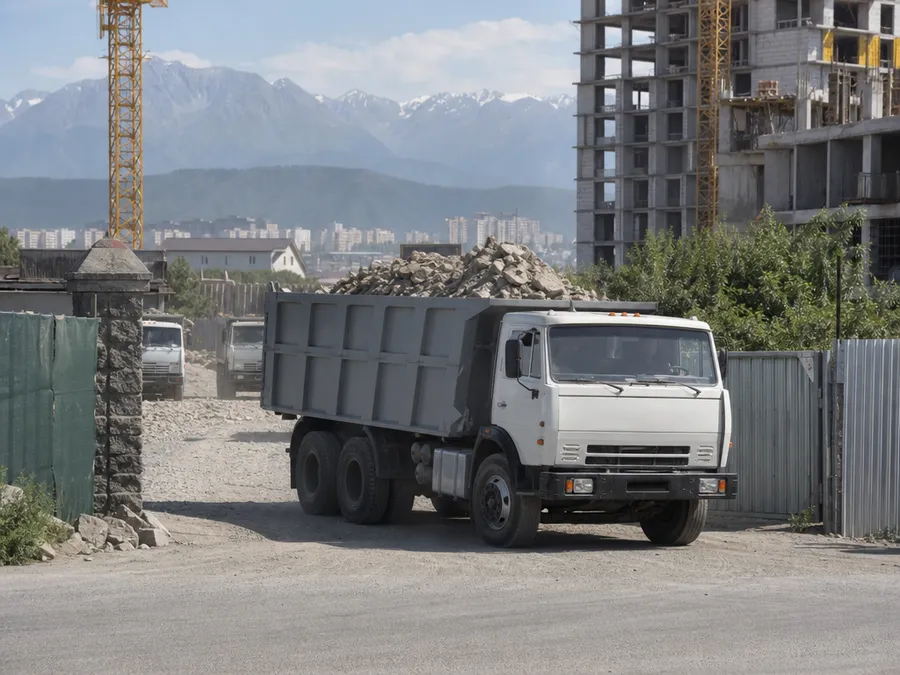
We haul clay with a dump truck or Howo — a GAZelle gets stuck in it. The price depends on the volume, not the trip: one cube of clay weighs as much as one and a half cubes of soil. We estimate from a photo of the pile and access.
Get a quote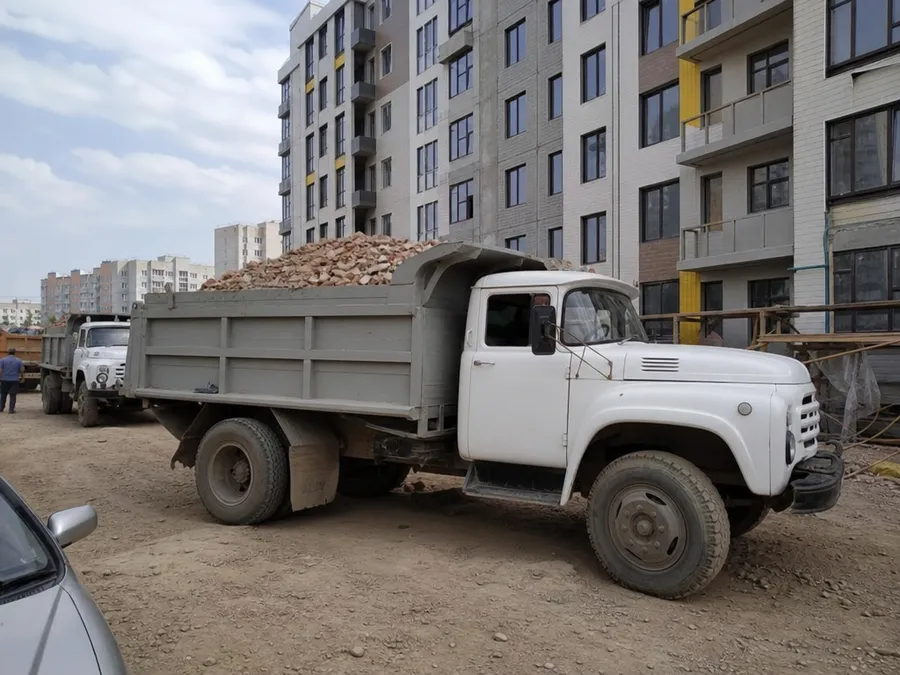
When the site has both soil and broken brick with concrete. We take it in one trip if the volume allows — that's cheaper than two visits. We unload at different points if needed.
Learn more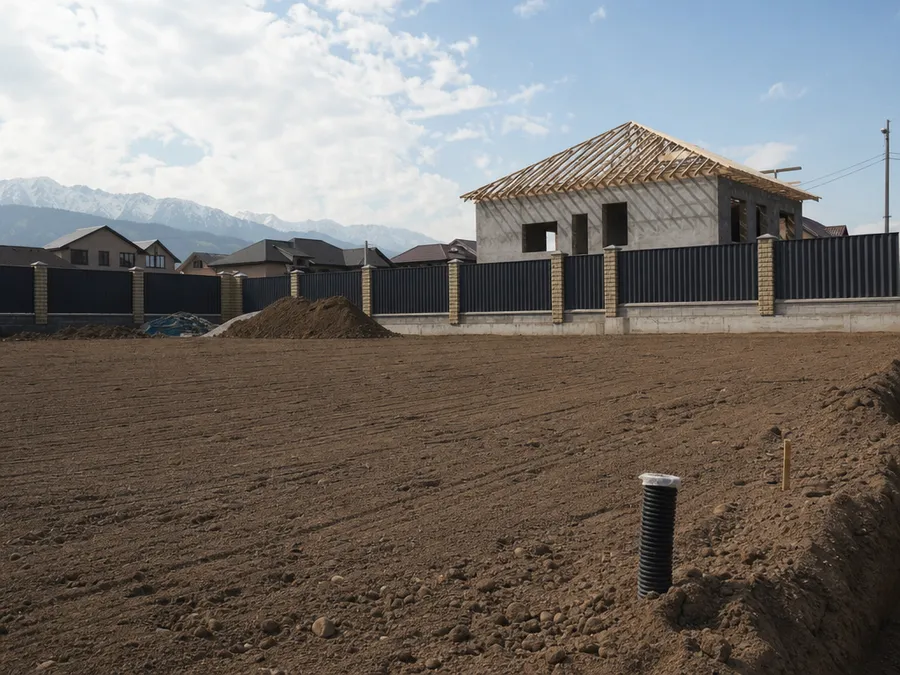
The pile is gone — the pit remains. On request, we level the site and add sand or crushed stone. The crew works by the hour, and we agree on the volume before dispatch.
With loaders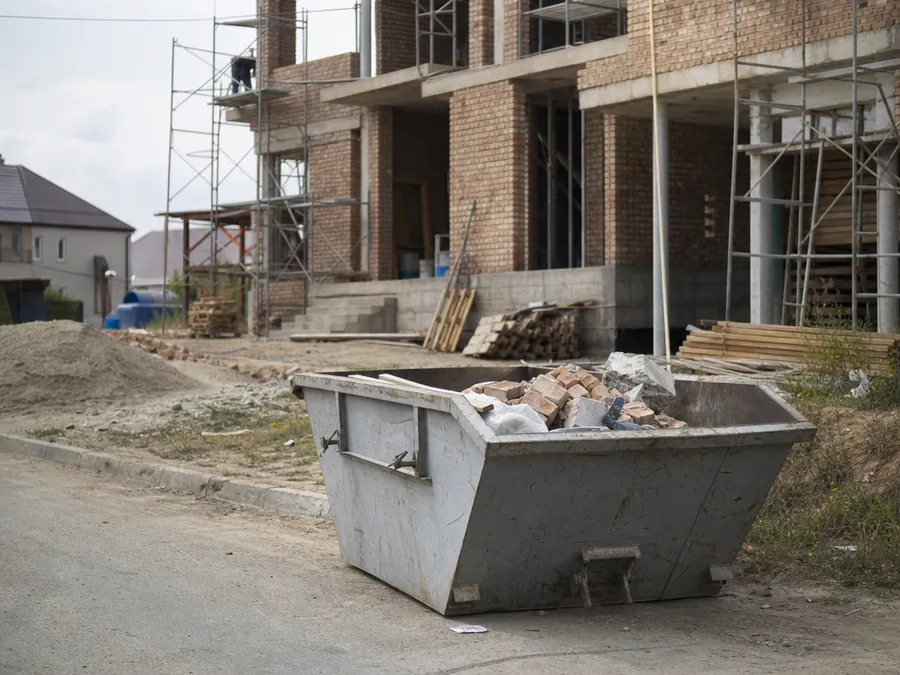
If you'll be digging for a week, we place a dumpster in the yard and swap it as it fills. We discuss the rental period and volume in chat: we confirm the price for long-term rental only after a conversation.
Message us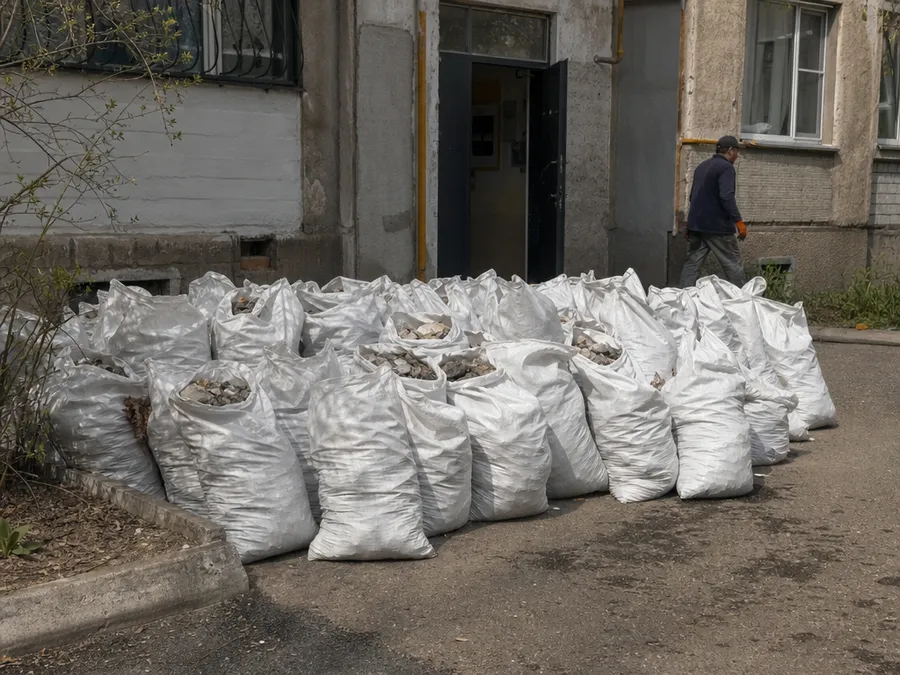
When digging is done by hand and the soil is bagged right away. The bags are heavy, so we send a GAZelle with a crew to avoid damaging the truck bed. Suitable for small pits for posts and a septic tank.
OrderThe heavier the soil, the fewer cubes the truck can take. Clay and wet loam hit the tonnage limit, not the bed capacity, so for those we usually use a KAMAZ or Howo.




Valid from August 2026 · price per trip within the city
| Equipment | Volume | Payload capacity | Price per trip | Extra hour |
|---|---|---|---|---|
| GAZelle 1.5 t | 12 m³ | up to 1.5 t | 30 000 ₸ | 6 000 ₸ |
| GAZelle 2.5 t | 16 m³ | up to 2.5 t | 35 000 ₸ | 9 000 ₸ |
| Truck 5 t | 25 m³ | up to 5 t | 40 000 ₸ | 12 500 ₸ |
| ZIL dump truck | 7–12 m³ | up to 7 t | 40 000 ₸ | 12 500 ₸ |
| KAMAZ dump truck | 15 m³ | up to 20 t | 55 000 ₸ | 15 000 ₸ |
| Howo dump truck | 25 m³ | up to 40 t | 60 000 ₸ | 15 000 ₸ |
| PUHTO (skip) | 8–10 m³ | up to 7 t | 45 000 ₸ | — |
| Multilift | 20 m³ | up to 12 t | 100 000 ₸ | — |
| Skip | 27 m³ | up to 15 t | 135 000 ₸ | — |
| Max skip | 32 m³ | up to 20 t | 160 000 ₸ | — |
Prices apply within Almaty city limits. Outside the city, mileage is added — we calculate it in chat before dispatch.
Not sure which truck you need? Send a photo — we'll pick one for you.
Message us on WhatsAppSoil is rarely removed on its own. Usually it goes together with an old foundation, brick rubble, or just construction leftovers. We can take it all in one trip.
Five steps, and none of them require you to be on site — just stay reachable by phone.
Start with a requestDescribe the job: where the soil is, roughly how many cubes, where to drive in. Photos of the pile and the driveway speed up the quote a lot.
We look at volume and weight: whether it's soil or clay, whether there are rocks. We pick a dump truck or a GAZelle with a crew, and lock in the price before dispatch.
We arrive in the agreed window, no days off, nine to nine. Within the city — from 30 minutes; we'll give you the exact time upon confirmation.
The loaders shovel it up and carry it out in wheelbarrows from behind the house and through narrow passages. That's where it becomes clear how far the pile is from the truck — which is why we ask for photos in advance.
We take the soil to disposal and sweep the site after loading. If the soil is needed at another site, we deliver it to the address instead of the landfill.
How the site looks before we arrive and what's left after. Next to it — volume, equipment and timeline.
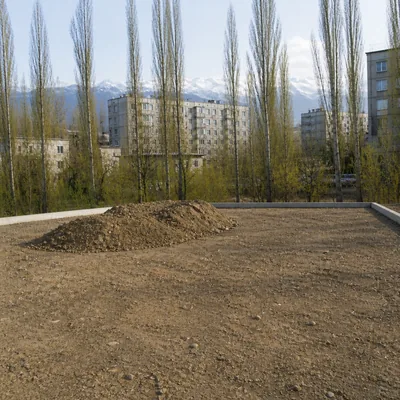
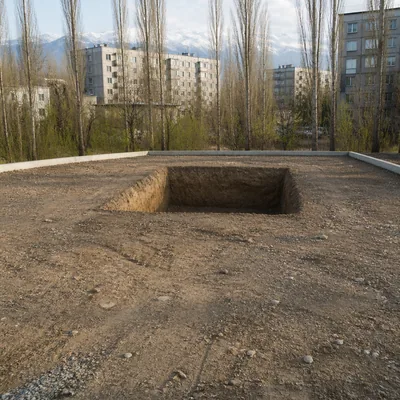
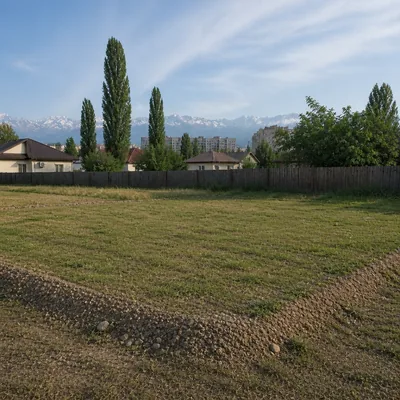
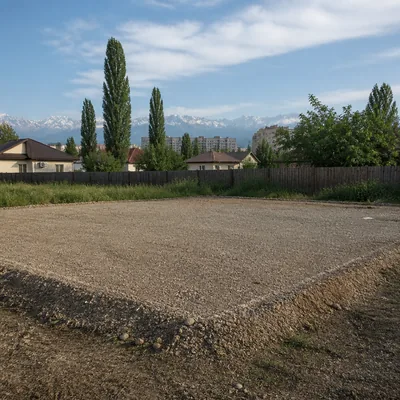
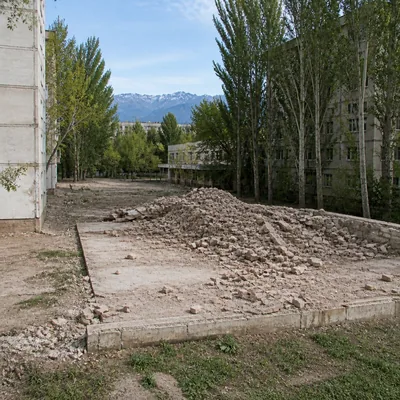
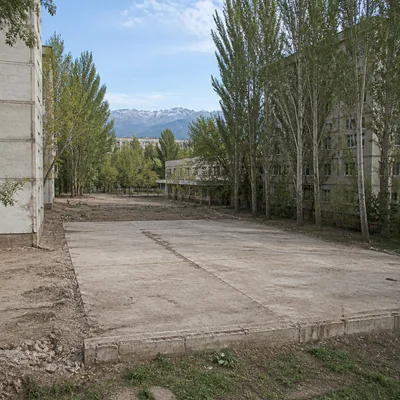
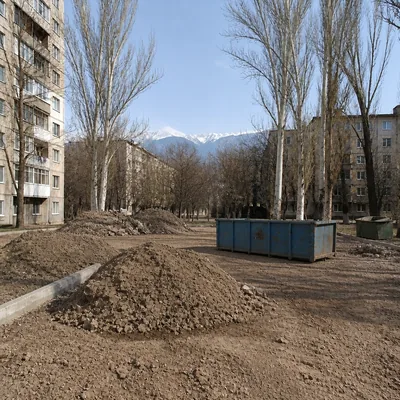
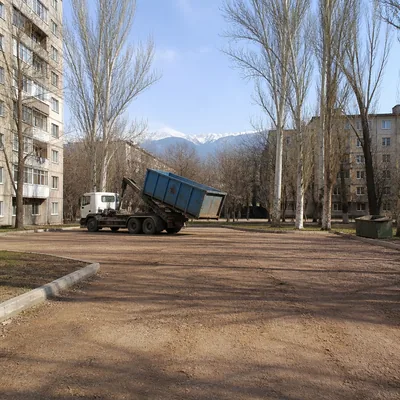
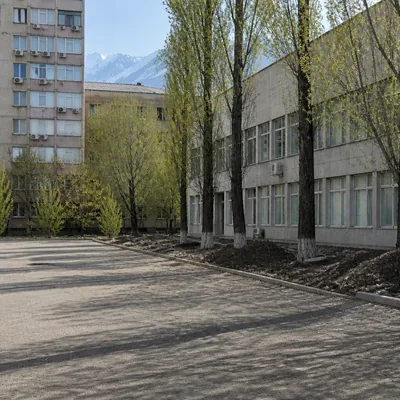
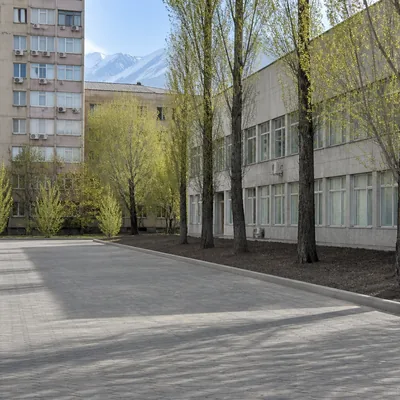
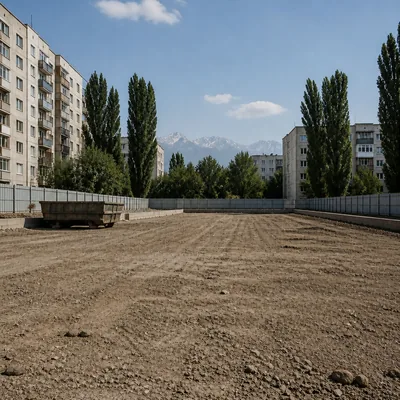
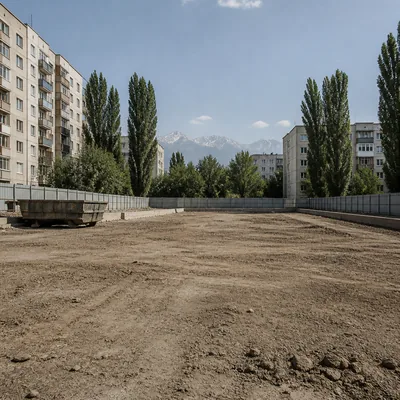
A driver and a team of loaders arrive on site. None of them will ask you for a shovel or ask you to help.







You dug for the foundation — and a hill grew in the yard. Or worse: a hill of wet clay that swallows your foot up to the ankle. A familiar picture for anyone building or leveling a plot in Almaty. And that's where the fun begins: it seems like just dirt, but picking the right truck for it is harder than for an old wardrobe.
Soil is different. Dry sand from under a foundation pad will go in a GAZelle, but dense clay from Upper Kaskelen or from foothill plots weighs so much that the same GAZelle will take half as much by volume. Plus water: in spring and after rain, clay drags along extra tons, and that's not a carrier's nitpicking — it's what the truck is actually designed for. So the question 'how much does it cost' almost always comes down to 'how many cubes are there and how hard is it to load.'
Below is a practical breakdown: how to estimate the volume of a soil pile before the truck arrives, how soil removal with loading differs from "doing it yourself," where the soil goes afterward, and why sometimes it's cheaper to remove soil and construction waste in one truck, and sometimes it's not worth it under any circumstances. In short: the main thing is to correctly assess the volume and type of soil — the rest is figured out on site.
Don't measure the pile — measure the pit. A pile lies: soil loosens after digging, so it always looks bigger than it was in solid form. A pit, on the other hand, tells the truth — if you know its dimensions and depth. Measure the length and width of the trench with a tape, and the depth along the wall. Multiply them — that gives you the volume in solid form. That's the number all calculations start from, including hauling excavated soil off the site.
A mound grows about a quarter bigger in volume — sometimes more if the soil is clayey and clumpy. Ten cubes in the pit turn into twelve or thirteen on site. If you count by the pile, the truck will arrive with less than you need, and you'll have to make a second run. A double trip means double the money and an extra day of downtime. So don't be lazy — estimate the pit, not the pile: soil removal in Almaty starts with exactly that number.
A household benchmark: a standard pit for a three-ring septic tank is about a cube and a bit. An excavation for a 6×4 meter garage, one and a half meters deep, is already thirty-six cubes. So think: GAZelle or dumpster. A rough guess costs dearly here: underload — you'll haul air, overload — the truck will get stuck on the way out.
The loosening factor is how many times bigger the soil gets after digging. For sand it's about 1.1, for loam — 1.2, for dense clay it goes up to 1.3. So a cube of clay in the ground turns into 1.3 cubes in the truck bed. That's why soil removal with loading and hauling excavated soil aren't quite the same thing: loading compacts it, but doesn't put the soil back to its original state. If you calculate by the pit, you'll pick the right truck, but the bed won't be fully loaded — that's normal, that's how it should be.
The other extreme is calculating by the factor but forgetting about weight. Clay from the foothills weighs about two tonnes per cube in solid form, and a bit less when loosened, but still heavy. A GAZelle will take three or four cubes of that soil, no more. If your pit is thirty cubes, you'll need several trips — or order a skip. The price of clay removal from a site depends on exactly these two numbers: volume and weight.
The photo needs to be informative. Shoot the pit from different sides, put something next to it for scale — a shovel, a bucket, a tape measure. Photograph the wall with the depth: you can see how much was dug. If it's a pile — photograph it against a fence or a car so the size is clear. Don't shoot from far away: from a shot like that you can't tell anything except that there's soil. Clay removal from a plot starts with a proper photo.
Another thing — access. Show in the photo where the truck will drive in from: the width of the passage, turns, wires. If the yard is narrow, that affects the choice of equipment. Sometimes it's easier to carry the soil out in bags to the road than to squeeze a GAZelle into a tight yard. Say so right away so there are no surprises on site.
Better to say less and clarify during loading. If you said five cubes but it's actually six — no big deal, you just pay for the extra cube. If it's the other way around — you overpay for air. So don't hesitate to lowball: "about four, but I could be wrong." We'll come, take a look and tell you exactly. Soil and construction debris removal often go together, and here it's important not to mix up the volumes: soil and construction waste are counted separately, even if they're in the same pile.
What else will help you get it right — a list of things worth clarifying when you place your order:
The points are simple, but each one changes both the truck and the time. If you don't know the depth — measure it with a stick or a tape measure, it's faster than guessing. In the worst case, take a photo with something for scale and send it to WhatsApp: we'll take a look and advise. That way you save yourself time, and us — fuel.
We come and look on site. Sometimes a photo makes it look like one thing, but in person it's completely different. Our driver or foreman will estimate the cubic volume from the pit and tell you how many trips are needed. If the volume is borderline, we'll take a smaller truck but do two trips to be safe. Hauling excavated soil with loading goes faster in that case: the machine does the scooping, less work for the crew.
One more thing: don't order a truck "just in case" with extra room. A bigger body than you need is money down the drain. Better to underestimate and add later than to overestimate and pay for air. We always say: if in doubt, round down. Loading will show you exactly what you've got, and paying a bit extra for one more cube is no tragedy. The main thing is not to run the truck empty.
In one week we had to load three different spoil heaps. The first was yellow sand from under a foundation pad in Boralday, it flew into the bed like grain. The second was loam from the Ili Highway, sticky, with clumps. The third was clay from the foothills near Kaskelen, the kind your foot sinks into. The weight difference in the same bed was almost double. That's exactly why soil removal can't be calculated "by cubes" in isolation from what's inside.
The volume of a spoil pile is measured with a tape, but the weight — only by eye or by experience. Sand density is about 1.6 tonnes per cube, loam up to 1.9, clay up to 2.1. Plus water. Plus how the bucket takes the material: dry sand pours evenly, clay sticks to the bucket and the sides. Let's go through it one by one.
Sand is the most agreeable. The shovel goes in without effort, the bucket takes a full load, the body is loaded in fifteen minutes. You can haul it with a GAZelle or a dump truck, and by weight the truck takes almost the full volume. In summer, dry sand kicks up so much dust that neighbors on the street close their windows. If you need soil removed fast and without surprises, this is exactly the case.
But there's a catch here too. Sand from under a foundation often has crushed stone and debris mixed in — then it's no longer free-flowing and sticks to the bucket. And the bulk density of wet sand after rain is higher: a cube weighs not 1.6 but almost 1.8 tonnes. Hauling excavated soil with loading in that case is charged at a different rate — not by pure volume, but adjusted for weight.
Clay is the champion of inconvenience. It doesn't pour, it tears off in chunks. The bucket takes half of what it would take of sand. The body has to be cleaned after every trip, otherwise the next load won't dump completely. The stuck layer is extra hundreds of kilograms you're paying for as if it were soil.
Loam is a bit easier to work with, but it still drags. Clay removal from a site almost always takes more trips than the heap's volume suggests. If you have ten cubes of clay, that's not one skip trip but two or three. And yes, the price of clay removal from a site isn't the same as the price for sand: what matters here isn't so much the cubic volume as the number of trips and the loading time.
The top layer of soil that gets stripped before construction is chernozem. You don't always have to haul it away. Often it stays on site so it can go back later under a lawn or garden beds. If you're planning landscaping, it's better to remove soil separately: chernozem in one pile, clay and stone into the truck.
Chernozem is light but bulky. A GAZelle will take almost a full body because the weight is low. It's less dusty than sand but dirties everything around. If you leave it on the site, cover it with film, otherwise rain will wash the pile all over the yard.
The only thing worse than clay is soil full of rocks. Boulders, chunks of concrete, bits of rebar — the bucket can't grab them all, so you end up lifting by hand or bringing in heavier equipment. This kind of soil weighs a third more, sometimes even more. Hauling excavated soil and construction debris in one trip doesn't always work here: rocks can damage the truck bed, so sometimes they go separately.
That's why the same question — "how much does it cost to remove soil?" — can vary twofold from one plot to another. And that's without even factoring in the season.
| Soil type | Density, t/m³ | Loading difficulty | What to consider |
|---|---|---|---|
| Sand | 1,6–1,8 | low | dusty, heavier when wet |
| Sandy loam | 1,65–1,85 | low | sometimes mixed with crushed stone |
| Loam | 1,7–1,9 | medium | sticks to the bucket |
| Clay | 1,9–2,1 | high | clean the bed, more trips |
| Chernozem | 1,1–1,3 | low | can be left on the plot |
| With stones | 2,0–2,4 | high | manual finishing, risk to the bed |
From experience, clay is what people underestimate most. It seems like ten cubes is one truck. In reality it's three, and every trip needs a cleanup. So before ordering, it's best to send a photo of the pile: it shows the type, the approximate weight, and whether you'll need extra equipment. Removing soil from a site in the foothills almost always means extra trips.
Let me start with what grabs you right away. Removing clay from a plot is not the same as removing soil from under a lawn. Clay is dense, sticky, heavy. The bucket scoops it with effort, and the bed takes it reluctantly. And if you ask "how many cubes?", you'll get a counter-question: "Is it dry or from under water?"
A request to remove clay from a site often starts with a photo. Not because we don't believe you, but because a description like "a hill about three by four" doesn't give you a volume. A pit, a pile, a ridge — all of these vary by several times. And the price for clay removal you already have in your head can change after we take a look. Usually it goes up in trips.
Here's the main math. A GAZelle is rated for up to two tons. Dry sand is about two cubes. Clay is a little over one. That's almost double the volume difference. That's why excavated soil removal in Almaty is often counted by trips, not cubes: how many times the truck can leave without overloading the axle.
Dense clay from the foothills, especially mixed with crushed stone, weighs about 1.8–2 tons per cube. Wet clay is even heavier. No one will haul an overload: it's both a fine and a wrecked suspension. So the phrase "I only have five cubes there" can turn into three trips instead of two.
We ask the client directly: where the clay is from, was it dug by hand or with machinery, was it left in the rain. The answers change the calculation. We're honest about timelines: if there's a lot of clay and the yard is narrow, one trip can take not an hour but two and a half. Not because we're slow, but because loading a sticky lump into the bed is work, not a mouse click.
There was a case in Remizovka: we arrived, and after a night rain the clay was like plasticine. Wheels sink, the bucket won't scoop — it just sticks. We struggled for half a day, but got everything out in three runs. The owner later said: "I thought you'd refuse."
The second reason clay removal turns into a whole story is the yard. Fresh clay is churned up, water on top, same clay below. The truck sits on its axle. Sometimes we have to put down crushed stone or boards to get out. That's time, and nobody likes it, but there's no other way.
If the driveway is narrow, a GAZelle gets through but a ZIL doesn't. Then you either carry it out in buckets and wheelbarrows, or order a smaller truck and make more trips. Soil removal with loading in that case isn't a luxury — it's how you keep the yard from getting completely wrecked.
We ask: is there a slope, where to exit, is the passage blocked by neighbors. From experience, in Almaty's suburbs half the surprises are fences put up after we were last here.
There are cases where we say no or name our terms. If clay is mixed with household trash, the site won't accept it as soil. If the pile has rebar or concrete chunks, that's excavated soil and construction debris removal, counted separately. If the clay is in a basement or on the third floor, that's manual carrying, and it costs different money.
One more condition: in winter, frozen clay can't be loaded with a bucket. It has to be broken up or you wait for a thaw. We warn you about this in advance so there are no surprises on the day of delivery.
What to do with the clay left over from digging a foundation pit? You can leave it on the plot, but it will settle, spread, and get in the way of your landscaping. More often it's hauled away or used as fill elsewhere. If the volume is large, it's cheaper to take it out right away than to move it twice.
Leftover clay isn't just ugly. It changes the terrain: where it was flat, a mound appears that will settle in a year and leave a dip. If you're planning a lawn or a path, better to haul it away. If you need the clay to fill a low spot — leave it, but keep in mind it holds water and without drainage will turn into a swamp.
We often remove clay from a plot not all at once but in stages: first the dry top layer, then the wet one. It's easier to load and there's less risk of getting the truck stuck. It's not a trick — just standard practice when you're working by hand.
And one last thing. Don't hesitate to ask how many trips and why that many. Better to discuss it before dispatch than to watch the truck leave half-empty or get stuck in the yard. Soil removal from a site, where the price comes from weight, volume, and access conditions, is always a conversation, not a ready number from a price list.
The most common question when you call: "What if we load it ourselves — will it be cheaper?" It will. But it's not always faster, and definitely not always easier. The line between "DIY" and "with loading" isn't about money — it's about volume and access. Piles up to three or four cubes in a private yard can realistically be shoveled out in a couple of hours by two people. Beyond that, the math kicks in and quickly outweighs the savings.
If the soil is dry, sits on flat ground, and there isn't much of it — yes, your own labor is justified. Sand from under a foundation pad, leftover lawn grading, a hole for a septic tank. Five or six cubes of dry sand — two people can toss it into a GAZelle in about three hours. But the truck is standing there, and idle time is paid — that's where the real loss hides. The driver arrives, waits while you carry buckets, and the clock is ticking. In the end you "saved" on loaders but paid for waiting. And that's without counting the fact that after loading, the area has to be swept — which is also time.
The second thing is fatigue. By the sixth cube, the pace drops by half; by the tenth, people just sit down. If the volume goes past ten cubes, doing it yourself will stretch the removal over a whole day and you still won't finish it in one go. So honestly: DIY is for small volumes and good access. Everything else — with loading.
Soil removal with loading means the truck arrives not empty, but with a crew and tools. The loaders work with shovels if the driveway is narrow or the soil is somewhere equipment can't reach. If there's enough room, we bring in a mini-loader with a bucket. The bucket scoops about as much in one go as a person can throw in half an hour. The pace difference is huge, and that's not marketing — it's physics.
What's included in this kind of dispatch: loading, tamping down in the truck bed (so more fits and nothing spills on the road), and sweeping the area after ourselves. Excavated soil removal in Almaty with loading also means picking the right truck. Because you can't throw much wet clay into a GAZelle, but dry sand can be loaded with a heap on top. The foreman on site looks at the soil and decides how much to actually take so the axle isn't overloaded.
Three tools — three different cases. A shovel is needed where machinery can't go: between a fence and a wall, in a courtyard with paving stones, on a slope. The mini-loader bucket is the workhorse for open areas: it's maneuverable, fits through standard gates, and loads quickly. An excavator is for when the soil needs not just to be removed, but dug out and loaded right away. For example, a foundation pit or a trench for utilities. Then the excavator digs and immediately dumps into the dump truck, instead of leaving you a pile on the site.
A beginner's mistake is to order just the truck, thinking "we'll somehow shovel it in." And then it turns out the access is muddy, the GAZelle is stuck, and it needs to be pulled out. That's why when you place an order, we always ask about the access and the dump point. It's not bureaucracy, it's to avoid redoing the work.
| Method | When it fits | Speed | Where they lose |
|---|---|---|---|
| On your own | Up to 5 cubes, dry sand, level yard | 3–4 hours for two people | Truck idle time, fatigue by the end |
| Shovel + loaders | Narrow access, clay, manual work | From 2 hours for 10 cubes | Slow for large volumes |
| Mini-loader | Open area, gates from 2.5 m | Loading in 40–60 minutes | Not everywhere it can drive on soil |
| Excavator | Foundation pit, trenches, large volume | Digs and loads at once | Needs space for maneuvering |
This is where many relax and for good reason. Soil is not just "throw it away." It's taken for disposal to a special site, not to the nearest ravine around the corner. Unauthorized dumping of soil in an undesignated place is a fine, and it lands not on the carrier but on the customer. That's why the price of soil removal from a site already includes the route to the site, not "somewhere closer."
After unloading at the site, the soil is either used for backfill or disposed of according to the rules. If the earth is clean, without construction debris, there's a better chance it can be reused. If the pile contains brick fragments, pieces of rebar, concrete leftovers — that's a different story. Removing soil and construction debris together is possible, but then the volume is calculated differently, and the truck is chosen with a margin.
Another nuance: we sweep the site after loading. Not because it looks nicer, but because the leftover soil on the asphalt is dirt that will be spread by wheels. If you order excavation removal with loading, sweeping is included. If you loaded it yourself — clean up after yourself, otherwise neighbors and the management company will quickly remind you of themselves.
Choosing between "DIY" and "with loading" isn't about cleverness, it's about calculation. If the pile is small and dry, try it yourself, but keep an eye on downtime. If the volume is five cubic meters or more and the soil is heavy, excavation removal with loading will end up not more expensive, but cheaper by the end of the day. And definitely calmer.
Read this far and still not sure about the volume? Send us a photo — we'll calculate and give you a price.
Message us on WhatsAppIn Almaty, the season matters more than you'd think. The same five-cube pile will go in one trip in July, but two in April — and it's not about the hauler being greedy. It's just that weight, yard conditions, and how you approach the pit change from month to month, and you need to plan for that in advance, not on the day of delivery.
March and April are the worst time to remove soil from a site. The snow is gone, the ground has thawed on top but is still frozen underneath, and water sits in the pit for weeks. Clay that was a solid chunk in winter turns to dough in spring. The truck bed fills with weight, not volume, and the truck leaves half-empty. From experience, a GAZelle carries one and a half cubes instead of the usual three — sometimes less.
The yard is all broken up. Wheels get stuck, the approach to the pit turns into a rut, and if the plot is in the foothills where there's a slope, the truck might not even make it in. Then either we wait a couple of dry days, or we do excavation removal with loading by hand and carry it out to a solid road. The second option costs more time, but you don't depend on the weather in the yard.
In spring, it's more honest to count weight, not cubes. If you can, ask the geologists or the crew that dug it what kind of rock is there. That one question will save you a trip.
From June to August, the soil is dry, light, loads quickly, and goes out in full trucks. This is the best time to remove soil and not overpay for extra trips. The earth doesn't stick to the bucket, the bed isn't overloaded with water, and the driveway is dry even in a private sector.
But there's a flip side. Summer is peak construction season, and equipment is booked solid. It's better to schedule delivery two or three days ahead, not "tomorrow by noon." At the height of the season, there are fewer free GAZelles and dump trucks in the city than there are requests, and that's the only reason your usual schedule might slip.
Dryness also means dust. Sand and loam kick up so much dust during loading that neighbors come out to complain. We water the pile before loading if it's loose — it's a small thing, but it prevents half the conflicts on site.
September and October are the second-toughest period after spring. Rain drags on, and the ground doesn't have time to dry. Removing clay from a site at this time is often postponed for a couple of days simply because the truck can't get out of the yard.
It's especially tough where the plot isn't covered with crushed stone and there's no solid entrance. A loaded truck gets stuck, and you have to pull it out, which takes time and nerves. In such cases, we advise either waiting for a weather window or carrying the soil out to the road and loading it from there — soil removal with loading by the road goes smoothly.
In fall, you can also see how much water is in the pile. If the pit has been open all summer, the bottom layer has absorbed moisture and is heavier than the top. The difference on five cubes is about one extra trip.
From December to February, the top layer freezes into a crust, and underneath the ground is like stone. The bucket struggles to bite, you have to break it up, and loading time increases by one and a half to two times. Frozen soil loads in big chunks, they don't compact in the bed, and the volume goes in unevenly.
But in winter there's no water, the yard is idle, and the access to the pit is usually clean. If you dug in autumn and left the spoil heap out in the open, break the crust right away while it's still thin. By January it's already about twenty centimeters thick, and you have to chip it.
In winter, it's more convenient to combine excavation removal and construction debris in one trip: the equipment is already on site, and few people want to pay for a second visit in the cold. Here's the procedure:
And lastly. The season affects timelines and the number of trips, but not the agreement. The price quoted before delivery stays the same in April mud and August heat. If the actual load turns out to be more than you described, that's a separate conversation before loading, not a surprise at the end.
The idea seems logical: why send a truck twice if you can remove both soil and brick rubble in one trip? In practice, removing excavation and construction debris in one bed often turns into a headache. And it's not that we don't want to mix them — it's about where it all goes afterward.
Landfills that accept construction debris usually require it to be more or less uniform. If concrete chunks are mixed with clay in the body, the receiving station may turn the truck away. Then the trip is paid twice: there and back. I've seen this happen more than once, especially when the customer assured us that 'there's just a little bit of soil in there.'
So the first question to ask yourself before ordering: is this a uniform load or a mixed bag? If you dug a foundation and were simultaneously demolishing an old wall, chances are you have two different types of waste on site, and it's better to haul them separately.
The savings on one trip are deceptive. When we come for a mixed load, we either have to take it to a site that accepts anything (there are few, and they're usually farther away) or spend time sorting on site. Both eat up the very price difference that started it all.
Besides, the density of the mix is unpredictable. Clay is heavy, brick rubble is light but takes up a lot of space. As a result, the truck may leave underloaded by weight but full by volume — or vice versa. Overloading risks a fine and unloading on the roadside, and that's a whole different story.
If you have clean soil on site and a separate pile of construction debris, haul them separately. Yes, it's two trips. But each goes where it will be accepted without questions: soil to a soil site, construction debris to a landfill for construction waste. In the end, you don't pay for downtime and don't risk the truck being turned away at the entrance.
Sometimes it's the opposite: the customer wants to save money and asks to 'stuff everything into one.' We explain the risks, and often the client agrees to separate removal. But sometimes the volume is small — a couple of cubes of soil and a bag of broken brick. Then it really is easier to take it together, and we do that, warning that there may be nuances at the receiving end.
A separate story is when clay mixed with construction debris ends up in the truck bed. For example, you were digging a trench for utilities and dug up the remains of an old brick wall. Here's the thing: if that mixture is more than half the bed, we'll haul it as construction debris, not as soil. Because at that point it's no longer earth, it's waste.
At the receiving station, they look first at the composition. If they see that more than half is soil, they may send it to a soil site, but they'll charge more. If more than half is construction debris, it goes to the landfill. Either way, it's better to warn the dispatcher in advance so they can choose the right route.
When you call or message on WhatsApp, don't just say "I need to haul away soil." Specify what exactly is on the site. It'll save time and money.
The more details you give, the more accurately we'll match the truck and route. Which means less chance you'll overpay for a second trip or for waiting time at the landfill.
| Situation | Can they be hauled together | What to consider |
|---|---|---|
| Soil and debris in separate piles | No | Two trips, but each goes to its own site |
| A small admixture of debris in the soil (up to 10%) | Yes | Warn the dispatcher, a surcharge at the receiving station is possible |
| More than half the bed is construction debris | No | It goes as construction debris, needs a landfill |
| Clay with remnants of brickwork | Depends on the volume | If there's a lot of brickwork — haul it separately |
| The customer wants to save on one trip | Risky | Possible return from the landfill and double payment |
The table shows common cases we deal with. If your situation doesn't fit any row, it's better to call and describe it in words. The dispatcher will ask a couple of questions and tell you what to do.
If we compress everything above, we get a few thoughts. Keep them in mind before you call and arrange for a truck. There's nothing new here — just the most important things gathered in one place.
A pile is deceptive. It lies loose, with voids, and its volume always comes out bigger than what was in the ground. But you'll pay for what actually goes into the truck bed. So the question "haul away soil" starts with the pit: length, width, depth in meters — and from there we calculate the cubes. Measure with a tape at least approximately, and we won't have to guess from a phone photo.
The average arithmetic is simple: ten meters by four by one and a half is sixty cubic meters in solid body. With loosening, it'll be noticeably more, and that difference is exactly what goes into the number of trips. A rough guess here costs an extra trip, or even two.
A cube of dry sand and a cube of dense clay are two completely different weights. Clay from the foothills is so heavy that the same truck takes half as much by volume. It's not the carrier being greedy, it's a calculation by the mass the truck is rated for. That's why hauling clay from a site almost always goes in small portions, but frequent trips.
Wet clay after rain or in spring is a whole different story. Water adds tons, and some trips just won't fit into the volume you estimated for a dry pit. You can't lowball here, or the truck will come and leave half-empty while you pay for air.
Soil removal with and without loading are two different jobs. If you load it yourself, we bring the equipment and leave, and you dig at your own pace. If we load, the price includes the labor of loaders and the time the truck spends in your yard. The difference is noticeable, and it's better to discuss it before dispatch, not on site.
By hand, you can realistically handle dry sand and loose earth. Clay, especially after rain, is a dubious pleasure to shovel. You'll toss a couple of cubes, then figure out for yourself how much time and effort it'll take.
The easiest way to avoid overpaying is to honestly describe what's in your pit. What kind of soil, roughly how many cubic meters, is there water, how's the access, how far to carry. The more accurate the picture, the better we'll choose the truck and number of trips. Excavation removal in Almaty is always about a specific yard, not average numbers.
Before you order, run through this list — it takes a minute and saves both time and money:
And lastly. Soil and construction debris removal often go as one order if there's both on site. Then it makes sense to take everything in one trip — but only if the volume allows. If you're unsure, tell it like it is, and we'll advise how to split the work more profitably.
A 1.5 t GAZelle trip starts at 30 000 ₸, but that's if the soil is already in the bed. With a loading crew, add 20 000 ₸ — for a two-man team. We'll give you the exact price after seeing a photo of the pile and the access: volume by eye is almost always underestimated.
Yes, we remove clay, and we price it by weight, not by cubes. Clay is denser than loam and topsoil — a cube weighs noticeably more, so less fits in a 1.5 t GAZelle than you'd think. If the clay is wet, after rain, it's even heavier — let us know and we'll bring equipment with a margin.
Then we'll take it in a second trip, and the price is per trip. Usually it's clear at the estimate stage that one truck isn't enough, and we say right away: you need a ZIL or a KAMAZ. There's no extra charge for a 'second go' — just another trip added.
Most likely yes, but it depends on the specific yard. A GAZelle fits where a ZIL can't even turn around. If the access is really bad, we'll carry the soil to the truck on stretchers or wheelbarrows — that's the crew's job. Send a photo of the entrance to WhatsApp and we'll tell you right away which equipment will fit.
Within the city we dispatch from 30 minutes if a truck is available. In high season, in spring and after long rains, the queue is tighter — better to book a day or two ahead. We work Mon–Sun, 9:00 to 21:00, so weekends are no problem.
Yes, but tell us in advance. Large rocks and roots mean it's not pure soil anymore, and their share affects both weight and loading. If there are lots of rocks, you'll need heavier equipment and a bigger crew. Construction debris in the same trip as soil is also possible, but not always — we'll discuss based on photos.
To disposal — we have a place for it. We sweep the area after loading so no dirty patch is left. If you need confirmation paperwork, ask in WhatsApp in advance. And if you need the soil moved to another plot instead of thrown away, that's a separate service — we do that too.
Loading a pile of a couple of cubes is an hour to an hour and a half of crew work. Plus the drive. If the soil is far from where the truck can park, it takes longer: every meter with a stretcher adds minutes. From experience, half a day for an average plot is normal.
You can pay cash or by transfer — whatever's easier. We lock in the price before the truck arrives, and it doesn't change after. No 'extra for difficulty' on site.
We remove it if it's in the way. But honestly: good topsoil is often worth keeping on the plot — for a lawn, for garden beds. If you decide to remove it, we price it the same as soil. Tell us what you plan to do with the plot, and we'll advise what to clear and what to keep.
Got a question that's not here? Ask — we'll answer in writing, no call needed.
Message us on WhatsAppThe price per cubic meter turned out lower than I'd estimated. Soil removal with loading is just what I needed. I'd have been digging for a week myself.
The renovation was done, and a pile of soil from leveling remained. I called in the morning — by lunch it was gone. Pleasantly surprised.
I ordered clay removal from my plot, the price was reasonable. Mukashev came, looked, said we'd manage in two trips. That's how it went.
We cleared the old soil near the house, and a pit was left in the yard. When I called, they gave me the price right away and didn't change it later. The guys came, loaded it up, and swept up. I checked everything — clean. Thanks.
I ordered soil and construction debris removal together. Handy that one truck does it all. Saved me time.
Everything was fast, but we waited an extra half hour for the truck. A small thing, honestly. They took the soil, I'm happy.
I had clay hauled away from my plot after digging a trench for utilities. They worked carefully and didn't ruin the lawn. I recommend them if you need soil removed fast.
We were cleaning an old ditch by the house, and quite a bit of soil piled up. I ordered removal, and they arrived in forty minutes. Fast.
The price for clay removal from the plot turned out lower than I thought. They came, loaded, took it away. That's it.
We replaced the soil in the garden, didn't know where to put the old stuff. I called, and the truck came the next day. The guys load fast and swept up after themselves.
We brought new soil to replace the old in the garden, but I didn't know where to put the old stuff. I called, and half an hour later the guys arrived. It was clay-mixed soil, heavy, but they lifted it all and took it away. The price was as promised.
We started digging for the bathhouse foundation, and it was solid clay with rocks. My husband was working, I was the one calling. Aigul immediately asked about access: would a GAZelle make it in or not. It did. They hauled everything out in one day — I couldn't believe it was that fast.
Removing clay from the plot was my headache. I spent two days looking for someone who'd take it. These guys took it without questions.
Hauled soil from a plot in the suburbs. The road was dirt, I thought the truck wouldn't make it. It did. Everything was removed in one trip.
Everything was fine, but we waited an extra hour for the truck. Traffic on Raiymbek, what can you do. They took the soil and didn't raise the price.

The plot is in Talgar, we were digging for a septic tank—two cubic meters of clay came up, heavy and sticky. I called at noon, and by evening the truck was at the gate. They hauled it away, swept the area, not even a trace left. The price per cubic meter was exactly as quoted.
We cleared the basement of old soil and junk. I thought I'd have to haul bags, but no—they took it all away at once. Even swept up after themselves. Nice.
A neighbor tipped me off when I was dismantling an old greenhouse — there was quite a bit of soil there. I called in the evening, they came in the morning. They took the soil, I dismantled the greenhouse myself. The price was as agreed, no surprises.
I was pleasantly surprised that the price was locked in before dispatch and didn't get bumped later. Removing clay from our plot was a big problem after the rains — the ground turned to mush. The guys handled it.
We dug a pit for a pool, mountains of soil. I thought a GAZelle wouldn't be enough, but Aigul said to take a 32-cube dumpster. So we did. Everything was hauled away in one go.

Overall fine, but they postponed the arrival once by an hour—the driver got stuck somewhere. They still hauled the soil away the same day, thanks for that. The price didn't change, which is a plus.
We were digging for a foundation and hit clay with stones. I thought I'd have to haul it myself. Askhat arrived with a dumpster, loaded it in an hour and a half. The yard is narrow, but the driver somehow got in.

We cleared the old soil near the house. A guy named Yerlan came and oversaw everything himself. He gave the price upfront, and it didn't change later.
hauled soil from the site after construction, there was a lot of clay. arrived at 10 in the morning, wrapped up in an hour. everything neat, swept the yard. recommend.
came fast, took everything. soil with clay, heavy. thanks to Yerlan for help with the calculation
I ordered soil and construction debris removal together. Convenient that it's one truck. Clay, broken brick, boards — they took it all.
We were digging a pit for a summer kitchen, and about five cubic meters of clay came out, maybe more. I thought I'd be hauling it away in bags for a week. Daniyar came, looked, and said a GAZelle wouldn't cut it—we needed a dump truck. He brought one the next day. In a couple of hours the plot was clean, and I didn't even pick up a shovel.
I was removing soil from a plot in Boraldai. It's outside the city, they said upfront there'd be mileage. They arrived at six in the morning while the neighbors were asleep. Beautiful.
Thanks to Askhat, he arrived on time and loaded everything himself. They took the soil from the plot in one go.
Clay removal from the plot—after digging a trench we had a whole mountain left. Dinara on the phone immediately asked how many cubic meters, so she could send the right truck. They got it right: one truck came, but a big one. Hauled it away in one trip.
A neighbor recommended these guys when I was cleaning out an old cellar. The soil was packed down and heavy. The movers were strong and carried everything out in buckets. I just supervised. Three hours later the yard was clean, not even a trace left.
We have a private house, and in spring the yard turned into a swamp. We decided to add fresh soil and haul away the old mud. They came in the rain but got it all done. Thanks to Daniyar for not backing out in that weather.
Showing 3 of 32
Want the same? Describe your task — we'll calculate and give you a price before the truck arrives.
Message us on WhatsAppChecked us out? Drop us a line — we'll pick the right truck for your load.
Message us on WhatsAppCollection, sorting, crushing, secondary raw materials — the steps in order and what actually gets recycled.
How medical and industrial waste differ from household waste and what's required of the hauler.
Illegal dumps on the outskirts, soil and groundwater: what happens when waste goes to the wrong place.
Articles of the Administrative Offenses Code of Kazakhstan, amounts in MCI for 2026, and who's responsible for the garbage — the carrier or the client.
If a pile of soil in your yard is blocking the way or you've dug a foundation pit — message us on WhatsApp. We'll give you the price before dispatch and arrive in a time slot that works for you.
Tell us how the pickup went — it helps us and anyone choosing a hauler.



